
What The Fish Say
My godson wanted to go look at fish but I told him, today, beauty is canceled.
We cried. I felt bad. I counted the unbeautiful like broken ribs.
Shrapnel in the olive tree. Child-sized tourniquet.
Saint Porphyrius’ watching and weeping.
My father phones to tell me they’re down to vinegar; they pour into
open wounds. His friend found some wild tomatoes. Cooked them
in the street for his children. Over there, it’s a god-lent shovel.
A murmur in water. The dark between angels is still time spent waiting for light.
My father finds the photo albums to remember the streets that once existed.
My godson has not stopped describing his desire for fish.
Their bodies are neon and possible. The water is full of his daydreams.
I scavenge his tiny wants. And after, I dream of the hospital. Ice cream trucks
filled with bodies. A friend dies on that blacktop like a fish. So few people
will name him. I said today I am choosing the space between angels. There is
nothing left to choose. I sew beauty between layers of skin. It seeps out
without my noticing. When I see it I get angry because how dare life go on?
My godson phones to say the fish are possible. We are possible.
The sky is full of broken windows and so is the dream. My eye sees the way
the past lurches forward, covering ground like we cover old scars.
It says what the fish say: witness me.
by A.D. Lauren-Abunassar
from Split This Rock
—A.D. Lauren-Abunassar is a Palestinian-American writer, poet, and journalist.
Her work has appeared in Poetry, Narrative, Rattle, Boulevard, and elsewhere.
Her first book, Coriolis, was winner of the 2023 Etel Adnan Poetry Prize.
 One Sumerian epic poem called Enmerkar and the Lord of Aratta gives the first known story about the invention of writing, by a king who has to send so many messages that his messenger can’t remember them all.
 Today, researchers are looking toward building quantum computers and ways to securely transfer information using an entirely new sister field called
  I first came to the United States for an academic exchange at Columbia University in 2005, and have spent the bulk of my time here since starting my PhD at Harvard University in 2007. No country changes nature overnight, and America still retains many of the virtues with which I fell in love all those years ago. But there are days when I fear that the place has been transformed so deeply that the qualities that would once have been touted as quintessentially American have forever been lost.
 SHORTLY AFTER Alice Munro died, a line from the title story of her 2009 collection Too Much Happiness began circulating on the internet: “Always remember that when a man goes out of the room, he leaves everything in it behind […] When a woman goes out she carries everything that happened in the room along with her.” The quote appeared in white font over a black background. The only attribution was to Munro, so at the time, I assumed it was something she had said in an interview. It felt piercingly ironic that the female winner of the 2013 Nobel Prize in Literature was being remembered for a remark she made about women’s supposed inability to live outside the context of men. Then, I learned the line was delivered by a character in “Too Much Happiness,” Munro’s fictional account of a real 19th-century woman, Sofya Kovalevskaya. Shortly afterward, the world learned of the sexual abuse Munro’s youngest daughter, Andrea Skinner, experienced as a child from her stepfather, Munro’s second husband. An abuse that Munro herself had learned of decades ago and chose to ignore.
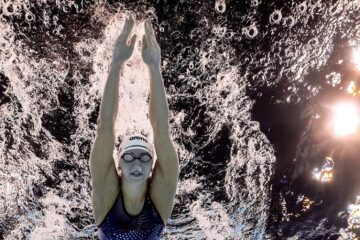 The medals keep coming for US swimmers at the
  This remarkable book begins dramatically and truthfully: ‘A monstrous child is blocking my view and has carved a nest in the soft darkness of my head. It eats the hours, this child, leaving me only crumbs.’ Motherhood can be overwhelming, however longed for. It is never a small thing, even if the rest of the world chooses to ignore it or view it as a block to professionalism. Cyril Connolly’s remark in Enemies of Promise (1938), ‘There is no more sombre enemy of good art than the pram in the hall’, was, of course, a reference to male creativity. But women have routinely been brainwashed into concurring with this dismissive observation – made, admittedly, before Connolly had children. In the 1950s, respected male tutors in colleges of art would dismiss female making as ‘frustrated maternity’. The sculptor Reg Butler asked Slade School of Fine Art students in 1962, ‘Can a woman become a vital creative artist without ceasing to be a woman except for the purposes of a census?’
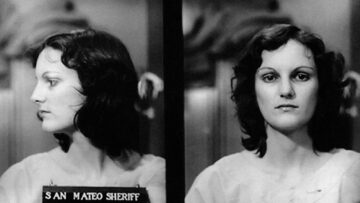 Fifty years ago, a young woman was kidnapped by the Symbionese Liberation Army, a ragtag group of revolutionaries willing to kill for gentle causes. For weeks, she recorded strident, sarcastic messages at her captors’ bidding, messages that bewildered and disturbed their intended audience. In time, she was taught the group’s thinking, given a nom de guerre (Tania), and handed a sawed-off carbine. She waved it around to help the SLA rob a bank—and later sprayed bullets from a machine gun to help them escape arrest. Of her own volition, she hid out with them for nearly a year. Public response swung from warm concern to fury.
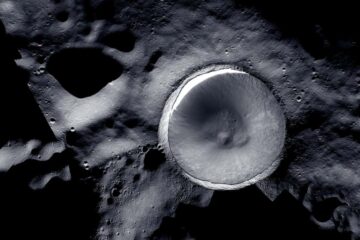 A backup of life on Earth could be kept safe in a permanently dark location on the moon, without the need for power or maintenance, allowing us to potentially restore organisms if they die out.
 Traditionally, Donald Trump has been
  While Knott may have alienated his peers in what
 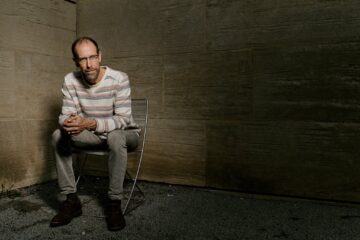 David Keith was a graduate student in 1991 when a volcano erupted in the Philippines, sending a cloud of ash toward the edge of space. Seventeen million tons of sulfur dioxide released from Mount Pinatubo spread across the stratosphere, reflecting some of the sun’s energy away from Earth. The result was a drop in average temperatures in the Northern Hemisphere by roughly one degree Fahrenheit in the year that followed. Today, Dr. Keith cites that event as validation of an idea that has become his life’s work: He believes that by intentionally releasing sulfur dioxide into the stratosphere, it would be possible to lower temperatures worldwide, blunting global warming.
 Baldwin Hills juts up 500 feet from the flat expanse of the Los Angeles Basin, the result of millennia of seismic activity along the Newport-Inglewood Fault, a dextral strike-slip fault that runs for 47 miles from Culver City through Signal Hill to Newport Beach. The fault, formed some 30 million years ago when the Pacific plate collided with the North American plate (an intersection that now sits at the San Andreas Fault), expresses on the surface as a series of low, irregular hills. Below the surface, seismic activity created a series of oil and gas reservoirs, including the Inglewood Oil Field.
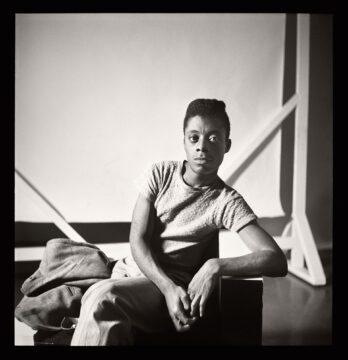 I underwent, during the summer that I became fourteen, a prolonged religious crisis. I use “religious” in the common, and arbitrary, sense, meaning that I then discovered God, His saints and angels, and His blazing Hell. And since I had been born in a Christian nation, I accepted this Deity as the only one. I supposed Him to exist only within the walls of a church—in fact, of our church—and I also supposed that God and safety were synonymous. The word “safety” brings us to the real meaning of the word “religious” as we use it. Therefore, to state it in another, more accurate way, I became, during my fourteenth year, for the first time in my life, afraid—afraid of the evil within me and afraid of the evil without. What I saw around me that summer in Harlem was what I had always seen; nothing had changed. But now, without any warning, the whores and pimps and racketeers on the Avenue had become a personal menace. It had not before occurred to me that I could become one of them, but now I realized that we had been produced by the same circumstances. Many of my comrades were clearly headed for the Avenue, and my father said that I was headed that way, too. My friends began to drink and smoke, and embarked—at first avid, then groaning—on their sexual careers. Girls, only slightly older than I was, who sang in the choir or taught Sunday school, the children of holy parents, underwent, before my eyes, their incredible metamorphosis, of which the most bewildering aspect was not their budding breasts or their rounding behinds but something deeper and more subtle, in their eyes, their heat, their odor, and the inflection of their voices.