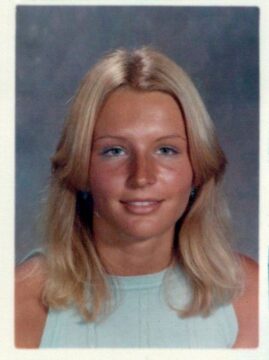
Namir Khaliq at Psyche:
 The day I met Daniel Kahneman, he had asked me to join him for lunch at the Bowery Road restaurant in Lower Manhattan. Danny proposed this venue because it has comfortable booths and ‘is mostly deserted’. I arrived 15 minutes early, palms sweaty with the anticipation of meeting the world’s most famous psychologist. He had agreed to discuss making a film of his life’s work. I’d been preparing my pitch all week, and had brought a stack of notes with me to the restaurant. Half an hour passed, and he hadn’t arrived. I sent his secretary an email. Another 45 minutes ticked by before I abandoned hope. I headed back uptown, expectations shot.
As I walked through the apartment door, my phone buzzed. Danny’s name shone on the caller ID. ‘I’m terribly sorry,’ he said as soon as I answered. ‘Please tell me where to find you.’ I told him I could head back downtown in a few minutes. Before hanging up, he apologised once more: ‘I’m very sorry. This doesn’t usually happen. But I sometimes make mistakes.’
More here.
Enjoying the content on 3QD? Help keep us going by donating now.
 The IMO is considered the world’s most prestigious competition for young mathematicians. Correctly answering its test questions requires mathematical ability that AI systems typically lack.
 In his acceptance speech for the vice presidency at the Republican National Convention, JD Vance stated that “one of the things that you hear people say sometimes is that America is an idea.” But, Vance asserted, the country was not just a “set of principles … but a homeland.” He went on to illustrate this by referring to his family’s cemetery where he hoped seven generations would be buried in a plot in eastern Kentucky. He said the country welcomed newcomers like his wife’s family from India, but “when we allow newcomers into our American family, we allow them on our terms.”
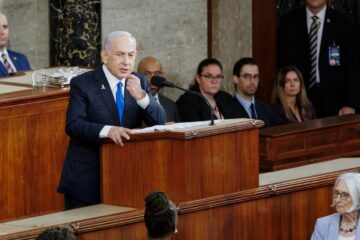 In the past, Washington has served as a sort of relief valve for Netanyahu, a place he could count on strong support, even when his political position looked rocky at home. In that first speech back in 1996, after receiving a five-minute standing ovation from Congress, he
  Computer chips are a hot commodity. Nvidia is now one of the most valuable companies in the world, and the Taiwanese manufacturer of Nvidia’s chips, TSMC, has been called a
 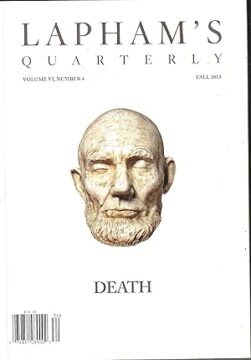 It is dangerous to excel at two different things. You run the risk of being underappreciated in one or the other; think of Michelangelo as a poet, of Michael Jordan as a baseball player. This is a trap that Lewis Lapham has largely avoided. For the past half century, he has been getting pretty much equal esteem in a pair of distinct roles: editor and essayist. As an editor, he is hailed for his three-decade career at the helm of Harper’s, America’s second-oldest magazine, which he reinvigorated in 1983; and then, as an encore a decade ago, for Lapham’s Quarterly, a wholly new kind of periodical in his own intellectual image. As an essayist, he was called “without a doubt our greatest satirist” by Kurt Vonnegut.
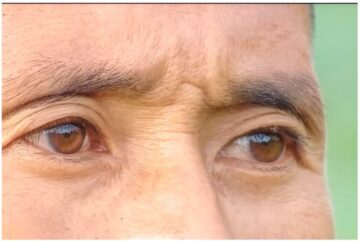 One of this year’s most influential people on TikTok and YouTube does not see himself as an influencer. He is Thích Minh Tuệ, a middle-aged man who adopted a humble, ascetic life a few years ago and began to walk barefoot up and down Vietnam. He lived in forests with few clothes and accepted alms from strangers, practicing a Buddhist way of frugal simplicity. In May, he became an internet phenomenon. Admirers began to post videos of him along his pilgrimage, inspiring millions. While disavowing any attempt at virtue signaling, he nonetheless was widely seen as an exemplary model, especially in comparison with the lavish lifestyles of top officials. Vietnamese were particularly irked when the minister of public security was caught on camera eating gold-encrusted steak at a London restaurant three years ago. In June, at the strong advice of police, Thích Minh Tuệ disappeared from public view. “His real crime was his humble lifestyle that stands in such stark contrast to the corruption scandals that have rocked Vietnam,” wrote Zachary Abuza, professor at the National War College in Washington, for Radio Free Asia.