Looking for America

Gail Collins in The New York Times:

Hashmi“I’m sorry,” said Representative Carolyn McCarthy, her voice breaking. “I’m having a really tough time.” She’s the former nurse from Long Island who ran for Congress in 1996 as a crusader against gun violence after her husband and son were victims of a mass shooting on a commuter train. On Friday morning, McCarthy said, she began her day by giving an interview to a journalist who was writing a general story about “how victims feel when a tragedy happens.” “And then 15 minutes later, a tragedy happens.” McCarthy, whose husband died and son was critically wounded, is by now a practiced hand at speaking out when a deranged man with a lot of firepower runs amok. But the slaughter of 20 small children and seven adults in Connecticut left her choked up and speechless. “I just don’t know what this country’s coming to. I don’t know who we are any more,” she said.

President Obama was overwhelmed as well, when he attempted to comfort the nation. It was his third such address in the wake of a soul-wrenching mass shooting. “They had their entire lives ahead of them,” he said, and he had trouble saying anything more.

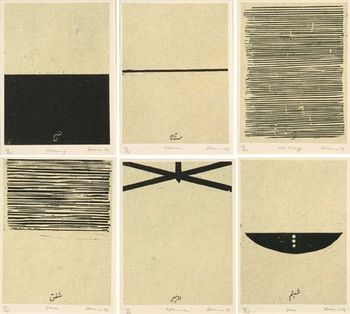
More here. (Note: Painting by my favorite NY artist Zarina Hashmi)

Friday, December 14, 2012

lawyers, god, and money

298_298_the-last-word-jared-diamond

The most glaring omission from Diamond’s account is the violence involved in the imperial grab for power. As Eric R. Wolf wrote in Europe and the People Without History (1982): “Europeans and Americans would never have encountered these supposed bearers of a pristine past if they had not encountered one another, in bloody fact, as Europe reached out to seize the resources and populations of the other continents.” Wolf was a Marxist, writing at the dawn of the neoliberal era; his work will never be made into a PBS documentary series as National Geographic did with Guns, Germs, and Steel. Diamond’s bowdlerized account of empire, in contrast, left out the inconvenient history and captured the triumphalist zeitgeist of the fin de siècle. Diamond’s next book, Collapse: How Societies Choose to Fail or Succeed (2005), was a fitting companion to the previous one. If Guns, Germs, and Steel played to the racial liberalism of upper-class professionals, Collapse flattered their environmental concerns. It purported to illuminate the dark side of the story told in the earlier book. If the haves acquired wealth through geographic accident, Diamond claimed, the have-nots lost it by squandering their own natural resources.

more from Jackson Lears at Bookforum here.

You’re like a bean sprout in a privy acting like a long-tailed maggot!

NYC112090_jpg_470x440_q85

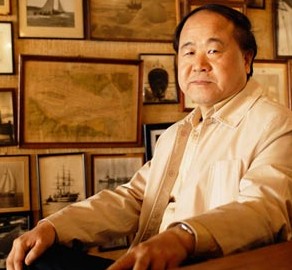
Getting into the People’s Liberation Army was hard, but not as hard as getting into college. So, starting in 1973, I sent in my application and took a physical exam at the commune every year, and every year I was rejected. But then, in February 1976, with the help of some important people, my persistence paid off—I received my enlistment notice. Soon after that, on a cold, snowy day, I walked some fifteen miles to the county town. There I put on an army uniform and climbed into the back of a military truck for the trip to Huang County, where I moved into the famous “Ding Family Compound” barracks and began basic training. (I would not revisit the site until the fall of 1999, after Huang County had evolved into the city of Longkou and Ding Family Compound had been converted into a museum. What had originally impressed me as the magnificent home of a wealthy landlord I now saw was little more than a squat building, proof that my horizons had broadened.)

more from Mo Yan at the NYRB here.

trying to interview László Krasznahorkai

LaszloKrasznahorkai

“I had to write only this book and no more. You try to write only one book and put everything you want to say in one book, to create my own literary world with my sentences,” Krasznahorkai told last week’s audience. The Irish Tóibín made a stab at describing Krasznahorkai’s style, which he saw as “removing the need for objects in novel and seeing whether a novel can live in a different space. Tóibín described the novel as “a secular space,” yet this one “deals with spiritual questions rather than material questions.” God “interferes” with the novel and its characters. “Bringing God into the novel, it’s dynamite,” Tóibín said. Comment? The Hungarian Krasznahorkai demurred. “Hmmmm,” he said. Then again, “Hmmmm…”

more from Cynthia Haven at The Book Haven here.

The new era of health and medicine: Is it time to rethink the promise of genomics?

Ray Kurzweil:

DNA-multicolorThere has been recent disappointment expressed in the progress in the field of genomics. In my view, this results from an overly narrow view of the science of genes and biological information processing in general. It reminds me of the time when the field of “artificial intelligence” (AI) was equated with the methodology of “expert systems.” If someone referred to AI they were actually referring to expert systems and there were many articles on how limited this technique was and all of the things that it could not and would never be able to do. At the time, I expressed my view that although expert systems was a useful approach for a certain limited class of problems it did indeed have restrictions and that the field of AI was far broader. The human brain works primarily by recognizing patterns (we have about a billion pattern recognizers in the neocortex, for example) and there were at the time many emerging methods in the field of pattern recognition that were solving real world problems and that should properly be considered part of the AI field. Today, no one talks much about expert systems and there is a thriving multi-hundred billion dollar AI industry and a consensus in the AI field that nonbiological intelligence will continue to grow in sophistication, flexibility, and diversity. The same thing is happening here.

The problem starts with the word “genomics.” The word sounds like it refers to “all things having to do with genes.” But as practiced, it deals almost exclusively with single genes and their ability to predict traits or conditions, which has always been a narrow concept. The idea of sequencing genes of an individual is even narrower and typically involves individual single-nucleotide polymorphisms (SNPs) which are variations in a single nucleotide (A, T, C or G) within a gene, basically a two bit alteration.

More here.

Pankaj Mishra: why Salman Rushdie should pause before condemning Mo Yan on censorship

Pankaj Mishra in The Guardian:

ScreenHunter_78 Dec. 14 14.58Mo Yan, China's first Nobel laureate for literature, has been greeted withsome extraordinary hostility in the west. This week Salman Rushdie described him as a “patsy” for the Chinese government. According to the distinguished sinologist Perry Link, “Chinese writers today, whether 'inside the system' or not, all must choose how they will relate to their country's authoritarian government.” And, clearly, Mo Yan has not made the right choice, which is to range himself as an outspoken “dissident” against his country's authoritarian regime.

But doesn't the “writer's imagination” also conflict with the “imagination of the state” in a liberal capitalist democracy? This was broadly the subject that John Updike was asked to speak on at a PEN conference in New York in 1986. Updike delivered – to what Rushdie, also in attendance, described as a “considerably bewildered audience of world writers” – a paean to the blue mailboxes of the US Postal Service, which, he marvelled, took away his writings with miraculous regularity and brought him cheques and prizes in return.

EL Doctorow was irritated enough by this gush to suggest to Updike that if “he goes around the corner” from his mailbox, “he'll find a missile silo buried in the next lot”. Rushdie himself went on to accuse American writers, much to Saul Bellow's exasperation, of having “abdicated the task of taking on the subject of America's immense power in the world”.

Both Rushdie and Doctorow were trying to point out that the American writer held an uninformed and complacent view of his heavily militarised – indeed, insanely nuclearised – state.

More here.

17 Things I Learned From Reading Every Last Word of The Economist’s “The World in 2013” Issue

Mark Leibovich in the New York Times:

ScreenHunter_77 Dec. 14 14.38Like many people who sometimes travel in high-powered circles, I am a complete fraud. I have no idea how I got here. This is an especially familiar condition in Washington, where I live, and where the impostor syndrome is like our psychological common cold. So a lot of people lie about reading The Economist here. We probably have the highest number of lied-about subscribers. Because it’s important to come off smart and worldly and cognizant that Lagos will overtake Cairo to become Africa’s biggest city in 2013. Also, that 2013 will be the first year since 1987 that will have all digits different from one another. And it could be a really big year for neutrinos.

Reading The Economist also makes you feel smart. Recall the Simpsons episode when Homer is handed a copy of the magazine on an airplane. “Look at me, I’m reading The Economist,” he boasts to Marge. “Did you know that Indonesia at is a crossroads?”

I especially love The Economist at this time of year. Holiday parties abound, which creates a constant need for the kind of fancy-pants knowledge the journal confers. I love the wry, punchy leads and the adorable British spellings (“globalisation”) and the concern the magazine engenders in me over whether the president of Colombia can regain his momentum (that would be Juan Manuel Santos, obviously); or whether we will learn of sufficient progress in the development of a “virtual liver” at much-awaited conferences next year in Luxembourg, Denmark and the Netherlands. Damn, gotta book those plane tickets.

December also marks the arrival of The Economist’s annual look-ahead issue: a confident and sophisticated accumulation of factoids and predictions for 2013 that can make you seem not only smart but also visionary.

More here.

You should probably be taking an aspirin a day

I have spoken to three doctors about this and they all said the same thing to me: you should be taking a 325 mg tablet of aspirin daily. All three do it themselves and two of them said they have been taking a daily aspirin for more than 20 years. So do speak to your own doctor about it when you next see her/him.

David B. Agus in the New York Times:

AspirinMany high-quality research studies have confirmed that the use of aspirin substantially reduces the risk of cardiovascular disease. Indeed, the evidence for this is so abundant and clear that, in 2009, the United States Preventive Services Task Force strongly recommended that men ages 45 to 79, and women ages 55 to 79, take a low-dose aspirin pill daily, with the exception for those who are already at higher risk for gastrointestinal bleeding or who have certain other health issues. (As an anticoagulant, aspirin can increase the risk of bleeding — a serious and potentially deadly issue for some people.)

New reports about aspirin’s benefits in cancer prevention are just as convincing. In 2011, British researchers, analyzing data from some 25,000 patients in eight long-term studies, found that a small, 75-milligram dose of aspirin taken daily for at least five years reduced the risk of dying from common cancers by 21 percent.

In March, The Lancet published two more papers bolstering the case for this ancient drug. The first, reviewing five long-term studies involving more than 17,000 patients, found that a daily low-dose aspirin lowered the risk of getting adenocarcinomas — common malignant cancers that develop in the lungs, colon and prostate — by an average of 46 percent.

In the second, researchers at Oxford and other centers compared patients who took aspirin with those who didn’t in 51 different studies. Investigators found that the risk of dying from cancer was 37 percent lower among those taking aspirin for at least five years. In a subsection of the study group, three years of daily aspirin use reduced the risk of developing cancer by almost 25 percent when compared with the aspirin-free control group.

More here.

Was life inevitable?

From PhysOrg:

Inorganic-LifeA new synthesis by two Santa Fe Institute researchers offers a coherent picture of how metabolism, and thus all life, arose. The study, published December 12, 2012, in the journal Physical Biology, offers new insights into how the complex chemistry of metabolism cobbled itself together, the likelihood of life emerging and evolving as it did on Earth, and the chances of finding life elsewhere. “We're trying to bring knowledge across disciplines into a unified whole that fits the essentials of metabolism development,” says co-author Eric Smith, a Santa Fe Institute External Professor.

Creating life from scratch requires two abilities: fixing carbon and making more of yourself. The first, essentially hitching carbon atoms together to make living matter, is a remarkably difficult feat. Carbon dioxide (CO2), of which Earth has plenty, is a stable molecule; the bonds are tough to break, and a chemical system can only turn carbon into biologically useful compounds by way of some wildly unstable in-between stages. As hard as it is to do, fixing carbon is necessary for life. A carbon molecule's ability to bond stably with up to four atoms makes it phenomenally versatile, and its abundance makes it suitable as a backbone for trillions of compounds. Once an organized chemical system can harness and manipulate carbon, it can expand and innovate in countless ways. In other words, carbon fixation is the centerpiece of metabolism – the basic process by which cells take in chemicals from their environments and build them into products they need to live. It's also the link between the geochemistry of Earth and the biochemistry of life.

More here.

Friday Poem

The Dream

On a nameless beach in France,
revolution: “But, Jesus,” I say,
“you can't have walked on water
because you're a metaphor.”

He looks at me as though I am Iscariot,
but the prince stands next to me
with a face of clay, hair adrift
on the sooty breeze.

Jesus Christ turns away
and I see his feet
feathery and clawed,
golden like lion skin

but mangled, a mass of bone like my own.
Disciples around us flock like chattering gulls:
I am marvelous,I should write a book,
they say. They ignore

the man who has just left me
with ashes in my mouth,
who marches silently to the cold surf,
glides away on the gray waves.

Jillian Saucier
Clarion 15, 2012

Thursday, December 13, 2012

what’s in a name?

Woodcut_practice_roses_sm

I don’t think I ever quite felt I was Elvis, that I and name were one. It was always a little alienating, that name, never fully overlapping, ever so lightly suspended off my body. I could hear it called out and it wouldn’t quite resonate inside me. No, I’d register it from the outside, so to speak, having to connect it intellectually to the contents behind the eyes. This is perhaps why I felt no compunction about toying with it, and in my late teens I was sometimes Eluis di Bego, mangling the last name of my birth, peeling off its edges. I wanted something shorter, less difficult than my real (is a name ever really “real?”) name. And what about it—Avdibegovic? The etymology of those eleven letters (just like Shakespeare, I once counted, blissfully) tells us three things: Muslim aristocracy of Slavic origins. How?

more from Elvis Bego at Threepenny Review here.

the coast: between a golden age and whatever is about to happen

Ontheedge26

In August 2009, Scott Conarroe set out from Toronto in his 1992 Toyota to photograph the North American coastline, from the Atlantic to the Pacific, from the Gulf of Mexico all the way up to Alaska. After nearly a year on the road—travelling alone, with a few clothes, an atlas, a foam mattress, and his Wista RF field camera—he returned home. In March 2011, he debuted By Sea, an exhibit of his journey, at the Stephen Bulger Gallery in Toronto. Soon afterward, he completed the ambitious project at last, documenting the Arctic with the Canadian Forces Artists Program. Conarroe, thirty-eight, cites Impressionism as an early influence, along with beat generation photographer Robert Frank. In the ’50s, Frank toured the United States in a used Ford coupe, recording the land and its people for his seminal book, The Americans. “All of that beat scooting around seems germane to my experience,” says Conarroe.

more from Scott Conarroe at The Walrus here.

phrenology today

Phrenologicalchart

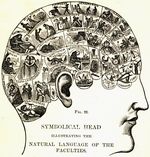
As the nineteenth century doctrine of the skull gave way to the twentieth century doctrine of the neuron, the side-show spectacle of phrenology fell out of favor. But now, in the early twenty-first century, neuro-imaging technologies seem to have brought back the desire to attach behaviors and mental processes to specific cortical locales. Functional magnetic resonance imaging as well as positron emission tomography, electroencephalography, and computerized axial tomography make it seem all the more possible to gather concrete proof of various locational neuronal theories. William Uttal notes in his 2003 book The New Phrenology that the nineteenth century diagram of the phrenological head persists as “one of the most familiar icons of psychology,” and that the current “mentalist zeitgeist…has reified separate mental modules and their distinct cerebral localization.” The allure of localization (or as Uttal calls it, the “phantom” of modular mental activity) still holds sway.

more from Jena Osman at Triple Canopy here.

Teaching Marx at Harvard: An Interview with Steven Jungkeit

Matt Bieber in The Wheat and Chaff:

MB: You’re teaching a course on “Marx and his Readers.” Obviously, that covers a lot of ground. Which aspects of the Marxist tradition do you see as most urgent, useful, or applicable to our contemporary situation?

IMG_2197-300x225SJ: What I’m not interested in doing is gaining converts or getting people to join a party or something like that. I don’t even know where to go to join a party. What I am interested in is getting people to think about class consciousness. I think more and more we need to be thinking through that stuff. Again, after 2008, after Occupy Wall Street, more and more I think that conversation is probably happening, but I think we need to keep having that conversation and keep thinking about it. In order to have that conversation, it makes all the sense in the world to turn to Marx and the Marxist tradition, to see what one of the finest thinkers on class consciousness has to say about this stuff.

Thinking through, for example, how capital works and how it creates this labor pool and underclass that capitalism depends upon in order to function. I think it’s a really helpful thing to witness as Marx makes these grand assertions in Capital. So working that through in Marx, but then working it through in Lenin, working it through in Lukacs and Althusser and seeing the ways others have run with this idea too.

Here’s the other thing I think we need to figure out, the big public conversation that needs to happen: how do you organize? If you’re worried about these issues, how do you organize resistance? How do you organize counterpunches? I mean, it’s one thing to sit and read these texts in a seminar, but how do you organize something?

More here.

UNDERSTANDING IS A POOR SUBSTITUTE FOR CONVEXITY (ANTIFRAGILITY)

Nassim Nicholas Taleb in Edge:

ScreenHunter_76 Dec. 13 18.41Something central, very central, is missing in historical accounts of scientific and technological discovery. The discourse and controversies focus on the role of luck as opposed to teleological programs (from telos, “aim”), that is, ones that rely on pre-set direction from formal science. This is a faux-debate: luck cannot lead to formal research policies; one cannot systematize, formalize, and program randomness. The driver is neither luck nor direction, but must be in the asymmetry (or convexity) of payoffs, a simple mathematical property that has lied hidden from the discourse, and the understanding of which can lead to precise research principles and protocols.

The luck versus knowledge story is as follows. Ironically, we have vastly more evidence for results linked to luck than to those coming from the teleological, outside physics—even after discounting for the sensationalism. In some opaque and nonlinear fields, like medicine or engineering, the teleological exceptions are in the minority, such as a small number of designer drugs. This makes us live in the contradiction that we largely got here to where we are thanks to undirected chance, but we build research programs going forward based on direction and narratives. And, what is worse, we are fully conscious of the inconsistency.

The point we will be making here is that logically, neither trial and error nor “chance” and serendipity can be behind the gains in technology and empirical science attributed to them. By definition chance cannot lead to long term gains (it would no longer be chance); trial and error cannot be unconditionally effective: errors cause planes to crash, buildings to collapse, and knowledge to regress.

The beneficial properties have to reside in the type of exposure, that is, the payoff function and not in the “luck” part: there needs to be a significant asymmetry between the gains (as they need to be large) and the errors (small or harmless), and it is from such asymmetry that luck and trial and error can produce results.

More here.

“America owed me nothing, gave me everything”

Sadef Ali Kully in Dawn:

“My parents recognised early on that I had so much motivation and ambition that they didn’t need to give me that,” says Zaidi who grew up as the eldest of four siblings with an engineer father and stay-at-home mom. “I play the trombone, saxophone, guitar, drums, and a bit of the piano. I learned the trombone as part of the school band and the rest was self-taught. I always had done musical stuff but never worked on anything.”

And he was not kidding around about the motivation and ambition part; Zaidi graduated magna cum laudewith a bachelor’s degree in economics, then graduated cum laude from law school, and then graduated top 10 per cent of his class from business school – all from Harvard University.

More here about Zeeshan Zaidi, the lead singer of The Commuters. And here they are:

Links between violent sectarian groups and the Pakistani Taliban are growing

From The Economist:

ScreenHunter_75 Dec. 13 18.03All through 2012, Shias, who make up an estimated 30m of Pakistan’s 180m people, have been attacked in Karachi and across Pakistan, with shootings and bombings by extremist groups, many of whom have historic links to Pakistan’s security services. Before the blasts, death squads in Karachi and the western city of Quetta tracked down and shot doctors, lawyers and other professionals, the educated elite of the Shia community. As far afield as the normally serene mountainous region of Gilgit in the north-east, passengers have been pulled off buses, identified as Shias and then shot. In Karachi Shia militants have hit back on a small scale, killing some Sunni activists, but otherwise the slaughter is one-sided. According to Hasan Murtaza, an independent researcher, 456 Shia have been killed in targeted attacks this year, more than double the casualties of 2011.

The violence has been notable not just for its scale, but for what lies beneath it: a growing alliance between established anti-Shia militant groups and the Pakistani Taliban, Sunni extremists who have spun out of the army’s control, allied with al-Qaeda, and are determined to attack the Pakistani state.

More here.

Thursday Poem

The Adventure of Conlae
.

Two tales slice the heart: The Adventure of Conlae and Joyce’s ‘Eveline’.

Take Eveline first, sitting by her window, moored to the street
by her childhood memories.

A young sailor offers her a way out but she’s caught in two minds.

Eveline? She won’t budge.

But don’t let her story fool you: it’s not a daughter’s duty tethering her
so much as the lure of what’s familiar.

Eveline and Conlae are twin tales (a lover, a boat and a chance of escape),
only in this case — the youth gives up.

You can’t but wonder how they fared, Conlae and his temptress,
from the moment they first set sail in her crystal boat.
.

by Aifric Mac Aodha
from Gabháil Syrinx
publisher: An Sagart, Dublin, 2010
translation: 2011, Aifric Mac Aodha

Hanif Kureishi: the pariah of suburbia

From The Telegraph:

Hanif Kureishi, erstwhile bad boy of English literature, has long enraged family members and ex-wives with his work. And now he’s taking on a whole country.

Hanif‘Love,” says Hanif Kureishi, “is the only game in town.” We meet in the unpretentious café near his west London home where he likes to watch the world go by. He’s serious, open, but with a hint of shyness; his eyes look away as he answers questions. Perhaps it’s his age (he’s 58 this month); perhaps it’s the result of regular therapy sessions; perhaps it’s the inevitable culmination of a body of work – novels, short stories and essays, plays and screenplays – that extends from the Eighties to today. Whatever it is, all conversational roads lead to passion.

Of course, Kureishi, who is handsome, and delivers his points emphatically, with a deadpan expression, has never really shied away from the subject of relationships. This is the writer who once shocked us with a homosexual kiss between a Pakistani and a white skinhead in the Oscar-nominated film My Beautiful Laundrette and depicted an emerging multicultural Britain that was raw, druggy and promiscuous in his novel, The Buddha of Suburbia. But he is now convinced it’s love, not sex, that has the power to change perceptions.

Those early works skewered racism in much the way that class prejudice was exposed by a generation of “angry young men” writers like John Osborne in the Fifties. The Buddha of Suburbia in particular seeped into popular consciousness as the risqué, must-watch TV series of 1993, capturing all the tensions and energy of Thatcherite Britain. Sex was used as a vehicle for exploring broader freedoms. “Now sex has become cheapened,” says Kureishi. “Sexual acts are turned into popular literature like Fifty Shades of Grey. You can find sex anytime, anywhere if you want – it’s not difficult, but having a real relationship with someone that is profound and significant and life-changing is far more dangerous than an act of copulation.”

More here.