
Category: Recommended Reading
birds of paradise
the burning babe
Sex, lies and slaughter
Basharat Peer interviews William Dalrymple about his new book in the Hindustan Times:

What made you write this book?
There are a lot of books about Afghanistan, but few about Afghan history. What brought me to write this book was thinking about Afghan history after rereading Peter Hopkirk's classic The Great Game. It is a bit dated and features a lot of “treacherous Orientals”. Return of a King is the first book about the first Afghan war using Afghan sources, telling the stories from an Afghan point of view as well. It is the defining conflict that the Afghans remember as the source of their independence that they alone in this region never succumbed to colonial rule. 18,000 soldiers of the East India Company marched into Afghanistan in 1839 and, according to legend, one man returns alive from this debacle. The British army is destroyed at the peak of the British Empire.
More here.
At home: Steven Pinker
Annie Maccoby Berglof in the Financial Times:
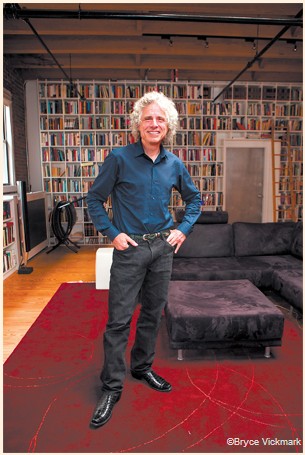
The apartment, a converted leather warehouse where Pinker lives with his third wife, the novelist and philosopher Rebecca Goldstein, is located a few blocks from Boston’s financial district. “This was once an industrial space. There were tanneries in the area,” says Pinker. Divided into three rooms, it has 14ft-high ceilings and exposed brick walls. The supporting beams in the main room are from the original 19th-century construction. “They are nine inches across. You would be unlikely to see construction like this today,” he adds.
The building has an intriguing past. Pinker’s former sister-in-law once lived here. “She was here illegally,” Pinker says. “She was a painter and her partner was a sculptor. They put in their own plumbing. At some point the developers came in, young urban professionals started pricing them out and by sheer coincidence, decades later, we bought an apartment here, by which point all the artists had been driven out. This is a common urban sequence.”
More here.
Why Obama Will Ignore Israel
From Newsweek:

So instead of confronting Netanyahu directly, Team Obama has hit upon a different strategy: stand back and let the rest of the world do the confronting. Once America stops trying to save Israel from the consequences of its actions, the logic goes, and once Israel feels the full brunt of its mounting international isolation, its leaders will be scared into changing course. “The tide of global opinion is moving [against Israel],” notes one senior administration official. And in that environment, America’s “standing back” is actually “doing something.”
More here.
Have Scientists Found Two Different Higgs Bosons?
From Scientific American:

The original Higgs data from back in July had shown that the Higgs seemed to be decaying into two photons more often than it should—an enticing though faint hint of something new, some sort of physics beyond our understanding. In November, scientists at the Atlas and LHC experiments updated everything except the two-photon data. This week we learned why. Yesterday researchers at the Atlas experiment finally updated the two-photon results. What they seem to have found is bizarre—so bizarre, in fact, that physicists assume something must be wrong with it. Instead of one clean peak in the data, they have found two. There seems to be a Higgs boson with a mass of 123.5 GeV (gigaelectron volts, the measuring unit that particle physicists most often use for mass), and another Higgs boson at 126.6 GeV—a statistically significant difference of nearly 3 GeV. Apparently, the Atlas scientists have spent the past month trying to figure out if they could be making a mistake in the data analysis, to little avail. Might there be two Higgs bosons?
More here.
Sunday Poem
This is Where we Were Born (#1)
The gaze adjusts itself to
the walls, the political commentators
in the newspapers
portrayed in dresses
with cats
and lovers
and the three-day stubble
intact
the tv news is a man
he says: everything is rags
he measures steps with herbs
lines with lines
water with lilies
we are called nothing
maybe we are called scream
or shot
we work on slogans
some people
think irony is the only thing power understands
others
want to know what exactly is meant by power
others again
sit still and fiddle with an old spoon
they later use to open cans of paint
the tv news is a man
he says: flood
he says: white knives don’t exist
he says: the arrests are nothing but propaganda
nothing happened
the day, on the other hand, was warm
bright, the parks were open
the population grilled salmon
kids climbed trees
our future: children who climb trees
power is invisible
a skinny middle-aged man says
power isn’t worth a scream
says another, oblivion
sleeps in the mouth of man
oblivion sits hunched over a small map
the city looks like plastic bags
cardboard and newspapers
two hundred thousand women remove their makeup
and get ready for their men
of glass in a bed
of glass
no one screams
the transport industry celebrates agreements
and shows the first steam aeroplanes
famous captains and pilots
from an era no one remembers
until now
Christ is a little chain
youth is Delphic
those who aren’t killed are shot
like cats
indifferent
and persistent
the white knives start to shine at midnight
corpses drift ashore
everything is rags
we are called nothing
we try to eat
sleep
under the moon
under the tv sets
Pedro Carmona-Alvarez
from Varmestafetten
publisher: Gyldendal, Oslo, 2009
Inequality is Killing Capitalism

Robert Skidelsky in Project Syndicate:
Impaired banks that do not want to lend must somehow be “made whole.” This has been the purpose of the vast bank bailouts in the US and Europe, followed by several rounds of “quantitative easing,” by which central banks print money and pump it into the banking system through a variety of unorthodox channels. (Hayekians object to this, arguing that, because the crisis was caused by excessive credit, it cannot be overcome with more.)
At the same time, regulatory regimes have been toughened everywhere to prevent banks from jeopardizing the financial system again. For example, in addition to its price-stability mandate, the Bank of England has been given the new task of maintaining “the stability of the financial system.”
This analysis, while seemingly plausible, depends on the belief that it is the supply of credit that is essential to economic health: too much money ruins it, while too little destroys it.
But one can take another view, which is that demand for credit, rather than supply, is the crucial economic driver. After all, banks are bound to lend on adequate collateral; and, in the run-up to the crisis, rising house prices provided it. The supply of credit, in other words, resulted from the demand for credit.
This puts the question of the origins of the crisis in a somewhat different light. It was not so much predatory lenders as it was imprudent, or deluded, borrowers, who bear the blame. So the question arises: Why did people want to borrow so much? Why did the ratio of household debt to income soar to unprecedented heights in the pre-recession days?
Let us agree that people are greedy, and that they always want more than they can afford. Why, then, did this “greed” manifest itself so manically?
To answer that, we must look at what was happening to the distribution of income.
Thinking the Unthinkable

Anarchist soccer mom on having a violent, mentally ill son (via Corey Robin):
Three days before 20 year-old Adam Lanza killed his mother, then opened fire on a classroom full of Connecticut kindergartners, my 13-year old son Michael (name changed) missed his bus because he was wearing the wrong color pants.
“I can wear these pants,” he said, his tone increasingly belligerent, the black-hole pupils of his eyes swallowing the blue irises.
“They are navy blue,” I told him. “Your school’s dress code says black or khaki pants only.”
“They told me I could wear these,” he insisted. “You’re a stupid bitch. I can wear whatever pants I want to. This is America. I have rights!”
“You can’t wear whatever pants you want to,” I said, my tone affable, reasonable. “And you definitely cannot call me a stupid bitch. You’re grounded from electronics for the rest of the day. Now get in the car, and I will take you to school.”
I live with a son who is mentally ill. I love my son. But he terrifies me.
A few weeks ago, Michael pulled a knife and threatened to kill me and then himself after I asked him to return his overdue library books. His 7 and 9 year old siblings knew the safety plan—they ran to the car and locked the doors before I even asked them to. I managed to get the knife from Michael, then methodically collected all the sharp objects in the house into a single Tupperware container that now travels with me.
Through it all, he continued to scream insults at me and threaten to kill or hurt me.
That conflict ended with three burly police officers and a paramedic wrestling my son onto a gurney for an expensive ambulance ride to the local emergency room. The mental hospital didn’t have any beds that day, and Michael calmed down nicely in the ER, so they sent us home with a prescription for Zyprexa and a follow-up visit with a local pediatric psychiatrist.
We still don’t know what’s wrong with Michael. Autism spectrum, ADHD, Oppositional Defiant or Intermittent Explosive Disorder have all been tossed around at various meetings with probation officers and social workers and counselors and teachers and school administrators. He’s been on a slew of antipsychotic and mood altering pharmaceuticals, a Russian novel of behavioral plans. Nothing seems to work.
Saturday, December 15, 2012
NEWTOWN AND THE MADNESS OF GUNS
Adam Gopnik in The New Yorker:

Then there were—many more, in fact—and when the latest and worst one happened, in Aurora, I (and many others) said, this time in a tone of despair, that nothing had changed. And I (and many others) predicted that it would happen again, soon. And that once again, the same twisted voices would say, Oh, this had nothing to do with gun laws or the misuse of the Second Amendment or anything except some singular madman, of whom America for some reason seems to have a particularly dense sample.
And now it has happened again, bang, like clockwork, one might say: Twenty dead children—babies, really—in a kindergarten in a prosperous town in Connecticut. And a mother screaming. And twenty families told that their grade-schooler had died.
More here. And here is a petition to the White House to sign if you are so inclined.
Interview: Howard Goldblatt, translator of Mo Yan
Sophia Efthimiatou in Granta:
SE: Were you familiar with Mo Yan’s work before you started translating him?

More here.
How We Became Israel
Andrew J. Bacevich in The American Conservative:

A nation seeking peace-as-dominion will use force more freely. This has long been an Israeli predilection. Since the end of the Cold War and especially since 9/11, however, it has become America’s as well. As a consequence, U.S. national-security policy increasingly conforms to patterns of behavior pioneered by the Jewish state. This “Israelification” of U.S. policy may prove beneficial for Israel. Based on the available evidence, it’s not likely to be good for the United States.
Here is Israeli Prime Minister Benjamin Netanyahu describing what he calls his “vision of peace” in June 2009: “If we get a guarantee of demilitarization … we are ready to agree to a real peace agreement, a demilitarized Palestinian state side by side with the Jewish state.” The inhabitants of Gaza and the West Bank, if armed and sufficiently angry, can certainly annoy Israel. But they cannot destroy it or do it serious harm. By any measure, the Israel Defense Forces (IDF) wield vastly greater power than the Palestinians can possibly muster. Still, from Netanyahu’s perspective, “real peace” becomes possible only if Palestinians guarantee that their putative state will forego even the most meager military capabilities. Your side disarms, our side stays armed to the teeth: that’s Netanyahu’s vision of peace in a nutshell.
More here.
Noam Chomsky interview on Slovenian television with Polona Fijavž
Promiscuous Males And Choosy Females? Challenging A Classic Experiment
Barbara J. King in Cosmos & Culture:

The study, on fruitfly mating, was done in 1948 by geneticist A.J. Bateman. Bateman showed that the male insects' strategy was to mate with many females, whereas the females' strategy was to be discriminating in their choice of partners. Male reproductive success, in other words, correlated positively with number of mates, but female reproductive success did not.
Now, ecologist and evolutionary biologist Patricia Gowaty and her colleagues Yong-Kyu Kim and Wyatt Anderson have repeated that study. They conclude something startling: Bateman blew it.
Before I explain where they say Bateman went wrong, I need to show how Bateman's conclusions rippled far beyond the scholarly world of fruitfly sex. His findings — promiscuous males, choosy females — seemed to strike a cultural chord. After biologist Robert Trivers cited it in a key 1972 paper on parental investment, the “Bateman principle” turned up everywhere. In my own field of primate behavior, for instance, field researchers expected to see (and thus often did) male primates with highly active sex lives and females who were coy, verging on sexual passivity.
More here.
more Kišes

When Danilo Kiš died in 1989, he was 54 and at the height not just of his powers but of his reputation too. Of the six works of fiction, it had been the most recent, the story collections A Tomb for Boris Davidovich and Encyclopedia of the Dead, that had won him greatest acclaim in the English-reading west. Not that the others had been found wanting; with the exception of Garden, Ashes, they remained untranslated, in the case of his first book – a pair of dissimilar novellas, Psalm 44 and The Attic – for more than a quarter of a century. Now, almost another quarter century on, the novellas are being published alongside a more or less perfect book of late stories, The Lute and the Scars (Dalkey Archive, £8.99). This completes a process – the Englishing of Kiš’s fiction – characterised during his life by indifference or sloth and since his death by energetic devotion.
more from Leo Robson at The Guardian here.
The Particle at the End of the Universe
As Carroll writes, one of the most astonishing insights of modern physics, and one of the hardest to grasp, is that sufficiently powerful symmetries give rise to forces of nature. Piecing together the broken bits to see the elegance of the underlying symmetries is “like being able to read poetry in the original language, instead of being stuck with mediocre translations”. With such difficult concepts, analogies may offer a useful insight to the non-technical reader, although they are inevitably misleading to a greater or lesser extent. Carroll came up with a good one for a television programme to explain the Higgs field. Imagine little robots scooting about on the floor of a large vacuum chamber, identical apart from the fact that they are fitted with sails of various sizes. When the space is completely evacuated the sails are irrelevant because there is no air for them to feel, so all the robots move at the same speed. When the atmosphere is let in, the robots with larger sails (greater mass) are impeded more by the air than those with smaller sails (less mass) so they move more slowly.
more from Clive Cookson at the FT here.
the big screen

The decay of the “average feature film” is such a common refrain it’s worth noting how Thomson’s version veers from the standard complaint. He does not think that moviemakers have simply stopped trying. He suggests, most startlingly, that the seeds of today’s anodyne blockbusters took root in the heyday of postwar film. Pronouncing Billy Wilder’s 1950 masterpiece, “Sunset Blvd.,” “the start of a new adulthood,” he explains how shrinking audiences led to a crisis of cinematic confidence. (The pictures did, in fact, get small.) In Thomson’s eyes, the French New Wave, and especially Godard’s work, was one propitious outgrowth of this change: because the Cahiers du Cinéma crowd rose to prominence as critics, their filmmaking employed a vocabulary tinged with allusion and anxious self-awareness. (“The critic in Godard was battling the storyteller,” Thomson writes.) By the time the young filmmakers of the late ’60s and ’70s arrived — Bertolucci, Coppola, Scorsese — moviemaking had become the province of artists schooled in “film studies”-style appreciation.
more from Nathan Heller at the NY Times here.
Wiping away tears, Obama mourns children killed in school shooting
Twelve facts about guns and mass shootings in the United States
Ezra Klein in The Washington Post:

1. Shooting sprees are not rare in the United States.
Mother Jones has tracked and mapped every shooting spree in the last three decades. “Since 1982, there have been at least 61 mass murders carried out with firearms across the country, with the killings unfolding in 30 states from Massachusetts to Hawaii,” they found. And in most cases, the killers had obtained their weapons legally:
2. Eleven of the 20 worst mass shootings in the last 50 years took place in the United States.
Time has the full list here. In second place is Finland, with two entries.
More here.