the meal as manifesto

TM_DI_JNOMA_AP_007

Around the time of Noma’s opening, Redzepi and Meyer, along with other young chefs, drafted a New Nordic cuisine manifesto (because you simply can’t have a movement without a manifesto). They called for, among other things, “purity, freshness, simplicity, and ethics,” much like an earlier influential Danish artistic movement with a manifesto, the Dogme 95 film movement led by Lars von Trier. The New Nordic chefs promoted the sole use of seasonal, Scandinavian ingredients—which meant, for instance, no olive oil, no lemons and no pasta—and a return to traditional Scandinavian techniques such as pickling, smoking, curing and fermenting. The idea was to force creativity by setting limitations. Here’s how New Nordic cuisine came to be identified: Ingredients such as sea-buckthorn or Douglas fir or gooseberries or deep-fried moss; cellared or slow-cooked vegetables and under-ripe fruit; dishes served on pieces of wood, rocks, seashells and tree branches; a focus on fish and veggies, rather than meat.

more from Jason Wilson at Table Matters here.
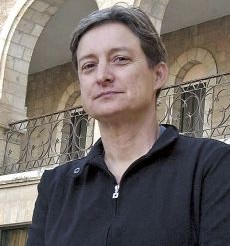
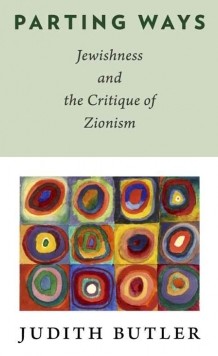
Judith Butler argues that even at its most liberal, Zionism is profoundly un-Jewish

Carlo Strenger in Haaretz:

ScreenHunter_68 Dec. 11 14.28Judith Butler has rightly been described as an academic superstar. She is one of the most quoted scholars in the humanities, and has also acquired fame − or notoriety, depending on one’s viewpoint − as a political activist. She has been highly critical of Israel’s occupation policy, describes herself as an anti-Zionist, and endorses the BDS movement, which advocates boycotting and divesting from Israel and imposing sanctions against it.

“Parting Ways” is Butler’s latest book, and she states its goal right at the outset: She wants to make a case for a specifically Jewish critique of Israeli state violence. Furthermore, she wants to make a case for “Jewish values of cohabitation with the non-Jew that are part of the very ethical substance of diasporic Jewishness.”

More here.

reading reading

Image

Reading is without question an extreme city, a trait seemingly encouraged by plan rather than circumstance. Concurrent with the slow death of passenger rail, the West Shore Bypass roadway was built to allow traffic to avoid the downtown area entirely. This ensured not only the starvation of many small businesses, but an urban version of the isolation that you might find in a remote rural village. In elementary school I experienced the city as a place one drives over on the way to the mall or a restaurant. Only occasionally would my parents take me downtown, a trip which involved traveling over or under a bridge no matter the approach (Reading is bound by river or mountain on all sides). At Christmas we would go to the Reading Symphony Orchestra to watch their rendition of The Nutcracker. Mid-year my mother might drag me to a specialty vendor that the suburbs couldn’t or wouldn’t host. I remember annual visits to a vacuum cleaner repair shop and a ceiling fan store. And then there were bureaucratic issues that could only be resolved in the Reading City courthouse, probably dropping off taxes or some kind of professional licensing. But I remember thinking the building was big and old and beautifully out of place.

more from Chris Reitz at n+1 here.

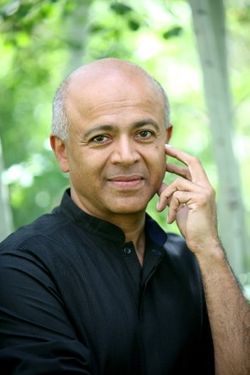
Abraham Verghese describes his writing life

From The Washington Post:

Books1211writinglifeI write by stealing time. The hours in the day have never felt as if they belonged to me. The greatest number has belonged to my day job as a physician and professor of medicine — eight to 12 hours, and even more in the early days. Lest it sound as if I resent my day job, I have to say that my day job is the reason I write, and it has been the best thing for me as a writer. Indeed, when I am asked for writing advice, which is rare, I offer this: Get a good day job, one that you love, preferably one that consumes you and that puts your boat out in the river of life. Then be passionate about it, give it your all, get good at what you do. All that gives you plenty to write about, and it also takes the pressure off the writing. Counting on writing to pay the mortgage or your kid’s college tuition is decidedly risky.

The next lien on time is held by family. I know, if I were being PC, I’d list family before work. But I’m being truthful. The current obsession for parents to be everything to their children, from purveyor of Mozart in utero to muse, coach, camp counselor and chauffeur to as many enriching activities as one can afford ultimately produces parents who accomplish too little at work. I wonder if it produces children who are more accomplished than the parents who had none of these things. (There, I said it. Someone must.)

More here.

Can Engineers and Scientists Ever Master “Complexity”?

John Horgan in Scientific American:

Complexity_image_I’m pondering complexity again. The proximate cause is the December 11 launch at my school, Stevens Institute of Technology, of a Center for Complex Systems & Enterprises. The center’s goal is “to enable deep understanding of complexity and create innovative approaches to managing complexity.” This rhetoric reminds me of the Santa Fe Institute, a hotbed of research on complex systems, which I criticized in Scientific American in June 1995 in “From Complexity to Perplexity.” Speakers at the Stevens event include a mathematician I interviewed for that article, John Casti, who has long been associated with the Santa Fe Institute. The event’s organizers asked a few professors in the College of Arts & Letters, my department, to offer some concluding comments on complexity. I jumped at the chance, because I’m fascinated by the premise of complexity studies, which is this: Common principles underpin diverse complex systems, from immune systems and brains to climates and stock markets. By discovering these principles, we can learn how to build much more potent, predictive models of complex systems. Here are some points I hope to make on December 11:

*Researchers have never been able to agree on what complexity is. The physicist Seth Lloyd has compiled a “non-exhaustive” list of more than 40 definitions of complexity, based on thermodynamics, information theory, linguistics, computer science and other fields. Can you study something if you’re not sure exactly what it is?

More here.

Tuesday Poem

They Are Coming
.

Gogo watches timorous
through a rent in her curtain
as the kids boil down the street.

Minutes ago
a terrified woman ran past
bleeding, dress torn,
yelling
THEY ARE COMING!

In an instant the streets were empty
of even the wind
only the yelling
cadres of national sovereignty
wielding dread in upraised little fists
like that man they admire
on the front
of their T-shirts

Gogo fears for her only son
she told him not to go –
but leaving
he told her “the country will never be a colony again”

He is leading the toyi toyi towards her home
sweating faces set
feet pumping
stones and sticks raised
teeth bared
with intention.

by Chris Mlalazi
publisher PIW, 2008

Monday, December 10, 2012

Perceptions

Smash1_mini
Martin Klimas. Smash 1.2011.

“For his project titled “Porcelain Figurines”, (german) photographer Martin Klimas dropped various porcelain figurines onto the ground from a height of 3 meters and set up a camera to capture photos triggered by the sound of the crash. The result are razor-sharp images of exploding figurines frozen in time — “temporary sculptures made visible to the human eye by high-speed photography”.”

More here (do check out the flower vase series too … stunning!) and here.

Sunday, December 9, 2012

Judith Butler and the Cause of the Other

Olivia Harrison in the Los Angeles Review of Books:

ScreenHunter_65 Dec. 09 22.11Israel's recent military assault on Gaza serves as a reminder of the continuing urgency of the Palestinian question, which has been a topic of worldwide debate since the June 1967 war and returns to the center stage of global politics whenever Palestinian or Israeli blood is spilt. Something has changed in recent years, however, particularly after conflicts so disproportionate (the 2006 Israeli invasion of Southern Lebanon, the 2008-2009 Gaza war) that it becomes difficult to speak of two “sides” in a conflict involving a military force, on the one hand, and a majority of unarmed civilians on the other.

But the increasingly uneven balance of forces is not the only thing that has tipped the scales in favor of the Palestinian people (if not their leadership) at dinner tables across the world. Palestinian civil society has also made itself heard more forcefully, particularly through non-violent protest actions (represented in films such Bil’in My Love and 5 Broken Cameras) and the 2005 West Bank-based call for an international campaign ofBoycott, Divestment and Sanctions (BDS) against Israel. Modeled after the South African boycott campaigns, the BDS movement has received wide support from luminaries including Desmond Tutu, Nelson Mandela, Angela Davis, and Alice Walker. It has also garnered the support (sometimes partial or qualified) of an increasing number of Jewish activists against Israeli state violence, including groups such as Jewish Voice for Peace or intellectuals such as Judith Butler and Naomi Klein. The growing legitimacy of the BDS movement is a symptom of the changing fortunes of the Palestinian question. It also reveals the extent to which it has become a Jewish question.

More than 60 years ago, a similar evolution in public opinion occurred at another historical juncture.

More here.

On Kirill Medvedev

Justin E. H. Smith in his own blog:

ScreenHunter_66 Dec. 09 22.24I should begin by confessing a history of prejudice, which reaches back more than two decades, to a different historical era. Some readers will have heard this story by now, and will likely be bored by it; but it is my story, and each time I tell it I see something new about myself. I became interested in Russia during the Cold War, and was disappointed by the onset of perestroika because, from a certain suburban American perspective, that made the place less bad-ass. I stole Lenin's Imperialism: The Highest Stage of Capitalism from my California high school's library in 1988, shortly before dropping out.

Two years later, I surfaced in Leningrad –and here's the prejudice part– and found myself haughtily, condescendingly, imperialistically judgmental of what Russia at ScreenHunter_67 Dec. 09 22.25that time was able to put forth as a youth counterculture. Everything seemed imitative, derivative, shabby. Kids with long hair tied actual shoelaces around their heads, like some cartoon version of hippies they must have seen somewhere. I saw 'Sex Pistals', misspelled (and, I see now, beautifully botanicized), written in ballpoint pen on fake leather jackets.

I was disappointed. I was a youth –if not wholly exceptional in this regard– intent on revaluing all values, etc., and yet I was far more influenced by the standards of MTV glossiness than I myself could see. I was, I think now, part of a sort of advance reconnoitering mission for what in a few more years would be official IMF policy towards Russia: the demand that they move 'up', to our level, on our terms, the refusal to accept that a part of the world could decline to strive toward glossiness, and the belief that this gloss could only be attained through the ordeal of 'shock therapy'. That there was anything there to build on, indigenous, pre-Soviet and running like an underground stream from 1917 to 1989, never occurred to me or to Jeffrey Sachs.

More here.

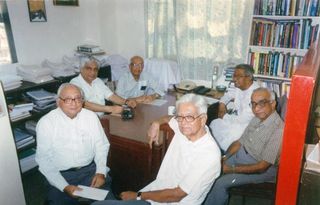
The Gentle Colossus: Krishna Raj and the Economic and Political Weekly

3_10

Ramachandra Guha in Caravan:

THE BRITISH HISTORIAN EP THOMPSON once remarked that “India is not an important country, but perhaps the most important country for the future of the world. Here is a country that merits no one’s condescension. All the convergent influences of the world run through this society: Hindu, Moslem, Christian, secular; Stalinist, liberal, Maoist, democratic socialist, Gandhian. There is not a thought that is being thought in the West or East which is not active in some Indian mind.”

Thompson may have been reading the Economic and Political Weekly (EPW), the Bombay journal where these thoughts and influences converge and meet. Rich in information and glowing with polemic, its pages are an index to the life of India. On subjects as varied (and important) as the economy, caste politics, religious violence, and human rights, the EPW has consistently provided the most authoritative, insightful, and widely cited reports and analyses. Among the journal’s contributors are scholars and journalists, but also activists and civil servants—and even some politicians.

Like other such journals around the world, the EPW commands an influence far out of proportion to its circulation. It has shaped intellectual discussion in India, and had a profound impact on policy debates. Can one see it, then, as an Indian version of the esteemed New York weekly The Nation? There are some telling similarities. For one thing, both are appallingly bad looking. The well-loved columnist Calvin Trillin said of the Nation that it was “probably the only magazine in the country [that] if you make a Xerox of it, the Xerox looks a lot better than the original”.

Zoe Heller versus Salman Rushdie and Joseph Anton

154115244

David Blackburn pushes back a little on Zoe Heller's review of Rushdie's Joseph Anton, in the Spectator:

The literary world anticipates Salman Rushdie’s response to Zoe Heller’s cauterisation of his memoir, Joseph Anton, in the New York Review of Books. Heller’s pointed review is deeply considered. It is a delight to read, even though some of its arguments are uneven and some of its conclusions are trivial next to the themes of Rushdie’s unlovely yet important book.

Heller is, in my view, right to slam the grandiloquence of Rushdie’s ‘de Gaulle-like third person’ narration. The technique succeeds in alienating Joseph Anton (Rushdie’s secret service nom-de-guerre) from normality; but its relentless oddness irritates to the point where the reader might lose sight of the fact that Joseph Anton is actually Salman Rushdie living in a grim part of the real world. It also leaves Rushdie open to mockery, perhaps deserved. The accounts of precious Joseph carousing with babes at Moomba and other flesh pots ‘to reduce the climate of fear around him’ are laughable.

Yet this particular criticism rather misses the point because Rushdie’s strange mix of heroism and preening is central to the book.

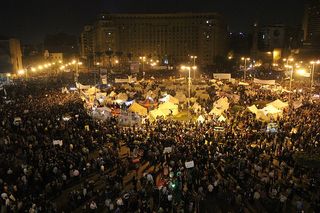
Why the Anti-Mursi Protesters Are Right

Tahrir_Square_on_Novemeber_27_2012_(Evening)

Ahmad Shokr in MERIP (image from Wikimedia commons):

The draft constitution does not reflect a democratic consensus, as many in the opposition have argued that it should. It reflects an emerging relationship between the Muslim Brothers and existing state institutions, like the army, along with a great deal of appeasement of the salafis, whom the Brothers have embraced as junior partners. The rush to a referendum suggests a deep anxiety among the state elites about continuing instability and a desire to seize the opportunity to cement a new political framework as quickly as possible. More worrisome than the text itself is the vision these leaders have for which voices count and which alliances matter in the new Egypt. Should this vision go unchallenged, the losers would be all those who have been calling for more pluralistic and inclusive system.

In his December 6 post, Jason Brownlee writes, “It is important that the ideological debate between liberalism and Islamism not be seen as a battle between democracy and authoritarianism.” Perhaps recent events in Egypt call for a rethinking of these terms. True, liberalism and democracy are not automatic counterparts, no more than Islamism and authoritarianism are. But the battle in Egypt is indeed one between a democracy that reflects the country’s political diversity and a remodeled authoritarianism, led by the Muslim Brothers and their allies, that seeks to circumscribe it.

Sunday Poem

Finding Flowers

Now I dreamt of you sleeping and dreaming,
beside me, in my bed, and of how it all was,
nothing happened except you sleeping and dreaming,
beside me, in my bed, and my looking at you,
and seeing how inexorably and all-pervasively
beautiful you were, how you were: all sleep and
dream and time, which gave itself ample time,
and how I knew that this immaculate waking
needs no kisses of shushing nostalgia,
when we think we’re dreaming of dreams
and religiously do the work, unseen by anyone.

by Pieter Boskma
from Het violette uur
publisher: Prometheus, Amsterdam, 2008
translation: 2012, Paul Vincent

HOW TO WIN AT FORECASTING: A Conversation with Philip Tetlock

From Edge:

Tetlock630There's a question that I've been asking myself for nearly three decades now and trying to get a research handle on, and that is why is the quality of public debate so low and why is it that the quality often seems to deteriorate the more important the stakes get? About 30 years ago I started my work on expert political judgment. It was the height of the Cold War. There was a ferocious debate about how to deal with the Soviet Union. There was a liberal view; there was a conservative view. Each position led to certain predictions about how the Soviets would be likely to react to various policy initiatives. One thing that became very clear, especially after Gorbachev came to power and confounded the predictions of both liberals and conservatives, was that even though nobody predicted the direction that Gorbachev was taking the Soviet Union, virtually everybody after the fact had a compelling explanation for it. We seemed to be working in what one psychologist called an “outcome irrelevant learning situation.” People drew whatever lessons they wanted from history. There is quite a bit of skepticism about political punditry, but there's also a huge appetite for it. I was struck 30 years ago and I'm struck now by how little interest there is in holding political pundits who wield great influence accountable for predictions they make on important matters of public policy. The presidential election of 2012, of course, brought about the Nate Silver controversy and a lot of people, mostly Democrats, took great satisfaction out of Silver being more accurate than leading Republican pundits. It's undeniably true that he was more accurate. He was using more rigorous techniques in analyzing and aggregating data than his competitors and debunkers were.

But it’s not something uniquely closed-minded about conservatives that caused them to dislike Silver.

More here.

Giant leaps for mankind: Most of our beliefs are unwarranted, even absurd

John Gray in New Statesman:

LockeToleration is out of fashion. We tolerate what we judge to be bad or false and, for many, this is a stance that involves a kind of disrespect. It has become part of the ideal of equality to accept that everyone has a right not only to speak but also to be heard, and regarding anyone as not worth listening to seems to go against this ethos. Yet it is hard to see how we can do without the practice of toleration. It is said that we can reject or condemn mistaken beliefs while respecting those who hold them but the distinction breaks down when the beliefs are not just mistaken but detestable and pernicious. Apologists for Stalinism deserve ridicule and disdain, while Holocaust deniers merit nothing but contempt. If we are ready to tolerate the expression of such views, it is not because their exponents are worthy of respect but for the sake of the greater good of freedom. Protecting the freedom of people we rightly despise is hard. Since those we tolerate may not reciprocate, it can also be dangerous. However, putting up with disgusting views and the people who express them is a part of what freedom means – one that is as important as any panoply of rights. The contemporary cult of rights has encouraged us to think that freedom and human rights are practically coextensive. Yet no freedom of any importance can be secured by a rights-based legal system alone. America’s grandiose constitutional paraphernalia did not protect the country from the frenzy of McCarthyism, any more than the legal right to choice in abortion has prevented doctors who perform abortions there being threatened with violence and in some cases even murdered. Nor did American legalism prevent the authorisation of torture by the Bush administration. A legal structure that is supposed to secure basic freedoms will count for nothing if it is not supported by a larger culture of liberty in which the practice of toleration is central and fundamental.

By putting toleration at the heart of his inquiry, Brian Leiter has done a service to political thought. Focusing on whether religious practitioners can be given special exemption from generally applicable laws on grounds of conscience, he aims to formulate a universal principle of toleration. “A practice of toleration is one thing,” he writes, “a principled reason for toleration another.” As Leiter sees it, Thomas Hobbes’s view of toleration as a means to peaceful coexistence was “nothing more than pragmatic” and even John Locke – author of A Letter Concerning Toleration (1689) – argued only that government was ill-suited to effect changes in belief. Instead Leiter is looking for a “pure” form of toleration, one based on principles having to do with the nature of human knowledge and the good life, and finds versions of this sort of toleration defended in the writings of John Rawls and John Stuart Mill.

More here.

Saturday, December 8, 2012

The Great Chinese Famine

1209MIRSKY-articleLarge

Chinese statistics are always overwhelming, so Yang helps us to conceptualize what 36 million deaths actually means. It is, he writes, “450 times the number of people killed by the atomic bomb dropped on Nagasaki” and “greater than the number of people killed in World War I.” It also, he insists, “outstripped the ravages of World War II.” While 40 to 50 million died in that war, it stretched over seven or eight years, while most deaths in the great Chinese famine, he notes, were “concentrated in a six-month period.” The famine occurred neither during a war nor in a period of natural calamity. When mentioned in China, which is rarely, bad weather or Russian treachery are usually blamed for this disaster, and both are knowledgeably dismissed by Yang. The most staggering and detailed chapter in Yang’s narrative relates what happened in Xinyang Prefecture, in Henan Province.

more from Jonathan Mirsky at The NY Times here.