How the Mullahs Won: Salman Rushdie’s artistic decline

Isaac Chotiner in The Atlantic:

Mag-article-largeBefore the fatwa, Salman Rushdie wrote two great books, Midnight’s Children (1980) and Shame (1983). Since the fatwa, he has not written any. Before the fatwa, Rushdie brilliantly exposed the corrupt dynasties and pathologies of two sundered societies (India and Pakistan). Since the fatwa, Rushdie has allowed flamboyant language and narrative trickery to overshadow biting political satire and acute characterization. Before the fatwa, Rushdie lived a relatively modest life in London. Now, as Joseph Anton drearily attests, Rushdie has become a New York socialite obsessed with name-dropping every celebrity he meets, lauding his own work with shameless abandon, and pointlessly denigrating his ex-wives. Joseph Anton shows both the resolve with which Rushdie confronted the threats to his life, and the sad degree to which the unhinged words of a demented ayatollah helped ruin a superb writer.

In this time of protests at American embassies and consulates around the Muslim world, it is helpful to be reminded of the things one dimly remembers—namely, the utter gutlessness and disgrace that characterized so many of the initial responses to the fatwa. Rushdie recounts the reaction of Margaret Thatcher’s British government and much of Fleet Street, with high-ranking officials and columnists complaining about the cost to taxpayers of Rushdie’s security, as well as the reaction of religious leaders (and not only Muslim ones) who seemed more sympathetic to book-burning mobs than to the oh-so-quaint idea of free expression. Many brave independent bookstores, as well as a number of writers, did rally to Rushdie’s cause. But those who didn’t—from Hugh Trevor-Roper (“I would not shed a tear if some British Muslims, deploring his manners, should waylay him in a dark street and seek to improve them”) to John le Carré—come in for well-earned drubbings.

More here.
A New Focus on the ‘Post’ in Post-Traumatic Stress

David Dobbs in The New York Times:

BrainIn 1980, the Diagnostic and Statistical Manual of Mental Disorders defined trauma as “a recognizable stressor that would evoke significant symptoms of distress in almost everyone” — universally toxic, like a poison. But it turns out that most trauma victims — even survivors of combat, torture or concentration camps — rebound to live full, normal lives. That has given rise to a more nuanced view of trauma — less a poison than an infectious agent, a challenge that most people overcome but that may defeat those weakened by past traumas, genetics or other factors. Now, a significant body of work suggests that even this view is too narrow — that the environment just after the event, particularly other people’s responses, may be just as crucial as the event itself. The idea was demonstrated vividly in two presentations this fall at the Interdisciplinary Conference on Culture, Mind and Brain at the University of California, Los Angeles. Each described reframing a classic model of traumatic experience — one in lab rats, the other in child soldiers.

In the first case, Paul Plotsky, a neurobiologist at Emory University, described what happened when he tweaked one of the most widely used models of how maternal separation affects young rats. The model was created in the early 1990s by Dr. Plotsky himself to bring consistency to the way maternal separation is studied. Earlier experiments kept mother and pups apart anywhere from 1 to 24 hours; Dr. Plotsky reset those periods to 15 minutes (the amount of time rat mothers in the wild routinely leave their litters to get food) and 180 minutes (a traumatic separation, he says, because in the wild it would mean that “the mother became a meal or roadkill”). After a 15-minute separation, a mother would typically sniff and lick each pup, then gather and feed them, all the while conversing with them in gentle, ultrasonic warbles. After a 180-minute separation, however, most mothers would dash about emitting panicky squeaks, often stomping on the pups or ignoring them. The pups too would squeak loudly. And for the rest of their lives, they had outsize physiological and behavioral reactions to stress and challenge.

More here.

Tuesday, December 25, 2012

In and Out of Fashion

Viviane Sassen in Lensculture:

Sassen_9In the Netherlands and abroad, Viviane Sassen is known foremost as an artist, whose somewhat surreal, colourful photographs of Africa won her the Prix de Rome in 2007. Alongside her independent work, however, she has long worked as a fashion photographer. Her fashion work is held in high regard, and she has carved out her own unmistakable style. Huis Marseille is exhibiting a retrospective of her fashion oeuvre over the last 17 years.

The retrospective shows images built up like paintings or collages, and which arise in free association and creativity. These are not generally prominent aspects in the cautious climate of today’s largely commercially-driven fashion photography, but they are typical of Viviane Sassen’s fashion photography.

More here.

Greetings, Friends!

Ian Frazier in The New Yorker:

ChrThe power’s back on! Let’s dry our socks,

And turn the volume down on Fox,

Mix up a vat of eggnog, brandied,

And fling a last Bronx cheer at Sandy.

Kick out the jams! Swing wide the gates!

… Dear friends, you have indulged our screed.

Please take the spirit for the deed.

Frost wrote of “poetry and power”—

We’re grateful just to shave and shower,

And sleep without four blankets on,

And read by Con Ed light till dawn.

Are we declining? We don’t think so.

Just teetering normally on the brink, so

Let’s link arms and raise a chorus

For all that we’ve got going for us.

The future, true, is trending hot.

We’re headed into who-knows-what.

But we’ll take heart this holy night

That work and love will make it right.

And now doze off with a soft “Hurrah!”

For the world, the Obamas, and the health-care law.

More here.

Monday, December 24, 2012

Sunday, December 23, 2012

Rape in India: Reactions to the Protests over the Gang Rape in Delhi

In reaction to recent events in India, Anand Soondas in The Times of India:

Strange theories are floated to explain the depravity of Indian men – from greater access to pornography (that would have made Holland very unsafe for women) to a growing inclination towards noodles (think Taiwan, Singapore, Hong Kong) – but the truth is that at the root of it all lies a culture built around hierarchies, of gender, faith, colour, caste, region.

We are, quite simply, not used to people being equal – dark versus fair, Mongoloid versus Aryan, ‘chinky’ versus large-eyed are demarcations and rankings that have almost been internalized; in many cases institutionalized. Of course, female versus male continues to be the greatest division of all – and one that cuts across all other borders of the mind.
We at The Times of India in our edition today laid out a 6-point action plan to make India safer for women – harsher punishment, sensitization of the police force, setting up of fast-track courts, better patrolling, cleverer use of technology like GPS and CCTVs and a data base of public transport personnel – but what all these measures will not address is the mindset. A mindset that since the time of that deviant philosopher called Manu has refused to see “the weaker sex” as anything but property and the receptacle of male sperms.

Though many of my north Indian friends react in agonized protest when I say this, but in the end it is also a cultural and civilisational thing. In those societies that do — or have learnt to — respect women, and consider them as equal, incidence of rape, sexual harassment, molestation is very low, if not absent altogether. In Darjeeling, for instance, police stations across the district will tell you that in the last decade they have come across only a couple of cases.

The Secular Saint

ID_IC_MEIS_ROTH_AP_001

Morgan Meis in The Smart Set:

Arthur Plotnik, a former student of Roth's at the Iowa Writer's Fiction Workshop, tapped into some of those deeper issues in a piece he wrote for The Christian Science Monitor. Arthur Plotnik felt shocked when he first heard the news that Roth was retiring. “I can't help feeling,” Plotnik wrote, “as if the Master — the patron saint of fiction for two generations — has let me down.” Plotnik further recalls how Roth would tell his students that he “imagined fiction to be something like a religious calling, and literature a kind of sacrament.”

I don't think this religious language should be taken lightly. Calling Roth a saint is not exactly a metaphor here — it is something deeper than a metaphor. We have to think about what a saint actually does, what role a saint performs. A saint is a person set apart for their holiness. The saint is still a human being, of course, still a sinner. There is a famous quote by Fr. Bernard Carges that says: “A saint is a sinner who keeps on trying.” But the seriousness of that trying, the relentlessness of that trying, marks the saint as beyond a normal human being. The saint thus becomes a model for everyone else struggling to make difficult choices, to behave well when there are so many motivations for behaving less-than-well. But it is even more complicated than that. It was always acknowledged, from the time of the early Christian saints, that the vast majority of human beings would never achieve a saintly level of holiness. So the saint is both a model and an impossible standard. The fact that the saint takes on the task of living life at a higher and unachievable level adds meaning to the lives of everyone else. For many centuries, human beings seem to have enjoyed stories of the saints as a way to acknowledge their own limits. People have been glad that saints exist and simultaneously glad that they do not have to be saints. There is a tension in those two feelings but not, I think, a contradiction. Confronting a saint is like confronting a better version of yourself, a version that you know you cannot ever become. The confrontation creates feelings of inspiration, then frustration, and then acceptance. Or so it was for many centuries of Western Civilization.

Then, to condense much history into one phrase, secularization happened. Saints didn't go away. The Catholic Church is canonizing people to this day. Mother Theresa lived and died and is well on her way to sainthood. Nevertheless, saints are less important than they once were. They have lost their mainstream social role. And yet, the world still holds a spot in its heart, a saint spot.

Guns and the Pain Economy

Bushmaster-man-card-banner-e1355844973963

James Livingston in Jacobin:

Why do these young white male people whom we routinely characterize as crazy—as exceptions to the rules of civilized comportment and moral choice—always rehearse and recite the same script? If each killer is so deviant, so inexplicable, so exceptional, why does the apocalyptic ending never vary?

The answer is equally obvious. Because American culture makes this script—as against suicide, exile, incarceration, or oblivion—not just available but plausible, actionable, and pleasurable. Semiautomatic, you might say.

But mainly to young white male people who want to kill many other white people with sophisticated weapons. Their apocalyptic endings make their deeply private states of mental anguish and illness very public. These gunmen don’t understand their mission in these terms, but they do tell us that they represent something beyond their own lives and families when they take innocents with them rather than just killing themselves—when they behave like terrorists without a political cause. They’re mute symptoms in search of a social disease, a cultural diagnosis, and a political cure.

Adam Lanza dressed the part for his first and final shootout as a man without a calling: all black, all military. He wore a Kevlar vest, he taped extra magazines to his weapons, he moved and he killed systematically; he was ready for anything in his theater of war, an elementary school. He knew how he would die that day—he knew the SWAT team would arrive soon after he started shooting—but not exactly when. He was armed against his own fear, and he was desperate to make it known.

William James saw him coming in 1910. In a Protestant culture that had defined manhood and character as the result of real work—a calling—what would happen, he asked, when such work became elusive if not altogether unavailable? Would manhood survive? Or would war then become the principal means of rehabilitating the “masculine virtues”?

Update: Lindsay Beyerstein responds [h/t: es]:

You can't read Columbine and come away with the idea that the shooters are beyond moral judgement. They knew exactly what they were doing. Cullen sees degrees of responsibility. Harris was the leader and Klebold was the follower. Harris was a malevolent young man who was bent on violence for its own sake. Klebold was a disturbed young man who might have chosen a better path if he'd gotten help for his depression. Reading Columbine, you feel sad that Klebold made such a terrible choice, but there's no doubt that it was a choice, however badly depression may have clouded his judgement.

Livingston is trying to answer the perennial question: What are so many mass shooters young white men?

Livingston argues that mass shootings are a symptom of what he calls “the crisis of American masculinity.” He thinks that young men are turning to hypermasculine, militarized displays of violence because they can no longer aspire to the traditional macho role of breadwinner in an industrial economy.

Livingston doesn't provide any evidence to support the creeping emasculation theory. He notes that William James might have predicted this particular malaise, but that doesn't count as evidence. William James said a lot of things.

For Poor, Leap to College Often Ends in a Hard Fall

Jp-educate-3-articleLarge

A dispiriting piece in the NYT by Jason DeParle:

Low-income strivers face uphill climbs, especially at Ball High School, where a third of the girls’ class failed to graduate on schedule. But by the time the triplets donned mortarboards in the class of 2008, their story seemed to validate the promise of education as the great equalizer.

Angelica, a daughter of a struggling Mexican immigrant, was headed to Emory University. Bianca enrolled in community college, and Melissa left for Texas State University, President Lyndon B. Johnson’s alma mater.

“It felt like we were taking off, from one life to another,” Melissa said. “It felt like, ‘Here we go!’ ”

Four years later, their story seems less like a tribute to upward mobility than a study of obstacles in an age of soaring economic inequality. Not one of them has a four-year degree. Only one is still studying full time, and two have crushing debts. Angelica, who left Emory owing more than $60,000, is a clerk in a Galveston furniture store.

Each showed the ability to do college work, even excel at it. But the need to earn money brought one set of strains, campus alienation brought others, and ties to boyfriends not in school added complications. With little guidance from family or school officials, college became a leap that they braved without a safety net.

Books of the Year

James Wood in The New Yorker:

BookAn end-of-year bouquet like this one offers a chance to pick some flowers that I didn’t get to this year. So in addition to re-recommending some of the fiction I reviewed in the last twelve months (namely, Hilary Mantel’s “Bring up the Bodies,” Sheila Heti’s “How Should a Person Be?,” Edward St. Aubyn’s “At Last,” and Per Petterson’s “I Curse the River of Time”), I want to mention two books of fiction that I wish I had written about. The first is “Four New Messages” (Graywolf Press), a collection of stories by Joshua Cohen. These were a revelation. I’d never read anything by Joshua Cohen, and I fear that I have no better excuse than laziness: his last book was an enormous, challenging, eight-hundred-page novel called “Witz” (Dalkey Archive). I was attracted by that novel’s title—Italo Svevo, one of my favorite novelists, was addicted to Witze, witty paradoxes and jokes, such as his response to Joyce’s apparently smug comment that he never used coarse language but only wrote it: “It would appear then that his works are not ones that could be read in his own presence.” But “enormous” and “challenging”—especially “enormous”—too often mean, alas, in a life with young children and teaching and writing, skimming the first few pages and replacing said book on the shelf with an embarrassed sigh… some day, some day.

…The second work of fiction that stood out was Zadie Smith’s “NW” (The Penguin Press). As everybody has commented, Smith has a restless, continuous relation with the novelistic tradition, and appears to be trying out different styles and forms in this new, Joycean / Woolfian / Dos Passos-ish work—first and third person, stream of consciousness, free, indirect style, dialogue written out like a screenplay, numbered vignettes, and so on. This seems to me pretty brave, because it risks alienating former readers who have just gotten comfy with her last work; and there is indeed something wonderful about encountering baffled responses to the book on Amazon, like this one: “I loved ‘On Beauty’ but could not get into this book… the writing style is so difficult it makes it not worth the effort.” The decentered and interrupted form feels right here, because this novel is trying to bring home a whale of a city, and to number the days of people who do not necessarily feel that they themselves possess an ordered internal calendar—who may feel, like Natalie, one of the protagonists, that they lack a continuous sense of self.

More here.

Nature’s 10: Ten people who mattered this year

From Nature:

Cynthia Rosenzweig: Guardian of Gotham

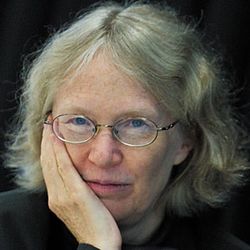
Cynthia_rosenweigAs Superstorm Sandy battered the US east coast this year, Cynthia Rosenzweig huddled with her 97-year-old mother in a suburb of New York City, not far from where she grew up. After making sure that her own home had sustained only minor damage, Rosenzweig turned her attention to the city, which had not been so lucky. Sandy had driven a 4-metre wall of water into low-lying neighbourhoods, destroying homes, flooding transportation tunnels and leaving millions of people without power. Although the damage came as a shock to most, Rosenzweig and a team of researchers had forecast those consequences a dozen years earlier as part of the first national assessment by the US Global Change Research Program. “Everything that happened is in our earliest report,” says Rosenzweig. Because of that work and many follow-on studies conducted for state and city officials, New York has incorporated climate-change adaptation and resilience into its long-term planning initiatives, which include upgrading building codes and managing parks and wetlands to accommodate flooding and sea-level rise. The actions have made New York a leader among cities working to prepare for the threats of climate change, says Rosenzweig. She is now trying to assess whether these steps helped to lessen Sandy’s impacts, which may offer a preview of the threats expected as climate change intensifies storms and raises sea levels.

More here.

Sunday Poem

Personal

Don’t take it personal, they said;

but I did, I took it all quite personal—
.
the breeze and the river and the color of the fields;
the price of grapefruit and stamps,
.
the wet hair of women in the rain—
And I cursed what hurt me
.
and I praised what gave me joy,
the most simple-minded of possible responses.
.
The government reminded me of my father,
with its deafness and its laws,
.
and the weather reminded me of my mom,
with her tropical squalls.
.
Enjoy it while you can, they said of Happiness
Think first, they said of Talk
.
Get over it, they said
at the School of Broken Hearts
.
but I couldn’t and I didn’t and I don’t
believe in the clean break;
.
I believe in the compound fracture
served with a sauce of dirty regret,
.
I believe in saying it all
and taking it all back
.
and saying it again for good measure
while the air fills up with I’m-Sorries
.
like wheeling birds
and the trees look seasick in the wind.
.
Oh life! Can you blame me
for making a scene?
.
You were that yellow caboose, the moon
disappearing over a ridge of cloud.
.
I was the dog, chained in some fool’s backyard;
barking and barking:
.
trying to convince everything else
to take it personal too.
.

.
by Tony Hoagland
from Poetry, Vol. 194, No. 4, July/August, 2009

Saturday, December 22, 2012

goodbye to the Mountains of Kong

RV-AJ171_MAPSID_G_20121221183726

As some may recall, it was not so long ago that we got around by using maps that folded. Occasionally, if we wanted a truly global picture of our place in the world, we would pull shoulder-dislocating atlases from shelves. The world was bigger back then. Experience and cheaper travel have rendered it small, but nothing has shrunk the world more than digital mapping. In medieval Christian Europe, Jerusalem was the center of the world, the ultimate end of a religious pilgrimage. If we lived in China, that focal point was Youzhou. Later, in the days of European empire, it might be Britain or France. Today, by contrast, each of us now stands as an individual at the center of our own map worlds. On our computers and phones, we plot a route not from A to B but from ourselves (“Allow current location”) to anywhere of our choosing. Technology has enabled us to forget all about way-finding and geography. This is some change, and some loss. Maps have always related and realigned our history; increasingly, we’re ceding control of that history to the cold precision of the computer.

more from Simon Garfield at the WSJ here.

angels

Stone-angel-Brompton-Ceme-008

Even in the 21st century, then, angels matter. To many of us, perhaps, this can come as a surprise. Here in Britain, the ebbing of religious faith has combined with our insatiable taste for kitsch to desensitise us to the historic potency of angelology. Yet the ubiquity of angels in pop songs, on Christmas cards and in episodes of Dr Who tells its own story. “In our increasingly secular age, when the presence of angelic beings seems remote and unreal, angel imagery still holds an immense power of attraction.” So Valery Rees opens her new book, which aims to make sense of the dimension between heaven and earth, and to explain why so many people, for so long, have populated it with entire hosts of messengers. In pursuit of that goal, Rees flits across space and time with an aptly angelic facility. Ranging from ancient Sumeria to the novels of Philip Pullman, and from medieval scholasticism to Jungian theory, the breadth of her learning is formidable.

more from Tom Holland at The Guardian here.

state of the language

9acabe37-a65b-4cad-9e81-5dc09cf0b07f

Why is English spelling such a tangle? It all started when Latin-speaking missionaries arrived in Britain in the 6th century without enough letters in their alphabet. They had 23. (They didn’t have “j”, “u” or “w”.) Yet the Germanic Anglo-Saxon languages had at least 37 phonemes, or distinctive sounds. The Romans didn’t have a letter, for example, for the Anglo-Saxon sound we spell “th”. The problem continues. Most English-speakers today have, depending on their accents, 40 phonemes, which we have to render using 26 letters. So, we use stratagems such as doubling vowels to elongate them, as in “feet” and “fool”. With the Norman invasion in 1066, spelling became more complicated still; French and Latin words rushed into the language. As the centuries went by, scribes found ways of reflecting the sounds people used with the letters that they had. They lengthened vowels by adding a final “e”, so that we could tell “hope” from “hop”.

more from Michael Skapinker at the FT here.