Friday Poem

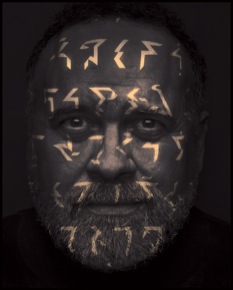
Giyani Block

When the sun recedes
into the Soutpansberg,
Giyani Block puts on a
black adder coat;
a mirror of death and despair.

Doctors and nurses stand on their feet.
They shall not rest when the workers’ strike
ignites its furious flame.
They’re on tiptoe, looking up,
wrestling the faceless, tailless monster.

Death’s whistle rings,
Death is a bosom friend here.
He walks like a dragon snake in the mountain.
In this house, Death is a burrowing mole;
he digs a hole in a life on the brink.
In this house, Death is a lion
with sharpened teeth, awaiting a rabbit.

Whether you are the most feared inyanga
with a calabash full of muti,
or a priest with the bible in hand,
whether strong as an iron-breaker or weak as an outcast,
whether handsome, shining like the sun
or beauteous, dancing with the stars,
Giyani Block remains a black sea
that wrecks our boats,
leaving no evidence or trace.
In Giyani Block heavens fall,
towers come to ruins,
flowers fade away.
Poor granny has joined ‘ngoma’:
who'll dance till the balls of his feet are bloodied,
his pride is but history.

Ncindhani, my neighbour, is feeble,
washed away like a rope.
His shoulders like a clothes hanger,
the blue arteries along his hands straight
as the strings of Juluka’s guitar;
his eyes are clouds of death,
deeply sunken like the sun falling
into the mouth of the horizon.
When he puts the hospital jacket away,
fleshless ribs and his amulet stand out
like rinderpest, a drought-stricken goat
by the stream.

by Vonani Bila
from In the Name of Amandla
Timbila Poetry Project, Elim, 2004

Genes, Cells and Brains

From The Guardian:

Clifford-Harper-illustrat-010We have outsourced the job of interpreting ourselves to the modern life sciences. The decoding of the human genome will tell us who we really are, pledged the gene-merchants. Brain scans will tell us who we really are, swore the neuro-hustlers. And what did we get? We got suckered. It turns out that humans have roughly as many protein-encoding genes as a fruit fly, and that fMRI scanning is still such an inexact art that a team of satirical neuroscientists have demonstrated significant “brain activity” in a dead salmon. This fascinating, lucid and angry book by the sociologist Hilary Rose and the neurobiologist Steven Rose (they are married) boasts abundant targets and a lethally impressive hit ratio. They decry the entrepreneurialisation of science – “wealth creation is now unabashedly formalised as the chief objective of science and technology policy” – not least because it actually impedes science. (“PhD students can work for months on a project only to find that they cannot continue as they have run into a patent.”) They lambast the “armchair” theorising of evolutionary psychology, with its ungrounded assumption that we have “stone-age minds in the 21st century”. They scorn the “neuromyths” sold to the educational establishment, with the result that schoolchildren become the unwitting subjects of uncontrolled experiments in applying alleged lessons from animal psychology to the classroom.

The book performs in high style the necessary public service of recomplicating the simplistic hogwash hysterically blasted at us by both uncritical science reporters and celebrity scientists. (The authors are very funny about Richard Dawkins, who clearly doesn't understand what a metaphor is.) Here are the knotty histories of molecular biology and evolutionary theory, with explanations of why evo-devo and epigenetics make the old genetic determinism untenable, and why there is hardly ever “a gene for” something. (“Ninety-five genetic loci have been found related to blood lipid levels,” the authors write, “possibly hundreds of genes might be implicated in coronary heart disease, and around a hundred in schizophrenia.”) They show how and why both genomics and stem-cell therapy have thus far failed to usher in a miraculous new age of medicine, and observe sorrowfully that, even as the media storm of neurogibberish rages unabated, Big Pharma is shutting down research into mental health disorders in favour of more tractable (and so profitable) diseases.

More here.

The sustainable meat of the future: Mealworms?

From Smithsonian:

MealwormsThe year is 2051. Given the realities of climate change and regulations on carbon emissions, beef and pork–protiens with high carbon footprints–have become too expensive for all but the most special of occasions. Luckily, scientists have developed an environmentally-friendly meat solution. Sitting down for dinner, you grab your fork and look down at a delicious plate of….mealworms. That, anyway, is one possibility for sustainable meat examined by Dennis Oonincx and Imke de Boer, a pair of scientists from the University of Wageningen in the Netherlands, in a study published today in the online journal PLOS ONE. In their analysis, cultivating beetle larvae (also known as mealworms) for food allowed the production of much more sustainable protein, using less land and less energy per unit of protein than conventional meats, such as pork or beef. In a 2010 study, they found that five different insect species were also much more climate-friendly than conventional meats—a pound of mealworm protein, in particular, had a greenhouse gas footprint 1% as large as a pound of beef. “Since the population of our planet keeps growing, and the amount of land on this earth is limited, a more efficient, and more sustainable system of food production is needed,” Oonincx said in a statement. “Now, for the first time it has been shown that mealworms, and possibly other edible insects, can aid in achieving such a system.”

This prospect might seem absurd—and, for some, revolting—but the problem of greenhouse gas emissions resulting from meat production is quite serious. The UN estimates that livestock production accounts for roughly 18% of all emissions worldwide, caused by everything from the fuel burned to grow and truck animal feed to the methane emitted by ruminants such as cows as they digest grass. Of most concern, since world populations are increasing and growing more wealthy, is that the demand for animal protein is expected to grow by 70-80% by 2050.

More here.

Wednesday, December 19, 2012

Statements on Erik Loomis

Erik Loomis blogs over at one of the smarter blogs around, Lawyers, Guns and Money. His position at the University of Rhode Island has come under attack, and there are a couple of statements in support. If you support him after reading the details, you may want to sign one of the statements in support. (Comments on this are closed.)

First, over at Crooked Timber:

Erik Loomis is no stranger to this blog. A gifted young scholar of US labor and environmental history, Loomis is also a blogger at Lawyers, Guns and Money. Many of us have tussled and tangled with him, most recently over whether leftists should vote for Obama. We have often disagreed with Loomis, not always pleasantly or politely, and he has certainly given as good as he has got.

But now we must stand by Loomis’s side and speak up and out on his behalf, for he has become the target of a witch hunt, and as an untenured professor at the University of Rhode Island, he is vulnerable. Loomis needs our solidarity and support, and we must give it to him.

Next over at Duck of Minerva:

Erik Loomis is a history professor at the University of Rhode Island and a long-time blogger. His highest-profile gig is at Lawyers, Guns & Money. In the immediate aftermath of the Newtown massacre, Erik tweeted that he “wanted to see Wayne LaPierre’s head on a stick.” The usual suspects in the conservative blogsphere soon translated this into the idea that Erik had called for LaPierre’s assassination.

The rest played out as you might expect. The stupid spread throughout the right-wing echo chamber, leading to depressing pot.kettle.black bullshit and, soon enough, calls to the Rhode Island police etc. etc. Erik was forced to delete his Twitter account, leading to the same kinds of losers who whine about “suppression of speech” at the slightest opportunity to crow victorious.

Joy

Zadie Smith in the New York Review of Books:

Smith_1-011013_jpg_230x1243_q85It might be useful to distinguish between pleasure and joy. But maybe everybody does this very easily, all the time, and only I am confused. A lot of people seem to feel that joy is only the most intense version of pleasure, arrived at by the same road—you simply have to go a little further down the track. That has not been my experience. And if you asked me if I wanted more joyful experiences in my life, I wouldn’t be at all sure I did, exactly because it proves such a difficult emotion to manage. It’s not at all obvious to me how we should make an accommodation between joy and the rest of our everyday lives.

Perhaps the first thing to say is that I experience at least a little pleasure every day. I wonder if this is more than the usual amount? It was the same even in childhood when most people are miserable. I don’t think this is because so many wonderful things happen to me but rather that the small things go a long way. I seem to get more than the ordinary satisfaction out of food, for example—any old food. An egg sandwich from one of these grimy food vans on Washington Square has the genuine power to turn my day around. Whatever is put in front of me, foodwise, will usually get a five-star review.

You’d think that people would like to cook for, or eat with, me—in fact I’m told it’s boring. Where there is no discernment there can be no awareness of expertise or gratitude for special effort. “Don’t say that was delicious,” my husband warns, “you say everything’s delicious.” “But it was delicious.” It drives him crazy. All day long I can look forward to a popsicle. The persistent anxiety that fills the rest of my life is calmed for as long as I have the flavor of something good in my mouth. And though it’s true that when the flavor is finished the anxiety returns, we do not have so many reliable sources of pleasure in this life as to turn our nose up at one that is so readily available, especially here in America. A pineapple popsicle. Even the great anxiety of writing can be stilled for the eight minutes it takes to eat a pineapple popsicle.

More here.

scott v. longfellow

Twilight-Quote

It is of some consequence, then, to discover that not everything Scott wrote were his own words, even though that is how they have always appeared in print. One of the passages famously noted for being an example of Scott’s innate facility with language and metaphor—and therefore “proof” of his superiority as a writer and noble soul—was in fact written by a far more accomplished wordsmith: Henry Wadsworth Longfellow. So how can it be that no one—not even Scott’s lauded editor, Leonard Huxley, or any of the scholars who have pored over Scott’s words in a hundred years—have noticed this glaring misappropriation? The fact that Scott was quoting Longfellow in the first place provides us with an insight into his literary life that is just as revealing as simply noting that it was overlooked. The passage that Scott quoted is itself illuminating.

more from Micki Myers at Paris Review here.

larkin v. amis

1317_larkinlarge

Not liking modernism and not wanting to be taken for poncy literary types were Amis-Larkin stances too, and proudly despising Beckett, in particular, is an Amis family tradition. (Kingsley to Larkin in 1985: ‘I think it’s all to do with Mandarin vs. Vernacular was it, as Cyril C put it? You know, art novel, Pickarso, European thought, bourgeois conscience, Tuscany, Beckett, we haven’t got a television set, lesson of the master and nothing happening.’) Yet Bradford’s discipleship is less wholehearted than it first seems. Throughout his narrative of the two men’s friendship it’s clear that he prefers Larkin’s closeted artiness to Amis’s knockabout style. Sometimes, as when he writes of the young Amis being viewed as ‘almost charismatic’, apparent bitchiness turns out to be a side effect of an awkward way with words. Elsewhere he seems as appalled as any taste-shaping puritan by Amis’s boozing and shagging. And after a while it’s hard not to feel for his subjects as he wrenches their every exchange into a pattern of one-way envy and obsession. When Larkin tells Monica that a letter from Amis ‘makes me laugh’, Bradford glosses: ‘No doubt it did but it stirred other feelings too.’ That these feelings, in this instance, weren’t mentioned only shows how deep they ran.

more from Christopher Tayler at the LRB here.

A March to the Grave: Joseph Roth and the End of the Austro-Hungarian Empire

Boylan_37.6_roth

Roger Boylan reviews Joseph Roth: A Life in Letters (edited by Michael Hoffman), in the Boston Review:

Reading Joseph Roth: A Life in Letters is like sitting across a café table from Roth himself after he’s had a few. He holds nothing back. He rages, jokes, pleads, and sobs. “Don’t be upset,” he says—imagination supplies a wagging forefinger—“if my letters are full of impatience and even irritations. It so happens I live and write in a continual state of confusion.”

No standard biography of Roth exists in English, but this collection of his letters, superbly translated and judiciously edited by long-time Roth advocate Michael Hofmann, provides a more intimate portrait than any biography could. Roth’s letters are a study in authorial candor: in vino veritas, at least in part, for some of them were composed while he was drunk, getting that way, or hungover—the grim trinity that dominated his life more and more until he died of it, plusweltschmerz, in Paris in 1939. He was just short of 45 and had come a long way to die so young. He left behind one masterpiece,The Radetzky March, in which, in a series of vivid set-pieces, he evokes the reality of life high and low during the Austro-Hungarian Empire’s long decline, a vast theme encapsulated in the Trotta family, who ascend to nobility and imperial favor from provincial origins on the obscure fringes of the realm.

Innovation Crisis or Financial Crisis?

2d34e247965bd0d3c5dc63f6fc01042e.portrait

Kenneth Rogoff in Project Syndicate:

As one year of sluggish growth spills into the next, there is growing debate about what to expect over the coming decades. Was the global financial crisis a harsh but transitory setback to advanced-country growth, or did it expose a deeper long-term malaise?

Recently, a few writers, including internet entrepreneur Peter Thiel and political activist and former world chess champion Garry Kasparov, have espoused a fairly radical interpretation of the slowdown. In a forthcoming book, they argue that the collapse of advanced-country growth is not merely a result of the financial crisis; at its root, they argue, these countries’ weakness reflects secular stagnation in technology and innovation. As such, they are unlikely to see any sustained pickup in productivity growth without radical changes in innovation policy.

Economist Robert Gordon takes this idea even further. He argues that the period of rapid technological progress that followed the Industrial Revolution may prove to be a 250-year exception to the rule of stagnation in human history. Indeed, he suggests that today’s technological innovations pale in significance compared to earlier advances like electricity, running water, the internal combustion engine, and other breakthroughs that are now more than a century old.

I recently debated the technological stagnation thesis with Thiel and Kasparov at Oxford University, joined by encryption pioneer Mark Shuttleworth. Kasparov pointedly asked what products such as the iPhone 5 really add to our capabilities, and argued that most of the science underlying modern computing was settled by the seventies. Thiel maintained that efforts to combat the recession through loose monetary policy and hyper-aggressive fiscal stimulus treat the wrong disease, and therefore are potentially very harmful.

These are very interesting ideas, but the evidence still seems overwhelming that the drag on the global economy mainly reflects the aftermath of a deep systemic financial crisis, not a long-term secular innovation crisis.

Begging to Differ

Mughal43

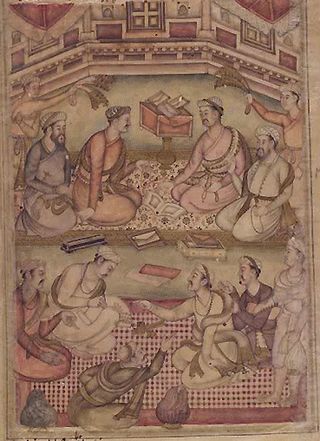
Catherine Z. Elgin in The Philosophers' Magazine (image from Wikimedia commons):

Disagreement abounds. People disagree about everything from sports and politics to science and child rearing. When disagreements stem from the manifest ignorance, bias, or stupidity of one of the disputants, they are epistemologically benign. That someone who clearly does not know what he is talking about disagrees with you gives you no reason to rethink your position. But some disagreements are more worrisome. Equally intelligent, knowledgeable, thoughtful and open-minded people often disagree. Let us call such parties intellectual equals. Should disagreements among intellectual equals give us pause?

Epistemologists disagree. Conciliatory thinkers such as Hilary Kornblith hold that it should. If Fred recognises George as his intellectual equal, he has no basis for thinking that his opinion is better than George’s (or that George’s is better than his). So when they disagree, conciliationists maintain, both should suspend judgement. Advocates of resoluteness such as Thomas Kelly recommend holding fast. If intellectual equals who disagree are always required to suspend judgement, scepticism looms. Given the range of topics on which we disagree with our intellectual equals, we know very little. Resoluteness is permissible, they maintain, because everyone makes mistakes. It is open to Fred to think that where they disagree, George must be mistaken. He is then within his rights to dismiss George’s opinion. Unfortunately, George can think the same about Fred. Resoluteness fosters dogmatism; we are always entitled to dismiss the opinions of intellectual equals who disagree with us by assuming they have made a mistake. Neither scepticism nor dogmatism is an attractive option. A third alternative is that disagreement among intellectual equals provides some reason to rethink one’s position but does not require revising or repudiating it. In that case, parties could reasonably agree to disagree. The challenge is to make room for this position.

10 myths about the Connecticut shootings

From Spiked:

One of the most striking aspects of the horrific tragedy in Newtown, Connecticut, is the wild inaccuracy in much of the reporting. As Peter Preston in the Observer noted, it was not only the number of casualties that wavered, but also the name of the killer, the details of the death of the mother (whether it was at home or in front of her class), and, significantly, the type of weapon the killer used (at first, the weapons were identified as two 9mm pistols – later reports noted that it was a semi-automatic rifle). But confusion over the details was nothing compared with the ridiculous myths and stories propagated as facts in relation to more general issues surrounding the tragedy at Sandy Hook school. Here are some myths we should challenge.

1. School shootings are a regular occurrence in the United States

School shootings are incredibly rare and, statistically, children are safer at school than they are at home, and they are far more likely to be killed by their parents than by anyone else. According to Gary Kleck, a child is more likely to be struck by lightning at school than a bullet. To put it in perspective, the homicide rate at primary schools in the UK – that nation most favoured by gun-control activists – is slightly higher than that in the United States, lest anyone thinks that school violence is endemic to the US. The fact that we have all heard of school shootings does not mean that there is much danger at all of them occurring.

2. Gun controls would have prevented such killings

Former UK home secretary Jack Straw, speaking after the Connecticut killings, said there is no doubt that tighter gun control laws would make school shootings less likely. ‘The more you tighten the law, the more you reduce the risk’, he said, taking credit for the lack of school shootings in the UK since he brought in legislation after the Dunblane massacre of 1996. Taking credit for the lack of incredibly rare incidents is hubris indeed. Had he put forward legislation concerning fatal elephant attacks, would he similarly take credit for the fact that the UK has been free of elephant attacks since the 1990s?

More here.

Wednesday Poem

Soffly Soffly Nesta Skank

boy Marley
armed & ganjaras
soffly soffly his spliff a mystrical cloud
thirsty as he pores into the book
of nolej of wrong & rise
ever so the drumthud & bass gong
move us to skank
while they having fun/k in Babylon
as one more of my peopleses
slumps into his mouthful of gurgling blood

for the pigses
who haven’t known the sun
but interstellar con & contraption
for their politishams
who haven’t known love
but the bleeding triggah of lies
that quiets the poor
for the slipperous slime
home in their shrunken hearts
we’ll be burning all illusion tonight
& banging munition all night
.

by Seitlhamo Motsapi
from earthstepper/the ocean is very shallow
Publisher: Deep South, South Africa

New technology may enable earlier cancer diagnosis

From MIT News:

NanoFinding ways to diagnose cancer earlier could greatly improve the chances of survival for many patients. One way to do this is to look for specific proteins secreted by cancer cells, which circulate in the bloodstream. However, the quantity of these biomarkers is so low that detecting them has proven difficult. A new technology developed at MIT may help to make biomarker detection much easier. The researchers, led by Sangeeta Bhatia, have developed nanoparticles that can home to a tumor and interact with cancer proteins to produce thousands of biomarkers, which can then be easily detected in the patient’s urine.

Cancer cells produce many proteins not found in healthy cells. However, these proteins are often so diluted in the bloodstream that they are nearly impossible to identify. A recent study from Stanford University researchers found that even using the best existing biomarkers for ovarian cancer, and the best technology to detect them, an ovarian tumor would not be found until eight to 10 years after it formed. “The cell is making biomarkers, but it has limited production capacity,” Bhatia says. “That’s when we had this ‘aha’ moment: What if you could deliver something that could amplify that signal?” Serendipitously, Bhatia’s lab was already working on nanoparticles that could be put to use detecting cancer biomarkers. Originally intended as imaging agents for tumors, the particles interact with enzymes known as proteases, which cleave proteins into smaller fragments. Cancer cells often produce large quantities of proteases known as MMPs. These proteases help cancer cells escape their original locations and spread uncontrollably by cutting through proteins of the extracellular matrix, which normally holds cells in place. The researchers coated their nanoparticles with peptides (short protein fragments) targeted by several of the MMP proteases. The treated nanoparticles accumulate at tumor sites, making their way through the leaky blood vessels that typically surround tumors. There, the proteases cleave hundreds of peptides from the nanoparticles, releasing them into the bloodstream. The peptides rapidly accumulate in the kidneys and are excreted in the urine, where they can be detected using mass spectrometry.

More here.

Tuesday, December 18, 2012

leviathan

Worden_12_12

Thomas Hobbes’s Leviathan is by common consent one of the masterpieces of political theory. Yet its greatness is hard to pinpoint. It lies partly, again by common consent, in the quality of its prose. Even readers horrified by Hobbes’s authoritarian arguments thrill to the manner of their expression. It is a prose as utterly individual as that of his contemporaries Robert Burton, Sir Thomas Browne and Milton – and as hard to categorise. Its darts and flashes, compressions and difficulties can call to mind the metaphysical poets, his other contemporaries. Yet metaphysical inspiration was one of Hobbes’s targets, bent as he was on the subjection of political argument to the realism of the scientific revolution, the area of thought where his prior interest lay. Anyway, the attraction of his prose can explain only so much. The impact of the work, especially on the Continent, was largely indebted to his Latin translation of it. The year of the English edition, 1651, also produced Milton’s Latin vindication of the execution of Charles I in 1649, Pro Populo Anglicano Defensio, another book whose literary properties dazzled readers shocked by its thesis. Hobbes was one of them. His own Latin deserved and commanded no such wonder.

more from Blair Worden at Literary Review here.

the new scientism

Scientism

In contrast to reason, a defining characteristic of superstition is the stubborn insistence that something — a fetish, an amulet, a pack of Tarot cards — has powers which no evidence supports. From this perspective, scientism appears to have as much in common with superstition as it does with properly conducted scientific research. Scientism claims that science has already resolved questions that are inherently beyond its ability to answer. Of all the fads and foibles in the long history of human credulity, scientism in all its varied guises — from fanciful cosmology to evolutionary epistemology and ethics — seems among the more dangerous, both because it pretends to be something very different from what it really is and because it has been accorded widespread and uncritical adherence. Continued insistence on the universal competence of science will serve only to undermine the credibility of science as a whole. The ultimate outcome will be an increase of radical skepticism that questions the ability of science to address even the questions legitimately within its sphere of competence. One longs for a new Enlightenment to puncture the pretensions of this latest superstition.

more from Austin L. Hughes at The New Atlantis here.

An amateur linguist loses control of the language he invented

Joshua Foer in The New Yorker:

121224_r22980_p233Languages are something of a mess. They evolve over centuries through an unplanned, democratic process that leaves them teeming with irregularities, quirks, and words like “knight.” No one who set out to design a form of communication would ever end up with anything like English, Mandarin, or any of the more than six thousand languages spoken today.

“Natural languages are adequate, but that doesn’t mean they’re optimal,” John Quijada, a fifty-four-year-old former employee of the California State Department of Motor Vehicles, told me. In 2004, he published a monograph on the Internet that was titled “Ithkuil: A Philosophical Design for a Hypothetical Language.” Written like a linguistics textbook, the fourteen-page Web site ran to almost a hundred and sixty thousand words. It documented the grammar, syntax, and lexicon of a language that Quijada had spent three decades inventing in his spare time. Ithkuil had never been spoken by anyone other than Quijada, and he assumed that it never would be.

More here.

The solar-powered bike-car thingy we’ve all been waiting for

Scott Huler in Scientific American:

TruckitYou want to see my next vehicle? I’m going to get a TruckIt, a tiny little recumbent-bicycle deal with an electric motor — it’s called a velomobile, if you want to know. It costs $5,500, recharges its battery with its own rooftop solar panels, can legally take you on the road, on the sidewalk,* and on greenway trails, and has a 30-mile-per-charge range. Then you can either rely on those solar panels or you can take the little battery out and plug it in. And though it’s designed to carry me and up to 800 pounds of payload (guitar, amp, and groupie?), I can retrofit a little jumpseat so I can just haul around the groupie if I need to. You can read all about it in this story by the News & Observer of Raleigh.

And hokey smokes, it’s made right here in the U.S.A., by Organic Transit, in a renovated furniture warehouse in downtown Durham, NC.

The thing — and the Elf, its more carlike little sister — is limited to 20 mph on pure electricity (to remain classified as a bicycle), but it can take you up and down hills with or without your pedaling. Every New Urbanist, transit focused downtown renovation should all but give these things away for free. If you live and work in a walkable downtown that lacks — as so many do — a grocery store, instead of needing a second car, all you’ve done is given purpose to your workout. “Going out for a ride, dear — got that grocery list?”

More here.

V.S. Naipaul on the Arab Spring, Authors He Loathes, and the Books He will Never Write

Isaac Chotiner in The New Rebublic:

Isaac Chotiner: Are you working on anything at the moment?

Naipaul_0V.S. Naipaul: I am far too old [laughs].

IC: So no more?

VSN: When you are eighty, you don’t have much more to say. Do you know any writers of eighty?

IC: I’m thinking. No.

VSN: Exactly. How can one? If a man begins writing at thirty, by the time he is fifty or sixty, the bulk of his work has been done. By the time he is eighty, he’s got nothing more, you know?

IC: You wrote a number of books after age sixty, though.

VSN: Yes, yes, I had to. There were things I had to say.

IC: Martin Amis said that, when he went back to read his early work, he found a certain energy in it that was absent in his later work, but he also said that, in terms of form, he thought his later work was stronger, at the sentence level.

VSN: Who said this?

More here.