
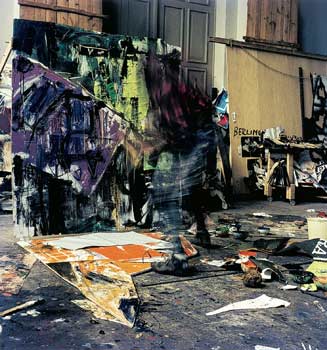
Emilio Vedova. Working on Absurdes Berliner, Tagebuch Berlin. 1964.
Category: Recommended Reading
Sunday, January 6, 2013
Mo Yan’s Nobel Lecture
From Outlook India:
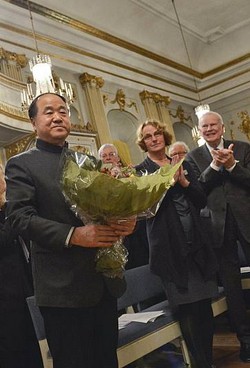
My illiterate mother held people who could read in high regard. We were so poor we often did not know where our next meal was coming from, yet she never denied my request to buy a book or something to write with. By nature hard working, she had no use for lazy children, yet I could skip my chores as long as I had my nose in a book.
A storyteller once came to the marketplace, and I sneaked off to listen to him. She was unhappy with me for forgetting my chores. But that night, while she was stitching padded clothes for us under the weak light of a kerosene lamp, I couldn’t keep from retelling stories I’d heard that day. She listened impatiently at first, since in her eyes professional storytellers were smooth-talking men in a dubious profession. Nothing good ever came out of their mouths. But slowly she was dragged into my retold stories, and from that day on, she never gave me chores on market day, unspoken permission to go to the marketplace and listen to new stories. As repayment for Mother’s kindness and a way to demonstrate my memory, I’d retell the stories for her in vivid detail.
More here.
what a desolation
We found the most sought-after particle in physics. Now what?
Lawrence Krauss in Slate:
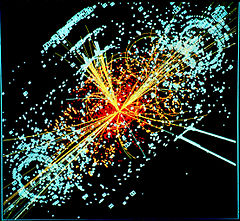
Many might imagine that physicists were rooting for door No. 5 because we like to be vindicated. In fact, nothing could be further from the truth. The discovery of the Higgs validates the prediction of the standard model, and with that much of the theoretical underpinning of modern fundamental physics and cosmology. But now we are completely baffled about the origins of the standard model itself. I, for one, was rooting for no Higgs at all, because that would have meant our fundamental ideas were on the wrong track. Nothing can be more exciting than finding that we have to start from scratch and discover a whole new reality hidden.
More here.
On Assholes
Evan R. Goldstein in the Chronicle of Higher Education:
“You get giggles,” says the linguist at the University of California at Berkeley, “or you get, 'You must have a lot of time on your hands'—the idea being that a word that vulgar and simple can't possibly be worth writing about.” Scholars have tended to regard the book as a jeu d'esprit, not a serious undertaking. Their reaction intrigued Nunberg: “When people say a word is beneath consideration, it's a sign that there's a lot going on.”
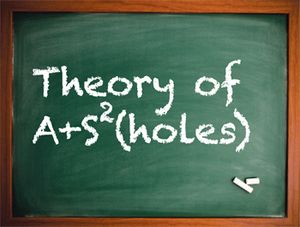
Aaron James can relate. He is a professor of philosophy at the University of California at Irvine and the author of Assholes: A Theory (Doubleday), which was published in late October, a few months after Nunberg's book, Ascent of the A-Word: Assholism, the First Sixty Years (PublicAffairs). James took up the project with some trepidation. “I felt a real sense of risk about writing something that might not appeal to my intellectual friends.”
Risky? Perhaps, but not without precedent. The Stanford business professor Robert I. Sutton had a best seller in 2007 with The No Asshole Rule. And the nonscholarly asshole canon is vast. Recent titles include A Is for Asshole: The Grownups' ABCs of Conflict Resolution, Assholes Finish First, Assholeology: The Science Behind Getting Your Way—and Getting Away With It, and Dear Asshole: 101 Tear-Out Letters to the Morons Who Muck Up Your Life.
More here.
digging
Adam Fulara – Invention No. 13 in A Minor (J.S. Bach)
A Woman in the City
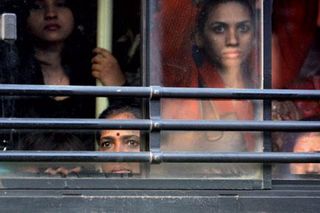
Devika Bakshi in Open The Magazine:
My city is not mine. I have always felt this, but only realised it fully last week, when, in the aftermath of the unspeakably brutal rape of a 23-year-old woman by six men, I began talking to women around me about safety. This is not a new subject. I have grown up and into an understanding that this city is hostile towards me, and that everything possible must be done to keep me safe.
My safety, my mother tells me, has always been a primary concern for her. No men in the house. A maid supervising the daily carpool to school. Boarding school and college abroad. Having spent her youth getting pawed by men in DTC buses, once only narrowly escaping an acid attack, she was determined to shield me from what she knew to be a harsh city for women. Every effort was made, every resource utilised to ensure I could circumvent the hazards of this city and be the independent person I was already becoming—elsewhere.
I now understand that that alternative would have been to stay here, in the city but removed from it, skirting its edges, tunneling through it, being smuggled in a tightly regulated bubble between illusory safe spaces—ones with gates, or guards, or a cover charge—like so many young women I know whose parents can afford to keep them safe, to hold them apart from the city.
Though irreproachable in its intent, the tragedy of this approach, as my mother puts it, is that you can’t give your child the confidence to operate in the world. Indeed, our collective fear of the city transforms it into an adversary, with whom we interact tentatively and only when necessary, careful not to do anything to provoke its ire.
We abide by a hallowed yet vague code of conduct: don’t stay out after dark, don’t wear anything that shows off your legs, don’t trust strangers, especially men, don’t stand out in a crowd.
We negotiate our own curfews: no autorickshaws after 8, no metro after 10, no driving alone after 11.
We permit ourselves small conditional freedoms: if you must go out, go in a group with boys, go to someone’s house, go only to this or that safe neighbourhood, take a driver.
My Faith: A Confession

Justin Smith over at his website:
Different people, different closets. I don't quite know how to say it delicately so I'm just going to come right out and say it. I believe in God. Apart from periodic spells of foolish pride, I have believed in God all my life. Even during these spells, I did not so much cease to believe, as turn my back on what I believed.
As far as I'm concerned there cannot really be any concern that God does not exist. Even to see God's existence as a problem is to misapprehend what is at stake, since God just is the love, sweet and radiant, that charges through every drop and leaf and mote of the creation, always ready to be felt by anyone who is ready to believe.
God is not male, and I cannot say 'he', however tempted I am to remain with the conventions of my beautiful language and its beautiful tradition of devotional writing. But this is a relatively trivial corollary of the more important point that God is not a being, and so also neither a monarch nor a father nor a ruler of any sort. God is love, and I can keep my love of God and have my anarchism too.
Indeed, as I see it the two not only can but must go together. To believe in God, and to feel the divine love that charges through all of creation, is precisely not to bow down, but to rejoice. The great travesty of the history of religion, and the victory of its enemies, has been to bend the idea of God to the legitimation of earthly rulers, to convince people that God is like dad, or the king, or the tyrant, but more so, and that, conversely, these mundane potentates are little reflections of God. There is none of this in my love of God, which shines out of my encounter with creatures, God's creatures, that themselves have no power other than the power of their own growth and integrity, their own life, which is itself an expression of the same joy in God as my own.
To experience this joy is to know that the states of my soul and the states of infinite nature always fit, that each is an expression of the other, and so, that my death cannot be the end of anything, since nature, of which my soul was a modulation, a beautiful if dirty outcropping, will keep doing what it always does, and I, now only more obviously a convolution of nature, will flow along in streams and breezes and cosmic rays and will no longer be held up on this concern about the 'I' at all, about its finitude and its mortality.
Alan Turing in Three Words
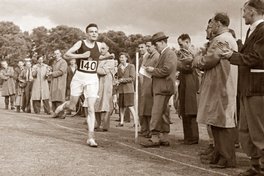
Michael Saler in the TLS:
B. Jack Copeland’s new biography of the father of modern computing opens with an Alan Turing Test: “Three words to sum up Alan Turing?”. It’s a challenging question for such a multifaceted man. No doubt Watson, the polymath computer that won at Jeopardy! in 2011, could generate apt terms, but so, too, could more ordinary folk, especially given the wide publicity the English mathematician has received during this centenary year of his birth. Yet Turing’s justified fame was unthinkable a little more than a generation ago. The man who helped defeat the Nazis and create the digital age was known among mathematicians and computer scientists, but few others. His crucial contributions to decrypting German codes during the war remained classified for decades after his death in 1954. And his signal concept of an all-purpose, stored-program computer – the model for our digital devices today – was often attributed to others, from Charles Babbage in the nineteenth century to John von Neumann in the twentieth. (With his unfinished “Analytical Engine”, Babbage was on the right track, but never posited the critical idea of storing programs in memory, enabling a single machine to execute multiple tasks – in effect becoming the “universal” machine residing on our desks and chirping in our pockets. Turing made this breakthrough, which in turn inspired von Neumann’s general architecture for electronic computers that became the industry standard.) Until his classified war work became public knowledge and the genealogy of modern computing was sorted out, Turing would not have been associated with Newton, Darwin or Einstein – a comparison drawn by Barack Obama in an address to the Houses of Parliament in 2011 – or considered among the “leading figures in the Allied victory over Hitler”, as Copeland does here. Picasso would have been an unlikely comparison also, but like the restless artist Turing was a fertile innovator, leaving new fields to sprout from his seedlings (computer science, artificial intelligence, mathematical biology), and making pioneering contributions to others (logic, cryptography, statistics).
Curse that lasted half a century: New biography casts fresh light on Sylvia Plath’s legacy
From The Independent:
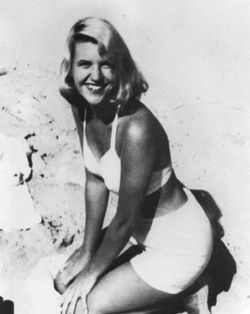
To celebrate the happier anniversary, at least, there is a sparkling new edition of The Bell Jar, which has never been out of print, a series of events are planned for later in the year, and this month sees the publication of a major new biography, Mad Girl's Love Song by Andrew Wilson. In the past, Plath's hotly contested life has been a minefield for those who attempted to interpret it. “I tried to be as objective as possible,” says Wilson. “I've got no agenda, I didn't read the other biographies, I went to the archives completely fresh, trying to stand back and see what kind of evidence there was.” He has conjured up a youthful, blonde and vibrant Plath, albeit one with a disturbing shadow side. But the dark fact of the suicide, on a bitter morning in one of the worst English winters on record, overshadows our understanding of the life and work of Sylvia Plath, and has cast something like a curse on the lives of those who survived her.
More here.
Promising compound restores memory loss and reverses symptoms of Alzheimer’s
From Eureka Alert:
A new ray of hope has broken through the clouded outcomes associated with Alzheimer's disease. A new research report published in January 2013 print issue of the FASEB Journal by scientists from the National Institutes of Health shows that when a molecule called TFP5 is injected into mice with disease that is the equivalent of human Alzheimer's, symptoms are reversed and memory is restored—without obvious toxic side effects. “We hope that clinical trial studies in AD patients should yield an extended and a better quality of life as observed in mice upon TFP5 treatment,” said Harish C. Pant, Ph.D., a senior researcher involved in the work from the Laboratory of Neurochemistry at the National Institute of Neurological Disorders at Stroke at the National Institutes of Health in Bethesda, MD. “Therefore, we suggest that TFP5 should be an effective therapeutic compound.”
To make this discovery, Pant and colleagues used mice with a disease considered the equivalent of Alzheimer's. One set of these mice were injected with the small molecule TFP5, while the other was injected with saline as placebo. The mice, after a series of intraperitoneal injections of TFP5, displayed a substantial reduction in the various disease symptoms along with restoration of memory loss. In addition, the mice receiving TFP5 injections experienced no weight loss, neurological stress (anxiety) or signs of toxicity. The disease in the placebo mice, however, progressed normally as expected. TFP5 was derived from the regulator of a key brain enzyme, called Cdk5. The over activation of Cdk5 is implicated in the formation of plaques and tangles, the major hallmark of Alzheimer's disease. “The next step is to find out if this molecule can have the same effects in people, and if not, to find out which molecule will,” said Gerald Weissmann, M.D., Editor-in-Chief of the FASEB Journal. “Now that we know that we can target the basic molecular defects in Alzheimer's disease, we can hope for treatments far better – and more specific – than anything we have today.”
Picture: Areas of the brain affected by Alzheimer's disease.
More here.
Sunday Poem
New Years Eve
There are only two things now,
The great black night scooped out
And this fire-glow.
This fire-glow, the core,
And we the two ripe pips
That are held in store.
Listen, the darkness rings
As it circulates round our fire.
Take off your things.
Your shoulders, your bruised throat!
Your breasts, your nakedness!
This fiery coat!
As the darkness flickers and dips,
As the firelight falls and leaps
From your feet to your lips!
.
by D.H. Lawrence
Saturday, January 5, 2013
the new bailyn history is out!
Twenty-seven years ago, Bailyn released “The Peopling of British North America,” a terse “sketch” of a bigger project: an attempt to understand and recount “the westward trans-Atlantic movement of people” from Europe and Africa to the Americas. “One of the greatest events in recorded history,” Bailyn called it, with “consequences . . . beyond measure,” a vast migration that was “the foundation of American history.” At the same time, he issued the first volume of his project, “Voyagers to the West,” a study of the English who came to this land just before the Revolution. It won a Pulitzer. Now comes “The Barbarous Years,” the next installment. It circles back to a period that most Americans don’t hear much about in school: the chaotic decades from the establishment of Jamestown (England’s first permanent colony in the Americas) in 1607 up to King Philip’s War (the vicious conflict that effectively expelled Indians from New England) in 1675-76. Bailyn’s goal is to show how a jumble of migrants, “low and high born,” sought “to recreate, if not to improve, in this remote and, to them, barbarous environment, the life they had known before.”
more from Charles C. Mann at the NY Times here.
the scars of detroit

For a currently declinist, anxious America, and pessimists across the western world, Detroit stands as a cautionary tale, its rise and fall an ideal subject for any nonfiction writer with some historical skills, a bit of courage and street wisdom, and a few gothic adjectives at their disposal. For the first few chapters here, it seems almost too ideal. Unlike many of Detroit’s recent explorers, Binelli has local roots. He writes for Rolling Stone magazine, and uses a busy, knowing prose. Initially, this volume reads less like a book than a good book proposal, authoritative but self-conscious, switching restlessly between past and present, scene-setting and summary, energetic promotion of the topic at hand and world-weary commentary on rival Detroit portraits. Binelli then traces the city’s ascent, from its foundation in 1701 as a French fur-trading post, well situated between two of the Great Lakes, to the self-mythologising “Motor City” of Detroit’s brief heyday.
more from Andy Beckett at The Guardian here.
the world until yesterday

For most of our species’ history, all human beings lived surrounded by people they had known since childhood. Meeting strangers would have been rare and exciting; depending on local customs, newcomers would perhaps have been invited in for food and rest, or perhaps killed on the spot. But they would never, ever have been simply ignored. What is now normal in cities around the world actually runs deeply against our nature – which might explain both why my four-year-old daughter has a tendency to stop strangers in the street to say hello, and why many grown-ups who have learnt to suppress this instinct suffer from chronic loneliness. This is an example of how we might better understand ourselves by looking at our origins. Our experience as hunter-gatherers, herders and subsistence farmers has shaped us genetically and culturally, argues Jared Diamond in The World Until Yesterday. We must therefore understand these ways of life in order to solve modern problems such as loneliness, obesity or the unhappy condition of many elderly people.
more from Stephen Cave at the FT here.
The World of Everyday Experience, In One Equation
Sean Carroll in his personal blog:
Longtime readers know I feel strongly that it should be more widely appreciated that the laws underlying the physics of everyday life are completely understood. (If you need more convincing: here, here, here.) For purposes of one of my talks next week in Oxford, I thought it would be useful to actually summarize those laws on a slide. Here’s the most compact way I could think to do it, while retaining some useful information. (As Feynman has pointed out, every equation in the world can be written U=0, for some definition of U— but it might not be useful.) Click to embiggen.
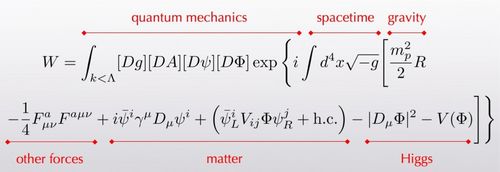
This is the amplitude to undergo a transition from one configuration to another in the path-integral formalism of quantum mechanics, within the framework of quantum field theory, with field content and dynamics described by general relativity (for gravity) and the Standard Model of particle physics (for everything else). The notations in red are just meant to be suggestive, don’t take them too seriously. But we see all the parts of known microscopic physics there — all the particles and forces. (We don’t understand the full theory of quantum gravity, but we understand it perfectly well at the everyday level. An ultraviolet cutoff fixes problems with renormalization.) No experiment ever done here on Earth has contradicted this model.
More here.
Slavoj Zizek on Charity
Chasing the total eclipse across the Pacific Ocean
Frank Close in Prospect:
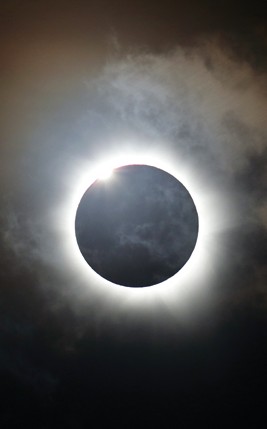
About once every 18 months, the moon passes directly between the sun and earth. As the moon moves slowly across the face of the sun, it casts a shadow on the earth’s surface about 100 miles in diameter, which is the distance from one horizon to another. As our planet spins in its daily round, the shadow rushes across land and sea at about 2000 miles an hour. Those beneath it as it passes see, for a few minutes, night brought to the dome of the sky directly overhead. Looking up myopically, you would see stars as if it were normal night, accompanied by an awesome sight: a circle of profound blackness, a veritable hole in the sky, surrounded by shimmering white light, like a black sunflower with the most delicate of silver petals. One watcher described it to me as like “looking into the valley of death with the lights of heaven far away calling for me to enter.”
There is a slow build-up to the show, as the moon gradually covers the sun, which becomes a thin crescent as darkness falls. Then as totality approaches, excitement mounts. After the thrill of the eclipse you can’t wait to do it again, but wait you must until that exquisite alignment of sun, moon and earth comes around once more, and when it does you must go to the thin arc where the moon’s shadow momentarily sweeps across a small part of the globe.
More here.
Saturday Poem
To My Brother George
Many the wonder I have this day seen:
The sun, when he first kist away the tears
that fill'd the eyes of morn; the laurel'd peers
Who from the feathery gold of evening lean;
The ocean with its vastness, its blue green,
Its ships, its rocks, its caves, its hopes, its fears,
Its voice mysterious, which whoso hears
Must think on what will be, and what has been.
E'en now, dear George, while this for you I wrote,
Cynthia is from her silken curtains peeping
So scantly, that it seems her bridal night,
and she her half-discover'd revels keeping.
But what, without the social thought of thee,
Would be the wonders of the sky and sea?
by John Keats