5 Ways to Make Progress in Evolutionary Psychology: Smash, Not Match, Stereotypes

Kate Clancy in Scientific American:

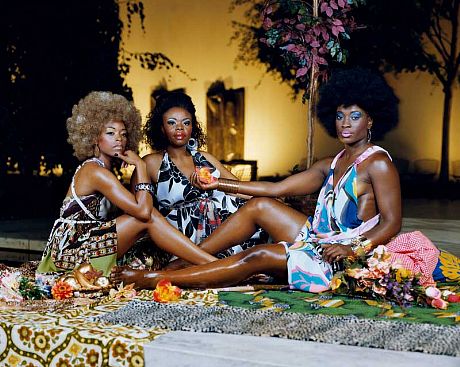
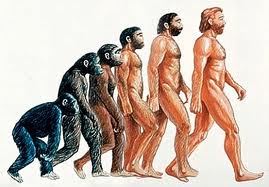
Images (1)Evolutionary psychology, the study of human psychological adaptations, does not have a popular or scientific reputation for being rigorous, even though there are rigorous, thoughtful scientists in the field. The field is trying to take on an incredibly challenging task: understand what of human behavior is adaptive and why. We can better circumvent the conditions that lead to violence, war, and hatred if we know as much as we can about why we are the way we are. What motivates us, excites us, angers us, and how can evolutionary theory help us understand it all?

Because of this, there are consequences to a bad evolutionary psychology interpretation of the world. The biggest problem, to my mind, is that so often the conclusions of the bad sort of evolutionary psychology match the stereotypes and cultural expectations we already hold about the world: more feminine women are more beautiful, more masculine men more handsome; appearance is important to men while wealth is important to women; women are prone to flighty changes in political and partner preference depending on the phase of their menstrual cycles. Rather than clue people in to problems with research design or interpretation, this alignment with stereotype further confirms the study. Variation gets erased: in bad evolutionary psychology, there are only straight people, and everyone wants the same things in life. Our brains are iPhones, each app designed for its own special adaptive purpose.

More here.

The man who shot and killed Osama bin Laden

Phil Bronstein at the Center for Investigative Reporting:

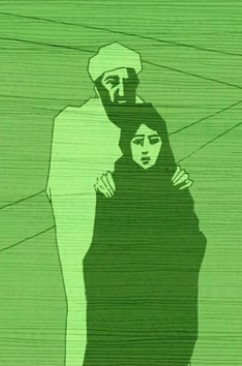
ScreenHunter_100 Feb. 12 11.12“I thought in that first instant how skinny he was, how tall and how short his beard was, all at once. He was wearing one of those white hats, but he had, like, an almost shaved head. Like a crew cut. I remember all that registering. I was amazed how tall he was, taller than all of us, and it didn't seem like he would be, because all those guys were always smaller than you think.

I'm just looking at him from right here [he moves his hand out from his face about ten inches]. He's got a gun on a shelf right there, the short AK he's famous for. And he's moving forward. I don't know if she's got a vest and she's being pushed to martyr them both. He's got a gun within reach. He's a threat. I need to get a head shot so he won't have a chance to clack himself off [blow himself up].

In that second, I shot him, two times in the forehead. Bap! Bap! The second time as he's going down. He crumpled onto the floor in front of his bed and I hit him again, Bap! same place. That time I used my EOTech red-dot holo sight. He was dead. Not moving. His tongue was out. I watched him take his last breaths, just a reflex breath.

And I remember as I watched him breathe out the last part of air, I thought: Is this the best thing I've ever done, or the worst thing I've ever done? This is real and that's him. Holy shit.”

More here.

Monday, February 11, 2013

Sunday, February 10, 2013

What Galileo saw

Adam Gopnik in The New Yorker:

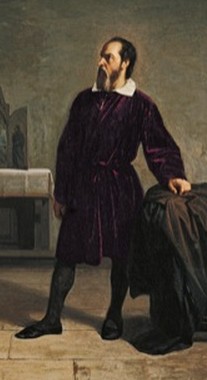
ScreenHunter_97 Feb. 10 18.36Although Galileo and Shakespeare were both born in 1564, just coming up on a shared four-hundred-and-fiftieth birthday, Shakespeare never wrote a play about his contemporary. (Wise man that he was, Shakespeare never wrote a play about anyone who was alive to protest.) The founder of modern science had to wait three hundred years, but when he got his play it was a good one: Bertolt Brecht’s “Galileo,” which is the most Shakespearean of modern history plays, the most vivid and densely ambivalent. It was produced with Charles Laughton in 1947, during Brecht’s Hollywood exile, and Brecht’s image of the scientist as a worldly sensualist and ironist is hard to beat, or forget. Brecht’s Galileo steals the idea for the telescope from the Dutch, flatters the Medici into giving him a sinecure, creates two new sciences from sheer smarts and gumption—and then, threatened by the Church with torture for holding the wrong views on man’s place in the universe, he collapses, recants, and lives on in a twilight of shame.

It might be said that Brecht, who truckled to the House Un-American Activities Committee—“My activities . . . have always been purely literary activities of a strictly independent nature”—and then spent the next bit of his own life, post-Hollywood, accessorized to the Stalinist government of East Germany, was the last man in the world to be pointing a finger at someone for selling out honesty for comfort. But then the last man who ought to point that finger is always the one who does. Galileo’s shame, or apostasy, certainly shapes the origin myth of modern science, giving it not a martyr-hero but a turncoat, albeit one of genius. “Unhappy is the land that breeds no heroes,” his former apprentice says at the play’s climax to the master who has betrayed the Copernican faith. “No,” Galileo replies, “unhappy is the land that needs a hero.” It is a bitter valediction for the birth of the new learning. The myth that, once condemned, he muttered under his breath, about the earth, “But still, it moves,” provides small comfort for the persecuted, and is not one that Brecht adopted.

More here.

‘Kill Anything That Moves’

Joel Whitney in the San Francisco Chronicle:

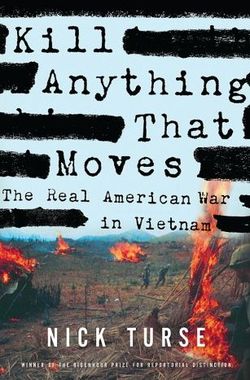
ScreenHunter_96 Feb. 10 18.30In early 1971, the New York Times Book Review splashed its cover with the question “Should We Have War Crimes Trials?” American perceptions of the war in Vietnam were at a sort of tipping point, and the military was nervous. A retired general and respected prosecutor at Nuremberg argued in the Times and on “The Dick Cavett Show” that Gen. William Westmoreland might be guilty of war crimes. “[O]ur army that now remains in Vietnam,” a colonel wrote at the time, “is in a state approaching collapse, with individual units avoiding or having refused combat, murdering their officers … drug-ridden, and dispirited where not near-mutinous.”

As Nick Turse tells it in his indispensable new history of the war, challenges to the military's perceptions of the conflict, which it pretended to be winning every day for years, started with Seymour Hersh's groundbreaking account of the My Lai massacre. American soldiers murdered 500 Vietnamese civilians at My Lai in 1968, and after Hersh's exposé, suddenly war crimes were a hot story. For a moment. But Turse insists that if the editors of Newsweek hadn't “eviscerated” an article that described a much larger death toll in 1972, the wool wouldn't still be pulled over Americans' eyes.

The problem, as described in Turse's “Kill Anything That Moves,” is the tension between the “bad apples” argument – which sees atrocities in Vietnam as the exception – and the reality of the broader, official “American way of war.”

More here.

The Other Side of Noam Chomsky’s Brilliant Mind

An excerpt from the new book “Power Systems” explore's Chomsky's contributions to the raging academic debate on linguistics and how children learn to speak.

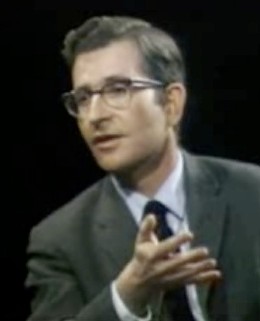
David Barsamian and Noam Chomsky in AlterNet:

DB: It’s been more than five decades since you first wrote about universal grammar, the idea of an inborn capacity in every human brain that allows a child to learn language. What are some of the more recent developments in the field?

ScreenHunter_95 Feb. 10 18.25NC: Well, that gets technical, but there’s very exciting work going on refining the proposed principles of universal grammar. The concept is widely misunderstood in the media and in public discussions. Universal grammar is something different: it is not a set of universal observations about language. In fact, there are interesting generalizations about language that are worth studying, but universal grammar is the study of the genetic basis for language, the genetic basis of the language faculty. There can’t be any serious doubt that something like that exists. Otherwise an infant couldn’t reflexively acquire language from whatever complex data is around. So that’s not controversial. The only question is what the genetic basis of the language faculty is.

Here there are some things that we can be pretty confident about. For one thing, it doesn’t appear that there’s any detectable variation among humans. They all seem to have the same capacity. There are individual differences, as there are with everything, but no real group differences—except maybe way at the margins. So that means, for example, if an infant from a Papua New Guinea tribe that hasn’t had contact with other humans for thirty thousand years comes to Boulder, Colorado, it will speak like any kid in Colorado, because all children have the same language capacity. And the converse is true. This is distinctly human. There is nothing remotely like it among other organisms. What explains this?

More here.

Letter from Jaipur

J. D. Daniels in the Paris Review:

IMG_0518-300x225Last year’s Jaipur Literature Festival was exciting and boring at the same time—a death threat is exciting, but thirty death threats are boring; as Dostoevsky wrote, “Man is a creature who can get used to anything.” Salman Rushdie was scheduled to attend: Islamic groups agitated to deny him a visa, which he does not need in order to enter India, but never mind. It was suggested that instead Rushdie might address the festival via video conference: the government itself advised against this. Hari Kunzru, Jeet Thayil, Amitava Kumar, and Ruchir Joshi read aloud in protest from The Satanic Verses, still banned in India, but, after the gravity of their collective transgression had been brought home to them, they left the festival.

We know what comedy is: life is increased. Think of Rodney Dangerfield addressing the crowd at the end of Caddyshack: “Hey, everybody, we’re all gonna get laid!” And we know what tragedy is: isolation increases. I used to think that life was about winning everything, Mike Tyson once said, but now I know that life is about losing everything.

But what is India, with its boundless affirmation of life in general that befouls so many lives in the particular, with its joyous proliferation unto overcrowding, need, and misery?

More here.

Slave market

From SCIP:

Zan

A monument dedicated to the memory of the inhuman situations which resulted from slavery. For ages, Zanzibar served as a transit port for African slaves going to Mauretania and the Arabic countries. The monument is created by Clara Sörnäs.

(Note: At least one daily post throughout February will be devoted to African American History Month)

More here.

Sunday Poem

Spring may be in your step or in your mind,
but if you carry it always in your mind
it’ll often be in your step. —Roshi Bob

Pagham Harbour Spring

The blur of sky and sea
this white grey morning
before the day burns
moves into blue

the sweet butter scent of gorse
the sweet scent of you
dear daughter ghost in my head
dear daughter

the mudflats and sailings shine
as the children run by
along marsh edge and the high dyke bank
egret and oystercatcher dunlin and sandpiper

In the distance a train passes
where a short neat man
pushes a refreshment trolley
his clean white shirt immaculately ironed
his black waistcoat just right
the quiet dignity of him
as he passes through the hours

You’d know this the particulars
were you here
held in the wide sky arc
the children running on the dyke bank
absorbed in this world
.

by Lee Harwood
from Collected Poems
publisher: Shearsman Books, Exeter, 2004

Far from the Tree: A Dozen Kinds of Love by Andrew Solomon

From The Guardian:

A-child-prodigy-010Solomon, a magazine journalist based in New York, begins again inside his own head, with the impulses that made him become a writer – the sense of difference and dislocation wrought by severe dyslexia as a child, and by the understanding that he was gay in his teens; alienations that were mitigated by the indefatigable efforts of his parents to have him live comfortably from infancy in a world of words, and by his own troubled efforts to have his mother and father and others understand his sexuality. This imprisoning solipsism is quickly willed into something entirely different, however, when Solomon sets out on his search for those who make his own psychological anxieties and challenges, his difficulties of acceptance and filial frustration, seem something not only manageable but trivial. This journey takes him to what he begins by imagining might be the outer edges of parental attachment. “The children I describe have conditions that are alien to their parents,” he says of this stubborn and compendious inquiry, “they are deaf or dwarfs; they have Down's syndrome, autism, schizophrenia or multiple severe disabilities; they are prodigies; they are people who are conceived in rape or commit crimes; they are transgender.”

Each of these groups is given a chapter to itself. And each chapter – like a series of discrete books – involves up to a dozen tales of how particular children have challenged their parents and the author with what they know of life and love. If that makes the book sound mawkish or exploitative, or a misery memoir on a grand scale, it never feels at all like that. Solomon never tries to draw explicit lessons from the families he talks to, and in defiance of his surname he continually stops short of judgment. Instead he details the often painful, occasionally triumphant, sometimes unbearable, always deeply human narratives with care and empathy, and from time to time illuminates them with the urgent politics and telling historical contexts in which they exist. Solomon interviewed, compulsively, more than 300 families for the book, and ended up, he says, with 40,000 pages of notes. It is odd to read something of this length that feels like a distillation, a piece of concentrated intelligence, but that is, nonetheless, its effect.

More here.

Saturday, February 9, 2013

lady lazarus

10KIRSCHE-articleInline

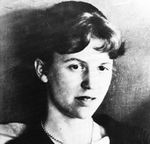
It is hard to believe that if Sylvia Plath had not taken her own life — in 1963, at the age of 30 — she would quite possibly still be alive today. Her rival Adrienne Rich, three years her elder, died just last year. But how could Plath live to comb gray hair? Her suicide does not seem like something that just happened to happen. In her poetry, she forces us to see her death as a destiny and a culmination: “The woman is perfected. / Her dead /Body wears the smile of accomplishment, / The illusion of a Greek necessity,” she wrote in her last poem, “Edge,” just six days before she died. Plath imbued her life with the kind of interpretability that usually belongs only to art. It’s no wonder, then, that on the 50th anniversary of her suicide Carl Rollyson and Andrew Wilson should want to add to the already full shelves of Plath biographies, even though neither of them radically changes our picture of her life and death. With Plath, biography is a kind of criticism, and vice versa.

more from Adam Kirsch at the NY Times here.

the dictatorship of art

Shklovsky2

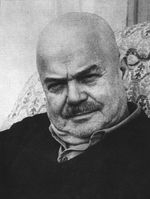
When Vitale asked him why young Russians considered him “a writer, so to speak, of the establishment,” the blood left Shklovsky’s face. He shook his cane and, yelling, kicked her out into the cold. It’s not hard to imagine how badly Vitale’s question must have wounded Shklovsky in his dotage. This was, after all, the same Shklovsky who had waged an artistic revolution—one that paralleled but did not always coincide with the Bolsheviks’—with no less at stake than the liberation of human consciousness; the same Shklovsky who had seen at least two brothers and most of his friends (an illustrious literary crew including Vladimir Mayakovsky, Osip Mandelstam and Yevgeny Zamyatin) disappeared, executed, or driven to suicide or exile by the Soviet establishment; the same Shklovsky who had twice been injured in battle fighting for a revolution that had already begun to hunt and humiliate him; who endured cold and hunger and exile and squirmed through years of silence under the censor’s heavy thumb; the same Shklovsky who spent most of his intellectual life championing the emancipatory power of the novel and fighting to blast it—and all of literature and even, yikes, reality—out of subservience to a host of dumb and arbitrary masters.

more from Ben Ehrenreich at The Nation here.

Variations on Britten

3eac94f9-2d27-48ac-a036-e57eb670ef8c

That tension, between private morality and public decorum, became the leitmotif of Britten’s adult life. Much of his creative inspiration was to be found in his sexuality and his – or society’s – conflicted response to it. The same tension lurks on almost every page of a flurry of books marking the composer’s centenary. In our more open-minded age, it may seem surprising to discover how obsessed 21st-century Britten studies are with Britten’s gayness, but it remains the key to understanding his creative psyche and his operatic characters: Grimes, the outsider-in-society who abuses child-apprentices (Peter Grimes); Vere, the naval captain who struggles to reconcile repression and homosexual desire (Billy Budd); Aschenbach, the vulnerable old artist who draws inspiration from beautiful unattainable boys (Death in Venice).

more from Andrew Clark at the FT here.

African Slavery In America by Thomas Paine

From Constitution:

The essay was written in 1774 and published March 8, 1775 when it appeared in the Pennsylvania Journal and the Weekly Advertiser. Just a few weeks later on April 14, 1775 the first anti-slavery society in America was formed in Philadelphia. Paine was a founding member.

To Americans:
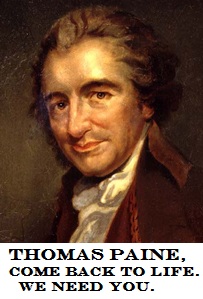
Thomaspaine-49075-20120508-76That some desperate wretches should be willing to steal and enslave men by violence and murder for gain, is rather lamentable than strange. But that many civilized, nay, Christianized people should approve, and be concerned in the savage practice, is surprising; and still persist, though it has been so often proved contrary to the light of nature, to every principle of Justice and Humanity, and even good policy, by a succession of eminent men, and several late publications.

Our Traders in MEN (an unnatural commodity!) must know the wickedness of the SLAVE-TRADE, if they attend to reasoning, or the dictates of their own hearts: and such as shun and stiffle all these, wilfully sacrifice Conscience, and the character of integrity to that golden idol.

The Managers the Trade themselves, and others testify, that many of these African nations inhabit fertile countries, are industrious farmers, enjoy plenty, and lived quietly, averse to war, before the Europeans debauched them with liquors, and bribing them against one another; and that these inoffensive people are brought into slavery, by stealing them, tempting Kings to sell subjects, which they can have no right to do, and hiring one tribe to war against another, in order to catch prisoners. By such wicked and inhuman ways the English are said to enslave towards one hundred thousand yearly; of which thirty thousand are supposed to die by barbarous treatment in the first year; besides all that are slain in the unnatural ways excited to take them. So much innocent blood have the managers and supporters of this inhuman trade to answer for to the common Lord of all!

More here. (Note: At least one daily post throughout February will be devoted to African American History Month)

‘How Literature Saved My Life,’ by David Shields

Reviewed by Mark O'Connell in the New York Times Book Review:

0210-OConnell-popupWhen you read David Shields, the first thing you learn is that he takes literature very seriously. The second thing you learn is how seriously he takes his taking seriously of literature. There’s a striking moment in the closing pages of his new book, “How Literature Saved My Life,” when he tells us that he is interested only in literature that obliterates the boundary between life and art. “Acutely aware of our mortal condition,” he writes, “I find books that simply allow us to escape existence a staggering waste of time (literature matters so much to me I can hardly stand it).” If there were such a thing as a quintessentially Shields­ian pronouncement, this may be it, with its odd tonal mixture of the bombastic and the beseeching. Shields wants you to know that he is a writer for whom neither life nor art is a matter to be taken lightly.

More here.

The Evolution of Emotions

Stephen T. Asma in Aeon:

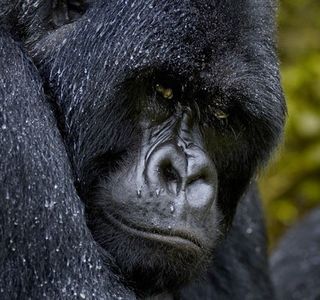
ScreenHunter_93 Feb. 09 13.24We were clinging at a 45-degree angle to the Mount Bisoke volcano, having hacked and crawled for three hours through stinging nettles. We started out in Rwanda; now we were in the Congo. Of course we weren’t supposed to be there, but mountain gorillas don’t respect national borders. With our machete-wielding guides, we had found the gorilla group called ‘Amahoro’, Kinyarwanda for ‘peace’. I just hoped they were in a peaceful mood today.

Before coming to Africa, I had just finished writing a review of America’s two new mother-ship museum exhibits: the Koch Hall of Human Origins at the Smithsonian in Washington DC, and the Spitzer Hall of Human Origins at the American Museum of Natural History in New York. Like every other presentation of our prehistory, these otherwise excellent exhibits focused on the evolution of our big neo-cortical brains — the adaptive significance of tool use, linguistic ability, increasing cultural sophistication. I guess it seems natural to celebrate the development of our unique cognitive abilities, since these distinguish us from our mammal relations.

Out in the bush, however, I began to appreciate how biased this cognitive picture really is. We owe a debt to our big neo-cortices, but our survival owes much more to the emotional skills that were under construction in mammals long before the Homo sapiens cortex explosion. We share a rich emotional life with our animal brethren because emotions helped us all survive in a hostile world. Indeed, the more we understand what mammals have in common, the more we have to rethink everything about even our specifically human intelligence.

More here.

how the Wikileaks founder alienated his allies

Jemima Khan in New Statesman:

JulianchairI passed through Los Angeles recently on my way to the Sundance Film Festival. I don’t know the place well, but it always feels to me as if it is in limbo and has never grown into a proper city: a municipal playground, populated by restless kidults. Here, people dine at seven and sleep by nine, ferried around in cars, sipping sodas, suspended in a make-believe world, poised in that fake calm between a toddler’s fall and ensuing screams. Its transient, unevolved quality may have something to do with it being a temporary home to a disproportionate number of famous people. There’s a theory about fame: the moment it strikes, it arrests development. Michael Jackson remained suspended in childhood, enjoying sleepovers and funfairs; Winona Ryder an errant teen who dabbled in shoplifting and experimented with pills; George Clooney, a 30-year-old commitment-phobe, never quite ready yet to settle down. Every plan in LA is SBO (“subject to better offer”). Fame infantilises and grants relative impunity. Those that seek it, out of an exaggerated need for admiration or attention, are often the least well equipped to deal with criticism.
Julian Assange was the reason I ended up at Sundance, the showcase for international independent film-makers. I was there to attend the premiere of Alex Gibney’s documentary about WikiLeaks, We Steal Secrets, which I executive produced and which Assange denounced before seeing. He objected to the title; WikiLeaks tweeted that it was “an unethical and biased title in the context of pending criminal trials. It is the prosecution’s claim and it is false.”
More here.