Tuesday Poem

To a Love Poet

I

Fortysomething did you say? Or more?
By now, no one could care less either way.
When you swoop into a room, no heads turn,
no cheeks burn, no knowing glances are exchanged,

no eye contact is made. You are no longer
a meaningful contender in the passion stakes.
But a love poet must somehow make love,
if only to language, fondling its contours,

dressing it in slinky tropes, caressing
its letters with the tongue, glimpsing it darkly
as though through a crackling black stocking
or diaphanous blouse, arousing its interest,

varying the rhythm, playing speech against
stanza like leather against skin, stroking words
wistfully, chatting them up, curling fingers
around the long flowing tresses of sentences.

II

Never again, though, will a living Muse
choose you from the crowd in some romantic city —
Paris, Prague — singling you out, her pouting lips
a fountain where you resuscitate your art.

Not with you in view will she hold court to her mirror,
matching this halterneck with that skirt, changing her mind,
testing other options, hovering between a cashmere
and velvet combination or plain t-shirt and jeans,

watching the clock, listening for the intercom or phone.
Not for your eyes her foam bath, hot wax, hook-snapped lace,
her face creams, moisturisers, streaks and highlights.
Not for your ears the excited shriek of her zip.

Look to the dictionary as a sex manual.
Tease beauty’s features into words that will assuage
the pain, converting you — in this hour of need —
to someone slim and lithe and young and eligible for love again.

by Dennis O'Driscoll
from New and Selected Poems

Monday, February 18, 2013

Sunday, February 17, 2013

The Brooklyn College BDS debacle highlights the perils of pro-Israeli overkill

Chemi Shalev in Haaretz:

ScreenHunter_110 Feb. 18 09.00Far more Americans know of the Palestinian BDS (Boycott, Divestment and Sanctions) movement today than did a week ago. Many millions of people have been exposed for the first time to the idea that Israel should be boycotted, divested and sanctioned for its occupation of the territories. Many more Americans, one can safely assume, have formed a positive image of the BDS movement than those who have now turned against it.

Tafasta merube lo tafasta, the Talmud teaches us: grasp all, lose all. The heavy-handed, hyperbole heavy, all-guns-blazing campaign against what would have been, as Mayor Bloomberg put it, “a few kids meeting on campus” mushroomed and then boomeranged, giving the hitherto obscure BDS activists priceless public relations that money could never buy.

Rather than focusing attention on what BDS critics describe as the movement’s deceitful veneer over its opposition to the very existence of Israel, the disproportionate onslaught succeeded in casting the BDS speakers who came to the Brooklyn campus as freedom-loving victims being hounded and oppressed by the forces of darkness.

More here.

A Theory of Theory of Mind

Michael Bérubé reviews Getting Inside Your Head: What Cognitive Science Can Tell Us about Popular Culture by Lisa Zunshine, in American Scientist:

9781421406169_p0_v1_s260x420Lisa Zunshine has a theory—a theory about theory of mind. It goes something like this (and in order to paraphrase it, I have to exemplify it, by getting inside her head as best I can): Our brains evolved in such a way as to render us all eager but flawed mind readers. Whenever we see each other, we try to figure out what other people are thinking; it is a necessary skill in a deeply social species—or, rather, we are a deeply social species precisely because we have this skill. We try to read each other by look, posture, expression, gesture. And, to make things more complicated (and/or fun), we know this about each other, so we also try deliberately to produce certain readings in others by feigning certain looks, postures, expressions and gestures. All the world’s a stage—and the world we have created includes millions of actual stages, where actors embody the principle that all the world’s a (self-reflexive) stage.

Zunshine’s earlier book, Why We Read Fiction, argued that we read fiction in order to give our restless brains a good workout: In novels and short stories, we are given up-close and intensely personal representations of how characters succeed or fail at reading each other’s motives and desires. For extra added cognitive benefit, we watch characters succeed or fail at reading other characters’ attempts to read other characters’ motives and desires. According to Zunshine, the mental exercise involved in reading fiction serves an evolutionary purpose, deploying our theory of mind so as to flex and build the cognitive muscles that will help us navigate a bewilderingly complex world of subtle social cues. Drawing widely and judiciously on recent research in neuroscience, Getting Inside Your Head expands this theory to cover all of human culture, from novels to films, plays, musicals, paintings and reality shows.

More here.

THE MAKING OF THE IDEA OF RACE

Kenan Malik in Pandaemonium:

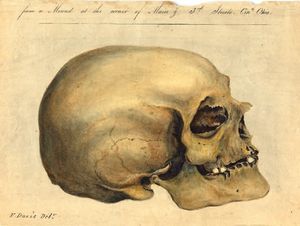
Crania-americanaIn my last post, on The Enlightenment’s “Race Problem”, I questioned the idea that the modern roots of the idea of race lie in the Enlightenment. The relationship between race and the Enlightenment is, I argued, far more complex than much contemporary discussion allows for. It was the transformation of Enlightenment attitudes through the course of the nineteenth century that helped mutate the eighteenth century discussion of human variety into the nineteenth century obsession with racial difference. This is the story of that transformation.

In March 1800, Captain Nicholas Baudin proposed to the French Institut National a journey of scientific exploration to New Holland (as Australia was then known). The Institut agreed to sponsor the expedition and asked the newly-formed Société des Observateurs de l’Homme for help in preparing instructions for the study of the ‘physical, intellectual and moral’ bearing of the indigenous peoples.

The Société provided two memoirs of instruction for Baudin’s voyage. The first,Considerations on the Diverse Methods to Follow in the Observation of Savage Peoples was written by the philosopher and educator Joseph-Marie Degerando. The second, An Instructive Note on the Researches to be Carried out Relative to the Anatomical Differences between the Diverse Races of Men, was penned by Georges Cuvier. Cuvier was one of the founders of the science of palaeontology and would become France’s most distinguished scientist of the early nineteenth century. Where Degerando was a child of the French Revolution, and a great believer in education as a motor of social change, Cuvier was deeply conservative in both his politics and his science, a lifelong opponent not just of revolution, but also of evolution. In the space between the respective views of Degerando and Cuvier emerged the nineteenth century concept of race.

More here.

The discovery of a microscopic world shook the foundations of theology and created modern demons

Philip Ball in Aeon:

ScreenHunter_109 Feb. 17 15.18When the Dutch cloth merchant Antonie van Leeuwenhoek looked at a drop of pond water through his home-made microscope in the 1670s, he didn’t just see tiny ‘animals’ swimming in there. He saw a new world: too small for the eye to register yet teeming with invisible life. The implications were theological as much as they were scientific.

Invisibility comes in many forms, but smallness is the most concrete. Light ignores very tiny things rather as ocean waves ignore sand grains. During the 17th century, when the microscope was invented, the discovery of such objects posed a profound problem: if we humans were God’s ultimate purpose, why would he create anything that we couldn’t see?

The microworld was puzzling, but also wondrous and frightening. There was nothing especially new about the idea of invisible worlds and creatures — belief in immaterial spirits, angels and demons was still widespread. But their purpose was well understood: they were engaged in the Manichean struggle for our souls. If that left one uneasy in a universe where there was more than meets the eye, at least the moral agenda was clear.

More here.

Sunday Poem

Nina's Blues

Your body, hard vowels
In a soft dress, is still.
.
What you can't know
is that after you died
All the black poets
In New York City
Took a deep breath,
And breathed you out;
Dark corners of small clubs,
The silence you left twitching
.
On the floors of the gigs
You turned your back on,
The balled-up fists of notes
Flung, angry from a keyboard.
.
You won't be able to hear us
Try to etch what rose
Off your eyes, from your throat.
.
Out you bleed, not as sweet, or sweaty,
Through our dark fingertips.
We drum rest
We drum thank you
We drum stay.
.
by Cornelius Eady
from Hardheaded Weather: New and Selected Poems
published by Putnam, 2008

An Unknown Free Black Author Describes Slavery In 1789

From BlackPast:

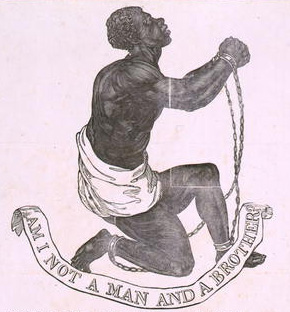
Slave1(1)Yes—and it is said we are men, it is true; but that we are men addicted to more and worse vices than those of any other complexion; and such is the innate perverseness of our minds that nature seems to have marked us out for slavery.—Such is the apology perpetually made for our masters and the justification offered for that universal proscription under which we labor. But I supplicate our enemies to be, though for the first time, just in their proceedings toward us, and to establish the fact before they attempt to draw any conclusions from it. Nor let them imagine that this can be done by merely asserting that such is our universal character. It is the character, I grant, that our inhuman masters have agreed to give us and which they have so industriously and too successfully propagated in order to palliate their own guilt by blackening the helpless victims of it and to disguise their own cruelty under the semblance of justice. Let the natural depravity of our character be proved—not by appealing to declamatory in¬vectives and interest representations, but by showing that a greater proportion of crimes have been committed by the wronged slaves of the plantation than by the luxurious inhabitants of Europe, who are happily strangers to those aggravated provocations by which our passions are every day irritated and incensed. Show us that, of the multitude of Negroes who have within a few years transported themselves to this country, and who are abandoned to themselves; who are corrupted by example, prompted by penury, and instigated by the memory of their wrongs to the commission of crimes show us, I say (and the demonstration, if it be possible, cannot be difficult), that a greater proportion of these than of white men have fallen under the animadversions of justice and have been sacrificed to your laws. Though avarice may slander and insult our misery, and though poets heighten the horror of their fables by representing us as monsters of vice—that fact is that, if treated like other men, and admitted to a participation of their rights, we should differ from them in nothing, perhaps, but in our possessing stronger passions, nicer sensibility, and more enthusiastic virtue.

Before so harsh a decision was pronounced upon our nature, we might have expected—if sad experience had not taught us to expect nothing but injustice from our adversaries—that some pains would have been taken to ascertain what our nature is; and that we should have been considered as we are found in our native woods rend not as we now are—altered and perverted by an inhuman political institution. But instead of this, we are examined, not by philosophers, but by interested traders; not as nature formed us, but as man has depraved us—and from such an inquiry, prose¬cuted under such circumstances, the perverseness of our dispositions is said to be established. Cruel that you are! you make us slaves; you implant in our minds all the vices which are in some degree inseparable from that condition; and you then impiously impute to nature, and to God, the origin of those vices, to which you alone have given birth; and punish in us the crimes of which you are yourselves the authors.

More here. (Note: At leas t one daily post throughout February will be devoted to African American History Month)

A Cardiac Conundrum

From Harvard Magazine:

MA13_28_01-2000The first randomized clinical trial of bypass surgery’s efficacy, using data from a collaboration of Veterans Administration hospitals, was not published until 1977. Such trials were then becoming the gold standard of medical research (and still are). “Surgeons said trials were totally unnecessary, as the logic of the procedure was self-evident,” says Jones. “You have a plugged vessel, you bypass the plug, you fix the problem, end of story.” But the 1977 paper showed no survival benefit in most patients who had undergone bypass surgery, as compared with others who’d received conservative treatment with medication. “There was a firestorm of controversy,” Jones says. “There was lots of money, institutional power, and lots of lives at stake. The surgeons dismissed the trial for technical reasons. So, many other trials were done, all more or less showing the same thing: bypass surgery improved survival for a few patients with the most severe forms of coronary artery disease, but for most others it relieved symptoms but did not extend lives.” The results raise a philosophical question of the goal of medical treatment: alleviating symptoms or lengthening lives? “How much is it worth investing in a surgical procedure, with all its risks,” he asks, “if all you’re doing is relieving symptoms?”

The advent of angioplasty in the 1980s complicates the story. With angioplasty, instead of bypassing the plugged artery, “you use a balloon to compress the plug,” Jones explains, “and (as it’s done today) you leave a stent behind to keep the blood vessel open, and so restore blood flow to the heart.” Like bypass surgery, angioplasty went from zero to 100,000 procedures annually with no clinical trial to assess long-term outcomes—based on the logic of the procedure and patients’ reports of how much better they felt. Yet the first clinical trials, which appeared in the early 1990s, showed no survival benefit of elective angioplasty as compared with medication.

…Furthermore, “patients are wildly enthusiastic about these treatments,” he says. “There’ve been focus groups with prospective patients who have stunningly exaggerated expectations of efficacy. Some believed that angioplasty would extend their life expectancy by 10 years! Angioplasty can save the lives of heart-attack patients. But for patients with stable coronary disease, who comprise a large share of angioplasty patients? It has not been shown to extend life expectancy by a day, let alone 10 years—and it’s done a million times a year in this country.” Jones adds wryly, “If anyone does come up with a treatment that can extend anyone’s life expectancy by 10 years, let me know where I can invest.” “The gap between what patients and doctors expect from these procedures, and the benefit that they actually provide, shows the profound impact of a certain kind of mechanical logic in medicine,” he explains. “Even though doctors value randomized clinical trials and evidence-based medicine, they are powerfully influenced by ideas about how diseases and treatments work. If doctors think a treatment should work, they come to believe that it does work, even when the clinical evidence isn’t there.”

More here.

Saturday, February 16, 2013

White People Have to Give Up Racism

Mychal Denzel Smith in The Nation:

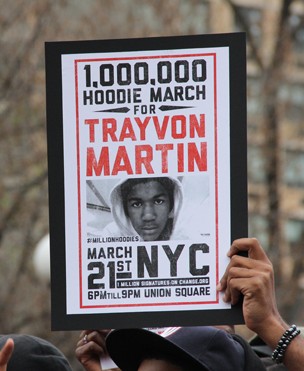
ScreenHunter_108 Feb. 16 18.07Last week, I argued that a repeal of so-called “Stand Your Ground” laws and the outlawing of racial profiling are necessary but insufficient to prevent murders like that of Trayvon Martin. On Twitter, someone asked me, “What’s your solution?” My short answer: white people have to give up racism.

As complicated an issue as race has become in the United States, that might sound like an overly simplistic answer, but it’s the root of it all. While we’ve all come up internalizing racism, since it’s all around us, only one group of people actually benefits from its existence. Not every white person is a racist, but the genius of racism is that you don’t have to participate to enjoy the spoils. If you’re white, you can be completely oblivious, passively accepting the status quo, and reap the rewards.

Over time, those living on the other side, whether black, Latino, Asian, or Native American, have fought back and shamed white people into sharing the power and the spoils of capitalism. A few people of color have managed to achieve levels of success, as we typically define it, that rival their white counterparts. So, a popular narrative has become, “These few tokens beat the odds, why can’t all of you?” In fact, no one defeats racism; they just succeed in spite of it. But most don’t.

No, it’s not the job of people of color to win over racism, it’s the responsibility of white people to abandon it altogether. We’ve reached a point here in America, though, where we believe the worst of racism is over and the remaining animus is either not worth mentioning or dying off. Neither is true. Racism is the foundation; it literally built this country. It’s going to keep showing up. Denying that doesn’t solve the problem, it exacerbates it, making it so we can’t ever achieve real solutions.

More here.

Sylvia Plath 50 Years Later: What Modern Feminism Can Learn From Ariel

Anis Shivani in the Huffington Post:

Img-thingSylvia Plath, who died 50 years ago this week, founded a style of feminist poetry that has almost completely receded. Arriving as she did at the head of the women's rights movement, Plath's poetry partly set the stage for the feverish experiments in consciousness that followed soon; it was comparable to, say, Malcolm X's militancy auguring the civil rights movement. Today, after 50 years of academic assimilation, one finds little poetry that stands up well to Plath's urgent retort to patriarchy, militarism and domesticity.

Is Ariel, her most important book, still effective almost 50 years after publication? Does it feel dated or is there a message that still resonates? How does the poetry itself hold up, ignoring the understandable obsession surrounding the circumstances of her death and after image? What can poets today learn from Ariel?

Ariel has lost none of its freshness — or madness. It strikes a deadly blow at the justifications of commercialized post-war American domesticity in the same way that Guillaume Apollinaire'sAlcools (1913) encapsulated the ennui immediately preceding three decades of European warfare.

More here.

The Possibility of Progress: Nathaniel Hawthorne’s “The Hall of Fantasy”

Jerremy Kessler in The New Atlantis:

ScreenHunter_107 Feb. 16 17.54At any moment, the imagination says no to the world as it is while saying yes to an alternative reality — to a world that never was or has yet to be. Behind every vision lies dissatisfaction. This holds true for the statesman as much as for the artist. Both say no to the world in which they find themselves, even as they say yes to its next incarnation, now disincarnate.

In his story “The Hall of Fantasy,” Nathaniel Hawthorne hints that every form of human activity verges on the unworldliness of fantasy, negating the present in favor of the future or imagined past. Yet it is the political use of the imagination that attracts Hawthorne’s most skeptical treatment. Political reformers and revolutionaries, Hawthorne argues, are uniquely unworldly, even anti-worldly, as they claim to care deeply for the same world that they work to destroy. Hawthorne’s story is a peculiarly American meditation on the relationship between art and politics and the purpose and power of human creativity.

More here.

why priests?

17BALMER-articleLarge

Wills argues that an alternative understanding of Jesus and the eucharist, one more consonant with the New Testament (Hebrews excepted) and informed by Augustine, sees Jesus as coming to harmonize humanity with himself. The eucharistic meal remains a meal (as it was in the first century), not a sacrifice, one that celebrates the union between Christ and his followers. “One does nothing but disrupt this harmony by interjecting superfluous intermediaries between Jesus and his body of believers,” Wills writes. “When these ‘representatives’ of Jesus to us, and of us to Jesus, take the feudal forms of hierarchy and monarchy, of priests and papacy, they affront the camaraderie of Jesus with his brothers.” If some elements of Wills’s thesis sound familiar, they are. In the not-so-distant past, another formidable thinker and critic — someone who also favored Augustine over Aquinas — mounted a similar case. In his 1520 “Address to the Christian Nobility of the German Nation,” Martin Luther argued against “Roman presumption” and punctured the pretensions of the clergy: “Priests, bishops or popes . . . are neither different from other Christians nor superior to them.” Similarly, in “The Babylonian Captivity of the Church,” published the same year, Luther wrote that “priests are not lords, but servants,” and “the sacrament does not belong to the priests, but to all men.”

more from Randall Balmer at the NY Times here.

Hitler’s Philosophers

02ec852e-4cad-4900-9d6a-a94c285e8a64

From 1933, Hitler’s chosen “philosophical” manager was Alfred Rosenberg, who was tasked with defending an ideology that would destroy democracy, pluralist toleration and individual freedom. Rosenberg even fished around in Homer and Plato to support his theories of the leadership principle, arguing that these greats of ancient Greece were “proto-Nazis”. He criticised Hegel’s idea of a strong state, arguing that the Volk takes precedence. But it was from Wilhelm Marr’s book The Victory of Judaism over Teutonism (1873) that, according to Sherratt, Rosenberg drew the Nazi version of Social Darwinism. Sherratt’s chapter on Martin Heidegger, the renowned philosopher of phenomenology, is a powerful portrait of collaboration, and corruption of the best. He endorsed the sacking of his erstwhile mentor Edmund Husserl after the dismissal of Jews from the civil service and academia in 1933. Heidegger even removed his dedication to Husserl from subsequent editions of his magnum opus Being and Time. He lectured in a Nazi uniform. As late as 1942 he was still praising National Socialism and “its unique historical status”. He defended Hitler’s regime and war aims well into 1944. According to Sherratt, Heidegger’s intellectual project can be read as a “doctrine of radical self-sacrifice where individualisation is allowed only for the purpose of heroism in warfare”.

more from John Cornwell at the FT here.

the gun guys

580x375

“Gun guys are not like camera buffs; they’re not like fly fishermen, not like car buffs. It’s deep, it’s really deep,” he explains. “I was really trying to figure out why these things move us, why they are so important to us.” Baum’s own love affair with guns began at age 5; at summer camp he discovered he had a natural aptitude for target shooting. He was attracted to the physicality of guns and charmed by the James Bond mythology he associated with them. But in his liberal suburb, the late ’60s brought a schism between the weapons and his world. “I was against the [Vietnam] war too, and aspired to the hippie aesthetic as much as any other sixth-grader,” he writes. “But that didn’t keep me from liking guns. To me, they were separate.” This separation between guns and violence is an essential part of Baum’s world view. As he details the way guns make him feel, one thing becomes clear: He finds power in carrying but not using a weapon.

more from Carolyn Kellogg at the LA Times here.

The deleted passage of the declaration of independence (1776)

From BlackPast:

THE DECLARATION OF INDEPENDENCE AND THE DEBATE OVER SLAVERY

When Thomas Jefferson included a passage attacking slavery in his draft of the Declaration of Independence it initiated the most intense debate among the delegates gathered at Philadelphia in the spring and early summer of 1776. Jefferson's passage on slavery was the most important section removed from the final document. It was replaced with a more ambiguous passage about King George's incitement of “domestic insurrections among us.” Decades later Jefferson blamed the removal of the passage on delegates from South Carolina and Georgia and Northern delegates who represented merchants who were at the time actively involved in the Trans-Atlantic slave trade. Jefferson's original passage on slavery appears below.

He has waged cruel war against human nature itself, violating its most sacred rights of life and liberty in the persons of a distant people who never offended him, captivating & carrying them into slavery in another hemisphere or to incur miserable death in their transportation thither. This piratical warfare, the opprobrium of infidel powers, is the warfare of the Christian King of Great Britain. Determined to keep open a market where Men should be bought & sold, he has prostituted his negative for suppressing every legislative attempt to prohibit or restrain this execrable commerce. And that this assemblage of horrors might want no fact of distinguished die, he is now exciting those very people to rise in arms among us, and to purchase that liberty of which he has deprived them, by murdering the people on whom he has obtruded them: thus paying off former crimes committed again the Liberties of one people, with crimes which he urges them to commit against the lives of another.

More here. (Note: At leas t one daily post throughout February will be devoted to African American History Month)