A Beckettian masterpiece

From The Telegraph:

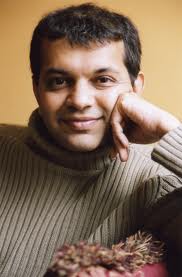
Martin_main_2467179bDave Eggers has packed such a lifetime of activity into the past 10 years that it’s amazing to find he still has time to write novels. An energetic young literary man who leapt to world attention in 2000 with A Heartbreaking Work of Staggering Genius – a garrulous memoir bristling with marginalia, footnotes and all the trappings of late-Nineties ironic reflexiveness – he has transformed over the decade into one of America’s most serious, thoughtful and socially engaged writers. Anyone picking up What Is the What (2006), the novelised memoir that Eggers wrote in collaboration with the Sudanese refugee Valentino Achak Deng, or Zeitoun (2009), his non-fiction book following a Syrian-American man through New Orleans in the aftermath of Hurricane Katrina, would find it near-impossible to reconcile their incisiveness and economy of style with the chatty, self-revising persona in Eggers’s debut.

But Eggers doesn’t just write. His other projects include running his publishing empire McSweeney’s, and its spin-off literary magazine The Believer; a string of charitable books interviewing survivors of human-rights abuses (the series Voice of Witness has reached eight volumes); a clutch of screenplays (Spike Jonze’s Where the Wild Things Are, Sam Mendes’s Away We Go), as well as the organisation 826 National, a string of drop-in centres he started in San Francisco to offer mentoring, help with homework and creative writing classes to schoolchildren. 826 has now spread to eight cities across the United States (a London chapter opened briefly in 2010), and the initiative has since led to ScholarMatch, an online platform that lets internet philanthropists sponsor promising students through college. This is, by any standards, an astonishing lot of stuff to have done, the kind of industry that usually breeds serious malignity, if not Oxfordian authorship hypotheses, in jealous competitors struggling with the daily 500 words. But the transparency of Eggers’s intentions seems to have put him almost beyond the criticism of his peers.

More here.

Wednesday, February 6, 2013

Martin Amis on Obama’s second term and the role of bad behavior in fiction

Santiago Wills in Guernica:

ScreenHunter_91 Feb. 06 16.58Late one Saturday morning last November, Martin Amis strode across the stage of a half-filled auditorium at the Miami Book Fair. Squinting as the light struck his face, Amis took a seat at a lonely table with a copy of his most recent work, Lionel Asbo: State of England.

Stern-faced, he commended the audience after a brief greeting. “You avoided electing a president who looks like a religious porn star, one much respected in the industry,” he said. “You avoided the presidency of a man who a few months ago sat in Jerusalem next to Sheldon Adelson,” he continued. “You’d have to rack your brains to find someone, anyone as disreputable as that. Perhaps if he’d had Larry Flint sitting on the other side of him…” The official schedule described the event as a reading, but Amis, often referred to as the Mick Jagger of literature by the British press (“Why isn’t Mick Jagger known as the Martin Amis of the rock world?” he’s joked), chose to start with a short speech on American politics and religion. “[Romney] is a hick,” he said alluding to Romney’s Mormonism, a religion, which, in his opinion, didn’t deserve discussion, given its short and somewhat ridiculous inception.

“I was just amazed that the election was so close,” he continued. “The Democratic Party represents the American brain, and the Republicans represent not the American heart, or soul, but the American gut. The argument between brain and bowel, everywhere else in the Free World, has been decided long ago in favor of brain. But Americans still—it still divides the nation, this question, here in America.”

Amis is well versed in provocation, but he hasn’t always shown a significant interest in politics. Early in his career he was largely seen as a literary playboy, avoiding the political scuffles that his late friend and colleague Christopher Hitchens ardently pursued. In recent years, however, Amis has taken on a wide range of culturally sensitive subjects, including communism, the press, and Islam.

More here.

Eefin and Hambone, Or, What Is Culture?

Justin E. H. Smith in his blog:

I mentioned recently that whenever I come back to the US (I'm writing from Chicago), I enjoy immersing myself in this country's rich cultural history. This, for example:

My friends imagined that I was joking, that I was being my usual haughty, hi-culture, Europhile self. How can I get the message across? No matter how often I attempt to explain this, no one believes me: I am essentially a lo-culture kind of guy. Or, rather, I deny the legitimacy of the distinction. I do not believe that there is anything more earnest in Ernstkultur than in Unterhaltung. I believe, quite the contrary, that culture bubbles up from the depths, and that its genius is equally distributed across all places and times. And I have no patience, either, for these incessant reminders that Brahms incorporated Slavonic folk dances into his music, or that Copland was influenced by jazz; to those who bring this up I can only reply: don't waste my time, then, but give me Slavonic folk dances, and give me jazz.

What gives the appearance of some monopoly on genius to the sort of cultural output that is housed in museums and Lincoln Plaza and so on is just this: that brainless one-percenters are spending huge amounts of money to put their names on these monuments, and the brainless bourgeoisie makes pilgrimages to them, spending medium sums of money to have a brush with cultural objects that supposedly edify by their simple proximity. The illusion that genius is stored up in sites of high culture is sustained by capital and by the laziness and gullibility of culture's consumers: all the season-ticket holders, all the dupes of the museums' advertising departments, for their part driven ever further, under the compulsion of capital, to make the Ottoman sultan's throne, or medieval armor, or Greco-Bactrian statuary, look like so many things to buy– passing them off as a special class of objects, museum objects, that you can buy in a way just by going and standing in front of them.

Now that that's out of the way, let's get back to Eefin and Hambone. I remarked to a friend (who, again, thought I was joking), that what we are witnessing here (and in general are always witnessing on Hee Haw, the show that perhaps more than any other shaped my earliest thoughts about what culture is and how it works) is a performance of musical virtuosity that unites feigned cretinism with real genius (i.e., not the kind that's only sustained by capital).

More here.

India’s Speech Impediments

Suketu Mehta in the New York Times:

ImagesIndia is in the throes of what Salman Rushdie rightly calls a “cultural emergency.” Writers and artists of all kinds are being harassed, sued and arrested for what they say or write or create. The government either stands by and does nothing to protect freedom of speech, or it actively abets its suppression.

This year, the world’s largest democracy ranked a miserable 140th out of 179 countries in the Reporters Without Borders Press Freedom Index— falling nine places from last year. Today, Afghanistan and Qatar have a freer press than India.

In recent years, the government has cast a watchful eye on the Internet, demanding that companies like Google and Facebook prescreen content and remove items that might be deemed “disparaging” or “inflammatory,” according to technology industry executives there.

In November, police in Mumbai arrested a 21-year-old woman for complaining on Facebook about the shutdown of the city after the death of the nativist politician Bal K. Thackeray; another Facebook user was arrested for “liking” the first woman’s comment. The grounds for the arrests? “Hurting religious sentiments.”

More here.

Why was he buried in a parking lot?

Richard_III

When the experts announced today that they had definitively identified the bones of Richard III (the curvature of the spine was so pronounced that breathing would have been difficult and the pain agonizing), what astonished me most was the savagery of the attack that killed the king in the Battle of Bosworth Field, 1485, which put the first Tudor, Henry VII, on the throne. According to the Guardian:

The hands lay by his side, but as found suggested that he was buried with arms still bound, just as he was lugged from the battlefield. The skull lay with the largely undamaged face up – itself a significant and sinister point, according to the experts, hiding the savage blow to the base from a halberd, a fearsome medieval pike-like weapon, which sliced through bone and into the brain and would have killed him in seconds. …

more from Cynthia Haven at The Book Haven here.

The transparency delusion

Krastev_ted1_468w

Transparency is the new political religion shared by a majority of civic activists and an increasing number of democratic governments. The transparency movement embodies the hope that a combination of new technologies, publicly accessible data, and fresh civic activism can more effectively assist people control their representatives. What makes transparency so attractive for different civic groups is the exciting premise that when people “know,” they will take action and demand their rights. And it is fair to admit that the advancement of the transparency movement in many areas has demonstrated impressive results. Governmental legislation that demanded companies to disclose the risks related to their products empowered customers and made life safer (we have today’s often reviled Ralph Nader as one early person to thank here). Demand for disclosure has also transformed the relations between doctors and patients, teachers and students. Now patients have a greater capacity to keep doctors accountable, and parents can more effectively decide which school to select for their children. The new transparency movement has empowered the customers.

more from Ivan Krastev at Eurozine here.

Galileo, the fat knight

130211_r23130_p465

Galileo was afflicted with a cold and crazy mother—after he made his first telescope, she tried to bribe a servant to betray its secret so that she could sell it on the market!—and some of the chauvinism that flecks his life and his writing may have derived from weird-mom worries. He was, however, very close to his father, Vincenzo Galilei, a lute player and, more important, a musical theorist. Vincenzo wrote a book, startlingly similar in tone and style to the ones his son wrote later, ripping apart ancient Ptolemaic systems of lute tuning, as his son ripped apart Ptolemaic astronomy. Evidently, there were numerological prejudices in the ancient tuning that didn’t pass the test of the ear. The young Galileo took for granted the intellectual freedom conceded to Renaissance musicians. The Inquisition was all ears, but not at concerts. Part of Galileo’s genius was to transfer the spirit of the Italian Renaissance in the plastic arts to the mathematical and observational ones. He took the competitive, empirical drive with which Florentine painters had been looking at the world and used it to look at the night sky.

more from Adam Gopnik at The New Yorker here.

Wednesday Poem

My Heart

She keeps a store for hearts lost and stolen.
Should I lose one I know where to look for it.

Life’s longest epic is a day in love. I gave up
All my cares for one that takes no cure.

In life, she is laid back, in love enigmatic.
What if she plays cool, she is aching for you.

For many years now, I have polished this heart.
I will get its value when she puts a price on it.

I know you like to rub salt in my wounds.
This cauterizes me: what does it do for you?

Ghazal from Ghalib
translation by M. Shahid Alam first appeared in Kenyon Review Online, Winter 2013

A brief history of the Buffalo chicken wing

From Smithsonian:

Anchor-barFew of us realize, though, that less than 50 years ago, wings were considered one of the least desirable cuts of the chicken—a throwaway part often cooked into stock—and “buffalo” was just a wooly ungulate that wandered the Plains. Despite the recency of the invention, the event itself is shrouded in mystery. Nevertheless, there is one thing we know for certain: the “buffalo” in the name definitively refers to the city in Western New York. The most authoritative account is by New Yorker writer Calvin Trillin, who investigated the dish’s history in 1980 as he sampled the city’s most well-regarded wing joints. He presented two competing versions of how a stroke of serendipity led Teressa Bellissimo, proprietor of the Anchor Bar, to invent the dish in 1964. Her husband Frank Bellissimo, who founded the bar with Teressa in 1939, told Trillin that the invention involved a mistake—the delivery of chicken wings, instead of necks, which the family typically used when cooking up spaghetti sauce. To avoid wasting the wings, he asked Teressa to concoct a bar appetizer; the result was the wing we know today.

Dominic—Frank and Teressa’s son, who took over management of the restaurant sometime in the ’70s—told a slightly more colorful tale: It was late on a Friday night in 1964, a time when Roman Catholics still confined themselves to fish and vegetables on Fridays…Some regulars had been spending a lot of money, and Dom asked his mother to make something special to pass around gratis at the stroke of midnight. Teressa Bellissimo picked up some chicken wings—parts of a chicken that most people do not consider even good enough to give away to barflies—and the Buffalo chicken wing was born. Both Frank and Dominic agreed on a few other crucial details—that Teressa cut each wing in half to produce a “drumstick” and a “flat,” that she deep-fried them without breading and covered them in a hot sauce, and that she served them with celery (from the house antipasto) and blue cheese salad dressing. They also both reported that they became popular within weeks throughout the city, where they were (and are still) simply called “wings” or “chicken wings.”

More here. (Note: For my brother Bhaisab, who introduced me to, and who enjoyed the wings regularly during his three decades of working nextdoor to Anchor Bar as a cardiac surgeon at Buffalo General Hospital)

Tuesday, February 5, 2013

Laurie Anderson interviews Brian Eno

Laurie Anderson in Interview:

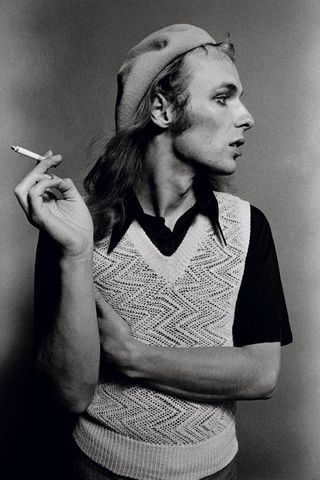
Img-brian2_152616699090If humans were able to hear light and parse the poetry of the spectrum, then perhaps there would be no need for Brian Eno, who seems to do it effortlessly. While the rest of us are generally content to hear sound, Eno can clearly see it. How else to explain the elaborate sonic color fields and glowing soundscapes that he creates, which feel as much like floating shapes and waves of light as they do music? And how else to make sense of a body of work that has been by turns challenging and definitive and spread across an expanse of disparate worlds and genres, from his early work with Roxy Music, to his ever-evolving solo oeuvre, to the colossal swoosh of his frequent collaborations with U2, to his numerous art projects, compositional gambits, and multimedia installations—not to mention the three ambient-music-generating apps, Scape, Bloom, and Trope, that he has created with musician and software designer Peter Chilvers.

Eno, though, has always had the good taste to never confuse grandeur with bombast. From his first gig with Roxy Music in 1971, it was clear that he was not going to play the role of rock musician as anyone had before. (He often preferred to play off stage, behind the mixing board, processing the sound with a VCS3 synthesizer, even as he sang background vocals.) Eno helped paint David Bowie's late-'70s “Berlin Trilogy” of Low (1977), Heroes (1977), and Lodger (1979) with a sense of minimalist discipline and a saturated electronic whir without sacrificing Bowie's sense of playfulness or his desperately romantic croon. With Eno behind the boards, Talking Heads catapulted from quirky New Wave outfit to mind-blowing world-funk collective, and his later work with Heads leader David Byrne, the co-credited 1981 album My Life in the Bush of Ghosts, successfully traversed a precarious edge of experimental music in its use of unconventional instrumentation and found and sampled sounds. But one of Eno's longest and most sustained creative partnerships has been with U2, which began when he and Daniel Lanois joined forces to produce the Irish foursome's brilliantly elliptical 1984 albumThe Unforgettable Fire, and continued as the group transformed itself from a club act into a force that could dominate football stadiums to the last great big rock group standing without ever compromising its creative ambition or sense of spirituality.

More here.

Not Talking About Pakistan

Taymiya R. Zaman in Tanqeed:

Road-shot-3I drew a secret line around the borders of Pakistan and rarely stepped over it. In the fall of 2007, I began teaching Islamic history at a small liberal arts college in San Francisco; even though my classes on South Asia and the Middle East could easily have included Pakistan, I made sure to exclude Pakistan from all my syllabi. To avoid ever having to talk about Pakistan, I changed the name of a course a predecessor had titled “History of South and Southeast Asia,” to “Indian Civilizations.” This now meant that the course took a leisurely route through the Indus Valley Civilization, the coming of the Aryans, the spread of Jainism and Buddhism in North India, the rise of the Mughal Empire and concluded with British colonial rule and the formation of India and Pakistan in 1947. But, after an emotionally charged lecture on Partition, I would begin a section on modern India and say nothing of Pakistan after the moment of its creation. My class, “The Modern Middle East,” covered American wars in Afghanistan but my syllabus screeched to a halt at the Pakistan border. Although the country inevitably featured in class discussions about U.S. foreign policy, I assigned no readings on Pakistan. In my other classes, I stayed away from the twentieth century, which meant that the question of Pakistan never arose.

Outside the classroom too, I was something of an expert at not talking about Pakistan.

More here.

The Gatekeepers: Six Israeli security chiefs stun world

Samuel Burke at CNN:

ScreenHunter_89 Feb. 05 18.54Six former heads of the Shin Bet, Israel’s secretive internal security service, have spoken out as a group for the first time and are making stunning revelations.

The men who were responsible for keeping Israel safe from terrorists now say they are afraid for Israel’s future as a democratic and Jewish state.

Israeli film director Dror Moreh managed to get them all to sit down for his new documentary: “The Gatekeepers.” It is the story of Israel’s occupation of the Palestinian Territories, as told by the people at the crossroads of some of the most crucial moments in the security history of the country.

“If there is someone who understands the Israeli-Palestinian conflict, it’s those guys,” the director told CNN’s Christiane Amanpour.

Against the backdrop of the currently frozen peace process, all six argue – to varying degrees – that the Israeli occupation of Palestinian land is bad for the state of Israel.

The oldest amongst the former chiefs, Avraham Shalom, says Israel lost touch with how to coexist with the Palestinians as far back as the aftermath of the Six Day War of 1967, with the occupation of Gaza and the West Bank, when the country started doubling down on terrorism.

“We forgot about the Palestinian issue,” Shalom says in the film.

A major impediment to a meaningful strategy, they say, are the Jewish extremists inside Israel – people like the Jewish Israeli who assassinated Prime Minister Yitzak Rabin, or the 1980 plot to blow up the Dome of the Rock Islamic shrine in Jerusalem.

More here.

A Legacy of Dark and Light

20130117_TNA37ValiunasCuriehomepage

Marie Curie’s death was brutal. She had long faced the ravages of extended radiation exposure: fevers, cataracts, respiratory distress, running sores on her hands. Aplastic pernicious anemia finished the job. She died on July 4, 1934, at the age of sixty-seven. … What would Madame Curie have thought of the long-term ramifications of her discoveries? The manifold medical and industrial uses of radioactive materials would have staggered her, in the best way. The atomic scientist Alan E. Waltar’s Radiation and Modern Life: Fulfilling Marie Curie’s Dream (2004) gives an idea of the vast scope of the technology, which is used in increasing crop production, controlling insect pests, sterilizing medical equipment, developing new drugs, medical diagnosis, cancer treatment, nuclear power, purifying cosmetics, testing soil at construction sites with radiation gauges, measuring automotive engine wear, inspecting aircraft welds through radiography, determining rail stresses, radioisotope thermoelectric generators for spacecraft, luminescent exit signs in public buildings, DNA forensics, carbon dating, enhancing the beauty of precious gems, authenticating rare paintings, and on and on.

more from Algis Valiunas at The New Atlantis here.

leaving the witness

Article_scorah

I began learning Mandarin Chinese in 2003 through a night class offered at my congregation in Vancouver. I had been a devout Jehovah’s Witness from the time I was a child, and I became a full-time missionary the day I graduated from high school. It was a pretty typical path for a young Witness. Pursuing any kind of career was frowned upon as materialistic and a distraction from what really mattered: preaching. Four days a week, I would put on my modest skirt and practical shoes, fill my briefcase with magazines and other Watchtower publications, and walk to the Kingdom Hall near my home in Kitsilano. I’d meet up with a car group of other Witnesses. We’d then head out to our assigned territory—the affluent neighborhoods of Vancouver’s west side. We would knock on doors—street by street, house by house. Some people would be polite, but most were just annoyed. Once in a while someone would slam the door in my face, or yell. But mostly people didn’t answer. Missionary work wasn’t the easiest in Vancouver.

more from Amber Scorah at The Believer here.

indirectly forthright, demure and definitive at once

Phillips_38.1_moore

Marianne Moore is always hiding in plain sight. She is the paradoxical radical, either distracting the reader from her traditionalism with avant-garde trappings or concealing rebellion in prim camouflage. She picketed for women’s rights and voted for Herbert Hoover. She distrusted the “obscenities” in William Carlos Williams and encouraged the “ability” in Allen Ginsberg. She breathed horror of “a sodomite” to one lesbian friend and signed letters to another “your affectionate albino-dactyl.” Those three-corned hats and men’s polo shirts: do they reflect an old-fashioned aversion to frippery or an innovative preference for androgyny? And her resolute urban celibacy (she lived in an apartment with her mother): a species of piety or a refusal of stereotypes? Moore’s mix of puritan and progressive seems quintessentially American—alert to the virtues of brown bread and the glories of Brancusi’s sculpture, to Pilgrim’s Progress as well as Ezra Pound. Likewise her get-to-the-point distrust of dreaming: “No wonder we hate poetry,” she writes in “Armor’s Undermining Modesty,” and “stars and harps and the new moon.” When Moore ends that poem on an “imperishable wish,” she means something as solid as the “hard yron” of another of her titles. Moore was indirectly forthright, demure and definitive at once.

more from Siobhan Phillips at Boston Review here.

Tuesday Poem

For All

Ah to be alive
on a mid-September
morn
fording a stream
barefoot, pants rolled up,
holding boots, pack
on,
sunshine, ice in the shallows,
northern rockies.

Rustle and
shimmer of icy creek waters
stones turn underfoot, small and hard as
toes
cold nose dripping
singing inside
creek music, heart
music,
smell of sun on gravel.

I pledge allegiance

I pledge
allegiance to the soil
of Turtle Island,
and to the beings who thereon
dwell
one ecosystem
in diversity
under the sun
With joyful
interpenetration for all.

by Gary Snyder