
Enjoying the content on 3QD? Help keep us going by donating now.
Category: Recommended Reading
A Mesmerizing New Opera About a Sonic Cult
Alex Ross at The New Yorker:
 Claire Devon, the protagonist of Missy Mazzoli’s seductively nightmarish opera “The Listeners,” is living contentedly as a suburban schoolteacher somewhere in the Southwest when she is beset by an inexplicable, inescapable sound. It is described as a “dull hum,” an “aggressive drone,” which renders daily existence intolerable. As she searches for the source of the noise, her life unravels by degrees. She develops an ill-defined, ill-fated attachment to one of her students, who also hears the hum. Her husband and her daughter move out; the school fires her. She falls in with a psychiatrist, Howard Bard, who presides over a cultish association of Listeners—people attuned to the hum. When one of them, a conspiracy theorist, fires a gun at a cell tower, the police spring into action and violence ensues. The ending is as unexpected as it is unsettling. Instead of fleeing the cult, Claire takes control of it, the hum having awakened charismatic powers within her. “We all need a family that understands us,” she intones, as Listeners crowd around her.
“The Listeners,” which had its première at the Norwegian National Opera, in 2022, and travelled to Opera Philadelphia last month, tells a familiar story of virulent environmental anxiety, in the vein of Todd Haynes’s 1995 film, “Safe.”
more here.
Enjoying the content on 3QD? Help keep us going by donating now.
Geoffrey “Godfather of AI” Hinton and John Hopfield win physics Nobel!
Christian Edwards at CNN:
 The 2024 Nobel Prize in physics has been awarded to John Hopfield and Geoffrey Hinton for their “foundational discoveries” that enable machine learning with artificial neural networks.
“Although computers cannot think, machines can now mimic functions such as memory and learning. This year’s laureates in physics have helped make this possible,” the Nobel Committee said in a statement.
The committee announced the prestigious honor, seen as the pinnacle of scientific achievement, in Sweden on Monday. The prize carries a cash award of 11 million Swedish kronor ($1 million).
More here.
Enjoying the content on 3QD? Help keep us going by donating now.
Monday, October 7, 2024
When Your Lover Is a Bot
Mihika Agarwal at The Walrus:
 Abrupt policy-inspired breakups are just one socio-ethical dilemma ushered in by the era of artificial intimacy. What are the psychological effects of spending time with AI-powered companions that provide everything from fictionalized character building to sexually explicit role play to recreating old-school girlfriends and boyfriends who promise to never ghost or dump you?
Some bots, including Replika, Soulmate AI, and Character AI, replicate the gamified experience of apps like Candy Crush, using points, badges, and loyalty rewards to keep users coming back. Premium subscription tiers (about $60 to $180 per year, depending on the app) unlock features like “intimate mode,” sending longer messages to your bot, or going ad free. Popular large language models like ChatGPT are veering in the same direction—a recent OpenAI report revealed the risk of “emotional reliance” with software that now offers voice exchanges.
Love, lust, and loneliness—Silicon Valley may have found its next set of visceral human needs to capitalize on.
More here.
Enjoying the content on 3QD? Help keep us going by donating now.
Computer Scientists Combine Two ‘Beautiful’ Proof Methods
Ben Brubaker in Quanta:
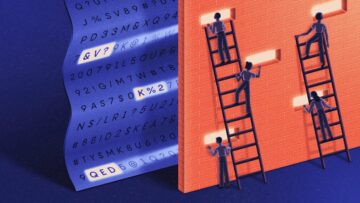 How do you prove something is true? For mathematicians, the answer is simple: Start with some basic assumptions and proceed, step by step, to the conclusion. QED, proof complete. If there’s a mistake anywhere, an expert who reads the proof carefully should be able to spot it. Otherwise, the proof must be valid. Mathematicians have been following this basic approach for well over 2,000 years.
Then, in the 1980s and 1990s, computer scientists reimagined what a proof could be. They developed a dizzying variety of new approaches, and when the dust settled, two inventions loomed especially large: zero-knowledge proofs, which can convince a skeptic that a statement is true without revealing why it is true, and probabilistically checkable proofs, which can persuade a reader of the truth of a proof even if they only see a few tiny snippets of it.
“These are, to me, two of the most beautiful notions in all of theoretical computer science,” said Tom Gur(opens a new tab), a computer scientist at the University of Cambridge.
More here.
Enjoying the content on 3QD? Help keep us going by donating now.
The UN Is Speaking Up About AI: Ian Bremmer and Bilawal Sidhu
Enjoying the content on 3QD? Help keep us going by donating now.
Enzo Traverso on Irresponsible Journalism and the Suppression of Student Protests
Enzo Traverso at Literary Hub:
 The press and especially the news channels are constantly warning us that antisemitism is everywhere on the rise. They don’t point to specific episodes, content instead to denounce an ancient prejudice that in the context of a Middle East crisis is staging a resurgence. No, they describe a gigantic wave of antisemitism that has been sweeping across the globe since October 7. Its epicenter is on American college campuses, just as the epicenter of the anti–Vietnam War movement was on college campuses sixty years ago.
The New York Times has published a number of articles making the analogy between the current antiwar demonstrations and the earlier ones. The comparison is fair enough, since the United States has not seen protests on this scale since the Vietnam War. Students are well aware of this. In the 1960s, an American army was engaged in war in Southeast Asia; today, Israel is destroying Gaza with weapons supplied by the United States.
Like their predecessors, today’s students understand that their involvement is crucial to stopping the massacre, that their demonstrations are not mere gestures of solidarity but an uprising organically linked to the Palestinian resistance. In both cases, these movements have been violently denounced, and even repressed.
More here.
Enjoying the content on 3QD? Help keep us going by donating now.
The Last Days of Mankind
Pankaj Mishra at n+1:
 At a time of widespread economic distress, ethnonationalists in the United States and United Kingdom as well as Germany, France, Hungary, Poland and Italy are united by their antipathy to immigrants, and targeting of institutions deemed insufficiently patriotic or indulgent of sexual, ethnic and racial minorities. This bleak scenario can be further elaborated. The main economic ideologies of endless growth and global prosperity have come up against environmental constraints and technological innovation, as well as built-in limits, and look unsustainable.
Editors and writers in hallowed periodicals were never mentally prepared for the collapse of their ideology of capitalist globalization and the rapid diminishment of Western power, legitimacy, and prestige. They were too attached, by national and class origin, and training, to the intellectual assumptions developed during the unchallenged hegemony of the West. Personally too implicated in the death-agonies of the old world, they cannot now feel the birth-pangs of the new. Indeed, they struggle to comprehend their own societies as these drastically change around them; they obsess over mere symptoms of a splintered social consensus such as “culture wars” and end up wringing meaning out of abstractions like “populism,” “democratic backsliding,” and “crisis of liberalism.”
more here.
Enjoying the content on 3QD? Help keep us going by donating now.
The Dreams and Specters of Scholastique Mukasonga
Marta Figlerowicz at the Paris Review:
 Like her other works—including Sister Deborah, the English translation of which is forthcoming from Archipelago later this month—Cockroaches is a reckoning with history, a steadfast commemoration of a community and culture that others tried to eradicate. But even in her debut, which many early critics read as a straightforward work of testimony about the Tutsi genocide, there is a deeply self-questioning quality to that work of commemoration. The narrator always wakes from her nightmare just as she is about to perish at the hands of her pursuers, who have already killed the other Tutsi girls fleeing alongside her. She thinks, “I know I’m going to fall, I’m going to be trampled”; and yet each night she reopens her eyes and her surroundings contradict this conviction. Why was she chosen to survive, and who did the choosing?
Mukasonga’s writing obsessively tries to answer this question, to justify but also to understand the reasons for her survival. Being spared from the genocide looms over her as an unaccountable miracle and as a heavy burden of mourning.
more here.
Enjoying the content on 3QD? Help keep us going by donating now.
Against humility
Rachel Fraser in aeon:
 Suppose you want to be a better person. (Lots of us do.) How might you go about it? You might try to become more generous and commit to donating more of your income to charity. Or you might try to become more patient, and practise listening to your partner, instead of snapping at them. These commonsense prescriptions invoke an ancient ethical tradition. Generosity and patience are virtues – excellences of character, whose exercise makes us flourish. To live well, says the virtue ethicist, is to cultivate and exercise just such excellences of character.
Part of living well, though, is thinking well. Our souls have an intellectual, as well as a practical, part; we cannot live fully flourishing lives unless we flourish intellectually. Are there, then, specifically intellectual virtues – excellences of intellectual character, whose exercise makes us good thinkers? Aristotle – whose works remain a touchstone for contemporary virtue theorists – certainly thought so.
More here.
Enjoying the content on 3QD? Help keep us going by donating now.
In Conversation With Scholastique Mukasonga
Enjoying the content on 3QD? Help keep us going by donating now.
World-first therapy using donor cells sends autoimmune diseases into remission
Smriti Mallapaty in Nature:
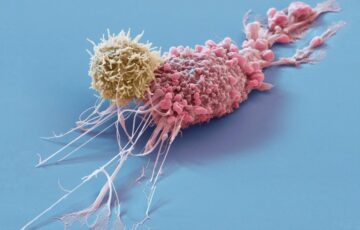 One woman and two men with severe autoimmune conditions have gone into remission after being treated with bioengineered and CRISPR-modified immune cells1. The three individuals from China are the first people with autoimmune disorders to be treated with engineered immune cells created from donor cells, rather than ones collected from their own bodies. This advance is the first step towards mass production of such therapies.
One of the recipients, Mr Gong, a 57-year-old man from Shanghai, has systemic sclerosis, which affects connective tissue and can result in skin stiffening and organ damage. He says that three days after receiving the therapy, he felt his skin loosen and he could start moving his fingers and opening his mouth again. Two weeks later, he returned to his office job. “I feel very good,” he says, more than a year after receiving the treatment.
More here.
Enjoying the content on 3QD? Help keep us going by donating now.
Sunday, October 6, 2024
Karl Marx’s Capital
Over at Princeton University Press’s Ideas Podcast, an interview with Paul North and Paul Reitter, editors of the new translation of Capital Volume 1, and Simon Vance:
Karl Marx (1818–1883) was living in exile in England when he embarked on an ambitious, multivolume critique of the capitalist system of production. Though only the first volume saw publication in Marx’s lifetime, it would become one of the most consequential books in history. This magnificent new edition of Capital is a translation of Marx for the twenty-first century. It is the first translation into English to be based on the last German edition revised by Marx himself, the only version that can be called authoritative, and it features extensive commentary and annotations by Paul North and Paul Reitter that draw on the latest scholarship and provide invaluable perspective on the book and its complicated legacy.
Enjoying the content on 3QD? Help keep us going by donating now.
Asperity and Delight
Hal Foster in Sidecar:
Richard Serra, who died in March of this year at the age of eighty-five, sought out the resistance of other voices, in part to clarify his own. The composers Philip Glass and Steve Reich performed that role early on, as did the artist Robert Smithson. Critics and curators like Rosalind Krauss, David Sylvester and Kirk Varnedoe stepped up later, and for six decades his wife Clara Serra was his essential interlocutor. I, too, was lucky enough to be in dialogue with Serra for many years; it was one of the great adventures of my life as a critic. At times, though, it was harrowing; my private title for our 2018 book Conversations about Sculpture was ‘Godzilla Meets Bambi.’ But Serra was no monster, and I learned not to shy away from his challenges. Our book works, to the extent that it does, because we agree just enough so that, when we disagree, the differences count.
One issue we debated is the difference between site and context. ‘Might you be so inside your language,’ I asked Serra, ‘so attuned to its nuances, that you’re not alert enough to conditions that are already there, embedded in the context – conditions that are social, economic, and political?’
‘If you go into a community to make a work,’ he replied, ‘and you try to follow the demands of the local people, which are never homogeneous anyway, you end up serving their interests more than your own. And usually their interests are transitory . . . So you have to hold fast to your work.’
More here.
Enjoying the content on 3QD? Help keep us going by donating now.
Can Social Democracy Win Again?
Simon Torracinta in Boston Review:
When Bernie Sanders was asked in a 2016 Democratic presidential debate what “democratic socialism” meant to him, he responded that we should “look to countries like Denmark, like Sweden and Norway.” Hillary Clinton was unequivocal in her reply: “We are not Denmark.” Yet Sanders kept the line, and his odes to the shining example of Nordic social democracy remained an exhaustive refrain throughout his 2016 and 2020 campaigns. The theme was unsurprising: ever since 1936, when Franklin Roosevelt hailed Sweden’s “middle way” between capitalism and communism, Scandinavia has been a fixture in the American left-liberal imaginary.
What’s not to like about Sweden? Its parents benefit from a total of 16 months leave for a newborn child, which they can divide among themselves, 13 months of which are paid at 80 percent of income. Income inequality, though rising, is moderate by international standards, and measurable gender inequalities are notably small. The country consistently scores near the top of global indexes of “happiness’” and “quality of life.” Union density stands at 69 percent, approximately seven times that of the United States and the second-highest rate anywhere in the world. In a continent in which left-of-center parties have been buffeted by populist and far-right upsurges and the once-flagship parties of the left like the French socialists are hollow shells of their former selves, the Swedish Social Democratic Workers’ Party (SAP) looks comparatively resilient. It has continued to command roughly 30 percent of the vote in elections over the last decade and has led the national government for half of the last twenty years.
Seen from another angle, however, the country looks very different.
More here,
Enjoying the content on 3QD? Help keep us going by donating now.
A Means to Live
Astra Taylor in The Nation:
Early in January at Le Mars, in northwestern Iowa, a mob of a thousand farmers seized the attorney for an insurance company, dangled a rope before his eyes, and threatened him with immediate lynching.” So begins an article by the journalist Charlotte Prescott, published in The Nation in February of 1933. In the first paragraph, Prescott informs her readers that the protesters then “held the judge of the district court a prisoner in his chambers and defied the county sheriff.” She also notes that the farmers won: Soon after, local officials withdrew foreclosure proceedings against one farmer and tossed out a judgment against another. A “social revolution in the cornfields of Iowa,” a wholesale revolt of the rural population against the authorities, was under way.
The Iowa rebellion was no isolated skirmish. In the 1930s, indebted farmers fought foreclosure across the heartland. They organized to protect one another’s homes and livelihoods and campaigned for politicians who vowed to represent their interests, preventing land seizures through direct action and at the ballot box. Yet as impressive as this surge of populist fervor was, it represented only one chapter in a much longer conflict between debtors and creditors in the United States—a conflict that is foundational to American politics and yet, for some reason, is mostly forgotten.
The Political Development of American Debt Relief, a fascinating new book by Emily Zackin and Chloe N. Thurston, seeks to recover this history.
More here.
Enjoying the content on 3QD? Help keep us going by donating now.
Sunday Poem
The Dance
In Breughel’s great picture, The Kermess,
the dancers go round, they go round and
around, the squeal and the blare and the
tweedle of bagpipes, a bugle and fiddles
tipping their bellies (round as the thick-
sided glasses whose wash they impound)
their hips and their bellies off balance
to turn them. Kicking and rolling about
the Fair Grounds, swinging their butts, those
shanks must be sound to bear up under such
rollicking measures, prance as they dance
in Breughel’s great picture, The Kermess.
by William Carlos Williams
from Selected Poems
New Directions Paperbook, 1949
Breughel’s painting: The Kermess
Enjoying the content on 3QD? Help keep us going by donating now.
Kris Kristofferson (1936 – 2024) Singer-Songwriter And Actor
Enjoying the content on 3QD? Help keep us going by donating now.
Why Christianity became popular
Enjoying the content on 3QD? Help keep us going by donating now.
Plastic-eating bacteria could combat pollution problems, scientists hope
Lizette Ortega in The Washington Post:
 Scientists discovered that bacteria commonly found in wastewater can break down plastic to turn it into a food source, a finding that researchers hope could be a promising answer to combat one of Earth’s major pollution problems. In a study published Thursday in Environmental Science and Technology, scientists laid out their examination of Comamonas testosteroni, a bacteria that grows on polyethylene terephthalate, or PET, a plastic commonly found in single-use food packaging and water bottles. PET makes up about 12 percent of global solid waste and 90 million tons of the plastic produced each year.
“The machinery in environmental microbes is still a largely untapped potential for uncovering sustainable solutions we can exploit,” said Ludmilla Aristilde, senior author on the study and associate professor of civil and environmental engineering at Northwestern University. Unlike most other bacteria, which thrive on sugar, C. testosteroni has a more refined palate, including chemically complex materials from plants and plastics that take longer to decompose. The researchers are the first to demonstrate not only that this bacteria can break down plastic, but they also illuminate exactly how they do it.
Through six meticulous steps, involving complex imaging and gene editing techniques, the authors found that the bacteria first physically break down plastic by chewing it into smaller pieces. Then, they release enzymes — components of a cell that speed up chemical reactions — to chemically break down the plastic into a carbon-rich food source known as terephthalate.
More here.
Enjoying the content on 3QD? Help keep us going by donating now.