
Enjoying the content on 3QD? Help keep us going by donating now.
Category: Recommended Reading
Wednesday, October 9, 2024
The bookies’ odds for tomorrow’s Nobel Prize in Literature
Emily Temple at Literary Hub:
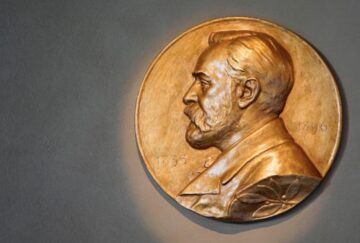 The 2024 Nobel Prize in Literature will be announced this Thursday, October 10. Who will win? As ever, no one knows. But everyone likes to guess…and bet. And because money talks, the betting odds can tell you a lot. Or a little. Or, something, anyway!
To figure out where to put my (extremely metaphorical) money this year, I consulted Ladbrokes, the UK’s premiere (?) betting outlet, which offers an extensive list of favorites, including many old hats and a few new ones.
Can Xue tops the list for the second year in a row. Is this her year? (I wouldn’t be surprised—last year, I predicted that she would win in 2024.) Australian novelist Gerald Murnane is in second place. Is it his year? After all, last year he was third, and in second place was Jon Fosse, who won. So it only follows. Maybe, maybe. Murakami is hanging around as always; César Aira is in the mix; the Greek writer Ersi Sotiropoulos makes a surprise appearance. Margaret Atwood has rather come up in the world since last year, when her odds were 39/1. Robert Coover is on the list, though very sadly, now ineligible. J.K. Rowling is in the insult slot, which made me laugh.
More here.
Enjoying the content on 3QD? Help keep us going by donating now.
Review of “The Third Realm” by Karl Ove Knausgård
Lara Feigel in The Guardian:
 “Signs are taken for wonders,” TS Eliot’s speaker observes soberly in Gerontion. But what is the difference between a wonder and a sign – and which do we prefer? Such questions flow through Karl Ove Knausgård’s Morning Star series of novels, an ongoing effort to open fiction up into a kind of vast Book of Revelation in which visions of red deer, landlocked crabs and devils stream across a rural Norway populated by Knausgård’s familiar hotel bars and supermarkets.
In the first volume, 2021’s The Morning Star, a disparate group of Knausgårdian characters – a jaded academic with a manic-depressive wife, a doubting vicar with a jealous husband – found their lives illuminated and sent off kilter by a new, preternaturally bright star in the sky. The vicar buried a man she’d seen alive after his death; two characters shared a vision of a ghost. This was followed by The Wolves of Eternity, a tighter story where a funeral director with an unexpected zest for life meets his half-sister, watched over by that same potentially diabolical star, amid a series of disquisitions on resurrection. Both novels had flashes of brilliance, but were unable to find a satisfying structure to blend the everyday with the supernatural and philosophical.
The Third Realm is quite different, even though the characters come from the earlier novels. With breathtaking confidence, Knausgård mirrors The Morning Star, giving us other, richer perspectives on the material.
More here.
Enjoying the content on 3QD? Help keep us going by donating now.
Google DeepMind boss, Demis Hassabis, wins Nobel for proteins breakthrough
Georgina Rannard at the BBC:
 British computer scientist Professor Demis Hassabis has won a share of the Nobel Prize for Chemistry for “revolutionary” work on proteins, the building blocks of life.
Prof Hassabis, 48, co-founded the artificial intelligence (AI) company that became Google DeepMind.
Professor John Jumper, 39, who worked with Prof Hassabis on the breakthrough, shares the award along with US-based Professor David Baker, 60.
Proteins are the building blocks of life and are found in every cell in the human body.
Better understanding proteins has driven huge breakthroughs in medicine. It is used in solving antibiotic resistance and to image enzymes that can decompose plastics.
Prof Hassabis said it was the “honour of a lifetime” to receive the Nobel.
“I’ve dedicated my whole life to working on AI because I believe in its potential to change the world,” he said in a press conference on Wednesday.
More here.
Enjoying the content on 3QD? Help keep us going by donating now.
The 2024 Nobel Prize in Physics Went To Computer Scientists!
Enjoying the content on 3QD? Help keep us going by donating now.
China Builds A New Eurasia
Jacob Dreyer at Noema:
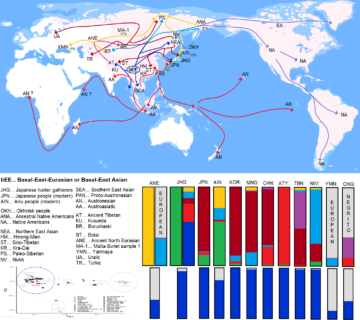 Over the past few years, the flimsy states and territories that cover the Eurasian continent as lightly as gauze have been getting pushed and pulled into a new way of being. In response to volatile oil prices, temperatures creeping ever higher, forests burning and deserts growing, China is reordering the internal logic of the supercontinent under the banner of a technological dream of endlessly renewable electricity.
The sources of this electricity, as if in fulfillment of an ancient pagan dream, are the rays of the sun, the breeze across the prairie and the cascades of mountain rivers. While new reservoirs of fossil fuels and seams of ores are being penetrated here too, two-thirds of all wind and solar projects that are currently under construction are located in China, and the country is expected to install more than half of the world’s total solar power in 2024 alone, both within and outside its borders. Across these huge distances and extreme temperatures — what the English geographer Halford Mackinder called the “Heartland” of the “World Island” — new towns are being built, even new capitals, all linked by lengths of glass and plastic wires to vast fields of solar panels and wind turbines and mega-dams.
more here.
Enjoying the content on 3QD? Help keep us going by donating now.
Wednesday Poem
Carpe Diem
Night and day
seize the day, also the night —
a handful of water to grasp.
The moon shines off the mountain
snow where grizzlies look for a place
for the winter’s sleep and birth.
I just ate the year’s last tomato
in the year’s fatal whirl.
This is mid-October, apple time.
I picked them for years.
One Mcintosh yielded sixty bushels.
It was the birth of love that year.
Sometimes we live without noticing it.
Overtrying makes it harder.
I fell down through the tree grabbing
branches to slow the fall, got the afternoon off.
We drove her aqua Ford convertible into the country
with a sack of red apples. It was a perfect
day with her sun-brown legs and we threw ourselves
into the future together seizing the day.
Fifty years later we hold each other looking
out the windows at birds, making dinner,
a life to live day after day, a life of
dogs and children and the far wide country
out by rivers, rumpled by mountains.
So far the days keep coming.
Seize the day gently as if you loved her.
Enjoying the content on 3QD? Help keep us going by donating now.
A Small RNA with a Big Impact on Cell Aging
Kamal Nahas in The Scientist:
 All cells in the body reach a point where they stop dividing, but some get there quicker under the influence of pressures, such as DNA damage or oxidative stress.1 Biologists have long studied how proteins hasten cell senescence in response to such signals but they know little about the role that RNAs play.2
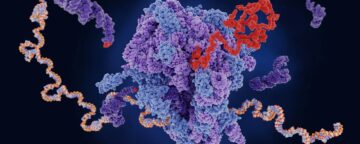
Publishing in Cell, scientists zeroed in on an RNA that triggers cells to stop dividing by inhibiting the production of ribosomes.3 Beyond expanding what scientists know about the roles of this class of biomolecules in cell senescence, these findings could inform the design of novel treatments for ribosomal diseases. Ribosomes provide cells with the surplus of proteins needed to continue to divide, placing these protein factories as key players in controlling cell senescence. Researchers have shown that small nucleolar RNAs (snoRNAs) modify bases in ribosomal RNAs, but Joshua Mendell, a molecular biologist at the University of Texas Southwestern and study coauthor, wanted to know whether these tweaks can cause ribosomes to ramp down protein production and trigger cell senescence.
More here.
Enjoying the content on 3QD? Help keep us going by donating now.
How Did Birmingham Help Forge Modern Britain?
Enjoying the content on 3QD? Help keep us going by donating now.
What Good Is Great Literature?
A O Scott in The New York Times:
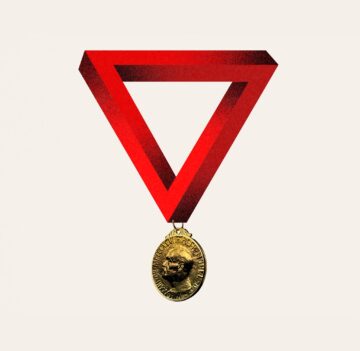 On Thursday, the Swedish Academy will award the Nobel Prize in Literature, the pre-eminent — perhaps only — global arbiter of literary greatness.
What distinguishes the Nobel isn’t that it singles out the best new poems, novels, essays and plays — that kind of reader service is the job of the National Book Awards, the Booker, the Pulitzer and the dozens of other worthy prizes that crowd the calendar. The academy does not celebrate great books; it consecrates great writers, compiling not a canon but a pantheon, not a reading list but a roster of immortals.
It’s easy enough to second-guess the choices, to count the past winners who have fallen into obscurity (no disrespect to Salvatore Quasimodo) and list the non-winners who have stuck around for posterity (Vladimir Nabokov was totally robbed). Questioning the wisdom of the Nobel Committee is a cherished paraliterary ritual, along with guilt-buying the works of an author you’ve never heard of. (I swear I’ll get to Jon Fosse, as soon as I’m done with Herta Müller and Jean-Marie Gustave Le Clézio.) Mostly, though, the busy and distracted reading public is content to take the learned Swedes at their word, to balance skepticism and bewilderment — wait, who? — with a measure of relief. We can rest assured that, for one more year, an important cultural principle has been upheld.
But what purpose does the principle serve? What good is greatness?
More here.
Enjoying the content on 3QD? Help keep us going by donating now.
Churchill’s Citadel: Chartwell and the Gatherings Before the Storm
Richard Vinen at Literary Review:
 It was during the 1930s that Chartwell mattered most. Churchill was out of office. He had a flat in London but no official residence and, for much of the time, no particular reason to be in the capital. Chartwell was not, though, a retreat from the world. It was a kind of factory, filled with secretaries and research assistants who hammered Churchill’s literary and political productions into shape. It was also a meeting place – close enough to London for people to come down for lunch, dinner or an evening of conspiracy. It was, to a large extent, at Chartwell that Churchill plotted his political campaigns of the decade. Two of these were misguided. He sought to resist the limited reforms that the Baldwin government proposed to British rule in India and to defend Edward VIII during the crisis that sprang from the king’s insistence on marrying an American divorcée. Another campaign he led from there – against the appeasement of Nazi Germany and in favour of British rearmament – would, in retrospect, be seen as the most important in interwar British politics.
Churchill still had the best address book in Europe. Officials and ministers talked to him and sometimes provided him with confidential information.
more here.
Enjoying the content on 3QD? Help keep us going by donating now.
Tuesday, October 8, 2024
Review of J.M. Coetzee’s new book, “The Pole”
Ellena Savage in the Sydney Review of Books:
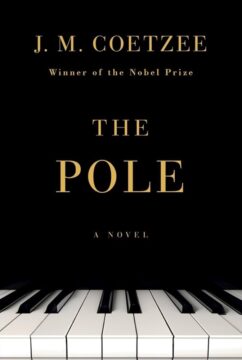 In ‘As a Woman Grows Older’, the second story in J.M. Coetzee’s very funny 2023 book The Pole and Other Stories, Elizabeth Costello complains to her son John:
‘The word that comes back to me from all quarters is bleak. Her message to the world is unremittingly bleak. What does it mean, bleak? A word that belongs to a winter landscape has somehow become attached to me, like a little mongrel that trails behind, yapping, won’t be shaken off. I am dogged by it. It will follow me to the grave. It will stand at the lip of the grave, peering in and yapping bleak, bleak, bleak!’
When I told friends I was rereading Coetzee’s novels for a review of his new book, their responses fell into two categories. The first was a variation of ‘bleak!’, and the second was ‘I once thought about writing a PhD on him’ – another version of bleak. Only those in the second category admitted they sometimes found Coetzee ‘funny’, and even then, only some of them did. When I typed ‘bleak’ and ‘J. M. Coetzee’ into my search bar, the results confirmed the diagnosis: ‘Frighteningly bleak,’ says the New Statesman; his works ‘mirror the bleakness of the human condition’ – the New York Times. In The Guardian, Coetzee’s vision explores ‘the human condition with a bleak, dispassionate sympathy’. ‘I do have some difficulty with the bleak emotional weather of his autobiographical works,’ says the London Review of Books. Furthermore: ‘bleak’ (Salon); ‘bleak’ (British Council); ‘bleak’ (Prospect Magazine).
More here.
What AI images reveal about our world
Rachel Ossip in The Guardian:
 When faced with a bit of downtime, many of my friends will turn to the same party game. It’s based on the surrealist game Exquisite Corpse, and involves translating brief written descriptions into rapidly made drawings and back again. One group calls it Telephone Pictionary; another refers to it as Writey-Drawey. The internet tells me it is also called Eat Poop You Cat, a sequence of words surely inspired by one of the game’s results.
As recently as three years ago, it was rare to encounter text-to-image or image-to-text mistranslations in daily life, which made the outrageous outcomes of the game feel especially novel. But we have since entered a new era of image-making. With the aid of AI image generators like Dall-E 3, Stable Diffusion and Midjourney, and the generative features integrated into Adobe’s Creative Cloud programs, you can now transform a sentence or phrase into a highly detailed image in mere seconds. Images, likewise, can be nearly instantly translated into descriptive text. Today, you can play Eat Poop You Cat alone in your room, cavorting with the algorithms.
More here.
Enjoying the content on 3QD? Help keep us going by donating now.
How the US Lost the Solar Power Race to China
David Fickling at Bloomberg:
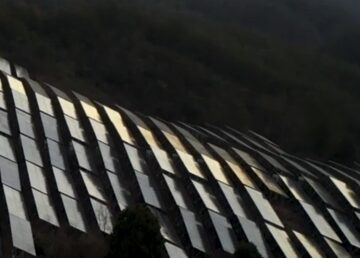 To make the solar cells that are projected to become the world’s biggest source of electricity by 2031, you first melt down sand until it looks like chunks of graphite. Next, you refine it until impurities have been reduced to just one atom out of every 100 million — a form of elemental silicon known as polysilicon. It’s so vital to the production of solar panels that it can be likened to crude oil’s role in making gasoline. The polysilicon is then drawn out into a vast crystal, resembling a Jeff Koons steel sculpture of a sausage, before being sliced into salami-thin wafers. These are then treated, printed with electrodes, and finally sandwiched between glass.
The basic process has changed little since the first cell was invented in 1954 by scientists at Bell Laboratories in New Jersey exploring whether silicon could be used to power computer processors. “It may mark the beginning of a new era,” The New York Times wrote at the time in a front-page article announcing the discovery, “leading eventually to the realization of one of mankind’s most cherished dreams — the harnessing of the almost limitless energy of the sun for the uses of civilization.”
The seven decades since tell the remarkable story of how America squandered its invention of solar photovoltaics, or PV, to the point where it will never recover.
More here.
Enjoying the content on 3QD? Help keep us going by donating now.
The 2024 Nobel Prize in Physics Went To Computer Scientists!
Enjoying the content on 3QD? Help keep us going by donating now.
How are holograms possible?
Enjoying the content on 3QD? Help keep us going by donating now.
Her Face Was Unrecognizable After an Explosion. A Placenta Restored It
Kate Morgan in The New York Times:
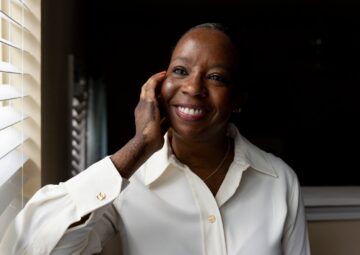 Marcella Townsend remembers looking around the kitchen in shock. In the silence just after the explosion, before the pain kicked in, she found herself almost in awe of the crushed stove and the caved-in cabinets.
“It was like Bigfoot had walked across the counters,” she said. In the aftermath of a propane explosion at her mother’s house in Savannah, Ga., in 2021, Ms. Townsend spent more than six weeks in an induced coma in a burn trauma unit. She had second- and third-degree burns over most of her body, and her face had become unrecognizable.
Searching for a way to help her, surgeons turned to a rarely utilized tool: human placenta. They carefully applied a thin layer of the donated organ to her face, which Ms. Townsend said was “the best thing they could have done, ever.” She still has scars from grafts elsewhere on her body, but the 47-year-old’s face, she said, “looks exactly like it did before.” During pregnancy, the placenta forms in the uterus, where it provides the fetus with nutrients and antibodies, and protects it from viruses and toxins. Then, it follows the baby from the body, still filled with a wealth of stem cells, collagens and cytokines that doctors and researchers have realized make it uniquely useful after birth, too.
More here.
Enjoying the content on 3QD? Help keep us going by donating now.
Global Oncology Trends 2024: Outlook to 2028
From Iqvia:
 Latest estimates indicate that the number of patients affected by cancer will increase dramatically through the middle of the century across all regions of the world. At the same time, the innovation ecosystem that discovers, develops, and delivers breakthrough therapies in entire new areas of science is operating near peak levels. Rising incidence, increasing numbers of treated patients, and the resulting expected growth in spending in this area will trigger an array of complex challenges over the next several years that are reflected in the trends highlighted in this report.
Our research profiles latest available data on cancer incidence and survival, the current state of research and development activity in oncology, including key mechanisms, targets and cancer types being investigated. We also look at metrics of clinical development productivity. As more novel cancer medicines are launched, patient access and use of those drugs vary widely around the world and by some measures the gaps between the science and patients is expanding. Trends in the use of novel mechanisms in specific cancer types are reported here as well as current expectations for how spending dynamics will play out over the next five years.
More here.
Enjoying the content on 3QD? Help keep us going by donating now.
On the Remarkable Legacy of Lewis Lapham
Elias Altman at Lithub:
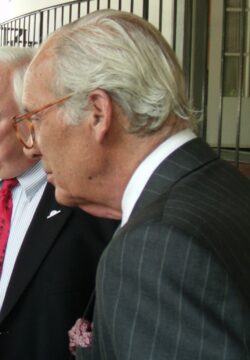 You only meet a few people in your life who, like stars, exert a pull so strong that they alter its trajectory completely. I was lucky enough to enter the orbit of the legendary editor and essayist Lewis Lapham. A week ago, I attended his memorial service. He died on July 23 in Rome at the age of eighty-nine.
Lewis came into view in 2002, my junior year of high school—a chance meeting in the library. Having completed a U.S. history exam for which I’d pulled an all-nighter, I flopped out on a soft chair next to the periodical rack to doze it off. For plausible deniability, I reached for a magazine to lay across my lap. I hadn’t read Harper’s before, but that white cover stood out. On it, a painting of three horses paired with an essay by someone who sounded like a passionate preacher from the Second Great Awakening—a term that had been on the test—John Jeremiah Sullivan. The opening piece was titled “The Road to Babylon.” It was by Lewis H. Lapham, another name you don’t forget.
more here.
Enjoying the content on 3QD? Help keep us going by donating now.
Tuesday Poem
This Is Just To Say
I have eaten
the plums
that were in
the icebox
and which
you were probably
saving
for breakfast
Forgive me
they were delicious
so sweet
and so cold
by William Carlos Williams
from Selected Poems
New Directions Paperbooks, 1949
Enjoying the content on 3QD? Help keep us going by donating now.