intervention

Image

In retrospect it’s easy to see that the argument over humanitarian intervention that should have taken place in the years after Kosovo was replaced and muddled by an argument over the Bush doctrine of preemptive war. In 2000–01, a high-powered international commission convened to discuss what the international community should do in the event of a human rights crisis in a failing state; one of their recommendations was that the concept of “humanitarian intervention” be scrapped, as being needlessly prejudicial (like “pro-life”), and replaced with the more capacious, less necessarily violent “responsibility to protect.” The group’s report was humane and intelligent, though not without problems; it was also presented before the UN Security Council in December 2001, at which point it had been “O.B.E.,” as they say in Washington—overtaken by events. The same happened with Samantha Power’s “A Problem from Hell”: America and the Age of Genocide, the summa theologica of liberal interventionist historiography, which was published in 2002. The book immediately became part of the debate over Iraq, with George W. Bush famously scribbling NOMW (“not on my watch”) in a memo outlining its arguments. Not long after, he invaded Iraq.

more from the editors at n+1 here.

What Have I Been Reading

Wolffimage

Robert Paul Wolff over at his blog:

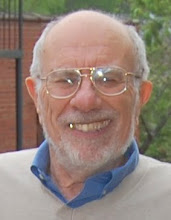
I have just finished reading Mind & Cosmos: Why the Materialist Neo-Darwinian Conception of Nature is Almost Certainly False, by my old friend and one-time student, Thomas Nagel. I am sorry to say that I did not find it an illuminating or persuasive book, for a variety of reasons. In this brief discussion, I should like to focus on just one, which I think has relevance for a certain kind of philosophy in general, and not just for Tom's book.

Let me begin, somewhat implausibly, by quoting a thirty-year old story from my autobiography about the famous biologist and founder of Sociobiology, E. O. Wilson [pp. 537-540]. I have edited it down a bit.

“A Canadian philosopher, Michael Ruse, asked whether I would like to meet E. O. Wilson. I said sure, and Ruse set it up. It was agreed that I would spend an afternoon in his office, which doubled as his laboratory. In advance of therendezvous, we exchanged gifts. I sent him, through Michael, a copy of The Poverty of Liberalism, and he sent back a copy of his latest book, Promethean Fire, co-authored by Wilson and Charles Lumsden. The volume, which sits on my shelves today, is inscribed “For Robert Paul Wolff, with warm regards, Edward O. Wilson, Museum of Comparative Zoology, Harvard U., January 25, 1984.”

We met in Wilson's office in the Museum. After the usual greetings, he showed me the centerpiece of the office, a large table on which, under a Plexiglas dome, was a bustling, complex ant colony. Wilson banged the side of the table, which set the ants scurrying, and as they poured out of the anthill he pointed out the soldier ants, worker ants, and so forth. I didn't have much in the way of conversation. What can you say about an anthill, after all? So, casting about for something to say, I mused aloud, “I wonder how many ants there are in the entire colony.” “Fifteen thousand,” Wilson replied. “How can you be sure?” I asked. “I counted them,” he said.

There are moments in life when the scales fall from your eyes and you suddenly see clearly something that has hitherto been obscured from view. This was one of those moments. I had from time to time reflected on how different the workaday lives are of people in different corners of the Academy, even though we all call ourselves “Professor.” Here was E. O. Wilson, the creator of Sociobiology, who thought nothing at all about counting fifteen thousand ants. Had anyone asked me to figure out the number of ants in an anthill, the farthest I would have gone was watching eight or ten walk by and then guesstimating the rest.

To be sure, philosophers sometimes descend to the level of the particular. But our tendency is to go in somewhat the opposite direction. Confronted with the real world, the reflex reaction of philosophers is to ask about possible worlds. It was clear to me that although we were both professors and authors, Wilson and I led lives so utterly different that no real mutual understanding was likely.


The Story of the Jews

From The Telegraph:

JewsSuch beautiful names, such terrible ends. Doulcea, the sweet one, cut to pieces on the streets of Worms in 1196, trying to summon help while her daughters Hannah and Bellette lay dying inside the house; Licoricia, tough as nails, twice-widowed, moneybags loaded, who survived three spells in the Tower of London, only to be murdered in her Winchester house along with her Christian maidservant in 1277; Zipporah of Worms, the bird caught in a suicide trap, in the spring of 1096, Crusader bands shouting for the blood of the Christ-killers, imploring her husband to kill her first so she might be spared the sight of her son slaughtered by his father’s knife; Sarit of Cologne, the comely bride, sliced up the middle, groin to throat, by her father-in-law Judah the Levite, her nuptials turned into a blood wedding; the women on the bridge, two from Cologne, two from Trier, watching their sisters dragged mercilessly to the baptismal font, resolving on a defiant counter-baptism, jumping to a drowning death in the dark waters of the Mosel; the nameless convert who had married Rabbi David Todros of Narbonne, pursued by her outraged family, finding sheltering obscurity in Monieux until a crusading gang killed Rabbi David, seized two of their children for captive conversions, leaving the widowed proselyte destitute with her infant boy.

And then there was Poulceline, whom everyone would hear about, fair Poulceline, close – very close, according to Ephraim of Bonn – to Thibaut, Count of Blois, seneschal of France, the king’s brother-in-law, none of which was any help when the Jews of Blois were being burned alive on a pyre in 1171, Poulceline included. What had she done? What had any of the beautiful names done? As usual, nothing except to be born Jews. What they were said to have done, though, was kill children, especially Christian children. No actual body was needed for the accusation to become credible. No one in Blois ever found a body, nor was any child missing, but in May a serving man happened to be watering his horse by the Loire when he saw something small and pale slip from the grasp of a Jew beside the river. What that Jew had been holding was, in fact, a batch of untanned hides, but when one splashed into the water, the servant reported to his master, his horse shied and refused to drink, a sure sign that something foul had been committed to the river. A skin was a skin.

More here.

Mystery of the Missing Women in Science

Natalie Angier in The New York Times:

AngPeter Ostrander, the tireless coordinator and cheerleader for a renowned science and mathematics magnet program at Montgomery Blair High School in Silver Spring, Md., was not satisfied. Over the past few years, the pool of applicants had included nearly as many girls as boys, and the acceptance rate — based largely on test scores and grades — had followed suit. Yet when it came to which of the invitees ended up choosing Blair’s magnet option over other offerings in the area, the scales tilted male. In 2012, for example, 80 percent of the eligible boys said yes, but only 70 percent of the girls. In 2010, the figures had been 93 percent and 56 percent. Convinced the program could do better at pitching its product to girls, Mr. Ostrander recruited teams of upper-class girls last spring to call their hesitant young counterparts. Extol the wonders of the program, he said. Dispel the tired geek myths. “The stereotype is out there that the magnet is filled with nerdy people,” he said. “Whatever that means.” The upper-class students took to the phone banks with verve. (Full disclosure: my daughter was one of them.) They talked of fun, extracurriculars and sisterhood. They secured many yes votes and earned pizza and sandwiches — but still, fewer qualified girls than boys are entering the magnet this fall. As a result, the demanding, gratifying, even thrilling four-year immersion in physics, chemistry, biology, calculus, computer science, astronomy, entomology, the proper use of power tools — and yes, the humanities and social sciences — remains almost two-thirds male.

Montgomery Blair’s experience is by no means unique. Even as girls prove their prowess in science and math, their ambivalence lingers when it comes to fields formerly painted boy blue. As researchers see it, that reluctance, that slight and possibly subliminal case of unfounded quantipathy, must be confronted and understood if the wider inequities in science are to be rooted out for good.

More here.

Tuesday Poem

September 1, 1939

I sit in one of the dives
On Fifty-second Street
Uncertain and afraid
As the clever hopes expire
Of a low dishonest decade:
Waves of anger and fear
Circulate over the bright
And darkened lands of the earth,
Obsessing our private lives;
The unmentionable odour of death
Offends the September night.

Accurate scholarship can
Unearth the whole offence
From Luther until now
That has driven a culture mad,
Find what occurred at Linz,
What huge imago made
A psychopathic god:
I and the public know
What all schoolchildren learn,
Those to whom evil is done
Do evil in return.

Exiled Thucydides knew
All that a speech can say
About Democracy,
And what dictators do,
The elderly rubbish they talk
To an apathetic grave;
Analysed all in his book,
The enlightenment driven away,
The habit-forming pain,
Mismanagement and grief:
We must suffer them all again.
Read more »

Monday, September 2, 2013

Sunday, September 1, 2013

Joseph Stiglitz Sees Bleak Future for America If We Don’t Reverse Inequality

Lynn Stuart Parramore in AlterNet:

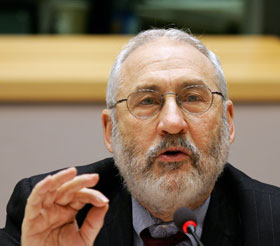
StiglitzNobel Prize-winning economist Joseph Stiglitz, one of America's most prescient voices, wrote an article for Vanity Fair several months before Occupy Wall Street was born. “Of the 1%, by the 1%, for the 1%” called attention to the widening gap between rich and poor and its deadly impact on our society and its democratic institutions. In his newly released book, The Price of Inequality, Stiglitz returns to this theme of a divided society, delving into the origins and consequences of economic unfairness. I caught up with Professor Stiglitz and talked to him about how the persistent myths and beliefs associated with our capitalist system help to drive this trend, turning America from a land of opportunity to a land of broken dreams.

Lynn Parramore: An argument has been made, particularly since the end of the Cold War, that capitalism is great at producing things that can improve our lives, and so we ought to therefore tolerate some unfairness. What's wrong with that narrative?

Joseph Stiglitz: Well, capitalism does have a lot of strengths, including producing things that are very innovative. But what drives capitalism is the profit motive. You can profit not only by making good things, but also by exploiting people, by exploiting the environment, by doing things that are not so good. The narrative that you describe ignores the extent to which a lot of the inequalities in the United States are not the result of creative activity but of exploitive activity. And if you look at the people at the top, what is so striking is that the people who've made the most important creative contributions are not there.

More here.

In our dark times we need poetry more than ever, argues Adrienne Rich

Adrienne Rich in The Guardian:

In “The Defence of Poetry” 1821, Shelley claimed that “poets are the unacknowledged legislators of the world”. This has been taken to suggest that simply by virtue of composing verse, poets exert some exemplary moral power – in a vague unthreatening way. In fact, in his earlier political essay, “A Philosophic View of Reform,” Shelley had written that “Poets and philosophers are the unacknowledged” etc. The philosophers he was talking about were revolutionary-minded: Thomas Paine, William Godwin, Voltaire, Mary Wollstonecraft.

And Shelley was, no mistake, out to change the legislation of his time. For him there was no contradiction between poetry, political philosophy, and active confrontation with illegitimate authority. For him, art bore an integral relationship to the “struggle between Revolution and Oppression”. His “West Wind” was the “trumpet of a prophecy”, driving “dead thoughts … like withered leaves, to quicken a new birth”.

I'm both a poet and one of the “everybodies” of my country. I live with manipulated fear, ignorance, cultural confusion and social antagonism huddling together on the faultline of an empire. I hope never to idealise poetry – it has suffered enough from that. Poetry is not a healing lotion, an emotional massage, a kind of linguistic aromatherapy. Neither is it a blueprint, nor an instruction manual, nor a billboard. There is no universal Poetry, anyway, only poetries and poetics, and the streaming, intertwining histories to which they belong. There is room, indeed necessity, for both Neruda and César Valléjo, for Pier Paolo Pasolini and Alfonsina Storni, for both Ezra Pound and Nelly Sachs. Poetries are no more pure and simple than human histories are pure and simple. And there are colonised poetics and resilient poetics, transmissions across frontiers not easily traced.

More here.

Zuckerberg Explains Facebook’s Plan to Get Entire Planet Online

Steven Levy in Wired:

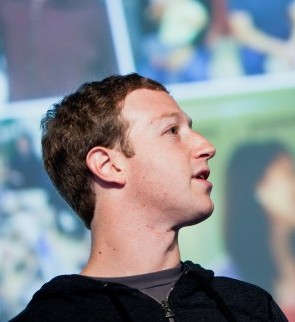
ScreenHunter_293 Sep. 01 18.16Last week, in an effort to reach this lofty goal, the Facebook CEO announced the establishment ofInternet.org, a consortium that allied his company with handset makers (Nokia, Samsung, Ericcson), a browser company (Opera), and network infrastructure manufacturers (Qualcomm, MediaTek). In a 10-page white paper shared on, yes, Facebook, he postulated that a connected world could address economic disparity and outlined a vision of even the poorest people connecting to low-cost, low-data versions of basic Internet services.

Reaction was mixed, both to the white paper and to the accompanying video, which used a John F. Kennedy speech to amplify a visual message that connectivity leads to better human relations. So WIRED welcomed the opportunity to discuss the plan face-to-face with Zuckerberg on the company’s Menlo Park, California campus. Here is the interview, edited for space and clarity.

WIRED: Why form a coalition to spread global connectivity?

Zuckerberg: The Internet is an important foundation in improving the world, but it doesn’t build itself. Over the past few years, we’ve invested more than a billion dollars in connecting people in developing countries. We have a product called Facebook for Every Phone, which provides our service on feature phones; it has 100 million users. But no one company or government can build out a full stack of infrastructure to support this around the world. So you need to work together with folks. Since we’ve announced Internet.org, we’ve heard from operators around the world and governments who want to work with us. This is going to provide momentum to make this work over the next 3 to 5 years, or however long it’s going to take.

More here.

Noam Chomsky: The Arab world has harbored fantasies about the supernatural power of the United States

Mohammed Attar Interviews Noam Chomsky at the website of the Heinrich Böll Stiftung:

Your discourse unambiguously states that America and Israel have no desire to see the regime fall and that their actions are determined by the “better the devil you know” principle. How do you explain a counter-discourse, promulgated by analysts and intellectuals, especially among Leftist circles in Europe the US and the Arab world, which is based on the supposition of an American/Israeli/imperialist plot? For some people, the revolution in Syria has been a conspiracy from the outset. For others it was hijacked by the conspiracy.

Chomsky1For a long time, the Arab world and other places beside have played host to stories and illusions about the supernatural power of the United States, which controls everything through complex conspiracies and plots. In this worldview, everything that takes place can be explained in terms of imperialist conspiracies. This is an error. Without a doubt, the UnitedStates are still a great power and capable of influencing events, but they are not always able to manipulate them by means of complex conspiracies: this really is beyond their capacities. Of course the Americans do sometimes try to do this, but they fail, too. What happened in Syria is not outside our understanding: it began as a popular and democratic protest movement demanding democratic reforms, but instead of responding to it in a constructive, positive manner, Assad reacted with violent repression. The usual outcome of such a course of action is either a successful crushing of the protests or otherwise, to see them evolve and militarize, and this is what took place in Syria. When a protest movement enters this phase we see new dynamics at play: usually, the rise of the most extremist and brutal elements to the front ranks.

More here. [Thanks to Omar Ali.]

How can we still the noise within?

Tim Parks in Aeon:

SilenceSilence, then, is always relative. Our experience of it is more interesting than the acoustic effect itself. And the most interesting kind of silence is that of a mind free of words, free of thoughts, free of language, a mental silence —

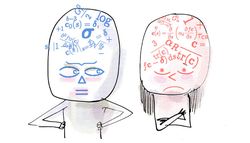
…The process is neither that of a single switch being turned, nor of a steady continuum, but of a series of small gains and losses; perhaps a larger step forward, then a small relapse. If one is persistent, undaunted, in one’s attempts to concentrate, if one is successful in showing neither aversion to pain nor indulgence in pleasure, then, very slowly, the stillness and silence deepen in an atmosphere of beatitude that is simultaneously and indivisibly both physical and mental. It is as if, as the body is slowly put together and all its component parts unite in an intense present, so the historical self is taken apart and falls away. At no point is it experienced as a loss, but rather as a fullness of existence; something brimful, very ordinary and very beautiful. The words we constantly use and the narratives we write reinforce a drama of selfhood that we in the West complacently celebrate. There is also much consolation taken in the way in which writing and narrative can transform emotional pain into a form of entertainment, wise and poignant in its vision of our passage through the world, intense and thrilled by its own intensity. Narrative is so often the narrative of misery and of the passage through misery. What silence and meditation leaves us wondering, after we stand up, unexpectedly refreshed and well-disposed after an hour of stillness and silence, is whether there isn’t something deeply perverse in this culture of ours, even in its greatest achievements in narrative and art. So much of what we read, even when it is great entertainment, is deeply unhelpful.

More here.

Haters gonna hate?

From MSNBC:

“Nah,” “eh,” “no” and “ugh”: These are the familiar sounds of people who don't seem to like much and conjure negative quips for just about anything. While people with more positive dispositions may try to shake enthusiasm unto these downers, new research helps to explain why this often doesn't work. That certain people like more things than others may seem obvious, but, until now, nobody has ever tested whether such dispositions operate as distinct personality traits, separate from other traits such as optimism/pessimism or extroversion/introversion. A team of researchers from the University of Illinois at Urbana-Champaign and the University of Pennsylvania have now conducted the first quantitative analysis of dispositional attitude, finding that it is, in fact, distinct from these other traits. “Optimists tend to have generalized beliefs usually about the future, such as 'Things are going to turn out well,'” said Justin Hepler, a professor of psychology at the University of Illinois at Urbana-Champaign and an author on the study. “We were interested in whether people liked or disliked things, in general, and had people report their attitude about different things.”

…The researchers found that people's dispositional attitudes often correlated with other similar traits, but were still statistically distinct, meaning that some optimists have a tendency to dislike many things, and some pessimists, likewise, might like lots of things. As with all personality traits, dispositional attitudes develop through a combination of one's biology and environment. The team has not yet assessed how therapy could help mediate these traits, but suggests that adjusting one's external stimuli, such as surrounding oneself with positive people, could ultimately sway a person from one side of the spectrum to the other.

More here.

Sunday Poem

Höfn

The three-tongued glacier has begun to melt.
What will we do, they ask, when boulder-milt
Comes wallowing across the delta flats

And the miles-deep shag ice makes its move?
I saw it, ridged and rock-set, from above,
Undead grey-gristed earth-pelt, aeon-scruff,

And feared its coldness that still seemed enough
To iceblock the plane window dimmed with breath,
Deepfreeze the seep of adamantine tilth

And every warm, mouthwatering word of mouth.
.

by Seamus Heaney

Saturday, August 31, 2013

The Origins of Space and Time

Quantum-gravity-nature-online

Zeeya Merali in Nature News:

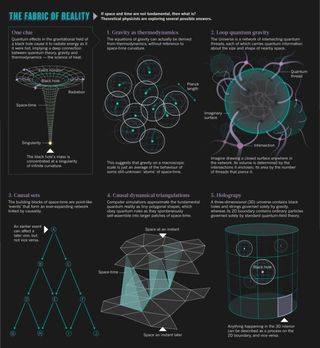
“Imagine waking up one day and realizing that you actually live inside a computer game,” says Mark Van Raamsdonk, describing what sounds like a pitch for a science-fiction film. But for Van Raamsdonk, a physicist at the University of British Columbia in Vancouver, Canada, this scenario is a way to think about reality. If it is true, he says, “everything around us — the whole three-dimensional physical world — is an illusion born from information encoded elsewhere, on a two-dimensional chip”. That would make our Universe, with its three spatial dimensions, a kind of hologram, projected from a substrate that exists only in lower dimensions.

This 'holographic principle' is strange even by the usual standards of theoretical physics. But Van Raamsdonk is one of a small band of researchers who think that the usual ideas are not yet strange enough. If nothing else, they say, neither of the two great pillars of modern physics — general relativity, which describes gravity as a curvature of space and time, and quantum mechanics, which governs the atomic realm — gives any account for the existence of space and time. Neither does string theory, which describes elementary threads of energy.

Van Raamsdonk and his colleagues are convinced that physics will not be complete until it can explain how space and time emerge from something more fundamental — a project that will require concepts at least as audacious as holography. They argue that such a radical reconceptualization of reality is the only way to explain what happens when the infinitely dense 'singularity' at the core of a black hole distorts the fabric of space-time beyond all recognition, or how researchers can unify atomic-level quantum theory and planet-level general relativity — a project that has resisted theorists' efforts for generations.

8 Reasons Not to Go to War in Syria

Bombed_out_vehicles_Aleppo

Peter Suderman in Reason's Hit and Run blog:

1. If the rebels win, it’s bad news for the U.S. Assad is no friend to the U.S. But neither are the rebel groups leading the charge against the Syrian dictator. Indeed, many of the rebel factions have strong ties to Al-Qeada. If the rebels successfully oust Assad, it’s entirely possible that they will attempt to set up a new regime that is intensely hostile to the United States. Intervention on the side of the rebels would also complicate America's already-fraught relationship with Russia, which is close with the Assad regime.

2. If Assad wins, it’s bad news for the U.S. Especially if the U.S. is seen to have openly sided with the rebels. A win for Assad is a win for anti-American forces Iran, which would see its influence in the region strengthened. It’s also a win for Hezbollah, which is closely linked with Iranian extremists. With no good option, then, the U.S. is better off staying out of the conflict entirely.

3. It’s far from certain that any “limited” actions would actually be effective. Most of the talk right now revolves around the possibility of limited cruise missile strikes and/or no-fly zone enforcement. But as the Chairman of the Joint Chiefs of Staff Martin Dempsey told NPR last month, the possible results of enforcing a no-fly zone could “include the loss of U.S. aircraft, which would require us to insert personnel recovery forces. It may also fail to reduce the violence or shift the momentum because the regime relies overwhelmingly on surface fires — mortars, artillery, and missiles.”

Why India’s Economy Is Stumbling

0831OPEDbarbour-popup

Arvind Subramanian in the NYT:

Structural problems were inherent in India’s unusual model of economic development, which relied on a limited pool of skilled labor rather than an abundant supply of cheap, unskilled, semiliterate labor. This meant that India specialized in call centers, writing software for European companies and providing back-office services for American health insurers and law firms and the like, rather than in a manufacturing model. Other economies that have developed successfully — Taiwan, Singapore, South Korea and China — relied in their early years on manufacturing, which provided more jobs for the poor.

Two decades of double-digit growth in pay for skilled labor have caused wages to rise and have chipped away at India’s competitive advantage. Countries like the Philippines have emerged as attractive alternatives for outsourcing. India’s higher-education system is not generating enough talent to meet the demand for higher skills. Worst of all, India is failing to make full use of the estimated one million low-skilled workers who enter the job market every month.

More from Simon Johnson in the NYT's Economix here.

The Mark of a Great Poet

1377899977834.cached

Paul Muldoon on Seamus Heaney in The Daily Beast:

If, as Eliot suggested, the mark of a great poet is that she or he will develop the milieu in which her or his work is seen to matter, then Heaney certainly had an educator’s gift for drawing out his readers and transporting them to places where they simply wouldn’t have expected to be. The truth is that he developed into a much more complex poet than anyone might have imagined, one who was increasingly recognized as having insights into not only plows, horses, and frogs, but international politics, human rights, and the attack on the World Trade Center. He was the only poet I can think of who was recognized worldwide as having moral as well as literary authority and, as such, may be the last major poet to even entertain such a possibility.