a small group of wanderers, adrift in an uncharted universe

La-la-ca-0826-jm-coetzee-028-jpg-20130905

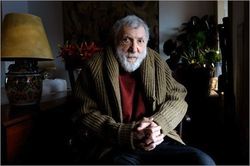
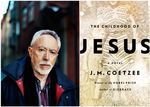
I don’t read J.M. Coetzee for pleasure. To be fair, I’m not sure anyone does. The 2003 Nobel laureate writes from his head more than his heart, framing novels that are philosophical and austere, books that break down the world in highly rational ways. Over the course of his career, he’s been compared to Beckett and Kafka, although despite the occasional nod in their direction — the title character of his 1983 novel “The Life and Times of Michael K.” functions to some extent as an homage to “The Trial’s” Josef K. — he lacks their appreciation of humor, of life as essentially absurd. “We must cultivate, all of us,” Coetzee writes in “Foe” (a 1986 recasting, of sorts, of “Robinson Crusoe”), “a certain ignorance, a certain blindness, or society will not be tolerable.” Here we see the fundamental tension of his writing: to make sense of ourselves in a universe where the private and the public narrative often are in conflict, where history betrays us in all sorts of ways. Coetzee’s new novel “The Childhood of Jesus” operates very much out of this territory: an allegory that is oddly concrete.

more from David L. Ulin at the LA Times here.

Malala Yousafzai opens new library in Birmingham and declares: ‘books will defeat terrorism’

From The Telegraph:

Malala-1_2660214cMalala Yousafzai made the inspirational speech as she officially opened Birmingham's brand new £188 million library – 11 months after she was shot in the head by a Taliban gunman. The 16-year-old was flown to the UK after a hit-man barged onto her school bus in Pakistan and fired at her at point blank range in October last year. She was targeted after she heroically spoke out against the regime and called for greater women's rights despite Islamic fundamentalists trying to impose a strict form of sharia law in the country. The schoolgirl survived the assassination attempt and was treated at Birmingham's Queen Elizabeth Hospital. The inspirational youngster has remained in the city ever since where she has made a remarkable recovery and now attends a local school. She opened the futuristic-state-of-the art library on Tuesday where she told a crowd of 300 people that by educating 'minds, hearts and souls' she believed global peace could be achieved. She told the crowd gathered in Birmingham's Centenary Square: “Dear brothers and sisters, I would like to begin with my personal story. “In my school in Swat, I was considered to be a good obedient student and I also used to get top marks in my class. “Apart from my school text books I read nine books from the library. “I thought I did a great job in my whole 15 years of life. “But last year, seven days after the incident that I faced, I was brought here to Birmingham for further treatment. “When I was discharged from the hospital, I was introduced to this new society, which is different from our society in Pakistan, in many ways. “Here people tell me that they have read hundreds of books. “It does not matter how old they are, they take a keen interest in reading, even children of six and seven years have read more books than me. “Now I have challenged myself that I will read thousands of books and I will empower myself with knowledge. “Pens and books are the weapons that defeat terrorism.

“I truly believe the only way we can create global peace is through not only educating our minds, but our hearts and our souls. “This is the way forward to our destiny of peace and prosperity. “Books are very precious – some books can travel you back centuries and some take you into the future. “In some books you will visit the core of your heart and in others you will go out into the universe. “Books keep ones feeling alive. “Aristotle's words are steal breathing, Rumi's poetry will always inspire and Shakespeare's soul will never die. “There is no better way to explain the importance of books than say that even God chose the medium of a book to send his message to his people.”

More ” target=”_self”>here.

Letting Go

Abraham Varghese in The New York Times:

In 1968, a letter to The British Medical Journal titled “Not Allowed to Die” described the ordeal of a retired 68-year-old doctor admitted to “an overseas hospital” (almost certainly in America) with metastatic stomach cancer. After much of his stomach was surgically removed and a blood clot cleared from his lung, he asked that “no further steps be taken to prolong his life, for the pain of his cancer was now more than he would needlessly continue to endure.” Two weeks later the unfortunate doctor had a heart attack in the hospital. His heart was shocked and restarted five times in a single night; morning found him in a persistent vegetative state. His body remained alive for another three weeks. That hellish situation, rare in the rest of the world, is all too common in this country. Although most of us claim no desire to die with a tube down our throat and on a ventilator, the fact is, as Katy Butler reminds us in “Knocking on Heaven’s Door,” a fifth of American deaths now take place in intensive care, where 10 days of futile flailing can cost as much as $323,000, as it did for one California man.

Butler’s introduction to the surreal world of health “care” at the end of life was precipitated by the sudden illness of her father, a native of South Africa. Jeffrey Butler lost his arm while serving in World War II. He married, earned a Ph.D. from Oxford and settled into academic life in the United States. He was a charismatic father, the sort who would “stand in our bedroom doorways and say good night to my two brothers and me quoting Horatio’s farewell to the dying Hamlet: ‘May flights of angels sing thee to thy rest!’ ” At 79 he was active and enjoying retirement when he suffered a stroke. Soon after hospitalization a “discharge planner” told the family that Jeffrey had to be immediately transferred to a neurological rehabilitation facility. “Only later would I understand the rush,” Butler writes. “The hospital was losing money on him with every passing day. Out of $20,228 in services performed and billed, Medicare would reimburse Middlesex Memorial only $6,559, a lump sum based on the severity of my father’s stroke diagnosis.” A year later, her father was outfitted with a pacemaker. The device would keep his heart functioning even as he descended into dementia and almost total physical helplessness over the next five years.

More here.

Friday, September 6, 2013

In Pomerania

Justin E. H. Smith in his own blog:

6a00d83453bcda69e2019aff319b89970c-350wiThe far-right National-Democratic Party of Germany has put up campaign signs in Mecklenburg-Vorpommern with the slogan 'Ausländer raus'. In case you don't believe me, I've provided photographic proof. On closer inspection, the signs in fact read 'Kriminelle Ausländer raus', but this is more a vivid example of the pragmatics of font size, and other elements of graphic design, than it is a mitigation of the political view expressed. The NPD hovers as close as it can to the boundary which, if crossed, would place it in violation of the German constitutional ban on neo-Nazism. In the past decade there have been two failed, but close, attempts to have it outlawed. The MLPD, the Marxist Leninist Party of Germany, has made this one of their principle campaign issues in the current election, which from my American free-speech point of view looks like a frivolous distraction, as there are far better ways to isolate fascists than to give their organizations the extra charge of illegality. The National Socialist Underground has committed at least a dozen murders since 2000; an illegal NPD would be great for their recruitment.

According to a 2010 article in Die Zeit, in that year a constitutional court ruled that the phrase 'Ausländer raus' by itself does not necessarily amount to a violation of the constitution; the entire context of the phrase needs to be considered in order to determine whether in a given occurrence it is meant as a reference, or indeed a citation, of the phrase as it was used in the 1930s. Without the addition of 'criminal', however, the NPD would probably not be able to pass off the phrase that follows as independent from the identical phrase as used by the Nazis, as the entire context of the party's existence is the longue durée of fascism in Germany. But as it is they can claim, bald-faced, that they are only pushing for the same desideratum that even center-left parties support: the deportation of non-citizens convicted of felonies.

More here.

Freddie Mercury: His Life in Pictures

James Sullivan in Rolling Stone:

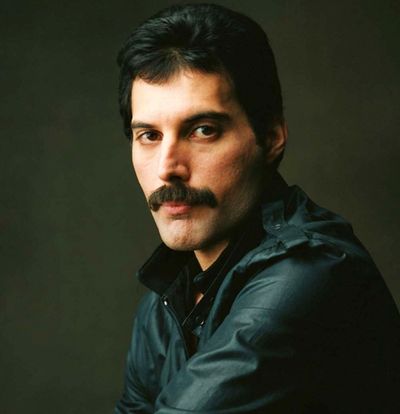
20120918-freddie-mercury-04-x500-1348005829In 1992, British comedian Rhys Thomas attended his first concert: an all-star tribute to late Queen frontman Freddie Mercury at London's Wembley Stadium. “The atmosphere when everyone sang 'We Are the Champions' was unbelievable,” Thomas says. “I came away obsessed. I started buying all the Queen albums with my pocket money. Until I was 16 or 18, all I did was buy Queen videos and albums.”

As an adult, Thomas has produced several Queen concert DVDs, written the liner notes to the band's reissued albums and directed the new documentary Freddie Mercury: The Great Pretender. Most recently, he wrote the foreword for a book of photographs by the same name. Read on for 15 of the book's best pictures of Freddie Mercury, along with Thomas' commentary.

More here. [Thanks to Louise Gordon.]

Pluralism and Liberal Politics

Jethro Butler reviews Pluralism and Liberal Politics by Robert B. Tallise, in Plurilogue:

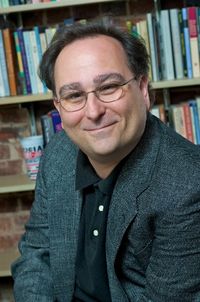
TalisseRTalisse devotes chapter 1 to an analysis of a range of supposedly pluralist claims, separating out genuine pluralist claims from merely apparent ones which turn out to be either vacuous or claims that monists could happily endorse. The problem, as Talisse discerns it, is that in diverse and tolerant societies, the term ‘pluralism’ is what he calls a ‘halo term’ with generally positive connotations whereas ‘monism’ carries with it connotations which are generally negative. This being so, there is a rhetorical motivation to want to borrow pluralism’s good name whether or not one’s doctrine is committed to genuine and substantial ‘manyism’. Talisse’s claim – and he makes a persuasive case for it – is that all sorts of doctrines that claim to be committed to pluralism are committed to nothing of the sort and that many monisms are perfectly capable of supporting a commitment to diversity and toleration. Talisse proposes the following test for any doctrine that has a genuine commitment to pluralism: since consistent utilitarians are unequivocal monists the test of a genuine pluralism is that the candidate doctrine must be one to which a consistent utilitarian would object. From the set of thus tested pluralisms he distinguishes four types of genuine pluralism: strong and weak versions of metaphysical pluralism and strong and weak versions of epistemological pluralism. Talisse claims that Berlin and his followers fall into the strong metaphysically pluralist category (as does William James) and that Dewey falls into the strong epistemological pluralist category. Pierce, on the other hand, can be reconstructed in such a way as to make him a weak epistemological pluralist.

More here. [Photo shows Robert B. Talisse.]

David Remnick on Bob Dylan

From Radio Silence:

We sat down with New Yorker editor-in-chief David Remnick to discuss the career and unique genius of one of his favorite artists—Bob Dylan. Here’s the first installment of the Radio Silence podcast series, complete with historical audio and plenty of music.

Written and hosted by Benjamin Hedin
Produced by Adam Kampe
Cover Art by Casey Burns

More good stuff here.

the executioner’s diary

TSL0604EVANS1forweb_367512h

In some cases Master Frantz had to arrange for the offender to be dragged to the scaffold through the streets while he pulled out parts of his flesh with red-hot tongs on the way; and before that, he frequently had to administer the tortures that brought the accused to confess. The process began with a display of the instruments to the accused, to whom the executioner’s assistant described their function while playing up the skill and ruthlessness of his master. Most people gave in at this point, but those who did not (mostly hardened robbers) would be subjected to the thumbscrews or leg splints, or have fires lit under their armpits, or be put in the “crown”, a leather or metal band progressively tightened around their head, or be drawn up a ladder with weights applied to their feet in a torture known as the strappado. All this was carefully regulated. Master Frantz stopped the torture if it reached a stage where it threatened the life of the accused. He tended the wounds he had inflicted until, if necessary, the accused was ready to undergo the procedure all over again. We know all these details because, most unusually, Master Frantz Schmidt kept a diary, which the American historian Joel F. Harrington has unearthed in a manuscript copy from 1634, the year of the executioner’s death, that is more accurate and more detailed than the versions that appeared in print in 1801 and 1913.

more from Richard J. Evans at the TLS here.

a love triangle between self, the Golden Gate, and death

Guernica-goldengate

In 1975 Dr. David Rosen conducted a psychiatric study among six people who were known to have survived jumps from the Golden Gate Bridge. His analysis was the first to utilize this specific control group—an exotic breed considering a plunge from the Golden Gate is 99 percent fatal. Rosen had gathered a minority that had somehow emerged from a widely accepted point-of-no-return, gems in the world of suicidology, where opportunity for follow-up is as frequent as immortality. Through a set of private interviews, Rosen discovered that each subject had specific suicide plans that involved only the Golden Gate Bridge. They collectively described the location as romantic, notorious, accessible, and effective—the perfect combination of myth and practicality. One subject imagined a sort-of love triangle between himself, the Golden Gate, and death. “There is a kind of form to it,” he said. “A certain grace and beauty.” Another denied even attempting suicide; he believed the Bridge was a set of “golden doors” leading from the material into the spiritual world. “It was the Golden Gate Bridge or nothing.” The group’s recollections assume a tone synonymous with people who have been there and back, a pitch the rest of us cannot quite perceive. They were thankful for their lives, but also for having experienced the once-in-a-lifetime sensation of jumping to one’s own death. “I felt like a bird flying,” one subject remembered.

more from Candace Opper at Guernica here.

on kolakowski

Connelly_jesterandpriest_fb_0

Almost a quarter-century after the collapse of communism, and four years after his own death at the age of 81, the Polish philosopher Leszek Kolakowski remains a prisoner of the Cold War. He has been lionized in the West for Main Currents of Marxism, the indispensable three-volume history of Marxist ideas first published in Paris (in Polish) in 1976, and also for the essays he wrote a decade earlier that inspired advocates of “socialism with a human face.” Yet travel across the old Iron Curtain to Warsaw or Wroclaw, and one will encounter a different Kolakowski: not the Marxologist or dissident socialist, but the religious thinker and elusive cultural critic who found wisdom and solace in the works of Spinoza, Erasmus, the Dutch heretics and the Catholic skeptic Blaise Pascal. Highly esteemed in Polish Catholic circles, Kolakowski was a frequent guest of John Paul II’s at Castel Gandolfo, the papal summer residence. But even in Poland, opinion about this other Kolakowski is mixed. Marek Edelman, a leader of the 1943 Warsaw Ghetto uprising, was among the mourners at his graveside in July 2009, and upon hearing the blessings being spoken as the casket was lowered into the pit, he whispered audibly, “Why are you making a Catholic out of him, that man was a decent atheist!”

more from John Connelly at The Nation here.

Friday Poem

And Adam gave names to all cattle, and to the fowl of the air,
and to every beast of the field … GEN. 2:20
.
Adam's Task

Thou, paw-paw-paw; thou, glurd; thou, spotted
Glurd; thou, whitestap, lurching through
The high-grown brush; thou, pliant-footed,
Implex; thou, awagabu.

Every burrower, each flier
Came for the name he had to give:
Gay, first work, ever to be prior,
Not yet sunk to primitive.

Thou, verdle; thou, McFleery’s pomma;
Thou; thou; thou—three types of grawl;
Thou, flisket; thou, kabasch; thou, comma-
Eared mashawk; thou, all; thou, all.

Were, in a fire of becoming,
Laboring to be burned away,
Then work, half-measuring, half-humming,
Would be as serious as play.

Thou, pambler; thou, rivarn; thou, greater
Wherret, and thou, lesser one;
Thou, sproal; thou, zant; thou, lily-eater.
Naming’s over. Day is done.

by John Hollander
from Selected Poetry
Alfred A. Knopf, a division of Random House, Inc.

I Dream of Genius

Joseph Epstein in Commentary Magazine:

GeniusI have met six Nobel Prize winners, and none has come close, in my view, to qualifying as a genius. Three won the prize for economics. They were all supremely confident and no doubt highly intelligent, but, I thought, insufficiently impressed by the mysteries of life. Another won his for physics, but in my company he wished to talk only about Shakespeare, on which he was commonplace and extremely boring. Another was a laureate for biology; he seemed to me, outside the laboratory, a man without the least subtlety. The last won his Nobel Prize for literature, and the most profound thing about him was the extent to which he had screwed up his personal life. Somehow it is always sensible to remember that in 1949 the Nobel Prize in medicine was given to Antonio Egas Moniz, a Portuguese surgeon, for developing the procedure known as the lobotomy.

Genius is rare. Schopenhauer thought a genius was one in a hundred million. In this realm if in no other, that most pessimistic of philosophers may have been optimistic. Distinguishing between a man of learning and a genius, Schopenhauer wrote: “A man of learning is a man who has learned a great deal; a man of genius, one from whom we learn something which the genius has learned from nobody.” A genius is not merely brilliant, skillful, masterly, sometimes dazzling; he is miraculous, in the sense that his presence cannot be predicted, explained, or accounted for (at least thus far) by natural laws or scientific study. The definitions for genius may be greater than the actual number of true geniuses who have walked the earth. My own definition is as follows: Be he a genius of thought, art, science, or politics, a genius changes the way the rest of us hear or see or think about the world.

More here.

Bacteria from lean mice prevents obesity in peers

From Nature:

GutGut bacteria from lean mice can invade the guts of obesity-prone cage-mates and help their new hosts to fight weight gain. Researchers led by Jeffrey Gordon, a biologist at Washington University in St. Louis, Missouri, set out to find direct evidence that gut bacteria have a role in obesity. The team took gut bacteria from four sets of human twins in which one of each pair was lean and one was obese, and introduced the microbes into mice bred to be germ-free. Mice given bacteria from a lean twin stayed slim, whereas those given bacteria from an obese twin quickly gained weight, even though all the mice ate about the same amount of food. The team wondered whether the gut microbiota of either group of mice would be influenced by mice with one type living in close quarters with animals harbouring the other type. So the scientists took mice with the ‘lean’ microbiota and placed them in a cage with mice with the ‘obese’ type before those mice had a chance to start putting on weight. “We knew the mice would readily exchange their microbes,” Gordon says — that is, eat each other’s faeces. Sure enough, the populations of bacteria in the obese-type mice changed to match those of their lean cage-mates, and their bodies remained lean, the team writes today in Science1. The bacterial invasion travelled only in that direction, however: the bacteria of the obese mice could not colonize the lean neighbour. This makes sense, says Gordon, who found in earlier work that the population of gut bacteria in obese people is less diverse than that in lean people2, leaving unfilled niches in the microbiota. The bacteria from the lean mice seem to be able to find those vacancies, he says.

But this left him wondering: if the bacteria of lean people are so good at setting up shop in the guts of the obese, “why don’t we have an epidemic of leanness in America?” So the team fed the mice a more human diet, turning foods such as breakfast cereal and pizza into pellets for the mice. When the animals were fed a diet low in saturated fat and high in fruit and vegetables, the transfer of gut microbes from mice with the lean type to those with the obese type still occurred; however, when the mice were given a high-fat, low-vegetable diet this did not happen, and mice with the obese-type bacteria gained weight. “There’s an intricate relationship between our diet and how our gut bugs work,” says Gordon. “You have to have the right ingredients.”

More here.

Thursday, September 5, 2013

Cooking in Karachi: The world’s most dangerous megacity is the next frontier in the global meth trade

Taimur Khan in Foreign Policy:

ScreenHunter_298 Sep. 05 14.02As night fell on Saturday, Nov. 24, the deputy superintendent of police, Zameer Abbasi, was out making the rounds. He had decided to take one last patrol when he received a phone call around 9:20 p.m. about a small explosion at a nearby apartment building. “My first thought was that this might be a high-value target, a terrorist who had planned to target the procession but had made a mistake with the bomb,” Abbasi later told me. When he arrived at the scene, smoke was pouring from a third-floor apartment window.

Abbasi didn't wait for the bomb squad to arrive. He quickly cordoned off the street and raced inside, fearing that there might be more explosives or a suicide bomber. When he got to the apartment, however, the scene was unlike anything he had seen before. A red chemical had been sprayed across the white walls. There was what seemed to be a laboratory: conical flasks connected by rubber tubing, sacks and boxes labeled with the names of chemicals, a small centrifuge. A silvery blue powder was spilled across the bathroom floor, and blood-red footprints crisscrossed the living room. “I thought this might not be the kind of blast I thought it was,” Abbasi said. “It looked like some kind of chemical reaction had happened.” He didn't know it at the time, but he had just made the first bust of a Pakistani meth lab.

It's hard for an outsider to understand the pace of change in Karachi these days. Statistics don't really do it justice. But here's one: From 2000 to 2010, Karachi's population grew more than 80 percent. That's roughly equivalent to adding more than New York City's entire population in just a decade. (For all the talk of the staggering boom of Chinese metropolises, the world's next fastest-growing city — Shenzhen — grew only 56 percent, adding fewer than 5 million people.)

More here.

In Memoriam: John Hollander

From The Paris Review:

HollanderlargeJohn was a true poet-critic, in whose work poem and essay inform one another and sometimes change places. One mark of their fellow traveling is a shared commitment to the art of explanation. The basic principles of the sugar-cube story are everywhere in his prose, especially in his perpetual delight at the precision and elegance of a good definition. His virtuoso guide to poetic form, Rhyme’s Reason, begins by telling us that “The study of rhetoric distinguishes between tropes, or figures of meaning such as metaphor and metonymy, and schemes, or surface patterns of words. Poetry is a matter of trope; and verse, of scheme or design.” Could it be said in fewer words? Another Hollanderian impulse is expressed here too, his love of taxonomy, dividing a subject into molecular simples. Many of his great essays make their sense of fundamental topics—like the making of refrains, or asking questions in poetry, or answering them—by counting the possibilities. In “Poetic Answers,” an answer can be a fact, a promise, an imperative; it can bring closure, or refuse it; and on and on, with examples drawn from anywhere and everywhere in English poetry.

If you read “Blue Wine,” you’ll see the same mind at work, or at play. (John loved to consider and confuse the two.) The poem got its start on a visit to Saul Steinberg’s house, where he saw a line of curiously labeled, clear bottles arrayed on a window sill, all filled with the same blue liquid. The poem’s root question is, What is that stuff? and each of its eleven sections offers a hypothesis, indeed, several hypotheses. Some “wise old wine people” speculate that it is red in the cask, blue in the light, the opposite of blood; or that it is no particular blue, but the cosmic blue of generality itself. Then again, it may have been made by vintners after a recipe in Plutarch’s lost essay “On Blue Wine.” Or again, perhaps it turned blue in the cask at the laugh of a Zen master, who posed its surprising color to his students as a koan. Or it is German, Das Rheinblau; or French, Château la Tour d’Eau; or Romanian, “the funny old / Half-forgotten Vin Albastru.” And so on: the poem is giddy with is own answers, its self-begetting explanations.

Of course, as Wittgenstein reminds us, in one of John’s favorite aphorisms, all explanations come to an end somewhere. It was important to how he understood his own career that somewhere along the line he turned away from “essayistic speculation” and began to write “less discursively, more puzzlingly”—so he told The Paris Review in 1985. The explanations, like many in “Blue Wine,” become as likely to be questions of their own.

More here. (Note: My co-author Sara Suleri and I greatly benefited from Rhyme's Reason during our attempts to translate Ghalib. We are deeply saddened by this loss.)

Cancer’s origins revealed

From Sanger Institute:

Researchers have provided the first comprehensive compendium of mutational processes that drive tumour development. Together, these mutational processes explain most mutations found in 30 of the most common cancer types. This new understanding of cancer development could help to treat and prevent a wide-range of cancers. Each mutational process leaves a particular pattern of mutations, an imprint or signature, in the genomes of cancers it has caused. By studying 7,042 genomes of people with the most common forms of cancer, the team uncovered more than 20 signatures of processes that mutate DNA. For many of the signatures, they also identified the underlying biological process responsible. All cancers are caused by mutations in DNA occurring in cells of the body during a person's lifetime. Although we know that chemicals in tobacco smoke cause mutations in lung cells that lead to lung cancers and ultraviolet light causes mutations in skin cells that lead to skin cancers, we have remarkably little understanding of the biological processes that cause the mutations which are responsible for the development of most cancers.

More here.

Mark Blyth on How the World’s Political Economy Works

Toby Ash interviews Mark Blyth at Five Books:

The title of this interview is nothing if not ambitious. So, in a nutshell, can you tell us how the world’s political economy does actually work?

Mark-BlythWell, it doesn’t work according to the textbooks. If you look at economic textbooks, the whole world is meant to work according to the logic of differential calculus; there are these reciprocal relationships – one side goes up and one side goes down. But deep within it there’s a paradox. On the one side you have Adam Smith, where everyone is pursuing their own self-interest leading to an outcome which is better than any of them could have intended. On the other, you have John Maynard Keynes. Today Keynes is thought of as someone who just talks about deficit spending and so on, but that’s just complete rubbish. Keynes’s central message is that individual rational action can be collectively disastrous. So, if you have a series of economic models in a text book where everything balances out, it’s much more attuned to the world working the way that Smith would like to tell us.

But what if it works the other way? That basically there are fallacies of composition and collective action problems at the base of everything, which means that your own individual best first strategy can lead to everybody having a second best outcome. That’s how I think about the world. Take climate change, for example. Everybody agrees that it’s a problem – unless you’re a crank. Why is it then so difficult to do something about it? Because everybody pursuing their own self-interest can be a really good thing, and it can lead to lots of innovation. But it can also lead to the fragilities that brought us the financial crisis and our inability to solve climate change. So where’s the space between Smith and Keynes? To me, that is where you should look for how the world works.

More here.

British parliament still hungover from Iraq war

Muhammad Idrees Ahmad at Al Jazeera:

It was inevitable that any conversation in Britain on foreign intervention would take place in the shadow of the Iraq War. To sell that war to a reluctant public, Tony Blair’s government fabricated a threat, presented it as imminent and prescribed urgent action. Humanitarian rationales were added afterward. The threat, as many had suspected, proved false, and the war, as everyone feared, created a human catastrophe. The British public, which had opposed the war, felt betrayed. A lesson was learned.

Both sides invoked Iraq in last week’s parliamentary debate. But the only lessons that were drawn were politically serviceable ones. In insisting that Britain must not get involved in “another Middle Eastern war,” the Labour Party implied that Iraq was a disaster due less to Labour’s mistakes than to the intractability of the Middle East. In blaming Blair’s “dodgy dossier,” the Conservatives ignored their own party’s complicity in sanctioning an unnecessary war. Both overlooked the fact that just two years ago, with near unanimity, the House of Commons approved the use of force against Muammar Gaddafi in Libya. The lessons of Iraq were no less valid then and the current situation in Syria is direr.

With the exception of some fringe figures, neither side in the debate denies that the regime’s atrocities are ongoing. This wasn’t the case in Iraq: in 2003, Saddam Hussein’s worst atrocities were more than a decade behind him. But last week’s debate in parliament wasn’t concerned with human rights — it couldn’t have been, since the British government was selling chemical agents to Syrian President Bashar al-Assad as late as January 2012. The focus was narrower: on the use of chemical weapons in defiance of the “red line” that President Obama claimed the Assad regime could not cross. The evidence for their use, past and present, is substantial, but parliament showed greater caution than it had in the case of Iraq, where only possession was alleged. Because of “Blair's trickery,” writes journalist Brian Whitaker, “the level of proof required for military intervention is not merely high (as it should be) but unrealistically high.”

More here.

Thursday Poem

Night Psalm

it’s a honky tonk that illumines the night
it’s the keyboard of a honky tonk
down at the feet of things
at the feet of the lampposts
at the acrid feet of the olive trees
it’s a metronome
at the sweeter feet of the lemongrove
at the vlei’s little slippers of water
down at the bottom of the reeds
where the lilies lilt on stilettos
it’s a rickety old honky tonk
maybe a loom
the spool and the shuttle
of a cranky old loom
or a smithy’s tinker and tilt
down in the sump of the night
or a sowing machine with a tapping heel
that jig-jigs yonder in the quag
it’s cheeky jazz on bell tongues
it’s in the hoof of every culm
sans a tune
without amen
it’s a honky tonk
it’s a clapper key
it’s a speckling under the dewclaw
it echoes from under the lavender
they’re foot spoons
they’re foot raps
of crickets and of toads
they’re the ones that are a-tappin’ and a-tickin’
unceasing in the mottle of the grass
to this I hum
to this I strum
to this I swingle
my night psalm
.

by Marlene van Niekerk
from Poetry International, 2013
translation by author