Requiem for Seamus Heaney

Sameer Rahim in The Telegraph:
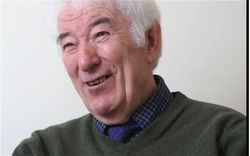
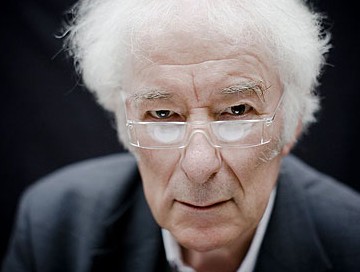
Heaney21_2657363bIn January, I heard Seamus Heaney reading at the Tricycle Theatre in north London. At the time it felt like a special event – and with the news that the Nobel Prize-winning poet has died aged 74, I feel even more privileged to have been there. He read from his poem “Two Lorries” – “one of the least romantic titles for a poem ever”, he drily noted – which opens with a memory of his mother having coal delivered: “It’s raining on black coal and warm wet ashes.” The last two words echoed a passage from Joyce’s Ulysses he had read out earlier, in which Stephen Dedalus’s dead mother appears in a dream smelling of “wetted ashes”. Heaney's echo was surely deliberate. It felt like he was allowing us a private glimpse of his creative method.

…Works of art often sparked his imagination. There were fine translations of Dante and Sophocles and an acclaimed version of Beowulf. European literature was in his bones. In an essay on three English poets – his close friend Ted Hughes, Philip Larkin and Geoffrey Hill – he wrote of the “cultural depth-charges latent in certain words and rhythms, the binding secret between words in poetry that delights not just the ear but the whole backward and abysm of mind and body”. The phrase “backward and abysm” recalls The Tempest: Prospero’s question to his daughter Miranda about her early years. Heaney was in deep touch with his childhood memories out of which he made beautiful poetry. But he also plunged into dark corners of the human heart and the well of ancient literature. He felt like a wise sage as well as a great poet. Though I can hear him gently recoiling from such praise: “The gift of writing is to be self-forgetful,” he told me, ”to get a surge of inner life or inner supply or unexpected sense of empowerment, to be afloat, to be out of yourself.”

More here.

There will never be another you: Images of Jazz Greats

From The New York Times:

BillieholidayAn almost startling intimacy characterized the smoky jazz clubs in places like Chicago and Cleveland around 1950. Billie Holiday relaxed on a banquette; Ella Fitzgerald sang on small stages, mere feet from the audience. “This was the way this music was supposed to be presented,” says Joe Lauro, the president of the Historic Films Archive in Greenport, N.Y. “They weren’t filling up Madison Square Garden.” Lauro acquired a trove of pictures from this time taken by Nat Singerman, a photographer and jazz lover, that captures some of the era’s jazz greats in color, rare for the subject matter then. “It’s fascinating to see them at this particular moment,” says Loren Schoenberg, the artistic director of the National Jazz Museum in Harlem, of these previously unpublished pictures. “This was just before rhythm and blues and rock ’n’ roll took the spotlight away from these people.”

More here.

Robert Pinsky and Others on Seamus Heaney

From the Boston Review:

ScreenHunter_292 Aug. 31 12.52Robert Pinsky

Seamus Heaney, as I’ve often said, was a mensch as well as a great poet.
 When he sent me a poem for the first issue of Slate (his wonderful “Little Canticles of Asturias”), I don't think he had any notion what an “internet magazine” might be. He gave me the poem because I asked him for one, and we were friends.
 Readers of Boston Review should know that his attachment to this place was deep. I think Boston and Cambridge supplied, a little, some haven from the central, sometimes fierce spotlight, for him, of being in Dublin or London. Here, there was a little refuge in being an outsider, as well as in the glare. He handled it all with class and generosity.
 When reading lives of writers, many great writers often behaving in ways that were petty or worse, I've thought to myself, “Thank god for Chekhov—a great writer who was also a decent, generous, good person.”

Well, thank god for Seamus.

More here. And here's the NYT obituary by Margalit Fox.

Huw Price reviews Lee Smolin’s Time Reborn

Huw Price in Medium of Expression:

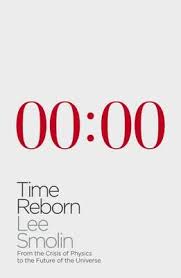
SmolinLee Smolin likes big targets. His last book, The Trouble With Physics, took on the string theorists who dominate so much of contemporary theoretical physics. It was my engrossing in-flight reading on a trip to the Perimeter Institute a few years ago, where I first met its rather engaging author in person. I thoroughly enjoyed that battle, from my distant philosophical vantage point – “Pleasant is it to behold great encounters of warfare arrayed over the plains, with no part of yours in the peril,” as Lucretius put it (1). But now things are more serious: in Time Reborn Smolin has my team in his sights, and some part of mine is certainly in the peril, if he emerges victorious. Should I now be feeling sorry for the string theorists?

I’ll come back to that question, but first to the dispute itself, which is one of philosophy’s oldest feuds. One team thinks of time as we seem to experience it, a locus of flow and change, centered on the present moment – “All is flux”, as Heraclitus put it, around 500BC. The other team, my clan, are loyal instead to Heraclitus’s near contemporary, Parmenides of Elea. We think of time as it is described in history: simply a series or “block” of events, lined up in a particular order, with no distinguished present moment. For us, “now” is like “here” – it marks where we ourselves happen to stand, but has no significance at all, from the universe’s point of view.

Which side is right? Both teams have supporters in contemporary philosophy, but we Parmenideans claim powerful allies in modern physics, commonly held by physicists themselves to favour the block picture. Einstein is often quoted as one of our champions.

More here.

The Silence of Animals: On Progress and Other Modern Myths

Richard King in the Sydney Review of Books:

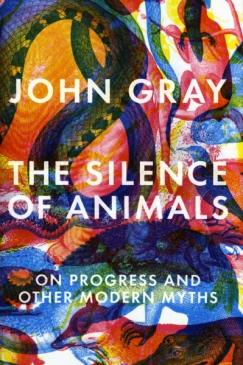
1370120542And if we are reasoning animals, why can we not apply our reason to the question of how to improve our lot and the lot of our species more generally? ‘Scientific inquiry may be an embodiment of reason,’ writes Gray in a revealing passage, ‘but what such inquiry demonstrates is that humans are not rational animals.’ Well, they’re rational enough to have science! And so the question becomes not whether we are rational, but to what extent we are rational and whether we can use our rationality to create institutions and political systems that favour and nurture that rationality and keep our irrational drives in check.

To say that The Silence of Animals doesn’t begin to answer that question would be to put it delicately. For Gray gives us an image of humankind as fundamentally and dangerously irrational. He gives us Man the Myth-maker. Turning to Freud, who in Gray’s estimation has been fundamentally misunderstood as providing ‘a therapy for modern ills’, Gray suggests that ‘the upshot of his work is that we are obliged to admit that our knowledge of ourselves cannot be other than highly limited.’ And so we tell stories about the world, and about our special place within it, and about how we are going to make it better; and in this way we avoid the truth that we are animals and that our lives are without meaning.

More here.

Saturday Poet

Rest in peace, Seamus

“Debate doesn’t really change things. It gets you bogged in deeper. If you can address or reopen the subject with something new, something from a different angle, then there is some hope…. That’s something poetry can do for you, it can entrance you for a moment above the pool of your own consciousness and your own possibilities.”

—Seamus Heaney

Between my finger and my thumb
The squat pen rests; snug as a gun.

—from Heaney's Digging

Friday, August 30, 2013

hitler’s town

Linz_bridge_tourism

This is the very question that Linz asks. We are not the past, Linz says, we are the present and the future. On the edge of town is solarCity, a model of alternative power use, and in the center, the tramcars (the latest from Siemens) glide by the same fashionable stores you can find in Avignon and Minneapolis. The bunker under the Hauptplatz has been converted to a parking garage, and the smog that once darkened Linz’s skies has been eliminated—the emissions from its steelworks filtered until the smoke seems as inoffensive as the new name, Voestalpine (so much less toxic than the original one, the Hermann Göring Steel Works). Linz got a boost recently when the European Union chose it as a cultural capital (an honor bestowed annually on a European city, which is expected, in return, to stage cultural events, promote art, and generally spruce itself up), although in the case of Linz, the honor came with a catch. In 1945 the Allies designated Austria as “Hitler’s first victim,” but Europeans whose families suffered under the Nazis in Austria (including Linz and its environs) understood this as self-serving revisionism. The EU urged Linz—as it set about preparing for a year in the limelight—to recover its memory.

more from Robert Hahn at The American Scholar here.

Life, with Marilyn Horne

Horne-Marilyn-9[Carmen-1972]

That narrative is a juicy one. As with most nineteenth-century operas, it is about forbidden love, but one that is as inevitable as destiny. The duet in Act II between Aïda and Amneris explores how the dynamics of power try to subvert the natural paths of love. Princess Amneris (sung by Marilyn Horne) is determined to find out if her slave Aïda (sung by Leontyne Price) loves the country’s warrior-hero Radamès, and all manner of overwrought cattiness ensues. Amneris lies that Radamès is dead. Aïda despairs and then explodes with relief when she learns the truth. Amneris vows retribution; Aïda begs for mercy. Even if you know nothing of opera, the turns, revelations, and emotions of this scenario call out for some kind of accompaniment: slow, lyric melodies in a modest range for Aïda’s supplication, orchestral explosions for her relief, marching horns and high notes for Amneris’ arrogance, quickened pace and leaping melodies for their agitation. If you didn’t know that Verdi was such a great composer, you would think that the duet had written itself.

more from Jayme Stayer at Hudson Review here.

a time before the snap

130902_r23888_p465

Tastes will shift again, no doubt, but right now, and on the evidence of the Met’s exhibit, this is what we value in the Cameron inheritance: the shock, and the privilege, of being looked at by persons from another time. They are clusters and nebulae—physically faded now, yet no less dazzling to the imagination than when they were first observed. The young woman photographed by Cameron in 1866, and boosted with a caption from Milton (“The Mountain Nymph Sweet Liberty”), should by rights be a ghost, peering from the depths of her damaged gloom; and yet, as Herschel said, in awe, “she is absolutely alive and thrusting out her head from the paper into the air.” That mixture of romance and mug shot is threaded through Cameron’s portraits, and her concocted scenes of myth and legend are, similarly, suffused with sincerity and play alike. To that extent, she upheld the peculiar standards of her era, but in other ways she kept them at bay. Contrary to the promises of her daughter, the camera did not amuse her, in ladylike ease, as a fitting diversion for an amateur; it consumed her, firing a career and a faith. She neither resented nor ever relinquished her duties as a wife and mother, and was, in Woolf’s words, “like a tigress where her children were concerned”; she threatened to colonize other people like a one-woman empire. But the fact remains that, when her vocation arrived, in middle age, all her zest and enterprise, far from being frittered away, was driven to a concentrated point. Julia Margaret Cameron found her focus.

more from Anthony Lane at The New Yorker here.

Sad news: Seamus Heaney dies aged 74

Liz Bury in The Guardian:

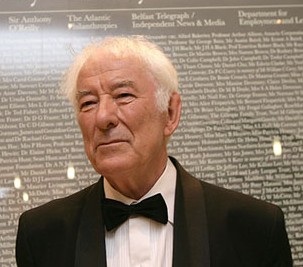
ScreenHunter_290 Aug. 30 13.50Seamus Heaney, Ireland's first Nobel prize-winning poet since WB Yeats, has died aged 74 in hospital in Dublin after a short illness, his publisher announced this morning.

Heaney won the Nobel prize for literature in 1995 and was celebrated for his many collections of poetry during his lifetime. He won the TS Eliot Prize in 2006 for his collection District and Circle. In 2010 he won the Forward poetry prize for Human Chain, a volume of verse inspired by his experiences after a stroke; his earlier collection The Spirit Level was shortlisted in 1996, as was District and Circle in 2006.

Heaney was born on a small farm near Toomebridge in County Derry, Northern Ireland, in 1939, “the eldest child of an ever-growing family”. In his Nobel address in Stockholm he spoke lovingly of his childhood in a three-roomed thatched farmhouse at Mossbawn where, in their early years, he and his siblings passed “a kind of den-life which was more or less emotionally and intellectually proofed against the outside world”.

After attending boarding school at St Columb's College in Derry city as a scholarship boy – a transition, as he has said, “from the earth of farm labour to the heaven of education” – Heaney went on to study at Queen's University Belfast, where he joined a generation of “Northern poets” that included Michael Longley and Derek Mahon. He published his first major collection, Death of a Naturalist, in 1966.

More here.

A comic walks into a particle accelerator lab…

From The Independent:

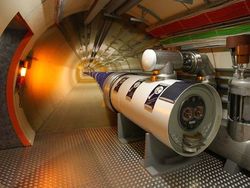
CERN-gtThe Cern laboratory will generate a unique collision between comedy and science when the particle physics research centre in Switzerland hosts its first night of stand-up. Six scientists will test their comedy routines at a special performance staged at the Geneva home of the Large Hadron Collider on Friday night. The stand-up show will be broadcast live on the web. Sam Gregson, a University of Cambridge PhD student and Cern affiliated particle physicist who organised the Large Hadron Comedy night, said: “The evening is a great opportunity to enthuse people worldwide about the fantastic work going on at arguably the world's most important scientific facility through an exciting, vibrant and upcoming medium. The use of stand-up comedy allows scientists to engage with audiences that may not attend the usual lectures and exhibitions and helps bring cutting-edge science more into the mainstream spotlight.”

Funny (peculiar?): Jokes for scientists

1. A Higgs boson walks into a bar and asks everyone to take part in an act of penitence. “What are you doing?” asks the barman. “Giving mass.”

2. What did the proton say to the ever-grumpy electron? “Why do you have to be so negative all the time?”

3. Two atoms are walking down the street. One says to the other, “Hey! I think I lost an electron!” The other says, “Are you sure?” “Yes, I’m positive!”

4. Why are quantum physicists crap in bed? Because when they find the position, they can’t find the momentum, and when they have the momentum, they can’t find the position.

5. A Higgs boson walks into a bar. The bartender says, “What’s the matter?” The Higgs replies: “Exactly.”

More here.

Stem cells mimic human brain

From Nature:

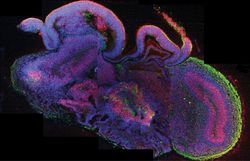
BrainWith the right mix of nutrients and a little bit of coaxing, human stem cells derived from skin can assemble spontaneously into brain-like chunks of tissue. Researchers provide the first description and application of these ‘mini-brains’ today in Nature1. “It’s a seminal study to making a brain in a dish,” says Clive Svendsen, a neurobiologist at the University of California, Los Angeles, who was not involved in the study. “That’s phenomenal.” A fully formed artificial brain might still be years away, he notes, but the pea-sized neural clumps developed in this work could prove useful for researching human neurological diseases. Researchers have previously used human stem cells to grow structures resembling the eye2 and even tissue layers similar to the brain's cortex3. But in the latest advance, scientists developed bigger and more complex neural-tissue clumps by first growing the stem cells on a synthetic gel that resembled natural connective tissues found in the brain and elsewhere in the body. Then, they plopped the nascent clumps into a spinning bath to infuse the tissue with nutrients and oxygen.

“The big surprise was that it worked,” says study co-author Juergen Knoblich, a developmental biologist at the Institute of Molecular Biotechnology in Vienna. The blobs grew to resemble the brains of fetuses in the ninth week of development. Under a microscope, researchers saw discrete brain regions that seemed to interact with one another. But the overall arrangement of the different proto-brain areas varied randomly across tissue samples — amounting to no recognizable physiological structure.

More here.

Literally the Worst Definition of a Word Ever

Nicholas Clairmont in Big Think:

Shutterstock_113618773Ours is a cultural and linguistic moment obsessed with irony.

For just that reason, people need to stop using the word 'literally' to mean 'figuratively'. I am not the first to say this. Yet the point failed to sink in. Worse, prompted by the addition of the non-literal sense of 'literal' to several dictionaries, including the Oxford Enflish Dictionary Online, the usage is getting even more accepted.

The situation is also getting worse because the flames are being fanned by several reactionary articles which claim that the usage which means 'figuratively' is perfectly legitimate. They make this claim based on three lines of reasoning: That the usage is very old, that nobody actually gets confused by the two meanings, and that language evolves naturally and we must simply describe it and conform to it, rather than judge it or make prescriptions for it.

I will describe precisely why this usage is a bad thing for the language. But first, because all of the above arguments are faulty, I want to take the time to point out why:

Bad Reason 1: “Aha!” they point out. “The usage is not some horrible new invention of the millennials, it has been around for a very long time, in the dictionary since 1903, and first used in 1759!”

This point tends to be the primary data used to make the non-literal use of 'literally' look legitimate to detractors. Why the hell does this matter to anyone?

More here.

Thursday, August 29, 2013

Is America Addicted to War?

Stephen M. Walt in Foreign Policy:

110404_Walt1_110926593nIt remains to be seen whether this latest lurch into war will pay off or not, and whether the United States and its allies will have saved lives or squandered them. But the real question we should be asking is: Why does this keep happening? Why do such different presidents keep doing such similar things? How can an electorate that seemed sick of war in 2008 watch passively while one war escalates in 2009 and another one gets launched in 2011? How can two political parties that are locked in a nasty partisan fight over every nickel in the government budget sit blithely by and watch a president start running up a $100 million per day tab in this latest adventure? What is going on here?

Here are my Top 5 Reasons Why America Keeps Fighting Foolish Wars:

1. Because We Can.
The most obvious reason that the United States keeps doing these things is the fact that it has a remarkably powerful military, especially when facing a minor power like Libya. As I wrote a couple of weeks ago, when you've got hundreds of planes, smart bombs, and cruise missiles, the whole world looks like a target set. So when some thorny problem arises somewhere in the world, it's hard to resist the temptation to “do something!”

More here.

Q & A with Shadab Zeest Hashmi

Soniah Kamal at her website:

ShadabZHashmi-198x300Can you tell us a little about your writing/revision process?

I write on an empty stomach. The first draft is hand-written in a slim notebook that I keep with me. I like to take a break before revising, so I have some distance from the work and I can be super-critical. I revise on the computer and I revise multiple times, typically with tea and almonds.

Any advice for a beginning writer?

Read a rich variety of works. Don’t ignore the voices in your head—they’ll never say anything unimportant to an artist. Be kind to yourself when writing and harsh when editing. I believe that “there is no great writing, only great rewriting.”

A favorite essay/memoir/short story on the topic of identity and borders?

Manto’s short story “Toba Tek Singh” is a classic. NovelsAli and Nino by Kurban Said and People of the Book by Geraldine Brooks explore identity in poignant ways. I find Ibtisam Barakat’sTasting the Sky: A Palestinian Childhood to be one of the most moving, beautiful memoirs dealing with identity and borders.

Your favorite social media tool?

Facebook

More here.

the berlin story

P4_Robertson_365967h

Berlin’s image as an outpost of America within Germany was established long before the 1920s. Mass spectator sport in the form of six-day cycle races antedated the war; the first such event was held in New York in 1896, and they were introduced into Berlin in 1909. In Georg Kaiser’s Expressionist drama Von morgens bis mitternachts (From Morning to Midnight, probably written in 1912), the mass excitement aroused by a cycle race leads the protagonist briefly to hope that such collective feeling can form the basis for a new society. The editors take a gloomier view, seeing in such large-scale sporting events the prototype for the mass spectacles organized under the Third Reich; the Berlin Olympics of 1936 come readily to mind. The narrative that emerges from the extracts assembled by Frisby and Boyd Whyte inevitably terminates in the Third Reich. Hitler’s state did not reject the modernity typified by Berlin, but adapted and redirected it. For example, the factory of the Borsig engineering company in Tegel was used to produce anti-aircraft guns instead of locomotives. Light effects like those at Karstadt were further developed so that Mussolini, paying a state visit in 1937, was greeted as he drove along Unter den Linden by the semblance of hundreds of golden eagles.

more from Ritchie Robertson at the TLS here.