Dawkins’s Accusers and the New “Oriental”

István Aranyosi in the Boston Review:

ScreenHunter_297 Sep. 05 10.27Richard Dawkins is under attack—at least if the recent tide of opinion pieces targeting him is any measure. Accusers allege that Dawkins’s recent tweets exhibit anti-Muslim bigotry.

Now, I am not a fan or follower of Dawkins qua religious or theological thinker, for the simple reason that his writings fall short of the kind of argumentative sophistication that we analytic philosophers are trained for. If I want to read careful atheist thinkers, I read people like Michael Tooley, Graham Oppy, Quentin Smith, or Adolf Grünbaum.

Yet in spite of this and of the fact that some of Dawkins’s tweets are insensitive and crude, the accusation that he promotes anti-Muslim bigotry or xenophobia is misplaced. In fact, I think that a significant part of what such bigotry usually involves—namely, viewing Muslims as a uniform, monolithic block, coupled with an attempt at racializing Islam—is more characteristic of Dawkins’s accusers.

Here is one of Dawkins’s tweets: “Mehdi Hasan admits to believing Muhamed flew to heaven on a winged horse. And New Statesman sees fit to print him as a serious journalist.” It is obvious what is wrong with Dawkins’s claim: Hasan’s religious beliefs are irrelevant to his journalistic activities. It is what we call a “fallacy of relevance” in informal logic. Why do some commentators feel the need to also add that it is racist, or Islamophobic, or anti-Muslim? Just because Hasan is Muslim? That would be another instance of the same fallacy, at least if Dawkins were ready to say something similar of a Christian journalist who happens to believe in, say, the Immaculate Conception. And he is. Do the accusers know he is? I assume they should, given that Dawkins has for a long time been a fierce critic especially of the Christian faith.

More here.
The Global Elite’s Favorite Strongman

Mag-08kagame-t_CA0-articleLarge

Jeffrey Gettleman in the NYT Magazine:

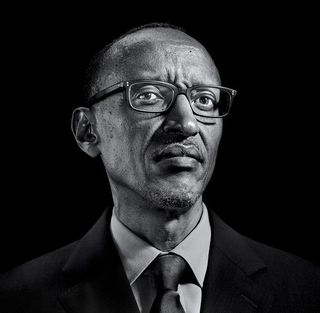
Kagame has made indisputable progress fighting the single greatest ill in Africa: poverty. Rwanda is still very poor — the average Rwandan lives on less than $1.50 a day — but it is a lot less poor than it used to be. Kagame’s government has reduced child mortality by 70 percent; expanded the economy by an average of 8 percent annually over the past five years; and set up a national health-insurance program — which Western experts had said was impossible in a destitute African country. Progressive in many ways, Kagame has pushed for more women in political office, and today Rwanda has a higher percentage of them in Parliament than any other country. His countless devotees, at home and abroad, say he has also delicately re-engineered Rwandan society to defuse ethnic rivalry, the issue that exploded there in 1994 and that stalks so many African countries, often dragging them into civil war.

Kagame may be the most complicated leader in Africa. The question is not so much about his results but his methods. He has a reputation for being merciless and brutal, and as the accolades have stacked up, he has cracked down on his own people and covertly supported murderous rebel groups in neighboring Congo. At least, that is what a growing number of critics say, including high-ranking United Nations officials and Western diplomats, not to mention the countless Rwandan dissidents who have recently fled. They argue that Kagame’s tidy, up-and-coming little country, sometimes described as the Singapore of Africa, is now one of the most straitjacketed in the world. Few people inside Rwanda feel comfortable speaking freely about the president, and many aspects of life are dictated by the government — Kagame’s administration recently embarked on an “eradication campaign” of all grass-roofed huts, which the government meticulously counted (in 2009 there were 124,671). In some areas of the country, there are rules, enforced by village commissars, banning people from dressing in dirty clothes or sharing straws when drinking from a traditional pot of beer, even in their own homes, because the government considers it unhygienic. Many Rwandans told me that they feel as if their president is personally watching them. “It’s like there’s an invisible eye everywhere,” said Alice Muhirwa, a member of an opposition political party. “Kagame’s eye.”

What Political Scientists Can Tell Us About War, Syria and Congress

Brad Plumer in the Washington Post:

3) Elite opinion on war plays a huge role in shaping public opinion. Intervention in Syria is pretty unpopular with the wider American public right now. But it won’t necessarily stay that way. A lot could depend on the words and actions of lawmakers and other elites.

At least, that’s one implication of a 2007 paper by Adam Berinsky of MIT: “When political elites disagree as to the wisdom of intervention, the public divides as well. But when elites come to a common interpretation of a political reality, the public gives them great latitude to wage war.” (See also Berinsky’s book on this topic.)

4) Broadly speaking, military interventions have a poor track record in achieving humanitarian goals. True, the Obama administration isn’t framing a strike on Syria as a humanitarian endeavor (their stated goal is to enforce norms against the use of chemical weapons). Still, Erica Chenoweth of the University of Denver has been highlighting a couple of striking papers on the consequences of intervention:

–A 2002 paper by Patrick Ragan found that outside military interventions don’t typically shorten the duration of civil conflicts. “Regardless of how the intervention is conceived – or empirically operationalized—there seems to be no mix of strategies that lead to shorter expected durations.”

–A 2012 paper by Reed Wood, Jason Kathman and Stephen Gent found that outside military interventions on behalf of rebel factions can actually increase government killings of civilians:

Screen-Shot-2013-08-27-at-8.58.11-AM

Wednesday, September 4, 2013

Liberate Poetry! Robert Pinsky’s Manifesto for Readers

Daniel Bosch in The Daily Beast:

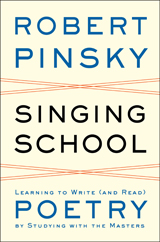
ImgRobert Pinsky’s new anthology with commentary, Singing School, argues that the medium of the poet is the reader’s body, that words and punctuation and tonal manipulations are means to ends felt not in mind but in the mouth, ears, lungs, and trunk of the oral performer of a poem. What good is served, Pinsky would ask, by so much talk about whether or not we have “understood” a work of art, if what we mean by “understanding” largely ignores our embodied experience of that work? Every word of Singing School is pitched against the decapitation of poetry’s head from its body.

Singing School is so lean and mean, any précis calls for a spoiler alert. Its title is lifted from William Butler Yeats’ 1926 poem “Sailing to Byzantium,” and the infamously negative couplet: “Nor is there singing school but studying / Monuments of its own magnificence.” A brief preface orients the reader to the kinds of attention Pinsky will advocate, and he divides the book into four sections or “courses” of 17 to 25 poems, each deftly-curated to tease out the complexity of an important on artistic theme: “Freedom,” “Listening,” “Form,” and “Dreaming Things Up.”

As you will see below, Pinsky spins his picks concisely: the total pedagogical apparatus amounts to just 35 of 222 pages (and many of these pages are full of verse). A lot of the poems in Singing School are canonical, and this fact will make the book a powerful choice for teachers of any high school or early college survey of principal literary genres. Middle school students would love it, too, but most middle school teachers would wrongly assume the poems too difficult. They are only difficult to explain, not to love.

More here.

Bad Decisions Don’t Make You Poor. Being Poor Makes for Bad Decisions

Matthew Yglesias in Slate:

ScreenHunter_296 Sep. 04 17.30A study published last week in the journal Science shows that the stress of worrying about finances can impair cognitive functions in a meaningful way. The authors gathered evidence from both low-income Americans (at a New Jersey shopping mall) and the global poor (looking at farmers in Tamil Nadu, India) and found that just contemplating a projected financial decision impacted performance on spatial and reasoning tests.

Among Americans, they found that low-income people asked to ponder an expensive car repair did worse on cognitive-function tests than low-income people asked to consider cheaper repairs or than higher-income people faced with either scenario. To study the global poor, the researchers looked at performance on cognitive tests before and after the harvest among sugarcane farmers. Since it’s a cash crop rather than a food one, the harvest signals a change in financial security but not a nutritional one. They found that the more secure postharvest farmers performed better than the more anxious preharvest ones.

These findings complement the already extensive literature of the negative physical impacts of low socioeconomic status, reinforcing the point that the harms of poverty extend beyond the direct consequences of material deprivation.

More here.

The Computational Theory of the Laws of Nature

Terrance Tomkow at Tomkow.com:

…the question, What are the laws of nature? may be stated thus: What are the fewest and simplest assumptions, which being granted, the whole existing order of nature would result? Another mode of stating it would be thus: What are the fewest general propositions from which all the uniformities which exist in the universe might be deductively inferred? J.S.Mill, 1843

… if we knew everything, we should still want to systematize our knowledge as a deductive system, and the general axioms in that system would be the fundamental laws of nature” Frank Ramsey, 1928

“a contingent generalization is a law of nature if and only if it appears as a theorem (or axiom) in each of the true deductive systems that achieves a best combination of simplicity and strength” David Lewis 1973

Ki-equationVereshchagin & Vitányi,2004

The quotes from Mill, Ramsey and Lewis above express the what philosphers call the “ Best System Analysis” of Laws.

BSA is probably the most widely accepted answer we have to the question, “What is it to be a Law of nature?” Even so, it is notoriously fraught with unanswered questions. A short list:

Can the account properly distinguish accidental from nomological regularities?

Can it explain the connection between the laws of nature, counterfactuals and dispositions?

Why should we count only generalizations as laws, given that many scientific principles do not obviously take this form? Can't singular statements describing, say, fundamental constants be laws too?

What is the connection between this deductive account of laws and our inductive methods of discovering them?

How does BSA accommodate the existence of probabilistic laws?

What do Mill and Lewis mean when they speak of “simplicity”? Isn't simplicity in the eye of the beholder? If so how can it be a subjective matter what the laws of nature are? Or, if simplicity is just a measure of shortness of our sentences, doesn't that make law-hood a matter of what language we happen to speak?

And, anyway, why should we think that the laws of nature must be simple in any sense?

In this post I want to raise different and, I think, more fundamental problems for BSA and provide an alternative theory of lawhood based on Algorithmic Information Theory (AIT). This new theory is precisely captured in the theorem of AIT that appears above. Don't worry if you don't understand it just now. AIT is a recent development and a novelty to most philosophers. Before we are done, I hope to have explained to you what this equation means and to have convinced you of its deep significance.

More here.

brodsky and lithuania

Romas

Here’s how my story begins: At the end of August 1966, the young Russian poet Joseph Brodsky was in low spirits. He was having trouble readjusting to Leningrad life on his return from 18 months of exile doing hard labor near the Arctic Circle. Brodsky’s crime was “having a worldview damaging to the state” and “social parasitism . . . except for the writing of awful poems.” There were romantic troubles besides. A colleague was worried, and kept in touch with him while traveling. One night he telephoned Brodsky from Lithuania, where he was staying with friends in Vilnius. “Let him come over here. We are all in a good mood here,” urged the Lithuanian host, Ramūnas Katilius. Brodsky arrived before noon the next day, and even held two readings at the apartment during his stay. Thus began a lifelong friendship with the Katilius family and a long romance with Lithuania, a comparative refuge during the dying years of the Soviet empire. Eventually, Brodsky gained recognition as Russia’s greatest postwar poet and, in exile, a controversial titan on the New York literary scene who taught at several U.S. universities.

more from Cynthia Haven at The Book Haven here.

into the sacred wood

J.M.W.-Turner-The-Golden-Bough-1834

If, as C. S. Lewis claimed, the old gods die to faith but rise as allegory, then old myths die to religion but rise as fantasy. Thanks to The Golden Bough and its sibling, Jessie Weston’s From Ritual to Romance, twentieth-century scholars had a field day with medieval romance, combing its enigmatic plots for remnants of pagan lore. These prove to be legion: along with the fairy challenge scenario, they include magic fountains, spinning castles, shape-shifting hags that turn into beautiful maidens, and beheading games that pit a mortal against a supernatural being, who has the unfair advantage of being able to saunter off with his head in his hands. Many of those avid source-hunters — unlike the reading public then or now — were all but immune to the appeal of romance itself. While they pined for lost archetypes, be they Irish, Welsh or Breton, they sneered at French storytellers who had the audacity just to tell stories, rather than painstakingly reassembling the shards of a lost religion. But that critical phase has had its day. Medievalists now prefer to explore the artistry of a Chrétien de Troyes or Marie de France, leaving the archaeology of their tales aside.

more from Barbara Newman at Berfrois here.

the kirkist backlash

130909_r23923_p233

Writers on the brain and the mind tend to divide into Spocks and Kirks, either embracing the idea that consciousness can be located in a web of brain tissue or debunking it. For the past decade, at least, the Spocks have been running the Enterprise: there are books on your brain and music, books on your brain and storytelling, books that tell you why your brain makes you want to join the Army, and books that explain why you wish that Bar Refaeli were in the barracks with you. The neurological turn has become what the “cultural” turn was a few decades ago: the all-purpose non-explanation explanation of everything. Thirty years ago, you could feel loftily significant by attaching the word “culture” to anything you wanted to inspect: we didn’t live in a violent country, we lived in a “culture of violence”; we didn’t have sharp political differences, we lived in a “culture of complaint”; and so on. In those days, Time, taking up the American pursuit of pleasure, praised Christopher Lasch’s “The Culture of Narcissism”; now Time has a cover story on happiness and asks whether we are “hardwired” to pursue it. Myths depend on balance, on preserving their eternal twoness, and so we have on our hands a sudden and severe Kirkist backlash.

more from Adam Gopnik at The New Yorker here.

Vocatus atque non vocatus, deus aderit

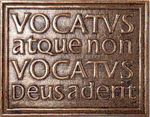
CARL gustav JUNG - Vocatus atque non vocatus, Deus aderit

I ask the reader to join me in an excursion of otsoggery [1] that begins in a steamy Japanese dystopia and ends in a suburb of Zürich, having at its center one of the great Latin poets. This expedition stepped off with a note on the American Literary Translators Association online chatroom: “I just finished [Haruki Murakami’s 2010 novel] 1Q84,” Dennis Dybeck wrote,

and was struck by what seemed an odd quote from C. G. Jung. In the novel, an enigmatic character, Tumaru, asks an unfortunate private investigator he’s about to painfully assassinate whether he’s ever heard of an inscription Jung carved in stone. “Cold or not, God is present.” It’s a striking scene with the question almost a meditative consolation for victim, assassin, and the reader, as well. Googling it this morning, it seems that “Cold or not, God is present” is a deliberate misquote of an ancient phrase Jung is said to have found quoted in Erasmus. “Vocatus atque non vocatus, deus aderit.” (Called or not, god is present.) I’m wondering if anyone knows how the pun is handled in the original Japanese.

more from J. Kates at Harvard Review here.

What Urban Planners Can Learn From a Hindu Religious Festival

From Smithsonian:

KumbhWhat they don’t tell you about Varanasi, probably India’s holiest city, is that in addition to being filled with sacred temples, mischievous monkeys and bearded ascetics, it’s also full of waste of all kinds: mountains of fetid cow and other, much worse kinds of dung, muddy tributaries of dubious origin, mounds of fast-decaying flowers, shards of shattered clay cups. As I left the utter squalor of Varanasi, a permanent and ancient city of four million, for a temporary religious celebration of even more people nearby, I could only imagine the enormous crowds, inescapable filth and utter chaos that it would produce.

…In the mythology of the Kumbh Mela, gods and demons fought for 12 days over a pitcher (kumbh) of nectar of immortality from the primordial ocean, and the nectar spilled onto the earth at four different places, including Allahabad. The gathering (mela) takes place every three years at one of the four locales in a 12-year cycle—a day of the gods’ time corresponds to a year of human time—with the largest (maha) celebration in Allahabad. The first written record of its occurrence dates to the seventh century A.D. I arrived by taxi at the Kumbh at sunset, expecting throngs of cars, cows and human beings blocking all access points. Instead I glided comfortably into my camp, which sat on a hilltop. I looked out over the fleeting city before me: makeshift shelters constructed on the floodplain of a river that was sure to overflow again in a few months. The soundtrack consisted of dissonant chords of shrill songs, snippets of amped-up holy recitations, a distorted line from a dramatic performance of an Indian epic and the constant rumble of millions of people cooking, chatting, snoring and singing. The horizon was dark and smoky red, with colorful flickers of light piercing the haze in orderly, geometric rows that stretched as far as I could see in three directions. I’d come to witness the spectacle for myself, but also to meet a group of Harvard researchers from the university’s Graduate School of Design. Led by Rahul Mehrotra, an architect from Mumbai before he went stateside to teach, they would closely analyze this unparalleled feat of spontaneous urban organization. “We call this a pop-up megacity,” said Mehrotra, a bearded 54-year-old. “It’s a real city, but it’s built in just a few weeks to instantly accommodate tens of millions of residents and visitors. It’s fascinating in its own right, of course. But our main interest is in what can we learn from this city that we can then apply to designing and building all kinds of other pop-up megacities like it. Can what we see here teach us something that will help the next time the world has to build refugee camps or emergency settlements?”

More here.

robinson crusoe, daniel defoe, and debtor’s prison

From DelanceyPlace:

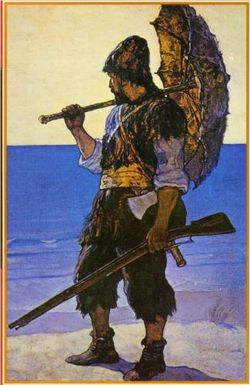
Robinson-crusoe-illustration.jpg!Blog“On October 29, 1692, Daniel Defoe, merchant, pamphleteer, and future best-selling author of Robinson Crusoe, was committed to King's Bench Prison in London because he owed more than 17,000 pounds and could not pay his debts. Before Defoe was declared bankrupt, he had undertaken such far-flung ventures as underwriting marine insurance, importing wine from Portugal, buying a diving bell used to search for buried treasure, and investing in some seventy civet cats, whose musk secretions were prized for the manufacture of perfume.

…”Typically, creditors obtained a writ of seizure of the debtor's assets. (Historians record that Defoe's civet cats were rounded up by the sheriff's men.) If the assets were insufficient to settle the debt, another writ would send the bankrupt to prison, from which he could win release only by coming to terms with his creditors. Defoe had no fewer than 140 creditors, but he managed to negotiate his freedom in February 1693, though he would continue to evade debt collectors for the next fifteen years. His misadventures later informed Robinson Crusoe (1719), whose fictional protagonist faces financial ruin and expresses remorse at pursuing 'projects and undertakings beyond my reach' and ending up 'the willful agent of all my own miseries.'

…”Defoe's thrice-weekly newspaper, A Review of the State of the English Nation, reported on the progress of the bill and served as its most authoritative advocate. The government, looking to drum up support, purchased and distributed copies, increasing its paid circulation to fifteen hundred. The act was understood as an emergency measure to restore commerce; it was to remain in force for just three years.”

More here.

Wednesday Poem

Country Life
.
.
Sowing a row of early wonder
beets, let's say, or a border
of nasturtiums, you stop
to wonder where you're traveling
by knee.
Into the August tool-shed musk
into a fermenting apple.

There goes the plow sealing
with a new two-foot snowbank
the driveway you cleared all morning.
There go the geese back to the lake
after their dusk feeding
on corn stubble:
it must be March:
next they'll go north to nest.
And if you lie flat and silent
you can hear the suburbs coming
on their elbows.

The stones dance in place.
On one of them a mole is knocking
but it won't come out, this
is its day for dancing.
.

by William Matthews
from Sleek for the Long Flight
White Pine Press, 1988

Tuesday, September 3, 2013

Do You Believe in Sharing?

9780521405997

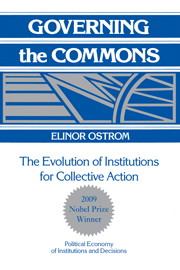
Tim Harford, the Undercover Economist, on Garrett Hardin and Elinor Ostrom on the common pool resources, at his website (via Marginal Revolution):

The story goes as follows: imagine common pasture, land owned by everyone and no one, “open to all” for grazing livestock. Now consider the incentives faced by people bringing animals to feed. Each new cow brought to the pasture represents pure private profit for the individual herdsman in question. But the commons cannot sustain an infinite number of cows. At some stage it will be overgrazed and the ecosystem may fail. That risk is not borne by any individual, however, but by society as a whole.

With a little mathematical elaboration Hardin showed that these incentives led inescapably to ecological disaster and the collapse of the commons. The idea of a communally owned resource might be appealing but it was ultimately self-defeating.

It was in this context that Hardin deployed the word “tragedy”. He didn’t use it to suggest that this was sad. He meant that this was inevitable. Hardin, who argued that much of the natural sciences was grounded by limits – such as the speed of light or the force of gravity – quoted the philosopher Alfred North Whitehead, who wrote that tragedy “resides in the solemnity of the remorseless working of things”.

Lin Ostrom never believed in “the remorseless working of things”. Born Elinor Awan in Los Angeles in 1933, by the time she first saw Garrett Hardin present his ideas she had already beaten the odds.

The Truth About the Pill

158871151.jpg.CROP.rectangle3-large

Lindsay Beyerstein in Slate:

In her new book Sweetening the Pill: or How We Got Hooked on Hormonal Birth Control, Holly Grigg-Spall offers what she calls a “feminist critique” of hormonal contraception. She argues that the so-called liberating force of the pill has been illusory. She claims that the pill keeps women in the thrall of patriarchal capitalism and destroys their health in the process. The addiction allusion in the title is not a metaphor—Grigg-Spall is convinced that the pill is an addictive drug.

It would be tempting to dismiss the author as an isolated crank, but she is part of a disturbing effort to reduce women to their biological functions in the name of feminism. Sexists have been trying to reduce women to incubators since time immemorial, but recently some self-proclaimed feminists have jumped on the bandwagon, arguing that true liberation means being left alone to experience feminine bodily functions like ovulation, childbirth, and breast-feeding in all their natural glory. To these “feminists,” tampons and epidurals are keeping women down. And now, the birth control pill is, too.

Grigg-Spall’s argument rests heavily on her own bad experience with Bayer’s Yasmin (which she blames for turning her into an emotional wreck) and comments on various websites dedicated to sharing pill horror stories. She indignantly anticipates that readers will dismiss these anecdotes: “I was sick, and then, I was well,” she writes. “That this is not enough evidence of the pill’s impact reveals so much about why women are encouraged to take this drug in the first place.” In other words, she accuses her critics of being sexist if they won’t accept her cherry-picked testimonials as proof that the pill harms all women.

Actually, there are good reasons to be suspicious of uncorroborated anecdotal evidence about the effects of drugs on our bodies. Millions of American women take the pill every day, so it’s a statistical certainty that some of them will have symptoms like depression, headaches, and weight gain, which are among the afflictions most commonly blamed on the pill. The only way to separate true side effects from coincidence, selective recall, and the power of suggestion is to conduct controlled clinical trials.

I Contradict Myself

QuakerNat Case in Aeon:

Magical stories moved me to tears. I vividly remember, at the age of eight, being surprised at how deeply the second chapter of Astrid Lindgren’s The Brothers Lionheart (1973) affected me. The narrator dies and goes to the land where sagas come from, and when he arrives he finds that all that he had wanted — to be strong, healthy and beautiful like his older brother — has come to be, and that his beloved brother is there, too. And this is just the beginning of the story. I remember arriving at the end of Penelope Farmer’s The Summer Birds(1962) and weeping bitterly as the children, who have spent the summer flying about the English countryside, return gravity-bound to school while their lonely classmate and the strange bird-boy fly off together over the ocean.

This essay wasn’t supposed to be about the stories I read as a child. It was supposed to be about how I manage to be an atheist within a religious community, and why I dislike the term ‘atheism’. But however I wrote that essay, the words died on the page. That story comes down to this: I do not believe in God, and I am bored with atheism. But these stories, this magic, and their presence in my heart, they don’t bore me — they are alive. Even though I know they are fiction, I believe in them.

My main religious practice today is meeting for worship with the Religious Society of Friends: I am a Quaker. Meeting for worship, to a newcomer, can feel like a blank page. Within the tradition of Friends, it is anything but blank: it is a religious service, expectant waiting upon the presence of God. So it’s not meditation, or ‘free time’. But that’s how I came to it at first, at the Quaker high school I attended.

After almost 15 years away, I returned to Quakerism in 1997. During a difficult patch of my life, a friend said I needed to do something for myself. So I started going to the meeting house on Sunday mornings. What I rediscovered was the simple fact of space. It was a hiatus, a parenthesis inserted into a complicated, twisty life. Even if it held nothing but breath, it was a relief, and in that relief, quiet notions emerged that had been trampled into the ground of everyday life.

I am an atheist, but I’ve been bothered for a long time by the mushiness I’ve found in the liberal spiritual communities that admit non-believers such as me. I’ve spent the better part of two decades trying to put my finger on the source of this unease, but it is not a question to be solved by the intellect: it must be lived through.

bleeding edge

Cover00

Of course, Pynchon is famous for his complexity. V., The Crying of Lot 49 (1966), and Gravity’s Rainbow (1973) virtually set the template for the paranoid style in American fiction, and for what’s semi-synonymously called the systems novel—vast interrogations in which character and plot get subsumed in grander architectures built to explain or exhaust various systems of control (political, technological, financial, chemical, etc.). Other high priests of this tendency include the stylistically diverse William Gaddis, Don DeLillo, and David Foster Wallace; The Corrections has one foot in this tradition, as do many of William Gibson’s novels. If you double the list of key figures, most will still be dudes. At times, the systems novel can seem like the ultimate in what we now call “mansplaining.” In Bleeding Edge, Pynchon is keenly conscious of this gender divide, and even seems to address it. “Generally, all-male narratives, unless it’s the NBA, challenge Maxine’s patience,” he writes. “Now and then [her sons] will hustle her into watching an action movie, but if there aren’t that many women in the opening credits, she’ll tend to drift away.”

more from Ed Park at Bookforum here.

Loose as the wind, as large as store

Stubbs_09_13

Herbert as much as Donne voices the waywardness of the passions, the anger that can send a child charging like an escaping balloon. But Herbert looks for a solution where Donne insists there is only a puzzle. For Donne, knowledge lies in dilemma, in paradox; for Herbert, this is only a stage. Their poetic language is also entirely different. In his famous ‘Song: Go, and catch a falling star’, for example, in telling his listener to ‘Ride … Till age snow white hairs on thee’, Donne uses a metaphor from Horace, which an ancient book on rhetoric, Quintilian’s Institutio Oratoria, explicitly disapproved of as ‘far-fetched’. He even goes a step or three further. Snow is a metaphor for the visible effects of old age (white hair) and indeed age itself, but it is hard or even silly to visualise ‘white hairs’ literally snowing down onto someone’s head. We have to go beyond that idea, by degrees, to the one Donne intends. There is no such bad behaviour in Herbert. Because of this and other differences, the two poets have their camps of rival supporters; Drury avowedly belongs to Herbert’s. In life, Donne and Herbert took mutual benefit from their diverse casts of mind. Although Donne was twenty years senior, he didn’t treat Herbert as the younger man. They spent the summer of plague in 1625 together at the home of Herbert’s stepfather in Chelsea and became respectful friends.

more from John Stubbs at Literary Review here.