The Pleasures of Pluralism, the Pain of Offence

Kenan Malik in Pandaemonium:
BehudAlmost twenty years ago, in 1994, the Independent newspaper asked me to write an essay on Tom Paine, the eighteenth-century English revolutionary. It was the 200thanniversary of his masterpiece, The Age of Reason, a book of which Paine said that it was a ‘march through Christianity with an axe’. ‘All national institutions of churches’, wrote Paine, ‘whether Jewish, Christian or Turkish, appear to be no more than human inventions, set up to terrify and enslave mankind, and monopolise power and profit.’

Few authors have so punctured the pretensions of organised religion or so savaged the claims of divine revelation as Paine. Fewer still have faced such ridicule and vilification for doing so. In England The Age of Reason was suppressed for decades and successive publishers imprisoned for blasphemy. Anyone who distributed, read or discussed the book faced prosecution. Some were arrested for simply displaying the portrait of the author. In America, where hitherto Paine had been feted as a hero for his unwavering support for independence, newspapers denounced him as a ‘lily-livered sinical [sic] rogue’ and ‘a demihuman archbeast’. The Age of Reason, as I observed in my Independent essay, became ‘The Satanic Verses of its day’. And, given that comparison, I thought it reasonable to open the essay with a quote from Salman Rushdie’s novel, satirising the divine origins of the Qur’an.

The Independent thought otherwise. There was consternation in the editorial offices when I filed my piece. Eventually one of the editors phoned me to say that I could not use the quote from The Satanic Verses because it was deemed too offensive. No amount of logic or reasoning could persuade her otherwise. The irony of having been commissioned to write an essay on Tom Paine, the greatest freethinker of his age, and then being banned from quoting from a freely available book, seemed to escape the Independent editors.

More here.

The Insanity Virus

Schizophrenia has long been blamed on bad genes or even bad parents. Wrong, says a growing group of psychiatrists. The real culprit, they claim, is a virus that lives entwined in every person's DNA.

Douglas Fox in Discover:

ScreenHunter_223 Jun. 18 15.11Steven and David Elmore were born identical twins, but their first days in this world could not have been more different. David came home from the hospital after a week. Steven, born four minutes later, stayed behind in the ICU. For a month he hovered near death in an incubator, wracked with fever from what doctors called a dangerous viral infection. Even after Steven recovered, he lagged behind his twin. He lay awake but rarely cried. When his mother smiled at him, he stared back with blank eyes rather than mirroring her smiles as David did. And for several years after the boys began walking, it was Steven who often lost his balance, falling against tables or smashing his lip.

Those early differences might have faded into distant memory, but they gained new significance in light of the twins’ subsequent lives. By the time Steven entered grade school, it appeared that he had hit his stride. The twins seemed to have equalized into the genetic carbon copies that they were: They wore the same shoulder-length, sandy-blond hair. They were both B+ students. They played basketball with the same friends. Steven Elmore had seemingly overcome his rough start. But then, at the age of 17, he began hearing voices.

More here.

Gezi Park

Melik Kaylan in Forbes:

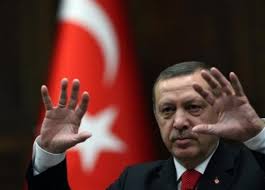
Images1One can understand why self-appointed despots might move early and hard, even semi-democratic despots of the Russian or Iranian variety, against a small, peacable protest in a public place. They fear for their legitimacy. They distrust the populace. They’ve seen the spontaneous multiplier effect of social media. But why would a duly elected leader such as Turkey’s Tayyip Erdogan resort to provocative brutality so gratuitously? That is, to the extent of calling his own legitimacy into doubt by hurtling the country toward full-blown strife in a very short time. The kind of instantly extreme anti-democratic measures he has deployed can only lead to retro-prosecution of his henchmen or he can kiss goodbye all sense of future public trust in the justice system. You would think that politicians globally have learned to respect the eventual backlash of citizens abused en masse in the present.

There can be no debating the extent of the abuse, the arrest of scores of lawyers who defend the rights of protesters, doctors who treat their wounds, clerics who grant haven to the wounded in their mosques, the nation perhaps irretrievably divided, the opposition smeared publicly as terrorists, police firing tear gas into private homes, and yes into hospitals and consulates and hotels – why would a legitimately elected leader repay his populace with devastation. After all, Turkey is not Syria. Yet Erdogan has put himself in the bitter position of having Assad repeat back to him the words “listen to your own people”.

More here.

The Art of Subtraction

From Harvard Magazine:

WoodThe royal palace of Hampton Court, built on the Thames nearly 12 miles upstream from London by Henry VIII in 1514, suffered a devastating fire on March 31, 1986. A bedside candle in the room of the elderly Lady Gale, a resident who perished in the flames, probably started the blaze. Grievously, the fire also consumed or seriously damaged some of the incomparable woodcarvings in the King’s Apartments, an addition that Christopher Wren built for William III near the end of the seventeenth century. These delicate depictions of botanical subjects in wood, hung on walls and surmounting doorways and mantelpieces, were the masterworks of the final period of Grinling Gibbons (1648-1721), the Dutch-born artist widely regarded as England’s finest woodcarver, a “golden codger, almost of the order of Samuel Johnson, Thomas Chippendale, Charles Dickens or William Morris,” as David Esterly ’66 puts it in his 2012 book, The Lost Carving: A Journey to the Heart of Making.

Given the British reverence for historical (and royal) heritage and the carvings’ importance, there was no question that restoration would proceed after the fire. Miraculously, most of them had survived, despite damage, but one spectacular overdoor drop, a pendant of flowers and leaves, in the King’s Drawing Room, had been incinerated. The problem was that in the nearly three centuries since Gibbons’s time, such finely detailed, high-relief carvings in limewood (the British term for linden wood) had become a lost art. There had been “sorry attempts at Gibbons revivals in the nineteenth and early twentieth centuries: crude embarrassments, almost all of them,” Esterly writes. In 1986, a number of English carving conservators were working assiduously in limewood, but the artist to whom the British entrusted the restoration was a 42-year-old craftsman living outside Utica, New York, who had been carving limewood for about a decade: Esterly himself.

More here.

Doctor Feelbad

From The New York Times:

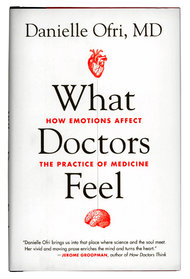
BookIn her new book, “What Doctors Feel,” Dr. Danielle Ofri tells the unforgettable story of a pediatrician she interviewed, a woman she calls Eva. In taut, vivid prose, Dr. Ofri describes a tragic event that occurred during Eva’s residency. She helped deliver a baby doomed to asphyxiation within minutes of birth because of a severe lack of amniotic fluid in the womb. The traumatized parents knew the outcome in advance, and made it clear they did not want to see the baby. After the delivery, the room leaden with silence, Eva wrapped the baby in a blanket and wondered where to go. The hospital had no room set aside for this. So the young physician, consumed with sadness for a child who would never be held by anyone but her, took the dying newborn into a supply closet. There, knowing she would be reprimanded for not observing the precise moment at which the umbilical cord ceased pulsing, she gathered the baby in her arms. “In the cramped space Eva rocked back and forth,” Dr. Ofri writes. “ ‘I love you, baby,’ she whispered as the heart began its slow, cratering descent.”

In the hands of a less agile and intelligent writer, such a scene could easily grow maudlin. Indeed, calling attention to a physician’s emotional pain might be seen as distracting and self-indulgent. It is, after all, the physician’s role to ease the suffering of others. Yet as Dr. Ofri points out, how doctors feel matters. And while she does write of joy, pride and gratitude, her emphasis is on negative emotions — which exert the strongest influence on medical care, particularly when a case grows unexpectedly complicated, frustrating or unyielding. “This is where factors other than clinical competency come into play,” she writes. An unwell doctor is a bad doctor.

More here.

Syria: Inventing a Religious War

20130612-matthiesen_jpg_470x602_q85

Toby Matthiesen makes the case in the NYRB blog:

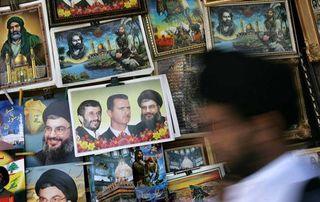
Since late May, pictures of Hezbollah militants standing amid the ruins of al-Qusayr, the former Syrian rebel stronghold, have offered dramatic evidence of the extent to which foreign Shia fighters are shifting the course of the Syrian war. To many observers, the Lebanese militia’s entry into the conflict has shown definitively that it has been a sectarian war from the outset. According to this view, Syria’s Alawite sect, to which the Assad clan and its security forces belong, is “quasi Shiite,” a fact which accounts for the government’s alliances to Iran and Hezbollah; while Syrian rebel forces are overwhelmingly dominated by the country’s aggrieved Sunni majority, now backed by the Sunni governments of Saudi Arabia, Qatar, and Turkey, along with various foreign Sunni jihadis.

But Bashar al-Assad is head of an ostensibly secular Baathist regime and many Shia think that Alawites are heretics. Why exactly is Hezbollah getting involved, and is this conflict really rooted in religion? The answer to both these questions may lie in a suburb of Damascus called Sayyida Zainab, the site of an important Shia shrine and since the 1970s a haven for foreign Shia activists and migrants in Syria. Today, Hezbollah forces, along with Iraqi Shia fighters, defend the suburb. Though the story of Sayyida Zainab is little known in the West, it may help explain why what began as a peaceful uprising against secular authoritarian rule in 2011 has increasingly become a war between Shia and Sunni that has engulfed much of the surrounding region.

Political Ideology and the Avoidance of Dissonance-Arousing Situations

Shutterstock_100039328_0

H. Hannah Nam, John T. Jost, and Jay J. Van Bavel over at PLOS One (via Chris Mooney):

Abstract

People often avoid information and situations that have the potential to contradict previously held beliefs and attitudes (i.e., situations that arouse cognitive dissonance). According to the motivated social cognition model of political ideology, conservatives tend to have stronger epistemic needs to attain certainty and closure than liberals. This implies that there may be differences in how liberals and conservatives respond to dissonance-arousing situations. In two experiments, we investigated the possibility that conservatives would be more strongly motivated to avoid dissonance-arousing tasks than liberals. Indeed, U.S. residents who preferred more conservative presidents (George W. Bush and Ronald Reagan) complied less than Americans who preferred more liberal presidents (Barack Obama and Bill Clinton) with the request to write a counter-attitudinal essay about who made a “better president.” This difference was not observed under circumstances of low perceived choice or when the topic of the counter-attitudinal essay was non-political (i.e., when it pertained to computer or beverage preferences). The results of these experiments provide initial evidence of ideological differences in dissonance avoidance. Future work would do well to determine whether such differences are specific to political issues or topics that are personally important. Implications for political behavior are discussed.

Quest for ‘Genius Babies’?

Steve hsu mug

Colleen Flaherty in Inside Higher Ed:

Jason Richwine swiftly resigned from the Heritage Foundation this month following revelations of his 2009 Harvard University dissertation on IQ and race, but the blogosphere continues to buzz with the story. In the aftermath, as Richwine continues to defend his research, some human biodiversity, or “HBD,” experts charge that a new generation of eugenicists may be coming of age. A recurring name is that of Stephen Hsu, the Michigan State University physicist and vice president for research and graduate studies who is researching intelligence and genetics at the world’s biggest genomics sequencing lab in Shenzhen, China.

“Richwine would probably also find a friend in Stephen Hsu, a theoretical physicist by training who is currently searching for an intelligence gene,” wrote Yong Chan, research director for the racial justice website ChangeLab. “Even though mainstream science has pretty much scrapped the notion that race has any kind of biological basis long ago, that hasn’t stopped [Hsu] from trying to link intelligence with race and getting a billion and a half dollars for research based in China.”

Michael Scroggins, a Ph.D. student at Teachers College of Columbia University, echoed Chan on Ethnography.com: “Suffice to say, [Richwine and Hsu] offer nothing new to debates over IQ, or poverty or immigration. Their innovation lies in the naked, unreflective application of a naïve sociobiology to policy debates over access to democratic institutions – citizenship and public education.”

Much of the controversy surrounding Hsu stems from a recent Vice article alleging Hsu's cognitive genomics project is ultimately helping China engineer “genius babies.”

“At BGI Shenzhen, scientists have collected DNA samples from 2,000 of the world’s smartest people and are sequencing their entire genomes in an attempt to identify the alleles which determine human intelligence,” the piece reads. “Apparently they’re not far from finding them, and when they do, embryo screening will allow parents to pick their brightest zygote and potentially bump up every generation's intelligence by five to 15 IQ points.”

Monday, June 17, 2013

Sunday, June 16, 2013

Breath of Death: A Pakistani Thriller

Fatema Imani in Dawn:

ScreenHunter_220 Jun. 17 10.55The main story line of the novel [by Saad Shafqat–shown in photo on the right] is based in Pakistan’s hub Karachi, but a generous portion is also set in America. An anonymous and unknown medical illness claims several lives in Karachi. The ill-fated victims more or less find themselves in a fictional ‘Avicenna University Hospital’, where Asad Mirza, a neurosurgeon freshly returned from medical residency in America, and his protégée Nadia Khan are trying to figure out the complex disease.

Alongside the duo’s quest to crack the riddle runs a sub-plot hatched by a terrorist network, aimed at the United States of America. How do these two plots come together? You certainly don’t want me to tell you, so read the novel to find out…

[Fatema Imani]: How did you get started with writing Breath of Death?

[Saad Shafqat]: The idea of penning down a novel came to me because I have always liked writing. I have been doing cricket writing for a while and have also written social pieces for some publications. I enjoy telling stories to friends and family members and seeing their interest gave birth to the idea of writing a book.

I started looking for a genre and it seemed befitting to write a medical novel, considering I am a physician seeing patients all the time in a hospital and clinic where there is a great deal of human drama. Illnesses and deaths are rampant, which is very tragic, but there is happiness too and a lot of intensity in taking care of sick patients. I conjoined these elements with social pressure, terrorism and extremist thinking and out came the novel.

More here.

Inflation Is Still the Lesser Evil

63c75e1453fe932f37bf3c6f167aef95.portrait

Kenneth Rogoff in Project Syndicate:

The world’s major central banks continue to express concern about inflationary spillover from their recession-fighting efforts. That is a mistake. Weighed against the political, social, and economic risks of continued slow growth after a once-in-a-century financial crisis, a sustained burst of moderate inflation is not something to worry about. On the contrary, in most regions, it should be embraced.

Perhaps the case for moderate inflation (say, 4-6% annually) is not so compelling as it was at the outset of the crisis, when I first raised the issue. Back then, against a backdrop of government reluctance to force debt write-downs, along with massively over-valued real housing prices and excessive real wages in some sectors, moderate inflation would have been extremely helpful.

The consensus at the time, of course, was that a robust “V-shaped” recovery was around the corner, and it was foolish to embrace inflation heterodoxy. I thought otherwise, based on research underlying my 2009 book with Carmen M. Reinhart, This Time is Different. Examining previous deep financial crises, there was every reason to be concerned that the employment decline would be catastrophically deep and the recovery extraordinarily slow. A proper assessment of the medium-term risks would have helped to justify my conclusion in December 2008 that “It will take every tool in the box to fix today’s once-in-a-century financial crisis.”

Five years on, public, private, and external debt are at record levels in many countries. There is still a need for huge relative wage adjustments between Europe’s periphery and its core. But the world’s major central banks seem not to have noticed.

Soviet Philosophy and Then Some

Bakhurst-1024x768

Richard Marshall interviews David Bakhurst in 3:AM Magazine:

RM: What led you to develop a specific interest in Russian philosophy?

DB: Well, I was drawn to the philosophical intensity of Russian culture, which comes through so strikingly in its literature, poetry, and art, and in the impassioned writings of Russian political thinkers. Moreover, the Soviet Union was, in a sense, the living embodiment of a philosophical idea. At the same time, it was obvious that the Russian philosophical tradition was very unlike anything I was studying in philosophy at Keele. So I tried to find out more on the philosophical culture of the USSR, about which relatively little was known in the West. I was encouraged in this by the Professor of Russian at Keele, Eugene Lampert, who was a fascinating figure. He was an intellectual historian, who’d written a couple of marvelous books on 19th century Russian political thinkers, and he was highly literate in philosophy. He’d translated Berdyaev, for example.

Anyway, I soon found that the Western literature on Soviet Philosophy was for the most part dismal. The Russian literature, so far as I could understand it, was obviously subject to censorship, so it was difficult to know how to approach it from an outsider’s perspective. I concluded, therefore, that I should go to Russia and talk to philosophers. Keele gave me a small bursary to travel to Moscow in the summer of 1980. I signed up for a language course with the intention of using my spare time to investigate Russian philosophy. My efforts to meet philosophers through official channels proved unrewarding—unsurprisingly in those Cold War days. But just before I was due to leave Russia I had an amazing stroke of good fortune.

In the Progress Publishers bookstore I came across a copy of Felix Mikhailov’s The Riddle of the Self, newly translated into English. I was really impressed. It was quite unlike the doctrinaire tomes of dialectical and historical materialism I’d be trying to plough through. It was an intelligent, witty, and engagingly-written introduction to a range philosophical questions that were familiar to me—questions about the justification of knowledge, concept formation, self-consciousness, other minds, and so on.

Rachel Kushner’s Ambitious New Novel Scares Male Critics

Kushner_roth-620x412

Laura Miller in Salon:

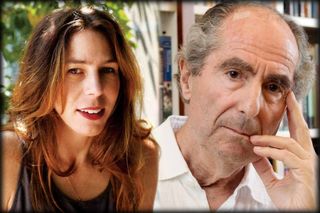
Often the debate about bias against women writers — now regularly revived by the annual VIDA survey and its dismaying figures on the gender breakdown of book reviewers and authors reviewed in prominent literary publications — focuses on genre. Why are some themes (courtship, family life) or forms (the short story) typically regarded as less significant than others (war, adventure, the epic novel)? How is it that purportedly lightweight themes suddenly become momentous in critics’ eyes when the novelist who takes them up is a man (Jonathan Franzen, Jeffrey Eugenides)?

These are legitimate and essential challenges to the values embedded in Mailer’s concept of the Room. It’s also true that chipping away at the fantasy of a rigidly hierarchical aesthetic pecking order — a typological crutch for structure junkies — will open up the literary landscape to more writers and readers. It’s important to challenge both the Room and the supremacy of the kind of novel the Room tends to prize: long, wide-ranging, idea-driven, full of social commentary and concerned with the American dream of self-invention — “ambitious,” as critics often call it.

Given how fiercely American male writers have fought for the Great American Novel laurels, many women authors apparently decided it simply wasn’t worth wading into the fray. Furthermore, there’s a grandiose self-presentation, a swagger, that goes along with advancing your book as a Great American Novel that many women find impossible or silly. Besides, critics longing for a silverback alpha male to declare the leader of the pack are never going to glance at the distaff side. Who wants to play a game whose rules are so obviously rigged against you?

So we don’t have many novels of this type written by American women, even if the women who might have written them (Jennifer Egan, say, or Joyce Carol Oates, to name just two) have done equally impressive work in other rooms, such as composing prismatic explorations of style or exploding seemingly hidebound genres like the gothic. Still, it’s possible to point out that a novel needn’t be “ambitious” to be worthy of the highest acclaim and yet stop short of dismissing the “ambitious” genre entirely.

Lives that seem perfect but aren’t

From New Statesman:

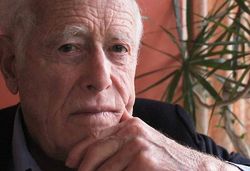
Salter_james_c_lana_rys_new_0I first came to read James Salter 20 years ago, when I was in the US on a book tour. I was promoting a novel I’d written about a family who, from the outside, seem to have everything – beauty, leisure, endless summers and a house by a lake – but whose lives are freighted by a sadness that eventually pulls them down. After one of my readings, in Stanford, a young man came up to me and told me that I must read Light Years by Salter. “He’s interested in those things you’re interested in,” he said. “Lives that seem perfect but aren’t. He sees the cracks and broken pieces that were there all along.”

…All That Is, Salter’s latest novel, may be his last (he is 87), though he’s not saying that. “You have the brains,” he once remarked, “but it’s energy and desire that make you write a novel.” Still, there is about All That Is the sense that the author is telling us once and for all what he is about. Philip Bowman, his hero, is more clearly drawn – as the selfmade man who has fashioned himself from the lessons life has taught him and the instruction of others who have lived on the scale to which he aspires – than any of Salter’s other protagonists. There’s also the sound here of elegy, a grand farewell:

He had been weeding in the garden that afternoon and looked down to see, beneath his tennis shorts, a pair of legs that seemed to belong to an older man. He mustn’t . . . be going around the house in shorts like this . . . He had to be careful about such things.

More here.

Sunday Poem

Hunger

This is hunger. An animal
all fangs and eyes.
It cannot be distracted or deceived.
It is not satisfied with one meal.
It is not content
with a lunch or dinner.
Always threatens blood.
Roars like a lion, squeezes like a boa,
thinks like a person.

The specimen before you
was captured in India (outskirts of Bombay)
but it exists in a more or less savage state
in many other places.

Please stand back.

by Nicolas Guillén