women, men and body language

From delanceyplace:

Body-language-book“When we say someone is 'perceptive' or 'intuitive' about people, we are unknowingly referring to their ability to read another person's body language and to compare these cues with verbal signals. In other words, when we say that we have a 'hunch' or 'gut feeling' that someone has told us a lie, we usually mean that their body language and their spoken words don't agree. This is also what speakers call 'audience awareness,' or relating to a group. For example, if an audience were sitting back in their seats with their chins down and arms crossed on their chest, a 'perceptive' speaker would get a hunch or feeling that his delivery was not going across well. …Being 'perceptive' means being able to spot the contradictions between someone's words and their body language. “Overall, women are far more perceptive than men, and this has given rise to what is commonly referred to as 'women's intuition.' Women have an innate ability to pick up and decipher nonverbal signals, as well as having an accurate eye for small details. “Research by psychologists at Harvard University showed how women are far more alert to body language than men. They showed short films, with the sound turned off, of a man and woman communicating, and the participants were asked to decode what was happening by reading the couple's expressions. The research showed that women read the situation accurately 87 percent of the time, while the men scored only 42 percent accuracy. … Female intuition is particularly evident in women who have raised children. For the first few years, the mother relies almost solely on the nonverbal channel to communicate with the child and this is why women are often more perceptive negotiators than men, because they practice reading signals early.

“Magnetic Resonance Imaging brain scans (MRI) clearly show why women have far greater capacity for communicating with and evaluating people than men do. Women have between fourteen and sixteen areas of the brain to evaluate others' behavior versus a man's four to six areas. This explains how a woman can attend a dinner party and rapidly work out the state of the relationships of other couples at the party — who's had an argument, who likes who, and so on.

More here.

trying to figure out the title of Coetzee’s new book

0670014656.01.MZZZZZZZMichael Duffy in The Millions:

With no mention of the titular character in it at all, critics have been squirming in their seats, unsure of what to think about the title of J.M. Coetzee’s new novel, The Childhood of Jesus. Since its publication in the UK and other English-speaking countries in March, it has become the occasion of many outpourings of critical anxiety. Rare is the occasion when someone like Christopher Taylerin the London Review of Books can feel excited about their confusion; or address it honestly as Leo Robson does in the New Statesman. More common is a scramble to make sense of the thing, like Theo Tait’s ingenious attempt in The Guardian, or the dismissal of its importance in giving the book some other framework for evaluation, as in Justin Cartwright’s otherwise interesting guide to the book for the BBC. And with the publication of the work in the U.S. we can only expect more of the same.

The problem isn’t that the title doesn’t describe what’s in the book. It’s the way it doesn’t. It’s too big a title, too grand. It describes a character who, even if he is not literally related to the character in the book — a boy named David — works on such a larger scale that it wouldn’t even work figuratively. And so even when we can’t find anything meaningful in it, it is hard to believe that Coetzee didn’t mean it to be there. It seems, in other words, indeed serious, in being a little too serious — there’s no letup, no obliqueness in it, no irony that is clear and distinguishable.

more here.

A gene for forgetting

From KurzweilAI:

Mit_memories_fade_awayA new study from MIT reveals a gene that is critical to the process of memory extinction (when older memories are replaced with new experiences). Enhancing the activity of this gene, known as Tet1, might benefit people with posttraumatic stress disorder (PTSD) by making it easier to replace fearful memories with more positive associations, says Li-Huei Tsai, director of MIT’s Picower Institute for Learning and Memory. The Tet1 gene appears to control a small group of other genes necessary for memory extinction. “If there is a way to significantly boost the expression of these genes, then extinction learning is going to be much more active,” says Tsai, the Picower Professor of Neuroscience at MIT and senior author of a paper appearing in the Sept. 18 issue of the journal Neuron. The paper’s lead authors are Andrii Rudenko, a postdoc at the Picower Institute, and Meelad Dawlaty, a postdoc at the Whitehead Institute. Tsai’s team worked with researchers in MIT biology professor Rudolf Jaenisch’s lab at the Whitehead to study mice with the Tet1 gene knocked out. Tet1 and other Tet proteins help regulate the modifications of DNA that determine whether a particular gene will be expressed or not. Tet proteins are very abundant in the brain, which made scientists suspect they might be involved in learning and memory. To their surprise, the researchers found that mice without Tet1 were perfectly able to form memories and learn new tasks. However, when the team began to study memory extinction, significant differences emerged.

To measure the mice’s ability to extinguish memories, the researchers conditioned the mice to fear a particular cage where they received a mild shock. Once the memory was formed, the researchers then put the mice in the cage but did not deliver the shock. After a while, mice with normal Tet1 levels lost their fear of the cage as new memories replaced the old ones. “What happens during memory extinction is not erasure of the original memory,” Tsai says. “The old trace of memory is telling the mice that this place is dangerous. But the new memory informs the mice that this place is actually safe. There are two choices of memory that are competing with each other.” In normal mice, the new memory wins out. However, mice lacking Tet1 remain fearful. “They don’t relearn properly,” Rudenko says. “They’re kind of getting stuck and cannot extinguish the old memory.”

More here.

On Jonathan Franzen’s translation of Karl Kraus

ImgresEric Banks in Bookforum:

If Franzen seems at first an unlikely vehicle for an author whose translation prospects could flummox Steiner, his rendering of Kraus immediately dispels all reservations. The Kraus Project, which reprints the German essays alongside Franzen’s translations, is a fluid version of Kraus that captures as best it might the author’s irascible precision without tinkering his prose to make it sound like any other writer’s. Franzen, one should recall, published his translation of Frank Wedekind’s Spring Awakening in 2007, and in his memoir The Discomfort Zone he recounted studying abroad in Germany. In some of the footnotes to The Kraus Project, he retraces that year again, a largely miserable and juvenile time of anger, confusion, and loneliness, but one at least in which the charged environment of Berlin in the early days of the Reagan administration led him to a seminar on Kraus. There, he wrestled with two of Kraus’s essays, “Heine and the Consequences” and “Nestroy and Posterity” (1912), which form the basis—along with Franzen’s sometimes meandering but mostly compelling footnoted counternarrative—of The Kraus Project. It is a curious and itself idiosyncratic document filled with a cacophony of voices, belonging mostly to Franzen and of course Kraus, but also to the novelist Kehlmann and to the scholar Paul Reitter, who annotates the thornier of references in the essays and offers his own perspective on Kraus.

more here.

interview with the Pope

Pope1_0Antonio Spadaro interviews the Pope in America:

I ask Pope Francis point-blank: “Who is Jorge Mario Bergoglio?” He stares at me in silence. I ask him if I may ask him this question. He nods and replies: “I ​​do not know what might be the most fitting description…. I am a sinner. This is the most accurate definition. It is not a figure of speech, a literary genre. I am a sinner.”

The pope continues to reflect and concentrate, as if he did not expect this question, as if he were forced to reflect further. “Yes, perhaps I can say that I am a bit astute, that I can adapt to circumstances, but it is also true that I am a bit naïve. Yes, but the best summary, the one that comes more from the inside and I feel most true is this: I am a sinner whom the Lord has looked upon.” And he repeats: “I ​​am one who is looked upon by the Lord. I always felt my motto, Miserando atque Eligendo [By Having Mercy and by Choosing Him], was very true for me.”

The motto is taken from the Homilies of Bede the Venerable, who writes in his comments on the Gospel story of the calling of Matthew: “Jesus saw a publican, and since he looked at him with feelings of love and chose him, he said to him, ‘Follow me.’” The pope adds: “I think the Latin gerund miserando is impossible to translate in both Italian and Spanish. I like to translate it with another gerund that does not exist: misericordiando [“mercy-ing”].

more here.

Can America face up to the terrible reality of slavery in the way that Germany has faced up to the Holocaust?

Susan Neiman in Aeon:

Slave-handsThe German language has a word for coming to terms with past atrocities. Vergangenheitsbewältigung came into use in the 1960s to mean ‘we have to do something about our Nazi past’. Germany has spent much of the past 50 years in the excruciating process of dealing with the country’s national crimes. What does it mean to come to terms with the fact that your father, even if not a passionate Nazi, did nothing whatever to stop them, watched silently as his Jewish doctor or neighbour was deported, and shed blood in the name of their army? With very few exceptions, this was the fate of most Germans born between 1930-1960, and it isn’t a fate to be envied.

Working through Germany’s criminal past was not an abstract exercise; it involved confronting one’s own parents and teachers and calling their authority rotten. The 1960s in Germany were more turbulent than the 1960s in Paris or Prague — not to mention Berkeley — because they were focused not on crimes committed by someone in far-off Vietnam but considerably closer to home, by the people from whom one had learnt life’s earliest lessons.

More here.

Thursday, September 19, 2013

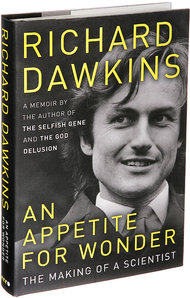
Review of Richard Dawkins’s ‘Appetite for Wonder,’ a Memoir

Janet Maslin in the New York Times:

19BOOK-articleInlineAnyone expecting an incisive account of Mr. Dawkins’s growth as a scientist may be surprised by the meandering path he takes here. True, his lineage is impressive, and his boyhood was uncommonly adventurous, so both warrant attention. He takes his time explaining that his great-great-great-grandparents eloped more cleverly than most couples do. Henry Dawkins and Augusta Clinton made their getaway in a coach, but not before the groom-to-be had planted half a dozen decoy coaches near Augusta’s home so that her father, Sir Henry Clinton, could not prevent the marriage. As the British commander in chief in America, he could not win the Revolutionary War, either.

The family history also includes Clinton George Augustus Dawkins, son of the eloped couple, who earned his place in family lore during the Austrian bombardment of rebel Venice in 1849, when a cannonball hit his bed.

“A cannonball penetrated the bed covers and passed between his legs, but happily did him no more than superficial damage,” reads the inscription that accompanies a cannonball in Mr. Dawkins’s possession. The story may not be 100 percent true, but it does underscore this family’s staying power.

More here.

J002E3

Asteroid

From Wikipedia:

J002E3 is the designation given to a supposed asteroid discovered by amateur astronomer Bill Yeung on September 3, 2002. Further examination revealed the object was not a rock asteroid but instead the S-IVB third stage of the Apollo 12 Saturn V rocket (serial S-IVB-507).[1]

When it was first discovered it was quickly found that the object was in an orbit around Earth. Astronomers were surprised at this as the Moon is the only large object in orbit around the Earth[note 1] and anything else would have been ejected long ago due to perturbations with the Earth, the Moon and the Sun.

Therefore it must have entered into Earth orbit very recently, yet there was no recently-launched spacecraft that matched the orbit of J002E3. One explanation could have been that it was a 30-meter wide piece of rock, but University of Arizona astronomers found that the object's electromagnetic spectrum was consistent with white titanium dioxide paint, the same paint used by NASA for the Saturn V rockets. Back-tracing its orbit showed that the object had been orbiting the Sun for 31 years and had last been in the vicinity of the Earth in 1971. This seemed to suggest that it was a part of the Apollo 14 mission but NASA knew the whereabouts of all hardware used for this mission; the third stage, for instance, was deliberately crashed into the Moon for seismic studies.

The only other explanation was that it was the S-IVB third stage for Apollo 12. NASA had originally planned to direct the S-IVB into a solar orbit, but an extra long burn of the ullage motors meant that venting the remaining propellant in the tank of the S-IVB did not give the rocket stage enough energy to escape the Earth–Moon system, and instead the stage ended up in a semi-stable orbit around the Earth after passing by the Moon on November 18, 1969. The Apollo 12 S-IVB eventually vanished.

It is thought that J002E3 left Earth orbit in June 2003, and that it may return to orbit the Earth in about 2032.

The Apollo 12 S-IVB unit had a dry weight of about 23,000 pounds (10,000 kgf)[citation needed] and is in unstable Earth orbit, which may result in eventual collision with Earth. An object with a mass of 10,000 kg collides with earth approximately every 1-5 years.

gerald kersh: a neglected writer of ghosts, monsters, Shakespeare, mermaids and Martians

Gerald_Kersh_370576hDavid Collard at the Times Literary Supplement:

“No mortal can write this well” marvels Harlan Ellison in his introduction to Nightshade and Damnations – nor, one might add, this much. Gerald Kersh was astonishingly prolific, hammering out twenty novels, twenty collections of short stories and thousands of articles in different publications, hacking pseudonymously as Piers England, Waldo Kellar, Mr Chickery, Joe Twist, George Munday, and others. He is a bibliographer’s nightmare – or dream. Born into a Jewish family in Teddington, South-west London, in 1911, he became an American citizen in 1959 and died in New York in 1968, by which point he had largely been forgotten. These reissues are signs of a revival of interest in this strange and compelling writer whose ramshackle cv included stints as a cinema manager, bodyguard, debt collector, fish frier, travelling salesman, teacher of French and all-in-wrestler. His literary career likewise avoided any taint of respectability. He was a mainstay of popular periodicals such as John O’London’s Weekly, Argosy and Lilliput, specializing in tales of war, freakishness, horror and science fiction.

more here.

Marville’s photographs of 19th century paris

Marville_02_jpg_470x640_q85Luc Sante at the New York Review of Books (with an incredible slideshow of photographs):

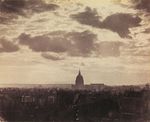
Charles Marville is best known for his government commission to photograph the neighborhoods of Paris slated for demolition during Baron Haussmann’s reconfiguration of the city between 1853 and 1870. In fact, that is virtually all he has been known for, a matter the authors of Charles Marville: Photographer of Paris are eager to rectify. Among the basic but previously unknown facts they have unearthed are his real name (Charles-François Bossu—which means “hunchback”) and his date of birth (1813). They have also delved into his early career as an illustrator for the popular press and his pre-commission work as a photographer. The latter includes delicate salted-paper prints that inevitably evoke Fox Talbot, inventor of the process; a great deal of urban landscape work, in Paris and elsewhere, that make it clear why he was given his commission; and a few intriguing stabs at photojournalism taken at the very threshold of photography’s ability to record crowds, such as a glimpse of the pageantry and extraordinary decorations attending the baptism of the Imperial Prince in 1856.

more here.

thoughts on Arendt, McCarthy, Hardwick, and Sontag

Hardwick3Darryl Pinckney at Threepenny Review:

I’ve always been sorry that I did not recognize Hannah Arendt at the memorial service for W. H. Auden at the Cathedral of St. John the Divine in October of 1973, but then I could not have, because at the time I still had not heard of her. In 1971, I’d read James Baldwin’s “Open Letter to My Sister, Angela Davis,” in the New York Review of Books. His conclusion, “For if they come for you in the morning, they will be coming for us that night,” had for me the romance of “Since there is no help, come let us kiss and part,” even though Baldwin was talking about the death chamber in California, not an Elizabethan love given up. I didn’t hold another issue of the New York Review of Books until the autumn of 1973, when I was a student in Elizabeth Hardwick’s creative writing class at Barnard College, along with Mona Simpson, Tama Janowitz, and Daphne Merkin.

I once came to class with a vodka gimlet in a Styrofoam coffee cup. Somehow Lizzie—it would be years before I called her that—needed a sip of something restorative. To accept a cup from a student, she must have been desperate. Her eyes blazed. She left the room. She did not forget the incident. Much later she confessed that she’d had the worst hangover that afternoon, having been up the previous night drinking with Barbara Epstein.

more here.

Thursday Poem

The Leveret

This is your first night in Carrigskeewaun.
The Owennadornaun is so full of rain
You arrived in Paddy Morrison’s tractor,
A bumpy approach in your father’s arms
To the cottage where, all of one year ago,
You were conceived, a fire-seed in the hearth.
Did you hear the wind in the fluffy chimney?
Do you hear the wind tonight, and the rain
And a shore bird calling from the mussel reefs?
Tomorrow I’ll introduce you to the sea,
Little hoplite. Have you been missing it?
I’ll park your chariot by the otters’ rock
And carry you over seaweed to the sea.
There’s a tufted duck on David’s lake
With her sootfall of hatchlings, pompoms
A day old and already learning to dive.
We may meet the stoat near the erratic
Boulder, a shrew in his mouth, or the merlin
Meadow-pipit-hunting. But don’t be afraid.
The leveret breakfasts under the fuchsia
Every morning, and we shall be watching.
I have picked wild flowers for you, scabious
And centaury in a jam-jar of water
That will bend and magnify the daylight.
This is your first night in Carrigskeewaun.
.

by Michael Longley
from Poetry International

why W H Auden still matters

Alexander McCall Smith in New Statesman:

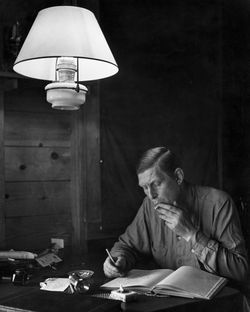
AudenWhen I started to write novels set in Edinburgh, the characters in these books – unsurprisingly, perhaps – began to show an interest in Auden. In particular, Isabel Dalhousie, the central character in my Sunday Philosophy Club series, thought about Auden rather a lot – and quoted him, too. A couple of years after the first of these novels was published, I received a letter from his literary executor, Edward Mendelson, who is a professor of English at Columbia University in New York. Unlike those writers who appoint coevals to look after their work, with the result that their executors either predecease them or do not last much longer, Auden made the wise move of appointing a young man to watch over his literary legacy. Mendelson was then a junior academic at Yale – and this gave him the opportunity to devote much of a long and distinguished career to producing commentary on Auden’s writing. It transpired that he was a reader of my Botswana novels and he wrote to me to tell me that, in his opinion, Auden and Mma Ramotswe would have agreed on practically every subject. However, what particularly pleased him, he said, was the attachment my other fictional characters had to the poet. The letter led to a friendship. I then wrote Professor Mendelson into an Isabel Dalhousie novel, creating a scene in which he comes to Edinburgh to deliver a public lecture on the sense of neurotic guilt in Auden’s verse. A year later, we translated fiction into reality by bringing Mendelson to Edinburgh to deliver before a real audience the lecture that he had previously given to a group of fictional characters. Such is the interest in Auden that almost 400 people came to hear him speak.
That is not bad for a poet who died 40 years ago this month. What explains the continuing appeal of his work? The language he used probably goes some way towards it. Auden had an ear for the rhythmic possibilities of English – at one time or another he used virtually every metre available to a poet writing in English. It is the syllabic verse, though, that he consistently used for so many of his later poems that has the strongest and most consistent appeal. It appears effortless – rather like the steady flow of a clever lecture – but it is really very skilfully constructed and has an extraordinary capacity to resonate with the reader. Yes, we think. This is exactly how it is. This is true.
More here.

Parasite makes mice lose fear of cats permanently

Eliot Barford in Nature:

CatA parasite that infects up to one-third of people around the world may have the ability to permanently alter a specific brain function in mice, according to a study published in PLoS ONE today1. Toxoplasma gondii is known to remove rodents’ innate fear of cats. The new research shows that even months after infection, when parasites are no longer detectable, the effect remains. This raises the possibility that the microbe causes a permanent structural change in the brain. The microbe is a single-celled pathogen that infects most types of mammal and bird, causing a disease called toxoplasmosis. But its effects on rodents are unique; most flee cat odour, but infected ones are mildly attracted to it. This is thought to be an evolutionary adaptation to help the parasite complete its life cycle: Toxoplasma can sexually reproduce only in the cat gut, and for it to get there, the pathogen's rodent host must be eaten.

In humans, studies have linked Toxoplasma infection with behavioural changes and schizophrenia. One work found an increased risk of traffic accidents in people infected with the parasite2; another found changes in responses to cat odour3. People with schizophrenia are more likely than the general population to have been infected with Toxoplasma, and medications used to treat schizophrenia may work in part by inhibiting the pathogen's replication. Schizophrenia is thought to involve excess activity of the neurotransmitter dopamine in the brain. This has bolstered one possible explanation for Toxoplasma’s behavioural effect: the parasite establishes persistent infections by means of microscopic cysts that grow slowly in brain cells. It can increase those cells’ production of dopamine, which could significantly alter their function. Most other suggested mechanisms also rely on the presence of cysts.

More here.

A Jewel at the Heart of Quantum Physics

Natalie Wolchover in Quanta:

Amplutihedron_spanPhysicists have discovered a jewel-like geometric object that dramatically simplifies calculations of particle interactions and challenges the notion that space and time are fundamental components of reality.

“This is completely new and very much simpler than anything that has been done before,” said Andrew Hodges, a mathematical physicist at Oxford University who has been following the work.

The revelation that particle interactions, the most basic events in nature, may be consequences of geometry significantly advances a decades-long effort to reformulate quantum field theory, the body of laws describing elementary particles and their interactions. Interactions that were previously calculated with mathematical formulas thousands of terms long can now be described by computing the volume of the corresponding jewel-like “amplituhedron,” which yields an equivalent one-term expression.

“The degree of efficiency is mind-boggling,” said Jacob Bourjaily, a theoretical physicist at Harvard University and one of the researchers who developed the new idea. “You can easily do, on paper, computations that were infeasible even with a computer before.”

The new geometric version of quantum field theory could also facilitate the search for a theory of quantum gravity that would seamlessly connect the large- and small-scale pictures of the universe. Attempts thus far to incorporate gravity into the laws of physics at the quantum scale have run up against nonsensical infinities and deep paradoxes. The amplituhedron, or a similar geometric object, could help by removing two deeply rooted principles of physics: locality and unitarity.

More here.

Wednesday, September 18, 2013

Tariq Ali: Wishing for the Syrian civil war to be a revolution doesn’t make it so

Tariq Ali in Guernica:

6962095179_076a97e063_z-600x415Ever since the beginning of the Arab Spring there has been much talk of revolutions. Not from me. I’ve argued against the position that mass uprisings on their own constitute a revolution, i.e., a transfer of power from one social class (or even a layer) to another that leads to fundamental change. The actual size of the crowd is not a determinant—members of a crowd become a revolution only when they have, in their majority, a clear set of social and political aims. If they do not, they will always be outflanked by those who do, or by the state that will recapture lost ground very rapidly.

Egypt is the clearest example in recent years. No organs of autonomous power ever emerged. The Muslim Brotherhood, a conservative social force, one that belatedly joined the struggle to overthrow Mubarak, emerged as the strongest political player in the conflict and, as such, won the elections that followed. The Brotherhood’s factionalism, stupidity, and a desire to reassure both Washington and the local security apparatuses that it would be business as usual led it to make several strategic and tactical errors from its own point of view. New mass mobilizations erupted, even larger than those that had led to the toppling of Mubarak. Once again they were devoid of politics, seeing the army as their savior and, in many cases, applauding the military’s brutality against the Muslim Brothers. The result was obvious. The ancient régime is back in charge with mass support. If the original was not a revolution, the latter is hardly a counter-revolution. Simply the military reasserting its role in politics. It was they who decided to dump Mubarak and Morsi. Who will dump them? Another mass mobilization? I doubt it very much. Social movements incapable of developing an independent politics are fated to disappear.

More here.

The Storytellers: 150 years after the death of Jacob Grimm, here’s what really happened with that princess and the pesky frog

Our own Morgan Meis in The Smart Set:

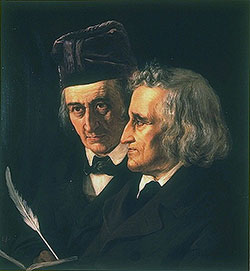
ID_IC_MEIS_GRIMM_AP_001If the Brothers Grimm were not trying to tell charming bedtime stories, what were they trying to do? Why are the original versions of their stories so often violent and disturbing? The first answer to these questions is that the Brothers Grimm were simply being true to the stories as they existed in the early 19th century. The Brothers saw themselves as faithful recorders of a living German tradition. They wanted to preserve these stories in their true and exact form. The second answer is this: The violence of the folktales is part of their power. The Brothers Grimm understood this fact. They wanted to tap into that power. They thought that the tales would revitalize a German people fallen on hard times. But we leap ahead of ourselves.

The story of the Brothers Grimm begins in a small town, Henau, in what is now the western part of Germany. But Germany was not yet a country in 1785, the year when little Jacob Ludwig Carl Grimm was born. Germany was a disorganized collection of principalities and fiefdoms. And Germans were still recovering from the Thirty Years’ War, which had wreaked much havoc in the middle of the 17th century. It is impossible to explain the Thirty Years War briefly or clearly. Let’s just say that the War left many regions of Germany devastated, depopulated, divided and unstable. It was a condition that would continue through the 18th century.

In the early 19th century, just when it seemed that Germans might be coming out of their funk, Napoleon came along. Young Jacob and Wilhelm Grimm were to see their region turned into a French satellite state in 1806. At the time of the initial publication ofGrimm’s Fairy Tales, the Brothers Grimm were living under a kind of military occupation.

More here.