Sunday Poem

The Goat

El Dorado Village. Trinidad

1

I don't want to kill the animal.
I don't want to kill the goat.
I don't want to bring the machete
of subjects and predicates down
on Bobby's wedding for his daughter.

By hack saw, cleaver, and knife,
I don't want to render
the body and spirit of Boyo
into edible bits,
no matter how delicious.

2

I want the goat whole.
There is nothing to prove to the goat
as Shaffina and her sister watch
in black hajibs from the house.

He doesn't need to be led by a rope
and relieved of his life
in a little spurting fountain,
trussed up by a hind leg
in the face of his own cage
beneath the flimsy galvanized
in service to what blank red Vatican
he knows not: the poem.
Read more »

The Road to Home

Steven E. Alford in Polaris:
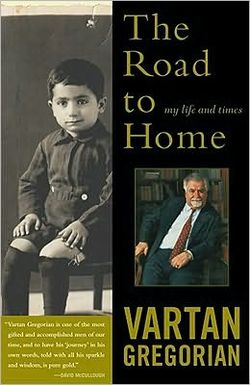
The-road-to-homeIn an era in which dark-skinned foreigners fly airplanes into buildings, it’s helpful to remind ourselves that other dark-skinned foreigners have helped immeasurably in shaping this country for the better. Exhibit A is Vartan Gregorian, born an Armenian, raised a Christian, and who, to our eternal good fortune, chose America as his home. The Road to Home is the autobiography of a man who, as an impoverished child, was embarrassed to be seen walking to school in his disintegrating shoes; a man who, as an adult, became president of the New York Library, president of Brown University, and current president of the Carnegie Corporation. Born in 1934 in Tabriz, Iran, Gregorian was raised by his superstitious grandmother in Dickensian poverty. Happily, his intellectual gifts were recognized in his early teens, resulting in a scholarship to the Collège Arménian in Beruit. Regrettably, his relatives and benefactors had neglected to provide him with any money. Rescued by sympathetic locals, he was provided with meals at a local restaurant. However, his bequest did not cover the weekends, two nightmarish days in which he played psychological games with himself to take his mind off his hunger. Working diligently to learn French and Arabic (to add to his Armenian, Turkish, and Persian), Gregorian became one of the school’s top pupils and the protégé of its president, Simon Vratzian, “the last prime minister of the short-lived independent Republic of Armenia.” Following graduation, Gregorian was accepted at Stanford University (one of three Armenian students on campus) where, as a graduate student, he completed a groundbreaking historical study of modern Afghanistan. Much to the surprise of both the Armenian community and his future in-laws, the diminutive Gregorian proposed to tall, blonde Clare Russell on May 28,1959, which, he ironically notes, was Armenian Independence Day. Married in New Jersey the following year, their union produced three sons and a marriage that has lasted over forty years. Teaching in California, Gregorian was awarded the Danforth Foundations E. H. Harbison Award for Distinguished Teaching. John Silber enticed him to move to Austin to teach in the University of Texas’ honors program, Plan II, as well as become its principal administrator. Gregorian found Silber, a life-long friend, “ambitious, determined, and impatient, with a dose of misplaced temper.” One admires Gregorian’s capacity for understatement. Energetic, erudite, and funny, Gregorian’s aggressive teaching style embodied his approach toward his students’ education: “my ambition was to teach them to know the facts; to understand the nature and the impact of historical data and the role of individuals and ideas in shaping historical trends and social forces; to understand all the orthodoxies and be able to challenge them; to navigate through many cultures; to go beyond identity politics; and to learn how to reconcile the unique and the universal. In short, I wanted them to be able to think.” He notes that these ideas were impressed upon him by his teachers at Stanford, who “were an unusual group of people, from a different era, when students and teaching were the central preoccupation of the professors and the university, when the central mission of the university was education, when undergraduate education was the core of the university and the quality of graduate education the ultimate goal.”

Gregorian’s dynamism, charisma, and intellectual gifts were such that by 1974 he became provost of the University of Pennsylvania. Passed over for the presidency owing to politics among the trustees, he accepted the presidency of the New York Public Library, placing him in New York’s social stratosphere, with Brook Astor as his patron. At a dinner welcoming him to New York, he found himself surrounded by people he had admittedly seen only on television. “I sat at Mrs. Astor’s right, I looked at all the dignitaries and glamorous people, the elegant apartment, and reflected on the distance between 1699 Church Street Tabriz, Iran, and 778 Park Avenue, New York.”

More here. (Note: Dear friend Vartan just gave me this amzing autobiography. Recommend highly!)

Humans Have Been Evolving Like Crazy Over the Past Few Thousand Years

From Smithsonian:

DnaIt’s a common argument of the know-it-all teen, fresh from an introductory biology course: “Life is so cushy now,” he might say, “People aren’t even evolving anymore.” As the argument goes, most people live a decently long life and have a chance to pass on their genes, since we aren’t so often being gobbled up by lions or succumbing to now-curable diseases. With this comes a dampening on the forces of natural selection, and a stagnation, or even weakening, of the human species. But the truth, it seems, couldn’t be more different. Over the past 5 to 10 thousand years, says Nature, reporting on a new study, the genetic diversity in the human population has exploded, a bloom that serves as stage one in the process of evolution.

The human genome has been busy over the past 5,000 years. Human populations have grown exponentially, and new genetic mutations arise with each generation. Humans now have a vast abundance of rare genetic variants in the protein-encoding sections of the genome. Brandon Keim, writing in Wired, says, “As a species, we are freshly bursting with the raw material of evolution.” Most of the mutations that we found arose in the last 200 generations or so. There hasn’t been much time for random change or deterministic change through natural selection,” said geneticist Joshua Akey of the University of Washington, co-author of the Nov. 28 Nature study. “We have a repository of all this new variation for humanity to use as a substrate. In a way, we’re more evolvable now than at any time in our history.

More here.

Saturday, September 21, 2013

Alison Gopnik on Hume and Buddhism

Over at Philosophy Bites:

In his Treatise (Book 1, Part 4, sec. 6) David Hume suggested that the idea of an enduring discoverable self was unfounded. Introspection revealed 'nothing but a bundle or collection of different perceptions, which succeed each other with an inconceivable rapidity, and are in a perpetual flux and movement.' Many people have noticed the similarity between Hume's position here and Buddhist discussion of the self. Alison Gopnik has discovered a possible route of influence.

Listen to Alison Gopnik on Hume and Buddhism

Read Alison Gopnik's paper 'Could David Hume have known about Buddhism?' (pdf)

Iraq and Roll: Bollywood’s Jewish Sounds

Naresh Fernandes in Taj Mahal Foxtrot (via Chapati Mystery):

The dulcet ring of the oud is impossible to miss on the soundtrack of Yahudi, Bimal Roy’s unlikely Bollywood historical made in 1958 about the persecution of Jews in ancient Rome. The background score, composed by Shankar and Jaikishan, has a vaguely Middle Eastern feel to it and as the plot twists and turns, it often falls to the versatile Arabian stringed instrument to signal the swirling emotions. As massacres are ordered, betrayals ensue and Dilip Kumar falls in love with Meena Kumari, the oud sobs, sighs and sings to enhance the mood on screen. It could easily have descended into kitsch. Perhaps the reason it didn’t was the fact that the man plucking the strings, Isaac David, was well acquainted with Middle Eastern music. David was Jewish himself and in the early years of the last century, he had polished his art by playing with an ensemble in Mumbai that recorded four discs of Iraqi Jewish tunes for the Hebrew Record label.

Some of those tunes can be heard on a collection called Shir Hodu: Jewish Song from Bombay of the ’30s, which offers a fascinating reminder of the city’s cosmopolitan heritage. The 15 archival tracks on the album have been painstakingly put together by Sara Manasseh, a Bombay-born Iraqi Jewish ethnomusicologist who now lives in London. During the 1930s, Bombay was “a musical kaleidoscope”, Manasseh says in her liner notes, and the pieces included music and Jewish prayer chants in Hebrew.

Last year, Manasseh explained the historical and theoretical context of this music in a book titled Shbahoth – Songs of Praise in the Babylonian Jewish Tradition: From Baghdad to Bombay to London.

More here.

“Jonathan Franzen: what’s wrong with the modern world” vs. “What’s the Matter With the Modern World: Jonathan Franzen”

Franzenjoben-350x263

First, Jonathan Franzen in The Guardian with a piece generating some interesting responses:

Karl Kraus was an Austrian satirist and a central figure in fin-de-siecle Vienna's famously rich life of the mind. From 1899 until his death in 1936, he edited and published the influential magazine Die Fackel(The Torch); from 1911 onward, he was also the magazine's sole author. Although Kraus would probably have hated blogs, Die Fackelwas like a blog that everybody who mattered in the German-speaking world, from Freud to Kafka to Walter Benjamin, found it necessary to read and have an attitude toward. Kraus was especially well known for his aphorisms – for example, “Psychoanalysis is that disease of the mind for which it believes itself to be the cure” – and at the height of his popularity he drew thousands to his public readings.

The thing about Kraus is that he's very hard to follow on a first reading – deliberately hard. He was the scourge of throwaway journalism, and to his cult-like followers his dense and intricately coded style formed an agreeable barrier to entry; it kept the uninitiated out. Kraus himself remarked of the playwright Hermann Bahr, before attacking him: “If he understands one sentence of the essay, I'll retract the entire thing.” If you read Kraus's sentences more than once, you'll find that they have a lot to say to us in our own media-saturated, technology-crazed, apocalypse-haunted historical moment.

More here. Next, Fiona Duncan and Sarah Nicole Prickett in New Inquiry:

Chris Kraus’d lovers Fiona Duncan and Sarah Nicole Prickett were on Twitter, debating the latest instance of an old man yelling at iCloud — a 5,000-word screed against Apple, Amazon, Twitter, smartphones, self-promotion, Jennifer Weiner, poor people, young people, elderly German women, and “the ‘dehumanisation’ of a wedding” — when one of us, doesn’t matter who, decided we should cunt up the text, replacing every quoting of and reference to Karl Kraus with, well, see below.

***

“The only way I’d gotten any meetings in Rotterdam or the Cinemarket two years before had been by getting drunk and flirting with an ex-philosopher turned producer by telling him I was the grand-niece of the satirist Karl Kraus.”

– Chris Kraus, Aliens & Anorexia

Chris Kraus was an American stripper and a central figure in fin-de-siecle New York‘s famously rich life of the mind. From the late 80s on , she edited and published the influential Semiotext(e) series Native Agents; she is also an author. Although Kraus would probably have hated academic journals, Semiotext(e) was like a journal that everybody who mattered in the American-speaking world, from Acker to Baudrillard to Rosalind Krauss, found it necessary to read and have an attitude toward. Kraus wasespecially well known for her aphorisms – for example,“Reading delivers on the promise that sex raises but hardly ever can fulfill” – and at the height of her popularity she drew thousands to her public readings.

More here. Also some more comments at Crooked Timber, here and here. See Amanda Hess's comment in Slate's XX Factor here. And Jennifer Weiner, whom Franzen singles out in passing, responds here.

julian barnes on the death of his wife

22MANGUSO-articleInlineSarah Manguso at The New York Times:

Julian Barnes has disregarded the conventional boundaries between literary genres for as long as he’s been publishing books. So it should come as no surprise that “Levels of Life,” a putative grief memoir about the loss of his wife, the literary agent Pat Kavanagh, is part history, part meditative essay and part fictionalized biography. The pieces combine to form a fascinating discourse on love and sorrow.

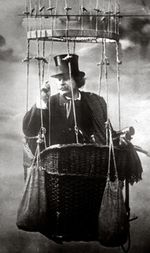
Each of the three essays — “The Sin of Height,” “On the Level” and “The Loss of Depth” — begins with the same concept: that of putting together “two things that have not been put together before.” In the first essay, the 19th-century photographer and inventor Gaspard-Félix Tournachon, later known simply as Nadar, combines photography and aeronautics as the first aerial photographer. In the second essay, Barnes narrates an imaginary affair between the actress Sarah Bernhardt and Fred Burnaby, an English traveler and adventurer. In the third essay, love unites Barnes and his wife — and persists even after Kavanagh’s death. A series of coincidences links the three essays: Burnaby and Bernhardt also rode in balloons; Nadar photographed Bernhardt several times; Nadar was a devoted husband despite his many affairs, and he nursed his wife in her last illness, as Barnes nursed his.

more here.

the deeply ambiguous writing of LÁSZLÓ KRASZNAHORKAI

SeioboAndrea Scrima at The Quarterly Conversation:

After the publication in English translation of Satantango, The Melancholy of Resistance, and War and War—which together with Seiobo There Below constitute an important cross-section of Krasznahorkai’s prodigious literary output—his bleak outlook on a human history bent on calamity has become legendary. In an interview published in 2012, he expresses doubt that the human race will survive another 200 years. Regarding our collective ability to alter this course, his prognosis is less than optimistic as he calls the authority of literature itself into question: “This kind of communication is really over and done with. Its disappearance is a rather obvious process; it is happening faster at some points of the world than at others. I’m afraid this kind of literature is not sustainable.” To compound the matter, as the incessant onslaught of information fragments our attention on a daily basis, it has to be said that reading Krasznahorkai is not particularly easy, even given the seductive nature of his prose. Moreover, with Seiobo There Below, he has set himself the task of writing about something that is essentially impossible to formulate in language. We are no longer accustomed to using words like “illumination,” “transcendence,” or “epiphany”; indeed, in our secularized Western world they can sound embarrassing and even ridiculous. Yet his is a language that flows in liquid state, eddying around obstructions to form vortices of swelling thought in which the consistency can suddenly gel, become viscous—and all at once, the writing embodies precisely what it describes as these endless, spell-binding sentences gradually alter our perception and prepare us for a brief glimmer of something outside ourselves, something that can perhaps explain us to ourselves.

more here.

Gandhi’s formative years

79a5475a-21ac-11e3-8aff-00144feab7deRamachandra Guha at the Financial Times:

The city that really shaped Gandhi was Johannesburg, where he lived between 1903 and 1913. Following the end of the Anglo-Boer war, the gold-rich Transvaal was attracting immigrants from all over the world. Marauders and exploiters came to Johannesburg in search of wealth, eccentrics and free-spirits to escape convention or ostracism at home.

One of these dissenters was Henry Polak, a Jewish journalist sent out from London by his family in a vain attempt to thwart his relationship with a Christian socialist named Millie Graham. Gandhi first met Polak in a vegetarian restaurant; later, after Graham also came out, the couple were married with the Indian lawyer as a witness. The Gandhis and the Polaks shared a home, where fierce arguments raged about diet, religion, politics, and the respective merits of radicalism and meliorism. Another strong influence was Sonja Schlesin, his secretary. The Russian-Jewish Schlesin was an energetic feminist, who – like the Polaks – moved Gandhi away from his inherited social conservatism and patriarchy.

more here.

Marriage Material

Melissa Katsoulis in The Telegraph:

Marriage_Material_2676557bSathnam Sanghera’s The Boy with the Topknot, his memoir of growing up Sikh in Wolverhampton, dealt not only with the retro ephemera of an Eighties childhood but also with the serious subject of mental illness. His follow-up, as the title suggests, moves to the next age of a man’s life. This time it’s fiction, intertwining the story of a family of Sixties Punjabi immigrants with their descendant, Arjan, the present-day narrator who opens the book with a razor-sharp disquisition on the trials of being an Asian newsagent. “There are few more stereotypical things you can do as an Asian man, few more profound ways of wiping out your character and individuality, short of becoming a doctor, that is. Or fixing computers for a living. Or writing a book about arranged marriages.”

…Sanghera is such an engaging and versatile writer that the pages fly by in a flurry of pathos, politics and paratha with extra butter. Not many readers will recognise this satirical mini-masterpiece as a reworking of the 1908 Arnold Bennett novel The Old Wives’ Tale, but everyone will feel richer for its uncompromising take on race relations in the Black Country.

More here.

Eat, Pray, Love, Get Rich, Write a Novel No One Expects

Steve Almond in The New York Times:

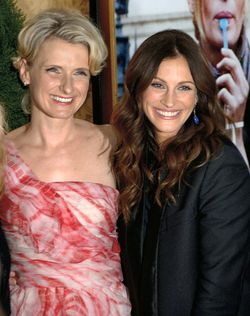
Mag-22Gilbert-t_CA1-popupWhen Elizabeth Gilbert was in fourth grade, her teacher, Ms. Sandie Carpenter, announced a fund-raiser. Students were asked to sell grinders — New Englandese for “sub sandwiches” — to pay for a class trip. There was never any question whether Gilbert would participate. Still, door-to-door sales of a perishable foodstuff can prove intimidating, even to a zealous 9-year-old. So her mother, Carole, initiated a training program. She made Gilbert go outside and close the front door. Gilbert then had to knock, introduce herself and explain what she was selling and why. “Our family’s going on vacation next week,” Carole might announce. “What if we want the grinders two weeks from now?” To which Gilbert would generally respond, “I don’t know!” and start crying. “Back it up,” her mother would say. “Try it again. Get it right, kid.” And close the door. They did this, Gilbert recalls, for what felt like a whole afternoon.

A decade and a half later, Gilbert took an elevator up to the offices of Spin magazine to ask for a job. Her only connection at the magazine was having met the publisher, Bob Guccione Jr., at a party once. She had no experience as a journalist — her degree from N.Y.U. was in international relations — and enough good sense to be terrified. The doors to the elevator opened. Gilbert took a deep breath. Come on, she told herself. You’re Carole Gilbert’s daughter. Go do this! The receptionist was, to put it gently, unmoved by her appeal. A concerned secretary appeared, then a personal assistant. Gilbert politely refused to budge. Guccione eventually agreed to see her but had no recollection of having met her. Look, he said finally, my assistant is going out of town for three days. You can do his job. At the end of this stint, Guccione pulled out his wallet, handed Gilbert 300 bucks and wished her good luck. Some months later, Gilbert placed her first short story in Esquire, which published it with the subtitle “the debut of an American writer.” She sent the story to Guccione with a note that read, “I told you I was a writer!” He called and offered her an assignment on the spot. The lesson was obvious. Life was just a big grinder sale. Your job was to knock on the door and not to leave until your ambitions were met.

More here.

Saturday Poem

Spring Sonnet, with my sister's favorite bit of Deborah

The way I see it, every season comes through
With a blessing—winter: dazzle; summer: evening;
Autumn: cold; and this particular spring
It's got to be you, monotonous cuckoo
Or whatever you are, blasting that major third
like a downbeat for the music of the spheres.
And who's to say it isn't, that the stars
And planets aren't guided by a bird?
You voice certainly seems to carry far
Enough, its two persistent notes so pure
They must keep the air's orchestra in tune.
Who cares if they're the same again and again?
I'll stop waiting for that new, exquisite song.
I've got two notes; even I will sing.

by Jaqueline Osherow

Was the partitioning of India inevitable and are the Muslims of the subcontinent better off today?

Ishtiaq Ahmed in The Friday Times:

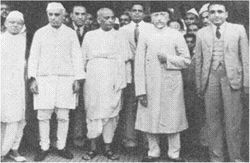
Large-Pandit Nehru and Maulana Abul Kalaam AzaadLet me admit that although partitioning territory to solve disputes between adversarial nationalist movements and parties is not something I am intellectually comfortable with because it validates tribalism rather than human empathy and solidarity for building community, at times it is the only solution which is morally and practically correct. Partitioning former Sudan to let the Black Africans escape genocide at the hands of the putative Arabs of northern Sudan was an appropriate solution; East Timor getting out of the clutches of the Indonesian state has also been the best option. I hope one day the Palestinians in the occupied West Bank are liberated from brutal Israeli rule.

However, I don't think the partition of India and of Bengal and Punjab belong to the category of intractable disputes that could not have been managed through appropriate democratic arrangements. The so-called Hindu-Muslim problem that dominated politics in British India from the twentieth century onwards till it culminated in the biggest forced migration of people in history and one of the most horrific cases of genocide and ethnic cleansing- 14-18 million forced to flee and between 1-2 million killed – left large minorities in both states. The only difference being that in India the Muslim minority could stay put after some three per cent of the Muslims from Muslim-minority areas migrated to Pakistan but Hindus and Sikhs had to leave almost to the last man in Punjab and the settled areas of Khyber-Pakhtunkhwa. Very few could stay behind in the tribal areas and in Balochistan. It was only in interior Sindh that a community of some significance could remain behind. Not surprisingly, such upheaval bequeathed a bloody and bitter legacy of fear and hatred to India and Pakistan. The three wars and the Rann of Kutch and Kargil miniwars and constant tension along the Line of Control drawn in the former Jammu and Kashmir State has meant not only huge, wasteful expenditure on military and defence but also a profoundly vitiating impact on democracy, development and pluralism.

More here.

Friday, September 20, 2013

Holy Shit: A Brief History of Swearing

Colin Burrow reviews the book by Melissa Mohr in the London Review of Books:

16225525Roll up, roll up all you ‘mangie rascals, shiteabed scoundrels, drunken roysters, slie knaves, drowsie loiterers, slapsauce fellows, slabberdegullion druggels, lubbardly lowts … fondling fops, base lowns, saucie coxcombs, idle lusks, scoffing Braggards, noddie meacocks, blockish grutnols, doddi-poljolt-heads, jobbernol goosecaps, foolish loggerheads, slutch calf-lollies, grouthead gnat-snappers, lob-dotterels, gaping changelings, codshead loobies, woodcock slangams, ninnie-hammer flycatchers, noddiepeak simpletons, turdie gut, shitten shepherds, and other suchlike defamatory epithets’. As these few tasters from Sir Thomas Urquhart’s translation of Rabelais indicate, swearing can be fun: ‘slabberdegullion druggels’ (slovenly dimbos) and ‘noddie meacocks’ (limp-wristed wimps) have the surreal energy of abuse forged in the heat. But Urquhart’s list of obscenities does gradually tail off. ‘Shitten shepherds’ is tired and formulaic. It’s time to move on. Foulness quickly becomes boring. Really good swearing relies on formulaic elements, but needs to be precisely adapted to the moment. In this respect dear old Robin in the 1960s Batman TV series was one of the best swearers, though his lips were never soiled with a common-or-garden profanity. He could combine ‘Holy’ with more or less anything in order to create his trademark ejaculations, which were always to the point. Number two in my list of all-time favourites is ‘Holy chocolate éclair!’ Number one has to be ‘Holy uncanny photographic mental processes!’

You can see how difficult it is to swear really well by asking a computer to do it. Those with masochistic tendencies might seek out the verbal rough-housing on offer from the potty-mouthed webservers at foulomatic.hnldesign.nl or the more tastily named sweary.com. The results, though, are disappointing. A true poet of the foul would never have come up with the computer’s ersatz ‘toe erection’, or its ‘son of a wank biscuit slapper’, though I confess that I had to look up ‘biscuit’ in a slang dictionary to discover its filth potential: ‘ass’ is the relevant sense, though it can apparently also function in similar ways to the British English slang use of ‘crumpet’.

More here.

Why does academic writing on international affairs seem to be of little practical value?

Stephen M. Walt in Foreign Policy:

Lecturehallflickr-nayukim-croppedWhy does so much of the academic writing on international affairs seem to be of little practical value, mired in a “cult of irrelevance”? Is it because IR scholars are pursuing a misleading model of “science,” patterned after physics, chemistry, or biology? Or is it because many prominent academics fear criticism and are deathly afraid of being controversial, and prefer to hide behind arcane vocabulary, abstruse mathematics, or incomprehensible postmodern jargon?

Both motivations are probably at work to some degree, but I would argue that academics are for the most part just responding to the prevailing incentive structures and metrics that are used to evaluate scholarly merit. This point is made abundantly clear in an important new article by Peter Campbell and Michael Desch of the University of Notre Dame, titled “Rank Irrelevance: How Academia Lost Its Way.” Campbell and Desch examine the methodology behind the National Research Council rankings of graduate programs in political science, and argue that the methods used are both “systematically biased” and analytically flawed.

National Research Council (NRC) rankings carry a fair bit of weight in academia. As I know from my own experience, deans, provosts, and presidents pay attention to where departments are ranked. A department chair who presides over a significant improvement in his/her department's ranking will be viewed favorably, while a decline sets off warning bells. Similarly, if a junior faculty member is up for tenure and gets an “outside offer” from a more highly ranked department, that will be taken as a strong signal of that faculty member's perceived value. By contrast, if you're up for tenure and get an offer from a department ranked further down the food chain, it will be a positive sign but not necessarily dispositive. For these and other reasons, these rankings matter.

The problem, as Campbell and Desch show, is that the rankings are seriously flawed.

More here.

How a jazz artist’s relationship to black identity gave his music its stormy weather

Adam Shatz in The Nation:

ScreenHunter_332 Sep. 20 18.44When Sy Johnson, a jazz pianist and arranger, used to visit Charles Mingus at his apartment in the East Village in the 1960s, there was always a pot of soup on the stove, and Mingus—a gourmand who once interrupted a concert to eat a steak dinner on the bandstand—was constantly tasting it. “He would say—‘Needs another carrot.’” He would chop another carrot and taste it again, only to decide it needed an onion. The pot might simmer for a month before Mingus was satisfied with the seasoning. As Johnson tells John Goodman in Mingus Speaks, a book of interviews with Mingus and friends conducted in the early 1970s, Mingus’s music was a lot like his soup: a “huge cauldron of sounds” that was “always in a state of becoming something.”

Mingus rarely left his pieces alone when he took them on the road with his Jazz Workshop, as he began calling his bands in the mid-1950s. When the Workshop played “Fables of Faubus,” a dart of sarcasm aimed at Arkansas’s segregationist governor Orval Faubus, at the Concertgebouw in Amsterdam, the jaunty eight-minute tune swelled into a half-hour suite, punctuated by tart allusions to “When Johnny Comes Marching Home” and “God Bless America” and a bass clarinet solo of blistering intensity by Eric Dolphy.

More here. [Thanks to Muhammad Idrees Ahmad. Photo from Wikipedia.]