Pynchon’s new book

170815128Leo Robson at The New Statesman:
It is probably fair at this advanced stage to note that Pynchon has an incurable obsession with language: its capacity for behaving like glass or gauze. The opening paragraph of Gravity’s Rainbow (1973) – “A screaming comes across the sky. It has happened before, but there is nothing to compare it to now” – makes a point of stating where eloquence can’t go, either because we don’t hear V-2 rockets any more, or we no longer hear anything that resembles them, or because the only people who might have heard them were dead by the time they got the chance (being supersonic, the V-2 announces its arrival after it has already landed). But then “screaming” is already a comparison, a clarifying anthropomorphic metaphor. Fastforward more than half a century – from 1944 to 2001 – and there are even more phenomena to describe or half describe, more slang to borrow from espionage and economics, erotica and psychiatry. One of the things that Pynchon wants to expose is the way we massage things into metaphor and then forget that we’ve done it.
The book’s title, though a term in its own right (meaning new technology with risks attached), is repurposed here as a pun on a metaphor – the word “pun” being, as Gottlob Frege points out in Pynchon’s novel-beforelast Against the Day (2006), “und” upside down and back to front and a good way of bringing things together.
more here.
Naps Nurture Growing Brains

Jennifer Couzin-Frankel in Science:
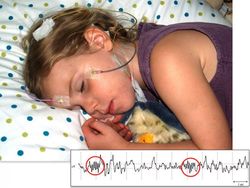
NapFew features of child-rearing occupy as much parental brain space as sleep, and with it the timeless question: Is my child getting enough? Despite the craving among many parents for more sleep in their offspring (and, by extension, themselves), the purpose that sleep serves in young kids remains something of a mystery—especially when it comes to daytime naps. Do they help children retain information, as overnight sleep has been found to do in adults? A study published today in the Proceedings of the National Academy of Sciences provides the first evidence that daytime sleep is critical for effective learning in young children.

Psychologist Rebecca Spencer of the University of Massachusetts (UMass), Amherst, had more than a passing interest in the subject: Her daughters were 3 and 5 when she began chasing answers to these questions. She also wondered about growing enthusiasm for universal public preschool, where teachers don’t necessarily place much emphasis on naps. “There is a lot of science” about the best curriculum for preschool classrooms, “but nothing to protect the nap,” Spencer says. Still, data to support a nap’s usefulness were scarce: Studies in adults have found that sleep helps consolidate memories and learning, but whether the same is true of brief naps in the preschool set was unknown. So Spencer approached the first preschool she could think of that might help her find out: her daughters’. She later added other local preschools to her sample, for a total of 40 children ranging from nearly 3 to less than 6 years old. The goal of Spencer, her graduate student Laura Kurdziel, and undergraduate Kasey Duclos of Commonwealth Honors College at UMass, was to compare each child against him or herself: How well did a child learn when she napped, and what happened when she didn’t?

To test this, the trio first taught the children a variant of the popular game Memory or Concentration. They were shown a series of cards with pictures on them, such as a cat or umbrella. The cards were then flipped over, hiding the pictures. Each child was offered another picture card and asked to recall where in the matrix its match lay. Then, about 2 hours later, it was naptime—or nap-free time, depending. Kurdziel and Duclos developed various “nap promotion” techniques, resting a hand on a child’s back, rubbing their feet (this was surprisingly effective), or simply sitting next to them. “If they know that someone’s got their eye on them then they can’t wiggle around as much,” Spencer says. The average nap was about an hour and 15 minutes. Soon after the children woke up, the memory game was repeated. On a different day, they learned the game in the morning, were deprived of a nap, and then tested again. All participants repeated the memory game the next morning, too. A nap made a notable difference in how the preschoolers performed, especially among those who were used to getting one.

More here.

Wednesday Poem

To My Heart On Sunday

Thank you, my heart:
you don't dawdle, you keep going
with no flattery or reward,
just from inborn diligence.

You get seventy credits a minute.
Each of your systoles
shoves a little boat
to open sea
to sail around the world.

Thank you, my heart:
time after time
you pluck me, separate even in sleep,
out of the whole.

You make sure I don't dream my dreams
up to that final flight,
no wings required.

Thank you, my heart:
I woke up again
and even though it's Sunday.
the day of rest,
the usual preholiday rush
continues underneath my ribs.
.

by Wislawa Szymborska
from Poems New and Collected 1957-1997
Harcourt Brace, 1998

Ten years since the death of Edward W. Said

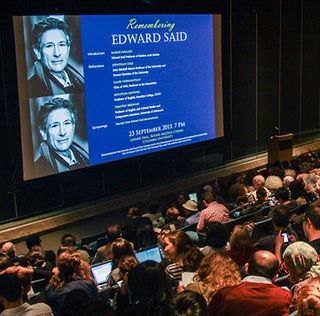
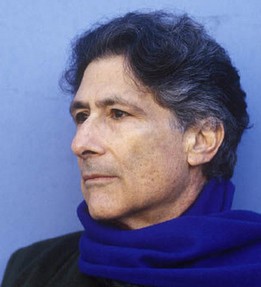
ScreenHunter_336 Sep. 25 09.48Hardly a week goes by since Edward Said's death without my explicitly missing, among other things, his exasperated yet eloquent words of political wisdom often expressed as op-eds in the New York Times, or Al Ahram, or elsewhere. My own last memory of him is of an evening while I was still a graduate student at Columbia and was off to meet a friend for drinks downtown when I saw Edward helping Sidney Morgenbesser get down the slope on 116th Street between Broadway and Riverside Drive. The two were walking slowly, arm-in-arm —neither was well— and stopped when they saw me about to pass them. I was carrying a book and Edward asked me something like, “What are you pretending to read, Bugger?” (One of his several affectionate nicknames for me.) I showed him the copy of The Kreutzer Sonata that I had in my hand and he said, “Don't let Tolstoy corrupt you!” with a twinkle in his eye. I exchanged some pleasantries with Sidney and then they moved on. I crossed the street and remember turning around to watch the two of them shuffling down toward Riverside, and that is my last memory of both of them: an Arab and a Jew, an intellectual colossus and an academic gadfly (one could call Sidney a modern-day Socrates), helping each other get home in New York City. There is still something poignant about it, at least for me.

This past Monday night there was an event in remembrance of Edward at Columbia. Here is an account by Allie O'Keefe in the Columbia Spectator:

ScreenHunter_335 Sep. 25 09.13Students and academics gathered Monday night to reflect on the life and legacy of Columbia professor Edward Said on the 10th anniversary of his death.

Said, a professor of English and comparative literature, gained fame through his books, especially “Orientalism” and “Culture and Imperialism,” and for his advocacy for Palestinian statehood. He died of leukemia in 2003 at the age of 67.

Presenters at the event, which was sponsored by the Center for Palestine Studies, the Department of English and Comparative Literature, the Heyman Center for the Humanities, and the Middle East Institute, lauded Said’s academic and political accomplishments and spoke of his intelligence, courage, and charm.

More here.

And here is an article by Vijay Prasad in The Hindu, “He said so 10 years ago“.

Also this: “Ten years after his death: remembering Edward Said and his quest for a just peace“.

And this: “Paying tribute to Edward W. Said“.

And here is an excellent remembrance of Edward by my nephew Asad Raza which was published at 3QD in 2005 to commemorate his second death anniversary, “Optimism of the Will“.

I collected some articles by and about Edward on the first anniversary of his death here.

And here is the complete last interview:

Tuesday, September 24, 2013

How We Learn To See Faces

Virginia Hughes in National Geographic:

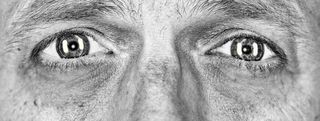
ScreenHunter_335 Sep. 24 17.43Two eyes, aligned horizontally, above a nose, above a mouth. These are the basic elements of a face, as your brain knows quite well. Within about 200 milliseconds of seeing a picture, the brain can decide whether it’s a face or some other object. It can detect subtle differences between faces, too — walking around at my family reunion, for example, many faces look similar, and yet I can easily distinguish Sue from Ann from Pam.

Our fascination with faces exists, to some extent, on the day we’re born. Studies of newborn babies have shown that they prefer to look at face-like pictures. A 1999 studyshowed, for example, that babies prefer a crude drawing of a lightbulb “head” with squares for its eyes and nose compared with the same drawing with the nose above the eyes. “I believe the youngest we tested was seven minutes old,” says Cathy Mondloch, professor of psychology at Brock University in Ontario, who worked on that study. “So it’s there right from the get-go.”

These innate predilections for faces change and intensify over the first year of life (and after that, too) as we encounter more and more faces and learn to rely on the emotional and social information they convey. Scientists have studied this process by looking mostly at babies’ abilities as they age. But how, exactly, our brains develop facial expertise — that is, how it is encoded in neurons and circuits — is in large part a mystery.

Two new studies tried to get at this brain biology with the help of a rare group of participants: children who were born with dense cataracts in their eyes, preventing them from receiving early visual input, and who then, years later, underwent corrective surgery.

More here.

The Drone Philosopher

Marco Roth in n + 1:

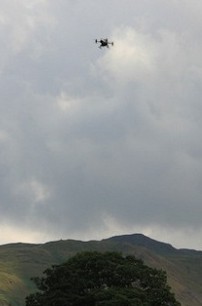
ScreenHunter_334 Sep. 24 17.38From the thumbnail headshot accompanying his essay in the Times, “the drone philosopher,” as I’ve begun to think of him, appears to be in his late twenties, or a boyish 30. In an oddly confessional-style first paragraph, he recalls what it was like to watch the second Iraq War from his college dorm television. He has clean-shaven Ken-doll looks and a prominent squarish jaw, recalling the former Republican vice-presidential candidate and representative from Wisconsin’s First Congressional District, Paul Ryan. I doubt the drone philosopher would be flattered by the comparison. The tone of his article makes him out to be a thoughtful liberal, more interested in weighing complexities than in easy solutions, simultaneously attracted by and wary of power, not unlike the commander in chief he hopes will one day read his papers.

I can make out a bit of wide-striped collegiate tie, a white collar, and the padded shoulders of a suit jacket in the photograph. I know I’m being unfair, but I don’t trust his looks. Since Republicans have become so successful at branding themselves the party of white men, I now suspect that any white guy in a suit may harbor right-wing nationalist tendencies, much as the CIA’s rules governing drone strikes have determined that groups of “military age” men in certain regions of Pakistan and Yemen may be profiled as terrorists. Even more unkindly, I catch myself thinking the drone philosopher’s portrait looks like it was taken for the high school debate club he surely belonged to. Maybe that was where — for competitions in dim auditoria from state to regional to national level, prepping in a series of carbon-copy cheap motels, four to a room — he first learned to be rewarded for making audacious arguments. It was like a job or a sport. Maybe there was one particularly formative debate, “Resolved: The United States was right to use the atomic bomb against Japanese civilians.” He would have parsed this proposition into a value, such as “Right Action” or “Justice,” made up of a checklist of criteria: saving American lives, the primary but not sole duty of the deciders; weighing potential lives lost or saved on both sides when contrasted with the alternative policy of full-scale invasion of Japan.

More here.

How Johnnie Walker conquered the world

Afshin Molavi in Foreign Policy:

ScreenHunter_333 Sep. 24 17.31Today, four bottles of Johnnie Walker are consumed every second, with some 120 million bottles sold annually in 200 countries. Five of Johnnie Walker's top seven global markets are in the emerging world: Brazil, Mexico, Thailand, China, and a region the company calls “Global Travel Asia and Middle East.”

From a small town in the Scottish Lowlands, the Striding Man has come a long way — and he's still walking.

Ask anyone who travels in emerging markets or developing economies, and chances are they've been offered Johnnie Walker. These are just some of the places I've seen it poured: at a Beijing gathering of techies, a four-day wedding in Jaipur, countless bars in Dubai, a Nile cruise in Egypt, the home of an Arab diplomat in Bangkok, private homes in Tehran, a middle-class Istanbul house, and diplomatic parties in Riyadh.

Journalists who spent time in Baghdad during the Iraq war marveled at the easy availability of Johnnie Walker Black Label, even when food staples were scarce. The late writer Christopher Hitchens — who fondly referred to the drink as “Mr. Walker's amber restorative” — accurately noted that Black Label was “the favorite drink of the Iraqi Baath Party.” In Saddam Hussein's era, a smuggler could make a good living taking crates across the border for thirsty Iranians.

More here.

sometimes Ukrainians dream of europe

Pomerantsev_ua_468wPeter Pomerantsev at Eurozine:

The journey of contemporary Ukrainian literature starts with violent vomiting on a Moscow side street. Otto von F, the hero of Yuri Andrukhovych's novel The Moscoviad (1993; English translation, 2008) has been on a binge (beer, champagne, vodka, meths, madeira) during the final days of the Soviet Empire, boozing his way through a psychotic city of monarchist madmen, terrorists and thieves, ranting at the great symbols of Russian might: “This is the city of a thousand-and-one torture chambers. A tall advance bastion of the East, in anticipation of conquering the West. The city of Bolshevik Imperial architecture with the high-rise ghosts of people's commissariats. It only knows how to devour.”

Otto is a Ukrainian student poet, resident in the dorm of the gigantic, jagged, neo-gothic tooth of Moscow State University, sensing “the slow bursting of the Empire's seams, with countries and peoples crawling apart, each of them now acquiring independent relevance”. If Ukrainian writers once wrote about the great capital with a mixture of fear and awe, Andrukhovych's hero drunkenly gobs and waves two fingers at it: his very name, Otto von F, announces his European superiority to the barbarous Russian East.

more here.

Dark Tongues: The Art of Rogues and Riddlers

Cover00Elizabeth Shambelan at Bookforum:

To speak is to know that language is amoral—equally congenial to truth and falsehood, clarity and circumlocution. And therein lies the impetus not only for everyday mendacity but also for artful systems of linguistic subterfuge. As Daniel Heller-Roazen observes, human beings seem to have an innate impulse to “break and scatter” language, to alter their native idioms in order to conceal, bewilder, and dissimulate. In his fascinating Dark Tongues—which might be construed as either a highly episodic history or a collection of case studies ranging across eras and cultures—Heller-Roazen investigates this tendency, paying particular attention to those instances when secret language becomes intertwined, if not interchangeable, with poetry.

He commences with an engrossing discussion of cant, introducing us to a gang of Burgundian bandits known as the Coquillars. In 1455, a prosecutor created a glossary of the Coquillars’ “refined” argot: “Jour is torture. . . . When one of them says, ‘Estoffe!’ it means that he is asking for his booty.” Asking for one’s booty by yelling “Stuff!” hardly seems refined, but to the prosecutor, the descriptor connoted sinister craftiness.

more here.

living in Calcutta

ImageAmit Chaudhuri at n+1:

What do I mean by “modernity,” in the special sense I discovered through the Calcutta I knew as a child? Not electric lights, telephones, cars, certainly, though it might encompass these—we had plenty of those in Bombay. I’ll keep it brief: by “modernity” I have in mind something that was never new. True modernity was born with the aura of inherited decay and life. My first impressions of Calcutta from the mid-sixties are of a Chowringhee whose advertisements shone through the smog; and of my uncle’s house in Pratapaditya Road in Bhowanipore, which, with its slatted windows, seemed to have stood in that place forever. It was built, in fact, roughly forty years before my first becoming conscious of it. Similarly, the city itself—which is by no means old by the standards of Rome, Patna, Agra, or even London—is, actually, fairly new, its origins traceable to three hundred and twenty years back in time, the groundwork for the Calcutta we now know probably laid no more than two centuries ago. Yet if you look at paintings and photographs, and see old films of the city, you notice that these walls and buildings were never new—that Calcutta was born to look more or less as I saw it as a child.

more here.

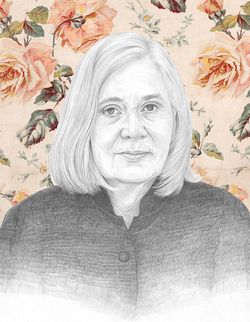
A Teacher and Her Student: Marilynne Robinson on Staying Out of Trouble

Thessaly La Force in Vice:

RobMarilynne Robinson was my fourth and final workshop instructor at the Iowa Writers’ Workshop. She is an intimidating intellectual presence—she once told us that to improve characterization, we should read Descartes. When I asked her to sign my copy of Gilead, she admitted she had recently become fascinated by ancient cuneiform script. But she is also generous and quick to laugh—when she offered to have us to her house for dinner, and I asked if we ought to bring food, she replied, “Or perhaps I will make some loaves and fishes appear!” Then she burst into giggles. After receiving my MFA this May, I left Iowa believing that there’s no good way to be taught how to write, to tell a story. But there is also no denying that Marilynne has made me a better writer. Her demands are deceptively simple: to be true to human consciousness and to honor the complexities of the mind and its memory. Marilynne has said in other interviews that she doesn’t read much contemporary fiction because it would take too much of her time, but I suspect it’s also because she spends a fair amount of her mental resources on her students. Our interview was held on one of the last days of the spring semester. The final traces of the bitter winter had disappeared, and light filled the classroom, which now felt empty with just the two of us. My two years at Iowa were over, and I selfishly wanted to stretch the interview for as long as possible.

VICE: You recently told the class you had discovered the ending to your new novel—or so you hoped. How does that happen for you? How do you know?

Marilynne Robinson: A lot of the experience of the novel—after the beginning—is being in the novel. You set yourself with a complex problem. If it’s a good problem or one that really engages you, then your mind works on it all the time. A novel by its nature is new. The great struggle, conscious or unconscious, is to make sure that it is new. That it actually has raised issues that deserve to be dealt with in their own terms. They’re not terms that you have seen elsewhere. It’s sort of like composing music. There are options that open and options that disappear, depending on how you develop the guidelines. You think about it over time. And then something will appear, something that is the most elegant response to the question that you’ve asked yourself. And it can absorb the most in terms of the complexities that you’ve created.

More here.

Fiction: Silicon and surveillance

Sean M. Carroll in Nature:

BumThomas Pynchon's novels have several recurring themes: paranoia and conspiracy, pastiches of high and low culture, synchronicity and coincidence, shadowy networks lurking around every corner, and the impact of science and technology. With the coming of the Internet age and the surveillance society that sprang up in the wake of 11 September 2001, it seems as though reality has finally caught up with his vision. In his latest work, Bleeding Edge, Pynchon takes full advantage of this convergence. The first question asked of a new Pynchon book is: is this one of the sprawling, spiralling, time-tripping monsters with innumerable characters and a plot that is tricky to bring into focus, like Gravity's Rainbow or Against the Day; or is it one of the fun detective stories with a well-defined protagonist, like The Crying of Lot 49 or Inherent Vice? Bleeding Edge is definitely in the latter category. There is a colourful cast of memorable personalities, and high jinks often ensue, but the tale is told linearly, from the point of view of an acknowledged main character, with something approximating an explicit goal. The year is 2001. The dot-com bubble has just burst and Silicon Alley, New York's version of Silicon Valley, is in disarray. The Internet revolution is just beginning to gather steam. And, of course, the imminent 11 September attacks loom over every page.

The novel begins simply, in the mundane beauty of an ordinary morning. Maxine Tarnow is walking her kids to school in Manhattan on the first day of spring, stopping to admire the sunlight shining through a pear tree's blossom. The lapsed-licence fraud investigator is about to be drawn into a sinister web of intrigue. An old acquaintance asks her to investigate the suspiciously successful dot-com for which he is filming a corporate documentary. Poking around brings Tarnow into contact with shady hackers, gregarious Italian–American venture capitalists, Mossad agents, bloggers, petty fraudsters who are in over their heads, trophy wives, a private investigator whose primary tool is his sense of smell, a pair of disarmingly likeable Russian gangsters with a fondness for hip hop, and a mysterious government operative. Some will be exiled, some will run away and some will carry on; not all will survive.

More here.

Tuesday Poem

Yolk

One, two, three—is the ring of chairs around our daily
table the right size? Is it time to stretch open
or do right by? Is the operative term underfoot,
undercapitalized, or under duress?
Every room seems to have a ceiling mirror
and here we are: dressed up, dressed down,
hand to mouth, a spray of lonesome hair, a tuft
of camaraderie, a swag of hope, crown of thorns.
Are we headed for Lake Dry Dock or a wide green
barge on the Nile? If I had to choose,
what would I wish inside me from this month's love?
A stray fragrance, ravaged memory, safe
echo? Or a swoon of repeating cells,
an undertow of more? I'm not sure I can
look up from my plate. This morning's yolk
is glowing around a jot, a tiny knob of the possible
and my lap is yellow with longing.
.

by Ellen Doré Watson
from We Live in Bodies
Alice James Books, 1997
.

Monday, September 23, 2013

Arguing about Argument

Scott F. Aikin and Robert B. Talisse

Why we argue coverOne fascinating thing about logic is that it is common property. We all reason from what we already believe to new conclusions. Sometimes logic helps us to make up our minds; by thinking through the implications of an idea, we can weigh its merits against others. To think at all is to employ logic; as Aristotle noted, even to question logic is to deploy it. Logic is inescapable.

Logic's inescapability explains its grip on us. Exposing a logical error is always a winning argumentative strategy. And that's because no matter how deeply people might otherwise disagree about other important matters, we all embrace the strictures of logic and the standards of good reasoning that they supply. Oddly, the universality of logic also explains why logic is so often misapplied. As Charles Peirce observed, few actually study logic because everyone thinks himself an expert. Consequently we all strive to be rational; yet there is a lot of poor reasoning around.

A complicating feature is that our powers of logic are frequently exercised within interpersonal contexts of disagreement with others. In these contexts, extra-rational factors — social standing, good manners, pressures to conform, and so on — can infiltrate our logical activities and lead us astray. And yet it is undeniable that reasoning is a collective endeavor. In order to reason well, we must reason with others. But reasoning with others forces us to confront disagreement. Accordingly, the study of logic leads us to the study of argumentation, the processes of interpersonal reasoning within contexts of disagreement.

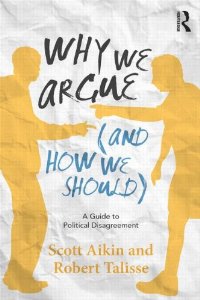
There are at least two tracks upon which argumentation theory travels. One is explored in our forthcoming book Why We Argue (And How We Should): A Guide to Political Disagreement (Routledge 2013). An alternative is suggested by the pseudonymous author (“Protagoras”) of the first installment in a series at The Guardian about “How to Argue.” (Interestingly, Protagoras's opening column is titled “Why We Argue— And How To Do It Properly“– further evidence that the subject matter is common property). The historical Protagoras held that “man is the measure of all things,” and we suspect that this is the inspiration for the current Protagoras's proposal that we argue because we find ourselves needing to convince others to agree with us. Note that the need here is practical; disagreement obstructs plans for action. Successful argument, then, removes or dissolves such obstacles by convincing others to share one's view. Protagoras hence associates proper argument with the “art of rhetoric,” the skill of bringing others in line with one's own thoughts. It should be mentioned that this art is not as manipulative as it might appear, for the aim is not simply to compel agreement, but to actually convince others of one's view. As it turns out, the artful rhetorician must take careful account of the reasons and commitments of his or her audience; the rhetorician must attempt not only to reason with the audience, but reason from the audience's own premises to the rhetorician's preferred conclusion.

Read more »

Arribes: An Interview with Zev Robinson, Painter and Filmmaker

MADb6tq8ohI7w2oPePHi3WErE5LaMUYpXVWecTX5E3k

by Elatia Harris

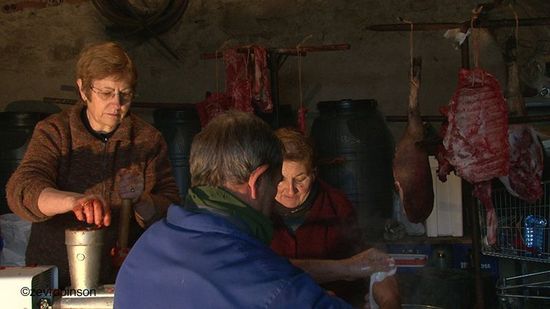
Zev Robinson, an Anglo-Canadian filmmaker and painter whose award-winning work in several media goes back to the 1980s, will present his documentary, Arribes: Everything Else is Noise, in Marbella, on October 5, 2013. If you are reading from Spain, join him — see link below. Arribes focuses on a traditonal way of life and its relationship to agriculture, food, and sustainability in the Arribes, Sayago and Abadengo regions in northwest Spain, along the Duero River. Natives to this region are about 80-90% self-sufficient. What have they to teach us?

All photos, including stills from Arribes: Everything Else Is Noise,

are used with permission of Zev Robinson and/or Albertina Torres. To make inquiries as to further use of these materials, write to the artists, contact info below.


480157_539574079405118_70362945_n
Elatia Harris: Zev, you are one of the ultimate city boys. How likely a story is this? That you would come to live in a rural Spanish village, and then spend years creating an intimate portrait of an even more isolated and distant region of Spain?

Zev Robinson: It was a long process of discovery. The last place I thought I’d end up, after living in several large cities including New York and London, was a Spanish village of fewer than 800 people, where my wife is from, and where my father-in-law works and harvests his vineyards.

When we lived in London, I remember looking at a bottle of wine in a supermarket that originated from this region, and thinking how few people understood all that went into its making. After we moved here, I was taking a walk through the vineyards one day, and got the idea of making a short film about how the grape gets from the vines here to bottles in the UK.

EH: Are you a wine connoisseur — in a big way?

ZR: I knew nothing about wine at the beginning of all this, but am always interested in processes, the history that brings an object into being.

Read more »

Sunday, September 22, 2013

Beyond the Veil

Kenan Malik in Padaemonium:

ScreenHunter_336 Sep. 22 15.38‘Cultural values that oppress and diminish women have no place in our society’, wrote the journalistAlison Pearson last week. I agree. The values embodied in the burqa and the niqab, the belief that women should be hidden from view for reasons of modesty or religious belief, should be trashed wherever they appear. But such values can be challenged, and new ones crafted, not top down through state prohibitions, as Pearson and others suggest, but only bottom up through social engagement. That is why, from the other side of the debate, Tariq Modood’s insistence that people should be ‘required’ to show respect towards different cultural mores, and that public arrangements be adapted to accommodate them, is also so problematic; it is an approach that eviscerates both civil society and the idea of freedom. The corollary to the right to wear the burqa is the right, indeed in my eyes the obligation, to challenge the practice of wearing it.

It is not just in the controversy over the burqa, but much more broadly in our discussions about culture and values, that the obsession with the state, and with bans and prohibitions, and the failure to nourish civil society, or even to grasp its importance, damages social life. If we want to get beyond the veil, in the sense both of moving the debate on, and of ridding the world of such medievalism, we need to think less about state proscriptions, and more about the cultivation and the transformation of civil society.

More here.

International Principles on the Application of Human Rights to Communications Surveillance

From Necessary and Proportionate:

ScreenHunter_335 Sep. 22 15.32As technologies that facilitate State surveillance of communications advance, States are failing to ensure that laws and regulations related to communications surveillance adhere to international human rights and adequately protect the rights to privacy and freedom of expression. This document attempts to explain how international human rights law applies in the current digital environment, particularly in light of the increase in and changes to communications surveillance technologies and techniques. These principles can provide civil society groups, industry, States and others with a framework to evaluate whether current or proposed surveillance laws and practices are consistent with human rights.

These principles are the outcome of a global consultation with civil society groups, industry and international experts in communications surveillance law, policy and technology.

Privacy is a fundamental human right, and is central to the maintenance of democratic societies. It is essential to human dignity and it reinforces other rights, such as freedom of expression and information, and freedom of association, and is recognised under international human rights law.[1] Activities that restrict the right to privacy, including communications surveillance, can only be justified when they are prescribed by law, they are necessary to achieve a legitimate aim, and are proportionate to the aim pursued.

Before public adoption of the Internet, well-established legal principles and logistical burdens inherent in monitoring communications created limits to State communications surveillance. In recent decades, those logistical barriers to surveillance have decreased and the application of legal principles in new technological contexts has become unclear.

More here.

The STEM Crisis Is a Myth

Forget the dire predictions of a looming shortfall of scientists, technologists, engineers, and mathematicians.

Robert N. Charette in IEEE Spectrum:

ScreenHunter_334 Sep. 22 15.21You must have seen the warning a thousand times: Too few young people study scientific or technical subjects, businesses can’t find enough workers in those fields, and the country’s competitive edge is threatened.

It pretty much doesn’t matter what country you’re talking about—the United States is facing this crisis, as is Japan, the United Kingdom, Australia, China,Brazil, South Africa, Singapore, India…the list goes on. In many of these countries, the predicted shortfall of STEM (short for science, technology, engineering, and mathematics) workers is supposed to number in the hundreds of thousands or even the millions. A 2012 report by President Obama’s Council of Advisors on Science and Technology, for instance, stated that over the next decade, 1 million additional STEM graduates will be needed. In the U.K., the Royal Academy of Engineering reported last year that the nation will have to graduate 100 000 STEM majors every year until 2020 just to stay even with demand.Germany, meanwhile, is said to have a shortage of about 210 000 workers in what’s known there as the MINT disciplines—mathematics, computer science, natural sciences, and technology.

The situation is so dismal that governments everywhere are now pouring billions of dollars each year into myriad efforts designed to boost the ranks of STEM workers.

More here.