
Olivia Farrar in Harvard Magazine:
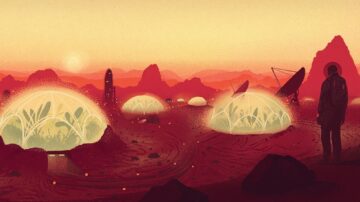 The race to send humans to Mars is underway. That’s the sense conveyed by certain politicians and wealthy entrepreneurs, who have spoken broadly about creating a Red Planet outpost. The website of the U.S. federal space agency, NASA, echoes that optimism, citing its work on “many technologies to send astronauts to Mars as early as the 2030s.”
That goal is staggeringly ambitious. Setting aside the astronomical price tag (and the question of who would foot the bill), a trip to Mars would represent a massive leap in the science of space exploration. The International Space Station (ISS), in operation for more than two decades, orbits just 250 miles above Earth. Mars lies more than 250 million miles away—roughly a thousand times farther than the Moon. The journey alone would take six to nine months. On Mars, the challenges would multiply. The planet has an ultra-thin atmosphere—its density is just 1 percent that of Earth’s—combined with a gravitational force that’s less than half as powerful as Earth’s and temperatures that can drop to -225 degrees Fahrenheit. To survive, astronauts would need to create entirely new habitats, with protective shelters and sustainable food sources.
More here.
Enjoying the content on 3QD? Help keep us going by donating now.