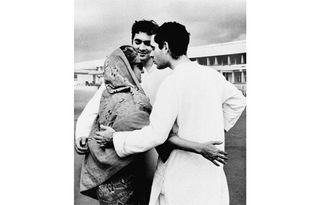
Family Ties: How the Gandhis Kept a Party but Lost the Country

Ap6910220141

Hartosh Singh Bal in Caravan:

The party that Indira Gandhi invented anew in 1969 was built around a personality cult, but it sustained itself through her ability to triumph electorally. The old system of organisational loyalty was now replaced by a network of patronage in which people who paid obeisance to the personality cult were rewarded by the benefits that come with a share in political power. There was no longer any question of people being attracted by the party’s vision, because no such thing existed; it is easy enough to define the term Nehruvian, but impossible to give a coherent shape to what Indira espoused. If today what we call the Congress does not have an organisation independent from the Nehru-Gandhi dynasty and its patronage, it is because Indira excised this possibility in 1969.

This model of politics soon began to show its weakness. The Congress was first voted out of power in 1977, after the Emergency. Although Indira returned to power in 1979, by the time Rajiv was defeated in the general election of 1989 it had become clear that the Nehru-Gandhi dynasty no longer had the appeal necessary to repeat the triumph of 1971. After Rajiv’s death in 1991, Narasimha Rao became the Congress president, and the party managed to cobble together a coalition government under him; it was the first time since 1969 that the party had been guided for any meaningful length of time by someone who was not from the Nehru-Gandhi dynasty. An electoral defeat five years later confined the party to the opposition until 2004.

With each successive stint out of power, the party’s ability to retain its supporters dwindled. Even where the Congress could win elections, it was not the “same type of political force it was in the 1960s”, Atul Kohli notes; by the mid 1980s, the Congress system “had almost vanished”. This was a natural corollary of the split in 1969: any network of patronage can survive only if it can assure benefits in the near future. Although the party won in 2004 and 2009, the victories were mostly exercises in coalition building; they did not demonstrate any newfound electoral strength among the Nehru-Gandhi dynasty, and could not reverse the party’s disintegration at the level that matters—in the states, where local patronage is handed out.

More here.
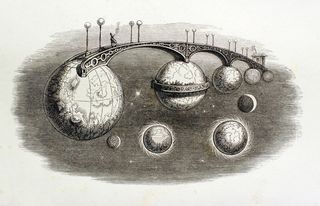
Modernity, Enchantment, and Fictionalism

Footbridge-between-worlds

Michael Saler in The Immanent Frame:

There are at least two ways that we can understand the meanings of “enchantment” and “disenchantment.” We can define them as stages within a broader historical process, and we can define them as human affects. In terms of historical process, the narrative of Weber and others described the shift from a premodern, “enchanted” world governed by an overarching supernatural order, to the modern “disenchanted” world characterized by scientific naturalism. Scholars advanced different historical periods for the origins of this process, but their accounts of its outcome were similar. A recognizable discourse equating modernity with disenchantment emerged among the late eighteenth century romantics, was given added momentum by nineteenth century cultural pessimists, and apparent scientific legitimacy by twentieth century sociologists, philosophers, and political scientists. The constant iteration that modernity has foresworn enchantment for disenchantment made it a virtual orthodoxy in the West until very recently.

In terms of human affect, since the Middle Ages “enchantment” had two meanings in Western culture: enchantment as “delight” and enchantment as “delusion.” The pleasures of enchantment as delight could be so overpowering that one is placed under a spell—an “enchantment”—and becomes deluded. The remedy was to become disenchanted. But disenchantment, like enchantment, also had positive and negative meanings. A positive meaning of disenchantment is that of emancipation: one is freed from dangerous illusions. A negative meaning of disenchantment is that of disillusion, a hard-bitten refusal of ideals or any form of transcendence.

The problem with the historical discourse was that it became conflated with the affective discourse. It equated the historical shift to a disenchanted world with the affect of disenchantment as disillusion, the end of a sense of wonder. States of enchantment might be delightful, but they were also delusory and regressive, at best suitable for children and other irrational beings, such as women, the working classes, and non-Western peoples. The historical narrative of modernity and enchantment could have positive elements—this was true of Weber’s account—but fundamentally it was one of discontent and loss.

More here.

reviewing 2013

DLT_nachocheesesupreme_pdp_2013AThe Yearly Review from Harper's Magazine:

Lego figurines were found to be growing angrier. Researchers reconstructed the face of Richard III, discovered the heart of Richard I to have been embalmed in daisy, mint, and myrtle, and calculated that Double Stuf Oreos contain only 1.86 times as much cream filling. In England, two North Anglians dressed as Oompa Loompas attacked a man outside a kebab house, an appellate court ended Cadbury’s monopoly on the color purple, and Lord Sugar was investigated for racism. An Edinburgh Krispy Kreme sold an average of one doughnut every three seconds in the six months after it opened. “They are ruinous,” said Scottish National Obesity Forum spokesman Tam Fry. Frito-Lay began selling Taco Bell Doritos, which taste like Taco Bell Doritos Locos tacos, which taste like Doritos. Conor P. Fudge was charged for a burglary at Iowa City’s Cold Stone Creamery. Toronto mayor Rob Ford admitted that he had smoked crack cocaine while in “one of my drunken stupors.” Doctors declared cured a Mississippi baby born with HIV. Belgium permitted twins born deaf to commit suicide because they had also become blind. In Spain, the recipient of the world’s first double-leg transplant had his transplanted legs amputated. South Korean police arrested two students for selling diet pills made of human flesh, and hackers in Montana broadcast an emergency alert warning of a zombie uprising.

more here.

what Alan Bennett did in 2013

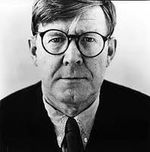
ImagesAlan Bennett at the London Review of Books:

17 April. Shots of the cabinet and the ex-cabinet at Lady Thatcher’s funeral in St Paul’s just emphasise how consistently cowardly most of them were, the only time they dared to stand up to her when eventually they kicked her out. What also galls is the notion that Tory MPs throw in almost as an afterthought, namely that her lack of a sense of humour was just a minor failing, of no more significance than being colourblind, say, or mildly short-sighted. In fact to have no sense of humour is to be a seriously flawed human being. It’s not a minor shortcoming; it shuts you off from humanity. Mrs Thatcher was a mirthless bully and should have been buried, as once upon a time monarchs used to be, in the depths of the night.

3 May. I am reading Neil MacGregor’s Shakespeare’s Restless World. It’s very good, even overcoming my (A.L. Rowse generated) prejudice against reading about Shakespeare. I hadn’t realised at Richard Griffiths’s funeral in Stratford that Shakespeare’s father had been buried in the churchyard, the whereabouts of the grave now unknown. So when, waiting for the service to start, I went out for a pee under one of the yews in a sheltered corner of the cemetery I may well have been pissing on Shakespeare’s dad’s grave.

more here.

Why the passenger pigeon became extinct

140106_r24450_p465Jonathan Rosen at The New Yorker:

Imagine that tomorrow morning you woke up and discovered that the familiar rock pigeon—scientifically known as Columba livia, popularly known as the rat with wings—had disappeared. It was gone not simply from your window ledge but from Piazza San Marco, Trafalgar Square, the Gateway of India arch, and every park, sidewalk, telephone wire, and rooftop in between. Would you grieve for the loss of a familiar creature, or rip out the spikes on your air-conditioner and celebrate? Perhaps your reaction would depend on the cause of the extinction. If the birds had been carried off in a mass avian rapture, or a pigeon-specific flu, you might let them pass without guilt, but if they had been hunted to death by humans you might feel honor-bound to genetically engineer them back to life.

This thought experiment occurred to me while reading “A Feathered River Across the Sky: The Passenger Pigeon’s Flight to Extinction” (Bloomsbury), Joel Greenberg’s study of a bird that really did vanish after near-ubiquity, and that really is the subject of Frankenpigeon dreams of resurrection. Even before the age of bioengineering, Ectopistes migratorius could seem as much science-fiction fable as fact, which is why it is good to have Greenberg’s book, the first major work in sixty years about the most famous extinct species since the dodo.

more here.

Ms Marvel: send for the Muslim supergirl!

Emine Saner in The Guardian:

Ms-marvel-008 In many ways, says the writer G Willow Wilson, Marvel's new comic-book character is a typical teenager, dealing with the angst of high school, before discovering superhero powers. So far, so Peter Parker. Except 16-year-old Kamala Khan is female, and a Muslim: unusual enough in the world of comics to have caused quite a ripple when it was announced in November. “She's a child of Pakistani immigrants,” says Wilson from her home in Seattle, where she is already working on the third issue; the series will start in February. “On the one hand, she grew up in an American city as a fairly typical middle-class American kid, but she's also got the tradition and history of her parents. She faces a lot of the same dilemmas many second-generation kids do.”

The idea came from two Marvel editors: Sana Amanat, who had been telling her colleague, Steve Wacker, tales of growing up in a Muslim family. (The idea predates the recent rise to prominence of the similarly named, similarly brave teenage girl, education activist Malala Yousafzai.) Amanat and Wacker approached Wilson – who converted to Islam in college, and whose work includes the comic Cairo and novel Alif the Unseen – to be the writer (with artwork by Adrian Alphona). “My immediate thought was, 'What are we going to get ourselves into?'” she says.

More here.

The New Year Within

From The Editorial Board of The New York Times:

WebSometimes the New Year comes in feeling merely newish, a matter of changing months and not much else. But sometimes the New Year brings with it a powerful sense of regeneration, as if, like certain insects, you were entering a new stage of complete metamorphosis.

…There are no hymns to the New Year, and the only music most of us associate with this holiday is that dirge of the departing year, “Auld Lang Syne.” There is no traditional ceremony either — everyone seems to celebrate the day in a different manner. And perhaps this is a holiday that defies both tradition and ceremony. Does it make sense, after all, to welcome the New Year in the Same Old Way? There is not much ritual in turning to a new page in the calendar. All the ritual lies within us, in the aspiration to live up to our highest hopes. The dead of winter is not a natural season for rebirth. Yet all of nature, dormant now under the cover of cold and snow, is preparing for a re-emergence that always seems spectacular when it eventually comes. Meanwhile, we persist, as much like ourselves on Jan. 1 as we were on Dec. 31. The newness we hope for is something that is ours to construct day by day.

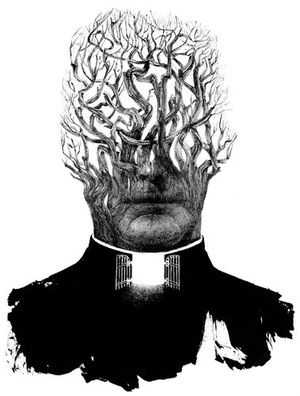
Picture: “The Priest that Preyed” by Sam Weber.

More here.

Tuesday, December 31, 2014

everything is an algorithm

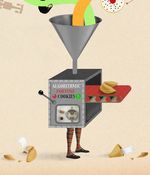
Algorithms_WEB1Tom Whipple at More Intelligent Life:

Algorithms decide what we are recommended on Amazon, what films we are offered on Netflix. Sometimes, newspapers warn us of their creeping, insidious influence; they are the mysterious sciencey bit of the internet that makes us feel websites are stalking us—the software that looks at the e-mail you receive and tells the Facebook page you look at that, say, Pizza Hut should be the ad it shows you. Some of those newspaper warnings themselves come from algorithms. Crude programs already trawl news pages, summarise the results, and produce their own article, by-lined, in the case of Forbes magazine, “By Narrative Science”.

Others produce their own genuine news. On February 1st, the Los Angeles Times website ran an article that began “A shallow magnitude 3.2 earthquake was reported Friday morning.” The piece was written at a time when quite possibly every reporter was asleep. But it was grammatical, coherent, and did what any human reporter writing a formulaic article about a small earthquake would do: it went to the US Geological Survey website, put the relevant numbers in a boilerplate article, and hit send. In this case, however, the donkey work was done by an algorithm.

more here.

An overdue study of the “experimental” novelist Ann Quin

159229391Juliet Jacques at The New Statesman:
Too little has been written about Brightonian novelist Ann Quin since her death in August 1973. Most of what has been has highlighted the striking opening sentence of her first novel, Berg, originally published by John Calder in 1964 and later reissued by Dalkey Archive Press:
A man called Berg, who changed his name to Greb, came to a seaside town intending to kill his father …’
Robert Buckeye’s Re: Quin, also published by Dalkey and described as an “unabashedly personal and partisan critical biography” of “one of the best and most neglected” British “experimental” writers of the 1960s, breaks with convention by opening with a quote from contemporary author-artistStewart Home about “The body of a dead princess” serving “as a metaphor for literature”. Buckeye then moves onto a Malcolm X speech from 1964, using it to illustrate his point that radical times need radical culture, before placing Quin into a post-war avant-garde with William S. Burroughs, Alexander Trocchi, B. S. Johnson and others.
more here.

the money and art problem

Schwabsky_survivingthemoment_ba_imgBarry Schwabsky at The Nation:

The price of things is crowding out their value. When it comes to art, the belief that the price of a work is its sole worth constitutes the peculiar accord between the hedge-fund millionaires driving prices into the stratosphere and the would-be revolutionaries who fantasize about the collapse of the art-market bubble and the whole hideous economic system of which it is a prominent sideshow. Is it even remotely possible to see the exhibition hanging in the Guggenheim Museum right now—paintings, drawings and photographs by the American artist Christopher Wool—as art instead of dollar signs, now that one of Wool’s paintings (not included in the exhibition, which is on view through January 22) has sold at auction for $26.5 million, just a year after another sold for what then seemed an already outlandish $7.7 million? According to a recent article in The Art Newspaper, speculation on Wool’s art over the past few years indicates that it “‘has become a parking lot for money,’ says one high-profile European curator. Like the market for Jean-Michel Basquiat, Wool’s market is in danger of being controlled by a small, powerful group of players, he [adds].”

“Parking one’s money” is apparently an everyday concept among those who have too much of it; a recent New York Times article headlined “Record Prices Mask a Tepid Market for Fine Art” quoted a market expert who accounted for the popularity of contemporary art among hedge-fund managers this way: “They can hang anything they want in their Manhattan co-ops or in Aspen and nobody can say that’s ugly because contemporary art has not been subjected to sustained critical appraisal. There are no markers of good or bad taste that have yet been laid down. It’s a safe place to park your money.”

more here.

America’s Secret History of Atomic Accidents

Gregory D. Koblenz in Foreign Affairs:

Fat_Man_Assembled_Tinian_1945_0Between 1950 and 1980, the United States experienced a reported 32 “broken arrows,” the military’s term for accidents involving nuclear weapons. The last of these occurred in September 1980, at a U.S. Air Force base in Damascus, Arkansas. It started when a young technician performing routine maintenance on a Titan II missile housed in an underground silo dropped a socket wrench. The wrench punctured the missile’s fuel tank. As the highly toxic and flammable fuel leaked from the missile, officers and airmen scrambled to diagnose the problem and fix it. Their efforts ultimately failed, and eight hours after the fuel tank ruptured, it exploded with tremendous force. The detonation of the missile’s liquid fuel was powerful enough to throw the silo’s 740-ton blast door more than 200 yards and send a fireball hundreds of feet into the night sky. The missile’s nine-megaton thermo­nuclear warhead — the most powerful ever deployed by the United States — was found, relatively intact, in a ditch 200 yards away from the silo.

The Damascus accident epitomizes the hidden risk of what the sociologist Charles Perrow has dubbed “normal accidents,” or mishaps that become virtually inevitable once a system grows so complex that seemingly trivial miscues can cause chain reactions with catastrophic results. As the journalist Eric Schlosser explains in his new book, Command and Control, “The Titan II explosion at Damascus was a normal accident, set in motion by a trivial event (the dropped socket) and caused by a tightly coupled, interactive system.” That system, he writes, was so overly complex that technicians in the control room could not determine what was happening inside the silo. And basic human negligence had only made things worse: “Warnings had been ignored, unnecessary risks taken, sloppy work done.”

More here.

Epistemology, Democracy, and the dynamic duo of 3 Quarks Daily

From 3:AM Magazine:

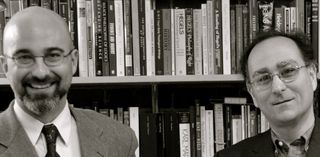
Aikin_Talisse222-1024x501Robert B. Talisse (on the right of the picture) and Scott F. Aikin (on the left of the picture) are the dynamic duo of 3Quarksdaily, thinking about the social nature and political significance of argument, about the two things the word ‘argument’ captures, about the straw man fallacy, about misfiring sound arguments, about the intimate connection between epistemology and democracy, about the nature of democracy, pragmatism and Rawls, about Dewey, Elizabeth Anderson and Pierce, about ‘pluralism’ as a halo term, about the truth orientation of our cognitive life, about Nietzsche’s challenge, about being fearless about the fear of regress, about the use of tone, about the need for political arguers and the dangers of cognitive insulation, about when to revise ones beliefs, about civility in argument and about why their new book is keyed to all contemporary democracies. Epistemocracy doubled!

3:AM: What made you become philosophers?

Scott Aikin: I was a Classics major at Washington University in St. Louis, and I was very lucky to have the patient instruction of Merritt Sale, George Pepe, and Carl Conrad there. We would have class discussion about some line from Seneca or Plato, and I’d get hung up on some philosophical issue. I originally thought it was because my ancient languages weren’t good enough, but it became clear that disagreements about virtue or knowledge aren’t solved by dictionaries, but by doing some philosophical work. You had to think about what virtue and knowledge really are. It was like my mind caught fire – I was eighteen years old and could dispute with the greats on what was good and true. Authority with these matters came with having reason on your side, not any status or anything like that. It was exhilarating, and that anti-authoritarian appeal of philosophical work still enlivens me.

Robert Talisse: I grew up in northeastern New Jersey, and I took a class in Philosophy in my senior year in high school. The class was a survey of the great philosophers’ ideas, paying nearly no mind to the arguments they devised. I liked that class, but it left me with the impression that Philosophy was a dead discipline, something that had ended in the 19th Century. So, when I entered William Paterson College (it was not yet a university then), I was not aware that it was possible to major in Philosophy. I spent my first semester as an Economics major, but once I discovered that there was a Philosophy major, I switched immediately. At the time William Paterson was a small commuter school filled with Business majors, yet somehow there was a critical mass of really serious Philosophy students, all of whom eventually earned PhDs, and many of whom are now professional philosophers. In any case, I quickly learned there that Philosophy is about challenging those (including oneself) who claim to know. Like Aikin, I latched on to the anti-authoritarianism of it all. And I soon realized that the impression of Philosophy that I got from my high school class – that it had died as a discipline – was exactly wrong. Philosophy is one of the few disciplines that is not dead. I eventually found myself with a PhD in Philosophy from CUNY and a job at Vanderbilt as a philosopher. To be honest, I’m not really sure how it all happened.

More here.

When Minority Students Attend Elite Private Schools

Judith Ohikuare in The Atlantic:

Cd1cf41e3Dalton is a prestigious, decades-old, K-12 prep school on New York City’s Upper East Side that filters its students into the best universities in the country. In 2010, Forbes reported that 31 percent of its students matriculated into MIT, Stanford, or an Ivy League institution. Former students include Anderson Cooper, Claire Danes, and Ralph Lauren’s daughter Dylan. Even imaginary peoplemake sure their families are present for parent-teacher conferences. For years, however, Dalton was largely inaccessible to minority and lower-income students. Maintaining its reputation as a top-tier place of learning did not require administrators to extend invitations to those groups.

When Idris Brewster and his friend Seun Summers entered kindergarten at Dalton in the late 1990s, they were one of the few students of color in their class. Idris and Seun’s parents believed that getting into Dalton was the first step to a life filled with accomplishments.

“Students that came out of independent schools were well-prepared on the level of networking, internships, job and school opportunities—you name it—and we were offered great financial-aid incentives,” Michèle Stephenson, Idris's mother, told me. “We thought this intensive, intellectually stimulating institution would open doors for Idris and take him anywhere he wanted to go.”

Fourteen years later, Idris's parents have released American Promise, a documentary that records the boys' personal and academic experiences from kindergarten through senior year of high school. The film reveals a hard truth about being a student of color at an elite school: Simply being admitted doesn't guarantee a smooth or successful educational journey.

More here. [Thanks to Anjuli Raza Kolb.]

In the Human Brain, Size Really Isn’t Everything

Carl Zimmer in The New York Times:

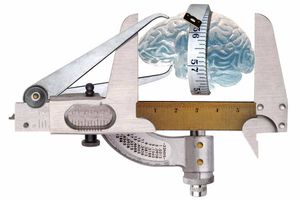
ZimmerThere are many things that make humans a unique species, but a couple stand out. One is our mind, the other our brain. The human mind can carry out cognitive tasks that other animals cannot, like using language, envisioning the distant future and inferring what other people are thinking. The human brain is exceptional, too. At three pounds, it is gigantic relative to our body size. Our closest living relatives, chimpanzees, have brains that are only a third as big.

Scientists have long suspected that our big brain and powerful mind are intimately connected. Starting about three million years ago, fossils of our ancient relatives record a huge increase in brain size. Once that cranial growth was underway, our forerunners started leaving behind signs of increasingly sophisticated minds, like stone tools and cave paintings. But scientists have long struggled to understand how a simple increase in size could lead to the evolution of those faculties. Now, two Harvard neuroscientists, Randy L. Buckner and Fenna M. Krienen, have offered a powerful yet simple explanation. In our smaller-brained ancestors, the researchers argue, neurons were tightly tethered in a relatively simple pattern of connections. When our ancestors’ brains expanded, those tethers ripped apart, enabling our neurons to form new circuits. Dr. Buckner and Dr. Krienen call their idea the tether hypothesis, and present it in a paper in the December issue of the journal Trends in Cognitive Sciences.

More here.

The Genius in All of Us

From The Genius in All of Us: New Insights into Genetics, Talent and IQ by David Shenk via delancyplace:

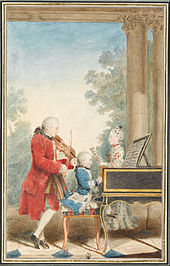
MozartGenius. The popular conception of genius is that it is an inborn gift, yet an increasingly large body of research suggests the opposite — that genius is always the product of sustained effort. A case in point — Mozart: “Standing above all other giftedness legends, of course, [is] that of the mystifying boy genius Wolfgang Amadeus Mozart, alleged to be an instant master performer at age three and a brilliant composer at age five. His breathtaking musical gifts were said to have sprouted from nowhere, and his own father promoted him as the 'miracle which God let be born in Salzburg.' “The reality about Mozart turns out to be far more interesting and far less mysterious. His early achievements — while very impressive, to be sure — actually make good sense considering his extraordinary upbringing. And his later undeniable genius turns out to be a wonderful advertisement for the power of process. Mozart was bathed in music from well before his birth, and his childhood was quite unlike any other. His father, Leopold Mozart, was an intensely ambitious Austrian musician, composer, and teacher who had gained wide acclaim with the publication of the instruction book … Treatise on the Fundamental Principles of Violin Playing. For a while, Leopold had dreamed of being a great composer himself. But on becoming a father, he began to shift his ambitions away from his own unsatisfying career and onto his children — perhaps, in part, because his career had already hit a ceiling: he was vice-kapellmeister (assistant music director); the top spot would be unavailable for the foreseeable future. “Uniquely situated, and desperate to make some sort of lasting mark on music, Leopold began his family musical enterprise even before Wolfgang's birth, focusing first on his daughter Nannerl. Leopold's elaborate teaching method derived in part from the Italian instructor Giuseppe Tartini and included highly nuanced techniques …

“Then came Wolfgang. Four and a half years younger than his sister, the tiny boy got everything Nannerl got — only much earlier and even more intensively. Literally from his infancy, he was the classic younger sibling soaking up his big sister's singular passion. As soon as he was able, he sat beside her at the harpsichord and mimicked notes that she played. Wolfgang's first pings and plucks were just that. But with a fast-developing ear, deep curiosity and a tidal wave of family know-how, he was able to click into an accelerated process of development. “As Wolfgang became fascinated with playing music, his father became fascinated with his toddler son's fascination — and was soon instructing him with an intensity that far eclipsed his efforts with Nannerl. Not only did Leopold openly give preferred attention to Wolfgang over his daughter; he also made a career-altering decision to more or less shrug off his official duties in order to build an even more promising career for his son.

…The tiny Mozart dazzled royalty and was at the time unusual for his early abilities. But today many young children exposed to Suzuki and other rigorous musical programs play as well as the young Mozart did — and some play even better. Inside the world of these intensive, child-centered programs, such achievements are now straightforwardly regarded by parents and teachers for what they are: the combined consequence of early exposure, exceptional instruction, constant practice, family nurturance, and a child's intense will to learn.

More here.

Tuesday Poem

Let Me Make This Perfectly Clear

Let me make this perfectly clear.
I have never written anything because it is a Poem.
This is a mistake you always make about me,
A dangerous mistake. I promise you
I am not writing this because it is a Poem.

You suspect this is a posture or an act
I am sorry to tell you it is not an act.

You actually think I care if this
Poem gets off the ground or not. Well
I don't care if this poem gets off the ground or not
And neither should you.
All I have ever cared about
And all you should ever care about
Is what happens when you lift your eyes from this page.

Do not think for one minute it is the Poem that matters.
Is is not the Poem that matters.
You can shove the Poem.
What matters is what is out there in the large dark
and in the long light,
Breathing.
.

.

by Gwendolyn MacEwen
from Afterworlds
McClelland & Stewart, 1987

Monday, December 30, 2014

Perceptions

Simon-beck-05

Simon Beck. #5.

“Using an orienteering compass, measuring tape and a pair of snowshoes, 54-year-old Simon Beck turns the hills and frozen lakes around Les Arcs into geometrically-perfect immaculate masterpieces. His intricate prints are huge, often spanning the equivalent size of six football fields, but while you’d be tempted to think Beck needs at least several days to complete just one of these patterns, he really only needs about 10 hours, on average.”

More here, here, and here.

Thanks to Walter Johnston.

Sunday, December 29, 2013

An Open Letter to the Makers of The Wolf of Wall Street, and the Wolf Himself

Cristina McDowell in LA Weekly:

ScreenHunter_476 Dec. 29 16.29I hate to be the bearer of bad news, dear Kings of Hollywood, but you have been conned.

Let me introduce myself. My name is Christina McDowell, formerly Christina Prousalis. I am the daughter of Tom Prousalis, a man the Washington Post described as “just some guy on trial for penny-stock fraud.” (I had to change my name after my father stole my identity and then threatened to steal it again, but I'll get to that part later.) I was eighteen and a freshman in college when my father and his attorneys forced me to attend his trial at New York City's federal courthouse so that he “looked good” for the jury — the consummate family man.

And you, Jordan Belfort, Wall Street's self-described Wolf: You remember my father, right? You were chosen to be the government's star witness in testifying against him. You had pleaded guilty to money laundering and securities fraud (it was the least you could do) and become a government witness in two dozen cases involving your former business associate, but my father's attorneys blocked your testimony because had you testified it would have revealed more than a half-dozen other corrupt stock offerings too. And, well, that would have been a disaster. It would have just been too many liars, and too many schemes for the jurors, attorneys or the judge to follow.

But the records shows you and my father were in cahoots together with MVSI Inc. of Vienna, e-Net Inc. of Germantown, Md., Octagon Corp. of Arlington, Va., and Czech Industries Inc. of Washington, D.C., and so on — a list of seemingly innocuous, legitimate companies that stretches on. I'll spare you. Nobody cares. None of these companies actually existed, yet all of them were taken public by the one and only Wolf of Wall Street and his firm Stratton Oakmont Inc in order to defraud unwitting investors and enrich yourselves.

More here.