Mournful Creatures

AnimalmourningNEW

Virginia Morell in Lapham's Quarterly:

Animals have a great advantage over man: they never hear the clock strike, however intelligent they may be; they die without any idea of death; they have no theologians to instruct them…Their last moments are not disturbed by unwelcome and often objectionable ceremonies; it costs them nothing to be buried; no one starts lawsuits over their wills.

—Voltaire
Who can say what cows feel, when they surround and stare intently on a dying or dead companion?
—Charles Darwin

It is often said that our understanding and knowledge of death separates the human animal from all other animals. We alone know that we will die—that one day, suddenly or slowly, our life, our loves, our dreams will end. Surely this awareness sets us apart from the rest of the animal kingdom, we say, pointing to some of our greatest art, music, and literature—all inspired by what we know: that death awaits every living being. And yet, how very odd it is that we should be the only animal to know what life ultimately has in store for us. We share biological histories and physiologies DNA, eyes, muscles, nerves, neurons, hormones—with other animals, and these may lead to similar behaviors, thought processes, and emotions—even about death.

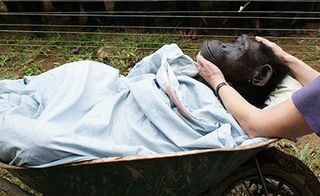
Take the case of Thomas, a nine-year-old chimpanzee who died in 2010 at the Chimfunshi Wildlife Orphanage Trust in Zambia, home to more than one hundred chimps. Research scientists filmed the reactions of one community of forty-three chimpanzees to Thomas’ corpse; thirty-eight of them gathered around and stayed by his side for almost twenty minutes. During that time, some of the chimps gently touched his body, smelled and studied him closely. One of those visitors was Masya, a mother carrying her dead infant (at the time, there was an outbreak of a respiratory illness among the chimps). A few days earlier, Masya had been seen placing her dead child in a grassy, sunlit patch and retreating to the shade, where she sat watching, her eyes rarely straying from her infant. Every few minutes, she strode back to the clearing to inspect her baby’s body. At times she did so hurriedly, jumping up and rushing forward as if she thought she’d detected a stirring. She studied her child’s face intently, peered into her gaping mouth and wide eyes, and brushed away the flies. Finally, she placed her knuckles softly against her infant’s neck—hoping, it seems, for any sign of life.

More here.

At year’s end, Egypt maintains little tolerance for dissent

Ashraf Khalil at Al Jazeera:

ScreenHunter_473 Dec. 27 16.15Twenty-one schoolgirls from Alexandria, in northwest Egypt, were sentenced to 11 years in prison last month for demonstrating in favor of deposed President Mohammed Morsi and handing out balloons bearing the Muslim Brotherhood's yellow four-fingers symbol. The symbol commemorates the bloody August clearing of a Brotherhood sit-in outside Cairo's Rabaa el-Adaweya Mosque.

“These women and girls should have never been arrested,” said Hassiba Hadj Sahraoui, deputy director for the Middle East and North Africa at Amnesty International, in a postverdict statement. “They are now prisoners of conscience and must be released immediately and unconditionally.”

Though the women's sentences were quickly reduced on appeal in early December — the seven minors received three months' probation, the rest suspended one-year sentences — the incident is perhaps the most disturbing example of a crackdown being carried out against supporters of the former president and his organization, the Muslim Brotherhood.

With much of the Brotherhood's leadership, including Morsi, locked up or in exile, authorities have in recent months rounded up thousands of alleged members in mass arrests.

More here.

on prison and the cold

Winter-cityHoward Tharsing at Threepenny Review:

When I got out of County Jail following my second arrest, one of the friends I wanted to get in touch with right away was HG. When I texted him the news that I was walking out of the jail at 850 Bryant Street, breathing freely for the first time in ten days, he said the strangest thing in reply: “I don’t know what I should say to you,” he said.

I have been often struck by the fact that HG constantly describes himself as driven first and foremost by Jewish guilt. He complains all the time about his mother and her oppressive concern with propriety. (Indeed, as someone whose mother is no longer living, I have found his denigration of her and the bitter feelings he expresses about her make me uncomfortable.)

So at first I took his remark to mean that he felt he needed some formal or conventional words to use on the occasion, that he was searching his mind for something his mother would say to a friend just released from jail. But his mother, no doubt, would not have a friend who had been released from jail because she would not have a friend who was in jail in the first place.

more here.

Modernity, enchantment, and Fictionalism

Footbridge-between-worldsMichael Saler at The Immanent Frame:

The stern visage of Max Weber looms over discussions of modernity and enchantment, as does the sunnier countenance of Charles Taylor. Perhaps they should be joined by the open faced, bluntly spoken, and allegedly poker wielding Ludwig Wittgenstein. This choice might seem counter-intuitive. Wittgenstein did not write much about enchantment, and is more often considered a disenchanter who used the tools of philosophy to dispel illusions brought about by linguistic misuse. As he wrote, “Philosophy is a battle against the bewitchment of our intelligence by means of language.”

Nevertheless, enchantment was central to Wittgenstein’s outlook on life. By enchantment he meant a sense of wonder regarding the world. He described wonder as his “experience par excellence…when I have it I wonder at the existence of the world. And I am then inclined to use such phrases as ‘how extraordinary that anything should exist’ or ‘how extraordinary that the world should exist.’” Plato and Aristotle claimed that philosophy begins in wonder, and Wittgenstein’s famous last words—“Tell them I’ve had a wonderful life”—suggests it ends there as well. His later philosophy aimed at re-enchanting the world by re-describing it in new and unexpected ways. In so doing, the world does not change—things remain as they are—but our fundamental orientation to the world changes: “We see, not change of aspect, but change of interpretation.” As a result, one becomes aware of how rich, contingent and variable the world is.

more here.

People and Homes of Aligarh

Meher Ali in Himal Southasian:

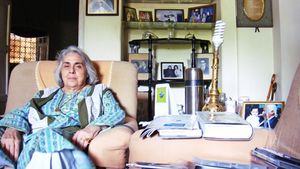
AftabI have always had a fascination with old homes. I grew up in one – Abid Manzil in Aligarh, built in 1935. Well-known as the home of Aligarh Muslim University, the town in western Uttar Pradesh saw many Indian Muslims migrate there in the early 1900s from different parts of the erstwhile United Provinces. This included the Muslim zamindar elites who came from neighbouring principalities as well as working-class and middle-class families from eastern Uttar Pradesh. Many wanted to give their children the chance of a good education at the university. These people brought their cultures and histories with them, blending with the Islamic yet liberal intellectual philosophy propagated by AMU and spearheaded by its founder, Sir Syed Ahmed Khan. The homes of these people, mostly built in the 1930s, are evidence of this syncretic tradition. On my most recent visit to Aligarh I realised that these pre-Partition houses were gradually disappearing. I met with some of the remaining families, who wanted to talk about the rich history of their homes, the culture and ways of life they embodied, and the measures they were currently taking to secure a future for their homes and themselves. This photo essay tells the story of these homes and the people who live in them.

Sir Syed Ahmed Khan, the founder of Aligarh Muslim University (AMU) was Scheherazade Alim’s paternal great, great-grandfather. She spent her childhood in Aftab Manzil, named after her maternal great-grandfather Aftab Ahmed Khan, who built the house in 1904. Scheherazade Begum studied law at Oxford and became a barrister and has taught law at AMU. After two decades of living and working in Dubai, Scheherazade Begum and her husband Abdul Alim Khan returned to Aligarh and to Aftab Manzil in 1997, and have lived there since. Aftab Manzil saw the comings and goings of influential men and women. One of them was E M Forster. Scheherazade Alim’s grandfather Sir Ross Masood was a close friend of the writer, who dedicated A Passage to India to him. Masood became the Vice Chancellor of AMU in 1929, a position he held for three years. The photograph on the right was taken in Italy in 1911. The photograph on the left shows Scheherazade Begum with Forster. It was taken in England in 1962. She herself cultivated a deep bond with the writer, calling him “Forster Chacha”.

More here. (Note: In memory of our mother, Begum Ali Raza, who grew up in Aligarh, the hub of activity for nineteenth and early twentieth century enlightened Muslims dedicated to modernizing and making higher education available to the common Muslims for the first time)

On narcissism: the mirror and the self

Rachel Cusk in New Statesman:

ObamaSylvia Plath said that writers are “the most narcissistic people”: whatever the truth of that statement, one can assume at least that her use of the term was correct. Freud bequeathed the modern era a tangled concept in narcissism, and literary culture has shown itself as apt as any other to misappropriate it. Yet it is the fashion to see people increasingly as one of two types – a narcissist, or the victim of one – so perhaps it is worth asking precisely what is meant by the word, which has come to encapsulate a cultural malaise.

Alongside the struggle in the modern era to define and enshrine narcissism as a psychiatric condition, the term has been appropriated as a shorthand for the general idea of self-obsession. This is a diverse concept with a large vocabulary of its own, but that vocabulary is increasingly abandoned in favour of a word whose ill-defined connotations of mental illness give it a strange force. What we think narcissism is, and how much of what we see seems to answer to it, depends in reality on the moral status we accord the self: the very forcefulness of “narcissism” lies in the fact that it illuminates the person saying it as much as the person against whom it is said. And indeed narcissism, classically, is a business of echo and reflection that can give rise to a narrative of maddening circularity, of repetition and counter-repetition, in which self and other struggle to separate and define themselves.
More here.

Thursday, December 26, 2013

Does journalism have a future?

Nicholas Lemann in the Times Literary Supplement:

P27_Lemann_web_393323hPeople tend to have little sympathy with accounts of crisis in a trade or profession. It comes across as evidence of excessive self-preoccupation, or as a prelude to special pleading before government. Journalism’s difficulties seem to be drawing this kind of reaction from many people who aren’t journalists. Isn’t the press still a swaggering, even power-abusing actor in politics and society? Doesn’t it command vast attention and resources? Isn’t more news being read by more people than ever before?

Out of Print: Newspapers, journalism and the business of news in the digital age shows that something really has changed quite suddenly and dramatically in the press industry. George Brock is a veteran newspaperman, and his main concern in this clear-headed, synoptic and never whiny book is with the institutions where he has spent most of his career. In the United States, newspaper advertising revenue – the main source of economic support by far – was $63.5 billion in 2000. By 2012 it had fallen to $19 billion. (During the same period, advertising revenue at Google went from zero to $46.5 billion.) Employment in the American newspaper industry fell by 44 per cent between 2001 and 2011. In the European Union, newspaper revenue is falling by more than 10 per cent a year. In the UK, newspaper circulation has dropped by more than 25 per cent during the twenty-first century. It would be hard to think of another industry that is going through such a sudden collapse.

More here.

I REGRET TO INFORM YOU THAT MY WEDDING TO CAPTAIN VON TRAPP HAS BEEN CANCELED

Melinda Taub in McSweeney's:

ScreenHunter_472 Dec. 26 15.05Dear friends, family, and Austrian nobility,

Captain Von Trapp and I are very sorry to inform you that we no longer plan to wed. We offer our deepest apologies to those of you who have already made plans to travel to Salzburg this summer.

Those of you on the Captain’s side of the guest list are probably aware of the reason for the change of plans. I’m sure by now you have received that charming “Save the date!” card in the shape of a mountain goat from the Captain and his new fiancée, Maria.

I must confess to being rather blindsided by the end of our relationship. It seems Captain Von Trapp and I misunderstood each other. I assumed he was looking for a wife of taste and sophistication, who was a dead ringer for Tippi Hedren; instead he wanted to marry a curtain-wearing religious fanatic who shouts every word she says.

More here. [Thanks to Feisal Naqvi.]

The 2013 National Geographic Photography Contest Winners

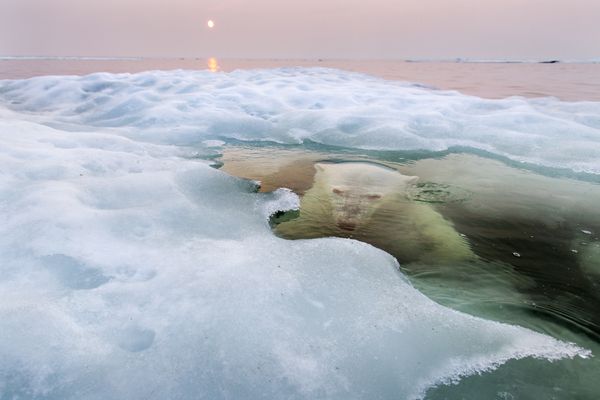
Ngpc2013-grandprize-nature-winner

Monica Corcoran in National Geographic:

During the month of November, National Geographic magazine invited photographers from around the world to submit photos in three categories: People, Places and Nature. We received more than 7,000 entries from over 150 countries, with amateur and professional photographers across the globe participating. You can view all of the winning images here.

We asked Senior Photo Editor Susan Welchman, and National Geographiccontributing photographers Stephanie Sinclair and Ed Kashi to judge this year’s photo contest at the Society’s headquarters in Washington, DC, on December 9th.

Imagine a darkened room with images projected on a huge screen, and almost total silence except for the ‘yeas’ and ‘nays’ of the judges and the occasional discussion over specific photos. Several hours later, after multiple rounds of editing, the finalists became clear and the real debate began.

Ultimately, the judges unanimously agreed the Grand Prize should be awarded to Paul Souders for his image of a polar bear lurking beneath melting sea ice in Hudson Bay, Canada. After realizing the photographer had won an award in another contest for a very similar photo, we thought it would be interesting to hear from Paul directly.

More here.

Mournful Creatures: animals confront death

AnimalmourningNEWVirginia Morrell at Lapham's Quarterly:

It is often said that our understanding and knowledge of death separates the human animal from all other animals. We alone know that we will die—that one day, suddenly or slowly, our life, our loves, our dreams will end. Surely this awareness sets us apart from the rest of the animal kingdom, we say, pointing to some of our greatest art, music, and literature—all inspired by what we know: that death awaits every living being. And yet, how very odd it is that we should be the only animal to know what life ultimately has in store for us. We share biological histories and physiologies DNA, eyes, muscles, nerves, neurons, hormones—with other animals, and these may lead to similar behaviors, thought processes, and emotions—even about death.

Take the case of Thomas, a nine-year-old chimpanzee who died in 2010 at the Chimfunshi Wildlife Orphanage Trust in Zambia, home to more than one hundred chimps. Research scientists filmed the reactions of one community of forty-three chimpanzees to Thomas’ corpse; thirty-eight of them gathered around and stayed by his side for almost twenty minutes. During that time, some of the chimps gently touched his body, smelled and studied him closely.

more here.

Nine years ago today, the massive Indian Ocean Tsunami struck

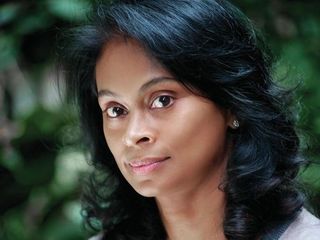
By chance, I was having a late dinner in Brooklyn with a Sri Lankan friend at the moment the tsunami struck Sri Lanka nine years ago today but we remained blissfully unaware of what had happened until the next morning. We also did not know at the time what had just happened to our mutual friend Sonali Deraniyagala and her family who were vacationing on a beach in Sri Lanka.

This is from NPR:

Sd-credit-ann-billingsley-44e965818a60dd070b47689ca78d7ebf4e96bec1-s3-c85Economist Sonali Deraniyagala lost her husband, parents and two young sons in the terrifying Indian Ocean tsunami of 2004. They had been vacationing on the southern coast of her home country Sri Lanka when the wave struck. Wave is her brutal but lyrically written account of the awful moment and the grief-crazed months after, as she learned to live with her almost unbearable losses — and allow herself to remember details of her previous life. In this scene, Deraniyagala revists both the house of her parents in Colombo, which has been emptied and closed up since the tsunami, and Yala National Park, where she was when the wave struck.

[Excerpt from 'Wave' By Sonali Deraniyagala:]

Someone had removed the brass plate with my father's name on it from the gray front wall. It had his name etched in black italics. I sat in the passenger seat of my friend Mary-Anne's car, my eyes clinging to the holes in the wall where that brass plate was once nailed.

This had been my parents' home in Colombo for some thirty-five years, and my childhood home. For my sons it was their home in Sri Lanka. They were giddy with excitement when we visited every summer and Christmas. Vik took his first steps here, and Malli, when younger, called the house “Sri Lanka.” And in our last year, 2004, when Steve and I had sabbaticals from our jobs and the four of us spent nine months in Colombo until September, this house was the hub of our children's lives.

This was where we were to return to on the afternoon of the twenty-sixth of December. My mother had already given Saroja, our cook, the menu for dinner. This was where they didn't come back to. Now, six months after the wave, I dared to set eyes on this house.

I was wary as I sat in Mary-Anne's car, which was parked by our front wall. I didn't want to look around. I was afraid of seeing too much. But I couldn't help myself, I peeked.

More here. Also see this. Wave is also on the New York Times' 10 Best Books of 2013 list.

the daily rituals of great minds

Hart_12_13Christopher Hart at Literary Review:

Erik Satie may have worn chestnut-coloured velvet suits, eaten thirty-egg omelettes and founded the Church of Jesus Christ the Conductor, but this was just bohemian decoration. He also walked 12 miles into and out of Paris every day, composing all the way. In his introduction to this wonderfully entertaining little book, Mason Currey quotes V S Pritchett: 'Sooner or later, the great men turn out to be all alike. They never stop working. They never lose a minute. It is very depressing.'

It should come as no surprise, perhaps, that most high-achieving creative people who have given something permanent to the world are not really in the slightest bit bohemian. They discover for themselves Flaubert's famous advice that one should live like a bourgeois and put one's bohemianism into one's work.

Food is often of little importance, mere brain fuel. Patricia Highsmith lived on vodka, cereal and bacon and eggs. For lunch Ingmar Bergman ate a revolting sort of baby food made up of yoghurt and strawberry jam which he mixed in with cornflakes. In the evening he enjoyed watching Dallas.

more here.

Massimo Pigliucci responds to David Johnson’s 3QD essay on New Atheism

Massimo Pigliucci in Rationally Speaking:

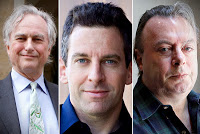
AtheistsI am not particularly friendly to the so-called New Atheism. While I respect (and often respectfully disagree with) Dan Dennett, I have been a fairly strong critic of Dawkins, Harris, and the late Hitchens(not to mention other NA’s, such as Jerry Coyne). I have even written a technical paper analyzing the NA movement from a philosophical perspective.

So it was with some interest that I recently read a piece by David V. Johnson at 3QuarksDaily, entitled “A refutation of the undergraduate atheists,” which promised to deliver some guilty pleasure for my weekend readings. It did deliver, but only in part. In the following I will outline Johnson’s arguments and where, I think, he goes astray. I have also invited him to respond here at Rationally Speaking, and he has graciously agreed, so stay tuned for a follow up.

Johnson adopts the (obviously derisive) language of philosopher Mark Johnston, referring to the NA as “undergraduate atheists” (notice that while Johnson seems to be some kind of deist, Johnson is an atheist). Since the NA’s themselves are notorious for their, shall we say, aggressive sarcasm, I think that’s a fair enough shot.

More here.

THE MAN BEHIND AVAAZ

From More Intelligent Life:

Our Top 10 of 2013. No. 7: Can we change the world, one click at a time? Ricken Patel, a young Canadian, thinks so, and he has 20m followers to show for it. Profile by Robert Butler.

Ricken%20cafeAvaaz is an online campaigning organisation that’s halfway between an NGO and a megaphone. After only six years, it has 20m followers—more than the population of the Netherlands. Avaaz, which means “voice” or “song” in Persian, was set up with the overarching goal of closing the gap between “the world we have and the world most people everywhere want”. From the outset it has been unashamedly idealistic and aspirational. Its executive director is Ricken Patel, and his ambition goes back half a lifetime.

…IF YOU HAD to pinpoint the moment when Ricken Patel first sensed this gap in the world that needed closing, it might be the day he went to primary school. His family had moved to Canada from Kenya in the 1970s, an anxious time for Indians in east Africa after Idi Amin expelled 60,000 Asians from Uganda and seized their assets. Patel grew up in Alberta, 35 minutes by bus from the nearest school. It was a First Nations school on a reservation; he was the only child at the time who wasn’t white and wasn’t First Nation. He was witnessing the end of the Cree culture. “It was a deep annihilation of a people’s culture and it was conscious,” he tells me over lunch. “They took a nomadic people and confined them to a reserve.” He had a friend, Michael, whose front door was broken (“the cold wind blew in”); the family slept in a tent inside the house and ate flour, having nothing else. “History was a very live thing.” On his first day at school, he went to the playground, a large field, and came across a two-year-old boy sitting on his own in the middle of an old tyre. There was no one else around. Patel, aged five, went up and said hello. The two-year-old said, “Go fuck yourself.”

More here.

songwriting

Keith Richards in delanceyplace:

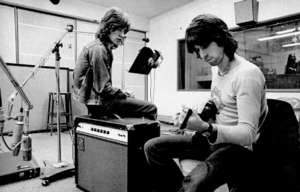
Keith“One hit requires another, very quickly, or you fast start to lose alti­tude. At that time you were expected to churn them out. 'Satisfac­tion' is suddenly number one all over the world, and Mick and I are looking at each other, saying, 'This is nice.' Then bang bang bang at the door, 'Where's the follow-up? We need it in four weeks.' And we were on the road doing two shows a day. You needed a new single every two months; you had to have another one all ready to shoot. And you needed a new sound. If we'd come along with another fuzz riff after 'Satisfaction,' we'd have been dead in the water, repeating with the law of diminishing returns. Many a band has faltered and foundered on that rock. 'Get Off of My Cloud' was a reaction to the record companies' demands for more — leave me alone — and it was an attack from another direction. And it flew as well.

“And because you've been playing every day, sometimes two or three shows a day, ideas are flowing. One thing feeds the other. You might be having a swim or screwing the old lady, but somewhere in the back of the mind, you're thinking about this chord sequence or something related to a song. No matter what the hell's going on. You might be getting shot at, and you'll still be 'Oh! That's the bridge!' And there's nothing you can do; you don't realize it's happening. It's totally subconscious, unconscious or whatever. The radar is on whether you know it or not. You cannot switch it off. You hear this piece of conversation from across the room, 'I just can't stand you anymore'… That's a song. It just flows in. And also the other thing about being a songwriter, when you realize you are one, is that to provide ammo, you start to become an observer, you start to distance yourself. You're constantly on the alert. That faculty gets trained in you over the years, observing people, how they react to one another. Which, in a way, makes you weirdly distant. You shouldn't really be doing it. It's a little of Peeping Tom to be a songwriter. You start looking round, and everything's a subject for a song. The banal phrase, which is the one that makes it. And you say, I can't believe nobody hooked up on that one before! Luckily there are more phrases than songwriters, just about.”

More here.

Thursday Poem

Similes

You give of yourself only partially
refusing to give me your body
yet my body doesn’t give up, it persists

Am I not like Ahab
chasing across the vast ocean
after a white whale
a primordial creature of the depths
whose formidable motion
may yet break my boat
sink it under the breakers

Still, I’d rather stick to the eastern mentality
to depict my state of utter sentimentality
I’ve become addicted to chasing after deer
I’m the hunter with an arrow in his heart
I’m the hunted hunter
hunted by the deer
.

by Mordechai Geldman
from Halachti Shanim Le-Tzidcha
publisher: Hakibbutz Hameuchad, Mossad Bialik, 2011
translation: 2013, Tsipi Keller

Wednesday, December 25, 2013

Christmas ghost stories: Ofodile

Chimamanda Ngozi Adichie in The Guardian:

Christmas-ghost-stories-i-009On the day our new neighbours came to our house, my brother Ofodile bit my mother on the arm. She was feeding him, pushing soft mashed yam into his mouth. She did it quickly, she always did, spoonful chasing another spoonful, then a plastic cup of water forced into his mouth to make him swallow. She did it silently, without really looking at him, her movements thick with duty, in his bedroom with the foam-carpeted floor that caught his falls. The door was always shut. Never ajar. When guests visited, the door was not just shut but locked, Ofodile sleeping inside. Sometimes she asked me to lock his door and I did it as she did, key turned swiftly, not looking in to see him first.

His piercing cries scared me. Sounds that ached and keened. High drawn-out screams filled with loneliness. They shattered the silence of every room in the house, and I would press my hands against my ears. My mother said that since he was fed and dry, he was merely expressing himself, and his crying would exhaust him and bring sleep. She would shut the door and let him cry, in that bedroom that was his life, where he ate and cried and slept. He slept more now that my mother was taking care of him. He always slept. He slept for hours and he woke up red-eyed and screaming, and my mother pushed food into his mouth between his cries. She had been taking care of him for almost a year, since she lost her job. When the new state was created, she became, overnight, a native of Anambra, a non-indigene who could no longer work in Enugu. She found another job in Anambra, and was preparing to start – she would go on Mondays and come back on Thursdays – when, one evening, a lump began to swell on Ofodile's forehead. The nanny, Ukalechi, said Ofodile had not fallen down. Then she said Ofodile could not have fallen down, then she said she did not know if he had fallen down, because most of the time when she was taking care of him, he was alone in his room while she stayed in the parlour and watched TV.

More here.