Ukraine and the other europe

Yermolenko_468wVolodymyr Yermolenko at Eurozine:

There is the Europe that presents a more or less emotionless face of rules and regulations. This Europe ends somewhere along the frontier between Germany and Poland. A kind of Euro-protestantism prevails: it has lost faith in European civilization but preserved its sense of morality. The European idea has been transformed into a set of rules and a collection of institutional procedures. Where there is no faith, rules become paramount.

The other Europe is spontaneous and emotional, the Europe of faith. This is Young Europe, comprising in the main the countries of the former socialist bloc. For the people living in these countries, Europe is still a vision, an ideal, utopia. They believe in Europe but often ignore its rules. For them Europe is a kind of mystical ecstasy in which they can forget about legal codes. In the face of Euro-catholicism and Euro-orthodoxy, they are filled with faith and ready to die for Europe, but not always ready to live for it. For them rules are too trivial for them to be concerned with.

Us Ukranians, we are that other Europe.

more here.

Wednesday Poem

Phone Survey

We're doing a phone survey, asking
average people like yourself, attractive, cynical, smart, etc.,
people who cook with garlic, who, if married,
it's not the first time. People who have had
two or more jobs in the last three years.
We want to know what your preferred response is
when you hear,
if in fact you do hear,
the voices. Shall I clarify?
Voices that converse
on the great unhappiness and failure
that is yours. How often
would you swear you're not drunk, no,
but the trees are swaying. We're calling to ask
if you ever get confused and mistake
the swaying of trees for the lapping of water,
until you can't get your bearing. Is that when
the voices advise you, smooth
as a nail going in? Are there certain words that,
can I say, sneak in from behind, know all
the back entrances? Would you agree
the secret of their strength
is that they will not let you give in
to your hunger? How often
all you've said and all you've done, torn
like meat from a bone. Is that when you go out, walk
past lighted windows? Go to a movie? Have a coke?
Or do you hang around, drift off
till the voices wake you with a jolt or slap: “Payback time.”
Like a street person in front of a diner, begging for change,
who will not let you go in and get your lousy cup of coffee
though the sign on the diner flashes: OPEN ALL NIGHT.
Are the voices familiar with, say,
streets you walked as a kid,
torn signs, dead trees?
We're asking if the voices, now or in the past,
have ever told you that you have to go back
to the path by the precipice. Because that is your path.
Would you mind answering? Or am I interrupting something?
Shall I call back later? What time would be best?
.

by Carole Glasser Langille
from Late In A Slow Time
Mansfield Press, 2003.

Harlem in Color

Genevieve Fussell in The New Yorker:

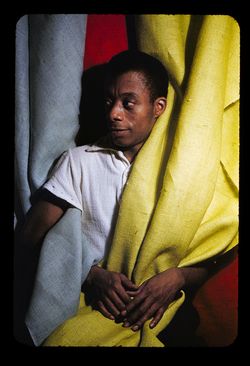
Baldwin In “White Mischief,” in this week’s issue of the magazine, Kelefa Sanneh writes about Carl Van Vechten, a “New York hipster and literary gadabout” who was an unlikely champion of the African-American experience as it unfolded on the streets of Harlem in the nineteen-twenties. Van Vechten, a white man from the Midwest, arrived in New York in 1906 and took a job as a music and dance critic for the Times. He was quickly drawn to the night clubs of Harlem, and became, in his own words, “violently interested in Negroes.” Sanneh explains how Van Vechten eventually considered himself not only a supporter of the Harlem Renaissance but a vital part of it. He and his second wife, the actress Fania Marinoff, hosted integrated parties at their apartment on West Fifty-fifth Street; he also developed close friendships with black artists like Langston Hughes, who, Sanneh writes, was “widely perceived as Van Vechten’s protégé.”

Although Van Vechten made his name as a writer, he began to explore photography in the early nineteen-thirties, shooting black-and-white portraits of people like Orson Welles, Salvador Dali, and Georgia O’Keeffe. In 1939, Van Vechten switched to color film, after discovering the vibrancy of Kodachrome. He started photographing luminaries of the Harlem Renaissance, including W. E. B. Du Bois and Zora Neale Hurston, many of them his friends, posing his subjects against colorful swaths of silk and velvet or brightly patterned tapestries. Van Vechten’s photographic project, which lasted a quarter of a century, represents a rich and lasting record of one man’s interest in a culture that he believed represented the “essence of America.”

Picture: James Baldwin, 1955.

More here. (Note: One post throughout February will be dedicated to Black History Month.)

A review of Her

Ray Kurzweil in KurzweilAI:

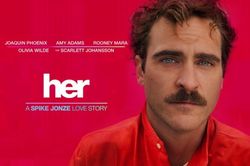
HerHer, written, directed and produced by Spike Jonze, presents a nuanced love story between a man and his operating system. Although there are caveats I could (and will) mention about the details of the OS and how the lovers interact, the movie compellingly presents the core idea that a software program (an AI) can — will — be believably human and lovable. This is a breakthrough concept in cinematic futurism in the way that The Matrix presented a realistic vision that virtual reality will ultimately be as real as, well, real reality. Jonze started his feature-motion-picture career directing Being John Malkovich, which also presents a realistic vision of a future technology — one that is now close at hand: being able to experience reality through the eyes and ears of someone else. With emerging eye-mounted displays that project images onto the wearer’s retinas and also look out at the world, we will indeed soon be able to do exactly that. When we send nanobots into the brain — a circa-2030s scenario by my timeline — we will be able to do this with all of the senses, and even intercept other people’s emotional responses.

As a movie, I thought Her was very successful, with a well-crafted script, excellent directing, and outstanding performances by Joaquin Phoenix, who plays the lonely, needy and nerdy protagonist Theodore, and Scarlett Johansson, who provides the sultry and seductive voice for Samantha, the OS. As a couple, Theodore and Samantha have their differences, which, as with many romantic stories, provide a dramatic tension. The most significant difference is that he has a body and she does not. Their relationship is seen as real by some observers (for example, by Amy, another love interest of Theodore’s, played by Amy Adams), and as unreal by other observers (for example, by Theodore’s alienated and ultimately ex-wife, Catherine).

More here.

Daniel Dennett: What can cognitive science tell us about free will?

Some of our readers attended this lecture by Daniel C. Dennett which was the latest in the series of annual lectures arranged by my sister Azra Raza in memory of her late husband, Harvey D. Preisler. Azra has kindly agreed to let me post the full video of the event here.

Sheherzad Preisler's tribute to her father, Harvey Preisler: 00:00

Azra Raza's introduction of Dan Dennett: 11:20

Dan Dennett: 21:00

Question and Answer Period: 1:20:17

Why Nutrition Is So Confusing

Gary Taubes in the New York Times:

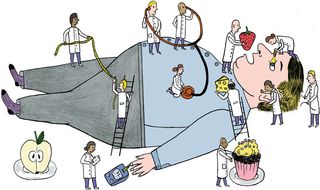
NUTRITION-master675Nearly six weeks into the 2014 diet season, it’s a good bet that many of us who made New Year’s resolutions to lose weight have already peaked. If clinical trials are any indication, we’ve lost much of the weight we can expect to lose. In a year or two we’ll be back within half a dozen pounds of where we are today.

The question is why. Is this a failure of willpower or of technique? Was our chosen dietary intervention — whether from the latest best-selling diet book or merely a concerted attempt to eat less and exercise more — doomed to failure? Considering that obesity and its related diseases — most notably, Type 2 diabetes — now cost the health care system more than $1 billion per day, it’s not hyperbolic to suggest that the health of the nation may depend on which is the correct answer.

Since the 1960s, nutrition science has been dominated by two conflicting observations. One is that we know how to eat healthy and maintain a healthy weight. The other is that the rapidly increasing rates of obesity and diabetes suggest that something about the conventional thinking is simply wrong.

More here. [Thanks to Syed Tasnim Raza.]

Tuesday, February 11, 2014

Is Atheism Irrational?

597px-AlvinPlantinga

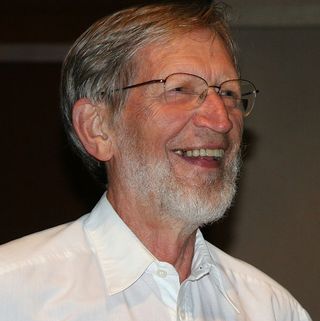
Alvin Plantinga makes the case to Gary Gutting in The NYT's The Stone (image from Wikimedia Commons):

G.G.: You say atheism requires evidence to support it. Many atheists deny this, saying that all they need to do is point out the lack of any good evidence for theism. You compare atheism to the denial that there are an even number of stars, which obviously would need evidence. But atheists say (using an example from Bertrand Russell) that you should rather compare atheism to the denial that there’s a teapot in orbit around the sun. Why prefer your comparison to Russell’s?

A.P.: Russell’s idea, I take it, is we don’t really have any evidence against teapotism, but we don’t need any; the absence of evidence is evidence of absence, and is enough to support a-teapotism. We don’t need any positive evidence against it to be justified in a-teapotism; and perhaps the same is true of theism.

I disagree: Clearly we have a great deal of evidence against teapotism. For example, as far as we know, the only way a teapot could have gotten into orbit around the sun would be if some country with sufficiently developed space-shot capabilities had shot this pot into orbit. No country with such capabilities is sufficiently frivolous to waste its resources by trying to send a teapot into orbit. Furthermore, if some country had done so, it would have been all over the news; we would certainly have heard about it. But we haven’t. And so on. There is plenty of evidence against teapotism. So if, à la Russell, theism is like teapotism, the atheist, to be justified, would (like the a-teapotist) have to have powerful evidence against theism.

G.G.: But isn’t there also plenty of evidence against theism — above all, the amount of evil in a world allegedly made by an all-good, all-powerful God?

A.P.: The so-called “problem of evil” would presumably be the strongest (and maybe the only) evidence against theism. It does indeed have some strength; it makes sense to think that the probability of theism, given the existence of all the suffering and evil our world contains, is fairly low. But of course there are also arguments for theism. Indeed, there are at least a couple of dozen good theistic arguments. So the atheist would have to try to synthesize and balance the probabilities.

More here.

When did faith start to fade?

Adam Gopnik in The New Yorker:

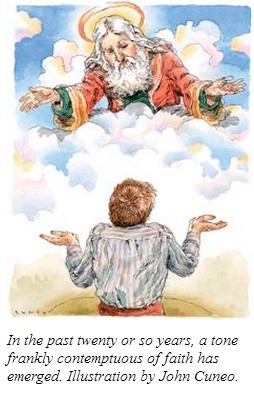
ScreenHunter_486 Feb. 11 16.23In Tom Stoppard’s 1970 play “Jumpers,” the philosopher hero broods unhappily on the inexorable rise of the atheist: “The tide is running his way, and it is a tide which has turned only once in human history. . . . There is presumably a calendar date—a moment—when the onus of proof passed from the atheist to the believer, when, quite suddenly, the noes had it.” Well, when was that date—when did the noes have it? In 1890? In 1918, after the Great War? In 1966, when Time shocked its readers with a cover that asked whether God was dead? For that matter, do the noes have it? In most of the world, the ayes seem to be doing just fine. Even in secularized Manhattan, the Christmas Eve midnight Mass is packed tight with parishioners, and the few who came for the music are given dirty looks as they sheepishly back out after the Vivaldi.

The most generous poll never seems to find more than thirty per cent of Americans saying they are “not religious or not very religious,” though the numbers get up to around fifty per cent in Europe. But something has altered in the course of a century or so. John Stuart Mill said in the early nineteenth century that he was the only youth he knew who was raised as a skeptic; by the end of his life, skeptics were all around him. Yet, though the nineteenth-century novel is roiled by doubt, there isn’t one in which the doubters quite dominate. Whatever change has occurred isn’t always well captured by counting hands. At a minimum, more people can say they don’t think there is a God, and suffer less for saying so, than has been the case since the fall of Rome. The noes have certainly captured some constituency, obtained some place. What, exactly, do they have?

More here.

Jewfros in Palestine

Corey Robin in Jacobin:

AjlTablet has a moving piece by Samantha Shokin, a Brooklyn-based writer, on how a semester in Israel helped change the way she felt about herself, particularly her bodily self-image as a Jewish woman.

Shokin writes:

I spent a lifetime hating my Jewish hair — straightening it, covering it, or otherwise finding ways to diminish its presence. A trip to Israel is what it took for me to realize my hair was wonderful all its own, and much more than just an accessory.

Shokin does a wonderful job describing how her hair was caught up with her feelings of awkwardness, shame, and exclusion, how difficult it was as an adolescent to contend with images of Britney Spears and Christina Aguilera from the vantage of “frizzy brown hair and glasses.” This was no simple matter of teenage angst, Shokin makes clear; it cut to the heart of her Jewish identity, not to mention a long history of anti-Semitism. For centuries, Jewish looks, including hair, have been a dividing line between the drowned and the saved. As that simple line from Paul Celan reminds us: “your golden hair Margarete/ your ashen hair Shulamit.”

More here.

Kamila Shamsie in conversation with Pankaj Mishra

From Guernica:

BothKamila Shamsie: The decision to give the Nobel Prize for Literature to Mo Yan was heavily criticized by many writers, not because of his work’s literary merit, but on the grounds that he had refused to sign a petition calling for the freedom of Liu Xiaobo, a fellow laureate. The criticism grew even stronger when Mo Yan defended censorship, comparing it to airport security. You’ve always been politically outspoken, and have expressed your frustration with writers who remain quiet over political issues. You might have been expected to join the chorus of disapproval. Instead you turned around and criticized those who were criticizing Mo Yan. Is there a contradiction here in your own position?

Pankaj Mishra: I should say right away that at no point did I defend Mo Yan’s political positions, and that in fact made clear my own strong disagreement with them. What I objected to was the attempt to delegitimize his literary achievement through some selective reference to his political choices, like his refusal to sign a petition. If we were to take that narrow measure to many of the canonical figures of Western literature—from Dickens with his bloodthirsty writings during the Indian Mutiny, to Nabokov, who adored the war in Vietnam—those writers would have to be dismissed as worthless.

More here.

Kalashnikov’s pain

ID_PI_GOLBE_AK47_AP_001Stefany Anne Golberg at The Smart Set:

Over the long years, people would forget about the inventor Mikhail Kalashnikov. And then an AK-47 would end up in a news story, next to a teenager in the Ivory Coast maybe, and people would ask him again, “Are you troubled by your invention?”

And then, upon the death of Mikhail Timofeyevich Kalashnikov at the age of 94, was the revelation of a letter, written by Mikhail Kalashnikov to the head of Russia's Orthodox church with the help of his local priest. The letter, typed onto Kalashnikov’s home stationary, was published by the Russian paper Izvestiaand patchy translations soon found their way into the international media. It was the anguished confession of a terrified old man on his deathbed.

“My spiritual pain is unbearable,” he wrote. “I keep asking the same insoluble question. If my rifle deprived people of life then can it be that I … a Christian and an orthodox believer, was to blame for their deaths?

“Yes! An increasing number of churches and monasteries in our land. And yet evil does not decrease! … Light and shadow, good and evil, two opposites of a whole, that can't exist without each other?”

more here.

The True Story of the Monuments Men

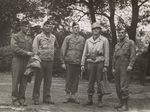
Monuments-men.jpg__800x600_q85_crop_subject_location-439,153Jim Morrison at Smithsonian Magazine:

Captain Robert Posey and Pfc. Lincoln Kirstein were the first through the small gap in the rubble blocking the ancient salt mine at Altausee, high in the Austrian Alps in 1945 as World War II drew to a close in May 1945. They walked past one sidechamber in the cool damp air and entered a second one, the flames of their lamps guiding the way.

There, resting on empty cardboard boxes a foot off the ground, were eight panels of The Adoration of the Lamb by Jan van Eyck, considered one of the masterpieces of 15th-century European art. In one panel of the altarpiece, the Virgin Mary, wearing a crown of flowers, sits reading a book.

“The miraculous jewels of the Crowned Virgin seemed to attract the light from our flickering acetylene lamps,” Kirstein wrote later. “Calm and beautiful, the altarpiece was, quite simply, there.”

Kirstein and Posey were two members of the Monuments, Fine Arts, and Archives section of the Allies, a small corps of mostly middle-aged men and a few women who interrupted careers as historians, architects, museum curators and professors to mitigate combat damage. They found and recovered countless artworks stolen by the Nazis.

more here.

rebecca mead’s life in middlemarch

M2Rohan Maitzen at Open Letters Monthly:

Mead read Middlemarch for the first time when she was seventeen and found it “riveting, from the very first sentence of its first chapter.” Speaking as someone who has assigned Middlemarch to hundreds of students not much older than that, I would say that her reaction is not entirely typical (though speaking as someone who read Middlemarch for the first time at eighteen, loved it, and has been rereading it ever since, at least as often and as appreciatively as Mead, I would also say that I find it entirely credible, and not a little endearing). Many readers approach Middlemarch with trepidation or leave it in frustration.

Not that the novel is not difficult in the way, say, James Joyce’sFinnegans Wake is difficult. It is, as the subtitle promises, “A Study of Provincial Life.” It chronicles the intersecting stories of a range of characters in a small English town on the eve of the 1832 Reform Bill that, by altering the balance of political power in Britain, launched an era of broader reform and modernization. There’s idealistic Dorothea Brooke, whose naïve yearnings for an intellectually significant life blind her to the faults of her unlikely suitor, the pedantic scholar Mr. Casaubon; ambitious Dr. Lydgate, whose hopes to reform his profession are derailed by the limpid blue eyes of the Mayor’s self-centered daughter Rosamond; shrewd, forthright Mary Garth and her faithful but feckless sweetheart Fred Vincy; Mr. Casaubon’s bright but erratic cousin Will Ladislaw, who adores Dorothea, flirts with Rosamond, and struggles to find his place in a rapidly changing world.

more here.

Tuesday poem

Ghost Story

—for Matthew Z and Matthew R

I remember telling the joke
about child molestation and seeing
the face of the young man
I didn't know well enough
turn from something with light
inside of it into something like
an animal that's had its brain
bashed in, something like that, some
sky inside him breaking
all over the table and the beers.
It's amazing, finding out
my thoughtlessness has no bounds,
is no match for any barbarian,
that it runs wild and hard
like the Mississippi. No, the Rio Grande.
No, the Columbia. A great river
of thorns and when this stranger
stood up and muttered
something about a cigarette,
the Hazmat team
in my chest begins to cordon
off my heart, glowing
a toxic yellow,
and all I could think about
was the punch line “sexy kids,”
that was it, “sexy kids,” and all the children
I've cared for, wiping
their noses, rocking them to sleep,
all the nieces and nephews I love,
and how no one ever
opened me up like a can of soup
in the second grade, the man
now standing on the sidewalk, smoke smothering
his body, a ghost unable
to hold his wrists down
or make a sound like a large knee in between
two small knees, but terrifying and horrible all the same.

by Matthew Dickman

Emancipation Proclamation (1863)

From Blackpast.org:

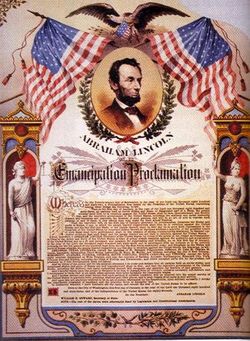
Emancipation_ProclamationFollowing the Union Army victory at Antietam, Maryland on September 17, 1862, President Abraham Lincoln issued a preliminary emancipation proclamation. This document gave the states of the Confederacy until January 1, 1863 to lay down their arms and peaceably reenter the Union, if these states continued their rebellion all slaves in those seceding states were declared free. Fearing the secession of neutral border slaveholding states such as Kentucky, Maryland, and Missouri, Lincoln’s Emancipation Proclamation, excluded those states which left almost one fifth of the four million slaves in bondage. Their freedom would come with the 13th Amendment, ratified in 1865. The Emancipation Proclamation also allowed freedmen to enlist into the Union Army. This provision struck a series blow to the economic structure of the seceding states as many black slaves labored for the Confederate Army or were engaged in vital agricultural or This Proclamation was not without its criticismindustrial production for the Confederacy.

This Proclamation was not without its criticism as as slavery and the issue of black freedom and equality were highly divisive issues even in the North. Confederate leaders threatened to summarily kill any black man they captured wearing a Union uniform. Anti-War Northern Democrats, who often attacked Lincoln’s policies, claimed that this one would irreparably harm the nation. Many northerners felt that freedmen would flock to the north and compete with white workers. That fear helped fuel the New York Draft Riots of 1863. Others feared the Proclamation would generate a race war between blacks and whites in the Confederacy.

More here. (Note: One post throughout February will be dedicated to Black History Month.)

Freezing Out the Bigger Picture

Justin Gillis in The New York Times:

IceScientists refer to global warming because it is about, well, the globe. It is also about the long run. It is really not about what happened yesterday in Poughkeepsie. The entire United States, including Alaska, covers less than 2 percent of the surface of the earth. So if the whole country somehow froze solid one January, that would not move the needle on global temperatures much at all. In fact, even this year’s severe winter weather has affected only part of the country. The Arctic blasts were caused by big dips in the jet stream that allowed frigid air to descend from the polar regions into the central and eastern United States. But toward the west, those dips have been counterbalanced by unusual northward swings of the jet stream that sent temperatures soaring. So while New Yorkers have been shivering this winter, California has been setting record or near-record high temperatures. The state is in its third year of a drought so severe that some towns have started to worry about running out of drinking water.

Alaska has been downright balmy for much of the winter. “Record warmth, confused plants: An Alaska January to remember,” The Anchorage Daily News declared. Likewise, large parts of Russia, Canada and Europe have had bizarrely warm temperatures this winter. Though the case is as yet unproven, a handful of scientists think the 50-degree temperatures in London and the frigid weather in Minneapolis might be a consequence of climate change. They contend the massive decline of sea ice in the Arctic has destabilized a weather pattern that normally keeps frigid air bottled up near the pole. That pattern is known as the polar vortex and its boundary is a fast-moving river of air called the jet stream. When the vortex weakens, the jet stream can develop big kinks, creating zones of extreme heat and cold.

More here.

The Precautionary Principle

PP Chart

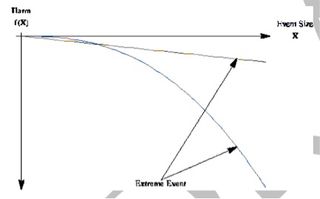
Yaneer Bar-Yam, Rupert Read, and Nassim Nicholas Taleb elaborate why under the precautionary principle GMOs should be banned but not nuclear power in a draft paper on the precautionary principle:

Genetically Modified Organisms, GMOs fall squarely under PP not because of the harm to the consumer [but] because of their systemic risk on the system. 

Top-down modifications to the system (through GMOs) are categorically and statistically different from bottom up ones (regular farming, progressive tinkering with crops, etc.) To borrow from Rupert Read, there is no comparison between the tinkering of selective breeding and the top-down engineering of taking a gene from an organism and putting itinto another. Saying that such a product is natural misses the statistical process by which things become ”natural”.

What people miss is that the modification of crops impacts everyone and exports the error from the local to the global. I do not wish to pay—or have my descendants pay—for errors by executives of Monsanto. We should exert the precautionary principle there—our non-naive version—simply because we would only discover errors after considerable and irreversible environmental damage…

In large quantities we should worry about an unseen risk from nuclear energy and certainly invoke the PP. In small quantities it may be OK and a matter of risk management—how small we should determine, making sure threats never cease to be local. Keep in mind that small mistakes with the storage of the nuclear are compounded by the length of time they stay around. The same with fossil fuels. The same with other sources of pollution.

More here.

Monday, February 10, 2014