The Utter Silence of the Andalusian Refugee

9780691158518

Richard Marshall reviews Moshe Halbertal's Maimonides, in 3:AM Magazine:

Most philosophers are atheists, according to David Chalmers’ recent survey. Most philosophers of religion are not atheists according to the same survey. One might suppose that it is already being religious that draws an individual to study religion and this explains why this sub-set of philosophy is anomalous. But one might also expect that as the skeptical hypothesis is studied these individuals would fall into line with their other philosophical colleagues and eschew religious belief. Why don’t they? They may be stubborn or inept.

But an alternative might be that they notice that religions themselves don’t suppose they are answering any skeptical hypothesis (the enlightenment version or any other). Instead of being involved with a skeptical hypothesis they make an alternative metaphysical hypothesis. With this, they are making claims about fundamental reality, the reality that grounds even physics, the nature of mind, the creation of the world and so on. This is where Laurence Krauss, the eminent physicist and cosmologist, went so disastrously wrong in his discussion of nothingness. He mistook Heidegger’s question ‘why is there something rather than nothing?’ to be a scientific question rather than a metaphysical one. And much skepticism about religion makes the same kind of error when discussing religion. Religions make metaphysical claims about fundamental reality and skeptical arguments that treat them as alternative scientific arguments in the skeptical tradition misunderstand this. One of the consequences of accepting the metaphysical hypothesis of a religion is that it may be totally compatible with science and naturalism, both of which are usually presented as counterfactuals to religion by atheists.

If you doubt this then studying the Andalusian refugee Maimonides will be revealing and this terrific book by the philosopher Moshe Halbertal is a great place to begin. Maimonides is presented as a great religious thinker who thought science and reason the only route to knowledge, a man of action and passion and great intellect, who scorned anthropomorphic representations of fundamental metaphysical principles and similarly sneered at supernaturalism, miracles and spooky prophecy. Atheism based on a skeptical hypothesis gets little traction here.

More here.

Endless Love

Older-couple

Aaron Ben-Zeev in Aeon:

[M]any studies have consistently shown that sexual desire and intense romantic love decrease drastically over time. The findings show that the frequency of sexual activity with one’s partner declines steadily, occurring half as often after one year of marriage compared with the first month, and falling off more gradually thereafter, especially after the child-rearing years. This decline has been found in cohabiting, heterosexual couples and in gay and lesbian couples. Accordingly, many scholars have claimed that enduring intense love is uncommon, almost always evolving into companionate love which, as time goes by, is low in attraction and sexual desire. Love is a trade-off, the prevailing wisdom goes: we can either soar briefly to the highest heights or we can have contentment for many years. It is fruitless to despair like Emma and Hannah, because no one can have both.

Or can they? New research suggests that common wisdom might be wrong, and that a significant percentage of long-term couples remain deeply in love. In 2012, the psychologist Daniel O’Leary and his team at Stony Brook University in New York asked study participants this basic question: ‘How in love are you with your partner?’ Their national survey of 274 individuals married for more than a decade found that some 40 per cent said ‘very intensely in love’ (scoring seven on a seven-point scale). O’Leary’s team did a similar study of New Yorkers and found that 29 per cent of 322 long-married individuals gave the same answer. In another national study in 2011, the dating site Match.com found that 18 per cent of 5,200 individuals in the US reported feelings of romantic love lasting a decade or more.

Research in neuroscience identifies the possible mechanism behind these results. In a study published in 2012, Stony Brook psychologist Bianca Acevedo and colleagues reported on 10 women and seven men married an average of 21 years and claiming to be intensely in love. The researchers showed participants facial images of their partners while scanning their brains with fMRI. The scans revealed significant activation in key reward centres of the brain – much like the patterns found in people experiencing new love, but vastly different from those in companionate relationships.

I must admit that these findings puzzled me. Are we actually victims of romantic ideology? Should we cease striving for true love or hold out until a soul mate appears? In our modern times, these questions do not have an easy answer

More here.

Gay Propaganda and Russia’s Shrinking Public Space

Gessen_Author-Main

Meara Sharma interviews Masha Gessen in Guernica:

Guernica: What was your initial reaction to Joseph Huff-Hannon’s proposal that you document the love stories of LGBT Russians?

Masha Gessen: There was this very strange moment when the world discovered what was going on for LGBT people in Russia. It was very gratifying: I thought, there is a world out there, a saner world. It had felt sort of desperate and bizarre until that point.

At the time, I was getting all these phone calls and letters from people who wanted to do projects. Everyday, there’d be somebody interviewing me as a “lesbian living in Russia.” It got to the point where I would joke that I now have two jobs. I work as a writer and a journalist, and I also work as a lesbian. There’s a big difference between being out and having that be your sole identity, the only reason that someone is talking to you. My twelve-year-old daughter said, “I have a new job as well. I work as the daughter of a lesbian,” because she was also giving all these interviews.

So I was skeptical because I thought this book was going to be a “let’s show the Russian public that gay people aren’t so bad” project. And that would really miss the point. What’s going on in Russia is not that the public is homophobic, but that the Kremlin has unleashed a war. You don’t fight a war by distributing well-meaning books about how the other side really isn’t so bad. But when I talked to Huff-Hannon it became very clear that what he had in mind was much more localized: communicating to the people who felt most alone that they’re not alone.

More here.

We Cannot Control the Traffic

Screen-Shot-2014-02-06-at-5.01.44-PM-243x366

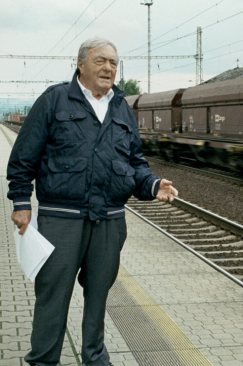
Leah Falk on Claude Lanzmann’s “The Last of the Unjust” in the LA Review of Books:

IN AN AGE of easy digital capture, we tend to think of visual and aural information as the ultimate proof of reality — a transient sunset over the walls of Rome or a conference with a nonagenarian can be recorded and broadcast almost as it happens. But merely recording and transmitting historic information isn’t a substitute for our informed reflection, the hours or years spent digesting what we’ve heard and seen. Having the data, as it were, doesn’t mean we immediately know what to do with it. Claude Lanzmann, whose 1985 film Shoah is composed of candid interviews with Holocaust survivors, SS officers, and others touched by the atrocities of the Holocaust, seems to know this: he kept some of that film’s footage away from the public eye for years, perhaps to allow it to develop its meaning.

In his new film, The Last of the Unjust, Lanzmann allows one of those preserved stories to emerge. (He’s done this before. In 2010’s Jan Karski, he responded to a popular — and, to Lanzmann, inaccurate — portrayal of the Polish resistance fighter with interview footage collected around the time he made Shoah.) Whereas Shoah’s unprecedented interviews made the war and its horrors feel newly fresh and wounding, in The Last of the Unjust,Lanzmann has allowed part of the story he presents to decay. He must make up for this with startling aesthetic choices that expose him as a filmmaker, thinker, and human being.

The footage in question is a series of interviews conducted in 1975 with Benjamin Murmelstein, the only surviving Jewish Elder of Terezín (Theresienstadt): Adolf Eichmann’s “model” or “show” ghetto, the death camp created to be paraded before the world. In a film presented to the International Red Cross to dispel the notion that the Nazis had interned Jews in death camps, Terezín was, infamously, portrayed as a town “given to the Jews.” (Murmelstein calls the camp “the town as if,” suggesting that while other interned Jews suffered unequivocally, in the undeniable present tense, the semistaged nature of Terezín warranted the use of the subjunctive — as if the Jews were living well under the Nazis).

Beginning in 1933, European Jewish institutions were forced to collaborate with the Nazis on the implementation of anti-Jewish policies. In the ghettos and camps, leaders of those institutions became a kind of local government under threat of terror, serving as liaisons between interned Jews and the SS. Murmelstein, a rabbi in the Viennese Jewish community, became one of these leaders and survived the war.

More here.

Sunday Poem

Deeper

Often at night, sometimes
out in the snow or going into the music, the hunch says,
“Deeper.”
I don't know what it means.
Just, “Push it. Go further. Go deeper.”
And when they come talking at me I get
antsy at times, but mostly I stay put and it keeps saying,
“Deeper. This is not it. You must go deeper.”
There is danger in this, also
beautiful fingers and I believe it can issue in
gestures of concord; but I
cannot control it, all I know is one thing—
“Deeper. You must go further. You must go deeper.”

by Dennis Lee

First Emancipation

From BlackPast.org:

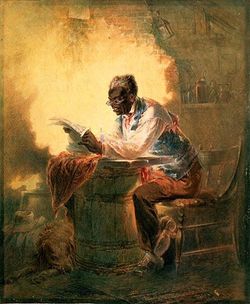
EmanFrom the late seventeenth century onwards, a few American colonists, mostly Quakers, had expressed their moral opposition to the spread of black slavery throughout British America. It was not until the coming of the Revolution, however, that the first concerted protests arose, first against the continued importation of slaves and then against slavery itself, as contrary to the liberties and natural rights for which the war was being fought. Some New England states adopted immediate emancipation: Vermont’s 1777 constitution explicitly outlawed slavery and in Massachusetts and New Hampshire, a series of judicial interpretations during the 1780s declared the institution in violation of the bills of rights contained in their new state constitutions. Elsewhere in the northern states, a policy of gradual emancipation was adopted, in Pennsylvania in 1780 and Rhode Island and Connecticut in 1784, but not until 1799 and 1804 in New York and New Jersey. This legislation provided for those born into slavery after the act to be freed at a certain age (21 in Pennsylvania and 28 in New York), so that masters would still receive the bulk of their slaves’ working lives as compensation for their ultimate loss of “property.” Slavery was excluded from the territories north and west of the Ohio River. Still further north, British Canada harbored several thousand former slaves freed by British forces during the revolutionary war.

This “first emancipation” set slavery on a course towards extinction in the northern United States. As the first large-scale freeing of slaves in human history, it helped launch a movement that would in less than a century transform slavery from an accepted component of almost every human society since ancient times to something morally suspect, a “peculiar” institution. It marked a turning-point in the black experience in America.

More here. (Note: One post throughout February will be dedicated to Black History Month.)

My hero: Malala Yousafzai

The Costa-winning author Nathan Filer in The Guardian:

Malala-Yousafzai-009Never meet your heroes. That's the warning. There is a fear that the people who we have most admired from afar, will, in the flesh, be left wanting. This makes sense. We admire a person's work: their dazzling prose, remarkable oratory, effortless stage-craft, whatever. Then join up the dots in our minds, to create the whole person. Then we meet them – say, at a glittering awards ceremony – and the resentment surges: How dare you be ever-so-slightly shorter than I imagined, with canape crumbs on your chin and nothing good to say? How dare you be so human?
I've had my moments. Except then I met Malala Yousafzai. This was at the National Book awards last year. Malala had won the Non-fiction Book of the Year for her memoirI Am Malala. She took to the stage and began to speak to a crowd of gently inebriated literati. I have never had a stronger sense of being in the company of greatness. But also something better than that: goodness. Malala talked of her love of books and her belief in the power and importance of them. She spoke of her faith, of how God had chosen books as the best way to send His message to people. There was a ripple of awkwardness at that, some laughter, but not at what followed. Malala spoke eloquently and profoundly about the 57 million children across the world who still have no access to school, no chance to learn to read. “We must help them,” she told us, the room now silent. “That is what I dream: to see children reading books, and going to school, and I hope that one day we will achieve our goal, and that is my mission.”

So much has been written of this extraordinary young person, and of her achievements in educational activism and rights for women. To begin to discuss this in such a brief column would be to do her a disservice. Instead I'll settle for noting that she was ever-so-slightly shorter than I imagined, and brilliantly, inspiringly human.

More here.

Saturday, February 8, 2014

Robert A. Dahl, 1915-2014

08obitsdahl-master180

Douglas Martin in the New York Times:

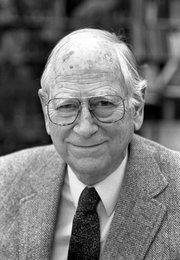
Perhaps Professor Dahl’s best-known work was one of his earliest: “Who Governs? Democracy and Power in an American City” (1961), which examined the political workings of New Haven. In contrast to the view that power in American society was concentrated in a business elite, he depicted a multitude of groups competing for influence. “Instead of a single center of sovereign power,” he wrote, “there must be multiple centers of power, none of which is or can be wholly sovereign.”

New Haven, he argued, had experienced a historical progression from patrician rule to a more contested form of government in which political parties and candidates of different ethnic and economic backgrounds competed.

Professor Dahl initially defended pluralistic competition as inherently democratic, but in later books he theorized that powerful, politically agile minorities could thwart the will of other minorities and, indeed, majorities. He particularly worried that corporate managers could dictate the direction of their companies, often without reference to shareholders. He advocated giving outsiders, including government and interest groups like consumer representatives, a greater role in corporate governance.

He also wrote that citizens in recent years have had less influence over the political process, even as they have demanded more of it. He pointed to growing economic inequality as a threat to the political process.

More here.

Massimo Pigliucci: On Coyne, Harris, and PZ (with thanks to Dennett)

From the IEET website:

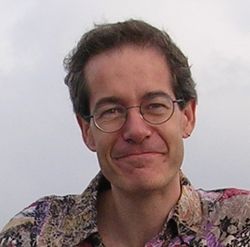
Massimo-outdoorOh dear, I pissed off the big shots among the New Atheists — again. If you are on Twitter or happen to have checked a couple of prominent NA blogs recently, you will have noticed a chorus comprised of none other than Jerry Coyne, Sam Harris, PZ Myers and, by way of only a passing snarky comment, Richard Dawkins — all focused on yours truly. I’m flattered, but what could I have possibly done to generate such a concerted reaction all of a sudden? Two things: I have published this cartoon concerning Sam Harris, just to poke a bit of (I thought harmless, good humored, even!) fun at the guy, and — more substantively — this technical, peer reviewed, paper in a philosophy journal devoted to a conceptual analysis and criticism of the NA movement, from the point of view of a scientist, philosopher, and, incidentally, atheist.

(The same issue of that journal carries a number of other commentaries, from theists and atheists alike.)

I watched the Twitter/blog mini-storm with some amusement (decades in the academy have forced me to develop a rather thick skin). The event was characterized by the usual back and forth between people who agreed with me (thank you) and those who don’t (thank you, unless your comments were of the assholic type). I thought there was no point in responding, since there was very little substance to the posts themselves. But then I realized that the mini-storm was making precisely my point: the whole episode seemed to be a huge instance of much ado about nothing, but nasty. So I decided a counter-commentary might be helpful after all. Here it is, organized by the three major authors who have lashed out at me in such an amusing way. I’ll start with a point-by-point response to Coyne’s longest blog post, followed by a more cursory commentary on PZ (who actually makes most sense out of the whole bunch, and indeed was himself mentioned only in passing in my paper), and ending of course with Harris, in whose case I will simply let Dan Dennett (another NA, did you know?) do the job for me.

More here.

Among the Wolves

Ahsan Akbar in the Dhaka Tribune:

ScreenHunter_483 Feb. 08 16.38Leonardo di Caprio teams up with mentor Martin Scorsese to play Jordan Belfort in The Wolf of Wall Street, currently the top grossing film at the London cinemas. Based on Belfort’s memoir by the same name, it’s a tale of excess: greed, corruption, leading to drugs, sex and rock and roll, or rather the roll-down effect of losing it all. Books and films about Wall Street and subcultures of the financial district are familiar to us all. We’ve had the run of American Psycho, The Wall Street, Boiler Room; later, Margin Call, Blue Jasmine for post-crash era stories, brought on by a market neither bulls nor bears could explain.

Belfort, a middle-class boy from the suburbs, has only one ambition, to become a millionaire. He will do anything to get there. After losing his job on Wall Street, he soon establishes his own firm, Stratton Oakmont, recruits an unlikely team of men and trains them in the art of selling. They start selling stocks; given their conviction and technique, they could sell ice to Eskimos. Soon, greed gets the better of Belfort, and he runs a number of securities fraud. When things get murky, especially with the FBI watching, he becomes involved in money laundering. One thing leads to another, and before Belfort can get his act straight the chickens come home to roost. It’s a clichéd tale perhaps, but what makes The Wolf different and hugely watchable is Scorsese’s masterly directing, a killer screenplay from Terence Winter, and an eclectic soundtrack. We get the full monty of Belfort’s high life: Ferraris, mansions, yachts, expensive suits, $40,000 watches, call girls, and a whole lot of candycaine. Belfort is different from the investment banker described in Liar’s Poker. For a brief period of time, he is truly a master of the universe, reaching the stratosphere by trading penny stocks and dialing in to Wall Street from Long Island.

More here.

TURBULENCE IN THE WORLD OF SICK BAG COLLECTING

Dorothy Feaver in The Junket:

Fig3The airsickness bag has just a thin plastic lining separating it from a paper lunch bag, but it is prized by collectors. Their decades’ worth of artifacts point to a dispersed, international subculture and present a droll version of aviation history, from military development, to the rise of civilian flights, the growth of budget airlines and a world where the internet has brought everything closer. But anecdotally, I never hear about airsickness any more and so too sick bags are increasingly invisible on plane journeys. While this is something for which most people would be thankful, for a few, it is cause for concern.

This article is written at a point when the design and production of unique airsickness bags is decreasing and seeks to touch on the implications of this star in the descendent. It takes its cue from the salutary scene in Waynes World, where Wayne and Garth discover their buddy Phil in a bad way:

Wayne: ‘Phil, what are you doing here, you’re partied out man, again.’

Garth: ‘What if he honks in the car?’

Wayne: ‘I’m giving you a no-honk guarantee.’

Garth, doubtful, has the alacrity of mind to pull out a tiny crumpled Dixie cup from his breast pocket and offer it to Phil. If the receptacle is hopelessly sized for the job, the gesture protests that there is no such thing as a ‘no-honk guarantee’.

More here.

Edmund white in paris

09PARINI-master180Jay Parini at The New York Times:

The latest installment of White’s life story, “Inside a Pearl,” finds the celebrated author of “A Boy’s Own Story” in Paris in 1983, just after that book had been published. It’s a city White had visited before, but at 43, he felt determined to make the place his own: “I wanted Paris to be a real grown-up, pansexual adventure.” But he knew it wouldn’t be easy, given the obstacles, including “a strange language spoken rapidly, a culture that rivals and a history that far surpasses America’s, winters during which it rains every single day, an exorbitantly expensive town.”

He would, despite the difficulties, spend many years in the city Hemingway had called “a movable feast,” transforming himself from an American writer into something else. “I was too prissy, too refined, too abstemious, too French to be a good American writer,” he notes. The abstemious part refers to his having given up tobacco and alcohol, though he never stinted on good meals or sexual encounters, even after being told he was H.I.V.-positive in 1985. (He was lucky in belonging to a small group of those whose disease progresses slowly.)
more here.

the real beatles

La-et-jc-meet-the-beatles-20140206-001David L. Ulin at the LA Times:

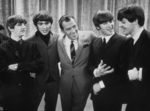
Doggett’s portrait of the band — as businessmen, tied to each other by a partnership they’d entered in their 20s — is fascinating because it addresses them not as idols but as human beings. The tensions are summed up most succinctly by McCartney, who says of his decision to leave the group: “One night I’d been asleep and awoke and couldn’t lift my head off the pillow. My head was down in the pillow and I thought, Jesus, if I don’t do this, I’ll suffocate.”

What McCartney’s describing is, in every way that matters, the flip side of that heady arrival in New York, with its declaration of possibility. It’s also a vivid glimpse from the inside at the price of success, of celebrity.

This is the part of the story no one wants to hear, and yet it’s the part that, finally, resonates. Or, as Lennon observes, looking back to 1964 and its aftermath in “Lennon Remembers” (which gathers his 1970 Rolling Stone interview with Jann Wenner): “We were just a band that made it very, very big, that’s all.”

more here.

Are humans really as unique as we like to think?

1a92060b-4037-4c4e-94f8-9f09a893e690Stephen Cave at the Financial Times:

You might think we that we humans are special: no other species has, for example, landed on the moon, or invented the iPad. But then, I personally haven’t done those things either. So if such achievements are what makes us human then I must be relegated to the beasts, except in so far as I can catch a little reflected glory from true humans such as Neil Armstrong or Steve Jobs.

Fortunately, there are other, more inclusive, ideas around about what makes us human. Not long ago, most people (in the west) were happy with the account found in the Bible: we are made in the image of God – end of argument. But the theory of evolution tells a different story, one in which humans slowly emerged as a twig on the tree of life. The problem with this explanation is that it is much more difficult to say exactly what makes us so different from all the other twigs.

Indeed, in the light of new research into animal intelligence, some scientists have concluded that there simply is no profound difference between us and other species. This is the stance taken in new books by Henry Gee, palaeontology editor of the leading scientific journal Nature, and by animal behaviour expert Marc Bekoff. But other scientists of equal eminence argue the opposite: that new research is finally making the profound difference between humans and animals clear – and two of them, the psychologists Michael Tomasello and Thomas Suddendorf, have written new books purporting to tell us exactly what it is.

more here.

Continental Drift: how the slave trade turned Jacobins into mercenaries

Victor LaValle in Bookforum:

Article00_largeAmasa Delano might not be remembered at all if Herman Melville hadn't written the novella Benito Cereno in 1855. Melville took one chapter from Delano's memoir and wrote the second-best book of his career. The best, Moby-Dick, had been published four years earlier and—famously—did not make Melville famous. Benito Cereno retells the story of Delano's contact in 1805 with the Tryal, a ship helmed by young Andalusian captain Benito Cerreño (Melville altered the spelling). Cerreño's vessel (the San Dominick in the book) appears to be in trouble as it enters the bay where Delano's ship is anchored. Delano takes a boat to help the Tryal. There he finds Cerreño, who explains that a storm killed most of his crew. There are also lots of Africans moving about freely on the ship. Delano spends the afternoon with Cerreño. He senses that something's wrong, but can't guess what. When Delano returns to his boat, the danger finally becomes clear: Cerreño leaps off the Tryal and into Delano's ship shouting that the Africans have rebelled. They've been playing docile, but they—not a storm—are in fact what killed the crew. The Africans cut the Tryal's anchor and sail off, but Delano's men recapture the ship and its rebellious cargo. This is the chain of events in both real life and the novella.

In The Empire of Necessity, Greg Grandin tracks backward from this episode like a sleuth, unearthing the motivations and machinations that collided on that day. We learn about not only Amasa Delano and Benito Cerreño but also, as records allow, the West Africans. Most important, the reader is given an overview of the era that is clear but never simplistic. “This was what historians call Spanish America's market revolution,” Grandin writes in summing up the economic background of the incident, “and slaves were the flywheel on which the whole thing turned.” Melville turned this episode into a rumination on subjugation and subterfuge, the lasting toll of slavery on the European soul. Grandin's vital book reads as a kind of ledger, relaying not just the cost of slavery but its profits, its lure.

…I can't say enough good things about The Empire of Necessity. It's one of the best books I've read in a decade. It should be essential reading not just for those interested in the African slave trade, but for anyone hoping to understand the commercial enterprise that built North and South America.

More here. (Note: One post throughout February will be dedicated to Black History Month.)

Delphi Gymkhana Club Ltd.
The Small Bar

I
There are two bartenders
Shankar and Ramshahai Singhvi Yadav.
Both of them are competent. But given
the choice, I prefer Ramshahai Singhvi Yadav.
Yet, each time one needs a drink,
I call for Shankar , even though I
know Ramshahai Singhvi Yadav will be quicker.
Why? Good question.
Shankar is easy to recall.
This is a truism.

One's name must be simple,
as in the case
with ones' personal philosophy.
And poetry.

II
What do the inebriated talk about?
Relationships.
The unipolar world.
Economic liberalization.
The Congress versus the BJP?
And of death.

Towards the end of the evening,
most people are into long-lasting relationships.
Liquor never lies. It amplifies.

III
There is an unwritten
law of liquor.
No one disagrees with the person
who pays for the round: his word is Law,
usually, till the end of the drink.
But, if one is with friends,
should it be so?

by Sanjeev Sethi
from Nine Summers Later
Har-Anand Publications, Pvt Ltd.1997