Socialism is about converting hysterical misery into ordinary unhappiness

Corey Robin in his blog:

Schiffrim-1024x680Last year, I said, somewhat tongue in cheek, that socialism is about converting hysterical misery into ordinary unhappiness.

This is what I meant. Socialism won’t eliminate the sorrows of the human condition. Loss, death, betrayal, disappointment, hurt: none of these would disappear or even be mitigated in a socialist society. As the Pirkei Avot puts it, against your will you enter this world, against your will you leave it (or something like that). That’s not going to change under socialism. But what socialism can do is to arrange things so that you can actually deal with and confront these unhappinesses of the human condition.

I was reminded of that reading this wonderful piece by Anya Shiffrin about the death of her father.

Last spring, André Shiffrin, the legendary publisher, was diagnosed with pancreatic cancer (he died in December). A New Yorker through and through, he nevertheless decided to spend his last months in Paris, where he and his wife had an apartment and where he had been born. It proved to be a wise move, as Anya explains.

More here. Anya Shiffrin's article is here.

We all know our culture puts a premium on good looks – does that mean that the ugly are oppressed?

Jonny Thakkar in Aeon:

ScreenHunter_489 Feb. 14 16.44The faces and forms of oppression are many, but nearly all of them flow from injustice, the treatment of people otherwise than they deserve. It’s hard to say what exactly any one person deserves, of course, but in the modern world we tend to think that desert is somehow related to what people can control. The colour of your skin is not up to you, for example, so treating you badly on its basis is oppressive. The treatment in question doesn’t have to be explicit: a society that marginalises homosexuals might not be as oppressive as one that imprisons them, but it is oppressive nonetheless. Sexuality and race are fairly obvious fault lines for oppression, as are class and gender. But if oppression is treating people otherwise than they deserve, there’s another category that tends to slip under our radar, namely the oppression of the ugly.

We don’t choose the configuration of our facial features any more than we choose our skin colour, yet people discriminate based on looks all the time. As the psychologist Comila Shahani-Denning put it, summarising research on the topic in Hofstra Horizons in 2003: ‘Attractiveness biases have been demonstrated in such different areas as teacher judgments of students, voter preferences for political candidates and jury judgments in simulated trials … attractiveness also influences interviewers’ judgments of job applicants.’ From the toddler gazing up at the adult to the adult gazing down at the toddler, we ruthlessly privilege the beautiful. The ugly get screwed.

More here.

Remembering Brown: Silence, Loss, Rage, and Hope

From BlackPast.org:

In the following article, James A. Banks, the Kerry and Linda Killinger Professor and Director of the Center for Multicultural Education at the University of Washington, Seattle, describes his Arkansas community's reaction to the U.S. Supreme Court's Brown v. Board of Education decision when it was announced in 1954.

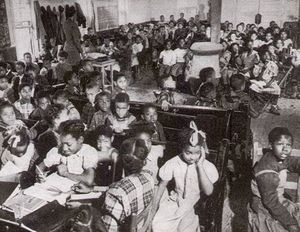
Segregated_SchoolI was in the seventh grade at the Newsome Training School in Aubrey, Arkansas when the Supreme Court handed down Brown vs. Board of Education on May 17, 1954. My most powerful memory of the Brown decision is that I have no memory of it being rendered or mentioned by my parents, teachers, or preachers. In my rural southern black community, there was a conspiracy of silence about Brown. It was completely invisible.

A conspiracy of silence
I can only speculate about the meaning of the silence about Brown in the Arkansas delta in which racial segregation was codified in both law and custom in every aspect of our lives. The only public library in Lee County was 9 miles from our family farm in Marianna, the county seat that had a population of 4,550. Although I was an avid reader, I could not use the public library. It was for whites only. The only time I saw the inside of the public library was when the choir from my all-black high school entertained a white civic group in the library. We had to see second-run movies at the all-black Blue Haven Theatre. To see first-run movies, we had to go to the white Imperial Theatre and enter the “Colored entrance,” which led upstairs where the projection room was also located. We could hear the rattle of the movie projector as we tried to concentrate on the movie. Marianna and Lee County, Arkansas epitomized the institutionalized discrimination and racism that existed throughout the Deep South in the mid-1950s. The conspiracy of silence about Brown in Lee County among whites was probably caused by fear that news of Brown might disrupt the institutionalized racist system of segregation that had been established in Lee County in the years after Reconstruction. That system was never publicly challenged or questioned by whites or blacks. Black resistance to racism was deep but covert. Blacks wore a mask as they feigned contentment around whites as their anger seethed below the surface, ready to explode. The statue of Robert E. Lee that towered above the park in the Town Square symbolized the racial oppression that gripped the community in which I, and many other southern blacks, came of age in the 1950s and 1960s. My teachers and preachers surely knew about the Brown decision and must have been quietly joyous about it. However, it must have also evoked fear in them as well, about losing their jobs and their schools. They must have quietly discussed Brown among themselves, out of the earshot of the children and certainly out of the earshot of whites. The National Association for the Advancement of Colored People (NAACP) took the five cases that constituted the Brown decision to the Supreme Court. The white establishment throughout the Deep South regarded the NAACP as a subversive and dangerous organization. It was viewed with as much suspicion and animosity as was the Communist Party in the North. Black teachers were often fired by school boards in the South when it was learned that they were members of the NAACP. The white school boards controlled both black and white schools. Consequently, for black teachers to spread the word about the Brown decision, especially among students, would probably have been considered a subversive and dangerous act.

Picture: Segregated School in West Memphis, Arkansas, 1949.

More here. (Note: One post throughout February will be dedicated to Black History Month.)

Looking back at Salman Rushdie’s The Satanic Verses

Geoffrey Robertson in The Guardian:

Rushdie-at-the-Whitbread--008On Valentine's Day 1989, the dying Ayatollah Khomeini launched the mother of all prosecutions against Salman Rushdie. As with the Red Queen from Alice in Wonderland, his fatwa was a case of sentence first and trial later. Rushdie's difficulties brought many of his north London friends into a closer and warmer contact with officers of the Special Branch than they might ever have thought likely. It was not long before a private prosecutor tried to issue a summons against the author of The Satanic Verses to attend, at the Old Bailey, his trial for blasphemous libel. The magistrate refused, so the prosecutor appealed to the High Court, where 13 Muslim barristers attempted to get the book banned, but their action forced them to draft an indictment against Rushdie and his publishers specifying with legal precision the way in which the novel had blasphemed. Their efforts convinced me that The Satanic Verses is not blasphemous. The book is the fictional story of two men, infused with Islam but confused by the temptations of the west. The first survives by returning to his roots. The other, Gibreel, poleaxed by his spiritual need to believe in God and his intellectual inability to return to the faith, finally kills himself. The plot, in short, is not an advertisement for apostasy. Our opponents could in the end only allege six blasphemies in the book, and each one was based either on a misreading or on theological error:

God is described in the book as “The Destroyer of Man”. As He is similarly described in the Old Testament and the Book of Revelation, especially of men who are unbelievers or enemies of the Jews.

The book contains criticisms of the prophet Abraham for his conduct towards Hagar and Ismael, their son. Abraham deserves criticism and is not seen as without fault in Islamic, Christian or Jewish traditions.

Rushdie refers to Muhammad as “Mahoud”. He called him variously “a conjuror”, “a magician” and a “false prophet”. Rushdie does nothing of the sort. These descriptions come from the mouth of a drunken apostate, a character with whom neither author nor reader has sympathy.

The book grossly insults the wives of the Prophet by having whores use their names. This is the point. The wives are expressly said to be chaste, and the adoption of their names by whores in a brothel symbolises the perversion and decadence into which the city had fallen before it surrendered to Islam.

The book vilifies the close companions of the Prophet, calling them “bums from Persia” and “clowns”, whereas the Qur'an treats them as men of righteousness. These phrases are used by a depraved hack poet, hired to pen propaganda against the Prophet. They do not represent the author's beliefs.

The book criticises the teachings of Islam for containing too many rules and seeking to control every aspect of everyday life. Characters in the book do make such criticisms, but they cannot amount to blasphemy because they do not vilify God or the Prophet.

The case had one very satisfying result: the Home Office announced it would not allow further blasphemy prosecutions, declaring “how inappropriate our legal mechanisms are for dealing with matters of faith and individual belief … the strength of their own belief is the best armour against mockers and blasphemers”. Amen to that (Pussy Riot prosecutors please note). The crime of blasphemy has now been abolished, although this wretched legacy of English law still permits courtroom persecutions in Pakistan and some other countries of the Commonwealth.

More here.

Where Soccer Gets Made

Omar Waraich in Roads & Kingdoms:

PakistanSoccerWhen the British ruled India, they had a habit of establishing garrisons in towns across the subcontinent. One of these was located in the ancient town of Sialkot, which now lies in Pakistan’s Punjab province, just shy of the Indian border. To amuse themselves, British soldiers stationed there would, of course, play cricket. But they played football, too, on the many stretches of carefully watered and manicured grass that can still be found across Sialkot’s cantonment area.

According to a local legend, at around the turn of the twentieth century, the British officers managed to puncture their ball during a casual kick-about. Seeking a quick and cheap mend, they enlisted the services of a local Sialkoti cobbler, who readily agreed to try and restore the unusual object to its original full-roundedness. The
attempt proved successful, and the cobbler became a regular source for repairs.

Over time, the cobbler carefully studied the architecture of the ball. Using local leather and practiced knit-work, the enterprising cobbler made several attempts to create a replica. Eventually pleased with the results, he developed a football of his own. When the colonial football enthusiasts next paid a visit, as the local Sialkotis tell the story with relish, he floated a revision to the terms of their deal.

“Instead of getting me to just repair balls,” the cobbler is supposed to have offered, “why don’t you buy them from me as well?” Satisfied with the locally produced alternatives to the footballs they would order from England, the Brits readily agreed. There began the now bustling Sialkoti trade of manufacturing and exporting some of the finest footballs in the world.

Read the rest here.

(And check out Roads & Kingdoms' series on the global appeal of soccer ahead of the World Cup)

Sam Harris responds to Dan Dennett

Sam Harris in his own blog:

Dear Dan,

I’d like to begin by thanking you for taking the time to review Free Will at such length. Publicly engaging me on this topic is certainly preferable to grumbling in private. Your writing is admirably clear, as always, which worries me in this case, because we appear to disagree about a great many things, including the very nature of our disagreement.

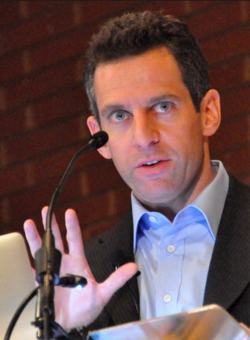
ScreenHunter_488 Feb. 14 12.45I want to begin by reminding our readers—and myself—that exchanges like this aren’t necessarily pointless. Perhaps you need no encouragement on that front, but I’m afraid I do. In recent years, I have spent so much time debating scientists, philosophers, and other scholars that I’ve begun to doubt whether any smart person retains the ability to change his mind. This is one of the great scandals of intellectual life: The virtues of rational discourse are everywhere espoused, and yet witnessing someone relinquish a cherished opinion in real time is about as common as seeing a supernova explode overhead. The perpetual stalemate one encounters in public debates is annoying because it is so clearly the product of motivated reasoning, self-deception, and other failures of rationality—and yet we’ve grown to expect it on every topic, no matter how intelligent and well-intentioned the participants. I hope you and I don’t give our readers further cause for cynicism on this front.

Unfortunately, your review of my book doesn’t offer many reasons for optimism. It is a strange document—avuncular in places, but more generally sneering. I think it fair to say that one could watch an entire season of Downton Abbey on Ritalin and not detect a finer note of condescension than you manage for twenty pages running.

More here.

Friday Poem

Season of Lilac

in april you come to me again in lilac
fall on my cheek like rain
take my hair like wind.

it is the sense of you the heat
brings in august, when life glistens
on skin and earth's deep smell climbs
high, bursting the veins of leaves
with the kind of joy birds know
as night cocoons to day, seasons turning

and december falls with the clear breath of you
sweetened ice on my tongue;

fall is the time when days drift
to sea to smother sand with damp wings
and your eyes touch fire, causing spark.

the seasons are full with you
the calendar rattles its leaves
for a glimpse of time's reflection
racing through my blood—
leaves fall, grass strains for wind
the soggy sky shakes itself dry
like a dog in from the snow to the fire
and love climbs like smoke
seeking its own level.

in april, then, you come to me in lilac
fall on my cheek like warm rain
take my hair like gentle wind
call me to lie down in fragrance.
.

by Dave Margoshes
from Walking at Brighton, Saskatoon, Saskatchewan
Thistledown Press, 1988.

Thursday, February 13, 2014

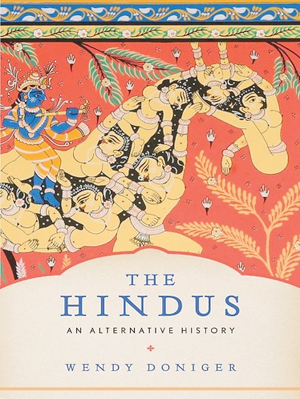
Aside the Chariot: ‘The Hindus: An Alternative History’ by Wendy Doniger

Diwas review

Diwas Kc in Himal [h/t: Chapati Mystery]:

Two years after the Indian state channel Doordarshan began daily broadcasting, when only Delhi-ites were lucky enough to get their first taste of television, a question was asked during a children’s quiz show: “Who was the mother of Ram?” The participating children, who had earlier effortlessly handled all the stumpers on Greek mythology, were now dumbfounded. Such was Kaushalya’s status in 1967. This rather inconsequential moment in India’s secular era would have simply passed by had one chance viewer not felt so deeply humiliated by the way “the glorious heritage of India” had once again been trumped. The viewer, Anant Pai, soon left his career with the Times of India, which brought American superheroes like Phantom and Mandrake to Indian readers through Indrajal Comics, and launched his own ­Amar Chitra Katha, through which he issued monthly and fortnightly comic books based on episodes from Hindu epics and puranas. Uncle Pai, as he is better known, thought of himself as an educator, and he must consider it an enormous feat that, after a sensational reception of his comics, golden boys and girls on Bournvita Quiz Contest no longer miss questions on Hindu legends.

In the following decades, Uncle Pai’s comics sold by the millions, which perhaps not astonishingly coincided with the resurgence of ‘Hindu values’ in Indian politics. Assembling the narratives of dazzling characters like Ram, Krishna and Hanuman from stories originating from different ends of India – dotingly ironing out the contradictions, and while at it ridding the ‘unpleasant’ bits – Uncle Pai had one eye on the Hindu past and the other on the post-Independence project of national integration. This double vision ofAmar Chitra Katha would prove to be remarkably self-legitimising, becoming imperative to subsequent raconteurs of Hindu legends. Uncle Pai, as it turned out, was only one of the many in modern India who was hoping to simplify the bewilderingly and boisterously diverse past for an emerging country. Following his success, in the late 1980s the triumphant creators of the Ramayana and Mahabharata serials on the by-then-pervasive Doordarshan heralded what can veritably be called a golden age of Hinduism – an uncanny kind of unification guided by the light of television screens, where millions of Hindus everywhere, of hitherto disparate traditions, could for the first time access, claim and share a uniform set of stories.

This prologue is necessary to understand what the scholar Wendy Doniger, in her new work, means by ‘alternative’. Alternative to what? Doniger has in mind the overbearingly malicious and fanatical turn of contemporary Hinduism that has much beleaguered her; but even more so, her adversary here is the troubling standardisation of the general Hindu outlook.

More here.

Vast Study Casts Doubts on Value of Mammograms

Gina Kolata in the NYTimes:

MAMMOGRAM-master675One of the largest and most meticulous studies of mammography ever done, involving 90,000 women and lasting a quarter-century, has added powerful new doubts about the value of the screening test for women of any age.

It found that the death rates from breast cancer and from all causes were the same in women who got mammograms and those who did not. And the screening had harms: One in five cancers found with mammography and treated was not a threat to the woman’s health and did not need treatment such as chemotherapy, surgery or radiation.

The study, published Tuesday in The British Medical Journal, is one of the few rigorous evaluations of mammograms conducted in the modern era of more effective breast cancer treatments. It randomly assigned Canadian women to have regular mammograms and breast exams by trained nurses or to have breast exams alone.

The study seems likely to lead to an even deeper polarization between those who believe that regular mammography saves lives, including many breast cancer patients and advocates for them, and a growing number of researchers who say the evidence is lacking or, at the very least, murky.

Read the rest here. (Original BMJ article)

the german burnout

P4_Schaffner2_405898kAnna Katharina Schaffner at The Times Literary Supplement:

One of the abiding refrains in exhaustion theories, both past and present, is the idea that modernity as such drains the individual’s energy. The aspects of modernity that are repeatedly identified as responsible include technological inventions that have dramatically increased the pace of life, as well as wider cultural developments such as the spread of capitalism, secularization, urbanization, industrialization, and, more recently, the imperative to be a constantly self-fashioning, entrepreneurial subject in a highly competitive environment. Symptoms are related to specific external developments, which are thus not just construed as drivers of pathology, but also pathologized in their own right. Even Freud, who generally aimed to establish transhistorical truths about the human psyche, assumed that modernity and exhaustion went hand in hand, as the demand to repress one’s desires became ever more complex.

Articles on burnout in the German supplements in recent years have been legion – in fact, so many have appeared that some observers are already complaining about “burnout burnout”. Academic publications, too, have mushroomed: in addition to the two books reviewed here, there is Stephan Grünewald’s Die erschöpfte Gesellschaft (2013), Patrick Kury’s Der überforderte Mensch (2012) and Byung-Chul Han’s Müdigkeitsgesellschaft (2010; and already in its eighth printing).

more here.

Noah and the much earlier Mesopotamian ark builders

Armesto_02_14Felipe Fernández-Armesto at Literary Review:

In the course of his investigation Finkel sheds much light on philological and literary problems of ancient Mesopotamian cultures, but one revelation dwarfs all others: in the earliest surviving description, the ark was round. The text is unambiguous on this point and includes detailed instructions for building a giant coracle out of more than 300 kilometres of coiled palm fibres, strengthening the structure with wooden ribs and decking, and coating everything in a waterproof mixture of pitch and lard. Finkel's painstaking and lively investigation of coracle-weaving traditions on the Euphrates makes the concept intelligible. He also clears up a puzzle in the flood story that forms part of Gilgamesh, where the gods seem to ordain an obviously unwieldy square ark; a round shape, like a square, is as broad as it is long and really the Gilgamesh scribe intended a circle (or was perhaps himself deceived into squaring it). With a vivid eye for what life was like in the Euphrates valley 4,000 years and more ago, Finkel argues – riskily but plausibly – that his tablet represents a fragment from the script or record of a dramatised version of the story for court performance, and that the arithmetical precision of the calculations involved in determining the ark's dimensions and assembling the materials for its construction derives from ancient Mesopotamian schoolroom exercises. There are other remarkable scholarly insights to admire. Finkel argues convincingly that the British Museum's famous Babylonian world map contains an allusion to the resting place of the ark. His image of Sennacherib, the Assyrian king from 704 to 681 BC, engaged in the first hunt for relics of the foundered vessel is brilliant.

more here.

the heiress, 1949

ImageMoira Donegan at n+1:

In Washington Square, his 1880 novella, Henry James goes out of his way to tell us that Catherine Sloper is a little bit fat. The shy daughter of a well-off New York City physician, Catherine spends much of her free time embroidering, and when she has pocket money she uses it to buy sweets, which she eats alone. In The Heiress, William Wyler’s 1949 adaptation, the scope of her pleasures is just as narrow. When the film opens, Catherine, played by Olivia de Havilland, is a grown woman of 21, living in her father’s comfortable house in the company of a silly, giggling aunt. She is unmarried, and poised to inherit a lot of money when her widowed father eventually dies.

But for all her wealth and education, Catherine has not inherited any of the self-assured equanimity of the rich. Her father is openly disappointed in her, and it’s not hard to see why. Catherine is unsociable and childishly timid; she seems fearful, and unfit to cope with even the minor daily violences of adult life. In one early scene, she sheepishly asks a fishmonger to remove the head of a large cod, and averts her eyes as he chops it off with a thudding meat cleaver. When she is dragged to a party, the man she dances with offers to go get her a glass of wine, and never returns. Catherine waits on a bench for him for the length of a waltz, her eyes nervously scanning the crowd. One of the first statements that The Heiress makes about gender is that women are easier to taxonomize than men.

more here.

On David Foster Wallace’s Conservatism

James Santel in The Hudson Review:

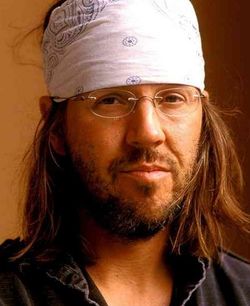
ScreenHunter_487 Feb. 13 15.37In 2000, Rolling Stone sent David Foster Wallace to report on John McCain’s presidential campaign. The resulting essay operates on a simple premise: that to just about anyone who came of age in what Wallace calls the “post-Watergate-post-Iran-Contra-post-Whitewater-post-Lewinsky era,” American politics is a kabuki of tired rhetoric and hollow promises. It is, Wallace writes, “an era in which politicians’ statements of principle or vision are understood as self-serving ad copy and judged not for their truth or ability to inspire but for their tactical shrewdness, their marketability,” one of the consequences being that young voters between 18 and 35 were voting in lower numbers than ever (of course, that would change in 2008). As if that weren’t enough, Wallace points out (following Joan Didion’s “Insider Baseball,” her classic essay on the 1988 national conventions) that it’s in the interest of the powers that be to preserve this status quo of indifference and cynicism, a task that proves easier than one might think, because politics is “complex, abstract, dry, the province of policy wonks and Rush Limbaugh and nerdy little guys on PBS, and basically who cares.” In other words: at the root of America’s political malaise lies a short attention span.

This is a central theme of The Pale King, the novel about IRS agents Wallace was working on at the time of his suicide in 2008. Part of the unfinished novel’s plot concerns an intra-agency struggle between old-guard employees who see their work as a public service and newcomers who are interested in maximizing revenue. The novel thus allegorizes the ascendancy of privatization and self-interest at the expense of the commonweal.

More here.

Ancient Viking code deciphered for the first time

Alison Flood in The Guardian:

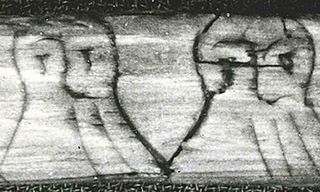
Jotunvillur-code-006An ancient Norse code which has been puzzling experts for years has been cracked by a Norwegian runologist – to discover the Viking equivalent of playful text messages.

The mysterious jötunvillur code, which dates to 12th or 13th-century Scandinavia, has been unravelled by K Jonas Nordby from the University of Oslo, after he studied a 13th-century stick on which two men, Sigurd and Lavrans, had carved their name in both code and in standard runes. The jötunvillur code is found on only nine inscriptions, from different parts of Scandinavia, and has never been interpreted before.

“The thing that solved it for me was seeing these two old Norse names, Sigurd and Lavrans, and after each of them was this combination of runes which made no sense,” said Nordby, who is writing his doctorate on cryptography in runic inscriptions from the Viking Age and the Scandinavian Middle Ages. He then realised, he continued, that in jötunvillur, the rune sign is swapped for the last sound in the rune's name, so for example the “m” rune, maðr, would be written as the rune for “r”.

“I thought 'wow, this is the system, this is the solution, now we can read this text,” said Nordby. But the code turned out to be extremely confusing, because many runes end in the same sound, “so you have to decide which one to choose”.

More here.

A potential firelighter of vanity, self-pity and logorrhoeic dullness

From The Week:

140212-morrisseySunday Times columnist AA Gill has won the Hatchet Job of the Year award, presented by The Omnivore website for his scathing review of Morrissey's autobiography.

“It is a heavy tome, utterly devoid of insight, warmth, wisdom or likeability,” Gill wrote in his 1,200 word demolition of Morrissey's work, published in October last year. “It is a potential firelighter of vanity, self-pity and logorrhoeic dullness.”

Gill was also scathing about Morrissey's insistence that the book be released as a Penguin Classic. “Putting it in Penguin Classics doesn't diminish Aristotle or Homer or Tolstoy; it just roundly mocks Morrissey, and this is a humiliation constructed by the self-regard of its victim.”

The review was hailed as an “expert caning” by a panel of judges including Rosie Boycott, Brian Sewell and John Sutherland.

“The 30 reviewers on the long list were easily reduced to eight, and then, as we knocked them off the list from bottom to the top, the winner emerged without argument,” said Sewell.

More here.

Lifespans predictable at early age

Brendan Borrell in Nature:

MitoScientists have a crystal ball on their hands: bursts of activity in the energy-producing mitochondria in a worm’s cells accurately predict how long it will live. The findings, published today in Nature1, suggest that an organism’s lifespan is, for the most part, predictable in early adulthood. Unlike other biomarkers for ageing, which work under limited conditions, these mitochondrial bursts are a stable predictor for a variety of genetic, environmental and developmental histories. “Mitochondrial flashes have an amazing power to predict the remaining lifespan in animals,” says study lead Meng-Qiu Dong, a geneticist who studies ageing in the Caenorhabditis elegans worm at the National Institute of Biological Sciences in Beijing. “There is truth in the mitochondrial theory of ageing.”

The mitochondria are organelles that power the cells of plants, animals and other eukaryotic organisms. During energy production, they produce reactive oxygen molecules, such as free radicals, that can cause stress and damage the mitochondria. Although mitochondria break down over time, the mitochondrial theory of ageing, first proposed2 in 1972, remains controversial and unproven. For instance, some long-lived organisms, such as naked mole rats, endure with high levels of oxidative damage. Nevertheless, many scientists think that mitochondria remain the primary drivers of ageing.

More here.

New York celebrates African-American culture and heritage

Jared McCallister in Daily News:

Black“The Black Power Mixtape: 1967–1975,” a new book by Sweden-born filmmaker Göran Hugo Olsson and based on his 2011 documentary, looks at the Black Power Movement in America through archival information, color photographs, and historical speeches and interviews with Stokely Carmichael (Kwame Ture), Dr. Martin Luther King, Jr., Eldridge Cleaver, Bobby Seale, Huey Newton, Emile de Antonio, and Angela Davis. There is also new commentary in the book from Erykah Badu, Talib Kweli, Harry Belafonte, Kathleen Cleaver, Angela Davis, Robin D. G. Kelley, Abiodun Oyewole, Sonia Sanchez, Bobby Seale, John Forte, and Questlove, in addition to a preface by actor/activist Danny Glover. “We have much to learn from these visionary organizers who sought to redefine and re-imagine democracy, whose sense of empowerment derived from the belief that the people could be the architects for change,” wrote Glover in the preface. The documentary was shot by Swedish journalists chronicling the Black Power Movement in the U.S., and edited by Olsson. In a review of the film, which screened in theaters and aired in PBS’ Independent Lens series, the Hollywood Reporter said, “If one of the roles of documentaries is to record and preserve history, The Black Power Mixtape: 1967-1975 admirably performs its duty. Assembled from extraordinary footage uncovered in the Swedish Television archives and augmented by contemporary audio interviews, the film presents a powerful reminder of the black power movement, often neglected, misrepresented or forgotten in this country. This is a film that should be seen by anyone who wants to learn where we’ve come from as a nation. The Black Power Mixtape is not a static, talking heads record of the past.”

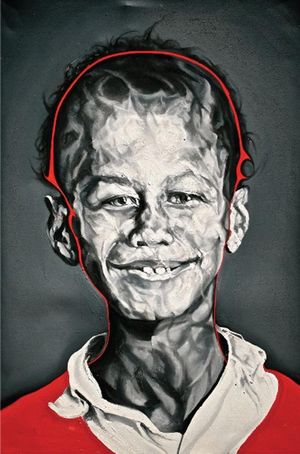
Picture: The art work “Malcolm Little “is a creation of Warren Lyons.

More here. (Note: One post throughout February will be dedicated to Black History Month.)

Wednesday, February 12, 2014

Farm Confessional: I Raise Livestock and I Think It May Be Wrong

Rhys Southan in Modern Farmer:

Farm-conf-hero2I have no farming background. I was born and raised in the suburbs, and I spent more time in a shopping mall playing video games and eating fast food than I did outside. “Animals” meant cats and dogs. Of course I knew the McDonalds hamburger I ate came from a cow, but that cow had no real existence for me. It wasn’t until I started farming that livestock animals became real and individuated. And that’s when my ethical struggle began.

I pursued a PhD in political philosophy for a number of years. I focused on postmodernist and poststructuralist philosophies, and this and identity, power and symbolization are very much at the root of my ethical crises.

Watching the pigs shows me over and over again, in countless and sometimes very subtle ways, that there is much more to the life experiences of animals than most of us know or are willing to believe.

One morning, I woke up absolutely certain that killing animals to eat their meat was wrong. So it might seem like I’ve sided with animal-rights advocates, but the long view that I’m taking on this makes my position more complicated than that. My feelings about the ethics of livestock farming ebb and flow. I have no plans to stop eating meat or raising animals for slaughter. But I believe that we as a species need to evolve into the sorts of beings that do not kill to eat. For now, I justify non-industrial farming as a necessary compromise that will gradually shift how we think about using animals as food.

More here. [Thanks to John Ballard.]