critique and the genesis of modernity

51RykqblADL._SY344_BO1,204,203,200_Bo Isenberg at Eurozine:

Critique expresses the possibility that everything could have been different. By doing so, critique puts things and the order of things in a state of crisis – institutions, meanings, relationships, mental and cultural dispositions. Realities emerge as possibilities, possibilities that have materialised. In other words, critique is an expression of the equal importance of the possible and the real. InThe Man Without Qualities, Robert Musil writes that “the sense of possibility” exists alongside “the sense of reality” and that “possible realities”, not “real possibilities”, are what is really interesting.[1]

It has been said that critique is a genuinely modern disposition, just as crisis is a genuinely modern societal and mental state. The urban sociologist Robert Ezra Park wrote that the city – the ultimate manifestation of modernity, both with regards to social order and mentality – was in, or even constituted, “a permanent state of crisis”.[2]

Critique and crisis are central categories in any understanding of the modern culture. The concepts have a common etymological origin. They describe a state where nothing is yet determined but is soon to be; a state all about decisions, distinctions and discernment. The Greek word krínein meant both “subjective critique” and “objective crisis”. The concepts achieve their real significance and are filled with opportunities and potential during the modern age, from the Renaissance and Reformation up to the present.

more here.
How to Engineer the Optimally Delicious Thanksgiving Plate

Mrgan Garber in The Atlantic:

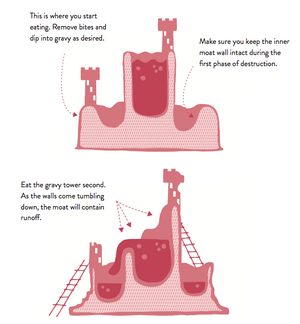
GravyThere may be an art to preparing Thanksgiving dinner, but there is an art, as well, to putting that dinner on a plate. The stakes are high: Get a little pour-happy at the moment of truth, and your turkey-to-gravy ratio gets completely upended; arrange your selections poorly, and suddenly your brussels sprouts are infiltrating your stuffing and potatoes. And then there's the cranberry sauce! Even a tiny bit of the stuff, misplaced, can turn an otherwise perfectly assembled plate into a mess of tangy hot-pink. If you, like me, have known the plight of the mis-proportioned meal, help is here. I asked Dan Pashman—author of the book Eat More Better, leader of the podcast The Sporkful, and general expert in the field of food consumption—for help engineering the optimal Thanksgiving plate. Here's his advice:

1. Use Your Mashed Potatoes as Construction Materials

Mashed potatoes, Pashman says, are “the structural backbone” of the Thanksgiving plate: “They're flexible, they're structurally sound, they're delicious, and they go well with most other things.” Everyone knows the myriad benefits of the mashed potato moat, the depression that allows your potatoes to become a lake-like storage vessel for your gravy; Pashman advises taking that basic structure and running with it. You can use potatoes, Pashman points out, “to cordon off other areas of your plate,” creating divisions that keep each food item in its place.

More here.

Inside the World’s Largest Islamist Group

1417021465kandilbrothers6_29_13gregg_carlstrom666Hazem Kandil at Dissent:

A reputation established over eight decades collapsed in less than eight months. Islamism, an ideology that carved its name from Islam, had always been synonymous with it in the minds of many. The Egyptian Muslim Brothers, who had invented and embodied this ideology since 1928, were perceived as fervent believers who went beyond practicing religion to promoting and defending it. But a gathering rebellion against the country’s first Brotherhood president changed all that.

On the eve of the 2013 popular uprising against Muhammad Morsi, Brothers organized preemptive sit-ins in several locations around the country. The biggest crowd camped around Cairo’s Raba’a al-‘Adawiya mosque. For forty days, unsuspecting Egyptians tuned in (some even strolled in) to witness for themselves what Brothers said and did. It was a rare opportunity to eavesdrop on this exceptionally discreet group. And what they saw and heard was quite different from what they were used to from the usually minted Brothers: political competitors were religiously condemned; images of Prophet Muhammad’s epic battles were conjured; biblical stories, from David and Moses to Armageddon, were invoked; allegations that Archangel Gabriel prayed at the Islamist campsite were flaunted; and sacred visions were relayed on stage night after night. This was not the vocabulary Brothers typically employed. Almost overnight, many Egyptians panicked. Who were these strangers, they wondered?

more here.

Wednesday, November 26, 2014

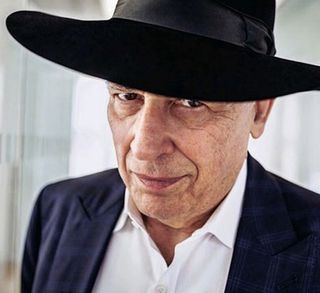
THE ÉMINENCE GRISE

Georg Diez in Der Spiegel via Edge:

ScreenHunter_883 Nov. 26 13.37Who is John Brockman? Even in New York, the world capital of people who know just about everybody, they are uncertain.

“Brockman, Brockman?” Shake of the head. “I don't know”, says the reporter from the New Yorker. Says the colleague of the New York Review of Books. Says the young writer who cofounded the magazine n + 1.

In the literary milieu where he is ignored more than despised, John Brockman is about as well known as the first three digits of the number Pi.

“This crowd sees everything through the lenses of culture and politics,” he says. “But an understanding of life, of the world, can only come through biology, through science.”

Ebola, stem cells, brain research—Who needs the new David Foster Wallace, the new Philip Roth?

“The great questions of the world concern scientific news,” says Brockman. “We are at the beginning of a revolution. And what we hear from the mainstream is: “Please make it go away.”

And there you are—this is how it goes with John Brockman who doesn’t like to waste time in the midst of the contradictions of the present. “Come, let's start,” he says in a good mood and puts a recording device on his desk. “I'm turning it on, you don't mind?”

He is charming, without hiding his own interests. He is proud of his life, his intelligence, without that he would have to apologize for it. He is a key figure of the late 20th and early 21st century, the éminence grise and major source of inspiration for the globally dominant culture, which he himself named as the “third culture”.

It is not Brockman, but his authors, who are well-known: Richard Dawkins, Steven Pinker, Daniel C. Dennett, Jared Diamond, Daniel Kahneman. Physicists, neuroscientists, geneticists, evolutionary biologists, fixed stars of the science age, superstars of nonfiction bestseller lists, the reason for Brockman's financial success and good mood.

More here.

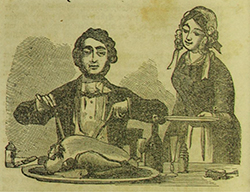
Today, all you need to carve the turkey is an electric knife. In the 1600s, you needed a serious education

Heather Hess in The Smart Set:

ID_HESS_TURKE_AP_001Pity the turkey. Capons are sauced, cranes are lifted, partridges are allayed, geese arereared. Turkeys are, to use the proper historical carving vocabulary, simply cut up. The ritual carving of the turkey is one of the few vestiges of a past, glorious tradition that once wowed diners at spectacular feasts, and yet, the prosaic words for slicing up the turkey do not seem to match the grandeur of the deed.

Once, carving was held in high esteem. It was less about serving base bodily needs for nourishment and more concerned with spectacle and performance. Those who carved (and those who had carving done for them) were not concerned with where their next meal was coming from. It was a demonstration of power: the ability to muster a bountiful feast and an exhibition of control of the body (both that of the carver and of the animal carcass to be consumed). In full view of the diners assembled at the table, the carver hoisted the bird aloft with one hand, while wielding a razor-sharp knife in the other. Slices from the cooked carcass floated down to the plate.

More here.

Treating disease with fecal transplants

Emily Eakin in The New Yorker:

ScreenHunter_882 Nov. 26 13.16One morning last fall, Jon Ritter, an architectural historian living in Greenwich Village, woke to find an e-mail from a neighbor, who had an unusual request. “Hi Jon, This is Tom Gravel, from Apt. 4N,” the e-mail began. “I wanted to check in and see if you may be open to helping me with a health condition.” Gravel, a project manager for a land-conservation group, explained that he had Crohn’s disease, an autoimmune disorder that causes inflammation of the intestinal tract along with unpredictable, often incapacitating episodes of abdominal pain and bloody diarrhea. His doctor had prescribed a succession of increasingly powerful drugs, none of which had helped. But recently Gravel had experimented with a novel therapy that, though distasteful to contemplate, seemed to relieve his symptoms: fecal transplantation, in which stool from a healthy person is transferred to the colon of someone who is sick. He hoped to enlist Ritter as a stool donor.

“I realize this is really out there,” Gravel wrote. “But I think you and your family are the nicest people in our building, and I thought I might start with lucky you.”

Crohn’s disease affects as many as seven hundred thousand Americans, but, like other autoimmune disorders, it remains poorly understood and is considered incurable.

More here.

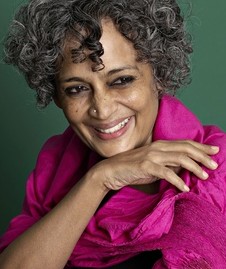
Arundhati Roy: goddess of big ideas

Andrew Anthony in The Guardian:

ScreenHunter_881 Nov. 26 13.11Like India and Walt Whitman, Arundhati Roy contains multitudes. She is, however, far from large. Small, delicately boned, a beguiling mixture of piercing dark eyes and bright easy smile, she is a warm presence. She turns 53 tomorrow and the grey tint to her curls lends depth to a still strikingly youthful face. Looking at her, it’s not hard to detect the author of the richly empathetic The God of Small Things, her debut, Booker-prize winning novel about family life in Kerala, that John Updike described as a “massive interlocking structure of fine, intensely felt details”.

That was 17 years ago and photos from that period show a captivating figure, at once shy and fiercely proud, wary and utterly self-possessed. The book was a huge international hit and the publishing world readied itself to cash in on a phenomenal new talent, galvanised by the fact that so photogenic an author would be a dream to market.

But the follow-up novel didn’t arrive. Instead Roy directed her considerable energies towards political activism, most especially in India where, despite her success, she has remained. It was a path that has led her to express solidarity with groups – such as Kashmiri separatists and Maoist guerrillas – that are seen by many Indians, with some reason, as terrorists. As a result Roy has become a controversial figure, an outspoken heroine in certain radical quarters, but loathed by large sections of Indian society, not least Hindu nationalists.

She has also become a prolific essayist and polemicist.

More here.

Our Cats, Ourselves

Razib Khan in The New York Times:

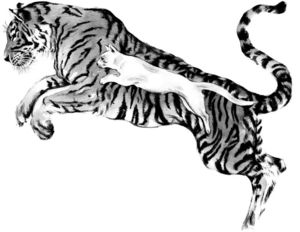
CatIT’S commonplace to call our cats “pets.” But anyone sharing a cat’s household can tell you that, much as we might like to choose when they eat in the morning, or when they come inside for the night, cats are only partly domesticated. The likely ancestors of the domestic dog date from more than 30,000 years ago. But domestic cats’ forebears join us in the skeletal record only about 9,500 years ago. This difference fits our intuition about their comparative degrees of domestication: Dogs want to be “man’s best friend”; cats, not so much. Fossils are handy snapshots of the past, but a genomic sequence is a time machine, enabling scientists to run evolutionary history backward. The initial sequence of the domestic cat was completed in 2007, but a recent study to which I contributed compared the genomes of the domestic cat and the wildcat (Felis silvestris) and sheds new light on the last 10,000 years of feline adaptations. Domestic cats are not just wildcats that tolerate humans in exchange for regular meals. They have smaller skulls in relation to their bodies compared with wildcats, and are known to congregate in colonies. But in comparison with dogs, cats have a narrower range of variation in size and form.

Wesley C. Warren, an author of the study, notes that domestic cats have excellent hunting skills, like their wild ancestors. This, too, supports the notion that cats are only semi-domesticated. Comparing the genomes of the wildcat and the domestic cat added much to what we had known. Michael J. Montague, the lead author, told me he’d anticipated that the two genomes would be very similar, but our study found a specific set of differences in genes involved in neuron development. This brain adaptation may explain why domestic cats are docile.

More here.

Geo-engineering: Climate fixes ‘could harm billions’

David Shukman in BBC:

ClimateSchemes to tackle climate change could prove disastrous for billions of people, but might be required for the good of the planet, scientists say. That is the conclusion of a new set of studies into what's become known as geo-engineering. This is the so far unproven science of intervening in the climate to bring down temperatures. These projects work by, for example, shading the Earth from the Sun or soaking up carbon dioxide. Ideas include aircraft spraying out sulphur particles at high altitude to mimic the cooling effect of volcanoes or using artificial “trees” to absorb CO2. Long regarded as the most bizarre of all solutions for global warming, ideas for geo-engineering have come in for more scrutiny in recent years as international efforts to limit carbon emissions have failed.

Now three combined research projects, led by teams from the universities of Leeds, Bristol and Oxford, have explored the implications in more detail. The central conclusion, according to Dr Matt Watson of Bristol University, is that the issues surrounding geo-engineering – how it might work, the effects it might have and the potential downsides – are “really really to doing nothing, to business-as-usual leading us to a world with a 4C rise.” The studies used computer models to simulate the possible implications of different technologies – with a major focus on ideas for making the deserts, seas and clouds more reflective so that incoming solar radiation does not reach the surface. One simulation imagined sea-going vessels spraying dense plumes of particles into the air to try to alter the clouds. But the model found that this would be far less effective than once thought. Another explored the option of injecting sulphate aerosols into the air above the Arctic in an effort to reverse the decline of sea-ice. A key finding was that none of the simulations managed to keep the world's temperature at the level experienced between 1986-2005 – suggesting that any effort would have to be maintained for years.

More here.

3QD Philosophy Prize Semifinalists 2014

The voting round of our philosophy prize (details here) is over. Thanks to the nominators and the voters for participating.

So here they are, the top 20, in descending order from the most voted-for:

  1. A Wondering Jew: The Sound of Silence
  2. Angela Roothaan: (Auto)biography and Derrida II (finished reading)
  3. Imperfect Cognitions: Epistemic Injustice and Illness
  4. Proof I Never Want To Be President (Of Anything): Work Friends
The editors of 3 Quarks Daily will now pick the top six entries from these, and after possibly adding up to three “wildcard” entries, will send that list of finalists to Huw Price for final judging. We will post the shortlist of finalists here on Monday, December 1st.

Wednesday Poem

Grace

Speaker 4
.

Eyes open in the womb. The struggle arrives to turn darkness into light.
Dangling on the wings of
the Phoenix. The creative process begins to turn ugly. Vandalizing and robbing
graves of
child prodigies turning into serious discussions of Mass Murder and the
therapeutic value of
saturday morning shopping sprees. The betrayal of genius is burning at the
stake. The spider
descends. The violence is always there. The web embraces us all. More
insidious than
drugs. More pleasurable than sex. Slightly entangled. Slightly confused. That
possible
criminal element awakens you to the terror and lonliness of running into the
silent pain of
someone else looking to you for answers. Glamorous and well financed pools
of blood
profiling on neighborhood corners while smiling at and tempting the boldest
gangsta rap.

The wealth we squandered on poor excuse and starving lines of poetry
inspired by the
tenderness of your smile healed me, cleansed me of my indifference to the
Holy Scriptures
should have told us something about being chidren of God in all this Madness,
against all
these odds of too intense and too delicate to be real lovers in real times. The
wind, the water,
the waves so natural in our hands. Falling on notes and images forever
caressing the Full
Moon and laughter too strong to be forgotten on opening nights and wanting
to be a big hit.
Run… Run… Run… to the birth, to the growth, to the experience of harmony so
wise and
peaceful desires to go back to the beginning and try to be good to yourself and
others… are
searching too!

by Umar Bin Hassan
from Poetry International, 2006

The Best Science Books of 2014

Maria Popova in Brain Pickings:

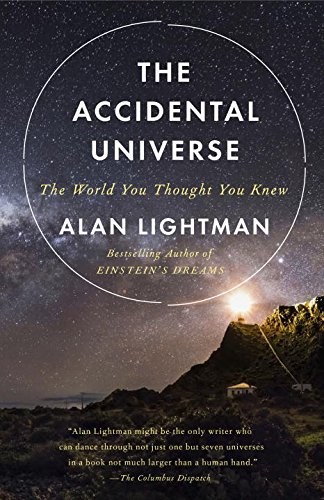
1. THE ACCIDENTAL UNIVERSE

“If we ever reach the point where we think we thoroughly understand who we are and where we came from,” Carl Sagan wrote in his timeless meditation on science and religion, “we will have failed.” It’s a sentiment that dismisses in one fell Saganesque swoop both the blind dogmatism of religion and the vain certitude of science — a sentiment articulated by some of history’s greatest minds, from Einstein to Ada Lovelace to Isaac Asimov, all the way backGalileo. Yet centuries after Galileo and decades after Sagan, humanity remains profoundly uneasy about reconciling these conflicting frameworks for understanding the universe and our place in it.

That unanswerable question of where we came from is precisely what physicistAlan Lightman — one of the finest essayists writing today and the very first person to receive dual appointments in science and the humanities at MIT — explores from various angles in The Accidental Universe: The World You Thought You Knew (public library | IndieBound).

At the intersection of science and philosophy, the essays in the book explore the possible existence of multiple universes, multiple space-time continuums, more than three dimensions. Lightman writes:

Science does not reveal the meaning of our existence, but it does draw back some of the veils.

[…]

Theoretical physics is the deepest and purest branch of science. It is the outpost of science closest to philosophy, and religion.

More here.

From Watts to Ferguson

Perl_453768716_10.web_850_593

Rick Perlstein in In These Times (Scott Olsen/Getty Images):

In Ferguson, police racism is built in, institutionalized in the town’s business model of using revenue from fines to pay its bills (and in the process, turning some residents into unemployable criminals). The encounter with Ferguson’s fierce justice system, if you are black, works like this: You have an overwhelming chance of being cited or arrested by police, for doing little or nothing that is wrong. A report from the legal group ArchCity Defenders found that in 2013, “the Ferguson Municipal Court disposed 24,532 warrants and 12,018 cases, or about three warrants and 1.5 cases per household,” an incredibly high rate. Then you are likely to face a fine you cannot afford to pay—ArchCity Defenders calculates that the average fine is $275—or a summons to a court that is rigged against you showing up on time. “The bench routinely starts hearing cases 30 minutes before the appointed time and then locks the doors to the building as early as five minutes after the official hour, a practice that could easily lead a defendant arriving even slightly late to receive an additional charge for failure to appear,” reads the report. Thus, you might end up in jail—with a criminal record that frequently bars employment.

That Kafkaesque sense of futility explains some of the frustration that boiled over in Ferguson with the shooting of Michael Brown. But that’s only one half of it. The other part is political.

Ferguson’s six-person city council has only one black member. It’s been much discussed that the dearth of African-American political representation has been helped along by what has been described as the apathy of black voters there, only 1.78 percent of whom turned out from one of the city’s black townships in a recent municipal election. But reporters on the ground in Ferguson—and possibly the Justice Department—should be looking at whether the powers that be have been practicing the sort of dark arts of malapportionment that disenfranchised other municipalities with sizable black populations in the past. Boston, for example, was able to defy a 1963 state law demanding school integration for nearly a decade by electing its school board “at large,” instead of by district. And prior to its 1967 riot, Newark’s Mayor Hugh Addonizio practiced a form of “urban renewal” that had a political twist: By building high-rises downtown, he was able to break up geographic concentrations of blacks, to ensure they would have no political power base.

Black Fergusonians have shown that they will vote when they have something to vote for and know that their vote will count. Seventy-six percent of them turned out in November 2012, when Missouri was a key swing state for Barack Obama’s reelection. When it comes to local elections, they might just be making the rational decision that a hike to the polls is a waste of time. Even that one black council member, Dwayne James, has baffled observers by remaining mum in the face of the single issue now galvanizing his constituency, Michael Brown’s killing. He’s said only, “Our city charter provides that our mayor is the spokesperson for the city.”

More here.

Tuesday, November 25, 2014

The Invention of the Jewish Nose

Sara Lipton in the New York Review of Books:

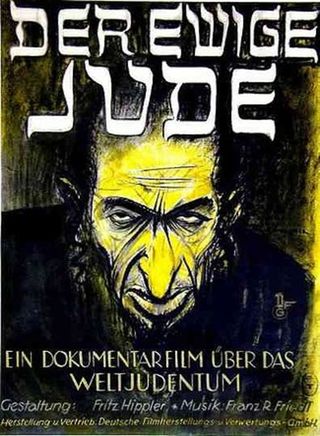
Le_Juif_eternelIn 1940 the Nazis released a propaganda film called The Eternal Jew. The film claimed to show the Jews in their “original state,” “before they put on the mask of civilized Europeans.” Stagings of Jewish rituals were interspersed with scenes of yarmulke- and caftan-wearing Jews shuffling down crowded alleys, all meant to show the benighted nature of Jewish life. Above all, the filmmakers focused on Jewish faces. They trained their cameras in lingering close-up on their subjects’ eyes, noses, beards, and mouths, confident that the sight of certain stereotypical features would arouse responses of loathing and contempt.

The designer of the film’s poster evidently agreed, avoiding more obvious symbols of Jewish identity (skull-cap, sidecurls, Star of David) in favor of a single dark, hook-nosed, fleshy face. Indeed, the poster hardly needed the accompanying title. In Europe in 1940, this representation of Jewishness was widespread: similar depictions of Jews could be seen on posters and in pamphlets, newspapers, even children’s books.

This image of the Jew, however, was far from “eternal.” Though anti-Semitism is notoriously “the longest hatred,” until 1000 CE, there were no easily distinguishable Jews of any kind in Western imagery, let alone the stereotypical swarthy, hook-nosed Jew. Earlier monuments and manuscripts did depict Hebrew prophets, Israelite armies, and Judaic kings, but they were identifiable only by context, in no way singled out as different from other sages, soldiers, or kings. Even nefarious Jewish characters, such as the priests (pontifices) who urged Pilate to crucify Christ in the Egbert Codex (circa 980), were visually unremarkable; they required labels to identify them as Jewish.

More here.

The astonishing rise of Angela Merkel, the most powerful woman in the world

George Packer in The New Yorker:

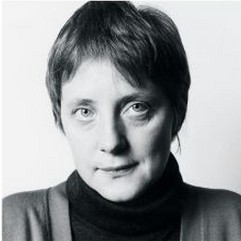
ScreenHunter_880 Nov. 25 17.02A summer afternoon at the Reichstag. Soft Berlin light filters down through the great glass dome, past tourists ascending the spiral ramp, and into the main hall of parliament. Half the members’ seats are empty. At the lectern, a short, slightly hunched figure in a fuchsia jacket, black slacks, and a helmet of no-color hair is reading a speech from a binder. Angela Merkel, the Chancellor of the Federal Republic of Germany and the world’s most powerful woman, is making every effort not to be interesting.

“As the federal government, we have been carrying out a threefold policy since the beginning of the Ukraine crisis,” Merkel says, staring at the binder. Her delivery is toneless, as if she were trying to induce her audience into shifting its attention elsewhere. “Besides the first part of this triad, targeted support for Ukraine, is, second, the unceasing effort to find a diplomatic solution for the crisis in the dialogue with Russia.” For years, public speaking was visibly painful to Merkel, her hands a particular source of trouble; eventually, she learned to bring her fingertips together in a diamond shape over her stomach.

More here.

Karen Armstrong on Sam Harris and Bill Maher

Michael Schulson in Salon:

Harris_armstrong_maherHow do ritual and religion become entangled with this violence?

Well, because state-building was imbued with religious ideology. Every state ideology before the modern period was essentially religious. Trying to extract religion from political life would have been like trying to take the gin out of a cocktail. Things like road-building were regarded as a sort of sacred activity.

Politics was imbued with religious feeling. The prophets of Israel, for example, were deeply political people. They castigated their rulers for not looking after the poor; they cried out against the system of agrarian injustice. Jesus did the same, Mohammed and the Quran do the same. Sometimes, religion permeates the violence of the state, but it also offers the consistent critique of that structural and martial violence.

Is it possible to disentangle that critiquing role from the role of supporting state structures?

I think in the West we have peeled them apart. We’ve separated religion and politics, and this was a great innovation. But so deeply embedded in our consciousness is the desire to give our lives some meaning and significance that no sooner did we do this than we infused the new nation-state with a sort of quasi-religious fervor. If you regard the sacred as something for which we are willing to give our lives, in some senses the nation has replaced God, because it’s now not acceptable to die for religion, but it is admirable to die for your country.

Read the rest here.

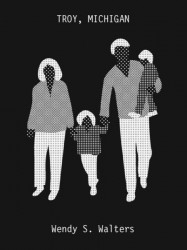
Wendy S. Walters: Interview

Troy-187x250

Justin Allen in Mosaic:

JA: You write about these murders and the crisis caused by who is known as the Oakland County Child Killer. You also touch on how these murders contributed to racial tension in the area.

WSW: There were other abductions of younger women in towns around us, which were attributed to anonymous Black men. Increasing unemployment in the area gave way to a fear of violence bubbling over from the city.

At the same time, a lot of Black people associated with the automobile industry were moving into the suburbs. These were college-educated people who wanted their kids to be in excellent public school systems. This created another level of anxiety. Sometimes these people were more affluent than the neighbors they were moving in with, which didn’t make sense to those with more provincial ideas about race and class.

Fear

Look at them looking like they don’t know
how they look. Why don’t they just stay where they
stay? Or drag sideways across our fields, come
at us zigzag over the rows we cut.
We made a place they know they should not stay
for a reason. They were nothing back when
we started from nothing, or we could not
have worked so hard to be right. They never
do what they need to do to be right. Who
knows? Someone might kill one. We tell them this
if they don’t run. Come on, try us, we say.
A city grows over the rows we cut.
Then they come at us. We stay for reasons.
They don’t understand right the way we do.

More here.

Why It’s Impossible to Indict a Cop

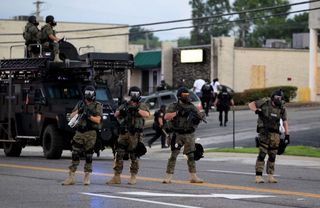
Ferguson_police_riot_gear_ap_img_2

Chase Madar in The Nation (AP Photo/Jeff Roberson):

How to police the police is a question as old as civilization, now given special urgency by a St. Louis County grand jury’s return of a “no bill” of indictment for Ferguson, Missouri, police officer Darren Wilson in his fatal shooting of an unarmed teenager, Michael Brown. The result is shocking to many, depressingly predictable to more than a few.

Can the cops be controlled? It’s never been easy: according to one old sociological chestnut, the monopoly on the legitimate use of violence is what defines modern government, and this monopoly is jealously protected against the second-guessing of puny civilians. All over the country, the issue of restraining police power is framed around the retribution against individual cops, from Staten Island to Milwaukee to Los Angeles. But is this the best way to impose discipline on law enforcement and roll back what even Republican appellate court appointees are calling rampant criminalization?

First, the big picture. Last year, the FBI tallied 461 “justifiable homicides” committed by law enforcement—justifiable because the Bureau assumes so, and the nation’s courts have not found otherwise. This is the highest number in two decades, even as the nation’s overall homicide rate continues to drop. Homicides committed by on-duty law enforcement make up 3 percent of the 14,196 homicides committed in the United States in 2013. A USA Todayanalysis of the FBI database found an average of about ninety-six police homicides a year in which a white officer kills a black person.

The FBI’s police homicide stats are fuzzy, and they are surely an undercount, given that they come from voluntary reports to the FBI from police departments all over the country. That the federal government does not keep a strict national tally shows just how seriously it takes this problem. A crowdsourced database has sprung up to fill the gap, as has a wiki-tabulation.

Perhaps the most disturbing thing about these police killings, many of them of unarmed victims, is that our courts find them perfectly legal.

More here.