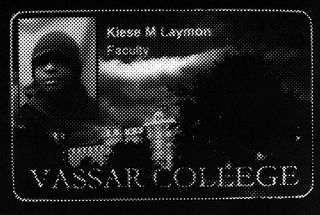
My Vassar College Faculty ID Makes Everything OK

Kiese Laymon in Gawker:

ScreenHunter_886 Dec. 04 12.39The fourth time a Poughkeepsie police officer told me that my Vassar College Faculty ID could make everything OK was three years ago. I was driving down Hooker Avenue. When the white police officer, whose head was way too small for his neck, asked if my truck was stolen, I laughed, said no, and shamefully showed him my license and my ID, just like Lanre Akinsiku. The ID, which ensures that I can spend the rest of my life in a lush state park with fat fearless squirrels, surrounded by enlightened white folks who love talking about Jon Stewart, Obama, and civility, has been washed so many times it doesn't lie flat.

After taking my license and ID back to his car, the police officer came to me with a ticket and two lessons. “Looks like you got a good thing going on over there at Vassar College,” he said. “You don't wanna it ruin it by rolling through stop signs, do you?”

I sucked my teeth, shook my head, kept my right hand visibly on my right thigh, rolled my window up, and headed back to campus.

One more ticket.

Two more condescending lessons from a lame armed with white racial supremacy, anti-blackness, a gun, and a badge. But at least I didn't get arrested.

Or shot six times.

My Vassar College Faculty ID made everything okay. A little over two hours later, I sat in a closed room on Vassar's campus in a place called Main Building.

More here.

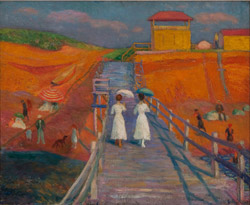
Many of the artists in the groundbreaking 1913 Armory Show went on to revolutionize art. William Glackens, on the other hand… he just kept painting

Morgan Meis in The Smart Set:

IC_MEIS_GLACK_AP_001In the early days of the 20th century, Picasso met some rich and careless Americans. “These folks,” Dave Hickey wrote in his book The Invisible Dragon: Essays on Beauty, “are no longer building gazebos and placing symboliste Madonnas in fern-choked grottos. They are running with the bulls — something Pablo can understand. They are measuring their power and security by their ability to tolerate high-velocity temporal change, high levels of symbolic distortion, and maximum psychic discontinuity.”

In Hickey’s version of the story of Modernism, it is these rich and careless Americans who finally shook the Europeans out of the torpor of late 19th century art making. The Americans were ready to face high-velocity temporal change and all the psychic discontinuity that goes with it. They were ready to face the Machine age, the Information age, the age of all things melting into air. Picasso’s portrait of prostitutes in a proto-Cubist tableau (les demoiselles d’Avignon) was, thus, made primarily for the rough and ready Americans who were prepared to understand such a picture.

There is truth to Hickey’s story. Gertrude Stein and her brother Leo were hosting their salon in Paris during the days when Picasso was looking for a new way to paint. The American expat community was restless, detached, and given to aesthetic excitability. The rich Americans dropping in from across the pond added fuel to the fire. They stirred money into a pot already filled with ambition and artistic discontent. A bomb was going to go off, and finally it did. The Steins provided the gunpowder. Picasso lit the fuse. Marcel Duchamp threw the bomb onto center stage.

The funny thing about this story is that the Americans who — in Hickey’s version — pushed Modernism along its course, seemed ill-prepared for the results that finally landed back upon their own shores. The landing came in 1913, at the famous Armory Show in New York City. At that show, Americans confronted European works of art that seemed to have metastasized dangerously from Picasso’s proto-Cubist ladies from Avignon just a few years earlier. Here were wild attacks of color from the Fauvists, machine-obsessed explosive paintings from the Futurists, extreme acts of spatial deconstruction from a now fully developed Cubism. And, of course, Marcel Duchamp’s Nude Descending a Staircase.

More here.

Wednesday, December 3, 2014

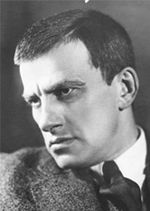
the life of Mayakovsky

Womack_12_14James Womack at Literary Review:

There are Mayakovsky Streets in forty-five Russian cities and fourteen Ukrainian cities. There are three Mayakovsky Streets in St Petersburg, more than there are in the whole of Kazakhstan, which boasts only a couple, one in Almaty and one in Ust-Kamenogorsk. Triumph Square in Moscow was called Mayakovsky Square from 1935 to 1992; the metro station that serves it is still called Mayakovsky. Omsk seems particularly fond of the poet: as well as a street, it has a cinema and a nightclub (or rather a 'youth relaxation complex', which I hope is a nightclub) blessed with the great man's name.

All this toponymy goes to suggest something of what Pasternak called Vladimir Mayakovsky's 'second death' in 1935, five years after his suicide. In response to a plea from Mayakovsky's lover Lili Brik, Stalin famously declared that 'Mayakovsky was and remains the best, most gifted poet of our Soviet epoch. Indifference to his works and memory is a crime.' After that, the commemoration machine cranked into action, Mayakovsky was elevated to the position of premier Soviet poet and his work started to be forcibly distributed, like 'potatoes in the time of Catherine the Great' (Pasternak again).

more here.

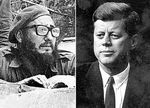
I Was With Fidel Castro When JFK Was Assassinated

053castrojfk_468x336Jean Daniel at The New Republic:

It was around 1:30 in the afternoon, Cuban time. We were having lunch in the living room of the modest summer residence which Fidel Castro owns on magnificent Varadero Beach, 120 kilometers from Havana. For at least the tenth time, I was questioning the Cuban leader on details of the negotiations with Russia before the missile installations last year. The telephone rang, a secretary in guerrilla garb announced that Mr. Dorticós, President of the Cuban Republic, had an urgent communication for the Prime Minister. Fidel picked up the phone and I heard him say: “Como? Un atentado?” (“What’s that? An attempted assassination?”) He then turned to us to say that Kennedy had just been struck down in Dallas. Then he went back to the telephone and exclaimed in a loud voice “Herido? Muy gravemente?” (“Wounded? Very seriously?”)

He came back, sat down, and repeated three times the words: “Es una mala noticia.” (“This is bad news.”) He remained silent for a moment, awaiting another call with further news. He remarked while we waited that there was an alarmingly sizable lunatic fringe in American society and that this deed could equally well have been the work of a madman or of a terrorist.

more here.

the return of wu-tang

141208_r25848-320Sasha Frere-Jones at The New Yorker:

The most surprising thing about “A Better Tomorrow,” the latest album from New York’s Wu-Tang Clan, is not that it is generally strong but that the fractious nine-person group ended up making any kind of recording together at all. For its previous studio album, “8 Diagrams” (2007), Wu-Tang Clan ended up touring without its founder, the RZA, who had produced most of the album. RZA, meanwhile, conducted a solo tour of his own, at the same time. By doing more visible work, including writing soundtracks for Quentin Tarantino, RZA had alienated his own group. As he told me, referring to Raekwon, a core member of the clan, “He said I was a hip-hop hippie with a guitar.” Hippie tag aside, this isn’t unfair. RZA said that he wrote many of the tracks for “A Better Tomorrow” on guitar, first, later voicing the compositions with samples or other instruments. But the Wu still mostly sounds like the Wu, and a newcomer who has never encountered the most famous band from Staten Island would do fine to start here.

The Wu-Tang Clan’s long career mirrors the comic books and kung-fu flicks that its members grew up loving: colorful and intense, and longer on respect than on widespread mainstream acceptance. Like cheap Canal Street mixtapes and kung-fu DVDs, Wu-Tang has never had enormous commercial success, even at the height of the CD era. In twenty years and five albums, the group has sold only a little more than six million records, according to Nielsen SoundScan.

more here.

Cyrus Vance Jr.’s ‘Moneyball’ Approach to Crime

07Vance1-master675-v2

Chip Brown in the NYT's Magazine (photo CreditLee Friedlander for The New York Times):

In 2010, at the start of his first term, Vance drew up a list of 20 things to do; four years later he had checked them all off, except for learning Spanish. He helped create a new court that offered alternatives to prison for mentally ill defendants whose crimes might have stemmed from treatable conditions. He set up a “conviction integrity program,” which reviewed innocence claims in more than 160 cases and vacated four convictions. He pushed to raise the age of criminal responsibility to 18 — New York and North Carolina are the only states that treat 16-year-olds as adults. He lobbied for the New York’s All Crimes DNA law, which doubled the kinds of crimes for which DNA evidence could be collected. He focused on crimes where the numbers in New York were going the wrong way: computer fraud, identity theft, abuse of the elderly and domestic violence. He reorganized office units and bureaus and shaved nine hours off the time between arrest and arraignment, freeing up cops who used to have to wait so long to give statements that they would sometimes bring lawn chairs to the intake area in order to have a place to sit. Drunken-driving dismissals, according to the D.A.'s office, were down 81 percent; cases tossed because prosecutors violated speedy-trial rules were down 91 percent. Felony conviction rates, which were lower in Manhattan in 2009 than in the other four boroughs, now trailed only the conviction rate in Queens.

But Vance’s most significant initiative, one that has been emulated in jurisdictions from Brooklyn to San Francisco, has been to transform, through the use of data, the way district attorneys fight crime. “The question I had when I came in was, Do we sit on our hands waiting for crime to tick up, or can we do something to drive crime lower?” Vance told me one afternoon in his eighth-floor office at the Criminal Courts Building in Lower Manhattan. “I wanted to develop what I call intelligence-driven prosecution.”

Preparing to run in 2009, Vance studied “community-based prosecution” programs in Washington and consulted with experts in Milwaukee and San Francisco. The concept of expanding prosecution strategies to address neighborhood concerns emerged in the early 1990s as prosecutors and police departments grappled with an epidemic of violence, drug abuse and “quality of life” issues.

More here.

Berlin Notebook

15564701908_e831d65e92_k

Ryan Ruby in n+1 (image by Ramón Goeden via flickr):

I had been away from Berlin for the better part of a month, and in my absence exhibits, memorials, and events devoted to the fall of the Wall had sprung up all over town.

4 NOVEMBER: POTSDAMER PLATZ ARKADEN

On my way to the Staatsbibliothek to return an overdue book, I pause in front of the sliding doors of the Potsdamer Platz Arkaden to examine two segments of the Berlin Wall that mark the entrance to an exhibit commemorating the twenty-fifth anniversary of November 9, 1989.

There is nothing particularly special about these Wall segments, which were recently repainted with the same cartoon faces that French street artist Thierry Noir originally sprayed on the Wall, nor about the exhibit itself. Down the long central nave of the Arkaden are border signs in four languages, a reconstructed guard tower, video clips, photographs, maps, uniformed mannequins, a large DDR insignia, the clothes Udo Lindenberg wore to his concert at the Palast der Republik, a Trabant automobile. In short, a collection of the same things that are usually spread out over the twenty sites in Berlin dedicated to the history of the Wall.

What was interesting about the exhibit was its location. The Potsdamer Platz Arkaden is a mall. It is tempting to focus on the crassness of placing what ought to be a solemn memorial to the horrors of a police state in a shopping center, but the choice is telling, and represents a not-uncommon interpretation of the political significance of what is known here as the Mauerfall. To many in the West, the fall of the Wall is a spectacular symbol for the victory of the free market. The whole Potsdamer Platz complex—with its corporate office towers, its multiplex cinemas, its luxury condominiums and five-star hotels and shopping malls—is not just a pleasure dome for the rich, it’s why the West fought the cold war. The Arkaden is Francis Fukuyama’s End of History thesis written in steel and glass. Capitalism was born in a building just like this one, as Walter Benjamin’s Arcades Project documents. It is fitting that this is where it should decide to celebrate its ultimate victory.

More here.

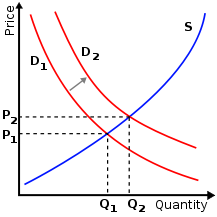
Economists Aren’t ‘Superior’ Just Because

217px-Supply-demand-right-shift-demand.svg

Henry Farrell discusses a new paper by Marion Fourcade, Etienne Ollion, and Yann Algan “The Superiority of Economists” over at Crooked Timber:

Marion Fourcade, Etienne Ollion and Yann Algan’s forthcoming piece on the ‘superiority of economists’ is a lovely, albeit quietly snarky, take on the hidden structures of the economics profession. It provides good evidence that e.g. economics hiring practices, rather than being market driven are more like an intensely hierarchical kinship structure, that the profession is ridden with irrational rituals, and that key economic journals are apparently rather clubbier than one might have expected in a free and competitive market (the University of Chicago’s Quarterly Journal of Economics gives nearly 10% of its pages to University of Chicago affiliated scholars; perhaps its editors believe that this situation of apparent collusion will be naturally corrected by market forces over time). What appears to economists as an intense meritocracy (as Paul Krugman acknowledges in a nice self-reflective piece) is plausibly also, or alternately, a social construct built on self-perpetuating power relations.

Unsurprisingly, a lot of economists are reading the piece (we’re all monkeys, fascinated with our reflections in the mirror). Equally unsurprisingly, many of them (including some very smart ones) don’t really get Fourcade et al’s argument, which is a Bourdieuian one about how a field, and relations of authority and power within and around that field get constructed. As Fourcade has noted in previous work, economists’ dominance has led other fields either to construct themselves in opposition to economics (economic sociology) or in supplication to it (some versions of rational choice political science). Economists have been able to ignore these rivals or to assimilate their tributes, as seems most convenient. As the new paper notes, the story of economists’ domination is told by citation patterns (the satisfaction that other social scientists can take from economists having done unto them as they have done unto others, is unfortunately of limited consolation). Yet if you’re an economist, this is invisible. Your dominance appears to be the product of natural superiority.

More here. Krugman's take here, and Marion Fourcade, Etienne Ollion, and Yann Algan's study can be found here.

How 4 Mexican Immigrant Kids and Their Cheap Robot Beat MIT

Ten years ago, WIRED contributing editor Joshua Davis wrote a story about four high school students in Phoenix, Arizona—three of them undocumented immigrants from Mexico—beating MIT in an underwater robot competition. That story, La Vida Robot, has a new chapter: Spare Parts, starring George Lopez and Carlos PenaVega, opens in January, and Davis is publishing abook by the same title updating the kids’ story. To mark that occasion, WIRED is republishing his original story.

Joshua Davis in Wired:

Team-660x505Oscar began by explaining that his high school team was taking on college students from around the US. He introduced his teammates: Cristian, the brainiac; Lorenzo, the vato loco who had a surprising aptitude for mechanics; and 18-year-old Luis Aranda, the fourth member of the crew. At 5’10” and 250 pounds, Luis looked like Chief from One Flew Over the Cuckoo’s Nest. He was the tether man, responsible for the pickup and release of what would be a 100-pound robot.

Szwankowski was impressed by Oscar. He launched into an in-depth explanation of the technology, offering details as if he were letting them in on a little secret. “What you really want,” he confided, “is a thermocouple with a cold junction compensator.” He went over the specifications of the device and then paused. “You know,” he said, “I think you can beat those guys from MIT. Because none of them know what I know about thermometers.”

“You hear that?” Oscar said triumphantly when they hung up. He looked at each team member pointedly. “We got people believing in us, so now we got to believe in ourselves.”

Read the full story here.

Menifesto: Laura Kipnis’s study of the un-fair sex

Kerry Howley in Book Forum:

ManThe twenty-first-century critic asked to opine on masculinity finds available to her a limited number of explanatory templates, socially acceptable ways of speaking that dominate our collective thinking about the male psyche. Most clearly, there is that of disapproval, talk of privilege and patriarchy and, of late, the much-deployed “rape culture.” There is also the moralizing template, preferred by presidential candidates and megachurch pastors, which merely ascribes desirable qualities to the state of being a man, generally preceded by the descriptor “real”: Real men raise their children, real men don’t cheat, real men, I don’t know, exercise portion control. For those with a lighter touch, there is the template of amused condescension: One might, for instance, elucidate the various phenomena of American male sentimentality—depressive alcoholism, distant fathers, baseball.

Locating a tone that neither scolds nor belittles the subject is only part of the challenge, because, having found an approach, one comes up immediately against a conceptual and moral problem: how to write about masculinity in a way that is neither essentializing nor prescriptive. If we assume that the differences between individual men are far greater than anything that might bind them together, and that a better world would consist of a wider rather than narrower definition of what it properly means to be a man, it becomes rather difficult to say anything at all.

More here.

How permanent stress may lead to mental disorders

From KurzweilAI:

Microglia-before-afterActivated through permanent stress, immune cells in the brain can cause changes to the brain, resulting in mental disorders, a research team headed by professor Georg Juckel, Medical Director of the Ruhr-Universität Bochum (RUB) LWL university clinic, has found. The research was based on psychoneuroimmunology, the study of the interaction between psychological processes and the nervous and immune systems of the human body. The team focused mainly on microglia, a type of glial cell that acts as the main immune defense in the central nervous system and comprise 10–15% of all cells found within the brain. Under normal circumstances, microglia repair synapses between nerves cells in the brain and stimulate their growth. Repeatedly activated, however, microglia may damage nerve cells and trigger inflammation processes — a risk factor for mental diseases such as schizophrenia, the researchers found.

Interactions between the brain and immune system

“Originally, the brain and the immune system were considered two separate systems,” explains Juckel in RUB’s RUBIN publication. “It was assumed that the brain operates independently from the immune system and has hardly anything to do with it. This, however, is not true. “Direct neural connections from the brain to organs of the immune system, such as the spleen, do exist. And vice versa, immune cells migrate to the brain, and local immune cells carry out various tasks there, including disposing of damaged synapses. Notably, treatment with an immune system mediator such as Interferon alpha, used in hepatitis C treatment, for example, leads to depressions in 20 to 30 per cent of the patients.

Picture: Microglia cells from rat cortex before (left) and after (right) traumatic brain injury

More here.

Tuesday, December 2, 2014

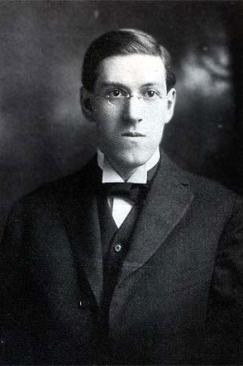
The Real Mr. Difficult, or Why Cthulhu Threatens to Destroy the Canon, Self-Interested Literary Essayists, and the Universe Itself. Finally.

Howard_Phillips_Lovecraft-243x366

Nick Mamatas in the LA Review of Books:

I MAY AS WELL state my claim in as straightforward a way as possible: H. P. Lovecraft, he of the squamous and eldritch, is wrongly derided as a bad writer. Lovecraft is actually a difficult writer. The previous decade saw a slow-motion dust-up over the notion of difficult writers thanks to Jonathan Franzen’s 2002New Yorker essay “Mr. Difficult: William Gaddis and the Problem of Hard-to-Read Books” and the 2005 rejoinder by Ben Marcus in Harper’s: “Why Experimental Fiction Threatens to Destroy Publishing, Jonathan Franzen, and Life as We Know It.” Franzen suggested an age-old conflict between Contract writers who wanted to offer a “good read” to their audiences, and Status writers who pursued an artistic vision to the very limits of the novel-form. Marcus, in his response, pled a case for high modernism, for writers who “interrogate the assumptions of realism and bend the habitual gestures around new shapes.”

Both essays are harmed by the simple fact that Franzen and Marcus are self-interested: Franzen considers himself “a Contract kind of person” and was put out when he received a letter from a reader who complained that his novel The Corrections contained the word “diurnality.” Marcus was put out by Franzen’s essay, labeling his own piece “a response to an attack” from the real status players of literature: the inappropriately named realists who hold experimental fiction of the sort Marcus prefers to write in disdain.

As it has been nine years, surely it is time to plant another flag: Lovecraftian fiction as experimental fiction — that is, the sort of fiction I’ve been known to write. I’ve done a bit of actual experiments: what if we triggered nucleic exchange between Lovecraft and the Beats, or Raymond Carver, or David Foster Wallace, or New Narrative, or or or…? (See my The Nickronomicon.) If there’s a difference between the self-interest in this essay and those of Franzen and Marcus, it’s a simple one: you’ve never heard of me. There’s no reason why you should, as I am a Status writer with no status, a Contract writer who has reneged.

More here.

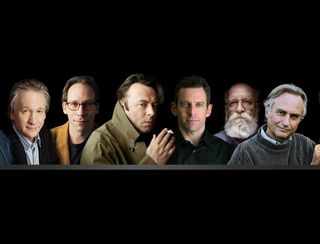
New Atheism, Old Empire

56568_54_news_hub_49740_588x448

Luke Savage in Jacobin:

The politics of the leading New Atheist thinkers are not uniform. Dawkins opposed the 2003 invasion of Iraq, while Harris and Hitchens were some of its leading apologists. Harris defends torture as an ethical necessity in the “war on terror” while Hitchens, who was voluntarily subjected to waterboarding, did not. Both Hitchens and Harris have been prone to bellicose outbursts of violent, almost bloodthirsty rhetoric, which cannot be said of Dawkins.

Nevertheless, all are united by several common intellectual threads. Each espouses a binary worldview that pits a civilized, cosmopolitan, and progressive West against a barbaric, monistic, and reactionary East. Though varied in their political positions, Harris, Hitchens, and Dawkins have all had very public dalliances with the Right, expressing either overt sympathy for, or enthusiastic endorsement of, some of its most vile and disreputable elements.

Each is outwardly a cultural liberal who primarily addresses liberal audiences — “respectable” to blue-state metropolitans and their equivalents elsewhere in ways Sean Hannity or Rush Limbaugh never could be — while embracing positions and causes that are manifestlyilliberal in the commonly understood sense of the term.

Beneath its many layers of intellectual adornment — the typical New Atheist text is laden with maudlin references to Darwin, Newton, and Galileo — we find a worldview intimately familiar to anyone who has studied the language of empires past: culturally supremacist, essentializing and othering towards the foreign, equal parts patronizing and paternalistic, and legitimating of the violence committed for its own ends.

In The End of Faith Harris suggests that nuclear-first strikes may be necessary if the ostensible conflict between “Islam” and “civilization” escalates: “What will we do if an Islamist regime, which grows dewy-eyed at the mere mention of paradise, ever acquires long-range nuclear weaponry?…The only thing likely to ensure our survival may be a nuclear first strike of our own.”

More here.

To Halt Ebola’s Spread, Researchers Race for Data

Kari Lydersen in Discover:

The Ebola virus has consistently stayed several steps ahead of doctors, public officials and others trying to fight the epidemic. Throughout the first half of 2014, it spread quickly as international and even local leaders failed to recognize the severity of the situation. In recent weeks, with international response in high gear, the virus has thrown more curve balls.

The spread has significantly slowed in Liberia and beds for Ebola patients are empty even as the U.S. is building multiple treatment centers there. Meanwhile the epidemic has escalated greatly in Sierra Leone, which has aserious dearth of treatment centers. And in Mali, where an incursion was successfully contained in October, a rash of new cases has spread from an infected imam.

Predicting the trajectory of Ebola rather than playing catching-up could do much to help prevent and contain the disease. Some experts have called for prioritizing mobile treatment units that can be quickly relocated to the spots most needed. Figuring out where Ebola is likely to strike next or finding emerging hot spots early on would be key to the placement of these treatment centers.

But such modeling requires data, and lots of it. And for stressed healthcare workers on the ground and government and non-profit agencies scrambling to combat a raging epidemic, collecting and disseminating data is often not a high priority.

Air traffic connections from West African countries to the rest of the world. Guinea, Liberia, and Sierra Leone are not well connected outside the region; Nigeria, in contrast, is. Image source

Air traffic connections from West African countries to the rest of the world. Guinea, Liberia, and Sierra Leone are not well connected outside the region; Nigeria, in contrast, is.

More here.

Evolution and the American Myth of the Individual

01stone-blog480

John Edward Terrell in the NYT's The Stone (photo Brian Snyder/Reuters):

At least part of the schism between Republicans and Democrats is based in differing conceptions of the role of the individual. We find these differences expressed in the frequent heated arguments about crucial issues like health care and immigration. In a broad sense, Democrats, particularly the more liberal among them, are more likely to embrace the communal nature of individual lives and to strive for policies that emphasize that understanding. Republicans, especially libertarians and Tea Party members on the ideological fringe, however, often trace their ideas about freedom and liberty back to Enlightenment thinkers of the 17th and 18th centuries, who argued that the individual is the true measure of human value, and each of us is naturally entitled to act in our own best interests free of interference by others. Self-described libertarians generally also pride themselves on their high valuation of logic and reasoning over emotion.

Philosophers from Aristotle to Hegel have emphasized that human beings are essentially social creatures, that the idea of an isolated individual is a misleading abstraction. So it is not just ironic but instructive that modern evolutionary research, anthropology, cognitive psychology and neuroscience have come down on the side of the philosophers who have argued that the basic unit of human social life is not and never has been the selfish, self-serving individual. Contrary to libertarian and Tea Party rhetoric, evolution has made us a powerfully social species, so much so that the essential precondition of human survival is and always has been the individual plus his or her relationships with others.

This conclusion is unlikely to startle anyone who is at all religious or spiritual. When I was a boy I was taught that the Old Testament is about our relationship with God and the New Testament is about our responsibilities to one another. I now know this division of biblical wisdom is too simple. I have also learned that in the eyes of many conservative Americans today, religion and evolution do not mix. You either accept what the Bible tells us or what Charles Darwin wrote, but not both. The irony here is that when it comes to our responsibilities to one another as human beings, religion and evolution nowadays are not necessarily on opposite sides of the fence.

More here.

Philip Larkin: Life, Art and Love

23JAMES-master315Michael Dirda at The Washington Post:

As late as the 1970s, it was hard to find Philip Larkin’s poetry in American bookstores. I remember searching all over Washington for his first collection, “The North Ship” (1945), before locating a paperback in the now long-gone Daedalus Bookshop next to the Uptown Theater. I already owned shabby copies of “The Less Deceived” (1955), “The Whitsun Weddings” (1964) and “High Windows” (1974), but I can no longer remember how I first discovered Larkin’s work. It was certainly prior to Noel Perrin’s moving essay on the long poem “Church Going,” part of the wonderful series of “Rediscoveries” he wrote for Book World in the 1980s and later collected in “A Reader’s Delight.”

Today, of course, Philip Larkin (1922-1985) is as famous a poet as any in the second half of the 20th century. In England he holds a roughly comparable position to Robert Frost in the United States — a beloved, curmudgeonly figure, with dark corners in his private life, who produced clear, accessible poetry that, once read, could never be forgotten. “Sexual intercourse began/ In nineteen sixty-three/ (which was rather late for me). . . . What will survive of us is love. . . . Age, and then the only end of age. . . . Never such innocence again.”

more here.

james joyce’s pomes penyeach

500px-Pomes_PenyeachAnthony Domestico at berfrois:

The 1932 Obelisk Press edition of Pomes Penyeach came at a crucial juncture in James Joyce’s writing career and in the life and mental health of his daughter, Lucia. At the time, Joyce was internationally renowned for Ulysses and laboring over his Work in Progress; meanwhile, Lucia was descending into the nightmare of schizophrenia, becoming increasingly delusional and erratic in behavior. Joyce had already published Pomes Penyeach, a series of 13 poems written between 1904 and 1924, with Shakespeare and Co. in 1927. In 1931, a publisher named Caresse Crosby, having seen and admired Lucia Joyce’s designs for a musical setting of Joyce’s poems, suggested that Joyce put out a limited edition volume of Pomes Penyeach containing illuminations of the initial letters for each poem. Joyce, eager to believe that some productive work would soothe Lucia’s inner demons and lead her back onto the road to normalcy, jumped at the chance.

Joyce approached Jack Kahane, a founder of Obelisk Press who had previously produced a limited edition of Joyce’s Haveth Childers Everywhere, and the two agreed to terms. With Desmond Harmsworth, Obelisk Press agreed to print a version of Pomes Penyeach that would use Lucia’s drawings and stress the handcrafted, artisanal nature of the book.

more here.

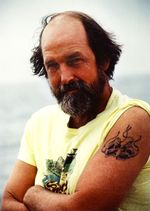
Reflections on Les Blank

Les_Blank_by_Chris_Simon_600Darrell Hartman at Guernica:

Dry Wood, Les Blank’s 1973 documentary about Creole life and music, throws the viewer headfirst into unfamiliar, almost bizarre, scenes of backwoods theater. It opens with a troupe of revelers costumed in cone hats, clown masks, and frilled jumpsuits, chasing a rooster around a yard. The camera follows their pickup trucks down a country road and into a gas station’s dirt parking lot, where they tip back handles of liquor and dance around while a fiddler plays. Someone throws a handful of pocket change up into the air; they go chasing after that, too.

This sequence of rag-tag Mardi Gras—like Rabelais with tractors and Budweiser—unfolds mostly on its own. No voiceover narrator or talking head chimes in to explain what we’re seeing—there are only the subjects themselves, accompanied by festive strains of zydeco music. Dry Wood becomes a brief immersion in that folk genre, a film that weaves the music into scenes of daily life—especially of celebration—for a dynamic, appreciative portrait of a longstanding American micro-culture.

In short, it’s vintage Blank.

more here.