
Category: Recommended Reading
God’s Bankers: the catholic church and indulgences
From Delancey Place:
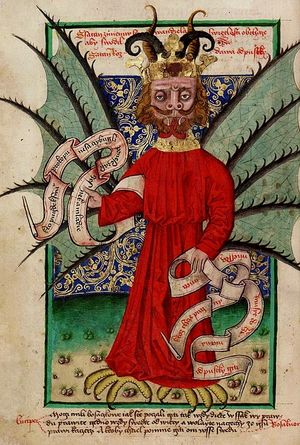
…”The licentious lifestyle of the Papal Court and the widespread abuses in selling indulgences became a rallying cry for Martin Luther and the Reformation. Pope Leo responded by excommunicating Luther. One of the few benefits from the schism was that since Protestants condemned indulgences, the Holy See remained unopposed when it came to selling forgiveness to believers in Christ. “The steady flow of cash became ever more important as the Vatican suffered from the repercussions of the liberal political and social upheaval that swept Western Europe in the late eighteenth century, climaxing in the 1789 French Revolution.”
More here.
Tumour mutations harnessed to build cancer vaccine
Heidi Ledford in Nature:
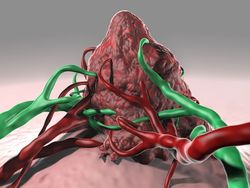
The advent of cancer-genome sequencing and an improved understanding of the immune system have converged to make that approach possible. Last year, two groups2, 3 showed that such vaccines can work in mice. Carreno and her colleagues have now taken the approach into humans. The researchers sequenced the tumour genomes in samples taken from three people with melanoma and catalogued the mutated proteins in each sample. They then chose seven protein fragments per patient for use in the vaccine. White blood cells were taken from each patient and cultured in the laboratory to generate immune cells called dendritic cells. These cells were then exposed to the protein fragments, allowed to mature in the laboratory and then infused into the patients. By then, the dendritic cells had taken up the protein fragments, and were able to present them to immune cells in the body. The result: immune cells trained to target the mutated proteins produced by the tumour1. Such immune cells were evident in the patients' blood two weeks after vaccination.
More here.
Wednesday Poem
At a Happiness Symposium in Wales
.
A psychologist said
Graveyards may help you feel happier,
visit a graveyard when you are depressed
There is a thin line between life and death, my friend
and I am a graveyard
I am happy to be alive, my friend
After Halabja and Anfal
I am happy to become the voice
of a land
that contains the mass graves of our brothers
There is a thin line between life and death, my friend
There is a thin line between life and death
.
by Nazand Begikhani
from Bells of Speech
Ambit Books, London, 2006
*******
Tuesday, April 7, 2015
Sven Birkerts Interviews Sven Birkerts
Sven Birkerts in the Los Angeles Review of Books:
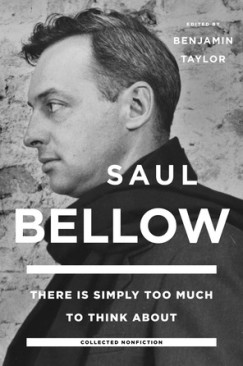
SVEN BIRKERTS: Maybe so, yes. But the idea came to me as a kind of default after I had been beating my head against the standard, familiar thing — you know: hook, overview, bits of excerpt, some wrangling, some praise, followed by the larger pronouncement … I felt I just could not do it one more time. Then I remembered that Bellow had conducted a self-interview (included in this very collection) and something clicked. The form offers certain advantages, the main one being that you can break against the prescribed structure and meander to the things that are more interesting, as happens in good conversation.
But what about fulfilling your reviewer’s responsibility?
I own that there is a certain shirking of the task going on. Which would normally be unconscionable. But this seemed an exception. And here’s my reasoning: first, there’s no need to be arguing for Bellow’s literary status — he is one of our confirmed greats, a Nobelist, admired by his fellow writers the world over. The essays in this book have been published and published again; not only in their original journals like Partisan Review, The Atlantic Monthly, The American Scholar, and The New Yorker, but in previous books. They’ve been reviewed and discussed and —
It sounds like you’re saying “what’s the point?”
I guess I am. On the other hand, there’s always a point in writing about a great writer. That’s what being a great writer means — that he or she can (and ought to) always be written about. Which leads me around to my other rationale for these proceedings: reading the essays had me dropping in on some of the novels — and as I did, my brain started getting revved up in the unique way that it does when I get near that side of Bellow, as if there reallyis simply too much to think about. (I was, it seemed, living out the feeling of the title of the collection.) I was being overrun — like in those old movies when the attacking multitudes finally put their crude ladders up against the castle walls and swarm over everything. (Well, that’s a bit dramatic …)
More here.
How Europeans evolved white skin
Ann Gibbons in Science:

The origins of Europeans have come into sharp focus in the past year as researchers have sequenced the genomes of ancient populations, rather than only a few individuals. By comparing key parts of the DNA across the genomes of 83 ancient individuals from archaeological sites throughout Europe, the international team of researchers reported earlier this year that Europeans today are a mix of the blending of at least three ancient populations of hunter-gatherers and farmers who moved into Europe in separate migrations over the past 8000 years. The study revealed that a massive migration of Yamnaya herders from the steppes north of the Black Sea may have brought Indo-European languages to Europe about 4500 years ago.
Now, a new study from the same team drills down further into that remarkable data to search for genes that were under strong natural selection—including traits so favorable that they spread rapidly throughout Europe in the past 8000 years. By comparing the ancient European genomes with those of recent ones from the 1000 Genomes Project, population geneticist Iain Mathieson, a postdoc in the Harvard University lab of population geneticist David Reich, found five genes associated with changes in diet and skin pigmentation that underwent strong natural selection.
More here.
the legacy of The New republic

“Twentieth-century liberalism has won.” So ran the first sentence of The New Republic’s eightieth-anniversary anthology back in 1994. Liberalism “inspired democratic revolutions from the Soviet Union to South Africa,” according to the anthology’s editor, Dorothy Wickenden, and finally “disabused this country of its prolonged infatuation with conservatism.” Occupying the White House were two men with “intellectual edge and moral intuition,” the magazine’s editors enthused, who offered “the best chance in a generation to bring reform and renewal to a country that desperately needs both.”
How accurate you think this judgment is depends on what you understand by that perennially disputed word, “liberalism.” Originally it meant the opposite of mercantilism, the close government regulation of commercial policy to benefit domestic merchants by means of tariffs and restrictions on the movement of capital and technology. Mercantilism, protectionism, and industrial policy all name various aspects of the impulse to limit competition from abroad. As Britain and the United States became the world’s leading economic powers in the nineteenth and twentieth centuries, respectively, each decided that other countries’ efforts to favor the home team were no longer cricket and that unregulated (i.e., “free”) competition—which, by the merest coincidence, they were most likely to win—was in everyone’s best interest. “Liberalism,” from the Latin word for “free,” is the name of this ideology. Even now, European political parties that call themselves “liberal” mean by it “pro-business.” The leading voice of nineteenth-century liberalism was The Economist, which famously argued that to provide famine aid to Ireland would be to interfere with the necessarily benign workings of the free market.
more here.
Is ISIS Islamic? Why it matters for the study of Islam
For instance, suppose instead of asking whether ISIS is Islamic, we were to say that ISIS is as much Islamic as it is a product of broken promises at the end of the British and French mandates; ISIS is as much Islamic as it is a product of the American interventions in Iraq; ISIS’s brutality is as Islamic as the Ku Klux Klan’s lynching of Black Americans was Christian, both Islam and Christianity having been used to justify violent brutality. To baldly pose these claims is to reveal the parochialisms that frame debates on Islam and Muslims, that inform certain politics of belonging and difference (read, Fox News), and that bolster the state policies that flow therefrom (e.g. Shari’a legislative bans).
To reveal these parochialisms illuminates how the arguments for and against moral panic artificially reduce the debate on ISIS to an unhelpful zero-sum game of Islamic/unIslamic. The label of “Islam(ic)” in the case of ISIS might be better appreciated as what James Scott in Domination and the Arts of Resistance would call a “hidden transcript” that is now made public. Scott writes about how the oppressed hew to “public transcripts” that might appear as their contented resignation to the status quo. But when they are able to avoid detection, the dominated employ “hidden transcripts” (like dragging one’s feet) to quietly subvert that same status quo.
But what happens when the dominated no longer want their hidden transcript to remain hidden?
more here.
The Master Writer of the City
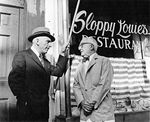
Images that “stand for something” recur throughout Mitchell’s writing and reinforce the sense that we are reading a single metaphoric work about the city. That the author was a southerner only heightens its authority. As Robert Frank’s European sensibility permitted him to see things as he traveled around America that had been invisible to the rest of us, so Mitchell’s outsiderness gave him his own X-ray vision.
Thomas Kunkel’s biography adds some telling details to what Mitchell’s readers already know about his childhood as the eldest son of a prosperous cotton and tobacco grower in North Carolina.* Perhaps the most striking of these is Mitchell’s trouble with arithmetic—he couldn’t add, subtract, or multiply to save his soul—to which handicap we may owe the fact that he became a writer rather than a farmer. As Mitchell recalled late in life:
You know you have to be extremely good at arithmetic. You have to be able to figure, as my father said, to deal with cotton futures, and to buy cotton. You’re in competition with a group of men who will cut your throat at any moment, if they can see the value of a bale of cotton closer than you. I couldn’t do it, so I had to leave.
Mitchell studied at the University of North Carolina without graduating and came to New York in 1929, at the age of twenty-one. Kunkel traces the young exile’s rapid rise from copy boy on the New York World to reporter on the Herald Tribune and feature writer on The World Telegram.
more here.
The Jim Crow Soft-Shoe Segregationists of St. George
Tom Gogola in The Baffler (via Bookforum):
Located
in the suburban settlement of St. George, the Mall of Louisiana—and most particularly, the millions in tax revenue it generates—was, until recently, ground zero in a fiercely pitched battle over the economic, political, and racial makeup of Baton Rouge, Louisiana’s capital city. This May, the Baton Rouge city council voted to annex the mall firmly within the city’s borders—thus claiming for the majority-black city one of the key economic prizes that had been in the sights of a new cohort of affluent (and mostly white) would-be municipal secessionists. But that setback for the region’s secessionist forces is unlikely to slow the momentum of their movement, which thrives on a powerful compound of free-market development stratagems, movement-conservative swagger, and new-millennial racial animus…
Throughout the South, rich municipalities have begun to raise the specter of secession—despite the associations that carry over from the last big push by a privileged white Southern elite to carve out a brave new civic destiny for itself, during the years 1861 to 1865. Similar movements to inaugurate breakaway townships and school districts have lately taken off in Georgia, Tennessee, and Alabama.
But the St. George effort is different. For starters, it furnishes a detailed case study in how the unvarnished rhetoric of white reaction has been repackaged as a sunny faith in the mystical healing powers of school choice. And it has drawn a corps of politically prominent supporters who are long-standing entrepreneurs of far-right reaction.
Read the rest here.
How the subconscious mind shapes creative writing
Charlotte Seager in The Guardian:
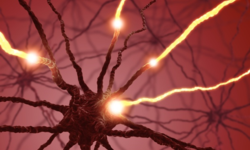
“I felt a lurch, because before writing The Red House I’d given up on a novel called The Missing Square, the central image of which was one of those tile puzzles, and whose organising conceit was that certain absences may make a world imperfect, but they enable that world to change and generate new meanings. I suddenly realised this image had remained a model for the central structure of The Red House, which is a story about the eight remaining members of a family and a ninth member – a stillborn daughter – who is still having a profound effect on the family despite, or because of, her absence.” This hidden structure enabled Haddon to plot and plan his novel around a central theme without even realising it. Unusual, but perhaps not unheard of, this got me thinking: how many other novelists have plotted their books subconsciously? Perhaps another subconscious plotter is John Boyne, who wrote the first draft of The Boy in the Striped Pyjamas in just three days and is known for writing without planning. I caught up with him to see how much of his writing he puts down to hidden thoughts.
More here.
The Mind of Those Who Kill, and Kill Themselves
Erica Goode in The New York Times:

…Serious mental illness, studies of mass killers suggest, is a prime driver in a minority of cases — about 20 percent, according to estimates by several experts. Far more common are distortions of personality — excesses of rage, paranoia, grandiosity, thirst for vengeance or pathological narcissism and callousness. “The typical personality attribute in mass murderers is one of paranoid traits plus massive disgruntlement,” said Dr. Michael Stone, a forensic psychiatrist in New York who recently completed a study of 228 mass killers, many of whom also killed themselves. “They want to die, but to bring many others down with them, whether co-workers, bosses, family members or just plain folk who are in the vicinity.” Mr. Lubitz, Dr. Stone noted, now ranks among the deadliest of mass killers, in a league with Adilson Marcelino Alves, who in 1961 killed as many as 500 people in a circus fire in Brazil, or Timothy McVeigh, the Oklahoma City bomber, who killed 168 people and injured more than 680 others.
More here.
Edward Snowden interviewed by John Oliver
Tuesday Poem
My Tongue Softens on the Other Name
.
In my mother’s backyard washing snaps
above chillies and wild rosemary.
Kapokbos, cottonwool bush, my tongue softens
on the rosemary’s other name.
Brinjal, red peppers and paw-paw grow
in the narrow channel between
the kitchen and the wall that divides
our house from the Severos. At the edge
of the grass by the bedrooms, a witolyf reaches
ecstatically for the power lines.
In a corner in the lee of the house,
nothing grows.
Sound falls here.
Early in the day shadows wash
over old tiles stacked
against the cement wall.
In the cold and silence
my brother is making a garden.
He clears gravel from the soil
and lays it against the back wall.
Bright spokes of pincushion proteas puncture a rockery.
For hours he scrapes into a large stone a hollow to catch
water from a tap that has dripped all my life.
Around it, botterblom slowly reddens the grey sand.
A fence made of reed filters
the wind between the wall and the house.
Ice-daisies dip their tufted heads
toward its shadows.
At night, on an upturned paint tin, he sits
in the presence of growing things.
Light wells over the rim of the stone basin
and collects itself into the moon.
Everything is finding its place.
.
.
by Gabeba Baderoon
from Illuminations: An International Magazine of Contemporary Writing
Rathasker Press, Charleston
Monday, April 6, 2015
perceptions
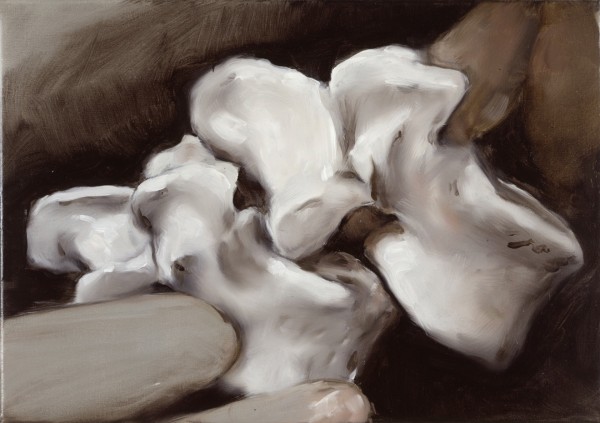
CATSPEAK
by Brooks Riley

Sunday, April 5, 2015
In V.S. Naipaul’s writing on Conrad, we see who he truly is
Morgan Meis in The Smart Set:
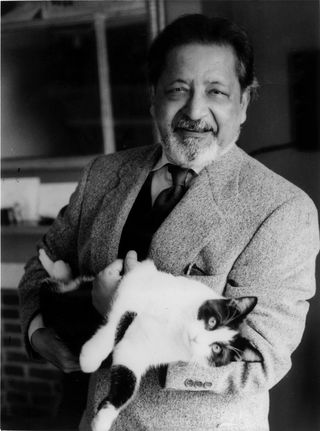
Naipaul and Margaret began an affair that set free all of his desires and fantasies. When his editor and friend Diana Athill scolded him, he replied, “I am having carnal pleasure for the first time in my life, are you saying I must give it up?” Carnal pleasure meant violence — in fact it was inextricable from beating Margaret up, degrading her in bed, turning the great man’s penis into an object of worship. How do we know these things? Because Naipaul tells them to his authorized biographer. “I was very violent with her for two days with my hand; my hand began to hurt. . . . She didn’t mind it at all. She thought of it in terms of my passion for her. Her face was bad. She couldn’t appear really in public. My hand was swollen. I was utterly helpless. I have enormous sympathy for people who do strange things out of passion.”
Reading French’s biography, some praised Naipaul’s honesty. Others felt disgust. It has always been so with Naipaul. He splits opinions, drives a wedge into what might otherwise be polite literary conversations. Nearly everyone who has read Naipaul has strong feelings about him. No side ever fully wins the debate. The Naipaul Question has been a live one for more than forty years.
More here.
The trolley and the psychopath
Sally Adee in The Last Word on Nothing:
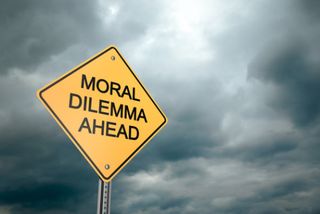
This kind of thought experiment is known as a sacrificial dilemma, and it’s useful for teaching college freshmen about moral philosophy. What you maybe shouldn’t do is ask a guy on the street to answer these questions in an fMRI machine, and then use his answers to draw grand conclusions about the neurophysiological correlates of moral reasoning. But that’s exactly what some neuroscientists are doing. The trouble is, their growing body of research is built on a philosophical house of cards: sacrificial dilemmas are turning out to be exactly the opposite of what we thought they were. Guy Kahane wants to divert this trolley before it drives off a cliff.
Kahane, deputy director of Oxford’s Uehiro Centre for Practical Ethics, has never been a big fan of the sacrificial dilemma. The main problem, he says, is that it has been misapplied to situations it was never intended for.
More here.
Physicists engage in a strange debate about whether time really passes
Sean Carroll in Smithsonian Magazine:

The idea that time is an illusion is an old one, predating any Times Square ball drop or champagne celebrations. It reaches back to the days of Heraclitus and Parmenides, pre-Socratic thinkers who are staples of introductory philosophy courses. Heraclitus argued that the primary feature of the universe is that it is always changing. Parmenides, foreshadowing Einstein, countered by suggesting that there was no such thing as change. Put into modern language, Parmenides believed the universe is the set of all moments at once. The entire history of the universe simply is.
Today we would call this the “eternalist” or “block universe” view—thinking of space and time together as a single four-dimensional collection of events, rather than a three-dimensional world that evolves over time. Besides Parmenides and Einstein, this picture is shared by the Tralfamadorians, an alien race who appear in Kurt Vonnegut’s novel Slaughterhouse-Five. To a being from Tralfamadore, visiting the past is no harder than walking down the street.
This “timeless” view of the universe goes against our usual thinking. We perceive our lives as unfolding. But it has adherents even in contemporary physics. The laws of nature, as we currently understand them, treat all moments as equally real. No one is picked out as special; the laws simply say how any moment relates to the previous one and to the next.
More here.
What Did Jesus Do? Reading and unreading the Gospels
Adam Gopnik in The New Yorker:
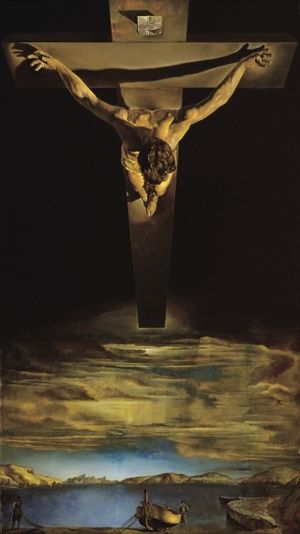
Verhoeven, citing Crossan, offers an opening scene for a Jesus bio-pic which neatly underlines this point. He imagines a man being nailed to a cross, cries of agony, two companion crosses in view, and then we crane out to see two hundred crosses and two hundred victims: we are at the beginning of the story, the mass execution of Jewish rebels in 4 B.C., not the end. This was the Roman death waiting for rebels from the outset, and Jesus knew it. Jesus’ cry of desolation—“My God, my God, why have you forsaken me?”—though primly edited out or explained as an apropos quotation from the Psalms by later evangelists, pierces us even now from the pages of Mark, across all the centuries and Church comforts. The shock and pity of failure still resonates.
One thing, at least, the cry assures: the Jesus faith begins with a failure of faith. His father let him down, and the promise wasn’t kept. “Some who are standing here will not taste death before they see the kingdom of God,” Jesus announced; but none of them did. Jesus, and Paul following him, says unambiguously that whatever is coming is coming soon—that the end is very, very near. It wasn’t, and the whole of what follows is built on an apology for what went wrong. The seemingly modern waiver, “Well, I know he said that, but he didn’t really mean it quite the way it sounded,” is built right into the foundation of the cult. The sublime symbolic turn—or the retreat to metaphor, if you prefer—begins with the first words of the faith. If the Kingdom of God proved elusive, he must have meant that the Kingdom of God was inside, or outside, or above, or yet to come, anything other than what the words seem so plainly to have meant.
More here.