Wednesday Poem

Bridge Builder

Bridge-builder I am
between the holy and the damned
between the bitter and the sweet
between chaff and the wheat

Bridge-builder I am
between the goat and the lamb
between the sermon and the sin
between the princess and Rumpelstiltskin

Bridge-builder I am
between the yoni and the lingam
between the darkness and the light
between the left hand and the right

Bridge-builder I am
between the storm and the calm
between the nightmare and the sleeper
between the cradle and the reaper

Bridge-builder I am
between the hex and the hexagram
between the chalice and the cauldron
between the gospel and the Gorgon

Bridge-builder I am
between the serpent and the wand
between the hunter and the hare
between the curse and the prayer

Bridge-builder I am
between the hanger and the hanged
between the water and the wine
between the pearls and the swine

Bridge-builder I am
between the beast and the human
for who can stop the dance
of eternal balance?

by John Agard
from Poetry Archive

Speaker 4

Listen (recommended)
.

Super-Intelligent Humans Are Coming

4520_45e81409831b77407fbc22afc09f0d78

Stephen Hsu in Nautilus Magazine (Photo by Cinerama/Courtesy of Getty Images):

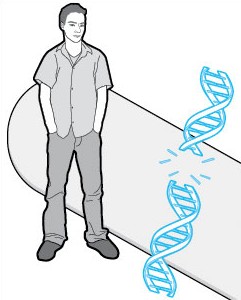
The possibility of super-intelligence follows directly from the genetic basis of intelligence. Characteristics like height and cognitive ability are controlled by thousands of genes, each of small effect. A rough lower bound on the number of common genetic variants affecting each trait can be deduced from the positive or negative effect on the trait (measured in inches of height or IQ points) of already discovered gene variants, called alleles.

The Social Science Genome Association Consortium, an international collaboration involving dozens of university labs, has identified a handful of regions of human DNA that affect cognitive ability. They have shown that a handful of single-nucleotide polymorphisms in human DNA are statistically correlated with intelligence, even after correction for multiple testing of 1 million independent DNA regions, in a sample of over 100,000 individuals.

If only a small number of genes controlled cognition, then each of the gene variants should have altered IQ by a large chunk—about 15 points of variation between two individuals. But the largest effect size researchers have been able to detect thus far is less than a single point of IQ. Larger effect sizes would have been much easier to detect, but have not been seen.

This means that there must be at least thousands of IQ alleles to account for the actual variation seen in the general population. A more sophisticated analysis (with large error bars) yields an estimate of perhaps 10,000 in total.

Each genetic variant slightly increases or decreases cognitive ability. Because it is determined by many small additive effects, cognitive ability is normally distributed, following the familiar bell-shaped curve, with more people in the middle than in the tails. A person with more than the average number of positive (IQ-increasing) variants will be above average in ability. The number of positive alleles above the population average required to raise the trait value by a standard deviation—that is, 15 points—is proportional to the square root of the number of variants, or about 100. In a nutshell, 100 or so additional positive variants could raise IQ by 15 points.

Given that there are many thousands of potential positive variants, the implication is clear: If a human being could be engineered to have the positive version of each causal variant, they might exhibit cognitive ability which is roughly 100 standard deviations above average. This corresponds to more than 1,000 IQ points.

More here.

Fame and Literature, Irreconcilable Enemies

Bolano-243x291

John Yargo in the LA Review of Books:

Bolaño’s biographers face a unique problem. The seductive popular image of him — something like a better-read Burroughs — is at odds with the voice of his fiction and his essays, which tends to be more generous, expansive, and penetrating than his image suggests. Even key events, like his arrest in Pinochet’s Chile or his “heroin addiction,” have been alternately credited as formative aspects of his personality, and discredited by his surviving family, friends, and rivals as erroneous planks of a legacy campaign.

What stands out in his fiction are the riotous voices, the contradictory and implausible characters, the restless equivocations and recapitulations: the polyphony. The first full-length biography in English, Bolaño: A Biography in Conversations, sidesteps “the authoritative biography” trap and attempts to recreate Bolaño-esque polyphony in telling the author’s own story. As the editor-in-chief of the Mexican edition of Playboy, Maristain conducted the last interviews, which appear with other conversations published between 1999 and 2005 in a handy collection, Roberto Bolaño: The Last Interview. In those interviews, Bolaño clearly relishes talking about books and contradicting himself and his image. If the interviews are not confiding in the usual sense of personal disclosures, to his credit, he is far more intimate and vulnerable when answering a question about Cervantes than when other authors are sharing sensitive details about their families.

As in the essay collection Between Parentheses, the picture that emerges from the interviews and the biography is a Bolaño that draws from different sources than contemporary Anglo-American literary fiction incubated in the university workshop. In place of Hemingway, Borges and Nicanor Parra; Carver is substituted by Breton; Denis Johnson usurped by Jacques Vaché and Witold Gombrowicz.

In Latin American fiction, he had a similar effect, shifting the terms on which authors would be understood.

More here.

Category Mistakes

Sleep-Furiously

Richard Marshall interviews Ofra Magidor in 3:AM Magazine:

3:AM: You say it’s important for linguistics, computer science – how so?

OM: In the case of linguistics, it is fairly obvious why category mistakes are important: one of the central tasks of linguistics explaining why some sentences are fine and others are infelicitous. In fact, category mistakes are a particularly interesting case, because a plausible argument can be made for explaining their oddness in terms of each of syntax, semantics, and pragmatics – so this is a good phenomenon to explore for anyone who is interested in the distinction between these three realms of language. This is probably why in the late 1960s category mistakes played a key role in one of the central disputes in the foundations of linguistics – that between interpretative semanticists (who claimed that syntax is autonomous of semantics) and generative semanticists (who rejected the sharp divide between these two realms).

I should also note there was a period in the 1960s when there was quite a lot of discussion of category mistakes happening in a parallel in linguistics and in philosophy, but there was practically no interaction at all between the two fields on this topic (they even used different terms – in linguistics authors usually refer to category mistakes as ‘selectional violations’). One thing I tried to do in the book was to bring together these two parallel debates. I’d like to think that these days there is much more co-operation between linguists and philosophers of language so this kind of divide is less likely to happen.

Moving to computer science: one straightforward way in which category mistakes are relevant is because of the field of computational linguistics. Suppose for example that you have an automatic translator which is given the sentence ‘John hit the ball’. If the translator looks up the word ‘ball’ in a dictionary, it will encounter (at least) two meanings: a spherical object that is used in games, and a formal gathering for dancing. It is obvious that the most natural interpretation of the sentence used the former meaning, and one way to see that is to note that if ‘ball’ were interpreted in the ‘dance’ sense, the sentence would be a category mistake. So being able to recognize category mistakes can help the automatic translator reach the correct interpretation.

But there is also a more general way in which the topic is relevant to computer science: computer programs use variables of various types which are assigned values – and it is very common to encounter cases where the value is of the wrong type for the variable. So there is an issue about how the program is going to deal with this kind of type mismatch which is in some ways parallel to the question of how natural languages deal with category mistakes.

More here.

Tuesday, October 21, 2014

Diary: ebola

1409307203767_wps_14_BN2XBP_Colorized_transmisPaul Farmer at The London Review of Books:

The worst is yet to come, especially when we take into account the social and economic impact of the epidemic, which has so far hit only a small number of patients (by contrast, the combined death toll of Aids, tuberculosis and malaria, the ‘big three’ infectious pathogens, was six million a year as recently as 2000). Trade and commerce in West Africa have already been gravely affected. And Ebola has reached the heart of the Liberian government, which is led by the first woman to win a presidential election in an African democracy. There were rumours that President Ellen Johnson Sirleaf was not attending the UN meeting because she was busy dealing with the crisis, or because she faced political instability at home. But we knew that one of her staff had fallen ill with Ebola. A few days ago, we heard that another of our Liberian hosts, a senior health official, had placed herself in 21-day quarantine. Although she is without symptoms, her chief aide died of Ebola on 25 September. Such developments, along with the rapid pace and often spectacular features of the illness, have led to a level of fear and stigma which seems even greater than that normally caused by pandemic disease.

But the fact is that weak health systems, not unprecedented virulence or a previously unknown mode of transmission, are to blame for Ebola’s rapid spread. Weak health systems are also to blame for the high case-fatality rates in the current pandemic, which is caused by the Zaire strain of the virus.

more here.

when H. G. Wells interviewed stalin

ImgresA 1935 piece by Malcolm Cowley at The New Republic:

I doubt that any other interview of the last ten years was more dramatic, more interesting as a clear statement of two positions or, in a sense, more absurdly grotesque than H.G. Wells’s interview with Stalin.

They met in Moscow on July 23 of last year and talked through an interpreter for nearly three hours. Wells gives a one-sided story in the last chapter of his “Experiment in Autobiography.” The official text of the interview can now be had in a pamphlet issued by International Publishers for two cents. A longer pamphlet, costing fifty cents in this country, was published in London byThe New Statesman and Nation. It contains both the interview and an exchange of letters in which Bernard Shaw is keener and wittier than Wells or J.M. Keynes. There is, unfortunately, no letter from Stalin. We know what Wells thinks about him; it would be instructive to hear what Stalin thinks about Wells.

The drama of their meeting lay in the contrast between two systems of thought. Stalin, with full authority, was speaking for communism, for the living heritage of Marx and Engels and Lenin. Wells is not an official figure and was speaking for himself; but he spoke with the voice of Anglo-American liberalism.

more here.

Cubism at the Metropolitan Museum

141027_r25660-320-419Peter Schjeldahl at The New Yorker:

The show eases, somewhat, the famous difficulty of telling a Picasso from a Braque in the woodshedding period of 1909-12, which is termed Analytic Cubism. A wall text—a welcome one among far too many that are prolix, making for an installation that is like a walk-through textbook—points out Braque’s tendency toward ruddy luminosity and Picasso’s toward dramatic shadow. Still, the works speak a single visual language of clustered forms that advance and recede in bumps and hollows, with shaded planes, often bodiless contours, and stuttering fragments of representation. It’s said that they rendered objects from different viewpoints simultaneously, but seeing the works that way is beyond me. You don’t take in an Analytic Cubist picture as a whole. Rather, you survey it, as with an aerial view of some terrain that you must then explore on foot.

Oddly, for a style that crowds the picture plane, spatial illusion is crucial to Cubism. You know that you’re on the right track when, to your eye, the “little cube” elements start to pop in and out, as if in low relief. There’s a vicarious tactility to the experience. What the elements represent matters far less than where they are, relative to one another. To see how this works, it helps to take note of an endemic formal problem of Cubist painting: what to do in the corners, where the third dimension can’t be sustained.

more here.

a lucid, thrilling and amusing history of the digital age

Peter Conrad in The Guardian:

PeterRevolutions usually leave ancient institutions tottering, societies shaken, the streets awash with blood. But what Walter Isaacson calls the “digital revolution” has kept its promise to liberate mankind. Enrichment for the few has been balanced by empowerment for the rest of us, and we can all – as the enraptured Isaacson says – enjoy a “sublime user experience” when we turn on our computers. Wikipedia gives us access to a global mind; on social media we can chat with friends we may never meet and who might not actually exist; blogs “democratise public discourse” by giving a voice to those who were once condemned to mute anonymity. Has heaven really come down to our wired-up, interconnected Earth?

What Isaacson sees as an eruption of communal creativity began with two boldly irreligious experiments: an attempt to manufacture life scientifically, followed by a scheme for a machine that could think. After Mary Shelley’s Frankenstein stitched together his monster, Byron’s bluestocking daughter Ada Lovelace devised an “analytical engine” that could numerically replicate the “changes of mutual relationship” that occurred in God’s creation. Unlike Shelley’s mad scientist, Lovelace stopped short of challenging the official creator: her apparatus had “no pretension to originate anything”. A century later, political necessity quashed this pious dread. The computing pioneers of the 1930s, as Isaacson points out, served military objectives. At MIT, Vannevar Bush’s differential analyser churned out artillery firing tables, and at Bletchley Park, after the war began, an all-electronic computer called the Colossus deciphered German codes. Later, the US air force and navy gobbled up all available microchips, which were used for guiding warheads aimed at targets in Russia or Cuba; only when the price of the chips dropped could they be used to power consumer products, not just weapons.

More here.

Genetic Variant May Shield Latinas From Breast Cancer

Anahad O'Connor in The New York Times:

Well_women-tmagArticleA genetic variant that is particularly common in some Hispanic women with indigenous American ancestry appears to drastically lower the risk of breast cancer, a new study found. About one in five Latinas in the United States carry one copy of the variant, and roughly 1 percent carry two.

…Many genome-wide association studies have looked for associations with breast cancer in women of European descent. But this was the first such study to include large numbers of Latinas, who in this case hailed mostly from California, Colombia and Mexico, said the lead author of the study, Laura Fejerman of the Institute for Human Genetics in San Francisco. The researchers zeroed in on chromosome 6 and discovered the protective variant, which is known as a single nucleotide polymorphism, or SNP (pronounced (“snip”). They also discovered that its frequency tracked with indigenous ancestry. It occurred with about 15 percent frequency in Mexico, 10 percent in Colombia and 5 percent in Puerto Rico. But its frequency was below 1 percent in whites and blacks, and other studies have shown that it occurs in about 2 percent of Chinese people. “My expectation would be that if you go to a highly indigenous region in Latin America, the frequency of the variant would be between 15 and 20 percent,” Dr. Fejerman said. “But in places with very low indigenous concentration — places with high European ancestry — you might not even see it.”

More here.

How Your Cat Is Making You Crazy

Jaroslav Flegr is no kook. And yet, for years, he suspected his mind had been taken over by parasites that had invaded his brain. So the prolific biologist took his science-fiction hunch into the lab. What he’s now discovering will startle you. Could tiny organisms carried by house cats be creeping into our brains, causing everything from car wrecks to schizophrenia?

Kathleen McAuliffe in The Atlantic:

ScreenHunter_848 Oct. 21 14.11Certainly Flegr’s thinking is jarringly unconventional. Starting in the early 1990s, he began to suspect that a single-celled parasite in the protozoan family was subtly manipulating his personality, causing him to behave in strange, often self-destructive ways. And if it was messing with his mind, he reasoned, it was probably doing the same to others.

The parasite, which is excreted by cats in their feces, is called Toxoplasma gondii (T. gondii or Toxo for short) and is the microbe that causes toxoplasmosis—the reason pregnant women are told to avoid cats’ litter boxes. Since the 1920s, doctors have recognized that a woman who becomes infected during pregnancy can transmit the disease to the fetus, in some cases resulting in severe brain damage or death. T. gondii is also a major threat to people with weakened immunity: in the early days of the AIDS epidemic, before good antiretroviral drugs were developed, it was to blame for the dementia that afflicted many patients at the disease’s end stage. Healthy children and adults, however, usually experience nothing worse than brief flu-like symptoms before quickly fighting off the protozoan, which thereafter lies dormant inside brain cells—or at least that’s the standard medical wisdom.

But if Flegr is right, the “latent” parasite may be quietly tweaking the connections between our neurons, changing our response to frightening situations, our trust in others, how outgoing we are, and even our preference for certain scents. And that’s not all. He also believes that the organism contributes to car crashes, suicides, and mental disorders such as schizophrenia. When you add up all the different ways it can harm us, says Flegr, “Toxoplasma might even kill as many people as malaria, or at least a million people a year.”

More here.

Keith Frankish on the Hard Problem and the Illusion of Qualia

Over at Philosophy Bites:

Subjective experience leads to the so-called 'hard problem' of consciousness: the difficulty of explaining qualia in terms of the brain. Keith Frankish discusses both the problem and a possible solution in this episode of the Philosophy Bites podcast.

Listen to Keith Frankish on the Hard Problem and the Illusion of Qualia

A Public Apology is Now the Defence Strategy of the Rich and Powerful

PAR92781

Nick Smith in Aeon (Photo by W Eugene Smith/Magnum):

Apologies interact with the law in strange ways. Let’s start with criminal law. The modern penitentiary originated in the 18th century as a place of penance: it was where society sent its outcasts to study their Bibles, experience quiet self-alienation, hear the word of Christ, and repent. Less has changed than you might think.

Between 90 and 95 per cent of all criminal convictions in the US result from guilty pleas rather than jury trials. In many if not all of the millions of cases in the US criminal justice system, courts determine punishments in part based on their sense of whether the offender is remorseful or not. We might wince at the idea of secular states engaging in the ‘soul crafting’ of the original penitentiaries, but we still expect state agents to divine the essence of the offender’s nature and offer a suitable punishment based on her badness. We are, in other words, still in the grip of old spiritual traditions. And that leaves us with an old problem.

Findings of remorse in criminal contexts typically occur in the star chambers of intuition. State officials consult their gut feelings, evaluate a few emotional cues and then render a (typically unappealable) decision about the offender’s character. On the whole, they do not explain why they find an offender’s remorse compelling. They do not disclose or defend their standards of contrition. The US Federal Sentencing Guidelines attempted to add some consistency to punishments by allowing reductions in sentences for those who ‘accept responsibility’, but, in practice, accepting responsibility has come to mean agreeing to a plea even while denying guilt. The US Supreme Court has ruled that remorse can determine whether an offender lives or dies, yet we entrust such determinations to ‘know it when I see it’ standards, as if judges and juries can look into the eyes of offenders, intuit the depths of their evil, and punish accordingly.

This discretionary latitude has predictable consequences. Regardless of their blameworthiness, rich offenders tend to get more credit for their remorse than poor ones, a generalisation that holds throughout the US criminal process. Police officers are more likely to let a warning suffice when the offender is rich. Parole boards are more likely to find that a rich inmate is sufficiently reformed. By contrast, the apologies of minorities, the poor and the mentally disabled often fail to convince.

More here.

Evading Power

41hZdJFrCZL._SY344_BO1,204,203,200_

Sonja Pyykkö speaks to György Dragomán, author of “The White King”, in Eurozine:

Day-to-day reality in a communist state was defined by a long list of forbidden practices, objects and opinions, and the culture of informants that aimed to keep everyone in check. Naturally, no one knew the identity of the informants, so neighbours, distant relatives and co-workers were all suspicious by default. Keeping people in a constant state of mistrust is a form of exercising power according to the ancient principle of divide and conquer. Dragomán links this distrust to the violence of the system:

“Conversations were full of violence and nearly every subject was approached through it. A dictatorship functions just so; violence replaces communication in its entirety. Since nobody could be trusted, you were forced into this violent guessing game of whether they'll hurt you or you them. It all started very early on, I can't even remember any other type of conversation. This is all in retrospect of course, at the time it felt completely normal.”

Dragomán is very good at portraying the division between open, physical violence, and hidden violence that is apparent only on the level of speech and thought, and as a constant threat in everyday life.

“In some ways, the entire system's rhetoric was based on violence. Peace was of course a big deal and the state's rhetoric was always about peace, but there was always some battle involved. As a child I always had this terrible feeling that violence could emerge at any moment. Like in school, where during my childhood teachers still used canes. We weren't caned often, but the threat was always present. I remember this teacher, who had a broken arm in a cast. I remember the story was that he'd broken it when hitting a child. This probably wasn't true, but as a child, I believed the story completely.”

More here.

Monday, October 20, 2014

perceptions

Thorns sized

Walter Johnston. Flaky Thorn Acacia. Timbavati, South Africa, 2014.

Digital photograph.

On safari in August we were told that a “gall making wasp” injects a kind of growth hormone into the thorn to make it expand (see below) and thus provide a well protected nourishing home for its eggs.

I have not been able to corroborate this. If someone else can, I'd love to learn.

Here's the best I have found:

“Myrmecophilous acacia are found in Eastern Africa and Mesoamerica …

…They develop some to most of their stipular spines into inflated, globose, ovoid, fusiform or thick cyclindrical armatures. Their spines look like galls or horns leading to species names like White swollen thorn acacia (=A. bussei), Black-galled acacia (A. malacocephala), Hairy-galled acacia (=A. mbuluensis), Bull`s Horn acacia, or Ant-galled acacia also called Whistling thorn acacia

The swollen thorns are genetically fixed. They are not randomely generated by the sting of an insect, like the galls produced by a wasp that injects her chemicals into a leaf, which then forms galls. Therefore the so-called gall-thorns are not real galls.

The fresh thorn is drilled open by an ant queen. Then it is carved out and she lays her eggs inside, starting a new colony …

The obligate mutualistic Acacia-ants (Pseudomyrex in Mesoamerica and Crematogaster in Africa) protect the plant in different ways: they fiercly attack browsing mammals, ravaging insects and epiphytic vines. They prevent any twig from neighbouring trees to touch their host – to prevent hostile ants from invading their tree. For the same reason they cut shoots of their tree that develop too far towards the canopy of neighboring trees.”

From: http://www.acacia-world.net/index.php/new-world/myrmecophilous-acacia

Swollen thorn

Walter Johnston. Swollen thorn of the Flaky Thorn Acacia. Timbavati, South Africa, 2014.

More on acacias here.

Photographs posted with permissin from Walter Johnston.

Sunday, October 19, 2014

In Kosovo

Justin E. H. Smith in his own blog:

ScreenHunter_845 Oct. 19 20.42There was a war here not long ago. Mass graves were filled by the bodies of people whose loved ones, the survivors, are still walking around, selling vegetables and bus tickets, huddling and smoking. This war was the expression of a sort of popular will, and it was part of a process of geopolitical realignment that ought to be of significant interest to self-identified Westerners, yet is not. Neither Samuel Huntington, nor Sam Harris, nor Bill Maher, nor anyone even lower among the pundits whose reptilian lobes do not just kick in in moments of distress, but whose careers in fact depend on the continuous buzzing of these lobes: none of these people, I note, ever care to acknowledge, in their professional performances of Islamophobia, that what is perhaps the most Americanophile country in the world is also a Muslim country.

More here.

Books by disillusioned physicians reveals a corrosive doctor-patient relationship at the heart of our health-care crisis

Meghan O'Rouke in The Atlantic:

LeadFor someone in her 30s, I’ve spent a lot of time in doctors’ offices and hospitals, shivering on exam tables in my open-to-the-front gown, recording my medical history on multiple forms, having enough blood drawn in little glass tubes to satisfy a thirsty vampire. In my early 20s, I contracted a disease that doctors were unable to identify for years—in fact, for about a decade they thought nothing was wrong with me—but that nonetheless led to multiple complications, requiring a succession of surgeries, emergency-room visits, and ultimately (when tests finally showed something was wrong) trips to specialists for MRIs and lots more testing. During the time I was ill and undiagnosed, I was also in and out of the hospital with my mother, who was being treated for metastatic cancer and was admitted twice in her final weeks.

As a patient and the daughter of a patient, I was amazed by how precise surgery had become and how fast healing could be. I was struck, too, by how kind many of the nurses were; how smart and involved some of the doctors we met were. But I was also startled by the profound discomfort I always felt in hospitals. Physicians at times were brusque and even hostile to us (or was I imagining it?). The lighting was harsh, the food terrible, the rooms loud. Weren’t people trying to heal? That didn’t matter. What mattered was the whole busy apparatus of care—the beeping monitors and the hourly check-ins and the forced wakings, the elaborate (and frequently futile) interventions painstakingly performed on the terminally ill. In the hospital, I always felt like Alice at the Mad Hatter’s tea party: I had woken up in a world that seemed utterly logical to its inhabitants, but quite mad to me.

More here.

Bangladeshi writing in English joins a global conversation

Shougat Dasgupta in The Caravan:

ScreenHunter_844 Oct. 19 19.53Who speaks, and who is being spoken for, have always been loaded questions for postcolonial novelists. If a nation is, at least in part, imagined into being through feats of storytelling, the storyteller acquires a kind of authority over the soul, such as it is, of the nation. For a certain kind of postcolonial novelist—say, VS Naipaul—the novel must remain an unfinished business: the protagonist cannot develop beyond a certain point; he is stunted and half-formed, like his nation. For another kind of postcolonial novelist—say Hanif Kureishi—it is the former imperial centre that seems half-formed; no longer cocksure, forced to cede ground to the immigrant, or at least to the immigrant’s children, to reconcile itself to a new order. For Naipaul’s failed nationalists and doomed Third World intellectuals, emigration and self-exile is necessary penance; for Kureishi’s first generation Londoners, the baggage of their parents’ histories, the baggage of the ‘home’ country has to be sloughed off so that a new kind of English person can be created. Other postcolonial novelists writing in English have also taken up the theme of finding, creating and claiming a place in new national communities.

Ideas of home and belonging are hardly particular to postcolonial or migrant literature. Novels, from Don Quixote on, have been preoccupied with the radical act of leaving home on journeys and quests, followed by a return; the protagonist fundamentally changed, matured by having lived a little. Home and away: you need the one to recognise the other. The English novel developed in the eighteenth century, alongside an empire expanding ever further afield. Englishness was confronted by foreignness, and the outlandish travel narrative was among the most popular literary genres of the time. Stories, Edward Said wrote in Culture and Imperialism, “are at the heart of what explorers and novelists say about strange regions of the world; they also become the method colonised people use to assert their own identity and the existence of their own history.”

The novel has been a way of asserting and establishing individual and national identity, of making coherent what seems incoherent, of answering (or failing to answer) essential questions: Who are you? Where do you come from? What is your place in society? For a writer like Salman Rushdie, the loss of home can be assuaged by restoring the past “whole, in CinemaScope and glorious Technicolor,” as he wrote in the essay ‘Imaginary Homelands,’ and by creating “Indias of the mind.” Rushdie, for a while, offered hybridity, the double perspective, as a happy alternative to Naipaul’s baleful gloom.

More here.

Magic Kingdoms

Sophia Nguyen in The Point:

ScreenHunter_843 Oct. 19 19.43In the dog days of August, two books about the Ivy League landed comfortably on the New York Times bestseller list. One was William Deresiewicz’s Excellent Sheep. The other was Lev Grossman’s The Magician’s Land. Despite their disparate genres, the nonfiction tract ends up in fantasy, while the escapist entertainment roots itself in reality—and both are invested in the drama of gifted children.

Heavily quoting emails and essays from his former students at Yale, Deresiewicz’s higher-ed polemic takes down elite colleges and the adults they produce—zombies with status anxiety where their curiosity and humanity used to be. Rather than challenge students with a rigorous education, Deresiewicz argues, the Ivy League and other elite colleges now promote a narrow notion of success. It begins with admissions offices, which have become inhumanly ruthless sorting machines further stratifying the upper class. Having selected for a certain breed of strivers, the schools then encourage their students to become a conformist herd, seeking meaning in credentials. Failing to find that meaning, the hunger only intensifies.

By contrast, the Magicians trilogy is a fantasy series about young wizards. Its protagonist, Quentin Clearwater, attends a magical college and later discovers a land he’d thought was only imaginary: Fillory, a magic kingdom from his favorite childhood book. Over three books, Quentin gains and abdicates a throne, meets a dragon, learns how to wield a sword and brings his first love back from a fate worse than death. But he is also the ur-sheep: a standard-issue, passably polymathic high schooler who does nothing more or less extraordinary than gain admission to an exclusive college. Amidst all the defensive noise made by Ivy Leaguers rebutting Deresiewicz with their personal stories, the Magicians trilogy furnishes him with a kind of confirming anecdote. It may be pure coincidence that the two were published within a week of each other, but they are symbiotically linked—and so are their fates.

More here.