
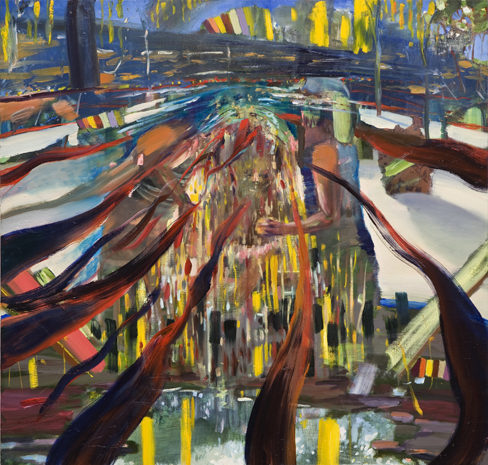
Annie Lapin. Feel, 2009.
Category: Recommended Reading
CATSPEAK
by Brooks Riley
Entering Startup Tunnel

The nine companies we are supporting do things like deliver services to your doorstep, allow freelancers to connect, improve sourcing and hiring for companies, integrate your social media feeds and allow health professionals to share information. It's a motley mix of different ends of the online economy, almost always addressing the professional and personal needs of urban elites — the global and connected middle class — of which there is now a critical mass not only in India, but also Indonesia, the Philippines, South-East Asia and other parts of the world, all now addressable from India.
I feel compelled to explain why I think incubators and accelerators like STun are a good thing. So much is written about the culture of Silicon Valley and how new wealth is creating new disparities there. Uber is the new ethically-challenged face of startups, not only in India, but everywhere else in the world. And the magnates of Sand Hill Road were among the first to slam Picketty's book, Capital in the 21st Century, for failing to understand how capitalism really works. I'm sympathetic to both sides, and often struggle to articulate my sense that these worldviews can be reconciled, that they're both right in different ways. I for one find Picketty's statistically-supported argument, that we are indeed living in a more unequal society, quite compelling. But I also sense, in a way that I can't yet defend, that the way for us to get to a more equal society is to find ways to funnel capital more effectively towards the kind of social and technical innovation that might envision and create newer better ways with which to navigate our everyday lives.
Sunday, January 11, 2015
Ivy League’s meritocracy lie: How Harvard and Yale cook the books for the 1 percent
Lani Guinier in Salon:

Admission into the “Big Three” was fairly easy if the applicant possessed a “manly, Christian character.” He had to pass subject-based entrance exams devised by the colleges, but the tests weren’t particularly hard, and he could take them over and over again to pass. Even if a student didn’t pass the required exams, he could be admitted with “conditions.” Once enrolled at Harvard, Yale, or Princeton, he would focus primarily on his social life, clubs, sports, social organizations, and campus activities, while often ignoring his academic work.
Admissions began to change, however, when Charles William Eliot became president of Harvard in 1869. Annoyed with “the stupid sons of the rich,” Eliot sought to draw into the university’s fold capable students from all segments of society. To ensure that smart students could attend Harvard regardless of their means, Eliot, in 1898, abolished the archaic Greek admission exams that were popular up until that time. He also replaced Harvard’s admissions exams with exams created by the College Entrance Examination Board because it tripled the number of locations where applicants could be tested. The result of Eliot’s changes was the admission of more public school students, including Catholics and Jews.
More here.
A New Antibiotic That Resists Resistance
Ed Yong in Not Exactly Rocket Science:

Since humans started making antibiotics for ourselves in the 1940s, bacteria have evolved to counteract our efforts. They are now winning. There are strains of old foes that withstand everything we can throw at them. Meanwhile, our arsenal has dried up. Before 1962, scientists developed more than 20 new classes of antibiotics. Since then, they have made two.
More, hopefully, are coming. A team of scientists led by Kim Lewis from Northeastern University have identified a new antibiotic called teixobactin, which kills some kinds of bacteria by preventing them from building their outer coats. They used it to successfully treat antibiotic-resistant infections in mice. And more importantly, when they tried to deliberately evolve strains of bacteria that resist the drug, they failed. Teixobactin appears resistant to resistance.
Bacteria will eventually develop ways of beating teixobactin—remember Orgel—but the team are optimistic that it will take decades rather than years for this to happen. That buys us time.
Teixobactin isn’t even the most promising part of its own story. That honour falls on the iChip—the tool that the team used to discover the compound. Teixobactin is a fish; the iChip is the rod. Having the rod guarantees that we’ll get more fish—and we desperately need more.
More here.
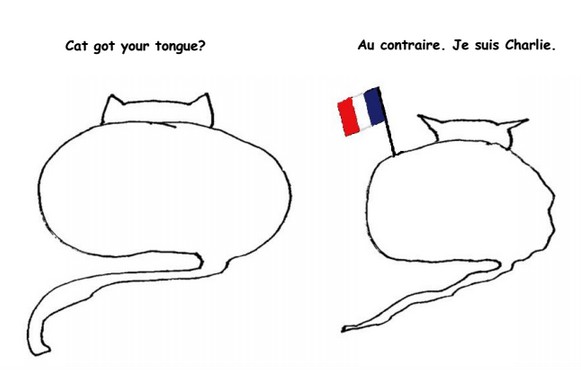
IN SOLIDARITY WITH A FREE PRESS: SOME MORE BLASPHEMOUS CARTOONS
Glenn Greenwald in The Intercept:
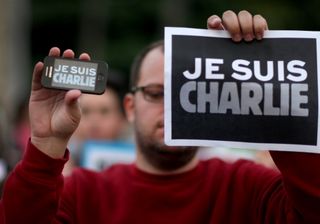
But this week’s defense of free speech rights was so spirited that it gave rise to a brand new principle: to defend free speech, one not only defends the right to disseminate the speech, but embraces the content of the speech itself. Numerous writers thus demanded: to show “solidarity” with the murdered cartoonists, one should not merely condemn the attacks and defend the right of the cartoonists to publish, but should publish and even celebrate those cartoons. “The best response to Charlie Hebdo attack,”announced Slate’s editor Jacob Weisberg, “is to escalate blasphemous satire.”
More here.
The town that China built: tourism boom at Zambia’s Victoria Falls
Jenni Marsh in South China Morning Post Magazine:

Twenty years ago, with no savings or formal education, the couple emigrated to Zambia when Liu's husband was hired as a chef by a Chinese state-owned construction company contracted to build roads in dusty Lusaka.
Now in their 50s, the Lius have just built a 15 million kwacha (HK$18.3 million) three-star hotel and restaurant, called the Golden Chopsticks, in the former British colonial outpost of Livingstone. They also own property in the Zambian capital; employ about 100 staff, local and Chinese; and rub shoulders with presidents and diplomats.
The Lius are among the estimated 20,000 to 100,000 Chinese living in the copper-rich southern African nation – weak census practices mean precise figures are elusive – and were among the first wave of daring migrants who sought their fortune here.
Although mining and construction brought the Chinese to Zambia, their presence is now having a significant effect on another industry: tourism.
Zambia, one of Sub-Saharan Africa's most politically stable states, is an underdeveloped tourism market, home to wild elephants, lush safari parks and the world's biggest series of waterfalls – the Mosi-oa-Tunya, or “the smoke that thunders”, which was found by Scottish explorer David Livingstone in 1855 and renamed after Britain's Queen Victoria.
In 2013, China became the world's largest outbound tourist market, with an increasing number of the estimated 100 million Chinese who left the mainland for leisure travel turning their attention away from Europe towards Africa; Chinese tourist arrivals to the continent grew by 56 per cent from 2011 to 2012.
Read the full story here.
Poetry reading by Les A Murray AO
B-52’s Rock Lobster
Little Jimmy Dickens (1920 – 2014)
The Most Punctual Man in India
Nina Martyris in Lapham's Quarterly:
Gandhi’s legendary punctuality had a utilitarian imperative—without it he would never have been able to answer the sacks of letters and streams of visitors that demanded his attention each day. But, as with everything he valued, it had a moral imperative as well. Simply put, time was tied to his philosophy of trusteeship: the belief that just as we do not own our wealth but are trustees of it—and thus have to use it wisely—similarly, we are trustees of our time. “You may not waste a grain of rice or a scrap of paper, and similarly a minute of your time,” he wrote. “It is not ours. It belongs to the nation and we are trustees for the use of it.” Consequently, any abuse of time was unethical. “One who does less than he can is a thief,” he wrote to a friend. “If we keep a timetable we can save ourselves from the last-mentioned sin indulged in even unconsciously.” While this focus on punctuality may portray Gandhi as skittish and anxious, the opposite was true: a timetable allowed him to give the issue at hand his tranquil and undivided attention.
More here.
The 50 Mini Modern Classics of Literature
Martin Chilton in The Telegraph:
In 2011 Penguin launched 50 Modern Mini Classics. Here is our guide to the books.
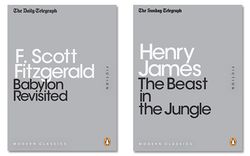 HELL SCREEN (1918) by Ryūnosuke Akutagawa
Japanese author Akutagawa's book was first published in English in 1948. It's a disturbing story about an artist who can paint only what he sees. When he decides to create a screen depicting the Buddhist hell, he proceeds to torture his apprentices and has to decide whether to burn his own daughter. Akutagawa committed suicide in 1927 at the age of 35. The book was made into a 1969 movie directed by Shiro Toyoda.
THE QUEEN'S NECKLACE (1952) by Italo Calvino
Calvino, the Cuban born novelist who died in 1985 aged 61, was brought up from the age of two in Italy and became one of that country's most distinguished writers. The short story is about two rivals who discover a treasure lost by the side of the road.
THE ADULTEROUS WOMAN (1957) by Albert Camus
Camus took the title for this story from John 8:3-11 and it's a tale of Janine and her husband Marcel and the frustrations of their life in Algeria. Camus, who died aged 46 in French Algeria in 1960, wrote the story in the year he won the Nobel Prize for Literature.
More here.
Sunday Poem
Performance
I starred that night, I shone:
I was footwork and firework in one,
a rocket that wriggled up and shot
darkness with a parasol of brilliants
and a peewee descant on a flung bit;
I was blusters of glitter-bombs expanding
to mantle and aurora from a crown,
I was fouéttes, falls of blazing paint,
para-flares spot-welding cloudy heaven,
loose gold off fierce toeholds of white,
a finale red-tongued as a haka leap:
that too was a butt of all right!
As usual after any triumph, I was
of course, inconsolable.
.
by Les Murray
from Subhuman Redneck Poems, 1996
Saturday, January 10, 2015
‘Sailing the Forest: Selected Poems,’ by Robin Robertson

Like his friend and fellow Scotsman Don Paterson, Robertson hasn’t yet crossed over into the realm of mainstream adoration that Ireland’s Seamus Heaney enjoyed among American readers, but that’s probably only a matter of time. He is not hip, and I mean that as a compliment. His work is accessible without being dopey, traditional without making him look like a fogy, and utterly free of fashionable snark. And somehow, the visceral language of a Robin Robertson poem has a way of feeling simultaneously luxurious and spartan. To put it bluntly, he writes lines that you want to read again and again: “He wore fish-gutter’s gloves to pick brambles,” and “the forest is triggered and tripwired,” and “a dab of blood on her cheek / from a rabbit or a deer.” In fact, he has such a deft hand that when his poetry takes a turn for the gory, as in “The Halving,” where he conveys the act and the aftermath of a median sternotomy, or “The Flaying of Marsyas,” his retelling of a scene of torture from Ovid, the gruesomeness can be hard to bear.
In “The Long Home” Robertson captures the atmosphere of a sleepy, crepuscular Aberdeen bar with such cinematic attention to detail that you half expect to see a boom mike hovering a few inches above the scene:
The firewood’s sap
buzzing like a trapped fly,
the granular crackle of a Green Final
folded and unfolded,
the sound of the coals
unwrapping themselves like sweets.
He only looked up when the barman
poured a bucketful of ice
into the sink, like a tremendous
burst of applause.
more here.
Michel Houellebecq makes provocation an art

In a 1998 piece in the New Yorker, Adam Gopnick described Houellebecq's literary intentions this way: “There are certain books — sardonic and acutely pessimistic — that systematically affront all our current habits of living, and treat our presumptions of mind as the delusions of the cretinous.”
The idea, in other words, is to make a mockery of our hypocrisies, to show us not as flawed but fatally self-deluded, the creators of a useless culture built on corrupt pieties.
“What I think, fundamentally,” he told the Paris Review in 2010, “is that you can’t do anything about major societal changes…. That’s the difference between me and a reactionary. I don’t have any interest in turning back the clock because I don’t believe it can be done. You can only observe and describe. I’ve always liked Balzac’s very insulting statement that the only purpose of the novel is to show the disasters produced by the changing of values.”
In “Submission,” these disasters have to do with the conflict between religious and secular values. “More and more people,” he told the Telegraph this week, before the attack on Charlie Hebdo, “can’t stand living without God.”
more here.
Fantasies of Federalism
Samuel Moyn in Dissent:
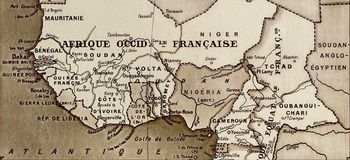
In an era of revulsion towards nation-states, and especially nation-states in postcolonial circumstances, we can appreciate why the story of federalism might be worth recalling. Is there anything else besides the nation that otherwise implacable enemies—liberals, Marxists, and postcolonialists—can more easily agree about, if only to agree in what they hate? The nation-state has always been exclusionary and has often been violent, offending the cosmopolitanism of liberals and the desire of Marxists for solidarity beyond borders. The nation-state has also been a severe disappointment to postcolonialists, who believe that new nations succeeded mainly in creating new elites and perpetuating the suffering of their populations at large.
However, for the history of federalism to be more than trivia, it has to be shown that it was actually possibile and that it might have yielded better results than the nation-state. Neo-federalist historians rarely take it upon themselves to solve what ought to be the central puzzle: why did the nation-state model win out, when the alternatives were supposedly so compelling?
Read the rest here.
on ‘Hall of Mirrors’, by Barry Eichengreen
Ever since the business cycle replaced the seasons as the prime driver of economic life, mankind has learnt to adapt to the inevitability of booms and busts. Yet, just as our farming ancestors struggled to cope with extreme weather, large-scale financial crises have repeatedly caught industrial and postindustrial societies off guard. Policy makers have had to dig deep into the past for lessons as they sought to contain bank runs and fight soaring unemployment.
The Great Recession has been no exception. After the largely benign economic fluctuations of the 1990s and early 2000s, central bankers were stunned by the financial crisis that struck in 2007-08. Their immediate instinct was to look back 80 years, to the upheavals of the Great Depression.
In Hall of Mirrors, Barry Eichengreen, a professor of economics at the University of California, Berkeley, argues that knowledge of what happened in the 1930s has been a mixed blessing for today’s policy makers. Hindsight allowed politicians and central bankers to avoid many of the errors made by their predecessors, sparing the world a more dramatic crisis. But Eichengreen also believes that the success of the initial response meant the reform effort stopped halfway. This has left the west vulnerable to a new financial shock.
more here.
The lack of wisdom of crowds?
Erik B. Steiner in Wired:

The mathematical theory behind this kind of estimation game is apparently sound. That is, the mean of all the estimates will be uncannily close to the actual value, every time. James Surowiecki’s best-selling book, Wisdom of the Crowd, banks on this principle, and details several striking anecdotes of crowd accuracy. The most famous is a 1906 competition in Plymouth, England to guess the weight of an ox. As reported by Sir Francis Galton in a letter to Nature, no one guessed the actual weight of the ox, but the average of all 787 submitted guesses was exactly the beast’s actual weight.
Galton, who also happens to be the inventor of eugenics, was shocked to find such value in “democratic judgment.”
The notion that the hive is more intelligent than the individuals comprising it is a seductive one, and a keystone of today’s bottom-up Big Data revolution. It’s democratic ideology, open-source goodness, the “invisible hand,” and New Age humility all wrapped into a big networked hug.
But is it true?
More here. By the way, I was one of the people who took part in the experiment. Below are emails between Erik and me. I didn't do so good! 🙂
Can Hermaphrodites Teach Us What It Means To Be Male?
Carl Zimmer in This View of Life:

In the early 1960s, a scientist named Sydney Brenner fell in love with the vinegar worm’s simplicity. He had decided to embark on a major study of humans and other animals. He wanted to know how our complex bodies develop from a single cell. He was also curious as to how neurons wired into nervous systems that could perceive the outside world and produce quick responses to keep animals alive. Scientists had studied these two questions for decades, but they still knew next to nothing about the molecules involved. When Brenner became acquainted with the vinegar worm in the scientific literature, he realized it could help scientists find some answers.
Its simplicity was what made it so enticing. Under a microscope, scientists could make out every single cell in the worm’s transparent body. It would breed contentedly in a lab, requiring nothing but bacteria to feed on. Scientists could search for mutant worms that behaved in strange ways, and study them to gain clues to how their mutations to certain genes steered them awry.
Brenner’s instinct proved correct. In 2002, he shared the Nobel Prize with John Sulston and Robert Horvitz for their research on the vinegar worm. Other scientists have done pioneering work on the animal as well, with over 22,000 papers published on it over the past five decades. Today, they show no signs of slowing down.
But something fascinating unfolded along the way.
More here.
Art Is Free: Responses to Charlie Hebdo
Darhil Crooks, creative director at The Atlantic:

More here.