Data show how manageable Europe’s refugee crisis could be

Refugees

Kavitha Surana in Quartz Magazine (photo: Reuters/Laszlo Balogh):

Malin Björk, a Swedish member of the European Parliament (MEP), worries that Europe is not doing enough to solve its ongoing refugee crisis. “I think Sweden could take more,” she said. “Considering the seriousness of the situation around us, we’re not taking enough people.”

Last month, the United Nation’s refugee agency (UNHCR) reported that global refugee figures, driven by the war in Syria and other conflicts in the Middle East and Africa, exceed 50 million people—the highest number since the Second World War. Unsurprisingly, there’s been a corresponding spike in people trying to enter the EU to apply for asylum, often making dangerous trips across the Mediterranean to reach their destination.

After a boat full of migrants capsized, drowning at least 800 in April, the European Commission proposed measures to address the crisis. This included a binding refugee quota system, as well as plans to resettle 20,000 refugees from outside the EU and relocate 40,000 asylum-seekers from Greece and Italy—the main countries on the receiving end of the boats—to other European states over the next two years.

But less than two months later, member countries can barely agree on anything when it comes to refugees. At a heated summit in June, the plan was downgraded to voluntary instead of binding, and limited to a one-time deal, leaving many worried that no one will step up to offer places.
“If you do not agree with the figure of 40,000 [placements for asylum seekers], you do not deserve to call yourself Europeans,” Italy’s premier Matteo Renzi said during the summit. “Either there’s solidarity, or don’t waste our time,” he said, according to a conference attendant.

With all the talk of burden sharing and solidarity, it’s worth taking a look at the numbers. What do asylum policies actually look like across the EU, and what would a fairer system mean?

More here.

How You Consist of Trillions of Tiny Machines

Flannery_1-070915_jpg_600x724_q85

Tim Flannery in the NYRB (image Martin Oeggerli/Micronaut):

In 1609 Galileo Galilei turned his gaze, magnified twentyfold by lenses of Dutch design, toward the heavens, touching off a revolution in human thought. A decade later those same lenses delivered the possibility of a second revolution, when Galileo discovered that by inverting their order he could magnify the very small. For the first time in human history, it lay in our power to see the building blocks of bodies, the causes of diseases, and the mechanism of reproduction. Yet according to Paul Falkowski’s Life’s Engines:

Galileo did not seem to have much interest in what he saw with his inverted telescope. He appears to have made little attempt to understand, let alone interpret, the smallest objects he could observe.

Bewitched by the moons of Saturn and their challenge to the heliocentric model of the universe, Galileo ignored the possibility that the magnified fleas he drew might have anything to do with the plague then ravaging Italy. And so for three centuries more, one of the cruellest of human afflictions would rage on, misunderstood and thus unpreventable, taking the lives of countless millions.

Perhaps it’s fundamentally human both to be awed by the things we look up to and to pass over those we look down on. If so, it’s a tendency that has repeatedly frustrated human progress. Half a century after Galileo looked into his “inverted telescope,” the pioneers of microscopy Antonie van Leeuwenhoek and Robert Hooke revealed that a Lilliputian universe existed all around and even inside us. But neither of them had students, and their researches ended in another false dawn for microscopy. It was not until the middle of the nineteenth century, when German manufacturers began producing superior instruments, that the discovery of the very small began to alter science in fundamental ways.

Today, driven by ongoing technological innovations, the exploration of the “nanoverse,” as the realm of the minuscule is often termed, continues to gather pace. One of the field’s greatest pioneers is Paul Falkowski, a biological oceanographer who has spent much of his scientific career working at the intersection of physics, chemistry, and biology. His book Life’s Engines: How Microbes Made Earth Habitablefocuses on one of the most astonishing discoveries of the twentieth century—that our cells are comprised of a series of highly sophisticated “little engines” or nanomachines that carry out life’s vital functions. It is a work full of surprises, arguing for example that all of life’s most important innovations were in existence by around 3.5 billion years ago—less than a billion years after Earth formed, and a period at which our planet was largely hostile to living things. How such mind-bending complexity could have evolved at such an early stage, and in such a hostile environment, has forced a fundamental reconsideration of the origins of life itself.

At a personal level, Falkowski’s work is also challenging. We are used to thinking of ourselves as composed of billions of cells, but Falkowski points out that we also consist of trillions of electrochemical machines that somehow coordinate their intricate activities in ways that allow our bodies and minds to function with the required reliability and precision. As we contemplate the evolution and maintenance of this complexity, wonder grows to near incredulity.

More here.

You don’t mean dick to me

Lidija Haas in the LRB:

Close-up of Amy Winehouse. Not the stylised mask of later years, with its extravagant licks of eyeliner. What you’re seeing is a quite different face, that of, as one record exec recalls her, ‘a classic North London Jewish girl’, large-eyed, fleshy, constantly in motion; it belongs to someone mouthy, beguiling and almost resplendently ordinary. Off-camera, a female interviewer appears to be trying to get Winehouse to join her in pontificating on women musicians who write about their personal lives: Dido, the interviewer insists, really ‘cleaned out her emotional closet’ on her last record. ‘Didshe?’ Winehouse asks sarcastically, leaking contempt on Dido, her emotions, her insipid music, but most of all on the hapless journalist. As the woman talks on, Winehouse’s expression shifts. Mugging for the camera, mocking her interlocutor, she reminds you that long before the press made her into a punchline, she was a comedian.

Amy Winehouse

This is a scene from Amy, a new documentary by Asif Kapadia, whose previous films include two – The Warrior and Far North – that pit an individual against a vast, inhospitable landscape; one aberrance in the form of a Hollywood thriller starring Sarah Michelle Gellar; and Senna (2010), a documentary about the Formula One driver pieced together from 15,000 hours of archival footage. As Kapadia told the New York Times, there are few people about whom you could make a film like Senna, because he was so famous that, anywhere in the world, ‘whenever he goes to work there is a camera there. So you have his work and his career and his death all on camera.’ Winehouse’s tabloid fame in the years preceding her death in 2011 at the age of 27 puts her in a similar category, although unlike Senna, who seems to have been more or less unaware of or unfazed by being filmed, she has a dynamic relationship with the camera, shifting from a playful, often flirtatious presence in early footage shot by friends, to an increasingly weary, lonely, spied-on expression as the paparazzi close in.

Each of these documentaries shapes a sympathetic portrait of a thoughtful, sensitive person, exceptionally gifted in their field, who we as viewers know is heading for a disaster (one quality of found footage is dramatic irony; no one on the tapes can know what the audience does). Stars of sport and pop music are similarly susceptible to being underestimated, seen as instinctive talents (which helps create a sense of fatedness around them), and Kapadia is determined not to portray his protagonists that way: inSenna, the manager of the McLaren team talks about watching him drive early on and being impressed by his pace and dedication, but most of all by his mind, because ‘in the end what you’re looking for is an intellect.’ It’s clear that with Amy, as with Senna, Kapadia doesn’t want to show only the crash: it is, after all, the part of her story we’ve already seen in excruciating detail.

More here.

The 100 best novels: No 94 – An Artist of the Floating World by Kazuo Ishiguro

Robert McCrum in The Guardian:

IshiKazuo Ishiguro is best known for The Remains of the Day, his Booker prizewinner; The Unconsoled, a very long novel of hallucinatory strangeness; and Never Let Me Go, a contemporary favourite, widely taught in schools. But the pitch-perfect novel that both expresses his Japanese inheritance and captures the haunting beauty and delicacy of Ishiguro’s English prose is his second work of fiction, An Artist of the Floating World. This, as its title suggests, is a tour de force of unreliable narration, set in post-second world war Japan, during the American occupation. Masuji Ono, a respected artist in the 1930s and during the war, but now retired, is garrulously recalling the past, from a highly subjective point of view. Ono, who passes his time gardening and pottering, opens his narrative with a low-key sentence whose meaning will resonate throughout the story: “If on a sunny day you climb the steep path leading up from the little wooden bridge still referred to around here as ‘the Bridge of Hesitation’, you will not have to walk far before the roof of my house becomes visible between the tops of two gingko trees.

This kind of hesitation and uncertainty runs through everything that follows. Everything, for Ono, is provisional and troubling: art, family, life and posterity. An Artist of the Floating World presents, with the menace of an almost dream-like calm, the reminiscences of a retired painter in the aftermath of a national disaster. Outside his home, there’s the grim reckoning that has followed the horrors of Nagasaki and Hiroshima. The American occupation is crushing Japan’s national pride. A new generation of young veterans wants to forget the imperial past. At the same time, in the tranquil seclusion of house and garden, Ono has time for some increasingly troubled reflections. He has lost his wife and son in the war, but lives on with two daughters, one of whom is married. But for a puzzling anxiety about his second daughter’s marriage negotiations, Ono could slip into old age. Instead, he must take “certain precautionary steps” against the necessary inquiries of his prospective son-in-law. It becomes clear that Ono’s past conceals some guilty secrets that “the artist” must reluctantly address, secrets that illuminate the larger themes of guilt, ageing, solitude and the baffling incomprehension between young and old.

More here.

the legacy of genghis khan

From Delanceyplace:

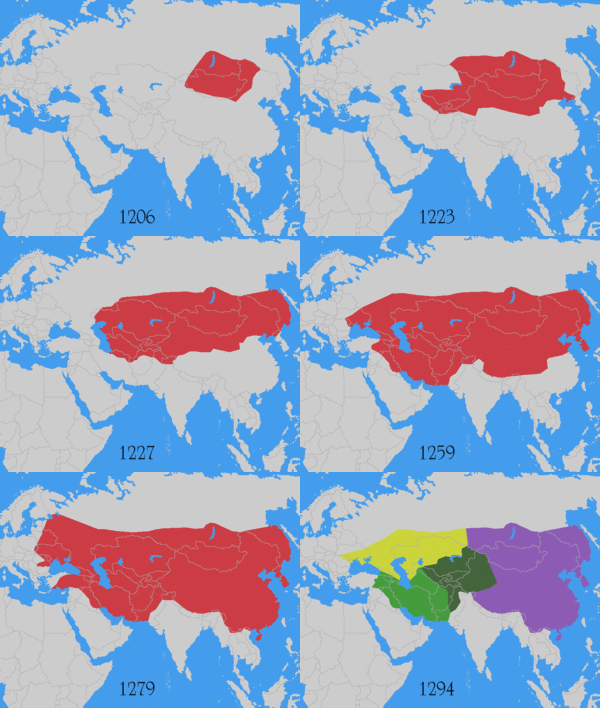
Mongol_empire_map“In twenty-five years, the Mongol army subjugated more lands and people than the Romans had conquered in four hundred years. Genghis Khan, together with his sons and grandsons, conquered the most densely populated civilizations of the thirteenth century. Whether measured by the total number of people defeated, the sum of the countries annexed, or by the total area occupied, Genghis Khan conquered more than twice as much as any other man in history. The hooves of the Mongol warriors' horses splashed in the waters of every river and lake from the Pacific Ocean to the Mediterranean Sea. At its zenith, the empire covered between 11 and 12 million contiguous square miles, an area about the size of the African continent and considerably larger than North America, including the United States, Canada, Mexico, Central America, and the islands of the Caribbean combined. It stretched from the snowy tundra of Siberia to the hot plains of India, from the rice paddies of Vietnam to the wheat fields of Hungary, and from Korea to the Balkans. The majority of people today live in countries conquered by the Mongols; on the modern map, Genghis Kahn's conquests include thirty countries with well over 3 billion people. The most astonishing aspect of this achievement is that the entire Mongol tribe under him numbered around a million, smaller than the workforce of some modern corporations. From this million, he recruited his army, which was comprised of no more than one hundred thousand warriors — a group that could comfortably fit into the larger sports stadiums of the modern era.

“In American terms, the accomplishment of Genghis Khan might be understood if the United States, instead of being created by a group of educated merchants or wealthy planters, had been founded by one of its illiterate slaves, who, by the sheer force of personality, charisma, and determination, liberated America from foreign rule, united the people, created an alphabet, wrote the constitution, established universal religious freedom, invented a new system of warfare, marched an army from Canada to Brazil, and opened roads of commerce in a free-trade zone that stretched across the continents. On every level and from any perspective, the scale and scope of Genghis Khan's accomplishments challenge the limits of imagination and tax the resources of scholarly explanation.

More here.

Toward Precision Medicine

Jonathan Shaw in Harvard Magazine:

BookWhat is biomedical informatics, why does it matter, and why now at HMS? The emerging discipline “reflects the dramatic development of large data sets in genetics, genomics, studies of proteins, the nervous system—all aspects of biomedical science and ultimately patient care,” says Gilbert Omenn, M.D. ’65, director of the University of Michigan’s Center for Computational Medicine and Bioinformatics, who chaired the external committee that reviewed the proposal for the new department. But much of this information is “heterogeneous,” he explains: the data range from the molecular and genetic to the behavioral and sociological. “All of it,” Omenn says, “has to come together to paint a complete picture of the determinants of health and disease, as well as response to therapies and general care.” Biomedical informatics aims to create an information commons that will be useful to researchers, doctors, and even their patients.

Lessons from Netflix

“Medicine as a whole is a knowledge-processing business that increasingly is taking large amounts of data and then, in theory, bringing that information to the point of care so that doctor and patient have a maximally informed visit,” says Kohane. He compares this idealized patient experience, in a sense, to Netflix or Amazon’s connection to consumers: they already know “your entire prior purchase history…what other consumers with a similar history are going to buy next, and what to recommend to you.” But in medicine, he points out, patients with chronic diseases must repeat some abbreviated version of their entire medical history “again and again to every provider.”

More here.

Thursday Poem

Only a Few
—a Ghazal From Ghalib

سب کہاں کچھ لالہ و گل میں نمایاں ہو گئیں
خاک میں کیا صورتیں ہونگی کہ پنہاں ہو گئیں
.

Not all, only a few come back to us in tulips.
Many more lie buried, dust on their sleeping eyelids.

By day, the daughters of Pleiades unwind out of sight.
At night, they shed their veils in ravishing display.

My eyes pour blood on this night of savage partings,
Two lamps I have lighted to burn in love’s agony.

I will make them pay for the years of torment, if
By chance, these sirens play houris in paradise.

Sleep is his, his too are rapture and silken nights,
If she unties her jasmine-breathing hair in his arms.

I have no use for your coy approaches to the divine.
Beyond your piety and creeds, we worship God alone.

If Ghalib were to keep this up (he cries inconsolably),
Sand will fill your streets, lizards will take the town..

Interpretation by M. Shahid Alam
.
.

Wednesday, July 8, 2015

Metrosophy: Philosophy and the City

David Kishik in the New York Times:

StoneWeb-blog480Where is philosophy? This is not a typo. What is philosophy is a common question. But rarely do we wonder where it is, physically speaking. Imagine a philosopher at work. Where does this scene take place?

Philosophy is typically depicted as a solitary activity conducted in remote natural settings — a hut next to a fjord, a clearing in the middle of a forest, a cave on the slope of a mountain, or, these days, a rocking chair on a porch in a quaint college town. Certainly, some great thinkers (Wittgenstein, Heidegger and Nietzsche among them) were responsible for promoting this bucolic ethos. But even a superficial familiarity with the history of Western philosophy reveals that the city is virtually a necessary condition for the possibility of doing theoretical work, which may then be carried on in other, less hectic places.

It might be enough to mention the critical importance of Athens to the birth of ancient philosophy with Socrates, Plato, and Aristotle; or the way that modern philosophy got its start in Bacon’s London, Descartes’s Paris and Spinoza’s Amsterdam; or the deep roots of American pragmatism in New York, where William James spent the first years of his life as a curious child, and John Dewey spent the last years of his life as a revered professor.

These biographical notes are not inconsequential, especially if we acknowledge one of the most basic pragmatist beliefs: Ideas do not operate in a void. They respond to and depend on human beings in particular situations. Ideas prevail not because of their immutable logic but because they are embedded in the social environment at hand.

More here.

Why Greece Isn’t to Blame for the Crisis

Mark Blyth in Foreign Affairs:

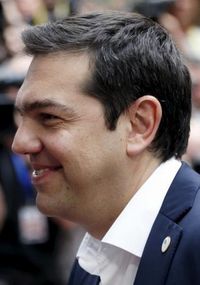
ScreenHunter_1246 Jul. 08 17.19When the anti-austerity party Syriza came to power in Greece in January 2015, Cornel Ban and I wrote in a Foreign Affairs article that, at some point, Europe was bound to face an Alexis Tsipras, the party’s leader and Greek prime minister, “because there’s only so long you can ask people to vote for impoverishment today based on promises of a better tomorrow that never arrives.” Despite attempts by the eurogroup, the European Central Bank, and the International Monetary Fund since February 2015 to harangue Greece into ever more austerity, the Greeks voted by an even bigger margin than they voted for Syriza to say “no” once more. So the score is now democracy 2, austerity 0. But now what? To answer that question, we need to be clear about what this crisis is and what it is not. Surprisingly, despite endless lazy moralizing commentary to the contrary, Greece has very little to do with the crisis that bears its name. To see why, it is best to follow the money—and those who bank it.

The roots of the crisis lie far away from Greece; they lie in the architecture ofEuropean banking. When the euro came into existence in 1999, not only did the Greeks get to borrow like the Germans, everyone’s banks got to borrow and lend in what was effectively a cheap foreign currency. And with super-low rates, countries clamoring to get into the euro, and a continent-wide credit boom underway, it made sense for national banks to expand private lending as far as the euro could reach.

More here.

Our own oasis of life in the cosmos is blue, but will others be?

6526_40afd3a37cca05efe623b7509855c73aCaleb Scharf at Nautilus:

Suppose that, instead of obsessing over colors that indicate the right conditions for life, we look for the colors of life itself? On modern Earth, the dominant light-harvesting mechanisms for life employ a set of pigments we call chlorophylls. These molecules preferentially absorb light in the blue and red, reflecting back greenish tones. As a result, near the surface of Earth’s oceans, microscopic photosynthetic organisms can create vast green blushes, mixed with the scattered blue light of pure water. On dry land, plant life can also produce great swathes of green, blending with the inorganic hues of the planet.

If we could see these signatures in Earthshine—the summed up, one-shot, reflected light of the whole planet—we might be able to tease out the signs of life, and then look for those same signs in distant planets. But evaluating Earthshine is difficult because we seldom have the right spectrographic instruments and telescopes sitting off world. So astronomers have resorted to ingenious methods that measure Earthshine as it reflects from the night side of the moon. It’s a technique that was used from the 1920s to the 1960s to evaluate Earth’s reflectivity, or albedo, but then largely forgotten.

more here.

The Venice Biennale: Islands of meaning in a morass of incoherence

Schwabsky_IslandMeaning_ba_imgBarry Schwabsky at The Nation:

At the beginning of his essay in the catalog for this year’s Venice Biennale, Okwui Enwezor asks: “What do we see? A void of nothingness? A horizon of possibilities? What to do?” Enwezor is describing, perhaps more accurately than he realizes, the perspective of the visitor to the Venice Biennale—not just this year’s (of which Enwezor is the artistic director and curator), but any biennale curated by anyone in recent memory.

“Leap into the void or into the fray?” These are the possibilities that Enwezor envisions, but there are others, one being to turn back and walk away. Which is what I did, inadvertently, two years ago: Having decided not to attend the preview of the 55th Biennale—thinking that I’d be able to see much more if I visited the show later, when the crowds would be less overwhelming—I never quite got myself sufficiently organized to plan the trip. And that was a shame, because Massimiliano Gioni’s 2013 Venice Biennale, “The Encyclopedic Palace,” might have been among the more interesting ones. Maybe I should just admit to myself that the attendant social whirl, though it distracts from the Biennale’s art, is partly what attracts me, or at least motivates me to go.

more here.

Why Can’t We Fall Asleep?

Konnikova-Sleep-p1-690Maria Konnikova at The New Yorker:

Here’s what’s supposed to happen when you fall asleep. Your body temperature falls, even as your feet and hands warm up—the temperature changes likely help the circadian clocks throughout your body to synchronize. Melatonin courses through your system—that tells your brain it’s time to quiet down. Your blood pressure falls and your heart rate slows. Your breathing evens out. You drift off to sleep.

That, at least, is the ideal. But going to sleep isn’t always a simple process, and it seems to have grown more problematic in recent years, as I learned through a series of conversations this May, when some of the world’s leading sleep experts met with me to share their ongoing research into the nature of sleeping. (The meetings were facilitated by a Harvard Medical School Media Fellowship.) According to Charles Czeisler, the chief of the Division of Sleep and Circadian Disorders at Brigham and Women’s Hospital, over the past five decades our average sleep duration on work nights has decreased by an hour and a half, down from eight and a half to just under seven. Thirty-one per cent of us sleep fewer than six hours a night, and sixty-nine per cent report insufficient sleep. When Lisa Matricciani, a sleep researcher at the University of South Australia, looked at available sleep data for children from 1905 to 2008, she found that they’d lost nearly a minute of sleep a year. It’s not just a trend for the adult world. We are, as a population, sleeping less now than we ever have.

more here.

Beyond Hope

Derrick Jensen in Orion:

HopeTHE MOST COMMON WORDS I hear spoken by any environmentalists anywhere are, We’re fucked. Most of these environmentalists are fighting desperately, using whatever tools they have — or rather whatever legal tools they have, which means whatever tools those in power grant them the right to use, which means whatever tools will be ultimately ineffective — to try to protect some piece of ground, to try to stop the manufacture or release of poisons, to try to stop civilized humans from tormenting some group of plants or animals. Sometimes they’re reduced to trying to protect just one tree. Here’s how John Osborn, an extraordinary activist and friend, sums up his reasons for doing the work: “As things become increasingly chaotic, I want to make sure some doors remain open. If grizzly bears are still alive in twenty, thirty, and forty years, they may still be alive in fifty. If they’re gone in twenty, they’ll be gone forever.” But no matter what environmentalists do, our best efforts are insufficient. We’re losing badly, on every front. Those in power are hell-bent on destroying the planet, and most people don’t care. Frankly, I don’t have much hope. But I think that’s a good thing. Hope is what keeps us chained to the system, the conglomerate of people and ideas and ideals that is causing the destruction of the Earth.

To start, there is the false hope that suddenly somehow the system may inexplicably change. Or technology will save us. Or the Great Mother. Or beings from Alpha Centauri. Or Jesus Christ. Or Santa Claus. All of these false hopes lead to inaction, or at least to ineffectiveness. One reason my mother stayed with my abusive father was that there were no battered women’s shelters in the ’50s and ’60s, but another was her false hope that he would change. False hopes bind us to unlivable situations, and blind us to real possibilities.

More here.

THE DATA OR THE HUNCH

From More Intelligent Life:

Data%20HeaderJOHN HAMMOND WAS a boy of ten when he fell in love with the new music called jazz. Rather than heading home after school to his family’s mansion on the Upper East Side of Manhattan, he would jump on an uptown bus and deposit himself, 30 blocks away, in a different world. The world he left behind was monied, white, sedate; the one to which he travelled was poor, black and popping with energy. To John Hammond, it felt like real life. The shop-owners and doormen of Harlem got used to the sight of the skinny white kid in a blue blazer and peaked cap, riffling through records in music stores, flashing a toothy grin at every-one he encountered. This was the early 1920s. By 1930, Harlem had usurped the South Side of Chicago as the prime destination for America’s jazz and blues musicians. At venues like the Lafayette, Big John’s Gin Mill, Minton’s and the Cotton Club, players and fans would drink, flirt, smoke and play. Hammond was still making the trip uptown, only now they let him into the clubs. In his button-down shirt and tie, he cut an incongruous figure. But he was friendly with dozens of black musicians and club-owners who knew that this lemonade-sipping young white man loved the same music they did and knew all about it. Hammond was born to immense wealth (his mother was a Vanderbilt) but longed to fly the gilded cage. To his father’s dismay, he dropped out of Yale in 1931 to work in the fast-growing record business. To succeed, he needed to find and record new artists. So he crisscrossed New York, from Greenwich Village to Harlem, in search of undiscovered talent. “Drop into almost any nightclub…any recording date or broadcast or audition or rehearsal,” wrote a jazz critic, Otis Ferguson, “and if you stick around long enough, you are almost sure to see John Henry Hammond, Jr, in the flesh, if briefly.”

One February night in 1933, Hammond rapped on an anonymous door on 133rd St. One of his singer friends, Monette Moore, ran a new speakeasy, and he had come to see her perform. As it turned out, she couldn’t make it. Her replacement was a girl called Billie Holiday. Hammond hadn’t heard of her—which meant nobody had—but she took his breath away. Just 17, Holiday was tall, unconventionally beautiful, with an imperious bearing. Her artistry gave Hammond shivers. She sang just behind the beat, her voice wafting languidly over the accompaniment like smoke from a cigarette. She didn’t just sing the songs, she played them with her voice. “I was overwhelmed,” Hammond said.

More here.

The Sixth Sense You Didn’t Know You Had

Juliette McGregor in Discover:

Shutterstock_178092626Ever fancied having a superpower? Something you can call upon when you need it, to hand you extra information about the world? OK, it’s not X-ray vision, but your eyes do have abilities that you might not be aware of. We are all familiar with color and brightness, but there is a third property of light: “polarization,” which tells us the orientation in which light waves are oscillating. Animals, like bees and ants, use the polarization patterns in the sky as a navigation aid. But few people, even in the scientific community, are aware that humans can sense the polarization of light with the naked eye. In research we’ve just published in Proceedings of the Royal Society B, we used an experiment that was originally designed to test the visual abilities of octopuses and cuttlefish to investigate our human ability to perceive this polarized light.

Polarized Light

Imagine a jump rope is a light wave traveling through space. If you move the rope from side to side, the wave you make is horizontally polarized. But if you shake it up and down you create a vertically polarized wave. Generally, light is a mixture of polarizations, but sometimes – for example in parts of the sky, on your computer screen and in reflections from water or glass – a large percentage of the waves are oscillating in the same orientation. This light is described as being strongly polarized.

More here.

Wednesday Poem

Stridulation Sonnet

Tiger beetles, crickets, velvet ants, all
know the useful friction of part on part,
how rub of wing to leg, plectrum to file,
marks territories, summons mates. How

a lip rasped over finely tined ridges can
play sweet as a needle on vinyl. But
sometimes a lone body is insufficient.
So the sapsucker drums chimney flashing

for our amped-up morning reveille. Or,
later, home again, the wind’s papery
come hither through the locust leaves. The roof
arcing its tin back to meet the rain.

The bed’s soft creak as I roll to my side.
What sounds will your body make against mine?

by Jessica Jacobs
from The Academy of American Poets

Tuesday, July 7, 2015

The bio-imaging artist

Louis Hughes in Nature:

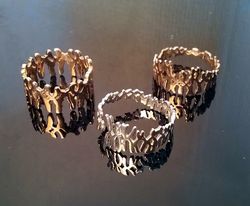
Biologist Louise Hughes heads the bio-imaging unit at Oxford Brookes University in the UK. Also a multimedia artist, she makes labwork-inspired jewellery — including gold pieces based on structures such as the hepatitis virus. Here she talks electron microscopy, centrioles and chromosome earrings.

Louise-Hughes-ringsHow do you see the relationship of scientific images and art?

I have always considered microscopy images and data to be beautiful. During my master’s degree in biological electron microscopy, I learned how to take images using negative plates and film — the use of modern digital cameras in an electron microscope is relatively recent. I see electron microscopy as another form of photography, just using a rather complicated camera. Art and science are both ways of looking at the world. How we use images and produce the graphics that explain our interpretation of the information we receive differs between the two disciplines, but there is a process that is similar.

You make 3D objects based on microscopic images for research and outreach, and also as jewellery?

I use a combination of techniques, including microscopy, digital modelling and 3D printing, and make adjustments until I have created the item I want. For outreach I generally make large plastic printed models, as close a replica of the 3D data as I can manage. For jewellery, I print the model in wax using a 3D printer (for the ‘lost wax’ casting method), which ensures a high level of detail. At the moment my favourite metal to work with is bronze: I feel the colour and weight create really striking items. I use microscopic structures in jewellery because they are aesthetically satisfying, and also universally human: at the cellular/organelle level there is no difference in race, sexual orientation, religion, country, wealth. We all have the same cellular components. Viruses can infect any one of us. My personal favourites are centrioles and axonemes — micro-tube structures found in cells. These beautiful, fascinating, endlessly complex biological structures apply across a wide range of organisms and kingdoms. I am now expanding the range to incorporate structures such as organelles and macromolecules. My awe at this amazing miniature architecture is not going to diminish any time soon.

More here.

Austerity Has Failed: An Open Letter From Thomas Piketty to Angela Merkel

Merkel_2015_rtr_img

Thomas Piketty , Jeffrey Sachs , Heiner Flassbeck , Dani Rodrik and Simon Wren-Lewis in The Nation:

The never-ending austerity that Europe is force-feeding the Greek people is simply not working. Now Greece has loudly said no more.

As most of the world knew it would, the financial demands made by Europe have crushed the Greek economy, led to mass unemployment, a collapse of the banking system, made the external debt crisis far worse, with the debt problem escalating to an unpayable 175 percent of GDP. The economy now lies broken with tax receipts nose-diving, output and employment depressed, and businesses starved of capital.

The humanitarian impact has been colossal—40 percent of children now live in poverty, infant mortality is sky-rocketing and youth unemployment is close to 50 percent. Corruption, tax evasion and bad accounting by previous Greek governments helped create the debt problem. The Greeks have complied with much of German Chancellor Angela Merkel’s call for austerity—cut salaries, cut government spending, slashed pensions, privatized and deregulated, and raised taxes. But in recent years the series of so-called adjustment programs inflicted on the likes of Greece has served only to make a Great Depression the likes of which have been unseen in Europe since 1929-1933. The medicine prescribed by the German Finance Ministry and Brussels has bled the patient, not cured the disease.

Together we urge Chancellor Merkel and the Troika to consider a course correction, to avoid further disaster and enable Greece to remain in the eurozone. Right now, the Greek government is being asked to put a gun to its head and pull the trigger. Sadly, the bullet will not only kill off Greece’s future in Europe. The collateral damage will kill the Eurozone as a beacon of hope, democracy and prosperity, and could lead to far-reaching economic consequences across the world.

More here.

Not I

Noti

Carrol Clarkson in Berfrois:

On 21 December, 2012, I had the privilege of introducing J.M. Coetzee to an expectant audience at the University of Cape Town; he was about to read from his new, as yet unpublished work, The Childhood of Jesus. The occasion marked Coetzee’s return to UCT in an official capacity for the first time since his leaving for Australia in 2002. But here was my dilemma: what would I call him? If mine was to be an “introduction” in the Oxford English Dictionary sense of “presentation of persons to each other, with communication of names”, how many different names there were by which various members of the audience knew our distinguished guest: “J.M. Coetzee”, author, Nobel Laureate, twice winner of the Booker Prize; “Coetzee”, the writer whose novels and critical essays constitute such a rich resource for students of literature; “John M. Coetzee”, the animal rights group patron; “Professor Coetzee”, a former staff member of the Department of English Language and Literature at UCT; and to many present on the evening of December the 21st, “John”—a colleague, a former fellow-student, a friend.

Further still, in more complicated ways, the person standing before us was also “known” to us through the “J.M. Coetzee” of John Kannemeyer’s biography, which had just been published; “known” to us through the “John” of Coetzee’s fictional autobiographies, Boyhood, Youth, andSummertime; through “J.C.” of Diary of a Bad Year (the protagonist shares the author’s initials, and, like him, has written a novel calledWaiting for the Barbarians and a collection of essays on censorship). The person before us was also “known” to us through Elizabeth Costello, who, it seems, is also the author of Slow Man.

In the novel that shares her name, Elizabeth Costello, the writer, stands before a gate and is expected to make a statement of her beliefs if she is to pass through. One of her responses subtends much of the discussion in this paper:

Her books certainly evince no faith in art. Now that it is over and done with, that life-time labour of writing, she is capable of casting a glance back over it that is cool enough, she believes, even cold enough, not to be deceived. Her books teach nothing, preach nothing; they merely spell out, as clearly as they can, how people lived in a certain time and place. More modestly put, they spell out how one person lived, one among billions: the person whom she, to herself, calls she, and whom others call Elizabeth Costello. If, in the end, she believes in her books themselves more than she believes in that person, it is belief only in the sense that a carpenter believes in a sturdy table or a cooper in a stout barrel. Her books are, she believes, better put together than she is. (Elizabeth Costello 207-8)

Novels, like those written by Elizabeth Costello or by J.M. Coetzee, may well “teach nothing, preach nothing” at the level of overt theme. But (as this paper suggests), an analysis of a formal literary device in narrative fiction may well be one way of thinking through questions more usually associated with moral philosophy.

More here.