No, He’s Not Hitler. And Yet…

Justin E. H. Smith in the New York Times:
ScreenHunter_2009 Jun. 05 16.58We are supposed to find some solace these days in the assurance that Donald Trump is “not Hitler.” One reasonable response is this: Of course he isn’t. Only Hitler is Hitler, and he died in a bunker in 1945. There is no such thing as reincarnation, and history is nothing more than a long, linear series of individual people and events that come and go. It is, as the saying goes, “just one damn thing after another.”

This quip is in part a rejection of the idea that history is, or might someday be, a sort of science in which we subsume particular events under general laws. This idea motivated Hegel to conceptualize human history as a law-governed dialectical process of the “unfolding of absolute Spirit.”

Marx in turn eliminated the ghost from Hegel’s system, and conceived the process of history as one of material relations between classes. But it, too, remained bound by general laws, so that when any historical actors did this or that (crossed the Rubicon, repealed the Edict of Nantes, etc.), they did so not so much as individuals, but as vessels of a historical process that would be unfolding even if they had never existed.

Even when Marx facetiously riffs on Hegel’s claim that historical facts and personages always appear twice — by adding that they do so the first time as tragedy and the second time as farce — he is still perpetuating the very serious idea that individual people and happenings in history are instances of something more general.

But what would it mean for the “same event” to happen again?

More here.
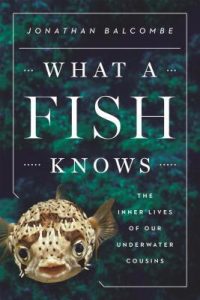
What a Fish Knows: The Inner Lives of Our Underwater Cousins

Justin Hickey in Open Letters Monthly:

26114430-200x300In 1949, Austrian ethologist Konrad Lorenz introduced his concept of the “baby schema,” which theorized that the large eyes, shorter snouts, and round wobbly heads of infant animals trigger caregiving urges in their parents. That this phenomenon crosses species lines is irrefutable, considering how much time we spend cooing at puppies and kittens—true fur babies—and any adult creature possessing a hint of benign fluffiness. If Lorenz were alive today, he’d nod in sage commiseration at our vast internet cache of videos and memes celebrating owls, raccoons, pigs, hedgehogs, rabbits, and ducklings (to name a few, in this reviewer’s order of Descending Cuddliness).

How about fishes? The puffer gracing the cover of Jonathan Balcombe’s new book, What a Fish Knows, stares out with a rascally mien, as if daring us to deny that he is, indeed, cute. With both eyes facing front, playful spots and stripes, and translucent fins whirling, you could say he’s all wobbly head. Might your first instinct be to pet his forehead, rather than see him sautéed on a plate?

Balcombe, a Humane Society ethologist who’s written about animals as sentient individuals of emotional complexity in Pleasurable Kingdom (2006) and Second Nature (2010), favors petting. Now he aims to show, through both the latest science and fabulous anecdotes, that “fishes are not just sentient, but aware, communicative, social, tool-using, virtuous, even Machiavellian.” Like author Sy Montgomery’s foray into similar pools with last year’s National Book Award finalist, The Soul of an Octopus, Balcome’s What a Fish Knows is meant primarily for those who treat the ocean like a buffet table, rather than the fascinating, fragile alien world that it is.

More here.

A Case Against America

Ken Roth in the New York Review of Books:

ScreenHunter_2008 Jun. 05 16.51It is hard to see yourself as others do, all the more so if you are the world’s sole remaining superpower. In unparalleled fashion, the United States today has the capacity to project its military might throughout vast parts of the globe, even if blunders in Iraq and Libya, unresolved crises in Syria and Yemen, and disturbing trends in Russia and China demonstrate the limits of American military power to shape world events. In an increasingly multipolar world, America’s power is far from its dominant heights after World War II, but it is still unmatched.

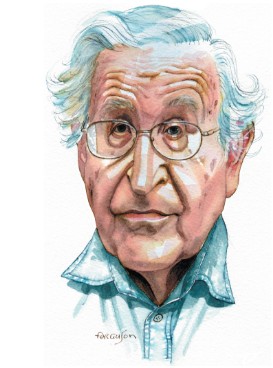
Americans tend to ease any qualms about such military supremacy with self-assurances about US benevolence. Noam Chomsky is at his best in putting those platitudes to rest, seeing an America of hypocrisy and self-interest. Yes, there are times when the United States does good, but Chomsky in his latest book, Who Rules the World?, reminds us of a long list of harms that most Americans would rather forget. His memory is almost entirely negative but it is strong and unsparing.

More here.

Can Neuroscience Understand Donkey Kong, Let Alone a Brain?

Ed Yong in The Atlantic:

ScreenHunter_2007 Jun. 05 16.46The human brain contains 86 billion neurons, underlies all of humanity’s scientific and artistic endeavours, and has been repeatedly described as the most complex object in the known universe. By contrast, the MOS 6502 microchip contains 3510 transistors, runs Space Invaders, and wouldn’t even be the most complex object in my pocket. We know very little about how the brain works, but we understand the chip completely.

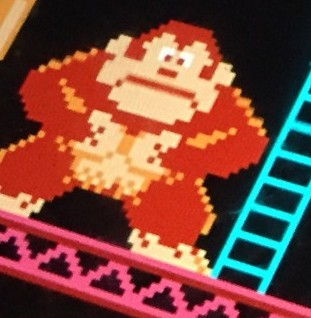
So, Eric Jonas and Konrad Kording wondered, what would happen if they studied the chip in the style of neuroscientists? How would the approaches that are being used to study the complex squishy brain fare when used on a far simpler artificial processor? Could they re-discover everything we know about its transistors and logic gates, about how they process information and run simple video games? Forget attention, emotion, learning, memory, and creativity; using the techniques of neuroscience, could Jonas and Kording comprehend Donkey Kong?

More here.

Let Them Drown: The Violence of Othering in a Warming World

Naomi Klein in The London Review of Books:

ImagesCAZDTIZ4Edward Said was no tree-hugger. Descended from traders, artisans and professionals, he once described himself as ‘an extreme case of an urban Palestinian whose relationship to the land is basically metaphorical’. In After the Last Sky, his meditation on the photographs of Jean Mohr, he explored the most intimate aspects of Palestinian lives, from hospitality to sports to home décor. The tiniest detail – the placing of a picture frame, the defiant posture of a child – provoked a torrent of insight from Said. Yet when confronted with images of Palestinian farmers – tending their flocks, working the fields – the specificity suddenly evaporated. Which crops were being cultivated? What was the state of the soil? The availability of water? Nothing was forthcoming. ‘I continue to perceive a population of poor, suffering, occasionally colourful peasants, unchanging and collective,’ Said confessed. This perception was ‘mythic’, he acknowledged – yet it remained.

If farming was another world for Said, those who devoted their lives to matters like air and water pollution appear to have inhabited another planet. Speaking to his colleague Rob Nixon, he once described environmentalism as ‘the indulgence of spoiled tree-huggers who lack a proper cause’. But the environmental challenges of the Middle East are impossible to ignore for anyone immersed, as Said was, in its geopolitics. This is a region intensely vulnerable to heat and water stress, to sea-level rise and to desertification. A recent paper in Nature Climate Change predicts that, unless we radically lower emissions and lower them fast, large parts of the Middle East will likely ‘experience temperature levels that are intolerable to humans’ by the end of this century. And that’s about as blunt as climate scientists get. Yet environmental issues in the region still tend to be treated as afterthoughts, or luxury causes. The reason is not ignorance, or indifference. It’s just bandwidth. Climate change is a grave threat but the most frightening impacts are in the medium term. And in the short term, there are always far more pressing threats to contend with: military occupation, air assault, systemic discrimination, embargo. Nothing can compete with that – nor should it attempt to try.

More here.

Studying Bacon to New Insights on the Daily Life of Enslaved African-Americans

Christopher Wilson in Smithsonian:

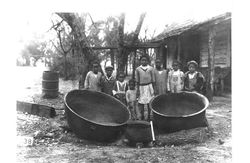
HogSadly in our nation’s history—erected on a foundation that included slavery—even bacon can be tied to bondage, but we will celebrate still the achievements of the bondsmen and women as culinary creators. On big plantations in the Lowcountry, killing time was serious work, just like everything else in these forced labor camps. Hundreds of hogs had to be slaughtered and butchered to provide the 20,000 or 30,000 pounds of pork it might take to sustain the enslaved workers toiling all year to produce rice and wealth for the few, incredibly rich white families of the region. Mostly hogs were used as a way to extract resources from the surrounding wilderness without a great deal of management. The “piney woods” hogs of the region, which most closely resembled the rare Ossabaw Island breed, were left to fend for themselves and then, as depicted in the film Old Yeller, with the help of good dogs hunted down and subdued either for marking or slaughter. In public history on the subject of slavery, there is always a conflict in how the story is presented—we often choose between presenting the story as one of oppression vs. resistance, subjugation vs. survival, property vs. humanity. Because the legacy of slavery is still so contested, audiences are sharply critical of presentation. If one shows a story of survival, does it follow then that oppression is given short shrift? If, on the other hand, we focus on brutalization, we run the risk of suggesting our enslaved ancestors were defeated by the experience of slavery.

This conflict is certainly at work in how we remember food on plantations. Missing from the common understanding of pork on the plantation though, is the skill of the enslaved butchers, cooks and charcutiers. The work involved young men like Shadrack Richards, born into slavery in 1846 in Pike County, Georgia, who remembered more than 150 people working for over a week on butchering and curing, preserving the sides of bacon and shoulders and other cuts to keep on the plantation and taking time to create great hams for sale in Savannah. Another survivor of slavery Robert Shepherd remembered with pride just how good the hams and bacon were that his fellow butchers created despite the cruelty of slavery. “Nobody never had no better hams and other meat” than they cured, he recalled.

More here.

Sunday Poem

White Spine

Liar, I thought, kneeling with the others,
how can He love me and hate what I am?
The dome of St. Peter’s shone yellowish
gold, like butter and eggs. My God, I prayed
anyhow, as if made in the image
and likeness of Him. Nearby, a handsome
priest looked at me like a stone; I looked back,
not desiring to go it alone.
The college of cardinals wore punitive red.
The white spine waved to me from his white throne.
Being in a place not my own, much less
myself, I climbed out, a beast in a crib.
Somewhere a terrorist rolled a cigarette.
Reason, not faith, would change him.
.

by Henri Cole
from The Visible Man
Knopf, 1998
.

Saturday, June 4, 2016

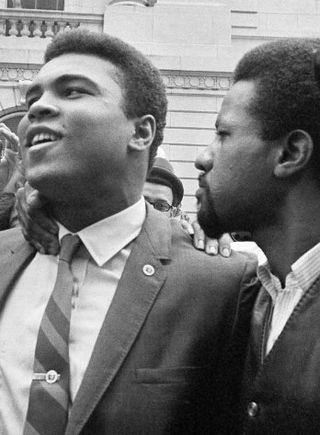
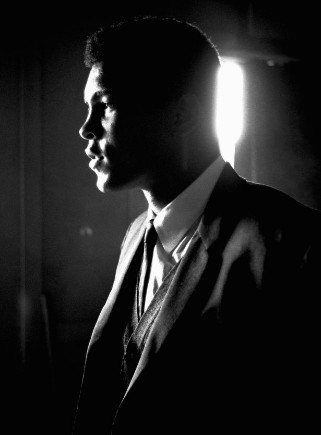
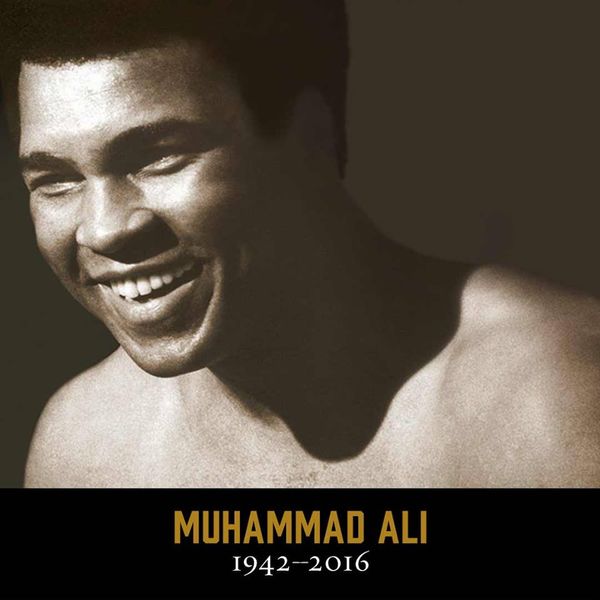
Muhammad Ali dead at 74: Tributes to the greatest of all time

Chris Graham Lydia Willgress Alistair Tweedale Tom Ough and Gareth A Davies in The Telegraph:

Muhammad Ali, the former world heavyweight boxing champion and one of sport's most influential individuals, has died aged 74.

Ali, who earned the nickname 'The Greatest', suffered from Parkinson's Disease since 1984. He was taken into hospital on Thursday for a respiratory condition and had been being kept in “as a precaution”. News of his death was released by his family's spokesman early on Saturday morning (GMT).

Politicians, athletes and celebrities immediately flooded to social media to pay tribute to “The Greatest”. Ali was also described as a “humble mountain” and “the biggest and the best”.

Follow live as the world reacts to the death of the celebrated boxer and public figure.

More here.

 The Radical Reverberations of Muhammad Ali

Dave Zirin in The Nation:

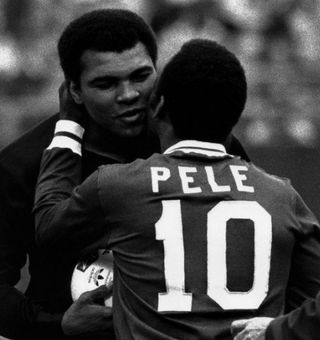
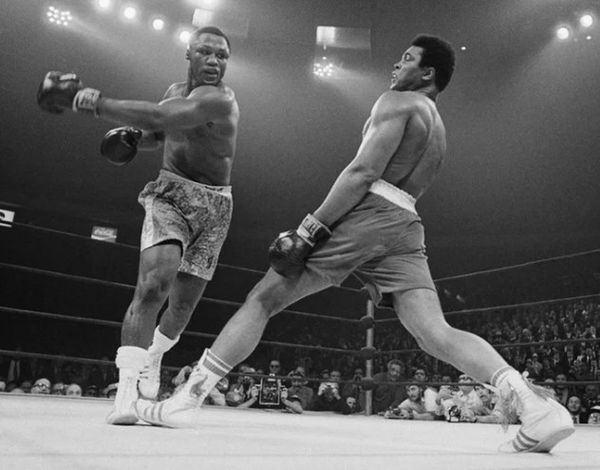
ScreenHunter_2004 Jun. 04 18.09The reverberations. Not the rumbles, the reverberations. The death of Muhammad Ali will undoubtedly move people’s minds to his epic boxing matches against Joe Frazier and George Foreman, or there will be retrospectives about his epic “rumbles” against racism and war. But it’s the reverberations that we have to understand in order to see Muhammad Ali as what he remains: the most important athlete to ever live. It’s the reverberations that are our best defense against real-time efforts to pull out his political teeth and turn him into a harmless icon suitable for mass consumption.

When Dr. Martin Luther King came out against the war in Vietnam in 1967, he was criticized by the mainstream press and his own advisors who told him to not focus on “foreign” policy. But Dr. King forged ahead and to justify his new stand, said publicly, “Like Muhammad Ali puts it, we are all—black and brown and poor—victims of the same system of oppression.”

When Nelson Mandela was imprisoned on Robben Island, he said that Muhammad Ali gave him hope that the walls would some day come tumbling down.

When John Carlos and Tommie Smith raised their fists on the medal stand in Mexico City, one of their demands was to “Restore Muhammad Ali’s title.” They called Ali “the warrior-saint of the Black Athlete’s Revolt.”

When Student Non-Violent Coordinating Committee (SNCC) volunteers in Lowndes County, Alabama launched an independent political party in 1965, their new group was the first to use the symbol of a black panther. Beneath the jungle cat’s black silhouette was a slogan straight from the champ: “WE Are the Greatest.”

When Billie Jean King was aiming to win equal rights for women in sports, Muhammad Ali would say to her, “Billie Jean King! YOU ARE THE QUEEN!” She said that this made her feel brave in her own skin…

More here.

The Outsized Life of Muhammad Ali

David Remnick in The New Yorker:

ScreenHunter_2002 Jun. 04 17.44What a loss to suffer, even if for years you knew it was coming. Muhammad Ali, who died Friday, in Phoenix, at the age of seventy-four, was the most fantastical American figure of his era, a self-invented character of such physical wit, political defiance, global fame, and sheer originality that no novelist you might name would dare conceive him. Born Cassius Clay in Jim Crow-era Louisville, Kentucky, he was a skinny, quick-witted kid, the son of a sign painter and a house cleaner, who learned to box at the age of twelve to avenge the indignity of a stolen bicycle, a sixty-dollar red Schwinn that he could not bear to lose. Eventually, Ali became arguably the most famous person on the planet, known as a supreme athlete, an uncanny blend of power, improvisation, and velocity; a master of rhyming prediction and derision; an exemplar and symbol of racial pride; a fighter, a draft resister, an acolyte, a preacher, a separatist, an integrationist, a comedian, an actor, a dancer, a butterfly, a bee, a figure of immense courage.

More here. And here's what I said about him on 3QD eight years ago.

Philip Marsden’s ‘Rising Ground’ and More

0605-BKS-Travel-master768Simon Winchester at The New York Times:

Once there were just nomads, their wanderings no more than necessary for survival. But then came the stockades their successors built and the fire-warmed ­settlements in which they huddled — and suddenly travel changed, becoming what for most would henceforth be a pursuit more elective than essential. There were many motives for it. Sheer curiosity — what’s beyond the fence? — came first. Then a need to trade, to inhabit, to conquer, to preach, to take part in a pilgrimage, to migrate and settle anew, to wage a war or to seek refuge. These and any of a thousand other proddings of the sharp stick would send travelers out on the road.

Before long, humankind had been whipped into a frenzy of wandering, one that has never let up. And nowadays, with technology and low cost combining to create a perfect storm of wanderlust, we see the results: the vast Lunar New Year crowds at a Chinese railway station, the lethal scrums at the hajj in Mecca, the endless security lines at Heathrow and Kennedy and Sheremetyevo, all vivid testimony to the unanticipated backwash of our pathological desire for ceaseless mobility. And yet just why, fretted Blaise Pascal back in the 17th century, when all of this seemed to get going, why the urge to engage in so much movement? Why all this transnational Brownian motion? Surely all of man’s ills must stem, the philosopher wrote, from his simple inability to remain quiet and alone, serenely in the comfort of his own home.

When confronted with this season’s tottering tower of new travel literature, I found it easy to sympathize with poor Pascal.

more here.

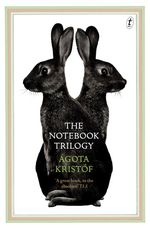
‘The Notebook Trilogy’ by Ágota Kristóf

The-Notebook-Trilogy-CoverMieke Chew at The Sydney Review of Books:

Ágota Kristóf was born in Csikvánd, a Hungarian village, in 1935. On foot she fled her home country in 1956, during the Hungarian uprising, as part of a small group that included her husband and infant daughter. They walked for hours in darkness afraid they were going round and round in circles and would soon be arrested, still in Hungary. Having successfully crossed into Austria, she travelled, by bus and train, to Switzerland. She had two bags, one containing diapers, clothes, and things for her baby, the other dictionaries. Completely by chance, she arrived in a Francophone city, where, she writes, ‘I confront a language that is totally unknown to me.’

Kristóf’s estrangement from language gave her a special distance from the syntax of quotidian speech. Her prose is rigorously simple in its grammar. Not a single word is wasted. As she explains in her memoir, ‘I know I will never write French as native French writers do, but I will write it as I am able to, as best as I can.’ Kristóf’s arduous and determined path to literacy in her adopted language, in a country she did not choose, gave rise to a radical prose style. Kristóf’s expression has an air of purity; her rigor and labor working as a kind of distillation process. She did not think to write in Hungarian. French, she has said, ‘killed my mother tongue.’ She had no choice but to accept French. But, as one of her translators, Nina Bogin, writes, her background created a special kind of prose: ‘French written through the prism of Kristóf’s native language, Hungarian.’

more here.

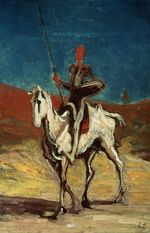
‘Don Quixote’ then and now

Http---com.ft.imagepublish.prod.s3.amazonawsWilliam Egginton at the Financial Times:

In January 1605, an ageing veteran of Spain’s wars against the Ottoman Empire published the strangest of books. Unlike the bestsellers of the day, it was not a chivalric romance, a pastoral drama or the fictional confession of an outlaw. Instead, it told the story of a gentleman so besotted with reading those kinds of books, especially the ones about knights errant and their magical adventures, that he loses his mind and begins to believe they are real.

The Ingenious Gentleman Don Quixote of La Mancha was an immediate and roaring success. Demand for copies was so high that within a few months its author, Miguel de Cervantes, was having the book distributed throughout the Iberian peninsula while his publishers began work on a second edition. Two pirated versions appeared in London, along with two others in Valencia and Zaragoza; stacks of copies were loaded on to the galleons embarking for the New World. By June the book’s two central characters had become iconic figures, their effigies carried in parades and imitators popping up in celebrations both royal and plebeian.

Don Quixote would become perhaps the most published work of literature in history. Its influence on writers has been unparalleled. When the Nor­wegian Nobel Institute polled 100 leading authors in 2002 to name the single most important literary work,Don Quixote was a handsome winner; no other book came close.

more here.

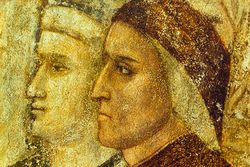
The secrets of Dante’s marriage

AN Wilson in The Spectator:

New-DanteUnlike Shakespeare, who kept himself out of all his works, except the Sonnets, Dante was endlessly reworking his autobiography, even when supposedly writing on politics or arranging love poems to his dream-women. The core of this new book about him can be found in a sentence following Dante’s banishment from Florence, and his setting out as a poverty-stricken exile, deprived of all power, separated from his wife and family and stripped of his wealth. Marco Santagata writes:

One of the typical features of Dante’s personality, which qualifies him as an ‘intellectual’ in the modern sense of the word, is his endless reflection on what he is doing, both as an author and as a man.

Santagata is Professor of Italian Literature at the University of Pisa, and this substantial work incorporates all the most recent Dantean scholarship. There is much to chew upon, since Dante lived at the very centre of his city’s political life. After his exile he became embroiled in the drama of the French Pope (Clement V, Bertrand de Got), and in November 1308 endorsed the candidature of Henry of Luxembourg as Holy Roman Emperor. Santagata, thoroughly steeped in the politics and genealogies of the period, gives the best account I have ever read of Dante in his historical context. We follow him as an enthusiastic Guelph, in the battle of Campaldino in 1289 against the Ghibellines of Arezzo, and on through his political and religious journey as a would-be politician. He falls foul of the bitter feuding between the ‘White’ Guelphs and the ‘Blacks’ — chief of whom in Florence was Dante’s wife’s terrifying and thuggish relation Corso Donati.

More here.