Negroland – life in the black upper class

Colin Grant in The Guardian:

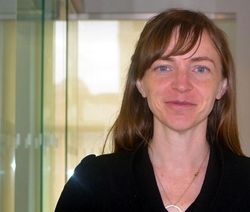
MargoHave you been to or, for that matter, even heard of “Negroland”? Here’s a clue. It’s not Harlem or Chicago’s South Side or any conurbation of black Americans. As Margo Jefferson illuminates in her captivating memoir, Negroland is not so much a geographic location as a state of mind; an exclusive club without discernible borders, to which few have ever belonged. Over the years, its members have been characterised by descriptions ranging from “the coloured 400” (families) to “the blue vein society”.

If you have to ask how you gain entry to Negroland, you’ve already betrayed your lack of credentials. It’s a society composed of a “better class” of Negro, though such people’s judgment is not always sound. In one of Jefferson’s many startling passages she reveals that, at the height of the Atlantic slave trade, the nation’s slave owners included free black members of the elite, such as Nicolas Augustin Metoyer of Louisiana and his family, who collectively owned 215 slaves. Back then, polished and fragrant members of Negroland breathed in the rarefied air of privilege and held their noses at the passing by of any johnny-come-lately, just as Britain’s “old money” class did at the advent of the codfish aristocracy.

More here.

Saturday Poem

It Begins in August

I

You think back to childhood
when the days of summer seemed
endless, and time long enough.

Then the school bell rang,
and you woke with a jolt
into the mortality of arithmetic.

II

After supper, it was too dark
to go out again for very long,
then just too dark to go out,

then just too dark. So you begin
to learn to live with Night,
admire her, even love her a little.
.

by Nils Peterson

Friday, June 3, 2016

Believing the unlikely

Martin Smith in the Oxford University Press Blog:

ScreenHunter_1999 Jun. 03 19.24We often want to know how likely something is. I might want to know how likely it is that it will rain tomorrow morning; according to the Met Office website, at time of writing, this is 90% likely. If I’m playing poker, I might want to know how likely it is that my opponent has been dealt a “high card” hand. With no other information available, we can calculate the probability of this to be about 50%. There seems to be close link between likelihood and belief; if something is likely, you would be justified in believing it, and if something is unlikely, you would not be justified in believing it. That might seem obvious, and the second part might seem especially obvious – surely you can’t be justified in believing something that’s unlikely to be true? I will suggest here that, sometimes, you can.

Some philosophers and psychologists have argued that it can sometimes be a good thing for people to hold irrational beliefs. That may be right, but it’s not the point I want to make. I think that believing the unlikely can not only be a good thing, but can be fully rational. The reason has to do with testimony, and when we owe it to other people to believe what they say. So much of what we believe about the world is based on the testimony of others. And, while we don’t always accept what others tell us, disbelieving a person’s testimony is not something to be taken lightly. If someone tells me, say, that there’s a coffee shop nearby and, for no reason at all, I refuse to believe it, then this is not just about me – another person is involved, and I’m doing that person a wrong. If I refuse to believe what someone tells me, then I need to have a good reason for doing this.

What does this have to do with believing the unlikely?

More here.

Can computers become conscious? Scott Aaronson replies to Roger Penrose

Scott Aaronson in Shtetl Optimized:

ScreenHunter_1998 Jun. 03 18.58A few weeks ago, I attended the Seven Pines Symposium on Fundamental Problems in Physics outside Minneapolis, where I had the honor of participating in a panel discussion with Sir Roger Penrose. The way it worked was, Penrose spoke for a half hour about his ideas about consciousness (Gödel, quantum gravity, microtubules, uncomputability, you know the drill), then I delivered a half-hour “response,” and then there was an hour of questions and discussion from the floor. Below, I’m sharing the prepared notes for my talk, as well as some very brief recollections about the discussion afterward. (Sorry, there’s no audio or video.) I unfortunately don’t have the text or transparencies for Penrose’s talk available to me, but—with one exception, which I touch on in my own talk—his talk very much followed the outlines of his famous books, The Emperor’s New Mind and Shadows of the Mind.

More here.

Interview with William Egginton

Andrew Mitchell Davenport in Full Stop:

Cover-194x300There are many stories in Don Quixote, but perhaps not a single one so unbelievable as the story of its creator. Miguel de Cervantes didn’t have it easy. William Egginton’s new work, The Man Who Invented Fiction: How Cervantes Ushered in the Modern World (Bloomsbury, 2016), makes this abundantly clear. But Egginton’s book focuses on the ways in which Cervantes, with his literary talents and his time-tested sense of humor, persevered in a world that seems to have conspired to keep him down. Cervantes was no ordinary chap. He was a humanist in an age of inquisition. Somehow he kept his head.

Who was this man? And how did his life inform his art? Egginton pursues these questions and presents his audience with enormously rich readings of Cervantes’ fictions while demonstrating how a man with a dream can overcome the limits imposed by reality.

A.M. Davenport: Bill, how would you describe Don Quixote to an alien?

William Egginton: This is a novel written by a deeply disillusioned soldier many years ago, about a deeply deluded soldier living in his own time. It’s about a friendship between two very different men who can’t quite see the world in the same way, and the love they feel for one another despite, or even because of those differences. And finally, it’s a novel about how sure we humans are about what we know to be true, how dreadfully wrong we can be, and how incredibly funny that fact is, once we can learn to see the truth of our situations.

More here.

Does everything cause cancer?

Max Goldman in New Humanist:

SkydivingIf I told you that the World Health Organisation (WHO) had recently declared a chemical weedkiller widely used on our crops and in our gardens to be “possibly carcinogenic”, you’d rightly be alarmed. You’d quite understand moves to ban the substance and if it looked like the authorities were resisting the ban, you’d be forgiven for thinking it was a scandal. That’s the debate being had over a herbicide called glyphosate. It was classified by the WHO’s International Agency of Research into Cancer (IARC) as “possibly carcinogenic” last year. It has already been banned for gardening use in France. Consumer pressure has taken it off the shelves at Waitrose and, in Bristol, the authorities are trialling its replacement with a natural alternative: vinegar. But the EU, despite protestations, approved it for use again this year – although it shortened the licence from 15 to seven years, following uproar from several MEPs. It seems pretty awful. But what does “possibly carcinogenic” even mean? The IARC reviews the scientific evidence available on the cancer-causing potential of every­thing from hairdressing to plutonium, then categorises things from those that definitely cause cancer (group 1) to those that probably don’t (group 4). The system includes a group for things that possibly cause cancer, including glyphosate (group 2B). The subtlety in understanding this system comes in the difference between “risk” and “hazard” – two words that might sound broadly synonymous but have, in the space between them, a world of misunderstanding. A few years ago, I went skydiving. The worst-case scenario when jumping out of an aeroplane at 12,000 feet is terrifying but skydiving (according to figures from Skydive magazine, which I suppose has some incentive to say it) is pretty safe. I’m about as likely to get killed making a single parachute jump as I am from travelling 4,000km in a car. That’s safe enough for me. Both driving and skydiving are activities that can kill you. That’s the hazard. Yet the important calculation is not whether something can kill you (pretty much anything can) but the actual chances of it killing you. That’s the risk.

What the IARC fails to make clear is that its classification system is all about cancer hazard, not risk. Often risk comes down to dose: there are many potentially dangerous substances (like cyanide in apple seeds) that are harmless at low exposure. Glyphosate is one of hundreds of agents, both naturally occurring and industrially manufactured, that the IARC has reviewed that might cause cancer. The same misunderstanding happened with mobile phones a few years ago. Despite no compelling evidence that mobile phone radiation causes cancer, the suspicion lingers. When the IARC decided in 2011 to classify mobile phone radiation as a group 2B carcinogen (“possibly causes cancer”, just like glyphosate), it added fuel to the fire of anti-radiation campaigns. They made no mention that aloe vera, nickel and coffee are all also classified 2B. The absurdity of this system is highlighted by the tiny number of things the IARC has felt confident enough to put in group 4, “probably not carcinogenic”.

More here.

Educate your immune system

Moises Velasquez-Manoff in The New York Times:

Valasquez-manoff-jumboIN the last half-century, the prevalence of autoimmune disease — disorders in which the immune system attacks healthy tissue in the body — has increased sharply in the developed world. An estimated one in 13 Americans has one of these often debilitating, generally lifelong conditions. Many, like Type 1 diabetes and celiac disease, are linked with specific gene variants of the immune system, suggesting a strong genetic component. But their prevalence has increased much faster — in two or three generations — than it’s likely the human gene pool has changed. Many researchers are interested in how the human microbiome — the community of microbes that live mostly in the gut and are thought to calibrate our immune systems — may have contributed to the rise of these disorders. Perhaps society-wide shifts in these microbial communities, driven by changes in what we eat and in the quantity and type of microbes we’re exposed to in our daily lives, have increased our vulnerability. To test this possibility, some years ago, a team of scientists began following 33 newborns who were genetically at risk of developing Type 1 diabetes, a condition in which the immune system destroys the insulin-producing cells of the pancreas.

The children were mostly Finnish. Finland has the highest prevalence — nearly one in 200 under the age of 15 — of Type 1 diabetes in the world. (At about one in 300, the United States isn’t far behind.) After three years, four of the children developed the condition. The scientists had periodically sampled the children’s microbes, and when they looked back at this record, they discovered that the microbiome of children who developed the disease changed in predictable ways nearly a year before the disease appeared. Diversity declined and inflammatory microbes bloomed. It was as if a gradually maturing ecosystem had been struck by a blight and overgrown by weeds. The study, published last year, was small. But for Ramnik Xavier, a molecular biologist at the Broad Institute in Cambridge, Mass., and a senior author on the study, the findings suggested for the first time that intervention might be possible. Maybe clinicians could catch and correct the microbial derangement in time to slow — or even prevent — the emergence of the disorder.

More here.

the life of wallace stevens

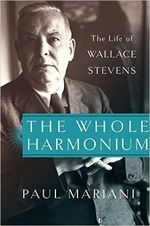
51x2ARMn6aL._SX329_BO1,204,203,200_Bruce Bawer at The Hudson Review:

It’s curious: on the one hand, Stevens was constantly noticing people around him (such as a “doddering girl” with “idiot eyes” whom he espied in church) who were much worse off than he was—and whom he regarded with meticulously recorded contempt; on the other hand, he felt extremely sorry for himself, as if absolutely everyone else’s existence were richer than his, as if he weren’t getting anywhere near the life he deserved. So taken in are we by his conviction that the fates had dealt him a lousy hand that we’re thrown for a loop when, at age twenty-eight, Stevens—who at the time was working as a legal advisor for the Equitable Life Assurance Company—runs down to Washington, D.C., to meet with President Theodore Roosevelt to discuss getting “the country back on its feet in the wake of the financial downturn.”

Pretty impressive. Why, then, wasn’t this level of achievement enough for him? How did he come by his sky-high expectations? To whose life was he comparing his own?

Often, on weekends during those bachelor years, Stevens wandered lonely as a cloud along the Palisades, where he sat alone for hours at a time brooding about the meaning of life, death, and the universe. Mariani exhaustively paraphrases these musings and seems to take them very seriously; yet one can’t help being reminded of Byron’s facetious account of the young Don Juan, whose unconsummated longing for Donna Julia causes him to “wander . . . by the glassy brooks,” pursuing “self-communion with his own high soul,” until he “turn[s], without perceiving his condition, / Like Coleridge, into a metaphysician.” Briefly put, Stevens, like Don Juan, was horny.

more here.

Phillip Guston: The Chameleon Painter

Schwabsky_guston_FULL_imgBarry Schwabsky at The Nation:

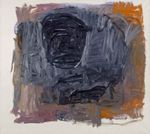
All the same, despite the seeming suddenness of Guston’s shift to figuration, hints that he was trying to go in that direction (or perhaps it would be more accurate to say, trying to avoid an irresistible pull in that direction) are recurrent. They are most evident in the rather awkward work for which the Hauser & Wirth show is titled,Painter III (1963), in which the large central black oval is clearly enough the head of the painter whose brush-wielding hand can be made out just below. Looking (1964) gets its title from the eye-like marks that seem to face the viewer from the head-and-shoulders form on the painting’s right. Reverse (1965) anticipates the head in lost profile (with cigarette and smoke) of Guston’s 1978 Friend-To M.F. ( The composer Morton Feldman was one of the friends whom Guston thought had turned away from him in 1970.) Even earlier works like Fable II and Rite, both from 1957, earn their titles by the nonspecific figurative connotations of their bunched shapes; it would take only a little bit of further manipulation to turn those forms into the kind of stylized figures found in the paintings that Jan Müller was making around this time, or Bob Thompson just a little later. This was the period in which, as Frank O’Hara would write, Guston’s forms “pose, stand indecisively, push each other and declaim.” As early as 1961, the conservative New York Times critic John Canaday was wondering whether “in the end it should prove that he has really gone in a circle, carrying abstract expressionism back to its figurative start.” Just as Guston’s paintings explored the porous boundary between sameness and difference, his career was an essay in the single-mindedness of a chameleon.

more here.

Martin Luther: Renegade and Prophet

Methode-times-prod-web-bin-3d870712-2286-11e6-8644-041f71209e1fPeter Marshall at Literary Review:

Get ready to start hearing a lot about Martin Luther. On 31 October 2017 it will be five hundred years since Luther nailed his Ninety-Five Theses to the door of the Castle Church in Wittenberg, initiating the Protestant Reformation. In fact, as scholars have long known, and Lyndal Roper immediately concedes, whether Luther ever actually posted the Theses in this way is doubtful. But there is no doubting the momentous consequences of the confrontation with the Papacy sparked by Luther’s disquiet over the theology of indulgences. In Britain interest in the anniversary has so far been relatively muted – a contrast with Germany, where an entire decade of official commemorative events is accelerating towards its climax. But Luther undoubtedly belongs to that relatively select company of eminent dead foreigners of whom nearly all British people have heard, and he enjoys the reputation of being a force for historical good: a prophet of individual conscience and liberty against oppressive structures of power and inherited patterns of thinking.

Roper’s beautifully written life is not exactly an exercise in debunking, but she admits that Luther is a ‘difficult hero’. Her publishers’ claim that the book represents the first historical biography ‘for many decades’ is hyperbolic chutzpah, but it is certainly among the most interesting, provocative and original biographies of Luther to appear in recent years – one that tackles head on the challenge of entering into and exploring the interior life of its subject.

more here.

Friday Poem

On Love, Proust, Chorus Girls, and Martha Nussbaum
I’ve been thinking about trying to read Proust
again. The legendary chorus girls of my youth
were said to carry him, volume by volume, from
try-out to try-out, perusing him in the Modern
Library Edition between calls, propping him up
on magnificent black-tighted legs. I sat for days
within the budding grove of the Stage Delicatessen,
Swann’s Way open before me, but never found
such a one. I kept imagining all I needed to do
was be at the right time in the right place with
the right book in my hand, and true love would
appear, ex nihilo, so to speak.
I read people who
say they love Proust – some I even believe.
Martha Nussbaum I believe. I love her talk
about Proust, or Henry James and, say,
The Golden Bowl. She makes me love the idea
of The Golden Bowl. In fact, she makes me love
the idea of Martha Nussbaum, though she’s an
Aristotelian while I’m nothing but a Platonist
in the Academy pointing to the idea of the book,
while Martha reads the thing itself.
So I picture
her as as a chorus girl, a fling before philosophy,
after a try out for Damn Yankees, maybe, humming
“Whatever Lola Wants” while paging through
her first Proust at the Stage Delicatessen,
while I keep on ordering a pastrami on rye
at the wrong time unaware of the fragility
of goodness. Now all I have from then is this
remembrance of things which never came to pass.

by Nils Peterson

Thursday, June 2, 2016

Primo Levi’s Resistance: Rebels and Collaborators in Occupied Italy

Dorian Stuber in Open Letters Monthly:

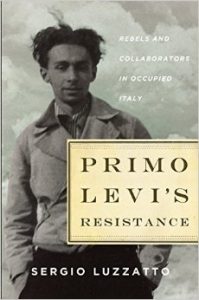
Primo-levis-resistance-199x300For three months in the fall of 1943, the Italian writer Primo Levi joined a small band of partisans based in the Piedmontese Alps. More than thirty years later, Levi described the group in characteristically modest terms: “We were cold and hungry, we were the most disarmed partisans in the Piedmont, and probably also the most unprepared.” Much of their time was spent wheedling supplies from the locals, who were often suspicious of their aims. The rest was spent looking for ammunition. According to Levi, they had nothing but a “tommy gun without bullets and a few pistols.”

In his fascinating new book, Primo Levi’s Resistance: Rebels and Collaborators in Occupied Italy, Sergio Luzzatto explains that, however insignificant Levi and his comrades may have seemed to themselves, they had attracted the attention of officials in the Italian Social Republic. Popularly known as the Republic of Salò, after the town in Lombardy where it was headquartered, the Republic had been formed in September 1943 when the Germans reinstalled the deposed Mussolini as head of a satellite state. Italy was split in two: in the south a government supported by King Victor Emmanuel III worked with the Allies, while in the north fascism persisted.

Salò took its orders from Berlin; Luzzatto focuses on how that obedience played out in a small corner of northern Italy. He does so by showing how the actions of individuals made a difference in a time when so many of the larger political entities were in flux. One of those individuals was the zealous Police Prefect for the region of Aosta, Cesare Carnazzi. Carnazzi was eager to arrest two kinds of people: the partisans who were forming the nascent Italian Resistance and Jews who were to be deported to satisfy the demands of the Republic’s Nazi allies. In the mountains of Piedmont, those people were often the same.

More here.

Misunderstanding Positive Emotion

June Gruber at Edge.org:

ScreenHunter_1997 Jun. 02 17.22One of the biggest questions I've been asking myself is why positive emotions have been so deeply neglected, particularly in the understanding of mental illness. I think of this as the neglected role of positive emotions.

We know a lot about negative emotions in psychopathology, which has been important in getting to the root of disorders such as anxiety, substance abuse, and depression. This knowledge has been effectively disseminated in order to develop etiological models and create effective treatment. We know far less about the role of positive emotions in human health and also human dysfunction, which is one of the biggest questions that I've been trying to tackle lately. It's not a trivial question.

Why should we care about the fact that studying positive emotions has been absent in our understanding of severe and chronic mental illness? There're two broad reasons as to why this question matters and why I've been spending time thinking about it. One of them is a practical reason and one of them is a more theoretical reason. The practical reason we should care about positive emotions in our conceptualizations of human health and severe mental illness is because, to put it plainly, severe and chronic psychiatric diseases are a societal burden. We know that, for example, substance use disorders alone are accounting for $500 billion a year in annual cost. Anxiety disorder is not far behind in terms of cost relating to days missed in work productivity and healthcare utilization. We also know that many common and chronic disorders—depression or bipolar disorder—are in the top ten causes of leading worldwide disability.

More here.

Nigerian players dominate Scrabble tournaments with the surprising strategy of playing short words even when longer ones are possible

Drew Hinshaw and Joe Parkinson in the Wall Street Journal:

ScreenHunter_1995 Jun. 02 17.14

Wellington Jighere with his trophy after winning the world championship.

Nigeria is beating the West at its own word game, using a strategy that sounds like Scrabble sacrilege.

By relentlessly studying short words, this country of 500 languages has risen to dominate English’s top lexical contest.

Last November, for the final of Scrabble’s 32-round World Championship in Australia, Nigeria’s winningest wordsmith, Wellington Jighere, defeated Britain’s Lewis Mackay, in a victory that led morning news broadcasts in his homeland half a world away.

It was the crowning achievement for a nation that boasts more top-200 Scrabble players than any other country, including the U.K., Nigeria’s former colonizer and one of the board game’s legacy powers.

“In other countries they see it as a game,” said Mr. Jighere, now a borderline celebrity and talent scout for one of the world’s few government-backed national programs. “Nigeria is one of the countries where Scrabble is seen as a sport.”

Once, almost all of Scrabble’s champions hailed from North America or Europe. Most stuck to a similar “long word” strategy—mastering thousands of seven- and eight-letter plays like QUIXOTRY, a 365-point-move in American Michael Cresta’s record-breaking 830 point win in 2006.

That seems smart Scrabble. A player who can unload all seven tiles gets an extra 50 points, in what is called a bingo.

Global competition and computer analytics have brought that sacred Scrabble shibboleth into question, exposing the hidden risks of big words.

More here.

Hitler couldn’t drive – or swim or dance

Neal Ascherson in the London Review of Books:

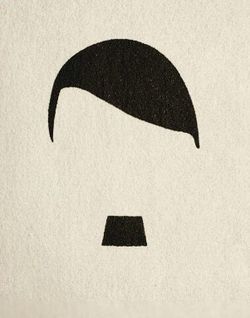
ScreenHunter_1994 Jun. 02 16.52Werner Willikens was quite a senior Nazi civil servant. In the crushed and castrated government of Prussia, he had become the state secretary of the Ministry of Agriculture. It was in February 1934, just over a year after Adolf Hitler had become chancellor, that Willikens made a speech to agriculture officials from all over the Reich, using words that have come in our own time to fascinate historians. ‘The Führer,’ he said, ‘finds it very difficult to bring about by order from above things which he intends to realise sooner or later.’ It was, therefore, ‘the duty of each one of us to try to work towards him in the spirit of the Führer’. The German, not easy to translate precisely, is ‘im Sinne des Führers ihm entgegenzuarbeiten’.

Willikens was not revealing some unknown fact. But he was offering posterity (as well as the party comrades in front of him) a really useful way of understanding how decisions were made in the Third Reich. ‘Working towards the Führer’ explains how many initiatives, including some of the worst, originated in the wider Nazi bureaucracy rather than with Hitler himself. And it can be argued that this commandment to second-guess and anticipate Hitler helped him to surf into ever more radical and terrible policies which are usually attributed to his invention alone.

As Volker Ullrich points out, there is an apparent contradiction here. On the one hand, the Leader’s will was supposed to be absolute and monocratic, and anyone who could claim convincingly that he was carrying out ‘the Führer’s will’ would get his way. On the other, a chaotic, ‘Darwinian’ struggle of overlapping Nazi institutions raged as each competed to make up Hitler’s mind for him. Behind all this was the weird, slovenly manner in which Hitler formed policies.

More here. [Thanks to Corey Robin.]

on the decline in the reputation of Henry Miller

Henry-miller-1950-californiaJames Campbell at the Times Literary Supplement:

Writing to Richard Aldington in March 1957, Lawrence Durrell relayed the boast of his friend Henry Miller that, at the age of sixty-five, he could still dance for his grandchildren, “without straining anything. ‘Like a doe’ he says – always prone to self-admiration! . . . He’s a most endearing gentle and babyish character – not at all the cannibal he acts when he writes.” Durrell assured Aldington that he would enjoy meeting Miller. “Everyone has a picture of him as a sort of ghoul from his work; but a gentler, more honourable, considerate and devoted man it would be impossible to find.”

Miller’s most famous books – Tropic of Cancer, Black Spring, Tropic of Capricorn – were banned in Britain and America at the time, remaining so until Grove Press risked prosecution by printing Tropic of Cancer in 1961, to be followed by a John Calder edition in the UK two years later. They were none the less widely read, being available legally in Paris, first in the original editions from the Obelisk Press, the creation of the Mancunian Jack Kahane, then from Obelisk’s post-war offshoot, Olympia Press (overseen by his son, Maurice Girodias), and were obtainable under the counter in English-speaking countries. Their fugitive status in the 1950s and 60s, together with that of other titles –The World of Sex, the Rosy Crucifixion trilogy (Sexus, Nexus andPlexus) – conspired to make Miller the hardiest of that alluring mid-century species, the sexual outlaw, perhaps the last of its kind in Western lands.

more here.

On Patrick Modiano’s deliberate obscurantism

Modiano_postcard_photo A. MahmoudDominic Green at The New Criterion:

The typical Modiano novel begins with a mystery of origins and identity, and proceeds by passivity and vagueness. Sometimes, the story terminates in a tragedy of life foreshortened. Sometimes the track runs full circle, as though life is a series of improvisations, each designed to keep you where you are. Either way, the “force of circumstances” determines the outcome.

The premise of a Modiano mystery mimics that of a detective novel, but the execution eschews the vulgarity of a traditional detective plot.Voyages des noces, translated into English as Honeymoon (1995), begins with the narrator, Jean B., in a hotel bar.

A woman had committed suicide in one of the hotel rooms two days before, on the eve of the fifteenth of August. The barman was explaining that they had called an ambulance, but in vain. He had seen the woman in the afternoon. She had come into the bar. She was on her own. After the suicide, the police had questioned him. He hadn’t been able to give them many details. A brunette.

Instead of solving the crime like Sam Spade, Jean leaves his wife and child, pretends to fly to Rio, and then holes up in Paris. There, he reimagines the movements of a young refugee couple that he had met twenty years earlier, during the German occupation. The mystery turns out to be existential.

more here.

Saudi Arabia was right to bulldoze Mecca, and other thoughts…

GettyImages-518421242-820x550Nicholas Mayes at The Spectator:

Here we might learn something from the Wahhabis. Plenty of observers have bewailed the Saudi authorities’ bulldozing of many of Mecca’s and Medina’s earliest buildings, pulled down lest they become shrines in themselves and distract from the core tenets of Islam. But the custodians of the holy mosques understand that Muhammad, like Ben Jonson’s Shakespeare, ‘is not of an age but for all time’.

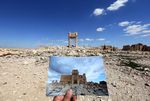
The same principle holds for Palmyra and its wonders, and for the best art of our own era: to preserve, regenerate. The stones and gongs that make up a temple or a piece of art can change without destroying the ideas they hold up or erasing the history that holds them up. In Palmyra’s case, that history speaks of cosmopolitanism, religious pluralism and world trade; we should make it stand for these things again, before Putin makes it stand for whatever it is he’s after. In that spirit, we should help rebuild the arches and temples of Palmyra if the Syrians wish, and let viewers organise and reorganise Calder’s sculptures if they wish.

more here.