Is Rushdie right about rote learning? Is Rushdie right about rote learning?

Homa Khaleeli in The Guardian:

SalmanWhat can you recite by heart? Your times tables? German verb formations? The Lord’s Prayer? Salman Rushdie thinks it should be poetry. Speaking at the Hay Festival, the novelist described memorising poems as a “lost art” that “enriches your relationship with language”. But doesn’t learning poetry by rote make children learn the words but lose the meaning? Not necessarily, according to David Whitley, a senior lecturer at Cambridge University currently researching poetry and memory. He says that, while some people remember with horror having to recite poems in front of an audience, for many, learning poetry by heart can be “life-enhancing”. Whitely, whose Poetry and Memory project surveyed almost 500 people, says: “Those who memorised poems had a more personal relationship [with the poem] – they loved it for the sound and meaning, but it also connected with their life currents – people they loved, or a time that was important to them. “For people who memorise a poem, it becomes a living thing that they connect with – more so than when it is on a page. Learning by heart is often positioned as the opposite of analysis. But for many people who know a number of poems, their understanding grows over time and changes.”

Whitley says that while learning poems was mandatory up until the first world war, and popular in the interwar period, it fell out of fashion in the 50s and 60s, thanks to its association with rote learning. Now, he says, teachers tend to be reluctant to embrace the idea of teaching poems by heart, because they are wary it will be standardised and tested. But while learning poems has become less frequent in schools, it has not disappeared. “One of the interesting things is when [memorising poetry] dropped out of school culture … it became part of a family culture. Often, there is a father who has a lot of poems, and it becomes part of the family culture that people recite and share them. It’s almost a special language.”

More here.

Turning point: Nanotech bridge: An Arab scientist in Israel has global reach

Virginia Gewin in Nature:

Hossam Haick, a nanotechnology researcher at the Technion-Israel Institute of Technology in Haifa, has developed devices to detect cancer using exhaled breath rather than through biopsies. But, he explains, life in Israel can be difficult for Arab scientists. He is therefore trying to use his science to bridge cultural boundaries.

ArabHow many Arab professors are at the Technion?

Out of 600 faculty members, there are 9 Arab professors. The Arab community in Israel is 20% of the population, but in academia, it is roughly 1%. There is a pervasive belief in Israel that the Arab community is not educated. I try to dispel that notion.

How did you get the idea to use breath to diagnose disease?

I read a lot of the history. From the ancient Greeks 2,400 years ago to Alexander Graham Bell in the early 1900s, there were long-standing hypotheses of the smell of chronic disease in breath. I also heard hypotheses that dogs could smell cancer. I decided to see if I could prove scientifically whether there is something about exhaled breath that can reveal signs of disease.

At what stage is the research?

We have shown that exhaled breath contains unique fingerprints of specific diseases. We have lab results, as well as animal experiments. We have run clinical studies with 5,000 patients across 19 departments and 9 institutions, where we collected breath with a small device called NaNose, which is able to detect more than 1,000 different compounds in the breath from all of these people. We started with lung cancer, and have extended studies to gastric, colorectal and breast cancers, as well as to degenerative disease such as Parkinson's, Alzheimer's and multiple sclerosis. In the case of lung cancer, we are able to discriminate between benign and malignant tumours with 88% accuracy. By using breath to discriminate between benign and malignant tumours, we could save people from having to undergo unnecessary biopsies and surgeries.

More here.

Wednesday, June 1, 2016

Neoliberalism: Oversold?

Ostry

Jonathan D. Ostry, Prakash Loungani, and Davide Furceri over at the IMF (yes, that IMF):

MILTON Friedman in 1982 hailed Chile as an “economic miracle.” Nearly a decade earlier, Chile had turned to policies that have since been widely emulated across the globe. Th e neoliberal agenda—a label used more by critics than by the architects of the policies— rests on two main planks. Th e fi rst is increased competition—achieved through deregulation and the opening up of domestic markets, including fi nancial markets, to foreign competition. Th e second is a smaller role for the state, achieved through privatization and limits on the ability of governments to run fi scal defi cits and accumulate debt.

There has been a strong and widespread global trend toward neoliberalism since the 1980s, according to a composite index that measures the extent to which countries introduced competition in various spheres of economic activity to foster economic growth. As shown in the left panel of Chart 1, Chile’s push started a decade or so earlier than 1982, with subsequent policy changes bringing it ever closer to the United States. Other countries have also steadily implemented neoliberal policies (see Chart 1, right panel).

There is much to cheer in the neoliberal agenda. The expansion of global trade has rescued millions from abject poverty. Foreign direct investment has often been a way to transfer technology and know-how to developing economies. Privatization of stateowned enterprises has in many instances led to more efficient provision of services and lowered the fiscal burden on governments.

However, there are aspects of the neoliberal agenda that have not delivered as expected.

More here.

A universal basic income only makes sense if Americans change how they think about work

Ezra Klein in Vox:

Eduardo Porter’s broadside against a universal basic income focuses almost entirely on the cost and efficiency of cutting every American a check that would keep them out of poverty. But the harder — and more important — question around a UBI is about how it interacts with our culture of work. And the truth is I have no idea how to answer it.

Here is the question: Could we respect people who live off a universal basic income?

Porter thinks not. Work, he writes, “is not just what people do for a living. It is a source of status. It organizes people’s lives. It offers an opportunity for progress. None of this can be replaced by a check.”

Later, he says that “in this world … where work remains an important social, psychological and economic anchor, there are better tools to help than giving every American a monthly check.”

Notice what he did there. “In this world.” So long as any discussion of a universal basic income is predicated on those three words, then I agree: It’s a bad idea. But the whole argument over a UBI, as I see it, is about the legitimacy of those three words. A UBI is the kind of radical policy that asks whether we actually need to live in this world, or whether there are better worlds on offer, if only we have the political and cultural courage to find them.

Does work — as currently conceived — have to be our primary source of status? Should it organize our lives? And can those dynamics be changed by a check?

Human beings are almost endlessly adaptable. Studies show that even the worst tragedies — the loss of a family member, the loss of a limb — only temporarily cut their happiness. But there are some conditions we never quite get used to. Among them is an extended bout of unemployment.

 “Compared with other negative experiences, the life satisfaction of the unemployed does not restore itself even after having been unemployed for a long time,” write economists Clemens Hetschko, Andreas Knabe, and Ronnie Schöb.

One major theory is that the pain of unemployment comes from the loss of social status. “Worker” is an identity you can be proud of, even if you don’t like your job. Having to recategorize yourself as “unemployed” robs you of your self-respect — and self-respect, it turns out, matters more than mere limbs.

More here.

How philosophy came to disdain the wisdom of oral cultures

Justin E. H. Smith in Aeon:

Idea_Sized-Ahron-de-Leeuw-3224207371_bde659342e_oAs the theorist Walter J Ong pointed out in Orality and Literacy: Technologizing the Word (1982), it is difficult, perhaps even impossible, now to imagine how differently language would have been experienced in a culture of ‘primary orality’. There would be nowhere to ‘look up a word’, no authoritative source telling us the shape the word ‘actually’ takes. There would be no way to affirm the word’s existence at all except by speaking it – and this necessary condition of survival is important for understanding the relatively repetitive nature of epic poetry. Say it over and over again, or it will slip away. In the absence of fixed, textual anchors for words, there would be a sharp sense that language is charged with power, almost magic: the idea that words, when spoken, can bring about new states of affairs in the world. They do not so much describe, as invoke.

As a consequence of the development of writing, first in the ancient Near East and soon after in Greece, old habits of thought began to die out, and certain other, previously latent, mental faculties began to express themselves. Words were now anchored and, though spellings could change from one generation to another, or one region to another, there were now physical traces that endured, which could be transmitted, consulted and pointed to in settling questions about the use or authority of spoken language.

Writing rapidly turned customs into laws, agreements into contracts, genealogical lore into history.

More here.

The Brazilian Coup’s Image Problem

Baiocchi-coup_body

Gianpaolo Baiocchi in Boston Review:

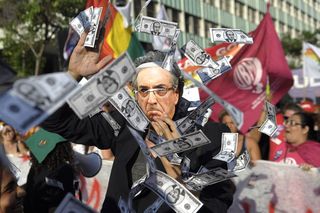
Two weeks ago, after recording what was perhaps her last official address and signing a net-neutrality addendum to Brazil’s landmark 2014 Internet civil rights legislation (the Marco Civil da Internet), Dilma Rousseff was temporarily removed from the office of president of Brazil. For a period of up to six months, the Senate will deliberate on whether to remove her permanently from office or reinstate her to finish her term, depending on if she is found guilty of a “crime of responsibility” for fiscal inconsistencies in the national budget. Meanwhile Vice-President Michel Temer, acting as interim president, has shuffled the country’s ministerial line-up and declared a series of policy reversals, primarily in an effort to restore national and international confidence in the country as a stable and business-friendly environment.

But despite the celebratory mood conveyed by Brazil’s corporate media, the country’s future is entirely uncertain. Not only is it far from assured that the Senate will vote at the end of the process to permanently suspend Rousseff, or that the Supreme Court will uphold the impeachment. The bigger uncertainty is whether the interim Temer administration will meet the minimum conditions to govern or be accepted as legitimate by a sufficient percentage of the population. For too many Brazilians at every level of the social ladder, the Rousseff impeachment seems transparently political, seeking to remove an unpopular but democratically elected president on thin, procedural grounds under the banner of fighting corruption. An unelected administration composed of several politicians themselves implicated in corruption is now beginning to carry out policies that the Brazilian public would have a hard time accepting at the ballot box. Internationally, the bizarre spectacle of the impeachment joins other recent power grabs by conservative forces in Latin America, notably in Paraguay and Honduras, which have sought to manipulate public institutions to facilitate elite interests.

More here.

Richard Smith: The Incredible Lightness Of Being

Richard-Smith-Major-Battle-1984-Acrylic-on-Canvas-c-Richard-Smith-Courtesy-of-Flowers-Gallery.-Photograph-by-Roman-Dean-1024x683Barbara Rose at The Easel:

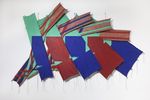
Throughout his career, Richard Smith refused to be a theoretician or cite dogma or to become part of any given circle or style. Yes, the kites are shaped paintings– but only in their own and not any generic sense. They hang lightly, gingerly from an exposed hook, their balance, although carefully engineered, seemingly effortless. They remain fascinating because they occupy two zones of consciousness at the same time. They are neither this nor that, not entirely image nor entirely object. They are brilliantly resolved in terms of composition and color relationships, but not in terms of their status as things in the world.

Color and light, as much if not more than surface and edge, remain Smith’s principle preoccupations. Smith’s thoroughly original palette, his unexpected slightly off shades and tints and his mix of colors from the divergent worlds of fine art, textiles, advertising, cinema and nature distinguishes his painterly style. He invents colors as much as he invents shapes, something one could never say of the familiar contrasts of most hard edge or color field painting. Not until the late work produced when he moved to the heart of Renaissance Italy did Al Held create a palette as extensive and original as that of Richard Smith. Indeed, the two seem to stand apart as alchemists of color, willing to use and combine every kind of color from that of the old sand modern masters to the tones and tints of the countryside in all seasons to the artificial brash colors of industry and technology. And with all the talk about color field painting, this has neither been noted nor discussed in any meaningful way, perhaps because Held and Smith were too independent to be acknowledged by Greenberg who demanded fealty to his authority from those he promoted.

more here.

WHY I DIDN’T SIGN THE OPEN LETTER AGAINST TRUMP

RumpAleksandar Hemon at Literary Hub:

I didn’t sign the Letter.

For one thing, if the writers take the American electoral system to be legitimate and legal, the way to oppose Trump’s candidacy is to vote against him—that’s what voting is for. It’s true, as the writers assert, that “the history of dictatorship is the history of manipulation and division, demagoguery and lies,” but Trump is presently abiding by the rules of democratic election, as are his followers, rabid as they may be. It’s also true that “neither wealth nor celebrity qualifies anyone to speak for the United States, to lead its military, to maintain its alliances, or to represent its people.” But what would qualify Trump to speak for the United States is his being elected in the fall, horrifying as that may seem, that’s how the system works—the election is the job interview. The Open Letter demands that Trump be excluded from the democratic process because he and his words are repellent, because his pelt and short fingers tarnish the comforting picture of American history that “despite periods of nativism and bigotry, has from the first been a grand experiment in bringing people of different backgrounds together.”

It’s questionable, however, that his absence from the electoral process would restore the said picture to its full American glory. Would the writers have written a letter opposing Ted Cruz, an ardent sociopath who at some point in his life must have tortured rodents, and who is just as hateful as Trump, because he would’ve conformed to the accepted practices of American politics? Would Ben Carson, a stranger to reason, comply with the writers’ belief “that any democracy worthy of the name rests on pluralism, welcomes principled disagreement, and achieves consensus through reasoned debate”?

more here.

naomi klein and the climate movement

9781846145063Peter Dorman at nonsite.

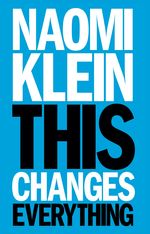
It’s been over a year since Naomi Klein’s This Changes Everything: Capitalism vs the Climate was published to generally favorable, and sometimes ecstatic, reviews. Why write about it at this late date? If the purpose of a book review is to advise readers whether they should add a new line to their to-read list, there’s not much point. But I think Klein’s book and its reception have important implications, most of them unpleasant, for the state of the left in the United States and deserves a close reading for that reason.

Klein takes many stands in this book (several on some pages), and it’s impossible to summarize all of them. As we’ll see, it’s even difficult to sum up her central argument, since she contradicts it liberally. In my view, the central thread of this book is not analytical (hypotheses about the causes and cures of the climate crisis) but associative and evangelical. By the first, I mean that she interprets the politics of climate change as a battle between two forces, one good and the other evil, and much of the book is devoted to sorting people into these two categories. (There is virtually no ambiguity or overlap between them.) By the second, I have in mind the notion that what divides the villains from the heroes is their respective consciousnesses. If the battle is still in doubt, it’s because true ideas have not yet triumphed over faulty and wicked ones, so politics is fundamentally a matter of conversion. To be blunt, readers who pick up Klein’s book hoping to learn something about the impact of capitalism on the climate crisis will be disappointed, since by “capitalism” Klein means capitalist thinking.

more here.

A new biography of Diane Arbus

Arbus-kid-grenadeAnthony Lane at The New Yorker:

Arbus inherited both strains: the urge to follow your star, plus the rage to cut yourself off and plunge into personal lockdown. One further twist in her upbringing was that she did not endure it alone, for her brother, Howard, was close to her, although whether that closeness offered aggravation or relief is open to debate. Both were precocious students, and they shared other talents, too. Diane masturbated in the bathroom with the blinds up, to insure that people across the street could watch her, and as an adult she sat next to the patrons of porno cinemas, in the dark, and gave them a helping hand. (This charitable deed was observed by a friend, Buck Henry, the screenwriter of “The Graduate.”) Not to be outdone in these vigorous stakes was her brother, who later, in a book called “Journal of the Fictive Life,” defined his self-abuse as “worship.” He added, “My father once caught me at it, and said he would kill me if it ever happened again.” A friend of Gertrude’s once told Howard that reading Freud would make you sick. On the contrary, it would be like a day in the life of the Nemerovs.

The summit of this weirdness comes before Lubow has reached page twenty, with the disclosure, from Arbus, that “the sexual relationship with Howard that began in adolescence had never ended. She said that she last went to bed with him when he visited New York in July 1971. That was only a couple of weeks before her death.” The source for this is a psychiatrist named Helen Boigon, who treated Arbus in the last two years of her life, and who was interviewed—though not named—by Patricia Bosworth for her 1984 biography of Arbus.

more here.

Does power really corrupt?

Matthew Sweet in More Intelligent Life:

Power-header-V2Cycling one morning over the East Bay Hills, Professor Dacher Keltner had a near-death experience. “I was riding my bike to school,” he recalls, “and I came to a four-way intersection. I had the right of way, and this black Mercedes just barrelled through.” With two feet to spare before impact, the driver slammed on his brakes. “He seemed both surprised and contemptuous, as if I was in his more important way.” Keltner’s first response was a mixture of anger and relief: no Berkeley psychology professor with surfer-dude hair had been smeared over the Californian tarmac that day. His second was more academic. Was there, he wondered, a measurable difference between the behaviour of Mercedes owners and those of other cars? Cars that didn’t cost twice the average annual income of an American middle-class family? Had the guy who nearly killed him bought something else, along with $130,000-worth of German engineering? The professor put a group of students on the case; sent them out with clipboards to loiter on the traffic islands of Berkeley. They monitored vehicle etiquette at road junctions, kept notes on models and makes. They observed who allowed pedestrians their right of way at street crossings; who pretended not to see them and roared straight past. The results couldn’t have been clearer. Mercedes drivers were a quarter as likely to stop at a crossing and four times more likely to cut in front of another car than drivers of beaten-up Ford Pintos and Dodge Colts. The more luxurious the vehicle, the more entitled its owner felt to violate the laws of the highway.

What happened on the road also happened in the lab. In some experiments Keltner and his collaborators put participants from a variety of income brackets to the test; in others, they “primed” subjects to feel less powerful or more powerful by asking them to think about people more or less powerful than themselves, or to think about times when they felt strong or weak. The results all stacked the same way. People who felt powerful were less likely to be empathetic; wealthy subjects were more likely to cheat in games involving small cash stakes and to dip their fists into a jar of sweets marked for the use of visiting children. When watching a video about childhood cancer they displayed fewer physiological signs of empathy.

More here.

Wednesday Poem

Born in the USA

We were pumping our fists with Springsteen,
chanting the chorus as Reagan galloped
the campaign trail, still pretending
to be a cowboy, and the old man who lived

in the blue house with the white fence
lined with rosebushes was handing out mints
from a bowl made out of a buffalo skull.
Uncle Bob chopped off his thumbs

in a metal press on his first day on the job.
My father returned to Khe Sahn sleepwalking
past our bedrooms, shouting out the names
of smoke and moon. He had a woman he loved

in Saigon, sang The Boss. Across the bay—
Ferris wheel lights and roller coaster screams.
Child Services found my grandmother unfit
to adopt. An ambulance in front of the blue house

with the white fence lined with rosebushes.
A white sheet. The bones and feathers
of a dead seagull—a ship wreck
on a rocky shore lapped by green waves.

Read more »

Tuesday, May 31, 2016

The Seven Broken Guardrails of Democracy

David Frum in The Atlantic:

ScreenHunter_1992 May. 31 19.49A long time ago, more than 20 years in fact, the Wall Street Journal published a powerful, eloquent editorial, simply headlined: “No Guardrails.”

In our time, the United States suffers every day of the week because there are now so many marginalized people among us who don't understand the rules, who don't think that rules of personal or civil conduct apply to them, who have no notion of self-control.

Twenty years later, that same newspaper is edging toward open advocacy in favor of Donald Trump, the least self-controlled major-party candidate for high office in the history of the republic. And as he forged his path to the nomination, he snapped through seven different guardrails, revealing how brittle the norms that safeguard the American republic had grown.

Here’s the part of the 2016 story that will be hardest to explain after it’s all over: Trump did not deceive anyone. Unlike, say, Sarah Palin in 2008, Trump appeared before the electorate in his own clothes, speaking his own words. When he issued a promise, he instantly contradicted it. If you chose to accept the promise anyway, you did so with abundant notice of its worthlessness. For all the times Trump said believe me and trust me in his salesman patter, he communicated constantly and in every medium that there was only thing you could believe and trust: If you voted for Donald Trump, you’d get Donald Trump, in all his Trumpery and Trumpiness.

The television networks that promoted Trump; the primary voters who elevated him; the politicians who eventually surrendered to him; the intellectuals who argued for him, and the donors who, however grudgingly, wrote checks to him—all of them knew, by the time they made their decisions, that Trump lied all the time, about everything.

More here.

After Tens of Thousands of Pigeons Vanish, One Comes Back

Robert Krulwich in National Geographic:

ScreenHunter_1991 May. 31 19.36At first the whole thing seemed preposterous. No way this could happen. Tom Roden, 66 at the time, was standing at the door of his home near Manchester, England. “I was just setting out on a walk with my dog when I saw him,” he told a reporter. “I recognized him straight away because of his white tail feathers.”

It was a pigeon. His pigeon. It had been missing for five years. Suddenly it was back. Why? And where were the tens of thousands of pigeons that vanished with him?

It had a name: Champion Whitetail. In 1997, Roden had sent Whitetail and a bunch of other racing birds to France, 430 miles south, to compete in the Royal Pigeon Association’s centenary cross-Channel competition, a major long-distance pigeon race with cash prizes that attracted 60,000 bird entries. The contestants, quietly cooing, were brought to a field near Nantes and released at 6:30 in the morning—that was the race’s motto: “At dawn we go.”

At the signal the birds took flight and, following a deep pigeon instinct, dashed at speeds as high as 50 miles an hour straight back toward their roosts, or “lofts,” all across England. This is something pigeons do. It’s called a homing instinct, and even though many of these animals had never been to France before, didn’t recognize the land below them, and had to cross a wide channel of ocean water before finding the house or roof or backyard from which they came, normally most of these racers would have find their way home.

Whitetail was expected to arrive early, because he was a champion. He’d already won 13 races in his lifetime, had flown across the English Channel 15 times, and had finished the Central Southern Classic from Lessay in northern France against a field of 3,026 birds with the winning time. He was a bird to watch.

More here.

How the Profound Changes in Economics Make Left Versus Right Debates Irrelevant

Eric Beinhocker in Evonomics:

ScreenHunter_1990 May. 31 19.22Economic ideas matter. The writings of Adam Smith over two centuries ago still influence how people in positions of power – in government, business, and the media – think about markets, regulation, the role of the state, and other economic issues today. The words written by Karl Marx in the middle of the 19th century inspired revolutions around the world and provided the ideological foundations for the cold war. The Chicago economists, led by Milton Friedman, set the stage for the Reagan/Thatcher era and now fill Tea Partiers with zeal. The debates of Keynes and Hayek in the 1930s are repeated daily in the op-ed pages and blogosphere today.

Economic thinking is changing. If that thesis is correct – and there are many reasons to believe it is – then historical experience suggests policy and politics will change as well. How significant that change will be remains to be seen. It is still early days and the impact thus far has been limited. Few politicians or policymakers are even dimly aware of the changes underway in economics; but these changes are deep and profound, and the implications for policy and politics are potentially transformative.

For almost 200 years the politics of the west, and more recently of much of the world, have been conducted in a framework of right versus left – of markets versus states, and of individual rights versus collective responsibilities. New economic thinking scrambles, breaks up and re-forms these old dividing lines and debates.

More here.

Tales of African-American History Found in DNA

Carl Zimmer in the New York Times:

ScreenHunter_1989 May. 31 18.24The history of African-Americans has been shaped in part by two great journeys.

The first brought hundreds of thousands of Africans to the southern United States as slaves. The second, the Great Migration, began around 1910 and sent six million African-Americans from the South to New York, Chicago and other cities across the country.

In a study published on Friday, a team of geneticists sought evidence for this history in the DNA of living African-Americans. The findings, published in PLOS Genetics, provide a map of African-American genetic diversity, shedding light on both their history and their health.

Buried in DNA, the researchers found the marks of slavery’s cruelties, including further evidence that white slave owners routinely fathered children with women held as slaves.

And there are signs of the migration that led their descendants away from such oppression: Genetically related African-Americans are distributed closely along the routes they took to leave the South, the scientists discovered.

More here.

ENRIQUE VILA-MATAS talks about the future

Enrique-Vila-MatasEnrique Vila-Matas at Music and Literature:

I have come to talk to you about the future. The future of the novel, I suppose, though possibly just the future of this speech. I’m going to describe to you the future as for years I imagined it would be. Put yourselves in 1948, the year I was born, on the August afternoon when music stations in Maryland began to play the sounds of a strange, all but noiseless disc, soon spreading all along the East Coast, leaving a trail of perplexity in anyone who happened to hear them. What was it? Nothing of the kind had ever been heard before, so it still didn’t have a name, but it was—we now know—the first Rock n’ Roll song in history. Whoever heard it was suddenly pitched into the future. The music of that disc seemed to come from the ether and to literally float on the airwaves of Maryland. This, ladies and gentlemen, was the arrival of Rock n’ Roll, and it came with the deep unhurriedness of that which is truly unexpected. The song was called It’s Too Soon to Know, and it was the first recording by The Orioles, five musicians from Baltimore. It sounded strange—which isn’t so strange, bearing in mind that it was the first sign that something was changing.

What thoughts might have crossed the mind of the first person who, hearing Radio Maryland that morning, comprehended that it was the start of a new era? It’s so, went the song, in the halting whispered delivery of singer Sonny Til, it’s too soon, way too soon to know.

I have come to talk to you about the future, which was for years something I thought of as arriving in the same way that Rock music arrived in the year I was born, with the deep unhurriedness of that which is truly unexpected.

more here.

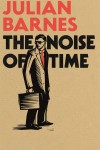
‘The Noise of Time’ by Julian Barnes

Julian-Barnes-The-Noise-of-Time-Cover-100x150Peter Craven at The Sydney Review of Books:

How strange the whirligigs of time are when it comes to literature. It’s only a few decades, a second in the eye of eternity, since Julian Barnes and his then friend and ally Martin Amis represented the new British writing. I remember Barnes saying to me back in the days when I published him in Scripsi and celebrated him when I could – or should – in the literary pages, ‘I think my work and Martin Amis’s both benefited from the fact that the dominant mode of British fiction ceased to be social realism with a comic twist.’

That was in the early nineties when Smarty Anus (as he has long been called) was looking like a behemoth of Dickensian novelistic invention. In books such as London Fields, sordor, sorrow, squalor and sex were all wrapped in the silk (sometimes the cellophane) of Amis’s prose. That prose appeared back then, more than any British prose before it, as something like a lassoing larrikin idiom, prose that could give the Americans at their wildest and most idiolectally inspired a run for their money.

But of course, there had always been another voice in the new British writing — Julian Barnes. It was clear then, and remains so now, that the unassailable masterpiece of the period was Barnes’ shortish novel Flaubert’s Parrot (1984). This strange story of obsession, which distilled the essence of the author ofMadame Bovary via Barnes’ transfiguration of Steegmuller translating the Master, is the work that stands in relation to Amis not only at his grandest but also his most loose and baggy the way Jeffrey Eugenides’ Virgin Suicideswould stand to David Foster Wallace’s Infinite Jest a few years later.

more here.

how francis Bacon constructed his striking faces

C3a8bc308c11b89c305840869ac3394bCraig Raine at The New Statesman:

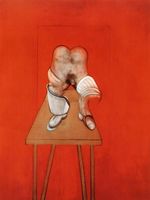
The Waste Land was one of Francis Bacon’s favourite poems. A phrase from section 2, “A Game of Chess”, exactly epitomises Study of the Human Body (1982): “And other withered stumps of time/Were told upon the walls”. This closing picture, one of 29 paintings on show at Tate Liverpool, depicts a body part, a gross truncation, bereft of torso and head. Topped by its bottom, it is a rump, a sturdy circumcised cock in a haze of pubic hair, and white-booted legs, advancing towards the viewer, clad in cricket pads. We are advised that David Gower, the England batsman, was an inspiration, but I wonder if Eliot’s word “stumps” didn’t also play its part, consciously or sub-consciously, as a verbal trigger.

The whole of Bacon’s masochistic homosexuality is encapsulated in this painting. Most of the indispensable parts are there – the penis, the buttocks, the anus – though the mouth is absent, presumably too tender for the ideal rough encounter. In fact, a mouth-part is there, displaced, but not the lips and tongue. You can see a row of teeth in the right cricket pad where, just below the knee, the white protective ridges have been summarily and severely pruned.

more here.