Category: Recommended Reading
thinking about france
A stand-off in Sudan in 1898 between the British and the French was attended by a prodigious rattling of sabres in London and Paris. The two armies in the field never came to blows, but France lost face at Fashoda and a tide of Anglophobia engulfed the Parisian press. It lasted through the Boer wars and beyond. Le Petit Journal, a scurrilous right-wing Republican daily, which rounded on Dreyfus, then Zola, took up the cudgels on behalf of oppressed Afrikaners. Among the sins it couldn’t forgive the British was the deadpan expression of Joseph Chamberlain, secretary of state for the colonies, when he toured the battlefields of South Africa. The paper had a point: the Boers fought – and lost – one of the first modern anti-imperialist struggles in Africa. Britain’s concentration camps in South Africa gave the world a glimpse of wars to come.
Le Petit Journal had a healthy print run, half a million in its heyday: it reeled in readers like idle fish on an appetising bait of faits divers. Parisian hoodlums – a particular type known as ‘apaches’ – were said to be keen browsers, partly because the paper loved to relate their fearsome deeds, and in return its editorial line rubbed off on them. They became human parchment for the journal’s opinions: in 1902 the police arrested 15 apaches and found they were covered in tattoos – among them, images of the Boer leader, Paul Kruger.
Apaches, as Luc Sante explains in The Other Paris, were propelled to fame by imaginative fin-de-siècle journalists and pamphleteers who felt the city was at risk from ‘an army of crime’.
more here.
On Jean-Marie Straub and Danièle Huillet

IN 1988, THE FRENCH-BORN DIRECTORS Jean-Marie Straub and Daniéle Huillet hosted a conference at a Paris film school. Before the assembled crowd, they explained with the help of labeled diagrams why they had chosen to shoot a sequence for their film The Death of Empedocles (1986) in a particular way. The scene shows the title character, a heretical pre-Socratic philosopher, standing in an outdoor clearing and addressing a group of five Sicilian townspeople, including the two oligarchs responsible for his exile, who stand arranged in a straight row opposite the philosopher and his young disciple. At the start of the scene, the white-haired Empedocles is fixed in a tight medium shot, from mid-chest up, looking like a talking bust. Leaves and ferns flutter behind his head. As he delivers his speech, we watch him contort his lips to best expel each syllable:
Even as a boy my pious heart
Avoided you who soil all you touch;
My pious heart, intensely loving, clove
To sun and ether, all the messengers
Of our grand nature intimated from afar.
For surely even then I felt it, I feared,
That you would bend my heart’s free love
Of gods to some obnoxious servitude.
That I would treat all things as you treat them.
Begone! I cannot bear to face a man who
Abuses holy things as stock in trade.
When Straub and Huillet cut to a wider shot of Empedocles’ two main accusers standing side by side, they too seem frozen in space. All their energy is concentrated in their facial muscles as they articulate the text’s sharp consonants and rolling vowels. Watching these shots, what’s striking is the variety of movement Straub and Huillet have purged from their images—all the cinematic devices that have been “avoided” on the suspicion that they will “soil” the shot or “bend” it “to some obnoxious servitude.”
more here.
Translating Adonis’s “Elegy for the Times”
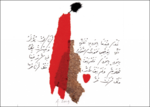
The speaker of “Elegy for the Times”—a long prose poem by the Syrio-Lebanese poet Adonis, a master of Arabic verse—is not an “I” but a “we,” an anonymous collective that travels through a nightmarish landscape of tombstones, locusts, and sand. The journey is what the ancient Greeks called a catabasis, a descent from the interior to the coast, “the sea’s abyss.” Adonis’s “we” is a community in flight, but the end of the poem suggests that the sea may offer no escape, or that it may be the final, most harrowing obstacle.
The poem, which I translated for our Summer issue, is visionary in scope, yet attentive to haunting details: the light glinting off a helmet, the stains of sweat on a dancer’s loincloth. Beyond the controlled hysteria of its images, I was drawn to the poem because it seems to have leaped from today’s headlines, conjuring the civil war in Syria and the vast migrations it has provoked. The scale of this ongoing tragedy defies the imagination, yet Adonis’s elegy is one of those rare works that aligns with Seamus Heaney’s definition of poetry: “a search for images and symbols adequate to our predicament.” (Heaney was thinking of Ireland’s own time of troubles.)
But Adonis’s poem actually has nothing to do with the predicament of present-day Syria—or at least, it wasn’t inspired by current events. “Elegy” was written more than fifty years ago, on a wholly different occasion.
more here.
Calm down. Trump won’t be President
Ian Leslie in New Statesman:
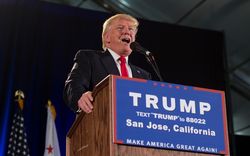
He certainly won’t make progress with non-white voters. If he wins as many Hispanic and black votes as Romney did – and he very probably won’t – he’ll have to win nearly two thirds of white voters to get to a majority. I just don’t think there are nearly enough angry racist white men in America to get him to the White House. It will soon become apparent that the big mistake of this whole electoral cycle was not, “We had no idea how popular Trump could be.” It was, “We had no idea how removed a large segment of the core GOP electorate has become from the rest of the nation.” Another factor is that the American media – finally, belatedly – have him in their sights, and they smell blood. Befuddled and dazzled by his rise, they didn’t scrutinize him aggressively, or call out his racism (and neither did his political rivals). Eager to make amends, they are now starting to make up for it. Interviews like this or this are just the beginning.
More here.
Dietary fiber has biggest influence on successful aging, research reveals
From KurzweilAI:
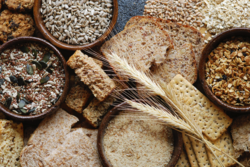
Successful aging was defined as including an absence of disability, depressive symptoms, cognitive impairment, respiratory symptoms, and chronic diseases including cancer, coronary artery disease, and stroke. Fiber, or roughage, is the indigestible part of plant foods that pushes through the digestive system, absorbing water along the way and easing bowel movements. According to lead author of the paper, Associate Professor Bamini Gopinath, PhD, from the Institute’s Centre for Vision Research, “Out of all the variables that we looked at, fiber intake —- which is a type of carbohydrate that the body can’t digest — had the strongest influence,” she said. “Essentially, we found that those who had the highest intake of fiber or total fiber actually had an almost 80 percent greater likelihood of living a long and healthy life over a 10-year follow-up. That is, they were less likely to suffer from hypertension, diabetes, dementia, depression, and functional disability.”
More here.
Wednesday Poem
The Language Issue
I place my hope on the water
in this little boat
of the language, the way a body might put
an infant
in a basket of intertwined
iris leaves,
its underside proofed
with bitumen and pitch,
then set the whole thing down amidst
the sedge
and bulrushes by the edge
of a river
only to have it borne hither and thither,
not knowing where it might end up;
in the lap, perhaps,
of some Pharaoh’s daughter.
by Nuala Ni Dhomhnaill
from Pahraoh’s Daughter
Wake Forest University Press, 1998
translated from the Irish by Medbh McGuckian
.
Tuesday, June 7, 2016
National borders exist to pen poor people into reservations of poverty
Giles Fraser in The Guardian:
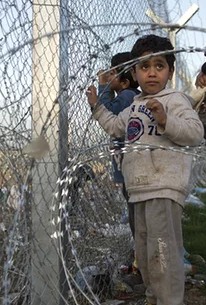
We are so hypocritical about borders. We cheer when the Berlin Wall comes down. We condemn the Israelis for their separation barrier and Donald Trump for his ludicrous Mexican fence. But are we really so different? We also police our borders with guns and razor wire as if we had some God-given right to this particular stretch of land. Through the random lottery of life, I have a UK passport. I didn’t work for it or do anything whatsoever to deserve it. In economic terms, I just happened to be born lucky. My new friend from Cameroon, not so much.
Within our own borders we complain at any suggestion of a postcode lottery. When the north of England has a different standard of healthcare to the south, we consider it a scandal. But when the global north has a radically different standard of healthcare to the global south, we think that’s just the way it is. In fact, it’s far worse than that – we somehow think it our duty to fence off our advantage, to protect it against those who would share in our good fortune.
More here.
Leonard Susskind: My friend Richard Feynman
The Hands of a Leader: Donald Trump and Niccolò Machiavelli
Robert Zaretsky in the LA Review of Books:
Let’s begin with, well, the hands of a political leader. Midway through The Prince, Machiavelli declares that we must judge politicians by the hands, not the eyes. Not by the size of their hands, mind you, but by the work of their hands. In other words, a politician’s vows are verbiage until he proves otherwise. Take Pope Alexander — please, Machiavelli might have added sotto voce — a sceptered wheeler-dealer whose lies were as legion as his bastard children. Alexander “never did nor ever thought of anything but to deceive, and always found a reason for doing so.” No one swore oaths with greater flourish, Machiavelli observes, and no one broke them with fewer qualms. And yet, Alexander’s fibs never failed him for a simple reason: “He knew the weakness of men in that particular.”
We are as weak now as we were then. We still want to believe, and not the small stuff. We want, instead, to believe the big stuff. The bigger the lie, the greater our satisfaction; the greater our satisfaction, the deeper our credulity. Yet Machiavelli, contrary to popular belief, does not applaud this sort of dissimulation. Instead, he agonizes over it. Time and again, he urges citizens to exercise their reason, to beware of leaders who appeal to their passions. In troubled times, he warns, citizens turn against minorities within their countries by turning them into scapegoats. This reflex, in turn, lifts to power those who promise to protect the people against their imagined enemies. The enemy of my enemy is not just my friend; he is my leader.
How do we guard the republic — just another way of saying we, ourselves — from ourselves? Machiavelli would urge us, first, to commit ourselves to the essential virtues. Whether Machiavelli was an atheist is still debated, but also still irrelevant. The pagan virtues of ancient Rome and Greece — courage, strength, justice, and compassion — that Machiavelli praised were, he believed, also the foundations of the Christian religion. Just as there are good and bad Christians, so too is the case with atheists. An “atheist” inspired by these virtues, no less than a Christian (or Jew or Muslim), would make for an honorable leader. What Machiavelli feared, instead, was a leader who scorned both the pagan and religious varieties of these particular virtues. The sort of leader, one imagines, who mauls scripture while his followers maul opponents.
More here.
Evidence of a ‘Fifth Force’ Faces Scrutiny
Natalie Wolchover in Quanta:
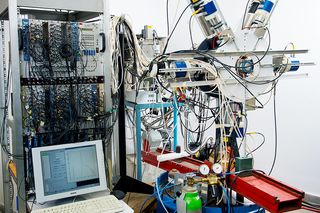
Last year, a team of nuclear physicists in Hungary observed an anomaly in the decays of excited beryllium-8 atoms — an unexpected preference for spitting out pairs of particles with a particular angle of separation. The bump in the physicists’ data was unmistakable, with odds of less than one in 100 billion of arising by chance. Reporting the anomaly in Physical Review Letters in January, the researchers argued that it could signify the existence of a new fundamental particle. But at first, few took notice.
That changed in April with a much-discussed paper by Jonathan Feng, a theoretical particle physicist at the University of California, Irvine, and colleagues. After spending months translating the nuclear physics finding into the language of particle physics and ensuring that no particle physics experiments contradicted it, the Irvine team determined that the beryllium-8 anomaly is “beautifully” explained by the presence of a previously unknown “vector boson” — a type of particle that would wield a little-felt fifth force of nature.
The proposed boson has become lunch-table talk in physics departments far and wide, and plans are afoot for testing the idea. If the particle is confirmed, it would be a definite “ticket to Stockholm” that “would completely upend our understanding of the universe,” said Jesse Thaler, a theoretical particle physicist at the Massachusetts Institute of Technology. Unlike the Higgs boson — the particle discovered in 2012 that was the last missing piece of the Standard Model of particle physics — this unforeseen boson and accompanying force would lead the way to a more complete theory of nature. Physicists desperately seek an extension of the Standard Model to account fordark matter, neutrino masses, unification of the forces and other mysteries. (In a forthcoming paper, the Irvine team will propose a Standard Model extension that includes the new boson.) Stressing that he has a high bar for experimental anomalies after seeing many bumps come and go in the past, Feng said, “I’m more excited than I’ve been about things for a long time.”
Remarkably, whereas the world’s biggest supercollider was needed to produce the heavy Higgs boson, the hypothetical Hungarian boson is so lightweight, with a mass only 34 times that of the electron, that it could have turned up in experiments decades ago. If it really exists, how did it go unnoticed for so long? Most experts will remain skeptical until further evidence of the particle rolls in — even Feng. “It’s a huge claim to say a fifth force has been discovered, and I recognize that,” he said. “Obviously, you need to check it.”
More here.
Let Them Drown: The Violence of Othering in a Warming World
Naomi Klein in the LRB:
Edward Said was no tree-hugger. Descended from traders, artisans and professionals, he once described himself as ‘an extreme case of an urban Palestinian whose relationship to the land is basically metaphorical’. In After the Last Sky, his meditation on the photographs of Jean Mohr, he explored the most intimate aspects of Palestinian lives, from hospitality to sports to home décor. The tiniest detail – the placing of a picture frame, the defiant posture of a child – provoked a torrent of insight from Said. Yet when confronted with images of Palestinian farmers – tending their flocks, working the fields – the specificity suddenly evaporated. Which crops were being cultivated? What was the state of the soil? The availability of water? Nothing was forthcoming. ‘I continue to perceive a population of poor, suffering, occasionally colourful peasants, unchanging and collective,’ Said confessed. This perception was ‘mythic’, he acknowledged – yet it remained.
If farming was another world for Said, those who devoted their lives to matters like air and water pollution appear to have inhabited another planet. Speaking to his colleague Rob Nixon, he once described environmentalism as ‘the indulgence of spoiled tree-huggers who lack a proper cause’. But the environmental challenges of the Middle East are impossible to ignore for anyone immersed, as Said was, in its geopolitics. This is a region intensely vulnerable to heat and water stress, to sea-level rise and to desertification. A recent paper in Nature Climate Change predicts that, unless we radically lower emissions and lower them fast, large parts of the Middle East will likely ‘experience temperature levels that are intolerable to humans’ by the end of this century. And that’s about as blunt as climate scientists get. Yet environmental issues in the region still tend to be treated as afterthoughts, or luxury causes. The reason is not ignorance, or indifference. It’s just bandwidth. Climate change is a grave threat but the most frightening impacts are in the medium term. And in the short term, there are always far more pressing threats to contend with: military occupation, air assault, systemic discrimination, embargo. Nothing can compete with that – nor should it attempt to try.
There are other reasons why environmentalism might have looked like a bourgeois playground to Said. The Israeli state has long coated its nation-building project in a green veneer – it was a key part of the Zionist ‘back to the land’ pioneer ethos. And in this context trees, specifically, have been among the most potent weapons of land grabbing and occupation. It’s not only the countless olive and pistachio trees that have been uprooted to make way for settlements and Israeli-only roads. It’s also the sprawling pine and eucalyptus forests that have been planted over those orchards, as well as over Palestinian villages, most notoriously by the Jewish National Fund, which, under its slogan ‘Turning the Desert Green’, boasts of having planted 250 million trees in Israel since 1901, many of them non-native to the region. In publicity materials, the JNF bills itself as just another green NGO, concerned with forest and water management, parks and recreation. It also happens to be the largest private landowner in the state of Israel, and despite a number of complicated legal challenges, it still refuses to lease or sell land to non-Jews.
More here.
Disgust made us human

Kathleen McAuliffe in Aeon:
The young man was having sex with his dog. In fact, he’d lost his virginity to it. Their relationship was still very good; the dog didn’t seem to mind at all. But the man’s conscience was eating at him. Was he acting immorally?
In search of sage counsel, he sent an email to David Pizarro, who teaches a class on moral psychology at Cornell University in New York. ‘I thought he was just pulling my leg,’ said Pizarro. He sent the man a link to an article about bestiality, and thought that would be the end of it. But the man responded with more questions. ‘I realised this kid was pretty serious.’
Although Pizarro is a leader in his field, he struggled to craft an answer. ‘What I ended up responding was: “I might not say this is a moral violation. But in our society you’re going to have to deal with all manner of people believing that your behaviour is odd, because it is odd. It’s not something anybody likes to hear about.” And I said: “Would you want your daughter to date someone who has been having sex with their dog? And the answer is no. And this is critical: you don’t have animals writing essays about how they’ve been mistreated because of their love of human beings. I would get help for this.”’
In essence, Pizarro was saying that the man’s behaviour was weird, concerning and distressing, but he wasn’t willing to condemn it. If that doesn’t sit well with you, you’re probably sickened by the very image of someone having sex with a dog. But was the man acting immorally? At least by the man’s own account, the dog wasn’t being harmed.
If you’re struggling to put your finger on why exactly the man’s behaviour seems wrong, psychologists have a term for your confused state of mind. You’re morally dumbfounded.
More here.
Why the Very Poor Have Become Poorer
Christopher Jencks in the NY Review Books:
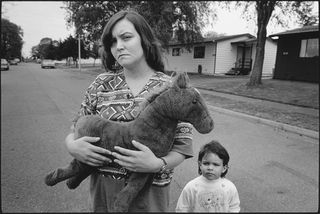
In $2.00 a Day: Living on Almost Nothing in America, Kathryn Edin and Luke Shaefer argue that what they call “extreme” poverty roughly doubled between 1996 and 2012. If they are right—and I think they are—the reader might wonder how I can still claim that poor families’ living standards have risen. The answer is that inequality has risen even among the poor. Half of today’s officially poor families are doing better than those we counted as poor in the 1960s, but as I learned from reading $2.00 a Day (and have spent many hours verifying), the poorest of the poor are also worse off today than they were in 1969. $2.00 a Day is a vivid account of how such families live. It also makes a strong case for blaming their misery on deliberate political choices at both the federal and state levels.
Kathryn Edin is a professor at Johns Hopkins University who has spent much of the past twenty-five years talking with low-income Americans about their lives. In 2010, when the national unemployment rate was over 9 percent, she began meeting parents who said they had no regular income whatever from work, from welfare, or from any other source. Their economic plight sounded worse than anything she had previously encountered, and she began pondering how to figure out what had happened, and why.
In 2011 Edin met Luke Shaefer, a young professor at the University of Michigan who had worked extensively with the Census Bureau’s Survey of Income and Program Participation (SIPP). This survey was the best available source of data on poor families, and Edin persuaded Shaefer to investigate what it showed about households with little or no income.3 To do that, they had to decide what criteria to use.
A single mother with two children was officially poor in 2011 if she reported an annual income below $18,123. If she reported less than half that amount, the Census classified her and her children as living in “deep” poverty. However, the Census had never had a term for families as poor as those Edin and Shaefer wanted to count, so they chose their own term: “extreme” poverty.
They also chose a third-world definition of who belonged in their new category. The World Bank counted third-world families as poor if they lived on less than $1.90 a day per family member. Edin and Shaefer rounded that up to $2.00.4 This cutoff was between 9 and 13 percent of the official poverty threshold for most American families. For a single mother of two, for example, Edin and Shaefer’s “extreme” poverty threshold was $6 a day while the “official” 2011 threshold came to just under $50 a day. Neither measure included noncash benefits or EITC refunds.
When Shaefer analyzed the SIPP data, he found that 4.3 percent of American households with children reported living on less than $2 a day per person for at least one month during 2011.
More here.
The ancient roots of humanism
Andrew Copson in New Humanist:
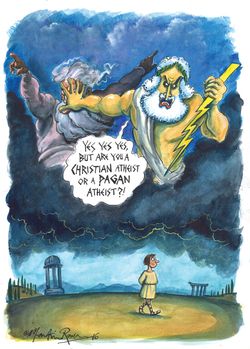
In his excellent book Battling the Gods: Atheism in the Ancient World, Tim Whitmarsh focuses specifically on atheism in ancient Europe. Ancient Greek and Roman atheism has been sidelined, he believes, because it has been in the interests of Christians for the past 1,500 years, as it is today, to pretend their faith is timeless; because it is in the interests of atheists to claim their beliefs are cutting edge, the products of a modern scientific approach; and because generally we have lost popular knowledge of the classical world throughout our culture. He wants to combat this, both for the truth’s sake and to give back to the modern non-religious something of their heritage.
More here.
Does a Newborn’s Helplessness Hold the Key to Human Smarts?
Simon Makin in Scientific American:

Like a lot of evolutionary theories, this one can be couched in the form of a story—and like a lot of evolutionary stories, this one is contested by some scientists. Kidd and Piantadosi note that, according to a previous theory, early humans faced selection pressures for both large brains and the capacity to walk upright as they moved from forest to grassland. Larger brains require a wider pelvis to give birth whereas being bipedal limits the size of the pelvis. These opposing pressures—biological anthropologists call them the “obstetric dilemma”—could have led to giving birth earlier when infants’ skulls were still small.
Thus, newborns arrive more immature and helpless than those of most other species. Kidd and Piantadosi propose that, as a consequence, the cognitive demands of child care increased and created evolutionary pressure to develop higher intelligence. This in turn led to larger brains, requiring earlier birth—and that produced offspring who were more helpless, requiring even higher parental intelligence, a circle that led to “runaway selection” and superintelligent modern humans. “We were playing with my niece, thinking, ‘It takes a lot of human abilities to take care of this kid,’” Piantadosi says. “You have to figure out what they need, and when.” You also have to understand goals, Kidd adds: “If the goal is to grab at something in a dangerous location, being able to read that quickly is very useful.” Humans are particularly good at this kind of social reasoning and various theories have been suggested to explain this, usually involving living in social groups. “Our theory is an alternative, which says that social reasoning evolved to take care of kids.” Piantadosi says.
More here.
Tuesday Poem
Consider the Hands That Write This Letter
—after Marina Wilson
Consider the hands
that write this letter.
Left palm pressed flat against the paper,
as we have done before, over my heart,
in peace or reverence to the sea,
some beautiful thing
I saw once, felt once: snow falling
like rice flung from the giants’ wedding,
or strangest of strange birds. & consider, then,
the right hand, & how it is a fist,
within which a sharpened utensil,
similar to the way I’ve held a spade,
the horse’s reins, loping, the very fists
I’ve seen from roads through Limay & Estelí.
For years I have come to sit this way:
one hand open, one hand closed,
like a farmer who puts down seeds & gathers up;
food will come from that farming.
Or, yes, it is like the way I’ve danced
with my left hand opened around a shoulder,
my right hand closed inside
of another hand. & how I pray,
I pray for this to be my way: sweet
work alluded to in the body’s position to its paper:
left hand, right hand
like an open eye, an eye closed:
one hand flat against the trapdoor,
the other hand knocking, knocking.
by Arcelis Girmay
from Teeth
Northwestern University Press, 2007
Monday, June 6, 2016
perceptions

CATSPEAK
by Brooks Riley