Destruction and Sorrow beneath the Heavens by László Krasznahorkai

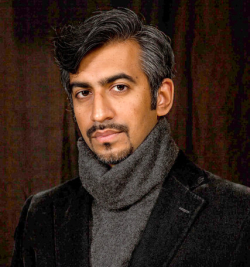
9780857423115Paul Kerschen at The Quarterly Conversation:

Though László Krasznahorkai’s early fictions were set in his native Hungary, over the past two decades he has turned to settings that cover the globe across much of historical time. He is suited to this wide range by his erudition, by the air of conviction in his long, oscillating sentences; above all because he is a writer temperamentally nowhere at home. His protagonists are wanderers, sometimes easily distinguished from their author, sometimes less so. Whether in Renaissance Florence, Muromachi Japan, New York or Berlin, they meet their surroundings with the foreigner’s mixture of curiosity and fear, and can count no homeland but the symbolic one of art.

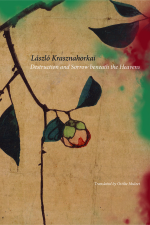
Destruction and Sorrow beneath the Heavens is the most recent Krasznahorkai volume to appear in English; though it carries the subtitle “Reportage,” it differs from the fiction only in that its confusion and longing are not joined to outright peril. An authorial double—“Mr. László” or “Comrade László” in the Hungarian original, in translation called (at the author’s direction) László Stein—travels to China, together with a long-suffering interpreter, to seek out remnants of classical Chinese culture: “this last ancient civilization, this exquisite manifestation of the creative spirit of mankind.” The phrase “beneath the heavens” is a rendering of tian xia, the Confucian concept of an ordered universe in which earth is brought in accord with heaven. Structurally, Krasznahorkai is a religious writer, and his quests after aesthetic revelation take the form of pilgrimages; but in this case, the pilgrimage goes quickly and spectacularly awry. The scenic town of Zhouzhuang is horribly transformed to a flea market the moment the tourist buses arrive; the fabled “First Spring Under Heaven” in Zhenjiang has become a filthy, stagnant pond; the adjoining Jiangtian monastery, while keeping its outward form, has inwardly ceased to exist.

more here.
The talent trap: why try, try and trying again isn’t the key to success

Ian Leslie in New Statesman:

AngelaAngela Lee Duckworth begins her book with a story that frames her life’s work as an act of retribution against her father. When Duckworth was a child, her dad would tell her, repeatedly, “You know, you’re no genius.” He was, she says, expressing the worry that she wasn’t intelligent enough to succeed in life. In 2013, aged 43, Duckworth felt able to show her father how wrong he had been. She was awarded a prestigious fellowship for her work on the relationship between character and success – specifically her identification of “grit” as a critical component, perhaps the critical component, of educational achievement. The unofficial name of the award: the MacArthur Genius Grant. Or maybe she proved him right. Duckworth’s work casts doubt on the very idea of genius. Her aim is to knock talent off its pedestal and replace it with strategically applied effort. Successful people, she argues, display a blend of passion and perseverance. They are motivated primarily by a love of what they do, as opposed to money or fame. They set long-term goals and seek to get better at what they do every day. They never give up, no matter what setbacks they suffer. Because grit is a practice, and not a gift, it can be learned.

Duckworth’s own success has been dazzling. Grit is already one of the best-known and most widely influential ideas to emerge from psychology in the past decade. Duckworth’s Ted talk has been viewed well over eight million times. She has advised the White House, the World Bank, the National Basketball Association and Fortune 500 chief executives. In the US, universities and schools are implementing programmes to raise grit levels among their students. In the UK, the Education Secretary, Nicky Morgan, has announced measures to instil grit in disadvantaged pupils.

More here.

In a New Novel, a Secular Muslim American Rejects the Burden of Labels

Pauls Toutonghi in The New York Times:

EtrazEnter 2016 — the election year of our discontent — which threatens to topple the country into a social chaos unseen since the late 1960s. Nearly two-thirds of Republican voters approve of a temporary ban on Islamic immigration. A mainstream presidential candidate has made xenophobia a central tenet of his campaign. In the first three months after terrorists attacked Paris in November, the rate of hate crimes against Muslims tripled in the United States. This is not an America with a robust and nuanced public discourse. And so the question must be asked: How much is our cultural marketplace to blame — where the narratives that sell most widely are ones that, arguably, do little to advance understanding, or even dialogue, across difference?

Into this maelstrom comes Ali Eteraz’s debut novel, “Native Believer.” Eteraz is the author of a memoir, “Children of Dust” (2009), that chronicled his journey from boyhood in a small town in central Pakistan to sex-obsessed adolescence in the American South to pious Islamic young adulthood to the broadly humanist activism that has marked his past 10 years. “Children of Dust” is, essentially, a description of the birth of “Ali Eteraz” — a pen name that translates to “Noble Protest,” which the author adopted several years after Sept. 11. Eteraz’s publisher has taken an admirable risk with “Native Believer.” I found myself wondering — as I sped through its pages with alternating interest, awe and queasiness — whether Eteraz had set out purposefully to challenge his imagined readership, to engage in a kind of “noble protest” against the demands of literary commerce. I believe this novel will offend as many readers as it captivates. It is unflinching in its willingness to transgress taboos, whether those taboos are religious, sexual or both. And in the end, “Native Believer” stands as an important contribution to American literary culture: a book quite unlike any I’ve read in recent memory, which uses its characters to explore questions vital to our continuing national discourse around Islam. This is a novel that says (to borrow a line from Aimé Césaire’s “Discourse on Colonialism”), “Any civilization that chooses to close its eyes to its most crucial problems is a stricken civilization.”

More here.

Friday, June 24, 2016

What’s The Matter With Poetry?

Ken Chen in The New Republic:

ScreenHunter_2058 Jun. 24 20.29Once, in my youth, I took a graduate philosophy seminar I thought would be about law and justice: Instead we discussed the semantic implications of punctuation marks. After class, I found myself venting to a friend who’d been a literature professor. I told her I was unsatiated by the course—it felt like when I had discovered poetry and found, in practice, this most lyric of arts often meant writing about flowers or describing an epiphany in the grocery store checkout line. My friend laughed. “You know your problem?” she said. “You thought that philosophy would be Truth and poetry would be Beauty.”

Apparently, this is Ben Lerner’s problem too. In his new book,The Hatred of Poetry, the poet, novelist, and MacArthur “genius” argues that if you love poetry’s promise of transcendence, you must also hate poems for their failure to keep up their end of the bargain. “Poetry,” Lerner writes, “arises from the desire to get beyond the finite and the historical—the human world of violence and difference—and to reach the transcendent or divine.” The only problem? Poems are ultimately human rather than divine in character. “As soon as you move from that impulse to the actual poem,” he continues, “the song of the infinite is compromised by the finitude of its terms. In a dream your verses can defeat time… but when you wake… you’re back in the human world with its inflexible laws and logic.” In other words, if you’re a poet, you may declare yourself the unacknowledged legislator of the world, but you’re really just a hobbyist in the verse game.

More here.

New studies explore why ordinary people turn terrorist

Bruce Bower in Science News:

ScreenHunter_2057 Jun. 24 20.21Fierce combat erupted in February 2016 at the northern Iraqi village of Kudilah. A Western-backed coalition of Arab Sunni tribesmen, Kurds in the Iraqi army and Kurdish government forces advanced on Islamic State fighters who had taken over the dusty outpost.

Islamic State combatants, led by young men wearing explosive vests, fought back. The well-trained warriors scurried through battle lines until they reached their enemy. Then they blew themselves up along with a few coalition soldiers, setting the stage for an Islamic State victory. These suicide bombers are called inghamasi, meaning “those who dive in deep.”

The inghamasi’s determination and self-sacrifice inspires their comrades to fight to the death, says anthropologist Scott Atran of the University of Michigan in Ann Arbor. Outnumbered about 6-to-1, Islamic State fighters still retained control of Kudilah after two days of heavy fighting. Coalition forces retreated, unwilling to lose more soldiers.

Atran and colleagues arrived in northern Iraq a couple of weeks later. Their plan: study “the will to fight” among soldiers on both sides of the Kudilah clash, even as fighting in the area continued. Their goals: try to understand what motivates people to join brutal organizations such as the Islamic State, and describe the personal transformations that push people leading comfortable, peaceable lives to commit acts of incredible violence and self-destruction.

More here.

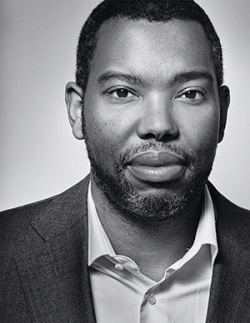
The Playboy Interview with Ta-Nehisi Coates

Bomani Jones in Playboy:

When did you realize you had become somebody?

Ta_textwrapWhen I came to The Atlantic I’d been writing for 12 years. The Atlantic is seen as this arbiter of sophisticated ideas, well ensconced in the mainstream consensus, and then they bring in this dude. I wasn’t making the case for reparations back then, but I was saying that sort of shit. I could see the reaction, and it built a little bit, and then when “The Case for Reparations” came out—holy shit. But even then it was like, “This is one story, and I’ll go back to my life.” I thought Between the World and Me would hit people who read shit. When we did BookExpo America, the book-trade joint, there was a line of people to get the galleys. I was like, “What the fuck?” And I knew it was some shit when somebody said to me on Twitter, “Oh, you’ve got to be a celebrity to get this book?” [laughs] Who the fuck wants a galley? And then when you’ve gotten love from Toni Morrison—it still didn’t hit me. When I started seeing the reaction to it I thought, Oh, this is different.

More here.

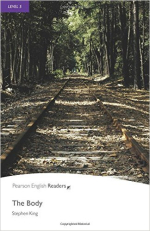
stephen king: working-class hero

5129on8lHdL._SX322_BO1,204,203,200_Naben Ruthnum at The Walrus:

King’s childhood in Connecticut and Maine was something of a blend of the lives he created for Lachance and Chambers in The Body. Like Lachance, King had a talent for storytelling. Like Chambers, he grew up without much money. King’s mother raised her two sons alone in the 1950s by taking on a series of low-paying jobs: shifts in a bakery and an industrial laundry, and housekeeping at a facility for the mentally ill. The strong women who populate King’s work—Wendy Torrance in The Shining (1977), a far cry from the trembling Shelley Duvall in the movie, and hardworking housekeeper Dolores Claiborne—reflect King’s admiration for his own mother’s efforts to get her boys a college education.

The stakes were high. In 1966, when King was in his last year of high school, the Vietnam war machine was at full throttle. Not being admitted into college would have meant getting drafted. To help with tuition, King got a job at a mill, a place he later described as “a dingy fuckhole overhanging the polluted Androscoggin River like a workhouse in a Charles Dickens novel.” Every day after school, he punched in for an eight-hour shift, went home to sleep for several hours, attended classes, then punched in again. His first notable story sale, in 1970, to a men’s magazine called Cavalier, was about the enormous rats under the mill. The grimy horror tale, “Graveyard Shift,” landed him the equivalent of a few weeks’ pay.

more here.

what will happen now?

Brexit-Glen Newey at The London Review of Books:

What will happen now? Precise predictions at this stage would be rash. The immediate upshot has already been position-staking by interest groups, notably from Scotland and Northern Ireland, both of which backed Remain in the poll. Sinn Fein has already called for a referendum on sovereignty. It’s unlikely that Nicola Sturgeon will be too quick to follow suit on Scotland’s behalf, first because in the short term the oil price collapse undermines an independent Scotland’s viability, and because a Scexit from the UK won’t quickly lead to Scotland’s reabsorption into the EU – existing members can veto accession, and Spain (and the Commission) will be loath to bless a precedent for secession, specifically of Catalonia.

If Scotland or Northern Ireland or both do peel off, the immediate prospects are fairly grim for people in what – the term is obsolete – used to be called Labour’s ‘heartlands’ in Rump UK. The kingdom of England and Wales would become, still more than it already is, Londonia, the capital a city-state as dominant over the rest as ancient Athens was over the surrounding demes. National politics is likely to be steered by the political wing of the Faragist falange, almost certainly with Johnson as premier. Its payroll vote skewed the Tory parliamentary party’s public stance in the referendum towards Remain; now it’s free to become what it is, an English nationalist party figureheaded by Johnson. Europhile Tories will be isolated. It’s not impossible that a major reconfiguration will occur, as happened with the Peelite Tories after Corn Law Repeal in 1846 or with anti-coupon liberals after the 1918 election, which eventually put paid to the Liberals as a single party of government.

more here.

deep thoughts on brexit

at 800The Onion:

FOR

  • First step in returning Britain to its pre-1970s glory as an economically languishing failed colonial empire
  • In the face of a resurgent Russia and increased threats from ISIS, leaving E.U. would be the best strategy for letting someone else deal with that shit
  • Britons could once again refocus their hatred on internal class divisions
  • One less goddamn flag everyone has to hang up
  • Won’t have to take part in awkward process of denying Bosnia and Herzegovina’s E.U. membership request
  • Throughout its history, Britain has always been a valiant defender of the right of smaller territories to separate from larger, oppressive governments
  • Pretty airtight way for citizens to mask racism as concern for national autonomy
  • more here

Being Super Busy May* Be Good for Your Brain

Brian Handwerk in Smithsonian:

Istock_000062439454_large_jpg__800x600_q85_cropSlammed. Swamped. Flat out. Buried. No matter how it's said, the refrain is all too familiar—people are just too busy. But there's good news for the harried and hectic, new research shows that busy lifestyles may be good for your brain. “There hasn't been much scientific research on busyness itself, although it's something that we talk about so often,” explains Sara Festini, a cognitive neuroscientist at the University of Texas at Dallas Center for Vital Longevity, a co-author of the new research published this week in Frontiers in Aging Neuroscience. “So we wanted to look at the relationship of a generally very busy lifestyle to cognition.” Festini and colleagues found that middle-aged and older Americans who keep themselves busy test better across a whole range of different cognitive functions like brain processing speeds, reasoning and vocabulary. The memory of specific events from the past, or episodic memory, is especially enhanced among busy people, they report. Psychologist Brent Small, director of the University of South Florida's School of Aging Studies, said the results are “in line with a large body of research suggesting that older adults who are actively engaged in cognitive stimulating activities are more likely to perform better on standard cognitive tasks.”

“This paper extends that work by examining the concept of busyness,” adds Small, who wasn't involved in the new research. But the strong correlation shown between busyness and brain function also raises an intriguing chicken-and-egg question: Does busyness boost the brain, or might people with better cognitive powers be more likely to keep themselves busy?

More here.

Scientists reveal single-neuron gene landscape of the human brain

From PhysOrg:

BrainA team of scientists at The Scripps Research Institute (TSRI), University of California, San Diego (UC San Diego) and Illumina, Inc., has completed the first large-scale assessment of single neuronal “transcriptomes.” Their research reveals a surprising diversity in the molecules that human brain cells use in transcribing genetic information from DNA to RNA and producing proteins. The researchers accomplished this feat by isolating and analyzing single-neuronal nuclei from the human brain, allowing classification of 16 neuronal subtypes in the brain's cerebral cortex, the “gray matter” involved in thought, cognition and many other functions. “Through a wonderful scientific collaboration, we found an enormous amount of transcriptomic diversity from cell to cell that will be relevant to understanding the normal brain and its diseases such as Alzheimer's, Parkinson's, ALS and depression,” said TSRI Professor and neuroscientist Jerold Chun, who co-led the study with bioengineers Kun Zhang and Wei Wang of UC San Diego and Jian-Bing Fan of Illumina. The study was published on June 24 in the journal Science.

All the Same

While parts of the cerebral cortex look different under a microscope—with different cell shapes and densities that form cortical layers and larger regions having functional roles called “Brodmann Areas”—most researchers treat neurons as a fairly uniform group in their studies. “From a tiny brain sample, researchers often make assumptions that obtained information is true for the entire brain,” said Chun. But the brain isn't like other organs, Chun explained. There's a growing understanding that individual brain cells are unique, and a possibility has been that the microscopic differences among cerebral cortical areas may also reflect unique transcriptomic differences—i.e., differences in the expressed genes, or messenger RNAs (mRNAs), which carry copies of the DNA code outside the nucleus and determine which proteins the cell makes. To better understand this diversity, the researchers in the new study analyzed more than 3,200 single human neurons—more than 10-fold greater than prior publications—in six Brodmann Areas of one human cerebral cortex. With the help of newly developed tools to isolate and sequence individual cell nuclei (where genetic material is housed in a cell), the researchers deciphered the minute quantities of mRNA within each nucleus, revealing that various combinations of the 16 subtypes tended to cluster in cortical layers and Brodmann Areas, helping explain why these regions look and function differently.

More here.

Thursday, June 23, 2016

The Unbelievable Tale of Jesus’s Wife

Ariel Sabar in The Atlantic:

ScreenHunter_2055 Jun. 23 18.19On a humid afternoon this past November, I pulled off Interstate 75 into a stretch of Florida pine forest tangled with runaway vines. My GPS was homing in on the house of a man I thought might hold the master key to one of the strangest scholarly mysteries in recent decades: a 1,300-year-old scrap of papyrus that bore the phrase “Jesus said to them, My wife.” The fragment, written in the ancient language of Coptic, had set off shock waves when an eminent Harvard historian of early Christianity, Karen L. King, presented it in September 2012 at a conference in Rome.

Never before had an ancient manuscript alluded to Jesus’s being married. The papyrus’s lines were incomplete, but they seemed to describe a dialogue between Jesus and the apostles over whether his “wife”—possibly Mary Magdalene—was “worthy” of discipleship. Its main point, King argued, was that “women who are wives and mothers can be Jesus’s disciples.” She thought the passage likely figured into ancient debates over whether “marriage or celibacy [was] the ideal mode of Christian life” and, ultimately, whether a person could be both sexual and holy.

King called the business-card-size papyrus “The Gospel of Jesus’s Wife.” But even without that provocative title, it would have shaken the world of biblical scholarship. Centuries of Christian tradition are bound up in whether the scrap is authentic or, as a growing group of scholars contends, an outrageous modern fake: Jesus’s bachelorhood helps form the basis for priestly celibacy, and his all-male cast of apostles has long been cited to justify limits on women’s religious leadership.

More here.

Breakthrough in understanding the chills and thrills of musical rapture

Ian Sample in The Guardian:

ScreenHunter_2054 Jun. 23 17.29The skin comes out in goosebumps and tingles run up the spine. But how particular pieces of music can induce such rapturous effects in people has stumped researchers for centuries.

With the passing of time comes new technology though, and suitably equipped with modern brain scanning equipment, scientists may now have made some headway.

In the latest effort to understand “the chills”, researchers in the US put out a call for music fans who either consistently experienced euphoric sensations on hearing certain tracks, or who hardly ever felt them at all.

“It stemmed from a deep interest in intense, profound emotional responses, in particular those that come from music,” said Matthew Sachs, a graduate student at the University of Southern California who conducted the experiments at Harvard University. “I’ve always been fascinated by how a collection of tones changing over time has the ability to evoke these very strong sensations.”

More than 200 people responded to the call and filled out online personality questionnaires. From these, Sachs and others at Harvard and Wesleyan University in Connecticut selected 10 to form a “chill group” and another 10 to form a “no chill” group.

Before having their brains scanned, the 20 volunteers went into the lab with playlists of music they found most pleasurable.

More here. [Thanks to Marko Ahtisaari.]

George Soros: The Brexit crash will make all of you poorer

From The Guardian:

ScreenHunter_2053 Jun. 23 16.56David Cameron, along with the Treasury, the Bank of England, the International Monetary Fund and others have been attacked by the leave campaign for exaggerating the economic risks of Brexit. This criticism has been widely accepted by the British media and many financial analysts. As a result, British voters are now grossly underestimating the true costs of leaving.

Too many believe that a vote to leave the EU will have no effect on their personal financial position. This is wishful thinking. It would have at least one very clear and immediate effect that will touch every household: the value of the pound would decline precipitously. It would also have an immediate and dramatic impact on financial markets, investment, prices and jobs.

As opinion polls on the referendum result fluctuate, I want to offer a clear set of facts, based on my six decades of experience in financial markets, to help voters understand the very real consequences of a vote to leave the EU.

More here.

How to Plug In Your Brain

David Noonan in Smithsonian:

May2016_b99_braintraining-wr-v2_jpg__800x600_q85_cropTwo hundred and thirty-five years after the Italian scientist Luigi Galvani reported that dismembered frog legs twitch in response to a static charge applied to a nerve, we are still exploring the mysteries of what he called “animal electricity,” especially in the brain. That the brain generates a bit of its own electricity, which can be detected by an electroencephalogram, or EEG, is well established, as is the fact that some neurosurgeons today sometimes use hair-thin electrodes to stimulate deep brain structures and stop Parkinson’s tremors. But scientists are now exploring a question that is, well, mind-boggling: Can low-voltage doses of electricity, transmitted through hair, skin and skull directly into particular regions of the brain, make already healthy people sharper and more alert?

Aron Barbey, a 39-year-old neuroscientist at the University of Illinois, is a leader in this research, though he is excruciatingly cautious about its prospects. He resists the idea that tomorrow’s malls and airports will feature commercial brain-charging stations, updated versions of today’s massage stops, but if that future (or something like it) comes to pass, his work will have played a critical role in bringing it about. Barbey is the director of the UI’s Decision Neuroscience Laboratory at the university’s Beckman Institute for Advanced Science and Technology, and his experiments appear to point to a time when students, soldiers, executives and the elderly could all benefit from a treatment called transcranial direct-current stimulation (tDCS).

More here.

Thursday Poem

Hearing Parker for the First Time

The blue notes spiraling up from the transistor radio
tuned to WNOE, New Orleans, lifted me out of bed
in Seward County, Kansas, where the plains wind riffed
telephone wires in tones less strange than the bird songs
of Charlie Parker. I played high school tenor sax the way,
I thought, Coleman Hawkins and Lester Young might have
if they were, like me, untalented and white, but Ornithology
came winding up from the dark delta of blues and dixieland
into my room on the treeless and hymn-ridden high plains
like a dust devil spinning me into the Eleusinian mysteries
of the jazz gods though later I would learn that his long
apprenticeship in Kansas City and an eremite’s devotion
to the hard rule of craft gave him the hands that held
the reins of the white horse that carried him to New York
and 52nd Street, farther from wheat fields and dry creek beds
than I would ever travel, and then carried him away.

by B.H. Fairchild
from Early Occult Memory Systems of the Lower Midwest
W.W. Norton, 2003
.

‘Holy grail’ of breast-cancer prevention in high-risk women may be in sight

From KurzweilAI:

Breast-cancer-preventionAustralian researchers have discovered that an existing medication could have promise in preventing breast cancer in women carrying a faulty BRCA1 gene, who are at high risk of developing aggressive breast cancer. Currently, many women with this mutation choose surgical removal of breast tissue and ovaries to reduce their chance of developing breast and ovarian cancer. Notably, in May 2013, actress Angelina Jolie, who reportedly had with an estimated 87 per cent risk of breast cancer and 50 per cent risk of ovarian cancer, chose to have d2ouble mastectomy with breast reconstruction. Women with mutation have an approximately 65% cumulative risk of developing breast cancer by age 70, the researchers note, based on a 2003 combined analysis of 22 studies.

A drug option

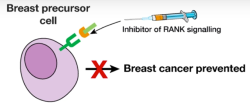
But now, another option may be be possible, as 16 scientists (most in Australia) report in an advance online paper in Nature Medicine this week. The researchers discovered that pre-cancerous cells could be identified by a marker protein called RANK. A concurrent study led by an Austrian group had also identified the importance of RANK. This was an important breakthrough, they said, because an inhibitor of the RANK signalling pathway was already in clinical use: the drug denosumab. The researchers suggest the drug may have potential to prevent breast cancer from developing. If confirmed in clinical studies, this would provide a non-surgical option to prevent breast cancer in women with elevated genetic risk.

More here.