Is This New Swim Stroke the Fastest Yet?

Regan Penaluna in Nautilus Magazine:

[Misty] Hyman came of age as a world-class swimmer during the underwater revolution. “I was 13 when I started staying under water longer than is typical,” she says, explaining she could go 30 meters without breathing. “I found I could be faster under water than at the surface.” Most swimmers were using the dolphin kick to propel themselves underwater, but Hyman’s coach, Bob Gillet, wanted to experiment. In 1995 he came across a study in Scientific American about how tuna were able to swim at almost 50 mph, where dolphins top out around 25 mph. The study found that the flick of a fish tail generated more efficient thrust than that of a marine mammal tail. Gillet wondered whether the dolphin kick might be more powerful on its side, so the undulations were horizontal, like those of a fish.

One cool December day in Phoenix in 1995, Gillet put it to the test. Hyman showed up for practice at Gillet’s outdoor pool, and he asked her to try it. “In the most respectful way, I called him a mad scientist,” she says. Her first attempts were awkward, and she ended up three lanes over from where she started. But she got better, and soon she was cutting through the water like an eel. She was going faster than she did with the dolphin kick. Faster than she had ever swum before. This gave Gillet another idea.

They went to the local country club pool, where the lighting was brighter and Gillet could walk out to the edge of a diving board to capture video. They took a long, thin rubber tube, fastened it to Hyman’s wrist, ran it down the length of one side of her body, and fastened the other end to her ankle. Then they filled the tube with store-bought food dye, and Hyman corked the tube with her thumb. She jumped into the pool, released her thumb, and took off as Gillet filmed. What they saw in the footage afterward astonished them. The dye swirled out to reveal huge vortices after each of her horizontal kicks. Gillet suspected that these miniature whirlpools, reaching 4 feet in diameter, propelled her forward. He also thought it was possible that when Hyman did the dolphin kick facedown, the bottom of the pool and the surface of the water interfered with these vortices and slowed her down.

More here.

Not Safe for Work: Why Feminist Pornography Matters

1459284456Potter666

Claire Potter in Dissent:

Pornography transformed women into “adult toys,” wrote feminist activist, journalist and Women Against Pornography (WAP) co-founder Susan Brownmiller in 1975, “dehumanized objects to be used, abused, broken and discarded.” “Pornography is the theory; rape is the practice,” former Ms. magazine editor Robin Morgan declared in 1977. Pornography, some argued, was a form of terror: women “will know that we are free when the pornography no longer exists,” wrote Andrea Dworkin, one of the most well-known advocates of anti-porn feminism, in 1981. In 1996, legal scholar Catharine MacKinnon argued against the idea that pornography was a creative practice entitled to First Amendment protection. While pornography itself was not responsible for sexual assaults against women, wrote MacKinnon, “men who are made, changed and impelled by” porn were.

Yet porn also had its defenders: politicians, media figures, and civil libertarians who had historically sought to free sexuality from control by the state. Even more importantly, porn was vigorously defended within feminism. Beginning with a clash between feminists at the 1982 Barnard Conference on Sexuality, the struggle came to a head when Dworkin and MacKinnon drafted an anti-pornography civil rights ordinance at the request of city officials in Minneapolis, Minnesota. Although the ordinance passed, Mayor Donald Fraser refused to sign it, prompting anti-pornography activists to take it to Indianapolis, a city whose mayor supported the legislation. Here, the Feminist Anti-Censorship Task Force (FACT), a coalition of New York academics and culture workers allied with the American Civil Liberties Union (ACLU), successfully challenged the ordinance’s constitutionality. Allowing people who believed they had been harmed by porn to sue for damages, they argued, would turn all erotica and sexual materials into a potential legal liability for the seller and result in de facto censorship. In effect, this prevented enactment of the ordinance anywhere in the United States.

Defenders of porn within radical feminism did not seek to deny the reality of exploitation and sexual violence: novelist Dorothy Allison, a member of FACT, wrote freely about having been subjected to cruel, sexualized beatings and incestuous rape as a child. But feminists who called themselves “pro-sex” objected to the idea that consuming or making porn was categorically harmful. Journalist Ellen Willis asked in 1979: “Is there any objective criterion for healthy or satisfying sex, and if so what is it?”

More here.

Is Islam ‘Exceptional’?

Lead_960

Shadi Hamid makes the case in The Atlantic:

To understand the Middle East’s seemingly intractable conflicts, we need to go back to at least 1924, the year the last caliphate was formally abolished. Animating the caliphate—the historical political entity governed by Islamic law and tradition—was the idea that, in the words of the historian Reza Pankhurst, the “spiritual unity of the Muslim community requires political expression.” For the better part of 13 centuries, there had been a continuous lineage of widely accepted “Islamic” politics. Even where caliphates were ineffectual, they still offered resonance and reassurance. Things were as they had always been and perhaps always would be.

Since the Ottoman Caliphate’s dissolution, the struggle to establish a legitimate political order has raged on in the Middle East, with varying levels of intensity. At its center is the problem of religion and its role in politics. In this sense, the turmoil of the Arab Spring and the rise of the Islamic State, or ISIS, is only the latest iteration of the inability to resolve the most basic questions over what it means to be a citizen and what it means to be a state.

It is both an old and new question, one that used to have an answer but no longer does. Islam is distinctive in how it relates to politics—and this distinctiveness can be traced back to the religion’s founding moment in the seventh century. Islam is different. This difference has profound implications for the future of the Middle East and, by extension, for the world in which we all live, whether we happen to be American, French, British, or anything else. To say that Islam—as creed, theology, and practice—says something that other religions don’t quite say is admittedly a controversial, even troubling claim, especially in the context of rising anti-Muslim bigotry in the United States and Europe. As a Muslim-American, it’s personal for me: Donald Trump’s dangerous comments on Islam and Muslims make me fear for my country. Yet “Islamic exceptionalism” is neither good nor bad. It just is.

More here.

Our Sovereign Father, Donald Trump

Trump3

Brian Connolly in the LA Review of Books:

Democracy, especially in the United States, has always been vexed by the concept of sovereignty. It is one thing to invoke the liberating, empowering phrase “popular sovereignty,” the sine qua non of democracy; it is another altogether to think through the sovereignty of popular sovereignty — which remains a question of domination and subjection that on the surface seems inimitable to democracy. Donald Trump makes manifest this latent desire of the people (or at least an increasingly large segment of the people) to be subjected to some sovereign authority. The glaring contradictions, the all-encompassing narcissism, the insistent claims to violate the law, to do what needs to be done, to “Make America Great Again,” are all evidence not of Trump’s failings — his combination of danger and incompetence is, as most opinion polls suggest, apparent to nearly everyone — but of a political reality taking hold in the United States today: the desire for a new age of the sovereign.

“Sovereignty” is a concept with a long and complicated history, grounded in the fantasy of an indivisible, final political authority. German political philosopher Carl Schmitt’s well-known definition of sovereignty — himself a staunch proponent of dictatorship — is very much at the core of Trump’s appeal. “Sovereign,” Schmitt wrote in his classic work of 1922, Political Theology, “is he who decides on the exception.” This definition has become a recurring trope in work on sovereignty in the United States, particularly since 9/11. But what, exactly, is the exception? Schmitt elaborates, claiming that a sovereign:

decides in a situation of conflict what constitutes the public interest or interest of the state, public safety and order [. . .]. The exception, which is not codified in the existing legal order, can at best be characterized as a case of extreme peril, a danger to the existence of the state, or the like. But it cannot be circumscribed factually and made to conform to a preformed law.

The sovereign, in a moment of conflict, determines the interest of the state, public order, and safety, and is able to do so by declaring exceptions to the law which cannot rest on facts, in order to articulate and enact dictatorial powers in a moment of crisis. A shadow of this definition lingers over Trump, who consistently articulates the United States as in a state of perilous crisis.

More here.

Sex is a costly molecular kind of wizardry – why evolve it?

Idea_SIZED-NICHD-19124186316_6eab18bc21_o

Arunas L. Radzvilavicius in Aeon:

At its heart, sex is a process of genetic mixing: it creates unique sets of genes and trait combinations different from either of the two parents. In eukaryotes (organisms such as animals and plants), the molecular machinery of recombination deliberately breaks the chromosomes into chunks, only to reunite the pieces of maternal and paternal origin into novel permutations that are then passed on to the progeny: a remarkable act of molecular wizardry, perfected over billions years of evolutionary tinkering.

But it is not the molecular workings of recombination that captivates biologists the most, it’s the fact that genetic mixing in the form of sex has evolved in the first place, in spite of it being a cumbersome and costly endeavour. Evolutionary theorists agree that cloning, in many ways, is a more efficient mode of reproduction, which, in a world governed by the rules of natural selection, should readily outcompete sex. An asexual female, for example, would produce twice as many offspring as the sexual one, avoiding the burden of bearing males or searching for suitable mating partners.

Sex is unknown in bacteria – the simplest and most ancient living cells on Earth – that reproduce by simply splitting into two. Evolving considerably later, eukaryotes are built of much larger and awfully complex cells, their insides full of organelles and membranous labyrinths buzzing with sophisticated molecular machinery and cargo-transport networks. Unlike bacteria, very few eukaryotic species revert to strict asexuality, and those that do seem to be relatively short-lived on the evolutionary timescale. Sex is costly, but it also appears to be essential for the long-term survival of complex life.

Some of the most talented theorists have striven to understand why. Myriad explanations made their way into science journals and textbooks – from the earliest proposals that sex generates variation and speeds up adaptation, to mathematical models demonstrating that gene shuffling bolsters resistance to parasites and slows down the accumulation of hazardous genetic defects. But even with the overwhelming amount of attention the problem has received over the years, it is still considered unsolved.

Why?

More here.

Four Words

Amy Davidson in The New Yorker:

PulseOf all the words that Donald J. Trump flings into the world, the four most Trumpian are “We have no choice.” It’s a favorite phrase, and one that he used last week in response to the attack at Pulse, a gay dance club in Orlando, where Omar Mateen shot and killed forty-nine people and wounded fifty-three more. Mateen was an American, born in New York to Afghan parents. Yet Trump said the lesson of Orlando is that “we have no choice” but to institute a temporary ban that would prevent non-citizen Muslims from entering the United States. He said the same thing when he first called for the ban, last December, after the San Bernardino shooting. That time, he chanted it in triplicate—“We have no choice! We have no choice! We have no choice!”—as if it were a spell that would make him Presidential, or make his listeners forget that he is not.

Trump has invoked choicelessness to explain everything from why he will build a wall on the border with Mexico to why he talked about his anatomy during a Republican primary debate. The phrase is a dismissal of rational discussion and an intimation of the doom that awaits if Trump is not heeded. In his recent book, “Crippled America,” he said of his decision to run for the White House, “I had no choice. I see what’s happening to our country; it’s going to hell.” Orlando was the first major domestic-terrorism crisis since Trump became the presumptive Republican nominee. His first response was to brag about “the congrats” he’d been receiving for having been “right on radical Islam.” Over the next few days, he suggested that President Obama had willfully failed to stop the shooting, for mysterious and possibly sinister reasons (“There’s something going on”), and accused American Muslims as a group of being similarly delinquent. He said, “They’re not reporting people, and they have to do that,” and insisted that America is “not going to continue to survive like this.”

More here.

This brilliant book sheds new light on Nazi Germany

Sir Ian Kershaw in The Telegraph:

Dachau-secon-large_trans++P_Bom7PPgEJsiWyV1eY9v4Fe_1VlDExwnQyrxoUgD38So what is new about Wachsmann’s book, and why is it so important? Odd as it might seem, his is the first comprehensive study of the camps, based on mastery of a huge literature and stupendous research in many parts of the world. Its value lies in no small measure in the way it weaves together the history both of the perpetrators and of the victims. Wachsmann tells the terrible story through the eyes of those who inhabited the camps. He writes of the camps as places where people lived. Prisoners become individuals, not just objects of terror. The behaviour of guards is shown to be more complex than mere sadism and brutality. A great virtue of the book is the way in which Wachsmann differentiates the camps. He shows the differences in organisation and structure as the vast camp network develops. For many readers, these differences will be new. The best-known camps are Dachau and Auschwitz. Both were places of horror, but with different purposes. Dachau, near Munich, was the prototype SS camp, meant to be widely known as a deterrent to opponents of the regime, especially at first communists. It served to hold prisoners who were subjected to arbitrary terror and forced to labour until the point of exhaustion, without any judicial protection, until (at least in theory) they were fit to rejoin society as compliant citizens.

Auschwitz, in a part of Poland annexed by Germany in 1939, had all this too, aimed primarily at recalcitrant Poles, but was unique within the system because it was an extermination camp as well as a concentration camp. The death camps further east in German-occupied Poland (Belzec, Sobibor and Treblinka), on the other hand, operated outside the concentration camp system. They did not imprison people and force them to work. Their sole purpose was to kill the Jews – close on two million, nearly all from Poland – as quickly as possible. But within the KL system itself, Jews were a minority among the prisoners. The Holocaust, as Wachsmann emphasises, mainly took place outside the concentration camps.

More here.

Saturday, June 18, 2016

THE LAST BOOK MY FATHER READ

Patrick Ryan in Literary Hub:

ScreenHunter_2044 Jun. 18 19.59My dad worked a lot of jobs. As a young man, in Ohio, he repossessed cars for a summer. (“Don’t ever repossess cars,” he told me. “Nobody likes you. I had to carry a baseball bat and keep a loaded pistol in the glove compartment, just in case of trouble.”) He then worked as a desk clerk at a hotel in Washington DC. Later, at Kennedy Space Center in Florida, he stood in a caged room all day and checked out camera equipment to staff photographers. When the Apollo program began to wane in the mid-1970s, he quit ahead of the layoffs that were coming, honed his skill at fixing cars, and got a job as an auto mechanic. But after a few years, the owner retired and sold the garage.

And so my dad mulled around for a bit and flirted with the idea of becoming his own boss. He looked into opening a liquor store, a cafeteria-style restaurant, a wholesale inner tube business. But he lacked the one thing a man with a dream needs to get anywhere: capital. He would become a realtor, he decided. He would sell houses. He got his license and tried that for a while—just as the real estate market in the area was entering a major slump. By coincidence, his marriage to my mother was also in a slump; they separated on the eve of their 23rd wedding anniversary and divorced soon after.

More here.

Birds Have More Neurons in Their Brains than Mammals, Study Finds

From Sci News:

ScreenHunter_2043 Jun. 18 19.46The study, published online this week in the Proceedings of the National Academy of Sciences, provides a straightforward answer to a puzzle that researchers have been wrestling with for years: how can birds with their tiny brains perform complicated cognitive behaviors?

“For a long time having a ‘bird brain’ was considered to be a bad thing. Now it turns out that it should be a compliment,” Dr. Herculano-Houzel said.

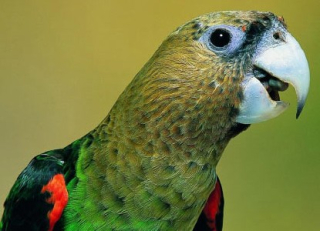
Dr. Herculano-Houzel and co-authors systematically measured the number of neurons in the brains of 28 avian species ranging in size from the tiny zebra finch to the emu.

“We found that birds, especially songbirds and parrots, have surprisingly large numbers of neurons in their pallium: the part of the brain that corresponds to the cerebral cortex, which supports higher cognition functions such as planning for the future or finding patterns,” Dr. Herculano-Houzel said.

“That explains why they exhibit levels of cognition at least as complex as primates.”

That is possible because the neurons in avian brains are much smaller and more densely packed than those in mammalian brains.

More here.

A Literary Journey Characterised by Tenderness and Grit

Amy Finnerty in The Wire:

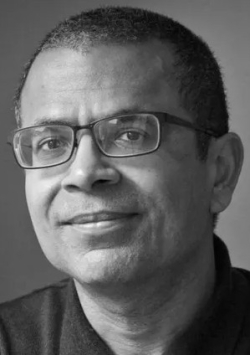
ScreenHunter_2042 Jun. 18 19.28Upon learning this month that his autobiographical novel Family Life had won the €100,000 International Dublin Literary Award — the world’s richest prize for a single novel — Akhil Sharma exhaled, thinking: “Thank God, another disappointment averted.” He received the news in a hotel room in Guatemala.

It makes sense that the India-born, Manhattan-based American novelist, journalist and professor of creative writing remains ever alert to bad news. When he was eight years old and his family moved from Delhi to New York in the 1970s brimming with hope, they could hardly have imagined that his older brother, Anup, the character Birju Mishra in the book, would soon be catastrophically disabled in a swimming pool accident: left permanently brain damaged, blind, unable to speak and requiring round-the-clock care for the rest of his life. (He died just four years ago). Family Life puts the prolonged and harrowing ordeal under fluorescent lights.

The author of an award-winning first novel, An Obedient Father, Sharma spent 13 years wrestling Family Life onto the page, a process he has likened to “chewing gravel”. A few years in, despairing and overweight, he says, he gave up on the project. Then he started running inhuman distances every day and, accessing the grit that he’s used to succeed at pretty much everything he’s ever set his mind to, he staggered across page 218 and handed in the manuscript to his editor, Jill Bialosky at Norton.

More here.

Jenny Diski’s ‘In Gratitude’

19JULAVITS-blog427-v2Heidi Julavits at the New York Times:

Jenny Diski was dying. It was 10:07 a.m. on April 25; I Googled to make sure, before I filed this review, that she was still alive. She was. Her “onc doc” gave her a year in April 2015, which meant, if she survived another seven days, she would technically beat the projections. She did not. She died on the morning of April 28, 2016.

Diski, as she makes vitally clear in her new memoir, “In Gratitude,” spent her every moment on earth beating the projections of authority figures. She overcame abusive and neglectful parents, foster homes, suicide attempts, repeated hospitalizations and the persistently gloomy conviction of relatives, caregivers, teachers, doctors and occasionally herself that she would fail at whatever she attempted.

Diski did not fail. Over the past 30 years, Diski published 17 books of fiction and nonfiction and became a writer who commanded descriptions from reviewers like “individual” and “wildly various”; her books — such as her 1997 “so-called travel book,” “Skating to Antarctica” (which she described as being about “Icebergs, mothers. That sort of thing”) — all proof, as Giles Harvey wrote in a 2015 New York Times Magazine profile, of her “spectacular originality.”

In September 2014, two months after the diagnosis, Diski began publishing essays in The London Review of Books about her illness and impending death.

more here.

taking stock of Karl Ove Knausgaaard

My-struggle-book-fiveScott Esposito at The Quarterly Conversation:

Respected, parodied, revered, despised, Karl Ove Knausgaard’s My Struggle has been with us for just four years. Few in the English-speaking world knew the Norwegian’s name in 2012, but in just four years he has come to seem so omnipresent that NYRB critic, author, and beloved contrarian Tim Parks recently chastised us against “the impression of [Knausgaard's] huge and inevitable success.”

There is some truth there. He has not sold in numbers that would put envy on J.K. Rowling’s face—there is a degree of hype—but with U.S. sales of the first four volumes of the series likely topping 200,000 copies, Knausgaard is certainly far more successful and better-known than all but a handful of authors of the last few years. And now that we have Book 5 the end is in sight; the method behind the entire cycle has at last come into view. It is time to take stock.

At the start few would have predicted Knausgaard’s extraordinary success, but there were signs. James Wood rhapsodized Book 1 in The New Yorker in one of his best reviews of 2012, drawing on a beloved Walter Benjamin essay to examine Knausgaard’s fascination with death. In support of that first book Knausgaard gave well-attended events in New York City, and he received a lengthy profile by The New York Times. Surely if you swing a cat in many metropolitan areas it will collide with a few authors who have attained similar notoriety; still, it was a promising beginning.

more here.

Eric Hobsbawm on Latin America

A1kzaQ0nPBLJohn Paul Rathbone at the Financial Times:

Ten years before he died in 2012, the great British historian Eric Hobsbawm wrote that the only region outside Europe which he thought he knew well and where he felt entirely at home was Latin America. “Nobody who discovers South America can resist the region,” he wrote in his autobiography Interesting Times.

There was the persistent fascination of a continent that is a “laboratory of historical change … made to undermine conventional truths”. It was fun, too: Hobsbawm admits that he did “not even try to resist the sheer drama and colour of the more glamorous parts of that continent”. Because of its European linguistic and cultural overlays, Latin America was also accessible, with “an unexpected air of familiarity, like the wild strawberries to be found on the path behind Machu Picchu”.

Hobsbawm first visited the region in 1960 and was soon “permanently converted”. So began a 40-year intellectual engagement that is of particular interest today, as it illuminates Latin America’s apparent swing away from the political left and away from the revolutionary changes that Hobsbawm, a Marxist, hoped to see.

As a card-carrying Communist, Hobsbawm’s interest in Latin America was first piqued and then sustained by its potential for revolution. There was the “endearing” early promise of Fidel Castro’s triumph in January 1959. More importantly, beyond Cuba there was “a continent apparently bubbling with the lava of social revolutions” — first in Peru and Colombia, then in Chile, later in Central America and Venezuela, and finally Brazil.

more here.

Flora, fauna and fraud: cheats of the natural world – in pictures

Martin Stevens in The Guardian:

PlantCarnivorous plants trap and capture animals, especially arthropods, to acquire extra nutrients. They have many tricks to do this, including mimicking the smells of things that insects are often attracted to, such as rotting vegetation. In some pitcher plants, the rims of the pitchers glow under ultraviolet light (which is common under normal daylight). The rims absorb ultraviolet wavelengths and re-emit the light at longer ‘blue’ parts of the spectrum. Just like the brightly coloured spider sitting on a web, this attracts insects, luring them to their death.

More here.

Think Less, Think Better

Moshe Bar in The New York Times:

MindA FRIEND of mine has a bad habit of narrating his experiences as they are taking place. I tease him for being a bystander in his own life. To be fair, we all fail to experience life to the fullest. Typically, our minds are too occupied with thoughts to allow complete immersion even in what is right in front of us. Sometimes, this is O.K. I am happy not to remember passing a long stretch of my daily commute because my mind has wandered and my morning drive can be done on autopilot. But I do not want to disappear from too much of life. Too often we eat meals without tasting them, look at something beautiful without seeing it. An entire exchange with my daughter (please forgive me) can take place without my being there at all. Recently, I discovered how much we overlook, not just about the world, but also about the full potential of our inner life, when our mind is cluttered. In a study published in this month’s Psychological Science, the graduate student Shira Baror and I demonstrate that the capacity for original and creative thinking is markedly stymied by stray thoughts, obsessive ruminations and other forms of “mental load.” Many psychologists assume that the mind, left to its own devices, is inclined to follow a well-worn path of familiar associations. But our findings suggest that innovative thinking, not routine ideation, is our default cognitive mode when our minds are clear.

In a series of experiments, we gave participants a free-association task while simultaneously taxing their mental capacity to different degrees. In one experiment, for example, we asked half the participants to keep in mind a string of seven digits, and the other half to remember just two digits. While the participants maintained these strings in working memory, they were given a word (e.g., shoe) and asked to respond as quickly as possible with the first word that came to mind (e.g., sock). We found that a high mental load consistently diminished the originality and creativity of the response: Participants with seven digits to recall resorted to the most statistically common responses (e.g., white/black), whereas participants with two digits gave less typical, more varied pairings (e.g., white/cloud).

More here.

Friday, June 17, 2016

How should we treat science’s growing pains?

Jerome Ravetz in The Guardian:

ScreenHunter_2039 Jun. 17 15.33As noted already in the Guardian’s science pages, there is no lack of initiatives to tackle science’s crisis in all its aspects, from reproducibilityto the abuse of metrics, to the problems of peer review. This gives good grounds for hope that the crisis will eventually be resolved, and that it will not become a general crisis of trust in science. Should that occur, and ‘science’ ceases to be a key cultural symbol of both truth and probity, along with material beneficence, then the consequences could be far-reaching. To that end, we should consider what lies behind the malpractices whose exposure has triggered the crisis over the last decade.

It is clear that a combination of circumstances can go far to explain what has gone wrong. Systems of controls and rewards that had evolved under earlier conditions have in many ways become counterproductive, producing perverse incentives that become increasingly difficult for scientists to withstand. Our present problems can be explained partly by the transformation from the ‘little science’ of the past to the ‘big science’ or ‘industrialised science’ of the present. But this explanation raises a problem: if the corrupting pressures are the result of the structural conditions of contemporary science, can they be nullified in the absence of a significant change in those conditions?

More here.