The Neutral Theory of Evolution

Chase Nelson in Inference:
ScreenHunter_2038 Jun. 17 15.30Originally proposed by Motoo Kimura, Jack King, and Thomas Jukes, the neutral theory of molecular evolution is inherently non-Darwinian.2 Darwinism asserts that natural selection is the driving force of evolutionary change. It is the claim of the neutral theory, on the other hand, that the majority of evolutionary change is due to chance.

Each individual in a typical mammal population has two copies of its genome in almost every cell. The exact DNA sequences they contain may differ as the result of mutations, random copying errors in which one nucleotide letter is replaced by another. Other changes can also occur, such as the deletion or duplication of larger DNA segments. The result is genetic variation, and it is estimated that, for human beings, each child acquires 100 new mutations—50 in each genome copy—that were not present in its parents’ DNA.3 Genetic variation means no more than spelling differences in the DNA sequences carried by different individuals in a population. When a new DNA spelling is generated, an allele is born. This alternative form of the original gene may or may not lead to changes in the organism’s physical characteristics.

Evolution involves the substitution of one allele for another in a population. Having come about by chance, a new allele becomes increasingly common, and finally replaces the old allele. An evolutionary substitution has occurred.

More here.
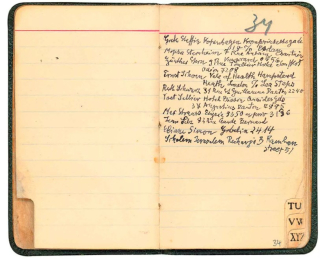
 Through their editorial work on the writings of Walter Benjamin, Theodor Adorno and Gershom Scholem forged an unlikely friendship

Peter E. Gordon in The Nation:

ScreenHunter_2037 Jun. 17 15.22In February 1966, the historian Gershom Scholem dashed off a few lines to alert his friend Theodor Adorno of his travel plans. “I’ll arrive Wednesday in Frankfurt, where I’ll touch down at the Park Hotel,” he wrote. “Please arrange with the Marxist heavens, just in case you don’t maintain diplomatic relations with the resident of the other heaven, for sunshine on March 16th. For myself I prefer to rely on the old angel.”

The collected correspondence between Scholem and Adorno, recently issued by the prestigious German publishing house Suhrkamp Verlag, doesn’t record the meteorological conditions for the middle of March 1966. Nor do we know whose deity might have proved more responsive. Men of extraordinary erudition and critical acumen, Scholem and Adorno could never truly overcome their philosophical and political differences, though in retrospect it’s clear that both men epitomized a shared style of Central European intelligence, fusing irony with utopian conviction, that emerged in the years before the mid-century catastrophe.

Born in 1897, Gershom (originally Gerhard) Scholem was raised in a well-acculturated German-Jewish family in Berlin. Early in life, he committed himself to the Zionist cause, and by 1923 he’d immigrated to Palestine, where he assumed a post at the newly established Hebrew University of Jerusalem and forged an entirely new field of historical inquiry into the esoteric and half-forgotten texts of the Kabbalah. Theodor Ludwig Wiesengrund-Adorno was born in 1903 (the “Adorno” is from his mother’s Catholic Corsican side) and was raised in Frankfurt, where he divided his time between philosophy and music. Eventually, he would join intellectuals like Max Horkheimer, Herbert Marcuse, and Leo Löwenthal to develop the subtle style of neo-Marxist social philosophy known as “critical theory.” The two wouldn’t meet in person until 1938, at the New York home of the socialist theologian Paul Tillich, who had once served as Adorno’s academic adviser.

More here.

The Unbelievable Tale of Jesus’s Wife

1e1c2a3a3Ariel Sabar at The Atlantic:

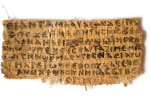
On a humid afternoon this past November, I pulled off Interstate 75 into a stretch of Florida pine forest tangled with runaway vines. My GPS was homing in on the house of a man I thought might hold the master key to one of the strangest scholarly mysteries in recent decades: a 1,300-year-old scrap of papyrus that bore the phrase “Jesus said to them, My wife.” The fragment, written in the ancient language of Coptic, had set off shock waves when an eminent Harvard historian of early Christianity, Karen L. King, presented it in September 2012 at a conference in Rome.

Never before had an ancient manuscript alluded to Jesus’s being married. The papyrus’s lines were incomplete, but they seemed to describe a dialogue between Jesus and the apostles over whether his “wife”—possibly Mary Magdalene—was “worthy” of discipleship. Its main point, King argued, was that “women who are wives and mothers can be Jesus’s disciples.” She thought the passage likely figured into ancient debates over whether “marriage or celibacy [was] the ideal mode of Christian life” and, ultimately, whether a person could be both sexual and holy.

King called the business-card-size papyrus “The Gospel of Jesus’s Wife.” But even without that provocative title, it would have shaken the world of biblical scholarship. Centuries of Christian tradition are bound up in whether the scrap is authentic or, as a growing group of scholars contends, an outrageous modern fake: Jesus’s bachelorhood helps form the basis for priestly celibacy, and his all-male cast of apostles has long been cited to justify limits on women’s religious leadership.

more here.

Art galleries: the cathedrals of the modern age

2016_24_tate_newMichael Prodger at The New Statesman:

From the Renaissance onwards, the building type that architects ­favoured as the ultimate showcase for their prowess was the church. It worked for Michelangelo and Borromini in 16th- and 17th-century Rome and for Wren and Hawksmoor in London after the Great Fire; churches were the ideal vehicle for both Pugin’s Victorian Gothic and Alvar Aalto’s 20th-century minimalism. But now, the building that architects most want to design is a modern place of worship – the art museum.

It was (with a nod to the Pompidou Centre) Frank Gehry’s Guggenheim Museum in Bilbao, inaugurated in 1997, that changed everything. Here was a building that was a work of art in its own right, which spurred urban growth and transformed the city in which it stood from a provincial backwater to a tourist destination. And this, even though the works on display were less striking than the building itself.

The Guggenheim and museums by other starchitects such as Zaha Hadid, Richard Rogers, Renzo Piano and Norman Foster also did two other things: they helped the public to accept challenging building design and they cemented the interdependence of modern art and modern architecture. The critic Hal Foster has written about the latter phenomenon in The Art-Architecture Complex. The gallery, he says, has become the “primary site of image-making and space-shaping in our cultural economy”. And not always in a beneficial way: big buildings mean big capital, and the good and the bad that brings with it.

more here.

Why did an intelligent Jewish scholar write an appreciation of a German tyrant?

1457-square-1536Michael Lipkin a The Paris Review:

In 1992, a medievalist named Norman Cantor published Inventing the Middle Ages, a series of light, biographical sketches intended to show readers how a few historians from the twentieth century had brought the Middle Ages alive to the general public, with, as the flap copy put it, vivid images of wars, tournaments, plagues, saints and kings, knights and ladies.” One chapter, “The Nazi Twins,” was devoted partly to Ernst Kantorowicz, a Princeton scholar who’d written a magisterial study of sovereignty in medieval law, philosophy, and art. Cantor alleged that Kantorowicz—who was not only Jewish, but had spoken up against Hitler at great peril to his academic career, and whose mother has perished in a concentration camp—had “impeccable Nazi credentials”: an outrageous slander, in the eyes of his former students and colleagues. When The New York Review of Books ran a largely favorable essay on Inventing the Middle Ages, the magazine received a flood of angry letters. “Where is this Cantor [a] professor? Disney World?” demanded one reader.

But “this Cantor” was not entirely specious in his claims. In 1927, when he was only thirty, Kantorowicz had written a seven-hundred-page biography of Frederick II, a Holy Roman Emperor from the thirteenth century. In lofty German that imitated the Latin style of Frederick’s time, Kantorowicz painted the Emperor as a redeemer of the German people who united the north with the Roman south and brought the barbaric East under his iron rule. Kantorowicz had a Hindu good luck symbol, the swastika, put on the biography’s cover, and on its dedication page he recalled laying a wreath on Frederick’s grave in Palermo.

more here.

Animal: The Autobiography of a Female Body

Lauren Hossack in The F Word:

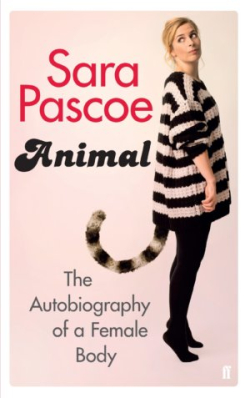
ANIMAL-jacket-300x477What if everything we think about romance is wrong? Why do many women have such skewed relationships with their bodies? How does one navigate the sometimes murky waters of consent? These are just some of the questions that have been bothering comedian and actor Sara Pascoe. So she went off and researched them all, and the result is Animal: The Autobiography of a Female Body. It’s part autobiography, part history, part science – and all very funny. Her refreshing, honest writing breaks down otherwise complex scientific studies and peppers them with anecdotes from her own life that elicit laughter, sympathy and self-reflection in equal measure.

A hybrid work, Animal tackles scientific theories of human behaviour along with medical and cultural history, making them easy for the lay person to understand. The problems and pressures cis women face are given the serious analysis they deserve, but there’s plenty of room for laughter too. It’s a highly entertaining and engaging read, full of facts you might be shocked to realise you didn’t know already. For instance, did you know that the menstrual cycle can last anywhere from 20 to 60 days? If not, like Pascoe, you need no longer panic about not adhering to the oft-publicised 28-day cycle – turns out that’s just the average length. Recollections of disastrous relationships, her first period and the abortion she had as a teenager serve as jumping-off points before these issues are explored in a wider context. Reflections include how the advice in teen magazines can leave you ill-equipped when it comes to relationships. Pascoe doesn’t let the media off lightly for what it teaches girls and women, or how it represents them. Animal is a sharp reminder not to believe everything you read, although, like the author, many of us have already learned the hard way.

More here.

Tumors have found a bloody new way to grow and spread

Mitch Leslie in Science:

TumorOn a cool day in March 2000, several hundred researchers jammed into a hotel auditorium in Salt Lake City, eager to see a showdown over what had become one of the most controversial ideas in cancer research. On one side stood cancer biologist Mary Hendrix of the University of Iowa Cancer Center in Iowa City, whose team the year before had reported an unusual, seemingly new way through which tumor cells can tap into the blood supply and obtain nutrients. Facing off against her was tumor vascular biologist Donald McDonald of the University of California, San Francisco, who was certain that she and her colleagues had misinterpreted their data. “This debate had the feeling of a boxing match—with the championship belt hanging in the balance,” Hendrix recalls.

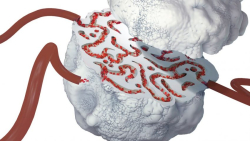
Researchers knew at the time that tumors can induce the endothelial cells of normal blood vessels to form new supply lines into a tumor, a process called angiogenesis. But Hendrix and her colleagues contended that tumor cells themselves sometimes create their own blood-delivering tubes, a mechanism they dubbed vasculogenic mimicry (also known as vascular mimicry). Their 1999 paper “started lots of upheaval,” says histopathologist Francesco Pezzella of the University of Oxford in the United Kingdom. The Utah debate, held at a Keystone meeting, was the first public discussion of the concept. In the end, neither side scored a knockout. Hendrix asserted that the loops and networks her team had observed represented a mini–circulatory system produced by the tumors themselves. McDonald countered that the patterns were folds of connective tissue, not tubes that carried blood. In the years since, the controversy has waned, and Hendrix and other researchers have pieced together a picture of how tumors build their own blood vessels and how they can affect prognosis and treatment. But some scientists continue to find the idea deeply unsettling. Now, vasculogenic mimicry faces another big test. The first clinical trial of a drug to block the process—and thus potentially limit tumor growth—has begun in the United States and Taiwan. If the drug succeeds, it would bolster what Hendrix and other researchers have been saying about these do-it-yourself blood vessels for nearly 17 years. And it might also explain why some of the most hyped drugs in cancer therapy—angiogenesis inhibitors—have underperformed.

More here.

Friday Poem

Extracted

—For my mother, Paulina (1926–2000)

When I go out to my garden
all I desire is a world with the mute on,
but there comes my neighbor, the haughty one, the one
who distinguishes himself by pronouncing words wrong in two languages,
the one who thinks himself too smart to work.
Or when I’m crouched beneath the fig tree, searching
for the darkest, sweetest fig—there suddenly appears
my elderly neighbor,
peering between the coral branches of bougainvillea,
offering me bits of her mind
like appetizers.
And it’s not that she doesn’t please me—
because in truth I love to see her
so full of life at 85,
so clearheaded, her eyes shining like the windows
of a house well cared for, like hers,
the one she bought in 1947,
the one that’s in her own name and not her husband’s.
But what happens is that when I finally leave my work
abandoned inside, on top of my desk,
I desire a wordless world, desire nothing
more than the silent vines of my mind
feeling into dark places—blood-sweet—
like a tongue exploring the hole left by a tooth that’s been extracted

by Aleida Rodriguez
from The Face of Poetry
University of California Press, 2005
translation by author

Read more »

Thursday, June 16, 2016

THE FAITH BEHIND AUBREY BEARDSLEY’S SEXUALLY CHARGED ART

Morgan Meis in The New Yorker:

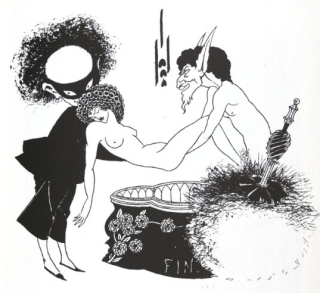
ScreenHunter_2037 Jun. 16 20.00The drawings of the late-nineteenth-century English illustrator and author Aubrey Beardsley are so sexually charged that even a critic as generally snobbish and patrician as Kenneth Clark, in accounting for his youthful fondness for them, all but described the works, in a 1976 essay for The New York Review of Books, as autoerotic visual aids. Calling the drawings “a kind of catmint to adolescents,” Clark wrote that they “suggested vice . . . with an adolescent intensity which communicated itself through every fold and tightly drawn outline of an ostensibly austere style.” He added, “I like to think that my interest was not only sexual.”

Beardsley did not think of himself as a pornographer—he thought of himself as a fine artist and a dandy. He ran with the British Decadents, who worshipped beauty. They were inspired and amused by the antics and the art of the American expatriate James McNeill Whistler. They grew up in a post-Romantic era and were stimulated, visually, by the works of the Pre-Raphaelites. They hung out, most notoriously, with Oscar Wilde.

But the era of dandy decadence was short-lived. Oscar Wilde was arrested for “gross indecency” (that is, homosexuality) in 1895, and imprisoned, following his famous trial, shortly thereafter. He died in 1900. Beardsley died two years before, of tuberculosis, having also been tarnished in the Wilde scandal—his friendship with Wilde was considered suspiciously close, causing him to lose his job as art editor for The Yellow Book, a quarterly he co-founded. Edward Burne-Jones, the last of the great Pre-Raphaelites, died the same year, and Whistler died in 1903. As the new century came on, these great figures of the late nineteenth century burned out.

More here.

 It’s Time to Get Serious About Climate Change

Noam Chomsky in The Nation:

ScreenHunter_2035 Jun. 16 18.50In January 2015, the Bulletin of the Atomic Scientistsadvanced its famous Doomsday Clock to three minutes before midnight, a threat level that had not been reached for 30 years. The Bulletin’s statement explaining this advance toward catastrophe invoked the two major threats to survival: nuclear weapons and “unchecked climate change.” The call condemned world leaders, who “have failed to act with the speed or on the scale required to protect citizens from potential catastrophe,” endangering “every person on Earth [by] failing to perform their most important duty—ensuring and preserving the health and vitality of human civilization.”

Since then, there has been good reason to consider moving the hands even closer to doomsday.

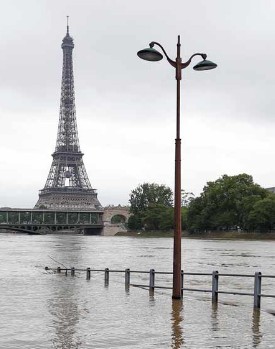
As 2015 ended, world leaders met in Paris to address the severe problem of “unchecked climate change.” Hardly a day passes without new evidence of how severe the crisis is. To pick almost at random, shortly before the opening of the Paris conference, NASA’s Jet Propulsion Lab released a study that both surprised and alarmed scientists who have been studying Arctic ice. The study showed that a huge Greenland glacier, Zachariae Isstrom, “broke loose from a glaciologically stable position in 2012 and entered a phase of accelerated retreat,” an unexpected and ominous development. The glacier “holds enough water to raise global sea level by more than 18 inches (46 centimeters) if it were to melt completely. And now it’s on a crash diet, losing five billion tons of mass every year. All that ice is crumbling into the North Atlantic Ocean.”

More here.

Blood of world’s oldest woman hints at limits of life

Andy Coghlan in New Scientist:

ScreenHunter_2034 Jun. 16 18.38Death is the one certainty in life – a pioneering analysis of blood from one of the world’s oldest and healthiest women has given clues to why it happens.

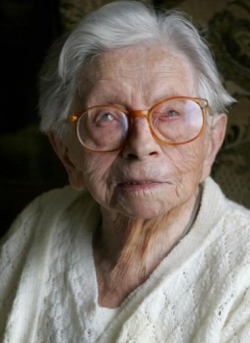
Born in 1890, Hendrikje van Andel-Schipper was at one point the oldest woman in the world. She was also remarkable for her health, with crystal-clear cognition until she was close to death, and a blood circulatory system free of disease. When she died in 2005, she bequeathed her body to science, with the full support of her living relatives that any outcomes of scientific analysis – as well as her name – be made public.

Researchers have now examined her blood and other tissues to see how they were affected by age.

What they found suggests, as we could perhaps expect, that our lifespan might ultimately be limited by the capacity for stem cells to keep replenishing tissues day in day out. Once the stem cells reach a state of exhaustion that imposes a limit on their own lifespan, they themselves gradually die out and steadily diminish the body’s capacity to keep regenerating vital tissues and cells, such as blood.

More here.

The ethics of Primo Levi

Primo-levi-1981-by-sergio-del-grande-sergio-del-grandemondadori-portfolio-via-getty-imagesIan Thomson at the Times Literary Supplement:

Of course, Levi was more than a witness to contemporary barbarism. In much of the newly translated journalism, fiction and poetry he explores the border zone between science and literature. His great scientific memoir, The Periodic Table, published in Italy in 1975, was ahead of its time: only in recent years has science become, in publishing terms, popular and attractive. Long before Richard Dawkins, Stephen Jay Gould and others, Levi had sought to make science accessible to the layperson. The Periodic Table gathers up an extraordinary range of writing, from detective fiction to learned scientific commentary. Chronicled are the fumes, stinks, bangs and fiascos (as well as the occasional triumphs) of Levi’s early chemistry experiments in 1930s Turin, his deportation to Auschwitz and post-war recovery as a writer and chemist.

Over a quarter of a century has passed since Levi died in 1987, yet his fame has grown during this period. In certain quarters of the United States, nevertheless, his suicide provoked a degree of moral outrage. By taking his life, an anonymous diarist objected in the New Yorker, Levi had cheated his readers. So violent a gesture (he pitched himself down the stairwell of the block of flats where he lived in Turin) was seen to be at odds with the calm reason of his prose. The belief remains as vulgar as it is short-sighted: the manner of Levi’s death in no way diminishes the importance of his writing. In The Complete Works Levi portrays himself variously as courageous, cowardly, prophetic or naive, but usually well balanced; in reality he was not at all well balanced. Levi and his books are not one and the same. If anything, his suicide reminds us that the life of the artist does not run parallel to his art. The suicide was provoked by a clinical depression, which was compounded by a number of factors, among them the fear of memory loss and, possibly, guilt at having survived Auschwitz. These three volumes, appearing two decades after the two-volume Opere published in Italy in 1997, confirm Primo Levi as one of the most important writers of our time.

more here.

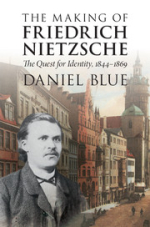
The Making of Friedrich Nietzsche

9781107134867Tom Stern at Literary Review:

Which famous philosopher wrote, ‘I have experienced so much, happy and sad, enlivening and dispiriting, but God has led me safely through it all as does a father his weak little child’? The words are taken from the autobiography of the profoundly religious thirteen-year-old Friedrich Nietzsche. Nietzsche was given to writing autobiographies. The most famous of these, Ecce Homo, was penned in 1888, shortly before, or perhaps during, his descent into madness. You might have heard of that one because it contains chapters such as ‘Why I am So Clever’ and ‘Why I Write Such Good Books’. From 1858 to the end of the 1860s, Nietzsche wrote at least six autobiographies. These take centre stage in Daniel Blue’s new book on Nietzsche, covering the years 1844–69. We might be tempted to think of this as ‘Nietzsche: The Early Years’, but that would have misleading connotations. ‘Early Nietzsche’ customarily refers to the period 1868–76, when he was overtly under the influence of Arthur Schopenhauer’s philosophy and Richard Wagner’s personality. In Blue’s 320 page account, Nietzsche buys Schopenhauer’s The World as Will and Representation on page 216 and meets Wagner on page 300. This is ‘Nietzsche: Before the Early Years’. Eight years old on page 58, eighteen halfway through, we leave him aged twenty-four, arriving in Basel to take up his first university position in philology: employed, financially independent and no longer asking his mother to do his washing.

more here.

Let’s Not Get It On: The Indefensible Sex Scene

Lateral_sexDrew Nellins Smith at The Millions:

Literature about sex, no matter who has written it, is almost always terrible, and everybody knows it. This is widely known and acknowledged — even on this very site, by both the great Sonya Chung and Julia Fierro. We’re all so tuned into its legendary badness that even relatively minor offenses in the realm of sex writing annoy us far more than other writerly transgressions. An imperfect depiction of sex is far worse for some reason than an inept description of someone entering a room or having a marital spat or whatever other things a book might get wrong without anyone disapproving quite so mercilessly.

There is sufficient scorn for bad sex writing that the Literary Review famously awards an annual prize for it. Though “prize” seems like a funny term for becoming the object of public ridicule and mockery. It’s a missing component of the human brain, the ability to recognize one’s own completely botched attempts at writing about penetration, blow jobs, and the rest of it. Most writers, one must assume, push themselves away from their desks at the end of their earnest writing sessions and think to themselves, Job well done. Only to discover a few months or years later that they have gone and humiliated themselves, at least according to a bunch of smug bastards on the other side of the ocean.

Which isn’t to say I’m not in sympathy with the smug bastards. In writing my own book full of sex, there was almost no one I could turn to for inspiration. There wasn’t a single book I looked to and thought, “What I’m trying to do is write sex like she did or like he did.”

more here.

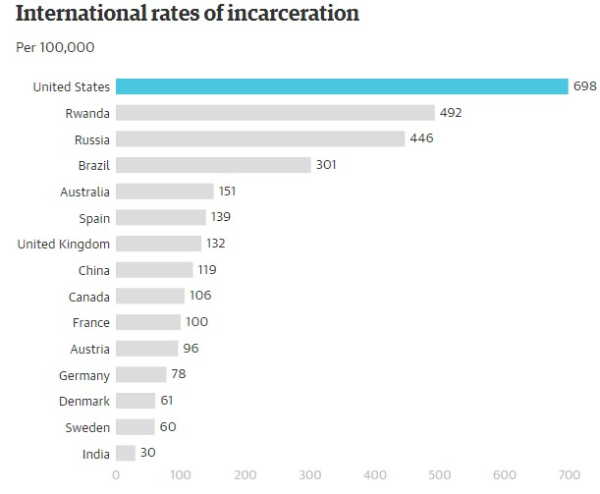
Welcome to Jail Inc: how private companies make money off U.S. prisons

ScreenHunter_2032 Jun. 16 16.14

Rupert Neate in The Guardian:

Getting locked up is unlikely to be good for your health but it’s “terrific, terrific” business for the booming private industry supplying doctors and nurses to jails and prisons. Many of those suppliers descended on Austin, Texas, last month to tout their services directly to jail administrators at the 35th annual American Jail Association conference.

As trade fairs go, this one is a little macabre. Companies line up to market everything from jumpsuits and meal trays to masks to stop prisoners from spitting, straitjackets and other full-body restraints. Once the national anthem had been observed and the AJA’s chaplain had led a prayer for jailers across the country, those gathered at Austin’s convention centre could get down to business: making money.

How long prisons will continue to be such money-spinners could depend on who wins the race for the White House. On the campaign trail Hillary Clinton has vowed to “end private prisons and private detention centers. They are wrong.” Donald Trump, on the other hand, has called for increased outsourcing of prisons. “I do think we can do a lot of privatizations, and private prisons it seems work a lot better,” he said in an MSNBC town hall earlier this month.

In the meantime, Ahmad Afzal and his two brothers are making a “very good living” manufacturing prison jumpsuits, underwear and suicide safety smocks in Pakistan and selling them to US jails.

More here. [Thanks to Anna Hall.]

Thursday Poem

Refugee Blues

Say this city has ten million souls,
Some are living in mansions, some are living in holes:
Yet there's no place for us, my dear, yet there's no place for us.

Once we had a country and we thought it fair,
Look in the atlas and you'll find it there:
We cannot go there now, my dear, we cannot go there now.

In the village churchyard there grows an old yew,
Every spring it blossoms anew:
Old passports can't do that, my dear, old passports can't do that.

The consul banged the table and said,
“If you've got no passport you're officially dead”:
But we are still alive, my dear, but we are still alive.

Went to a committee; they offered me a chair;
Asked me politely to return next year:
But where shall we go to-day, my dear, but where shall we go to-day?

Came to a public meeting; the speaker got up and said;
“If we let them in, they will steal our daily bread”:
He was talking of you and me, my dear, he was talking of you and me.

Thought I heard the thunder rumbling in the sky;
It was Hitler over Europe, saying, “They must die”:
O we were in his mind, my dear, O we were in his mind.

Saw a poodle in a jacket fastened with a pin,
Saw a door opened and a cat let in:
But they weren't German Jews, my dear, but they weren't German Jews.

Went down the harbour and stood upon the quay,
Saw the fish swimming as if they were free:
Only ten feet away, my dear, only ten feet away.

Walked through a wood, saw the birds in the trees;
They had no politicians and sang at their ease:
They weren't the human race, my dear, they weren't the human race.

Dreamed I saw a building with a thousand floors,
A thousand windows and a thousand doors:
Not one of them was ours, my dear, not one of them was ours.

Stood on a great plain in the falling snow;
Ten thousand soldiers marched to and fro:
Looking for you and me, my dear, looking for you and me.

by WH Auden
from Selected Poems
Vintage Books 1979

Colleges Should Be Nurturing Interfaith Leaders

Eboo Patel in The Chronicle of Higher Education:

Photo_77286_square_850x850I recently met a graduate of an elite liberal-arts college who was working as the activities coordinator in a facility for senior citizens. The most interesting part of her job, she said, had to do with the diverse religious identities of her clients. She was constantly organizing event spaces for various religious holidays, working with the kitchen to make sure food was prepared in a manner that met different religious specifications, and arranging for funeral services according to the rites of diverse faith traditions. Occasionally she had to help calm an argument over doctrinal disagreements or contradictory religious practices. “I had to learn most of this on the fly,” she told me. “The one part of identity we never talked about in college was faith.” I was reminded of this story as I read through the recent Chronicle special report on diversity. As usual, the articles were sharp and provocative. And as usual, religious identity was totally ignored.

This is not so much a critique of The Chronicle as it is an observation about higher-education discourse more generally. Colleges are generally quick to respond to one set of important identity issues (racialized policing, transgender accommodations, sexist pay disparities) with academic and co-curricular programs meant to prepare leaders who can engage such challenges. Unfortunately, other dimensions of diversity, namely religion, get short shrift. But even a casual perusal of The New York Times on any given day illustrates that religious diversity issues — from diplomacy across religious divides to tailoring public-health campaigns to particular religious communities — are just as challenging as other identity issues. And the experience of the recent graduate I mentioned earlier who was working through religious issues at a senior citizens’ center could as easily have taken place at a school, a company, a hospital, a YMCA, or, indeed, a college campus — in other words, the spaces where much of American life takes place, and where college graduates get jobs.

Given this reality, I’d like to make a small proposal: Any college that promises to prepare global citizens has to take religious diversity seriously enough to educate their students to be interfaith leaders.

More here.

Cancer-preventing protein finds its own way in our DNA

From PhysOrg:

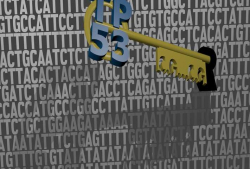
CancerprevenGeneticists from KU Leuven, Belgium, have shown that tumour protein TP53 knows exactly where to bind to our DNA to prevent cancer. Once bound to this specific DNA sequence, the protein can activate the right genes to repair damaged cells. All cells in our body have the same DNA, yet they're all very different. One cell may become a brain cell, the other a muscle cell. This is because not all genes are active – or 'switched on' – in every cell. Professor Stein Aerts and his team study the 'switches' that turn genes on and off. Gaining insight into these mechanisms is very important, because genetic defects and differences may not only be in our genes, but also in the 'switches' that control them. It's a known fact that genes are activated when a protein binds to a specific sequence on our DNA. But how does this protein find its way in our extraordinarily complex DNA? Scientists have thus far been assuming that one protein could never locate the exact DNA sequence to activate a specific gene all by itself – at least not in human beings. However, Professor Aerts and his colleagues from the Department of Human Genetics at KU Leuven, Belgium, have now shown that some of these proteins are in fact capable of locating their targets autonomously. Furthermore, the composition of some DNA switches turns out to be unexpectedly simple.

“We used next-generation sequencing to test the capacity of DNA sequences to act as switches for more than 1500 DNA sequences at the same time,” explains Professor Stein Aerts. By way of comparison: in the past, researchers had to test all switches one by one. “We then used supercomputers and advanced computer models to examine the differences between effective and non-effective switches. That's how we discovered that TP53 is able to locate the exact DNA sequence to which it needs to bind – all by itself.” “The protein TP53 plays a crucial role in the prevention of cancer. When a cell is damaged – because of UV or radioactivity, for instance – TP53 switches on the right genes to repair the cell. A cell sometimes loses TP53, so that cancer can start developing there. In about 50% of all cancers, there's a problem with the protein TP53. That's why it's so important to unravel its underlying mechanisms.”

More here.