
John Whitfield at Aeon Magazine:
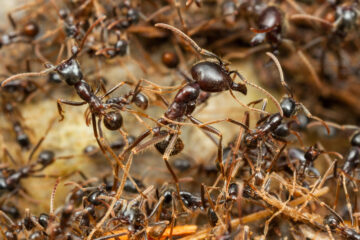
It is a familiar story: a small group of animals living in a wooded grassland begin, against all odds, to populate Earth. At first, they occupy a specific ecological place in the landscape, kept in check by other species. Then something changes. The animals find a way to travel to new places. They learn to cope with unpredictability. They adapt to new kinds of food and shelter. They are clever. And they are aggressive.
In the new places, the old limits are missing. As their population grows and their reach expands, the animals lay claim to more territories, reshaping the relationships in each new landscape by eliminating some species and nurturing others. Over time, they create the largest animal societies, in terms of numbers of individuals, that the planet has ever known. And at the borders of those societies, they fight the most destructive within-species conflicts, in terms of individual fatalities, that the planet has ever known. This might sound like our story: the story of a hominin species, living in tropical Africa a few million years ago, becoming global. Instead, it is the story of a group of ant species, living in Central and South America a few hundred years ago, who spread across the planet by weaving themselves into European networks of exploration, trade, colonisation and war – some even stowed away on the 16th-century Spanish galleons that carried silver across the Pacific from Acapulco to Manila. During the past four centuries, these animals have globalised their societies alongside our own.
more here.
Enjoying the content on 3QD? Help keep us going by donating now.
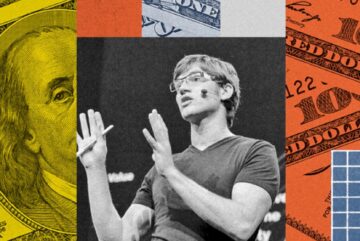 In 2017, the MIT Media Lab launched MyGoodness, an online game billed as a way to teach players to “maximize the impact of [their] charitable donations.”
 Evolution was a “training process” selecting for reproductive success. But humans’ goals don’t entirely center around reproducing. We sort of want reproduction itself (many people want to have children on a deep level). But we also correlates of reproduction, both direct (eg having sex), indirect (dating, getting married), and counterproductive (porn, masturbation). Other drives are even less direct, aimed at targets that aren’t related to reproduction at all but which in practice caused us to reproduce more (hunger, self-preservation, social status, career success). On the fringe, we have fake correlates of the indirect correlates – some people spend their whole lives trying to build a really good coin collection; others get addicted to heroin.
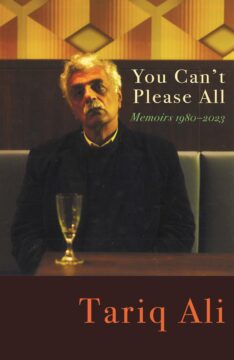 One afternoon in the early 1980s, Tariq Ali, wearing only a towel, leapt into a room in Private Eye’s Soho offices. His mission was to liberate the magazine’s editor, Richard Ingrams, from a tiresome interview with Daily Mail hack Lynda-Lee Potter. “Mr Ingrosse, sir,” said Ali, posing as an Indian guru, “Time for meditation. Please remove all clothes.”
 In a 1939 essay, the critic Philip Rahv
  OpenAI’s new o3 artificial intelligence model has achieved a breakthrough high score on a
  While
While  A twelve-hour opening shift and I dripped snot on the first customer’s debit card. But that’s Christmas tree season. Other than the barrel fire, there’s no place to get warm, so I wore fleece thermals with jeans on top, pockets full of pine needles already. Plus a hoodie and a blanket-lined denim trucker jacket that passes for hip. Ty doesn’t wear a coat, just three Carhartt hoodies on top of each other. Jack wears a knee-length puffer jacket from Goodwill. Brian wears a hoodie with the hood cinched tight around his face and his beard poking out. He looks the most like an elf. He also looks the most like Santa. Kids like to bring up one or the other. Sometimes we try to wear gloves, but they get caked in sap.
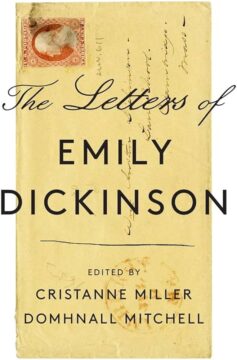 ‘A Letter is a joy of Earth –/It is denied the Gods’, Emily Dickinson wrote in 1885, a year before she died, aged fifty-five, at her home in Amherst, Massachusetts. It was a joy she indulged freely. This monumental new edition of her correspondence contains 1,304 items, including all the previously published letters, further uncollected material and some two hundred ‘letter-poems’. Still, all this represents just a fraction of Dickinson’s total correspondence.
 Bob Dylan is so inherently unclassifiable that, when the great filmmaker Todd Haynes made
  Andrew Cassy had spent his working life in a telecommunications research department until a diagnosis of Parkinson’s disease in 2010 pushed him into early retirement. Curious about his illness, which he came to think of as an engineering problem, he decided to volunteer for clinical trials. “I had time, something of value that I could give to the process of understanding the disease and finding good treatments,” he says.