
Many Authors at Salmagundi:
 ROCHELLE GURSTEIN: In the course of writing my new book (on the ephemeral life of the classic in art), I was heartened to find that a standard of taste could be established when a work of art is felt to exemplify primary aspirations and excellences. Joshua Reynolds set out this understanding in his Discourses on Art (1790) when he located the standard of taste in “the authority and practice of those whose work may be said to have been consecrated by having stood the test of ages.” From the sixteenth century until the nineteenth, ancient sculpture such as the Venus de’ Medici and the Apollo Belvedere, which had been unearthed during the great building projects in Rome during the Renaissance, and also those artists who had most perfectly imitated them—Raphael and Michelangelo—met this test. These “true examples of grandeur,” as Reynolds called them, were regarded as models for artists to imitate and as the indisputable standard of taste. Exemplar and standard were synonymous. And as long as the practice was in good working order and artists and viewers felt part of its intellectual and aesthetic continuum, they could confidently judge works of art, both present and past.
more here.
Enjoying the content on 3QD? Help keep us going by donating now.
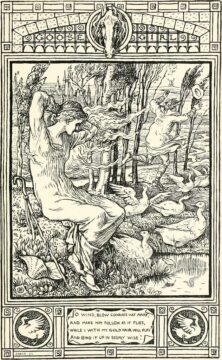 In an 1846 letter to the Athenaeum, English writer William Thoms coined a term, “folklore.” He wondered whether some new scholar might do for British culture what Jacob Grimm had done for German. Jacob was the more prominent of the Grimms, but his life and work were inconceivable without the companionship and contributions of his younger brother, Wilhelm. The work for which they are most celebrated today, Kinder- und Hausmärchen (Children’s and Household Tales), was a collaboration in which Wilhelm eventually played the dominant editorial role. The two brothers shared a bed when young, and lived side by side for most of their lives, pursuing some of the most prodigious scholarship imaginable. Since their deaths (Wilhelm in 1859, Jacob in 1863), so many legends have accrued about their lives and works that they almost seem fairy-tale figures themselves, quaint Hobbit-like creatures trawling the peasantry for stories. Nothing could be further from the truth, which is why Ann Schmiesing’s brief, eloquent and moving biography, The Brothers Grimm, is bound to prove enlightening to English-language readers.
 W
W T
T Desire is among the United States’ most enduring global exports, an industry as profitable as war. As a 10-year-old child in the Philippines, Geena Rocero, the woman in the centerfold, snuck into her father’s bedroom to flip through his collection of Playboy magazines. Poring over the glossy pages, she grew enamored with the bodies on display. Smooth, bosomy emissaries of the American libido, they gave a young trans girl an education in comportment funneled through an imperial pipeline. In 1898, the US purchased the Philippines from its former colonizer, Spain, for $20 million and, after killing about 20,000 revolutionaries, held dominion over the islands for close to 50 years. To this day, it is the United States’ most secure sphere of influence in the Far East, a society where stateside cultural products emit a mystic gleam.
 No one seems to know whether world-bending AGI is just three years away. Or rather, everyone seems to know, but they all have conflicting opinions. How can there be such profound uncertainty on such a short time horizon?
 In late 2023, President Volodymyr Zelensky of Ukraine announced an ambition never before heard in the history of war. Ukraine, he said, would provide its forces with one million FPV drones in the next calendar year. The announcement, which followed battlefield disappointments and long delays of arms shipments from the United States, pushed this unusual new class of weapon to the front of Ukraine’s bid for survival and rapidly reordered contemporary combat along the way.
 It’s no coincidence that in our age of techno-optimism, the technological solutions posed for ecological problems are growing ever more ambitious — and invasive. Fertility control for wildlife is hardly the only example; scientists are already
  A lot of London has been lost. German bombs didn’t do anything like as much damage as the energy produced by the huge, ever-expanding metropolis itself. In the late 19th century, London was the richest city in the world, boiling with plutocrats flinging up new mansions in the Kensington ‘suburbs’ or drastically refurbishing old ones in Mayfair and Belgravia. Clifford’s Inn, a remarkable medieval survival, was pulled down in Edwardian times. Nash’s Regent Street would have been one of the architectural wonders of the world had it survived in its original form, an astonishing urban scheme stretching all the way from Carlton House Terrace to Regent’s Park. But it was carelessly chucked on the rubbish heap: more retail space was required and undesirable persons were congregating in the arcades. Priceless aristocratic mansions, such as Devonshire House, designed by William Kent, were breezily bulldozed in the 1920s, when their owners could no longer afford the upkeep, and replaced by hideous blocks of flats.
 The question has been hurtling through
  Breakthroughs in medicine are exciting. They promise to alleviate human suffering, sometimes on global scales. But it takes years, even decades, for new drugs and therapies to go from research to your medicine cabinet. Along the way, most will stumble at some point. Clinical trials, which test therapies for safety and efficacy, are the final hurdle before approval. Last year was packed with clinical trials news. Blockbuster medications Ozempic and Wegovy still dominated headlines. Although known for their impact on weight loss, that’s not all they can do.