
Jonathan Shaw in Harvard Magazine:
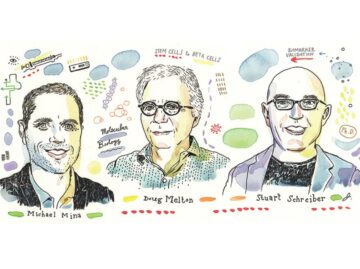 Not infrequently, companies lure professors to highly paid positions directing scientific research in pharmaceuticals, technology, and related fields. But the recent departures of some leading Harvard scientists deeply committed to improving human health point to a different phenomenon: challenges to conducting translational life-sciences research in academic settings. Given the University’s emphasis on and investment in the life sciences and biomedical discovery, these scientists’ differing decisions suggest emerging issues and concerns about current constraints and the future of such research.
Applying for National Institutes of Health (NIH) grants can take a substantial portion of an investigator’s time, and as much as a year can pass between a submission deadline and the point when funds are received and disbursed by the recipient’s home institution.
More here.
Enjoying the content on 3QD? Help keep us going by donating now.
 Over the past two decades, research has emerged showing that opportunities for risky play are crucial for healthy physical,
  When, on January 19, 1939, W.H. Auden boarded at Southampton a ship bound for New York City, he could not have known that he would never live in England again. But some months earlier, he had told his friend Christopher Isherwood that he wanted to settle permanently in the United States. Almost as soon as he arrived in New York, he began to rethink his calling as a poet, and, moreover, to reconsider the social role and function of poetry. (He also began a spiritual pilgrimage that would lead him to embrace the Christian faith of his childhood.)
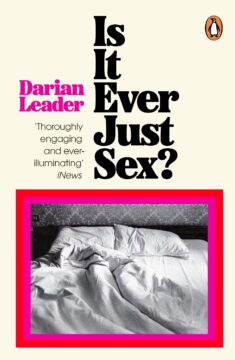 To seek out a therapeutic practice, we are sometimes told, is often the expression of a desire for change. But ‘therapy’ is hardly separate from the culture it intersects with, and may end up changing that very culture. If the poet W. H. Auden could describe Freud as ‘no more a person / now but a whole climate of opinion’, then surely that was because Freud’s language eventually became our own; phrases like ‘acting defensively’ or ‘feeling conflicted’, as John Forrester notes, have been absorbed into everyday speech. A particular therapeutic practice can thereby help to bring into being the self it seeks to describe (such as the epochal emergence of what Philip Rieff once called ‘psychological man’), as its models of successful treatment and its language for the mind, emotions, and behaviour become part of culture’s common-sense. Even the use of ‘therapy’ tells us something about its contemporary cultural status, indexing far more than any individual therapeutic act. ‘You should talk to a therapist’ is a refrain regularly printed on t-shirts, worn by internet celebrities of all stripes, and the remark trades off the sense that recommending therapy could be seen as an act of care just as it could also be a moral corrective for bad behaviour (‘go to therapy, you naughty boy!’).
 In 2009, The New York Observer published “
 Watching television while using another smart device is so common that over
 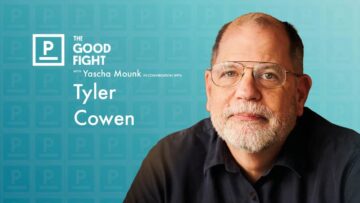 Yascha Mounk: One of the things that I’ve really been trying to wrap my head around is the impact of AI. The launch of easily publicly accessible AI was now a little over two years ago, and it is clear that AI has tremendous capacities. At the same time, so far, its impact on the world has been a little bit more limited than might have been imagined two years ago. How do you see this panning out over the course of the next few years?
 Whether embedded in a hospital, a high school, a zoo, a welfare center, an army training camp, a public library, a city hall, or an entire neighborhood, his films are “stylistically ur-vérité,” as
 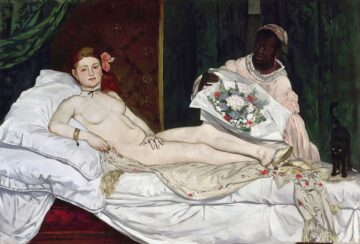 When Édouard Manet exhibited Olympia in the Salon of 1865, it unleashed a firestorm. Viewers were shocked by the subject matter—the sheer nakedness of the sitter—and by his formal treatment of the subject: critics lamented the lack of finish, the sharp contrast between light and dark, and, above all, the starkness of the model’s outward look at the viewer. For critics at the time, Manet’s shocking way with form went hand in hand with a sense of moral outrage, around gender and class. Olympia subtly but powerfully broke all the unspoken rules about the nude in painting and set the standard for a new form of revolutionary modern art.
 F
F H
H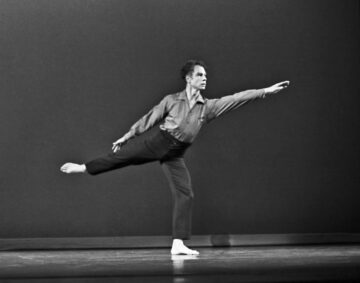 Now I’ll never have a chance to impress Arlene Croce.
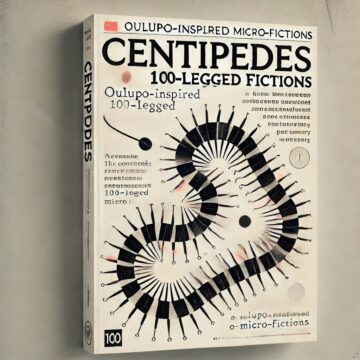 It brings me no joy to report the rebirth (or the renewed undeadness) of the zombie literary movement known as OuLiPo.
 P
P