Living With Parakeets and Other Migrants

Gideon Lasco in Sapiens:

When I came to Amsterdam as a graduate student in 2012, I was surprised to find the city’s parks teeming with vibrant green feathers, red beaks, and bluish tails. The birds, which looked to me like parrots, were hard to miss. They congregated in Vondelpark, close to the city’s famed museums and canals, and also in Oosterpark, where I jogged daily. Even without seeing their verdant plumage, I could hear their distinctive squeaking noises in the air.

Parrots, as far as I knew, were tropical birds—and often elusive. Even in my home country, the Philippines, where there are a number of endemic parrots, they’re a rarity, visible only to birdwatchers and hikers who go deep into the forests. Indeed, only when I took up birdwatching myself did I see some of them in the wild, making it even more astonishing to see so many in Western Europe.

Soon I learned the birds were rose-ringed parakeets (Psittacula krameri), a type of parrot. The species is native to Africa and the Indian subcontinent, but the birds have made a home in Amsterdam for decades. In the dozen years I’ve been coming and going in the Netherlands, I’ve heard and read various urban legends about how the birds got established in the city.

More here.

Enjoying the content on 3QD? Help keep us going by donating now.
How should we test AI for human-level intelligence? OpenAI’s o3 electrifies quest

Nicola Jones in Nature:

The technology firm OpenAI made headlines last month when its latest experimental chatbot model, o3, achieved a high score on a test that marks progress towards artificial general intelligence (AGI). OpenAI’s o3 scored 87.5%, trouncing the previous best score for an artificial intelligence (AI) system of 55.5%.

This is “a genuine breakthrough”, says AI researcher François Chollet, who created the test, called Abstraction and Reasoning Corpus for Artificial General Intelligence (ARC-AGI)1, in 2019 while working at Google, based in Mountain View, California. A high score on the test doesn’t mean that AGI — broadly defined as a computing system that can reason, plan and learn skills as well as humans can — has been achieved, Chollet says, but o3 is “absolutely” capable of reasoning and “has quite substantial generalization power”.

More here.

Enjoying the content on 3QD? Help keep us going by donating now.

Tuesday Poem

Horse Latitudes

When they found them,
a cast hook pulling from the depths
an apparently endless iron chain,
it was just another mystery
to marvel at in an ocean
filled with more than enough.
But still the story spread
from ear to ear,
until finally, an old man
in a dockside bar
with a face more wood than skin
heard the tale
and laughted at the fools
who now call themselves sailors.

How could they understand
what they had found
without knowing why it was
they called that part of the Atlantic
by that old, almost forgotten name?

You see, long ago
Spanish Galleons,
filled with soldiers
greedy for the plunder
of the New World,
often found instead
the sickly winds
and Sargasso weeds
of a mariner’s oubliette
a part of the sea that loved
their ships so much it would not let them go.

Finally, near dying of thirst,
they would cast their own stallions
by the hundreds into the sea…

But sometimes, the leather harnesses
and the salt of the sea
might mix in some silent,
unknown alchemy
and the corpses would rise,
some even centuries afterwards,
still chained in great lines,
floating right near the edge
of the sun-dappled surface…

Imagine that, being some fisherman
or deckhand, and looking into the water
for one single instant to see
the bones of Spanish stallions,
somehow in the currents, moving
for an instant in stunning grace,
as if racing in a last charge,
chained to your brethren,
great manes flying,
hooves thundering as if to turn
the very ocean to earth,
in a race with no finish,
for it circles the very world.

by Brandon Whitehead
fromThieves, Pharaohs & Mexican Daredevils
Spartan Press

Enjoying the content on 3QD? Help keep us going by donating now.

How Los Angeles Created the Vocabulary of Its Destruction

Ed Simon at Hyperallergic:

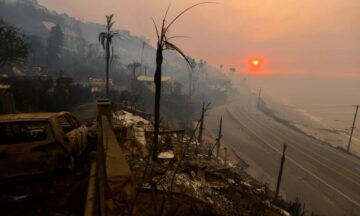
When the Hollywood sign was first unveiled in 1923, it read “Hollywoodland.” Surrounded by coastal sage scrub, chaparral, and invasive and highly flammable eucalyptus trees, that kitschy, iconic, and slightly absurd marker consisting of 50-foot-tall letters spread across nearly 500 feet atop Mount Lee has signified Los Angeles and its attendant associations for more than a century. But in some ways, that missing syllable gestures toward an even deeper truth about this region. The word “Hollywoodland” is slightly fantastical, evoking a southern California that’s as mythic as it is actual — a fitting moniker for the forge of American dreams, a place configured to generate spectacle and narrative, the maker of cellulose nitrate chimeras in the form of physical film often as combustible as the illusions it conveyed. A kingdom of imagery for an art form that, if not invented by Americans, was at least stoked to its potential here, at the western terminus of the continent. In 1923, Los Angeles was a dry, desert city of Art Deco skyscrapers and Modernist homes clinging to the hillsides of her craggy neighborhoods, an urban landscape of coyotes and bobcats. Today, the city of Los Angeles is home to nearly four million people, and the county a stunning 10 million. And it’s on fire.

more here.

Enjoying the content on 3QD? Help keep us going by donating now.

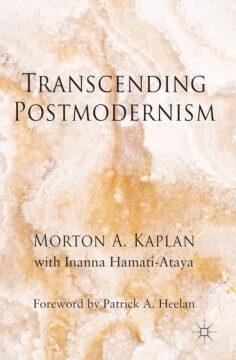
There Are No Pure Cultures

Inanna Hamati-Ataya at Aeon Magazine:

During the past three decades, more people have begun viewing our ‘global’ world as a cursed fate. With its suffocating time-space compression, globalisation seems to have uncoupled us from the logic and flow of history. Our suspicious, bastard identities – patched together from a mishmash of cultures – appear incompatible with our ancestors’ ‘authentic’ traditions and ways of life. We have become strangers to the places they called home, to the ways they dressed, ate or communicated with one another. And, with no template for how to live and no experience to learn from, the deafening siren songs of anti-globalisation movements are now luring us back into the safer identities and boundaries of a lost, golden past.
This tale of globalisation is the most successful scare story of our times. And like all scare stories, it stimulates our fear of an overwhelming unknown. But it’s all an illusion. There is no new global world. Our present appears that way only because we have forgotten our common past. Globalisation didn’t begin in the 1990s, or even in the past millennia.

more here.

Enjoying the content on 3QD? Help keep us going by donating now.

Monday, January 13, 2025

The chronicle of a fire foretold

Rebecca Solnit in The Guardian:

It was only last month that the Franklin fire, fanned by the dry Santa Ana winds from the east gusting up to 50 miles an hour, burned 4,000 acres around Malibu in 48 hours. The Station fire burned 160,577 acres in 2009 to set the record as LA’s largest and the Woolsey fire in 2018 burned 96,949 acres and destroyed 1,643 structures, while the 1970 Malibu fire destroyed 31,000 acres, incinerated hundreds of structures, and killed 10 people, fed in part by six months of no rain. Los Angeles has a history of catastrophic fire.

As Mike Davis, in his bluntly titled 1998 essay The Case for Letting Malibu Burn, noted: “Malibu, meanwhile, is the wildfire capital of North America and, possibly, the world. Fire here has a relentless staccato rhythm, syncopated by landslides and floods. The rugged 22-mile-long coastline is scourged, on the average, by a large fire (one thousand acres plus) every two and a half years, and the entire surface area of the western Santa Monica Mountains has been burnt three times over the twentieth century.” The case for letting Malibu burn is that it is inevitably going to burn, over and over, but fire departments protect structures as long as they can.

None of these facts make what is happening now less terrible. And it is terrible – to me personally as well; people I know have lost not just their homes but their neighborhoods; friends and family have had to evacuate not knowing if they’ll have homes to return to. But these facts do perhaps make it all less surprising.

More here.

Enjoying the content on 3QD? Help keep us going by donating now.

Inconvenient truths about the fires burning in Los Angeles from two fire experts

Thomas Curwen in the Los Angeles Times:

“When you study the destruction in Pacific Palisades and Altadena, note what didn’t burn — unconsumed tree canopies adjacent to totally destroyed homes,” he said. “The sequence of destruction is commonly assumed to occur in some kind of organized spreading flame front — a tsunami of super-heated gases — but it doesn’t happen that way.

“In high-density development, scattered burning homes spread to their neighbors and so on. Ignitions downwind and across streets are typically from showers of burning embers from burning structures.”

This fundamental misunderstanding has likewise led to a misunderstanding of prevention. No longer is it a matter of preventing wildfires but instead preventing points of ignition within communities by employing “home-hardening” strategies — proper landscaping, fire-resistant siding — and enjoining neighbors in collective efforts such as brush clearing.

More here.

Enjoying the content on 3QD? Help keep us going by donating now.

Yuval Noah Harari: AI will make the world more Kafkaesque than Terminator

Enjoying the content on 3QD? Help keep us going by donating now.

Now Is the Time of Monsters

Ezra Klein in the New York Times:

Donald Trump is returning, artificial intelligence is maturing, the planet is warming, and the global fertility rate is collapsing.
To look at any of these stories in isolation is to miss what they collectively represent: the unsteady, unpredictable emergence of a different world. Much that we took for granted over the last 50 years — from the climate to birthrates to political institutions — is breaking down; movements and technologies that seek to upend the next 50 years are breaking through.

Let’s begin with American politics. Trump is eight days from taking the oath of office for the second time, and America’s institutional storm walls are not, in 2025, what they were in 2017.

The Republican Party is meek, and Trump knows it. He would not have dared to send Senate Republicans names like Robert F. Kennedy Jr., Tulsi Gabbard, Kash Patel and Pete Hegseth for cabinet posts in his first term. Even beyond the party, he faces no mass resistance this time, nothing like the Women’s March that overwhelmed Washington in 2017. Democrats are dispirited and exhausted.

More here.

Enjoying the content on 3QD? Help keep us going by donating now.

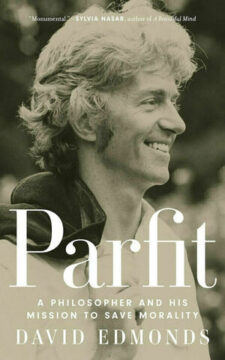
Parfit: A Philosopher and His Mission to Save Morality

David Phillips at Notre Dame Philosophical Reviews:

David Edmonds’ Parfit belongs to a burgeoning genre. There are the two recent collective biographies of Anscombe, Foot, Midgley and Murdoch (by Benjamin Lipscomb and by Claire Mac Cumhaill and Rachael Wiseman). There are M.W. Rowe’s J.L. Austin: Philosopher and D-Day Intelligence Officer and Nikhil Krishnan’s A Terribly Serious Adventure. Earlier works include Ray Monk’s Russell and Wittgenstein volumes, Tom Regan’s Bloomsbury’s Prophet, and Bart Schultz’s books on Sidgwick and the other classical utilitarians. And Edmonds himself is inter alia the author of The Murder of Professor Schlick and the coauthor of Wittgenstein’s Poker.
Derek Parfit stands out among the subjects of these various works for being so contemporary. Edmonds could draw on a vast collection of stories conveying Parfit’s legendary eccentricity. But he also took on in a particularly acute form the challenge of writing simultaneously for two quite different audiences. One audience consists of philosophers, some of whom are the sources of the stories and almost all of whom know a good deal about Parfit and his ideas. The other audience consists of general readers who are apt to come to the book knowing little or nothing about either.

I think Edmonds meets this challenge admirably.

more here.

Enjoying the content on 3QD? Help keep us going by donating now.

On Najwan Darwish

Alexia Underwood at the Paris Review:

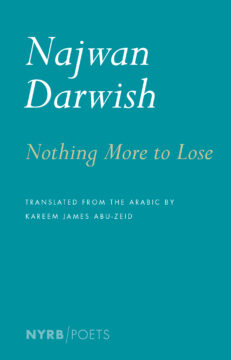
“No one will know you tomorrow. / The shelling ended / only to start again within you,” writes the poet Najwan Darwish in his new collection. Darwish, who was born in Jerusalem in 1978, is one of the most striking poets working in Arabic today. The intimate, carefully wrought poems in his new book, , No One Will Know You Tomorrow, translated into English by Kareem James Abu-Zeid, were written over the past decade. They depict life under Israeli occupation—periods of claustrophobic sameness, wartime isolation, waiting. “How do we spend our lives in the colony? / Cement blocks and thirsty crows / are the only things I see,” he writes. His verses distill loss into a few terse lines. In a poem titled “A Brief Commentary on ‘Literary Success,’ ” he writes, “These ashes that were once my body, / that were once my country— / are they supposed to find joy / in all of this?” Many poems recall love letters: to Mount Carmel, to the city of Haifa. To a lover who, abandoned, “shares my destiny.” He speaks of “joy’s solitary confinement” because “exile has taken / everyone I love.” Irony and humor are present (“I’ll be late to Hell. / I know Charon will ask for a permit / to board his boat. / Even there / I’ll need a Schengen visa”), but it is Darwish’s ability to convey both tremulous wonder and tragedy that make this collection so distinct.

more here.

Enjoying the content on 3QD? Help keep us going by donating now.

What Is an AI Agent?

Brian O’Neil in Singularity Hub:

Interacting with AI chatbots like ChatGPT can be fun and sometimes useful, but the next level of everyday AI goes beyond answering questions: AI agents carry out tasks for you.

Major technology companies, including OpenAIMicrosoftGoogle, and Salesforce, have recently released or announced plans to develop and release AI agents. They claim these innovations will bring newfound efficiency to technical and administrative processes underlying systems used in health care, robotics, gaming, and other businesses. Simple AI agents can be taught to reply to standard questions sent over email. More advanced ones can book airline and hotel tickets for transcontinental business trips. Google recently demonstrated Project Mariner to reporters, a browser extension for Chrome that can reason about the text and images on your screen.

More here.

Enjoying the content on 3QD? Help keep us going by donating now.

What Matters More for Longevity: Genes or Lifestyle?

Dana Smith in The New York Times:

When Dr. Nir Barzilai met the 100-year-old Helen Reichert, she was smoking a cigarette. Dr. Barzilai, the director of the Institute for Aging Research at the Albert Einstein College of Medicine, recalled Mrs. Reichert saying that doctors had repeatedly told her to quit. But those doctors had all died, Mrs. Reichert noted, and she hadn’t. Mrs. Reichert lived almost another decade before passing away in 2011.

There are countless stories about people who reach 100, and their daily habits sometimes flout conventional advice on diet, exercise, and alcohol and tobacco use. Yet decades of research shows that ignoring this advice can negatively affect most people’s health and cut their lives short. So how much of a person’s longevity can be attributed to lifestyle choices and how much is just luck — or lucky genetics? It depends on how long you’re hoping to live. Research suggests that making it to 80 or even 90 is largely in our control. “There’s very clear evidence that for the general population, living a healthy lifestyle” does extend the life span, said Dr. Sofiya Milman, a professor of medicine and genetics at the Albert Einstein College of Medicine.

More here.

Enjoying the content on 3QD? Help keep us going by donating now.

Sunday, January 12, 2025

Whither Woke?

Gary Younge in The Ideas Letter:

In the film American Fiction, the culturally refined Dr Theolonius “Monk” Ellison, an African American author and professor, is struggling to get his highbrow novels published: the white gatekeepers to the literary world believe they are not “Black enough” and would rather put out ghetto stereotypes. So he writes a spoof novel, set in the hood, under the pseudonym Stagg R. Leigh. He calls it FUCK and pretends to be an author whose identity needs to be protected because he’s on the run from the police. It’s snapped up for a huge sum, giving Monk’s ghettofabulous doppelganger more money and attention than his culturally elevated original ever enjoyed. Later he is asked to join a judging panel for a book award, which has been accused of being too white. “I’m honored you’d choose me out of all the black writers you could go to for fear of being called racist,” says Monk facetiously.

FUCK is shortlisted for the award. The three white judges praise it as “gutsy”, “necessary” and “like gazing into an open wound”. When Monk and the only other Black judge argue that the book should not win the prize they are overruled by the three white judges, the most aggressively liberal of whom states: “I just think it’s essential to listen to black voices right now.” As the Black author of six books, much of the scene rang true to me. Indeed, the film wouldn’t work as a parody if it didn’t bear some resemblance to reality.

More here.

Enjoying the content on 3QD? Help keep us going by donating now.

Politics All the Way Down

Lily Hu in Boston Review:

A new common sense has emerged regarding the perils of predictive algorithms. As the groundbreaking work of scholars like Safiya Noble, Cathy O’Neil, Virginia Eubanks, and Ruha Benjamin has shown, big data tools—from crime predictors in policing to risk predictors in finance—increasingly govern our lives in ways unaccountable and often unknown to the public. They replicate bias, entrench inequalities, and distort institutional aims. They devalue much of what makes us human: our capacities to exercise discretion, act spontaneously, and reason in ways that can’t be quantified. And far from being objective or neutral, technical decisions made in system design embed the values, aims, and interests of mostly white, mostly male technologists working in mostly profit-driven enterprises. Simply put, these tools are dangerous; in O’Neil’s words, they are “weapons of math destruction.”

These arguments offer an essential corrective to the algorithmic solutionism peddled by Big Tech—the breathless enthusiasm that promises, in the words of Silicon Valley venture capitalist Marc Andreessen, to “make everything we care about better.” But they have also helped to reinforce a profound skepticism of this technology as such. Are the political implications of algorithmic tools really so different from those of our decision-making systems of yore? If human systems already entrench inequality, replicate bias, and lack democratic legitimacy, might data-based algorithms offer some promise in addition to peril? If so, how should we approach the collective challenge of building better institutions, both human and machine?

More here.

Enjoying the content on 3QD? Help keep us going by donating now.

Polycrisis & the critique of capitalocentrism

Adam Tooze over at his substack, Chartbook:

2008 and the years that followed delivered a historic shock.

The vertiginous panic of the financial crisis, the protracted eurozone crisis that followed, the Occupy movement and the “inequality moment”, BLM, mounting anxiety about fascistoid politics, the radicalization of the climate crisis, escalating geopolitical tension, all this and more has led to a search for big, urgent, powerful frames of analysis. Anything less seems inadequate to the moment.

One of the responses on the progressive political side has been a return to what you might call classical foundations. For some this was Marxism. For others, myself included, it involved a return to Keynes, left Keynesianism and currents like MMT and the Green New Deal.

This turn was “necessary”. It has been intellectually and politically productive. But it also came at a price.

What I worry about is a double evasion of history, both “real” and intellectual, if such a distinction may be permitted:

a. In real terms: by anchoring critique in classical social theories that were shaped above all by the 1900-1950 moment, we risk underestimating the radicalism of the present. This is not to underestimate the dramas of the early 20th century – I hope I may be spared that accusation. But to insist on the novelty, unprecedented scale and pace of our current predicament.

More here.

Enjoying the content on 3QD? Help keep us going by donating now.