
Category: Recommended Reading
Not just a matter of time: Measuring complexity
Ken Wessen in Plus Magazine:
As computers are constantly becoming faster and better, many computational problems that were previously out of reach have now become accessible. But is this trend going to continue forever, or are there problems computers will never, ever be able to solve? Let's start our consideration of this question by looking at how computer scientists measure and classify the complexity of computational algorithms.
How complex is complex?
Suppose you are responsible for retrieving files from a large filing system. If the files are all indexed and labelled with tabs, the task of retrieving any specific file is quite easy — given the required index, simply select the file with that index on its tab. Retrieving file 7, say, is no more difficult than retrieving file 77: a quick visual scan reveals the location of the file and one physical move delivers it into your hands. The total number of files doesn't make much difference. The process can be carried out in what is called constant time: the time it takes to complete it does not vary with the number of files there are in total. In computers, arrays and hash-tables are commonly used data structures that support this kind of constant time access.
Now suppose that over time the tabs have all fallen off the files. They are still indexed and in order, but you can no longer immediately spot the file you want. This introduces the requirement to search, and a particularly efficient way to do so is a binary search. This involves finding the middle file and seeing whether the file you need comes before or after. For example, when looking for file 77, pull out the middle file and see if its index is smaller or larger than 77, and then keep looking to the left or right of the middle file as appropriate.
With this single step you have effectively halved the size of the problem, and all you need to do is repeat the process on each appropriate subset of files until the required file is found. Since the search space is halved each step, dealing with twice as many files only requires one additional step.
Writing  for the total number of files, it turns out that as grows, the number of steps it takes to solve the problem (that is, the number of steps it takes to find your file) grows in proportion to
  the logarithm to base
  of (see the box below to find out why). We therefore say that a binary search is logarithmic, or, alternatively, that it has computational complexity
  This is the so-called big O notation: the expression in the brackets after the O describes the type of growth you see in the number of steps needed to solve the problem as the problem size grows (see the box on the left for a formal definition).
A logarithmic time process is more computationally demanding that a constant time process, but still very efficient.
But what if over time the loss of the tabs has allowed the files to become disordered? If you now pull out file 50 you have no idea whether file 77 comes before or after it.
More here.
Why Neuroscientists Need to Study the Crow

Grigori Guitchounts in Nautilus:
The animals of neuroscience research are an eclectic bunch, and for good reason. Different model organisms—like zebra fish larvae, C. elegans worms, fruit flies, and mice—give researchers the opportunity to answer specific questions. The first two, for example, have transparent bodies, which let scientists easily peer into their brains; the last two have eminently tweakable genomes, which allow scientists to isolate the effects of specific genes. For cognition studies, researchers have relied largely on primates and, more recently, rats, which I use in my own work. But the time is ripe for this exclusive club of research animals to accept a new, avian member: the corvid family.
Corvids, such as crows, ravens, and magpies, are among the most intelligent birds on the planet—the list of their cognitive achievements goes on and on—yet neuroscientists have not scrutinized their brains for one simple reason: They don’t have a neocortex. The obsession with the neocortex in neuroscience research is not unwarranted; what’s unwarranted is the notion that the neocortex alone is responsible for sophisticated cognition. Because birds lack this structure—the most recently evolved portion of the mammalian brain, crucial to human intelligence—neuroscientists have largely and unfortunately neglected the neural basis of corvid intelligence.
This makes them miss an opportunity for an important insight. Having diverged from mammals more than 300 million years ago, avian brains have had plenty of time to develop along remarkably different lines (instead of a cortex with its six layers of neatly arranged neurons, birds evolved groups of neurons densely packed into clusters called nuclei). So, any computational similarities between corvid and primate brains—which are so different neurally—would indicate the development of common solutions to shared evolutionary problems, like creating and storing memories, or learning from experience. If neuroscientists want to know how brains produce intelligence, looking solely at the neocortex won’t cut it; they must study how corvid brains achieve the same clever behaviors that we see in ourselves and other mammals.
More here.
Why Be a Parent?

The first sentence in Gopnik’s book is “Why be a parent?” Good question, but she answers it only abstractly, saying that having children “allows a new kind of human being to come into the world.” She does say that being a parent is profoundly satisfying, even if exhausting, but that tells us why you’re glad you did it, not why you did it. In thinking about the reasons in my own family, I realized that they have probably varied over the generations but have some things in common. One set of my grandparents (about 1880 to 1960), who farmed, fished, and built boats, had eleven children; the children provided much-needed labor, even when very young, and they were a source of pride, particularly for my grandfather (I think he saw them as proof of potency), not to mention a bid for family immortality. They were also a form of old-age and medical insurance.
My parents (about 1906 to 1990) lived a different life. They had only two children and we were of almost no use. My father worked in an office that might as well have been on the moon, and my mother was a housewife without much to do after we were of school age. I think they had children because it was expected of them, and besides, what else could my mother do? But they liked the idea of family (the reality, maybe not so much), and here, too, it offered security in old age and continuation of the dynasty, such as it was.
I am seventy-seven years old and, like Gopnik, the mother of grown children who have young children of their own, and also a woman with a postgraduate degree and a demanding profession. I knew the planet didn’t need more children, and there was now some safety net for old age and illness. So why did I have children? All I can say is that I wanted them very much, partly for the lifelong love and companionship of people whose character and values I had helped form. (Here Gopnik might accuse me of being something of a carpenter, and I may have been, but she is too, I suspect.) And like Gopnik, I am glad I had them.
Nevertheless, despite an unbroken chain of people choosing to have children, albeit for different reasons, we are now living at a time when fewer and fewer women are making that choice. The most recent data from the National Center for Health Statistics show that the fertility rate for American women ages fifteen to forty-four was 62.9 per thousand in 2014, the lowest ever recorded. In 1950 it was 106.2 per thousand, 70 percent higher. Moreover, according to Sophie Gilbert in her review in The Atlantic of a book edited by Meghan Daum, titled Selfish, Shallow, and Self-Absorbed (2015), which contains essays by writers who chose not to have children, 25 percent of women with college degrees never have children. Despite the new focus of celebrity magazines on celebrity babies, more young people seem to be finding sufficiently close and sustaining relationships with one another to forgo parenthood.
More here.
Wednesday Poem
Trees are People and the People are Trees
And there in the crowded commons
three hundred striding people,
gesturing, eating the air,
halted around us, suddenly quiet.
They sprouted leaves and cones,
they wore strange bark for clothing,
and gently lifted their arms.
.
by John Haines
from The Owl in the Mask of the Dreamer
Graywolf Press, 1993
The reality of the Enlightenment
Anthony Gottlieb in Spiked:
In 2000, scholar, writer and then executive editor at The Economist Anthony Gottlieb received widespread acclaim for the first installment of his survey of Western philosophy, The Dream of Reason, which covered thought from the Greeks to the Renaissance. This year, its remarkable sequel, The Dream of Enlightenment, emerged. Focusing on that ‘150-year burst’ of intellectual energy that begins in Northern Europe after the Thirty Years War, and stretches up to the eve of the French Revolution, Gottlieb provides a profoundly illuminating portrait of an era in which the battles fought (and sometimes won) were to pave the way for the modern age. The spiked review caught up with Gottlieb to discuss toleration, freedom and the many misconceptions that have, at points, turned Enlightenment thinkers into caricatures of themselves.

Gottlieb: Yes, it was certainly common throughout the period to think that the more science shows you about nature, the more it showed the evidence of God. Isaac Newton (1643-1727) was very specific about this. He endorsed what we now call the argument of design, that is, the idea that there is evidence of design in nature. Newton thought that the further you looked into the workings of the natural world, the more you saw the evidence of God. And most Enlightenment thinkers, except for Hume and some after him, accepted that idea.
More here.
Tear your knee? Maybe your nose can help it heal
Kelly Servick in Science:

Or they can create tiny breaks in the underlying bone in the hopes of releasing progenitor cells that can restore the cartilage. But over the last decade, researchers have realized that cartilage cells from the nose are adept at forming new tissue that can hold up to the mechanical stress of the knee joint. And extracting those cells is much less invasive and damaging than digging around in someone’s knee. In a study published online today in The Lancet, researchers cut a flat chunk about the diameter of a pencil eraser out of the septum dividing participants’ nostrils, then broke down the tissue with enzymes and grew the cells on a porous membrane.
More here.
Tuesday, October 25, 2016
The climate event that helped create Frankenstein and the bicycle

Last year marked the two-hundredth anniversary of the eruption of Indonesia’s Mount Tambora, among the largest volcanic eruptions in recorded history. This year marks the two-hundredth anniversary of Mary Shelley’s Frankenstein. Next year, 2017, will be the two-hundredth anniversary of Baron Karl Drais’s “running machine,” the precursor to the modern bicycle. Strange as it may seem, these three events are all intimately related; they’re all tied together by the great shift in climate that made 1816 the “year without a summer.”
Tambora, on the island of Sumbawa, Indonesia—then the Dutch East Indies—began its week-long eruption on April 5, 1815, though its impact would last years. Lava flows leveled the island, killing nearly all plant and animal life and reducing Tambora’s height by a third. It belched huge clouds of dust into the air, bringing almost total darkness to the surrounding area for days. The geologist Charles Lyell would reflect that “the darkness occasioned in the daytime by the ashes in Java was so profound, that nothing equal to it was ever witnessed in the darkest night.” According to Lyell, of the 12,000 residents of the province of Tambora, only twenty-six survived. Tens of thousands more were choked to their deaths by the thick black air and the falling dust, which blanketed the ground in piles more than a meter high.
more here.
The conflict in Yemen is a Civil War by numbers

Ten thousand dead – a conservative estimate at best. Three million internally displaced. Twenty million in need of aid. Two hundred thousand besieged for over a year. Thirty-four ballistic missiles fired into Saudi Arabia. More than 140 mourners killed in a double-tap strike on a funeral. These are just some of the numerical subscripts of the war in Yemen.
The British government would probably prefer to draw attention to the money being spent on aid in Yemen – £37m extra, according to figures released by the Department for International Development in September – rather than the £3.3bn worth of arms that the UK licensed for sale to Saudi Arabia in the first year of the kingdom’s bombing campaign against one of the poorest nations in the Middle East.
Yet, on the ground, the numbers are meaningless. What they do not show is how the conflict is tearing Yemeni society apart. Nor do they account for the deaths from disease and starvation caused by the hindering of food imports and medical supplies – siege tactics used by both sides – and for the appropriation of aid for financial gain.
more here.
The Terrible Battle for Mosul

The hesitation in the drive toward Mosul also has much to do with Iraq’s fractious politics. The three main forces advancing toward the city—the Iraqi army, the peshmerga, and the coalition of independent Shiite militias, some backed by Iran—are in conflict about their parts in the coming liberation. Nechirvan Barzani, the Kurdistan Regional Government prime minister, announced last summer that the peshmerga would play a “central role” in the liberation of Mosul, which has a minority Kurdish population. The top commanders of the Iraqi security forces, dominated by Shiites, insist that the Kurds stick to the outskirts of the city, which is itself largely Sunni—then withdraw as soon as the battle is over.
The Shiite militias, poised within striking distance of Mosul in parts of neighboring Kirkuk province, have also demanded that they participate in the Mosul operation. “They played a huge role in the liberation of areas [around Baghdad] and they are highly motivated,” a US military officer in Baghdad told me. But the prospect of armed Shiites sweeping through Mosul has alarmed many Sunnis, who recall the killings of Sunni civilians during the liberation of Fallujah and other parts of Anbar province last spring. Some Shiite militia leaders, meanwhile, say they will oppose any attempt by the peshmerga to march into Mosul. Kurdish leaders are also demanding a referendum on their own independence as soon as the Islamic State is driven out of the country. Al-Abadi has hedged on Kurdish independence, which is opposed by most of the Shiite majority. (The US government has repeatedly said it supports a united Iraq.)
more here.
BERNIE MADOFF EXPLAINS HIMSELF
Carmen Nobel at the website of Harvard Business School:
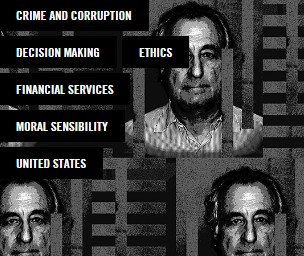
Soltes, who was doing an in-depth investigation on white-collar crime, had been interviewing Madoff every Wednesday evening for several months. Madoff, a renowned stockbroker turned fraudster, conducted the phone calls from FCI Butner, a medium-security federal correctional institution in North Carolina. At the time, he was serving the third year of a 150-year prison sentence for orchestrating the biggest Ponzi scheme in history.
Madoff’s phone-time allowance was limited, and he saved much of it for his conversations with Soltes. They conversed in 15-minute chunks, the maximum amount of uninterrupted call time that the prison would allow.
The professor and the felon shared a genuine, geeky interest in financial economics. Sometimes they discussed the early days of Madoff’s career, which began in 1960. Other times they chatted about new books, academic journal articles, or recent events in the news. But that evening Soltes led the conversation with a specific question: How would you explain your actions and misconduct to a group of students?
More here.
Why Do These Plants Have Metallic Blue Leaves?
Ed Yong in The Atlantic:

And she thinks she knows why.
Similar metallic colours are common in nature—you can find it in the wings of many butterflies, the bibs of pigeons, the feathers of peacocks, and the shells of jewel beetles. These body parts get their color not from pigments but from microscopic structures that are found in evenly spaced layers. As light hits each layer, some gets reflected and the rest pass through. Because of the regular gaps between the layers, the reflected beams amplify each other to produce exceptionally strong colors—at least, from certain viewing angles.This is called iridescence.
Iridescence is less obvious among plants, but there are some stunning exceptions.
More here.
WORK
From Notes on Liberty:

Here is an illustration of these basic ideas. Today, one can buy shoes made by machine in South Korea or by hand in India. That is, modern mass production along rationalized lines, in the world, exists side by side with craft production fairly similar to all shoe production before 1750. The average line worker in a Korean shoe production does not need to be very bright, and he can be satisfactorily trained in a month or so. By contrast, a traditional Indian shoe-maker is apprenticed for four to five years, or more.** He cannot be stupid and he needs patience, perseverance, and a superior ability to focus, among other personal traits. It’s true that today’s unskilled Korean worker probably has more formal education that the Indian shoe-maker. That’s not because he needs it to do his job but because he lives in a rich society where formal education is a consumption item. It may also be to enable him to spend rationally. It may make him a better citizen. It’s not required by his job beyond basic literacy, if that.
More here.
What is Color? & Who Cares?
Video length: 9:01
Animal Minds: The new anthropomorphism
Brandon Keim in The Chronicle of Higher Education:
Other questions involve capacities like morality: Might its biological building blocks be widespread in the animal kingdom? Or what about motivation? After all, a human whose every physical need is provided for, but who doesn’t actually do anything except sit in a room, won’t be very happy. Beyond seeking pleasure, avoiding pain and procreating, what might an animal find fulfilling? “I don’t think I can understand that unless I try, with a whole lot of humility, to imagine what it would be like to be that animal,” says Becca Franks, a cognitive psychologist at the University of British Columbia. “Then you take those insights to create an experimental, data-driven paradigm. That’s how science proceeds.”
More here.
Tuesday Poem
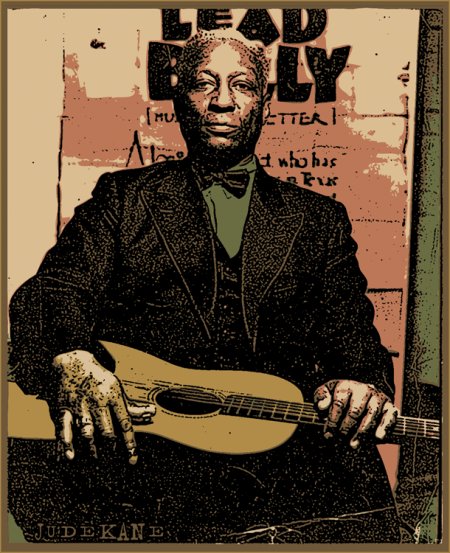
martha promise receives leadbelly, 1935
when your man comes home from prison,
when he comes back like the wound
and you are the stitch,
when he comes back with pennies in his pocket
and prayer fresh on his lips,
you got to wash him down first.
you got to have the wildweed and treebark boiled
and calmed, waiting for his skin like a shining baptism
back into what he was before gun barrels and bars
chewed their claim in his hide and spit him
stumbling backwards into screaming sunlight.
you got to scrub loose the jailtime fingersmears
from ashy skin, lather down the cuffmarks
from ankle and wrist, rinse solitary’s stench loose
from his hair, scrape curse and confession
from the welted and the smooth,
the hard and the soft,
the furrowed and the lax.
you got to hold tight that shadrach’s face
between your palms, take crease and lid
and lip and brow and rinse slow with river water,
and when he opens his eyes
you tell him calm and sure
how a woman birthed him
back whole again.
by Tyehimba Jess
from Leadbelly
Wave Books
Hillary Clinton will make a fine US president
Editorial in Nature:

Will the centre hold? Will the United States elect its first female president, Hillary Clinton? It should do. And not just because she is not Donald Trump. Clinton is a quintessential politician — and a good one at that. She has shown tremendous understanding of complex issues directly relevant to Nature’s readers, and has engaged with scientists and academics. Take health: as first lady, she led attempts to expand health care in the early years of her husband Bill Clinton’s presidency. She supported the Children’s Health Insurance Program, which reaches millions of poor children. She championed women’s rights, and as secretary of state made global health a priority through the Global Health Initiative, a framework to coordinate various US programmes. Clinton may not have the outsider appeal of a newcomer. But few politicians with her degree of experience and pragmatism do. She is arguably the best-qualified presidential candidate for two decades.
More here.
Monday, October 24, 2016
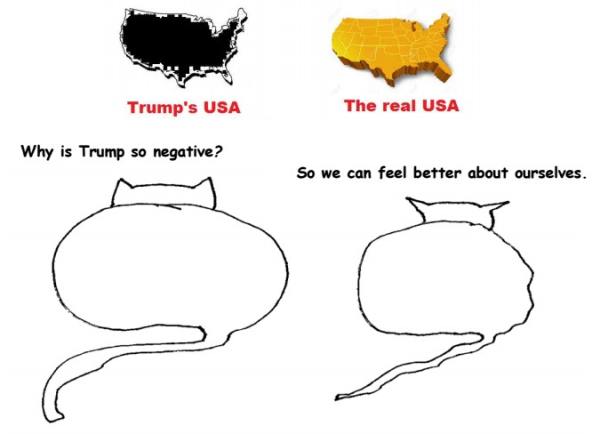
Perceptions: selfie circa 1930

CATSPEAK
by Brooks Riley
Sunday, October 23, 2016
Now it’s time to prepare for the Machinocene
Huw Price in Aeon:

Well, two big things have changed in recent decades. First, there’s been a lot of real progress – theoretical, practical and technological – in understanding the mechanisms of intelligence, biological as well as non-biological. Second, AI has now reached a point where it’s immensely useful for many tasks. So it has huge commercial value, and this is driving huge investment – a process that seems bound to continue, and probably accelerate.
One way or another, then, we are going to be sharing the planet with a lot of non-biological intelligence. Whatever it brings, we humans face this future together. We have an obvious common interest in getting it right. And we need to nail it the first time round. Barring some calamity that ends our technological civilisation without entirely finishing us off, we’re not going to be coming this way again.
There have been encouraging signs of a growing awareness of these issues. Many thousands of AI researchers and others have now signed an open letter calling for research to ensure that AI is safe and beneficial. Most recently, there is a welcome new Partnership on AI to Benefit People and Society by Google, Amazon, Facebook, IBM and Microsoft.
For the moment, much of the focus is on safety, and on the relatively short-term benefits and impacts of AI (on jobs, for example). But as important as these questions are, they are not the only things we should be thinking about.
More here.