Statistician David Spiegelhalter offers a masterful guide to embracing the unknown

Yongyi Min in Nature:
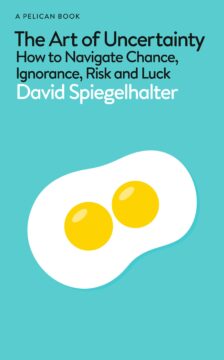
As I sat down to read David Spiegelhalter’s The Art of Uncertainty, much of the world’s focus was on the 2024 US presidential elections. Forecasts flooded news outlets and social media, saying that the race was too close to call. When the results came out — a resounding win for Donald Trump — they laid bare the limitations of predictive models, which are subject to assumptions, uncertainty and shifts in voter behaviour. It was ideal timing, it turned out, for reading a book that emphasizes the importance of humility when dealing with uncertainty and predictions.

Spiegelhalter, a renowned statistician, has crafted a masterful examination of how to understand, measure and communicate uncertainty. His great ability to translate complex statistical concepts into accessible language is fully on display. Drawing from decades of experience, he neatly weaves together historical anecdotes, real-world examples and rigorous statistical analyses to provide a comprehensive overview.

This book asks how we can use data and statistical analysis to make informed decisions in the face of uncertainty. It equips readers with the tools to think critically about risk and chance, enabling them to make better choices in their lives.

More here.

Enjoying the content on 3QD? Help keep us going by donating now.

The Birth of Aspirational Populism

Yascha Mounk at his Substack:

After Donald Trump was first elected, the same political scientists who had adamantly insisted that he could never win a presidential election quickly coalesced on the same interpretation of his success. He was an authoritarian populist who cleaved the electorate into “real” Americans and everybody else, promising to put the former in charge while banishing the latter to the margins (or, according to the more extreme alarmists, putting them in camps). On this interpretation, two things were intrinsically linked: Trump’s demagogic talent for mobilizing popular opinion against the norms and values of a deeply mistrusted establishment; and his apparent alliance with a predominantly white and elderly electorate that had experienced a decline in their social status, feared the future, and was ready to resist change by any means necessary.
It turns out that this was a grave analytical error, which made it impossible to understand what has been brewing in the United States for the past ten years. For despite all the predictions that Trump couldn’t possibly win, he didn’t just squeak through in 2016; he also won a more convincing victory, taking the popular vote, in 2024.

More here.

Enjoying the content on 3QD? Help keep us going by donating now.

Paraguay: Versions of Unknowability

Mark Jacobs at the Hudson Review:

Unknowability was everywhere, not just in my interactions with people, but in the life and world I was eagerly observing. One morning early, maybe five a.m., I woke in a one-room shack of boards with a dirt floor and a thatched roof. It was raining. I had no bed; slept on a pallet. The thatch leaked, making the floor a muddy lake whose shore brushed my pallet.
 
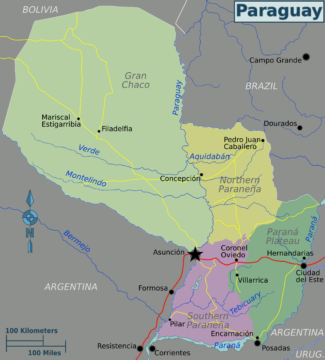
In the soft insistent rain, across the way I heard a family stirring. Someone was building a fire, someone filling a kettle for the morning mate, without which no day began. I lay on my soggy pallet and listened. They were speaking in Guaraní, the Paraguayans’ private language, in which I had less than a baby’s proficiency. I was still working on my Spanish. (Years later, a government minister told me that, while serving as an ambassador abroad, he and his colleagues spoke in Guaraní when they wished to keep a conversation confidential.) That rainy tranquil morning, what I experienced was more than the novelty of fresh perception, it was a shimmering. For me, it was in the wake of such shimmer that the impulse to tell a story found its first working out. I was at an intersection: new knowledge collided with a headstrong drive to say what I was seeing. I started writing Paraguay stories. Never stopped. Their genesis was everywhere.

more here.

Enjoying the content on 3QD? Help keep us going by donating now.

Tuesday Poem

Being out West When Time Stood Still

Once she had a seamless mind.
Clouds rolled into her thinking
like opposites attracting. And hitching.
There was that openness of beginning.
Those crisp little white cockle shells. And then
that low fog.  Spreading around
like when once you could touch time without rules or referees,
like when you used to dance alone with your eyes closed
serenading crazy in your room late, doors shut, the music on fire,
and you moved around in there, bumping the walls
like salmon swarming and flopping up the ladder.

Just that. Somehow just
to be seamless that way. Fiercely in the free.

Clouding in open fog.

by Linda E. Chown
from Numéro  Cinq Magazine

Enjoying the content on 3QD? Help keep us going by donating now.

My Cat Mii

Mayumi Inaba at the Paris Review:

It was the end of summer, 1977. At least I think it was late summer. I found a cat, a little ball of fluff. A teeny-tiny baby kitten.

Her face was the size of a coin, and was split by her huge wide-open mouth as she hung suspended in the dark. She was stuck inside the fence of a junior high school on the banks of the Tamagawa River in the Y. neighborhood of Fuchū City in western Tokyo. In which direction was the wind blowing that night? It was most likely a gentle breeze blowing up to my house from the river. I’d followed her cries as they carried on this breeze. At first, I searched the gaps in the hedge around my house and among the weeds of the empty plots on my street. But her cries were coming from high up, not low down. I looked up and suddenly saw a little white dot.

The large expanse of the school grounds was shrouded in the dim light. Before me was a high fence separating the road and the school. Somebody must have shoved the kitten into the fence. She was hanging so high up that even on tiptoe I could barely reach her as she clung on for dear life.

more here.

Enjoying the content on 3QD? Help keep us going by donating now.

An Exosome Protein Sets the Stage for a Cancer Biomarker

Shelby Bradford in The Scientist:

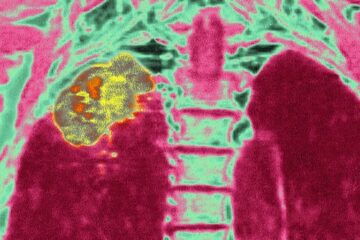
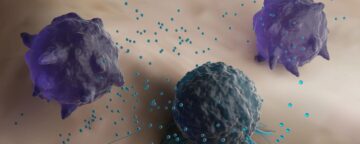
Cellular communication is vital for passing information to neighboring cells. One key messenger in this process is an exosome, a nanosized particle that buds off from a progenitor cell, carrying molecular cargo. Because these small, cellular vehicles carry contents from their parent cells, exosomes can serve as snapshots for a given population of cells, including tumors.

“If you can sample a vesicle, or any entity, from blood, it gives you a huge advantage, being a low or minimally invasive strategy to monitor cancer or detect cancer,” said David Greening, a biologist who studies extracellular vesicles like exosomes at La Trobe University. One strategy to improve the use of exosomes as cancer biomarkers is to identify surface proteins on these vesicles that reflect their originating tumor.1 L-type amino acid transporter 1 (LAT1), a surface protein that shuttles large amino acids into the cell, is predominantly associated with cancerous cells and correlates with tumor severity.2,3   These characteristics made the protein an attractive target for therapeutic intervention, with one LAT1 inhibitor currently undergoing clinical trials.4

More here.

Enjoying the content on 3QD? Help keep us going by donating now.

Monday, January 20, 2025

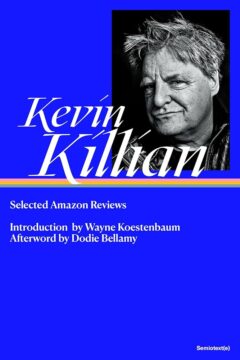
On Kevin Killian’s “Selected Amazon Reviews”

Tara Cheesman at the Cleveland Review of Books:

In 2021, writer Will Hall began scraping Kevin Killian’s reviews from Amazon’s servers and, thanks largely to his efforts, Semiotext(e) published Kevin Killian: Selected Amazon Reviews in November. The 697-page collection rescues from obscurity some of the over two thousand reviews the poet, playwright, novelist, biographer, editor, critic, and artist posted to the platform from 2003 until his death in 2019. He was a great consumer of books, music, and film but also discussed the odd product. Killian’s reviews can be read as meditations on the objects and media that populated our lives for the first twenty-five years of the twenty-first century. He imbued ordinary items – duct tape, a toaster, a DVD—with personal meaning.
More here.

Enjoying the content on 3QD? Help keep us going by donating now.

The illusory consensus of math reform

Ben Orlin at Math With Bad Drawings:

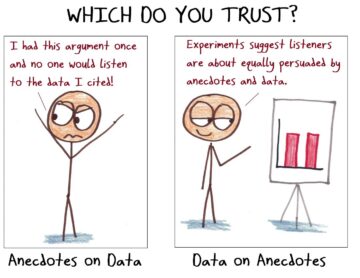
I’ve come to see this as a basic dynamic in math education reform: an illusory spirit of consensus. Clearly math education needs more something. But more what?
One popular answer: “more data science.” Let’s renounce all of those fusty, old-fashioned trigonometric formulas. Instead, fill math class with 21st-century virtues: data visualization, probabilistic thinking, and statistical literacy. This isn’t necessarily about new pedagogy; it’s about new content. It’s about re-centering math class on techniques that will cash out, on skills that students might actually apply.

Another popular answer: “more student-centered.” Let’s banish all tasks mechanical and rote. Instead, fill math class with open-ended puzzles, inquiry-based learning, and creative projects. This isn’t necessarily about new content; it’s about new pedagogy. It’s about re-centering math class on the voices, the ideas, and the ingenuity of the students themselves.

More here.

Enjoying the content on 3QD? Help keep us going by donating now.

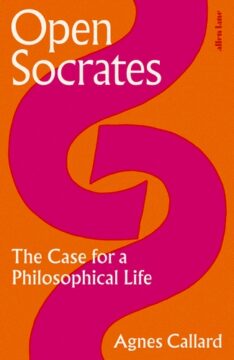
“Open Socrates” by Agnes Callard, Reviewed

Tim Clare in The Guardian:

I beseech you,” wrote Oliver Cromwell, in his letter to the general assembly of the Church of Scotland, “in the bowels of Christ, think it possible you may be mistaken.” Cromwell’s pungent entreaty is often cited in conversations about the importance of self‑enquiry and the perils of overconfidence. It’s an odd but telling choice, given that he was asking others to question their assumptions, while leaving his own unexamined. He had just purged parliament, overseen the execution of Charles I, and was in Scotland leading an army in a pre-emptive strike. Naturally, he wanted the Scottish forces massing for battle to think again. The obvious retort is: “No. You.”

This is one of several thorny problems philosopher Agnes Callard tackles in Open Socrates, an exploration of Socrates’ “substantive ethics of enquiry”; an approach to knowledge that, she argues, can’t merely be tossed into our usual repertoire of rhetorical flourishes, but rather detonates the bedrock on which we claim to stand: “People will announce, ‘Question everything!’ without noticing they have just uttered not a question, but a command.” The Socratic method is an approach with “colossal ambitions” and not just some antiquated curio we might repurpose to get an edge in business meetings. In fact, its power is so great that we must wield it with great care.

More here.

Enjoying the content on 3QD? Help keep us going by donating now.

Reincarnations Of A Rebel Muse

David Hudson at The Current:

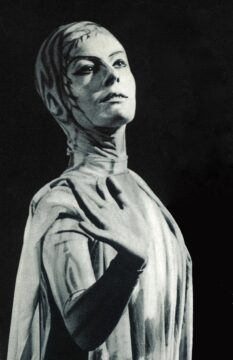
The title of a series currently running at New York’s Metrograph through February 1, Delphine Seyrig: Rebel Muse, neatly encapsulates a notion that Beatrice Loayza seeks to reevaluate in a series she’s programmed for the Harvard Film Archive. Loayza notes that Seyrig’s “career tends to be defined along the same narrative: she was a muse to European auteurs like Alain Resnais, François Truffaut, Joseph Losey, and Luis Buñuel before repudiating her goddesslike image and pursuing collaborations that challenged and complicated the feminine persona that made her a star.” The Reincarnations of Delphine Seyrig, opening Friday and running through March 2, “reframes the French-Lebanese actress’s body of work and breaks it out of this before-and-after template.”

The daughter of a French father and Swiss mother, Seyrig spent the first ten years of her life in Beirut and eventually studied acting, first in France and then at the Actors Studio in New York. There, she fell in with a bohemian crowd and landed her first small film role as the long-suffering wife of a conductor played by artist Larry Rivers in Pull My Daisy (1959), the thirty-minute Beat milestone written by Jack Kerouac and directed by Robert Frank and Alfred Leslie.
more here.

Enjoying the content on 3QD? Help keep us going by donating now.

The Science of Racism – evidence that speaks for itself

Farrah Jarral in The Guardian:

It was over schnitzel and mash that my friend’s Bavarian grandparents decided to call me a “black devil”, chuckling all the while. Breaded chicken has since been my madeleine, taking me back to racially charged moments I’ve not known quite how to interpret. Is it really racist if they didn’t mean to be rude? What if they have dementia? And if racism = prejudice + power, was being called a black devil while I choked down some potatoes even that big a deal, given that I felt in no way disempowered in the company of my tiny, elderly hosts?

In his succinct and bingeable book The Science of Racism, professor of social psychology Keon West begins by acknowledging that society doesn’t agree on even the most basic aspects of racism, let alone its finer points. Indeed, roughly half of Britons don’t believe minorities face more discrimination than white people in various areas of life. Yet far from being a set of hazy, unanswerable philosophical questions, many of the unknowns about racism are empirically testable, especially if researchers design clever studies.

More here.

Enjoying the content on 3QD? Help keep us going by donating now.

How to trick the immune system into attacking tumours

Saima Sidik in Nature:

Scientists have disguised tumours to ‘look’ similar to pig organs ― tricking the immune system into attacking the cancerous cells. This ruse can halt a tumour’s growth and even eliminate it altogether, data from monkeys and humans suggest. But scientists say that further testing is needed before the technique’s true efficacy becomes clear. It’s “early days” for this novel approach, says immuno-oncologist Brian Lichty at McMaster University in Hamilton, Canada. “I hope it stands up to further clinical testing,” he adds. The work is described today in Cell1.
Viral trickery

To devise a strategy against cancer, the authors took a cue from a challenge facing people who receive organ transplants: the human immune system recognizes transplanted organs as foreign objects and tries to eliminate them. This challenge is especially acute for transplanted pig organs, which could supplement the supply of donated human livers, kidneys and more. But human antibodies immediately attach to sugars that stud the surfaces of pig cells, leading to rapid rejection of the transplanted tissue. (Pig organs transplanted into humans are bioengineered to forestall the antibody response.) Immunologist and surgeon Yongxiang Zhao at Guangxi Medical University in Nanning, China, wondered whether he could harness this runaway immune response and direct it against tumours.

More here.

Enjoying the content on 3QD? Help keep us going by donating now.

The Inscrutable David Lynch

Simran Hans at The New Statesman:

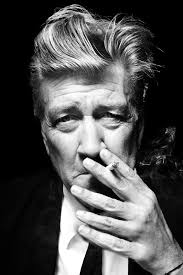
Twin Peaks first aired in 1991. A tragic and often frightening mystery, it centred on the violent murder of a beautiful teenage girl in a strange, small town nestled in the mountains of the Pacific Northwest. The protagonist was a handsome FBI agent who drank black coffee and spoke in riddles. There was a lot of spontaneous dancing fuelled by a bizarre, forbidding undercurrent of danger. I didn’t understand it at all. I was gripped. I became obsessed with its images of Americana: desolate diners and roadside dive bars, clanking industrial machinery (the fictional town of Twin Peaks has a sawmill), flanked by jaw-dropping natural beauty.
It was a great introduction to many of the director’s long-standing preoccupations: the rot of evil, the mysteries of desire, parallel worlds and the portals to them. The show featured a curdled nostalgia for the 1950s, the music of Julee Cruise, and contained much discussion of the weather (in 2020, Lynch started publishing charming daily weather reports on YouTube), and music from the 1950s. Like his most beloved and best-known film, the Blue Velvet (1986), it deals with the utter devastation of losing one’s innocence.

more here.

Enjoying the content on 3QD? Help keep us going by donating now.

Sunday, January 19, 2025

We should take AI welfare seriously

Robert Long at Experience Machines:

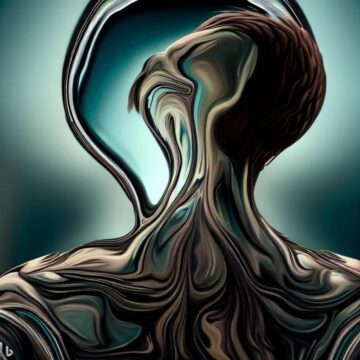
Image generated by GPT4 when asked by Morgan Meis what it would see if it looked in a mirror.

We’re likely to get confused about AI welfare, and this is a dangerous thing to get confused about.

And even though some people still opine that AI welfare is obviously a non-issue, that’s far from obvious to many scientists working on this the topic who take it quite seriously. As a recent open letter from consciousness scientists and AI researchers states, “It is no longer in the realm of science fiction to imagine AI systems having feelings.” AI companies and AI researchers are increasingly taking note as well.

This post is a short summary of a long paper about potential AI welfare called “Taking AI Welfare Seriously“. We argue that there’s a realistic possibility that some AI systems will be conscious and/or robustly agentic—and thus morally significant—in the near future.

More here.

Enjoying the content on 3QD? Help keep us going by donating now.

Reflecting on the Risks of ‘Mirror Life’

Michael Kay at Undark:

In December, 37 colleagues and I published a paper in Science arguing that mirror bacteria — self-replicating, synthetic cells whose every component exists in its mirror-image form — could indeed pose incredibly grave dangers if successfully created. First, they would likely evade most human, animal, and plant immune system responses because these have evolved to tackle natural bacterial threats, not mirrored ones. That intrinsic resistance could lead to widespread, lethal infections in many species (independent of any other factors that make pathogens dangerous, like toxins they can produce). Second, our world is not overrun with natural bacteria partly because they are kept in check by other organisms, such as viruses and amoebae, that prey on them. To the best of our current knowledge, reversed molecular structures would likely give mirror bacteria significant resistance to these predators, potentially enabling them to grow largely unchecked in a wide range of ecosystems.

We shouldn’t lose sleep, though. Nobody is currently close to creating a full mirror bacterium. No one has even achieved the much simpler feat of creating a natural bacterium from its individual components; doing so in mirror form would be an extraordinarily complex undertaking that could take decades. Our intention in publishing our paper was to kickstart the conversation about the potential risks long before they materialize.

More here.

Enjoying the content on 3QD? Help keep us going by donating now.