
From Phys.Org:
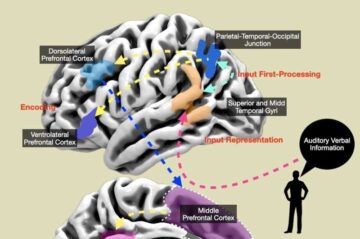 The new study, published in Brain Communications, found that shrinkage in the front and side of the brain (prefrontal, temporal and cingulate cortices, and the hippocampus) was linked to difficulty remembering words. The new discovery highlights how the network that is involved in creating and storing word memories is dispersed throughout the brain.
This is particularly crucial for helping to understand conditions such as epilepsy, in which patients may have difficulty with remembering words. The researchers hope that their findings will help guide neurosurgical treatment for patients with epilepsy by helping surgeons to avoid parts of the brain important for language and memory, that may otherwise be affected, when doing operations.
More here.
Enjoying the content on 3QD? Help keep us going by donating now.
 Wearable devices
 To forage is to look for things that aren’t lost. Birding, mushrooming, hunting agates in the wet sand at ebb tide or arrowheads in the sagebrush along the edge of a dry playa—everything I’ve spent time seeking has been right where it belonged, indifferent to whether it was found. If I failed to see birds when I could hear them or gather mushrooms when I could smell them, I considered it a failure to live in the right relation to my senses. The most apt phrase I know for the necessary state of attunement comes from psychoanalysis. The analyst, in Freud’s idealized therapeutic environment, cultivates “evenly hovering attention”—hard to cultivate, harder to maintain, no matter how early one starts.
 You know that creepy phenomenon where some people remember historic events differently than others? Like when people thought the classic kid’s book was called the “Berenstein Bears” instead of its actual title, the “Berenstain Bears.” Yep, this weird event is called the Mandela Effect.
 When I’m birdwatching, I have a particular experience all too frequently. Fellow birders will point to the tree canopy and ask if I can see a bird hidden among the leaves. I scan the treetops with binoculars but, to everyone’s annoyance, I see only the absence of a bird.
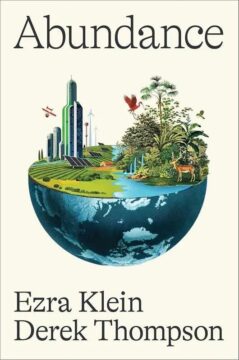 I’ve been waiting a long time for this book. Late in 2021, Ezra Klein wrote a New York Times op-ed titled “
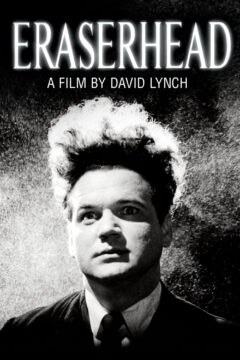 I saw Eraserhead in Providence in late 1979, I think, and I suspect it was at the Avon on Thayer Street. I liked cheeseball, poorly-constructed horror films in those days and I think Lynch’s film was being sold as midnight cult film fare, a more horrifying Rocky Horror Picture Show. So I went. At a similar moment, in undergraduate school at Brown University, I was also taking, or had just taken, Keith Waldrop’s survey course on this history of the silent film, which had offered me my first interaction with Bunuel and Dali’s Un Chien Andalou. In my recollection these experiences are utterly conjoined. Like the Bunuel film, Eraserhead scared me very thoroughly—it was merciless and unforgiving and also very funny—and likewise it established in my mind a set of filmic values (for which Un Chien Andalou was also partly responsible), antithetical to the barbarous Hollywood values, and from these I never really strayed: 1) cheap is fine, 2) black and white tells you some things, 3) good sound design is crucial, 4) non-actors are very often better than actors, 5) subjectivity is in a circular container, and thus the reiterations, 6) linearity in storytelling is a con, and 7) when in doubt stick a lady in a radiator and have her sing.
 What do the angelic forces of the Heavenly Host have to do with orgasms? The answer, according to the 12th-century philosopher and theologian Maimonides, was simple. Some invisible forces that caused movement could be explained by God working through angels. Quoting a famous rabbi who talked about ‘the angel put in charge of lust’, Maimonides commented that ‘he means to say: the force of orgasm … Thus this force too is called … an angel.’
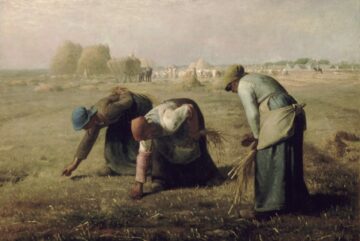 There is a phrase
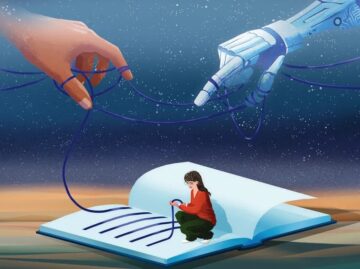 I recently copy-pasted
 As anyone who has had the job can attest, the enterprise of being chair of an English department—or, in my case, “head,” a term meant to designate a role still more managerial—comes with more than its share of these scenes of demoralized compliance and low-grade surrender. “A two-fisted engine of aggravation and despair” is how I recently described the gig to a friend, and it’s hard to find anyone who would disagree. So imagine my surprise, my wonder even, in having found for myself a nourishing antidote to all the in-built tedium, joylessness, and metastatic irritation. Yoga? Hypnosis? Ketamine? No. It has appeared in nothing so much as the revelation that my colleagues are, in ways and degrees I hadn’t quite grasped, extraordinarily good at what they do.
 We often study cognition in other species, in part to learn about modes of thinking that are different from our own. Today’s guest, psychologist/philosopher Alison Gopnik, argues that we needn’t look that far: human children aren’t simply undeveloped adults, they have a way of thinking that is importantly distinct from that of grownups. Children are explorers with ever-expanding neural connections; adults are exploiters who (they think) know how the world works. These studies have important implications for the training and use of artificial intelligence.
 As we observe our current world order becoming less cohesive, more volatile, socially fractured, politically polarized, and hence arguably less predictable, it becomes increasingly difficult to understand why.