
Romanticism 101
Then I realized I hadn’t secured the boat.
Then I realized my friend had lied to me.
Then I realized my dog was gone
no matter how much I called in the rain.
All was change.
Then I realized I was surrounded by aliens
disguised as orthodontists having a convention
at the hotel breakfast bar.
Then I could see into the life of things,
that systems seek only to reproduce
the conditions of their own reproduction.
If I had to pick between shadows
and essences, I’d pick shadows.
They’re better dancers.
They always sing their telegrams.
Their old gods do not die.
Then I realized the very futility was salvation
in this greeny entanglement of breaths.
Yeah, as if.
The I realized even when you catch the mechanism,
the trick still works.
Then I came to Texas
and realized rockabilly would never go away.
Then I realized I’d been drugged.
We were all chasing nothing
which left no choice but to intensify the chase.
I came to handcuffed and gagged.
I came to intubated and packed in some kind of foam.
This to is how ash moves through water.
And all this time the side doors unlocked.
The I realized repetition could be an ending.
The I realized repetition could be an ending.
by Dean Young
from Poetry Magazine, July/August 2014.
Enjoying the content on 3QD? Help keep us going by donating now.
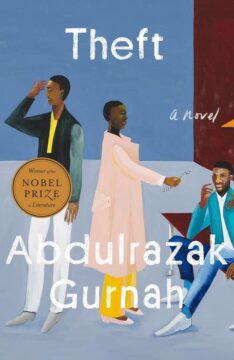 “Leaving. I’ve had years to think about that, leaving and arriving,” Latif, a Zanzibari emigre, tells us in Abdulrazak Gurnah’s 2001 novel By the Sea. The book describes the complicated friendship between two Zanzibari men living in the United Kingdom, but in these lines, Gurnah might as well be writing about himself. In 1968, Gurnah left his home—the small tropical island of Zanzibar, 20-odd miles off the coast of Tanzania—for Britain. He was seeking asylum: four years earlier, insurrectionists led by a Ugandan bricklayer named John Okello had risen up against the island’s landholding Arab minority in what would probably be called a genocide if it happened today. Okello himself boasted that some 12,000 Arabs were killed. Gurnah, whose people came from Yemen, was forced to flee Zanzibar. He was 18 years old when he arrived in England.
 Masaki Kashiwara, a Japanese mathematician, received this year’s Abel Prize, which aspires to be the equivalent of the Nobel Prize in math. Dr. Kashiwara’s highly abstract work combined algebra, geometry and differential equations in surprising ways.
 I
I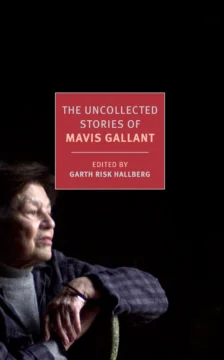 I
I What happened to former Columbia University student and Palestine rights activist Mahmoud Khalil has rightly alarmed many indignant Americans. Some have sought reassurance in the idea that since his abduction is nakedly unconstitutional, the institutions of American democracy—the Constitution, rule of law, brakes on the unchecked use of power—will swoop in to put an end to the madness. After all, we have the vaunted First Amendment. Attorneys from the ACLU and Center for Constitutional Rights are representing Khalil; surely their free speech arguments will impel his freedom and cancel his deportation. His detention surely is just one more instance of Trumpian insanity. Surely it will prove legally frivolous.
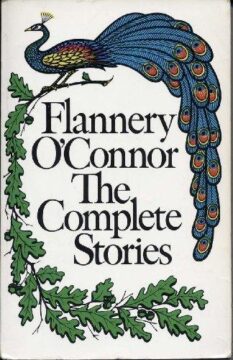 Short though her life was, O’Connor produced a distinctive body of work—two short-story collections, A Good Man Is Hard to Find and Everything that Rises Must Converge, and her two novels Wise Blood and The Violent Bear It Away, along with luminous essays and a rich, often hilariously detailed, correspondence—that more than justifies her standing as a classic American author. Her fiction is replete with certain types—hillbillies and carnival barkers, tent revival preachers and geek show performers—but her concern was always with grace, of the ways in which the irredeemable can be redeemed, the unsalvageable can be saved (which is to say all of us to varying degrees). What fascinated O’Connor, intellectually and spiritually, were the complexities of the soul, not how good people can be capable of bad, but how even evil people are sometimes capable of good, the ways in which “this current comes openly to the surface and is seen as the sudden emergence of the underground rivers of the mind into the clear spring of grace,” as she wrote in a 1956 book review. A moral universe with original sin, yes, but not total depravity.
 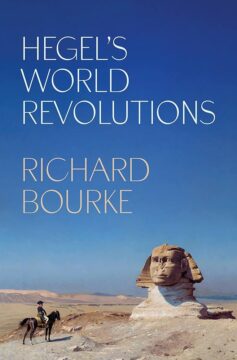 Anyone who takes on Hegel knows they have their work cut out. He is among the most complex, capacious and ambitious philosophers in the history of Western thought. And unlike other comparable figures in that tradition, such as Plato, Descartes or Hume, his style of writing can be notoriously difficult – indeed one of the more striking aspects of the book is the contrast between Bourke’s consistently clear, exact and clipped style and the frequently obscure, vague and stentorian prose of his subject. As the title of Bourke’s book signals, it is not a synoptic or comprehensive study of Hegel’s thought. Rather it is primarily concerned with the historicism and political philosophy of the nineteenth century thinker and even then in a quite defined way.
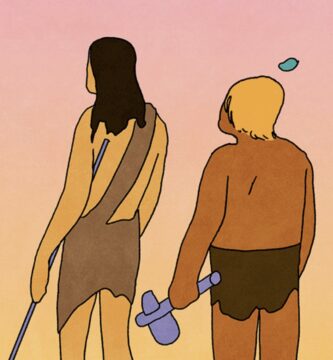 Hunter gatherers were not non-violent noble savages by any stretch of the imagination. They were relatively violent when compared with modern standards and even when compared with rates of violence experienced by other primates and mammals in general. However, we think this is primarily because human conflict is so lethal, not because it happens so often. On the contrary, hunter gatherers typically exhibit non-violent norms, with amoral and atypical sociopaths accounting for a disproportionate share of violence, just as in our own societies today.
 Consciousness is easier to possess than to define. One thing we can do is to look into the brain and see what lights up when conscious awareness is taking place. A complete understanding of this would be known as the “neural correlates of consciousness.” Once we have that, we could hopefully make progress on developing a theoretical picture of what consciousness is and why it happens. Today’s guest, Christof Koch, is a leader in the search for neural correlates and an advocate of a particular approach to consciousness,
  The debate over abundance liberalism unleashed by
 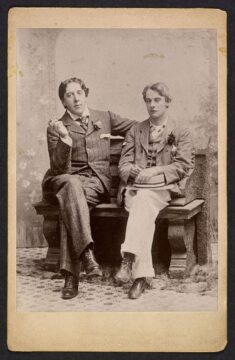 The Oscar Wilde Temple first opened in 2017, in the basement of the Church of the Village in Greenwich, New York. Wilde is glorified on a plinth: a creamy statue dressed as a dandy, his prison number from his time served in Reading Gaol, C.3.3, on a sign below him. Directly behind Wilde is a large neo-Gothic stained glass window of Jesus, drawing an association of martyrdom between the two men. On the walls there are also pictures of LGBTQ figures who were similarly persecuted: Alan Turing, Harvey Milk, Marsha P Johnson. The artwork was created by David McDermott and Peter McGough.
 The enduring popularity of intermittent fasting has been fed by celebrity endorsements, news coverage and a growing number of books, including several written by researchers in the field. More than 100 clinical trials in the past decade suggest that it is an effective strategy for weight loss. And weight loss generally comes with related health improvements, including a reduced risk of heart disease and diabetes. What is less clear is whether there are distinct benefits that come from limiting food intake to particular windows of time. Does it protect against neurodegenerative diseases such as Alzheimer’s disease, enhance cognitive function, suppress tumours and even
  I
I