
Josh Rothman at The New Yorker:
 Many people don’t know how seriously to take A.I. It can be hard to know, both because the technology is so new and because hype gets in the way. It’s wise to resist the sales pitch simply because the future is unpredictable. But anti-hype, which emerges as a kind of immune response to boosterism, doesn’t necessarily clarify matters. In 1879, the Times ran a multipart front-page story about the light bulb, under the headline “Edison’s Electric Light—Conflicting Statements as to Its Utility.” In a section offering “a scientific view,” the paper quoted an eminent engineer—the president of the Stevens Institute of Technology—who was “protesting against the trumpeting of the result of Edison’s experiments in electric lighting as ‘a wonderful success.’ ” He wasn’t being unreasonable: inventors had been failing to construct workable light bulbs for decades. In many other instances, his anti-hype would’ve been warranted.
A.I. hype has created two kinds of anti-hype. The first holds that the technology will soon plateau: maybe A.I. will continue struggling to plan ahead, or to think in an explicitly logical, rather than intuitive, way.
more here.
Enjoying the content on 3QD? Help keep us going by donating now.
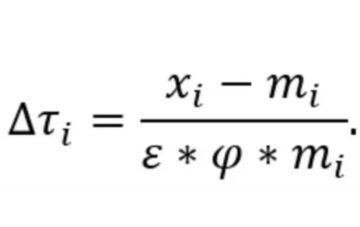 So Trump’s basic starting point is that he thinks trade deficits are bad.
 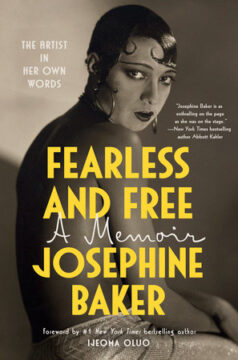 Today we think of Josephine Baker as the personification of the Jazz Age – the skinny black kid from Missouri who took Paris by storm. In retrospect, her show-stopping Revue Nègre act can be read as a subversion of the prejudices of her age. At the time, however, it just looked like a heady cocktail of comedy, exoticism and sex. Scantily garlanded with feathers, dancing to ‘barbaric, syncopated music’, Baker was ‘black poetry’, according to Marcel Sauvage, who acted as her ghostwriter.
 Travelers to Unimaginable Lands is that rarity: true biblio-therapy. Lucid, mature, wise, with hardly a wasted word, it not only deepens our understanding of what transpires as we care for a loved one with Alzheimer’s, it also has the potential to be powerfully therapeutic, offering the kind of support and reorientation so essential to the millions of people struggling with the long, often agonizing leave-taking of loved ones stricken with the dreaded disease. The book is based on a profound insight: the concept of “dementia blindness,” which identifies a singular problem of caring for people with dementia disorders—one that has generally escaped notice but, once understood, may make a significant difference for many caregivers.
 In 2015, scientists made a surprising discovery about physiologically normal human skin: More than
  I
I One doesn’t need a philosophy degree to recognize that the way we think about animals is, at best, deeply inconsistent. Consider the following: many Americans
  B
B While a drop in libido is often associated with aging in women, it’s not just a female issue. Around
 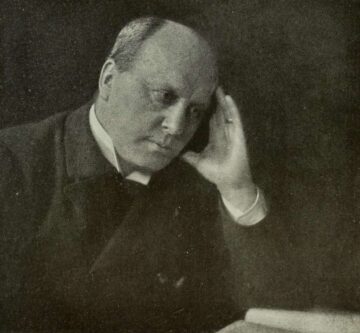 When Henry James decided to come to America in 1904 and 1905, his elder brother, William James, was not immediately pleased. William said that while his wife, Alice, would welcome his visit (she and Henry had a firm bond), he felt “more keenly a good many of the désagréments to which you inevitably will be subjected, and imagine the sort of physical loathing with which many features of our national life will inspire you.” There follows an account of how traveling Americans ate their boiled eggs, presumably in hotels and on trains, “bro’t to them, broken by a negro, two in a cup, and eaten with butter.” As a source of physical loathing, this seems a bit excessive: one might linger over William’s attempts to keep Henry’s visit at bay. William’s letter seems more to the point when he notes: “The vocalization of our countrymen is really, and not conventionally, so ignobly awful … It is simply incredibly loathsome.”
 In general, we view sexual jealousy as bad. Jealousy creates distrust and destroys harmony. It does not always cause the kind of outright physical violence it does in Othello, but it certainly does violence to one’s peace of mind and to one’s sense of security and comfort. Sexual jealousy can cause an otherwise dignified individual to become a snooping, creeping, paranoid obsessive. Jealous souls, as Shakespeare writes, “are not ever jealous for the cause, / But jealous for they’re jealous. It is a monster / Begot upon itself, born on itself.” It can lead to hatred, manipulation, control, and cruelty. In Othello, it leads directly to despair and to death. And yet its absence and the void it has left behind herald something more sinister and colder than the terror and grandeur produced by the hot-blooded, violent stirring of the human heart. Instead of a thunderstorm that frightens and awes, we are left with the dreariness of a gray drizzle that chills to the bone. Sexual jealousy is the proof of sexual love. It is the evidence of a love for another that is so total that to imagine another enjoying even a part of one’s beloved drives one to a crisis of meaning that turns toward rage and despair.
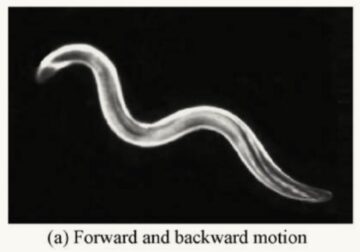 A near-perfect simulation of the human brain would have profound implications for humanity. It could offer a pathway for us to transcend the biological limitations that have constrained human potential, and enable unimaginable new forms of intelligence, creativity, and exploration. This represents the next phase in human evolution, freeing our cognition and memory from the limits of our organic structure.
 It’s no secret that “driving while black” is a real phenomenon. Study after study has shown that minority drivers are ticketed at a higher rate, and data from speed cameras suggests that it’s not because they commit traffic violations more frequently. But this leaves open the question of why. Bias is an obvious answer, but it’s hard to eliminate an alternative explanation: Minority groups may engage in more unsafe driving, and the police are trying to deter that.