
by Scott F. Aikin and Robert B. Talisse

Constitutional democracy is a system for conducting politics under conditions where citizens, understood as free and equal persons, disagree profoundly about what is good. Naturally, such disagreements extend to politics itself. That is, we expect democratic citizens to disagree, sometimes even sharply, about the fundamental aims and aspirations of government and its policies. The moral claim underwriting democracy holds that each citizen’s status as a free and equal person is respected when collective political decisions are made by way of a system that affords to each an equal say.
Still, in a democracy, we also expect disagreements over politics to extend beyond Election Day. Even after the votes are counted, citizens are nonetheless entitled to continue arguing over the wisdom, prudence, and even the justice of democratic collective decisions. What’s more, ongoing democratic engagement in the form of continuing scrutiny of political affairs is expected of citizens. Participation in ongoing political discussion is among the democratic citizen’s duties.
If democracy calls citizens to engage regularly in political discussion, there will be among them ongoing political disagreements. Disagreements over things that matter often get heated, sometimes even hostile. And yet political disagreement in a democracy must be conducted in a way that manifests a fundamental respect for each citizen’s status as a free and equal person. In a democracy, no citizen is inherently another’s boss or subordinate; and all of our political interactions as citizens must reflect that basic moral commitment. Read more »
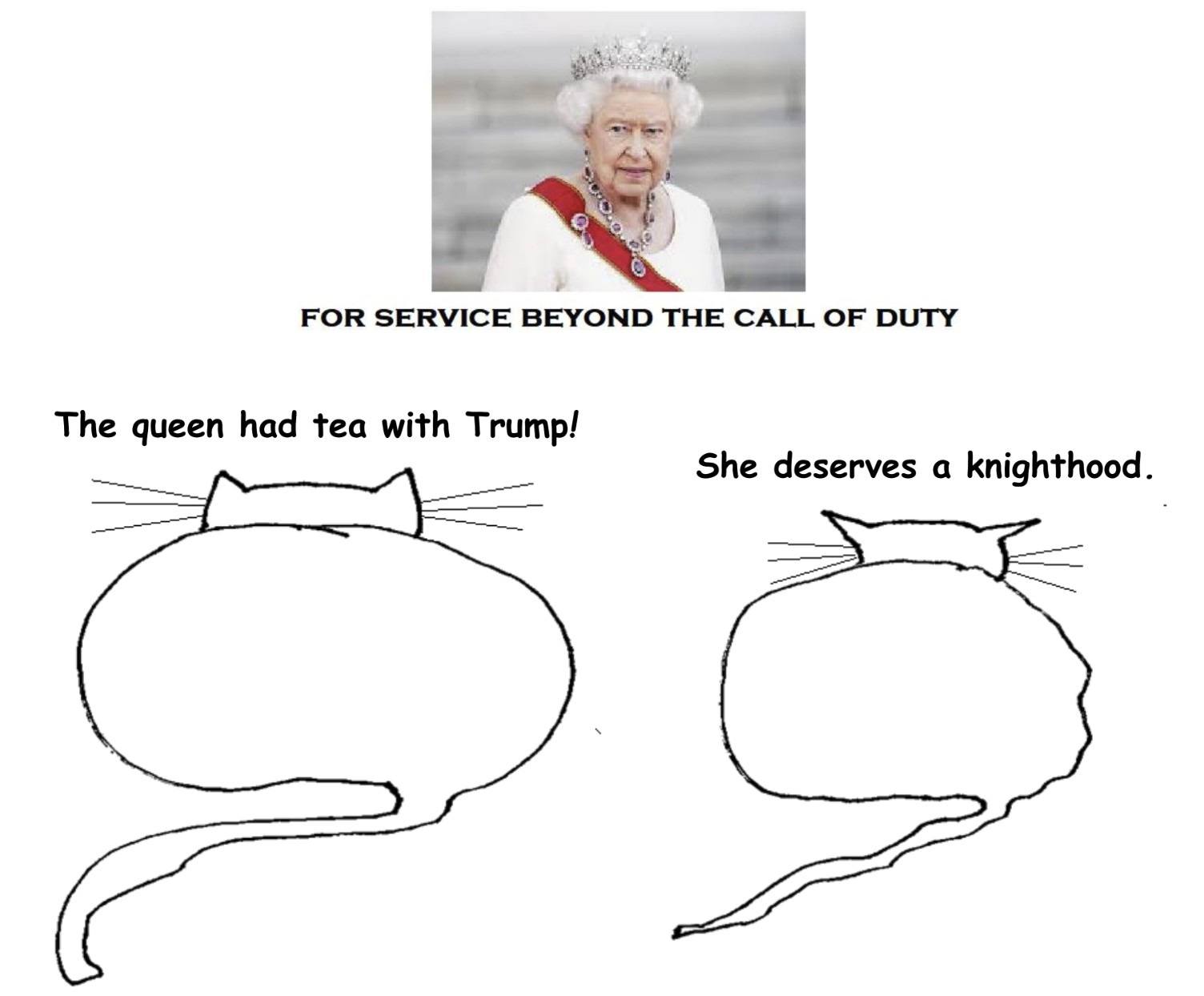
 For someone who spent most of his life trying to get on Page Six, (the New York Post’s iconic gossip column), hitting Page One was pay dirt for Donald Trump. Now that he’s there, he means to stay there, devouring our attention for the foreseeable future. One could even argue that all his lies and deplorable actions are motivated by a single, sorry ambition, to be the center of attention at all times and in all places. Outrage sells.
 Four years ago, Human Rights Watch and Amnesty International—joining hundreds of others—urged the United Nations Security Council to send atrocity crimes committed in Syria to the International Criminal Court (ICC) for prosecution. Then, the conflict had already claimed 100,000 lives, overwhelmingly civilians. Today, the death toll is estimated at over half a million, with each day bringing new violations and unlawful killings.
 The obelisk bearing the chiseled gray-granite face of a Confederate soldier enters my field of vision each morning as I stroll across campus. After forty years away from Mississippi, I returned last year to teach at my alma mater, Ole Miss. Having entered the University of Mississippi in 1974, only twelve years after James Meredith shattered the color barrier, I was one of about fifty black students in a freshman class of more than 800, African Americans then making up less than 5 percent of the entire student body.
 In Tamil, farewells are never final. As Akil Kumarasamy pointed out in a 2017 interview, the Tamil equivalent of goodbye is poyittu varen, meaning “I’ll go and return.” These are parting words especially suited to the refugee: ever running away, ever looking back.
 Last month, the artificial intelligence company DeepMind
  On Sunday night,
  ALAN BEAM WAS
  Identity politics has engulfed the humanities and social sciences on American campuses; now it is taking over the hard sciences. The STEM fields—science, technology, engineering, and math—are under attack for being insufficiently “diverse.” The pressure to increase the representation of females, blacks, and Hispanics comes from the federal government, university administrators, and scientific societies themselves. That pressure is changing how science is taught and how scientific qualifications are evaluated. The results will be disastrous for scientific innovation and for American competitiveness.
  It’s a tough time to defend religion. Respect for it has diminished in almost every corner of modern life — not just among atheists and intellectuals, but among the wider public, too. And
  The oldest stone tools outside Africa have been discovered in western China, scientists reported on Wednesday. Made by ancient members of the human lineage, called hominins, the chipped rocks
  For nearly 40 years, the gender gap in voting has been the subject of continued speculation. How much does it matter? Would it be wide enough to put Democrats in office? Now, with President Trump ascendant, the question becomes still more urgent: What happens if the gender gap becomes a gender chasm?
 Tribalism and slavery are as old as humanity. The very first human records are records of human bondage. Reports estimate that today 60 million people are held as slaves. While each one of these lives represents an unacceptable tragedy, not one occurs with the approval of law. And that is revolutionary. For while slavery is as old as humanity, abolitionism is a relatively recent phenomenon that did not emerge until the ideas and ideals of the Enlightenment nurtured it into existence.